AI project showcase / idea exchange / co-creation

Built ideas,made to be seen.

Share your AI projects, browse fresh ideas, and talk through the parts that are almost there. Working demos deserve an audience, and blockers do not have to stay private.

Share work
Showcase
Find sparks
Ideas
Keep talking
Co-create

Project square

Scan active directions first, then refine by category or momentum.
RioShot
Showcase
Online
Productivityclaude-code

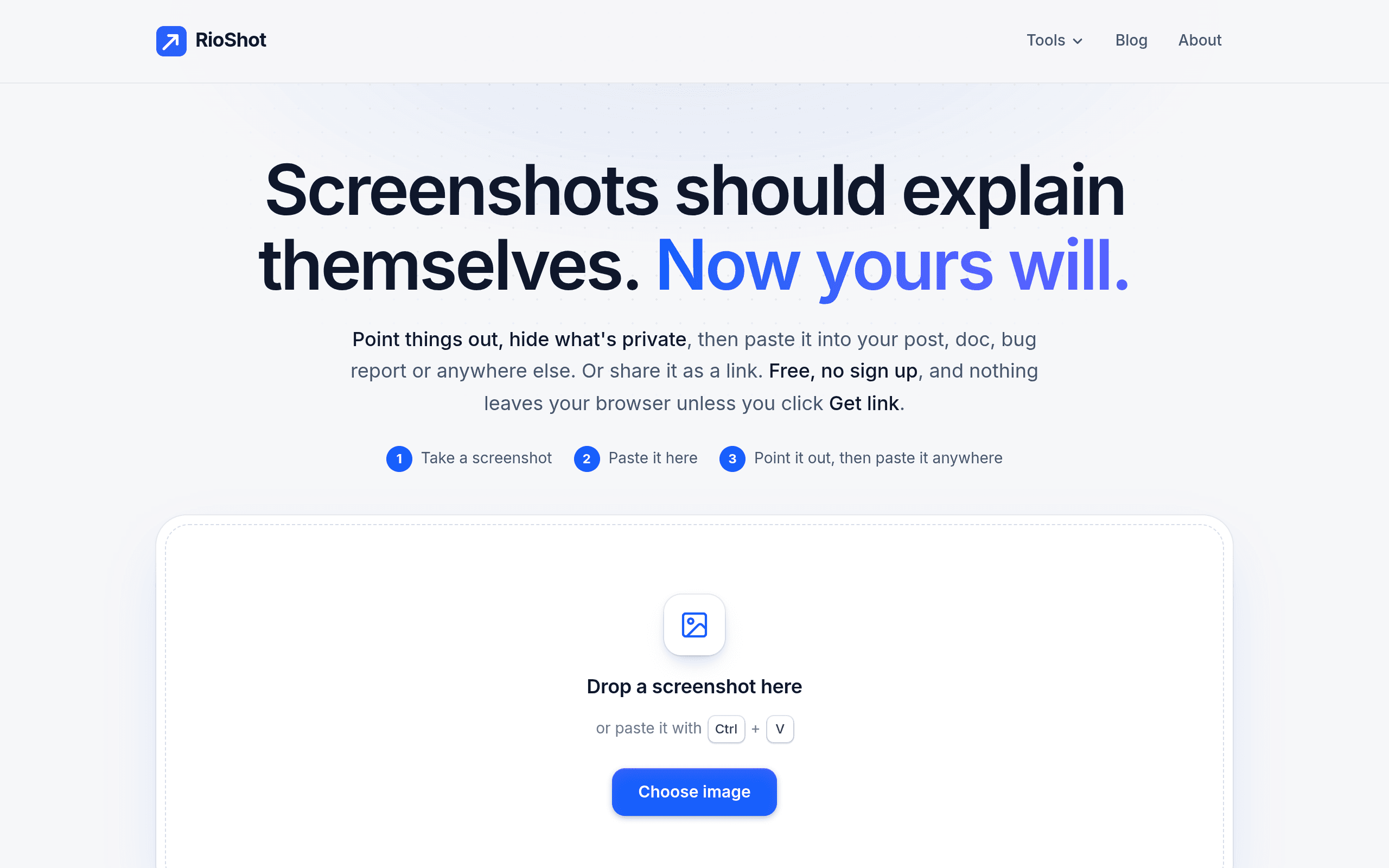
RioShot

A free screenshot editor that never uploads your images — annotate, redact, and paste anywhere, all in-browser

RioShot is a free screenshot editor built around a radical simplicity: take a screenshot, paste it (Ctrl+V), annotate it, and paste the result anywhere. No upload, no account, no watermark. Everything happens inside your browser — the only time an image leaves your device is when you click Get link to share it. The toolkit matches how makers actually communicate: arrows, highlights, blur and redact to hide private details, zoom callouts to point at tiny buttons, and a dark spotlight that dims everything except the number that matters. Fourteen before/after examples on the homepage show how much a single annotated screenshot can say. It is also a vibe-coding case study. Maker Alberuni Azad announced it in the vibecodinglife Facebook group on October 1, describing “building and launching a free screenshot editing app called RioShot in a single sitting … development with Claude Code and the Opus 5.5 model” — from idea to domain purchase, testing, deployment and launch in one session. Private by design, instant, and free — the rare annotation tool that never makes you wonder where your screenshots went. curated by the VibeFix editors
OpenForge
Showcase
Online
Toolsclaude

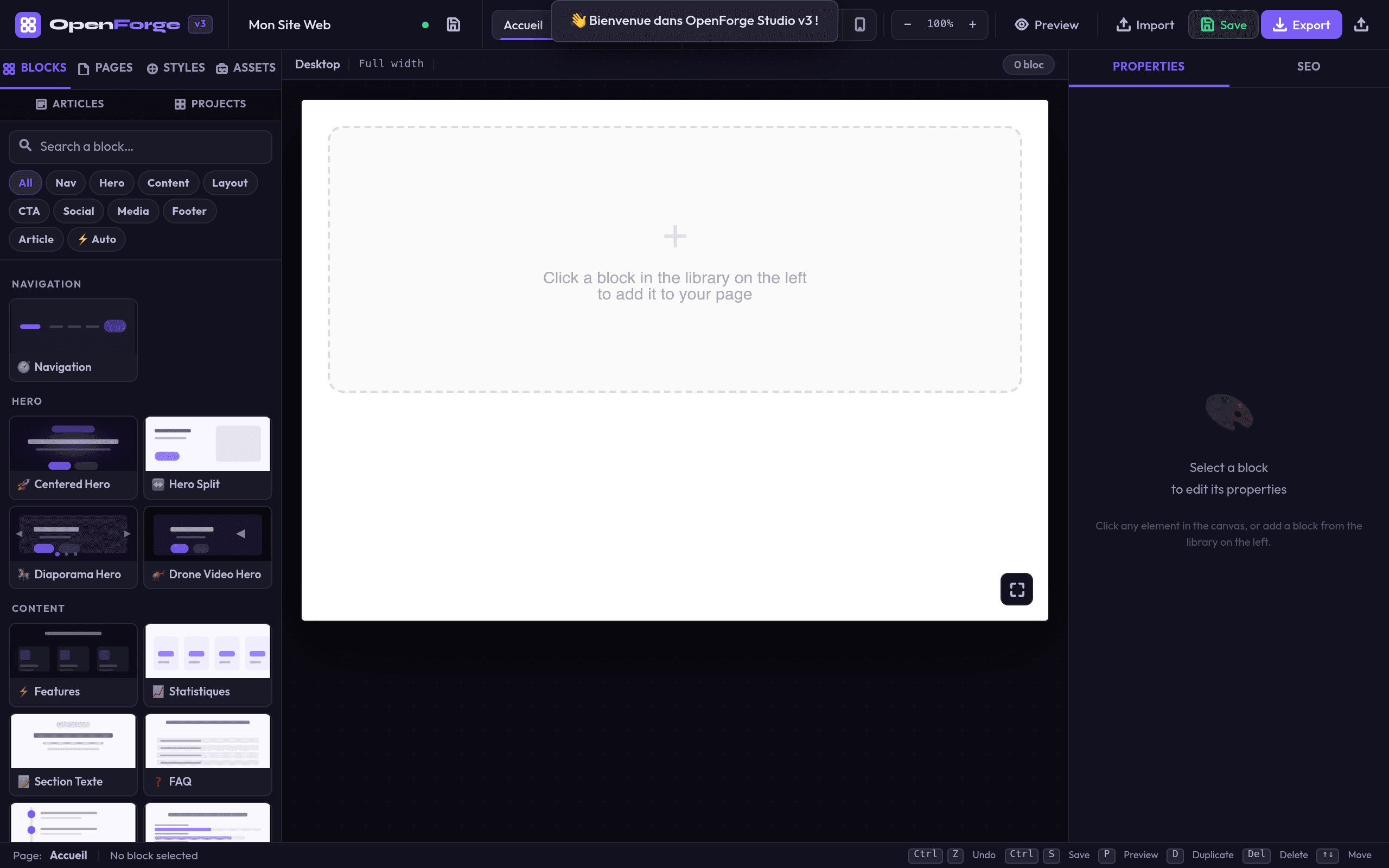
OpenForge

A no-code website builder that's a single HTML file — drag blocks, export static sites, zero dependencies

OpenForge is a full no-code website builder that is itself exactly one HTML file: no backend, no build step, no dependency pile. Open the page, drag blocks — nav, hero, content, footer, articles — into a canvas, tune styles in the properties panel, preview on desktop or mobile, and export standalone static HTML/CSS/JS, with localStorage persistence between sessions. The exportability is the point. Unlike platform builders that lock your site behind their walls, OpenForge's output is portable static files you can host anywhere — the same anti-lock-in instinct that drove the single-file design. Its creator, u/ConsistentWay7704, introduced it on r/vibecoding with the title “I vibe-coded a full no-code website builder using Claude's free plan” — built entirely on Claude's free tier, published as open source on GitHub (Moi455/OpenForge_No-code-website-builder). A neat paradox for the showcase: a vibe-coded tool that lets non-coders vibe-code websites. curated by the VibeFix editors

罗绪海 App 作品集
Showcase
Online
Design & Creativecodex

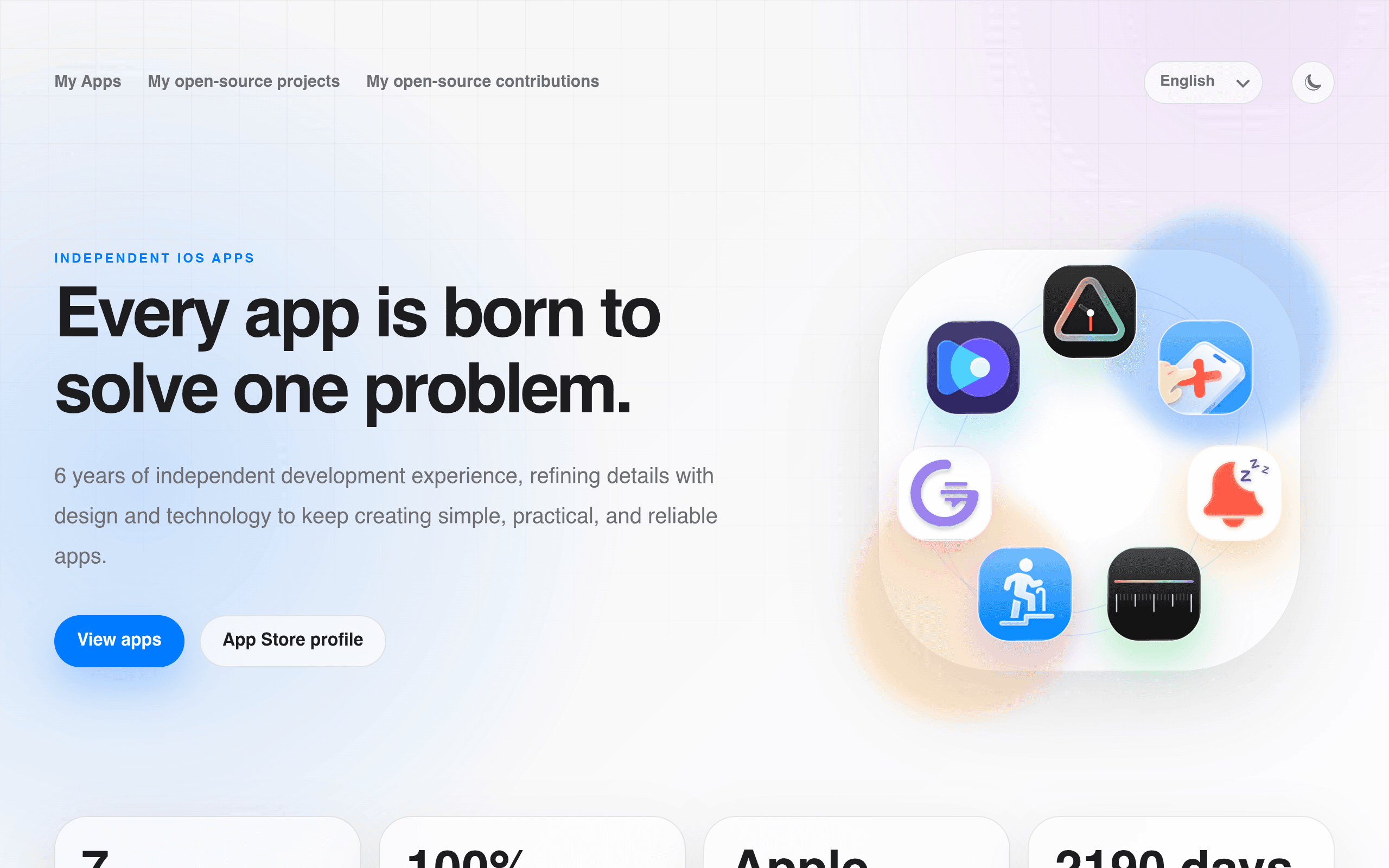
罗绪海 App 作品集

独立开发者罗绪海的 iOS 应用作品集——6 年独立开发心血,全部 App 一页尽览

这是独立开发者罗绪海的个人作品集页面:一个网页收录了他 6 年独立开发路上的全部 iOS App——每一款应用都“为解决一个问题而生”。页面用轨道式动画展示每一款应用图标,滚动即可浏览,点进每款 App 看到介绍与 App Store 下载入口。 最有意思的是它的诞生方式:作者在 V2EX 发帖自述“我花费 2 小时 Vibe coding 出的个人作品展示页面”,“全程使用 Codex,没有手写一行代码”。代码已开源在 GitHub(luoxuhai/products),并用 Astro 框架搭建。 对独立开发者来说,这是一个很务实的样本:用 AI 两小时做出一个体面的展示页,把真正的作品(App 本身)推到台前,而不是在官网像素上纠结半年。 curated by the VibeFix editors

Dice Roller
Showcase
Online
Entertainment

Dice Roller

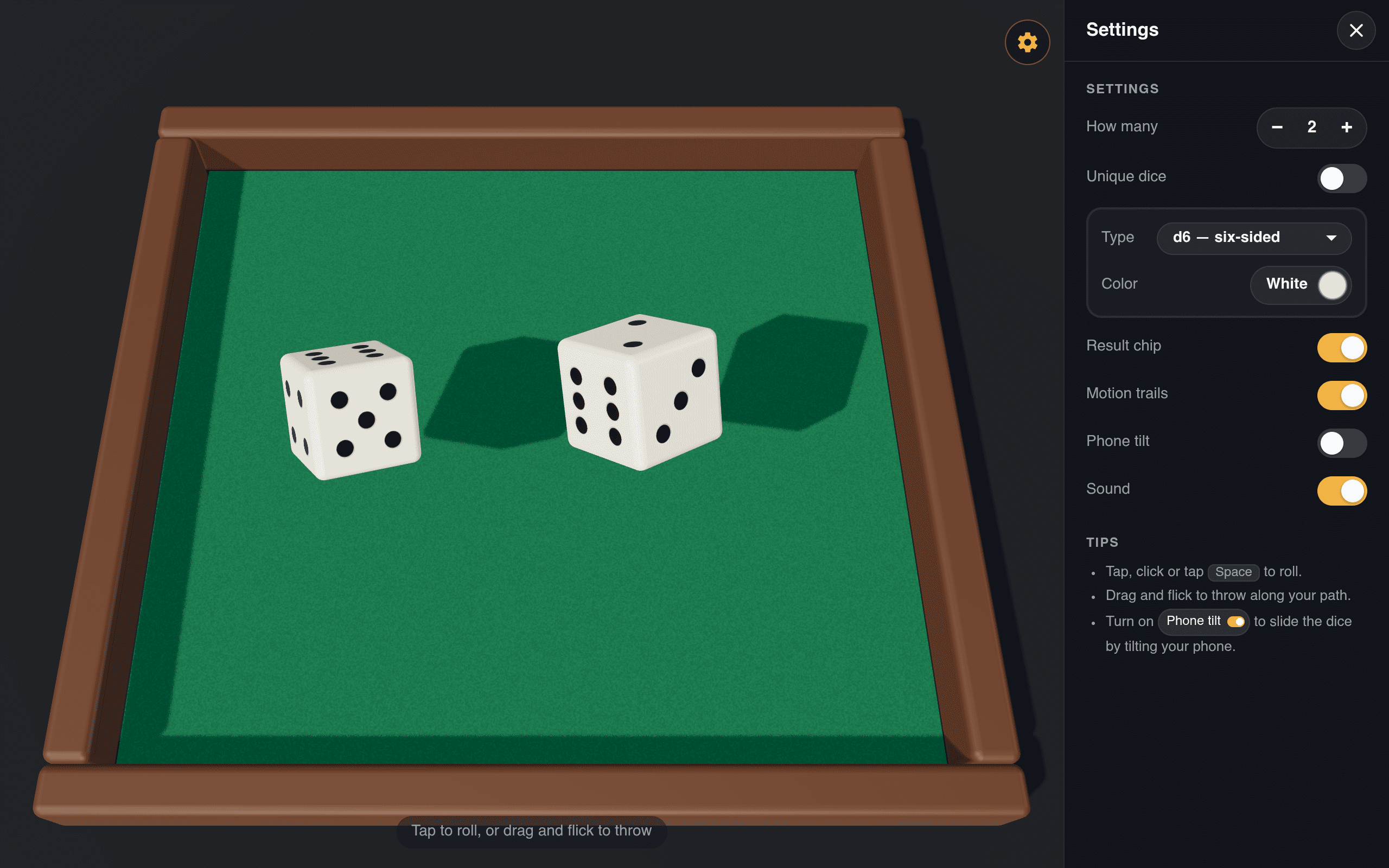
A physics-based 3D dice roller that runs entirely in the browser — tap to roll, flick to throw

Dice Roller is a physics-based 3D dice roller that runs entirely in your browser: tap to roll, or drag and flick to throw the dice with real simulated physics. You watch the faces tumble and land — what you get is what the physics gives, with no hidden RNG reveal. The settings panel shows the craft: dice count, d4 through d20 types, colors, result chips, motion trails, phone-tilt control, and sound — all in a polished dark UI, hosted free on GitHub Pages with zero ads. Maker swid posted it on Show HN on September 29 with disarming honesty: “Yes it is a vibe-coded static site, but I'll share it anyway since people have liked it” — adding that he built it because he couldn't find a good free dice app that wasn't covered in ads. Small, honest, and genuinely fun — the kind of single-purpose tool the web used to be full of. curated by the VibeFix editors

Viboplr
Showcase
Online
Music & Audioclaude-code

Viboplr

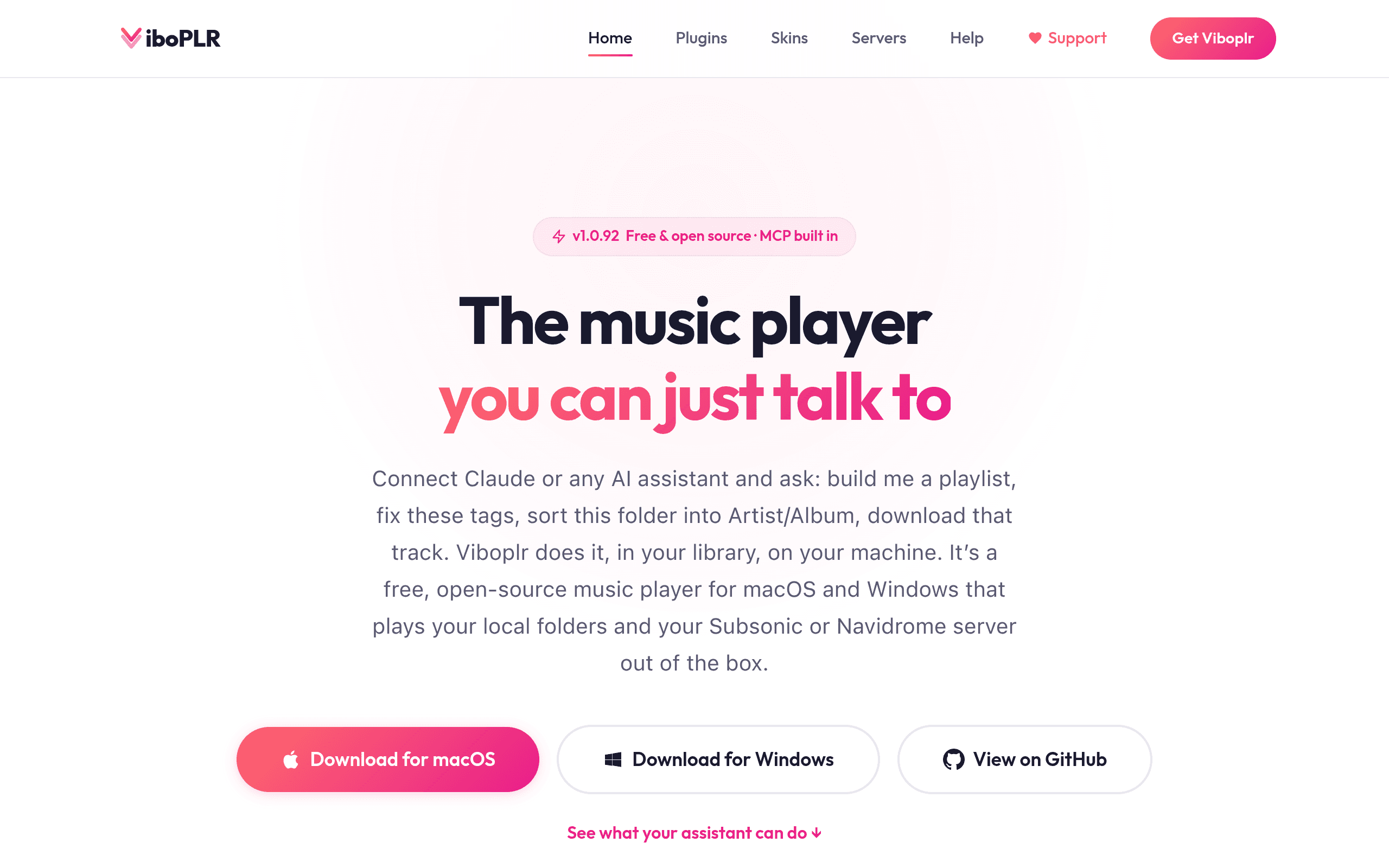
The music player you can just talk to — every line written by Claude Code, MCP built in

Viboplr is the music player you can just talk to: connect Claude or any AI assistant and say "build me a playlist," "fix these tags," "sort this folder into Artist/Album" — it does it, in your library, on your machine. A free, open-source player for macOS and Windows with a built-in MCP server. The README's "Built with AI" section is unusually honest: "Built by AI. Every line of code was written by an AI coding assistant (Claude Code). The human role is tech lead and product owner: decide what to build, define how it behaves, review, test, and push back until it's right." 2,500+ commits, 35 releases, GPL-3.0 — this is not a weekend demo, it's a shipped product at v1.0.92. The model it proposes is the interesting part: the human as tech lead, the AI as the entire engineering team, with .claude/rules/ guardrails and machine-checked linting standing in for code review. Viboplr is what that workflow produces when it's done well. curated by the VibeFix editors

The Morning Lineup
Showcase
Online
Content & Mediaclaude-code

The Morning Lineup

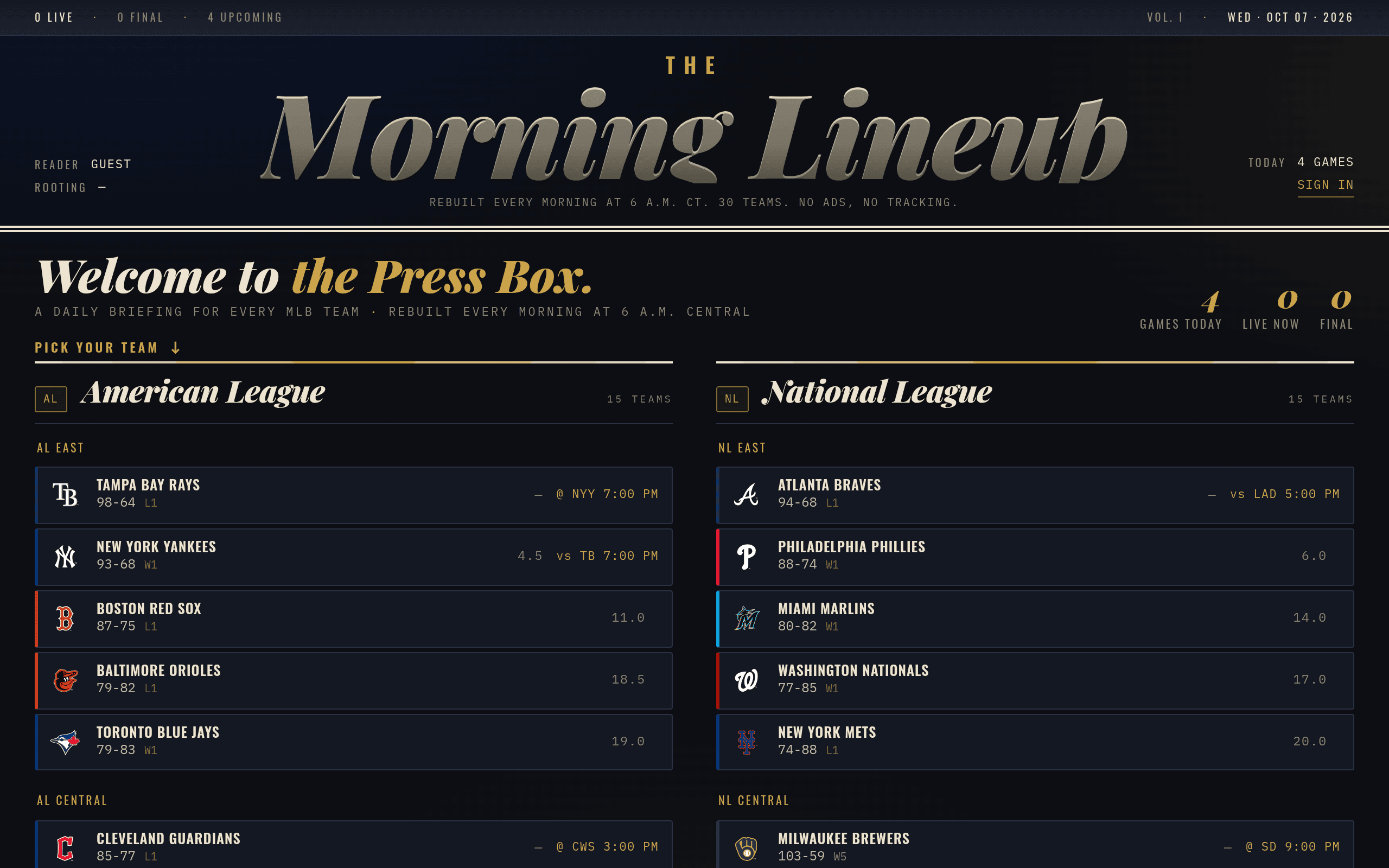
A daily briefing for every MLB team — rebuilt every morning at 6am CT by a scheduled Claude agent

The Morning Lineup is a daily newspaper for baseball: one page per MLB team, all 30 of them, rebuilt every morning at 6 a.m. Central. A scheduled Claude agent fetches fresh MLB Stats API data, rebuilds every team's page, and regenerates three LLM-authored columnist columns per team before deploying the whole site to GitHub Pages. The maker's README says it plainly. Credits: "Built by JB Brawley — Head of Growth at Resolve Logistics, vibe coder by night." The stack is deliberately spartan — Python 3.12 stdlib only, vanilla JS, no build step — with Ollama's qwen3:8b handling the writing locally and the Anthropic API as fallback. Nearly 15,000 commits, most of them the daily rebuild firing on schedule. The proof is in the masthead: the screenshot above shows today's date and "4 games today" — the pipeline ran this morning. A newspaper that writes and prints itself, one agent cron job at a time. curated by the VibeFix editors

Digitup
Showcase
Online
Tools

Digitup

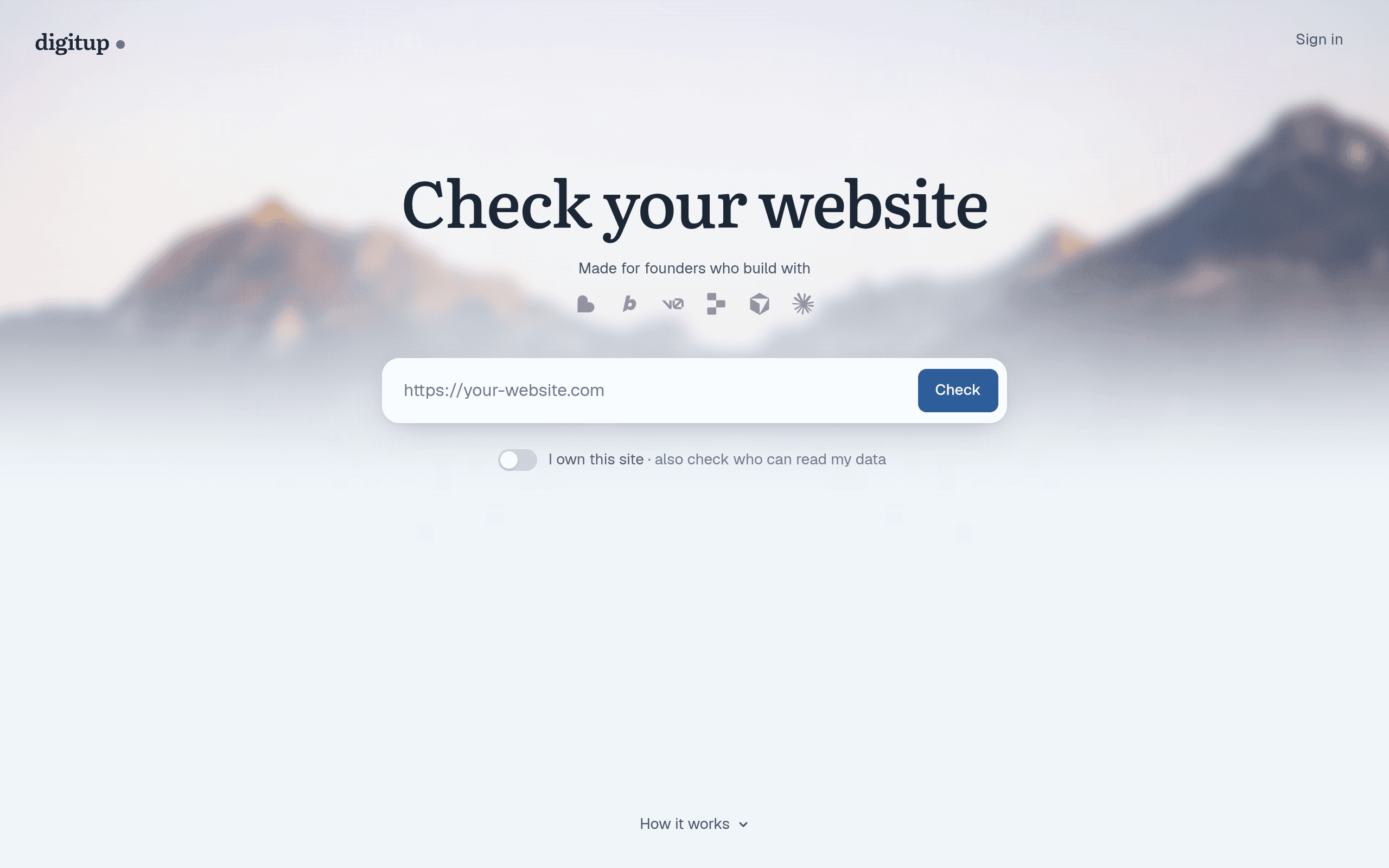
A monitoring and runtime scanner for vibe-coded websites — catches leaked secrets before attackers do

Digitup exists because of a very 2026 problem: people vibe-code websites and accidentally ship their API keys, tokens, and database credentials to the public internet. It's a "monitoring and runtime scanner for vibe-coded websites" — paste a URL, hit Check, and it hunts for leaked secrets and other exposures. Maker ahmgeek introduced it on Show HN on October 4 with the title "Show HN: I built a vibe coded website checker for leaked secrets" — the checker itself is vibe-coded, auditing other vibe-coded sites. It also hit Product Hunt's October web-app board the same week. A security tool for the AI-builder era: the same workflow that makes shipping easy makes leaking easy, and Digitup closes that loop with a one-click check. No signup needed to scan. curated by the VibeFix editors

WanderScout
Showcase
Online
Lifestyleclaude

WanderScout

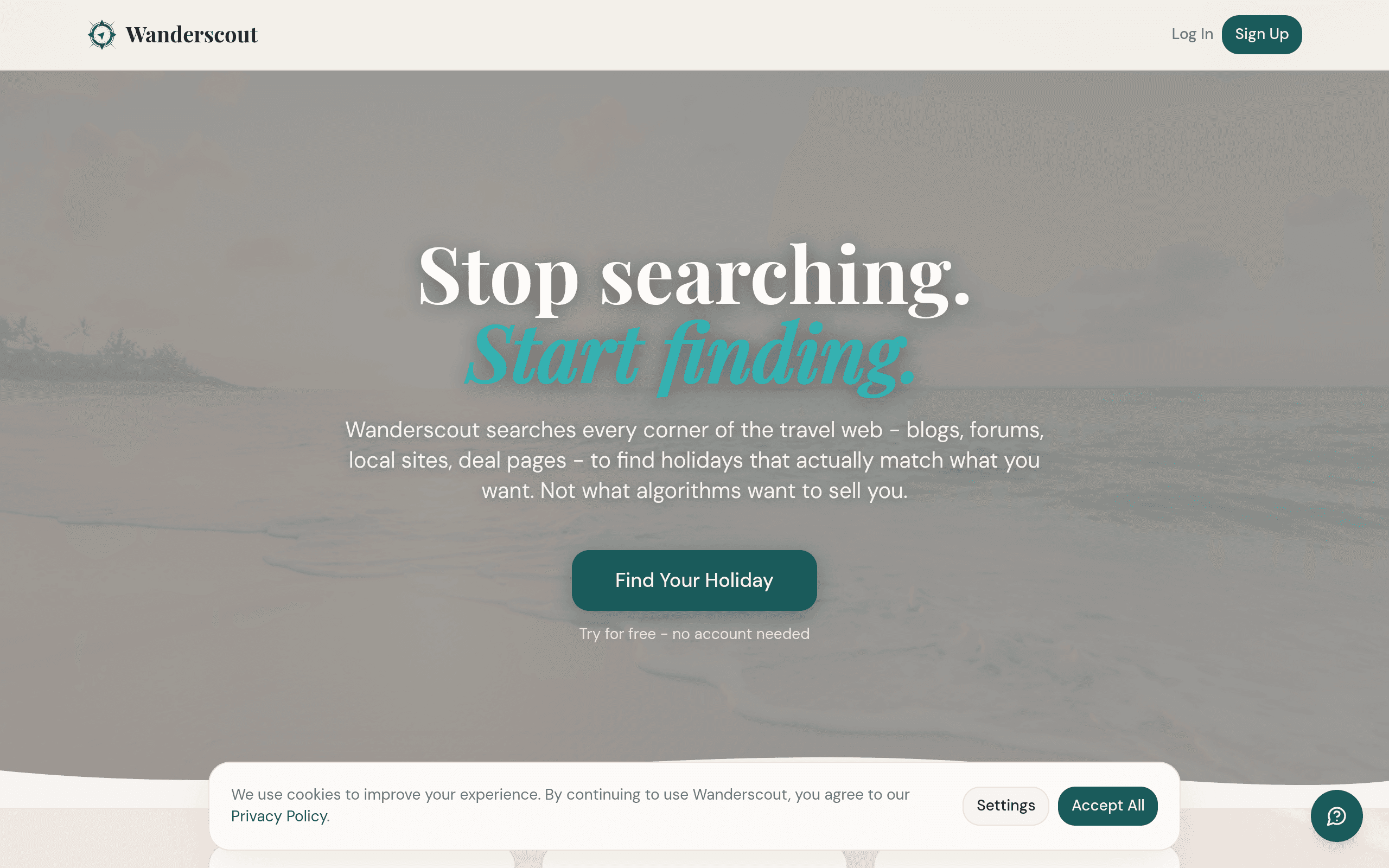
AI travel search that reads the real web before recommending — built in Lovable, priced by Duffel, reasoned by Claude

Wanderscout is an AI travel destination search built by a Swedish couple with two young kids, through their company Zorez Group AB, "in the evenings." Tell it your real budget, dates, preferences, and who's coming, and its AI reads across travel blogs, local rental sites, tourism board pages, and flight deal pages before returning a shortlist with match scores — every pick backed by a source link, with no invented prices. Verbatim from the makers' project page: "We build in Lovable, use Duffel for airline-direct flight pricing, no markup, and Anthropic Claude for the AI." A real operating business with free trials, not a demo — anti-algorithm travel advice, researched like a human travel agent would. The honesty is the product: "Not what algorithms want to sell you." WanderScout is what happens when vibe coding meets a genuine service business — evenings-only builders shipping a real company on it. curated by the VibeFix editors
Relokato
Showcase
Online
Productivity

Relokato

Cross-border moving planner built end-to-end on Lovable: visa checklists, costs, official sources

Relokato takes the most paperwork-heavy project of an adult life — moving to another country — and turns it into a guided plan. Enter your nationality, destination, and household, and it generates a relocation roadmap with visa thresholds, document checklists, deadlines, and a cost budget — every requirement linked to the official source it came from, with the date it was last reviewed. The build story is on its madewithlovable.com project page, verbatim from the maker: "Built end-to-end on TanStack Start, Tailwind CSS, and Lovable Cloud." (Added October 1, 2026.) A live freemium SaaS with real pricing ($19/mo, $149 Move Pass), a live demo, and destination guides from Portugal to Costa Rica. It's the kind of unglamorous-but-useful domain where AI builders shine: high trust requirements, heavy research work, and a checklist that would take a human team months to assemble. Relokato ships it as a working product. curated by the VibeFix editors

Lava Bound
Showcase
Online
Games

Lava Bound

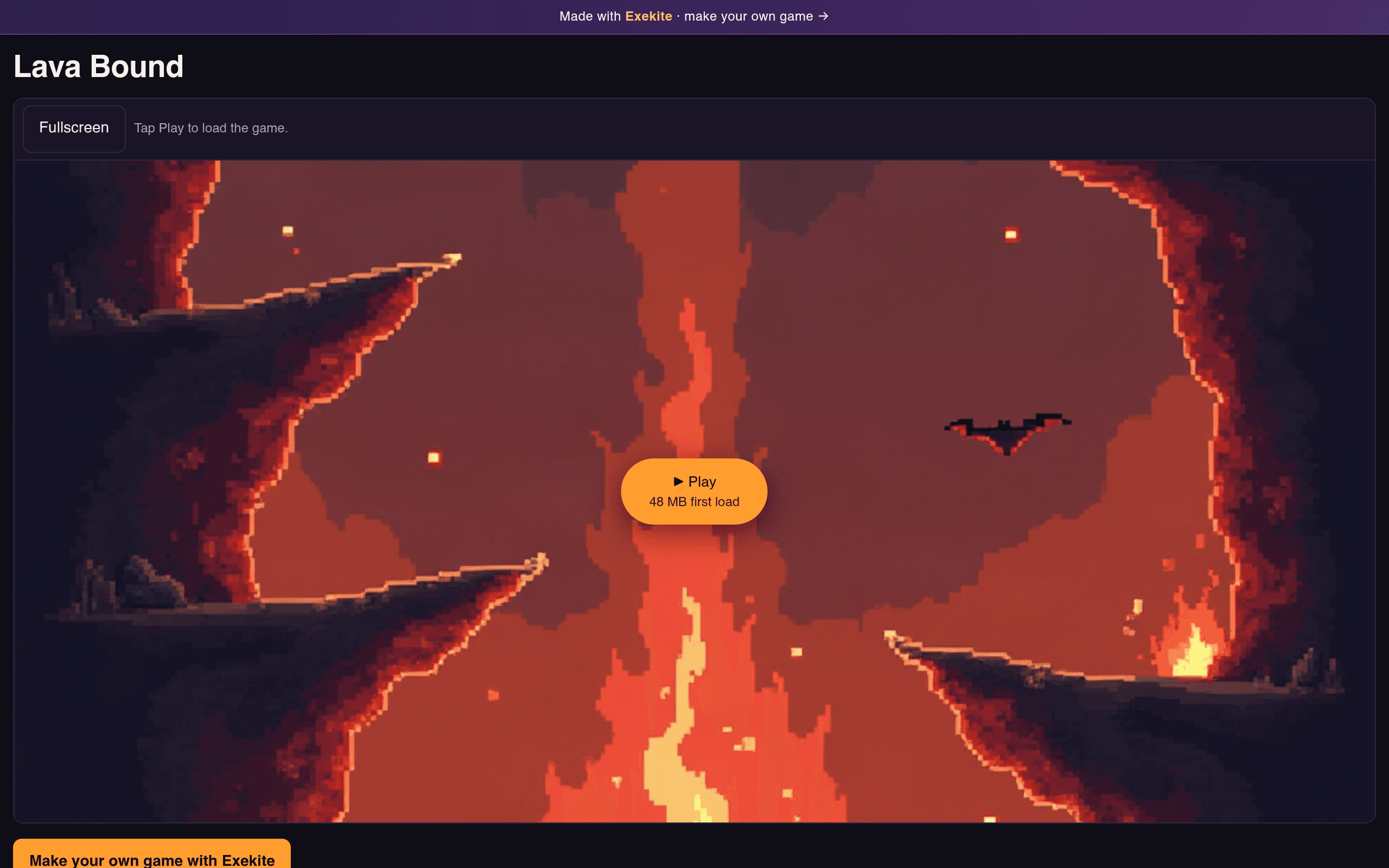
A lava platform jumper — the maker's first vibe-coded game, playable free in the browser

Lava Bound is a pixel-art lava platform jumper you can play free in your browser on Exekite — and it exists because its maker umut-neo decided to vibe-code his first game. The Show HN post from September 17 says it in the title: "Show HN: My first vibe coded game planning to publish to Android." Tap Play and a 48MB game loads: volcanic caverns, a bat gliding over the magma, the whole retro platformer mood. No build tools, no engine ceremony visible to the player — just a game that runs. The interesting arc is in the post title itself: first game, then an Android publish. Vibe coding didn't just produce a prototype; it produced someone's path into being a game developer. curated by the VibeFix editors
Turbo Kartz
Showcase
Online
Gamesclaude-code

Turbo Kartz

4-player split-screen cartoon kart racer built in Claude Code — 12 prompts for the game, 8 more to make it TV-ready

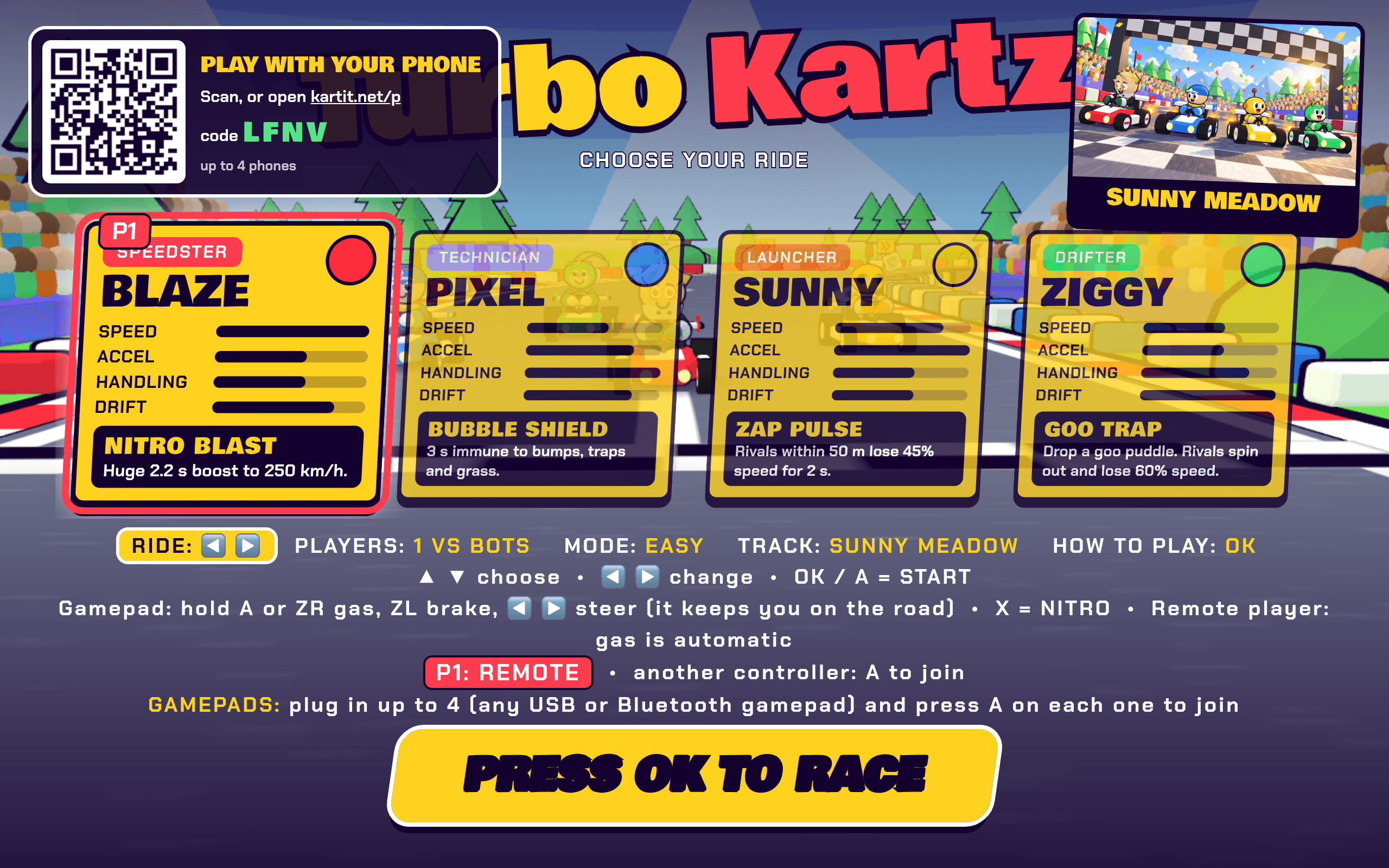
Turbo Kartz is a cartoon kart racer for 1–4 players that its maker Anass Kartit built in Claude Code — and he counted the prompts: Claude Sonnet 5.5 built the game in 12 prompts, then Claude Opus 5.5 turned it into something people actually play on a TV, in 8 more. Twenty prompts, one finished game. It plays like the real thing: split-screen multiplayer, a character select screen (Blaze the Speedster, Pixel the Technician, Sunny the Launcher, Ziggy the Drifter) with distinct speed/accel/handling stats and special abilities — Nitro Blast, Bubble Shield, Zap Pulse, Goo Trap. The October 7 update added the killer feature: scan a QR code and your phone becomes the controller, up to 4 phones, with touch controls and PWA install. Built with three.js; music from Lyria 3 Pro. The October 2 blog post walks through the whole build. A showcase of what twenty well-aimed prompts can ship. curated by the VibeFix editors
SheMesh Tribe LLC
Showcase
Online
Businesslovable

SheMesh Tribe LLC

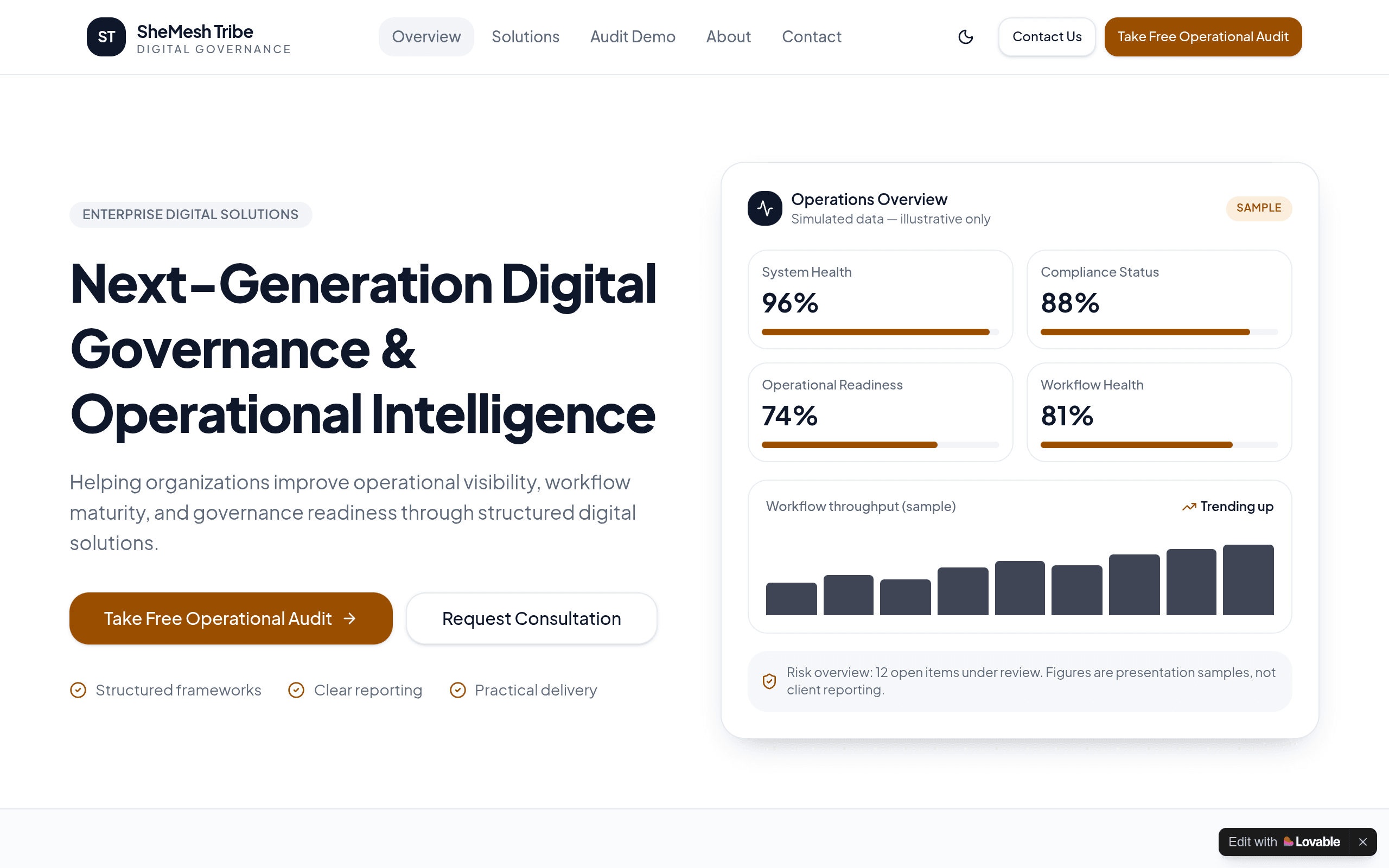
A digital governance consultancy site designed and shipped in Lovable — operations dashboards included

SheMesh Tribe LLC is a digital governance and operational intelligence consultancy — and its entire website was designed and shipped in Lovable (note the "Edit with Lovable" badge and the lovable.app domain). It is a good example of what AI site builders are actually for: a complete, client-ready business site with an operations overview dashboard (system health, compliance status, operational readiness, workflow throughput charts), service pages for digital governance, workflow optimization and operational intelligence, plus sample engagement case studies across public sector, healthcare and logistics. No code changed hands; the whole thing is prompt-built. For anyone wondering whether vibe-coded sites can look "enterprise" — here's your answer. curated by the VibeFix editors
Pixel News Network
Showcase
Online
Entertainmentclaude-code

Pixel News Network

A 24/7 AI news network streaming live in your browser — "hey opus 5.5 can you build me a news network"

Pixel News Network (PNN) is exactly what it sounds like: a 24/7 news network that streams live in your browser — built from a single prompt: "hey opus 5.5 can you build me a news network that streams live 24/7." Open pnn.watch and a retro TV flickers on: a program guide with 24 shows (PNN After Dark, Opening Bell, Pixel Court, Crypto After Hours…), a cast of AI anchors (Chet Marlowe, Dana Vex, Gary Pruitt, Lenny Rook, Jax Pike, Dr. Nora Lindqvist), replays from the last 7 days — and a live viewer count (289 people watching when we checked). Sound on, broadcasting around the clock. The purest vibe-coded artifact in this batch: one sentence in, a television station out. curated by the VibeFix editors

Magpie
Showcase
Online
Tools

Magpie

iOS 开发者 onevcat 的 Vibe Coding 习作:313 条链接的中文收藏知识库,分类/标签/搜索俱全

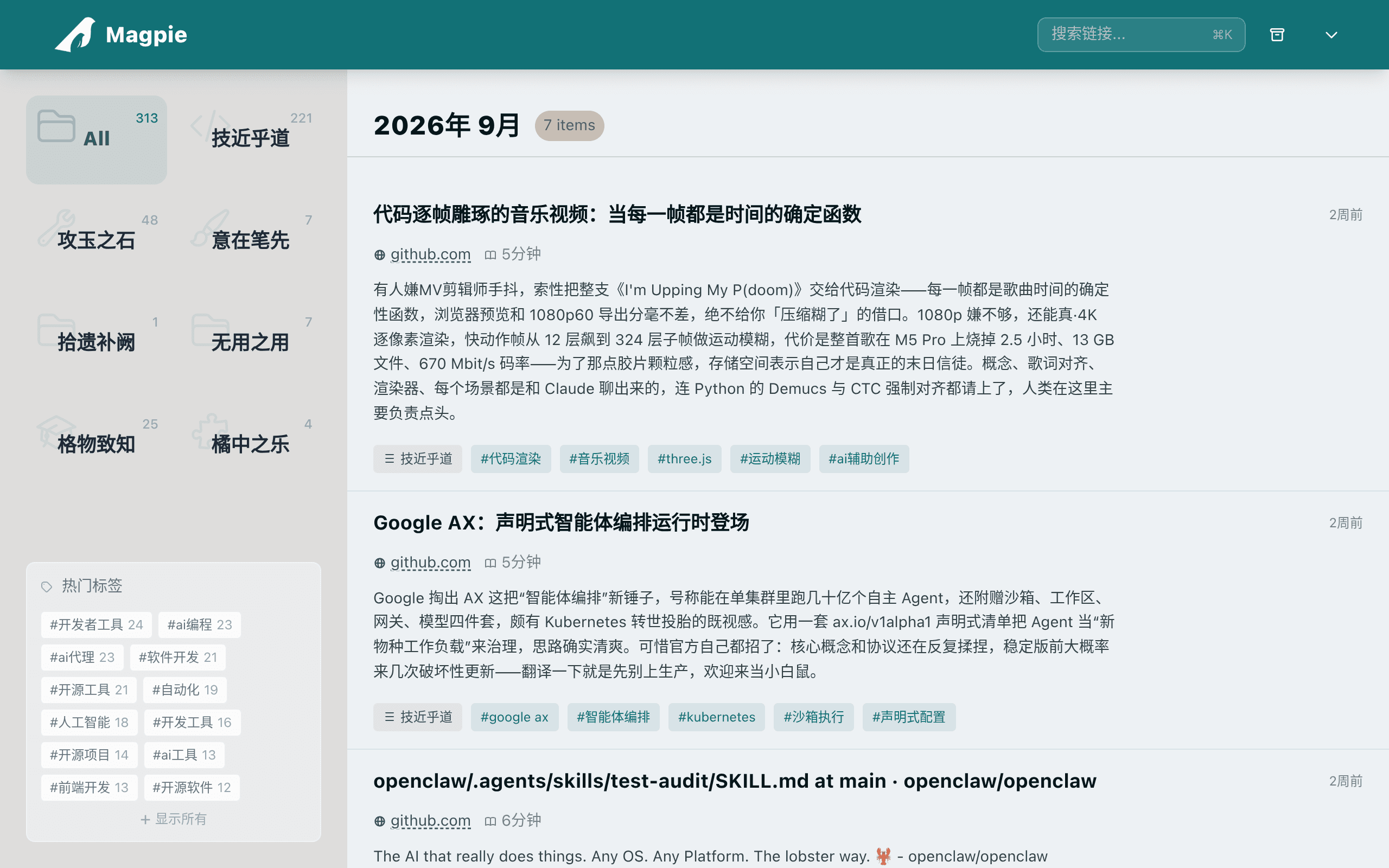
Magpie 是 iOS 开发者 onevcat(Wei Wang)的一个链接收藏与知识管理应用,而它的出身写在 README 的末尾,一句话:「本项目仅为个人业余兴趣的 Vibe Coding 学习项目。」 别被「学习项目」四个字骗了——这个站点的完成度超过很多正式产品:中文时间线按月归档,分类目录(技近乎道、攻玉之石、格物致知、无用之用、拾遗补阙、橘中之乐)配图标与计数,313 条收藏链接,热门标签云,全文搜索(⌘K)。点开一条收藏,有来源、阅读时长、摘要和标签,信息密度拉满。 技术栈是作者明确声明的 React 前端 + Hono.js 后端 API + SQLite,没有过度设计。9 月底还在更新内容,repo 87 stars。这就是独立开发者 vibe 项目该有的样子:小而完整,先让自己每天都用,再谈别的。 curated by the VibeFix editors
上了AI的贼船
Showcase
Online
Educationcodex

上了AI的贼船

onevcat 的 AI 航行日志:0 行手写代码的纯 vibe coding 博客,Codex 从计划包到实施

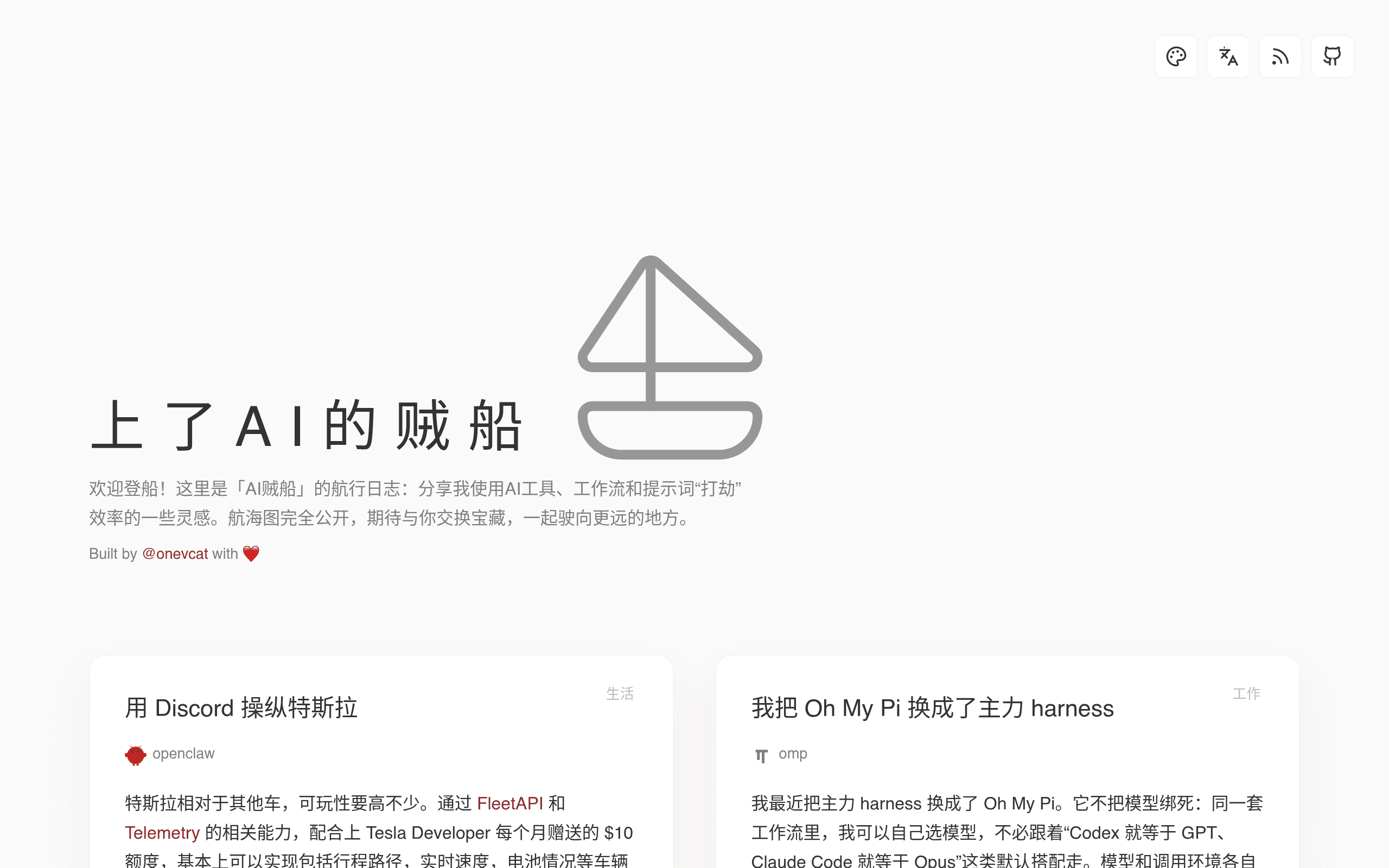
「上了 AI 的贼船」是开发者 onevcat 的中文博客,航行日志式地记录他用 AI 工具、AI 工作流和提示词「打劫」效率的实战:用 Discord 操纵特斯拉、把 Oh My Pi 换成主力 harness、多 agent 辩论、TransCrab、Chroma 性能优化……篇篇都是第一手经验。 最妙的是这个站本身。作者在站内亲口承认:这是一个纯 vibe coding 的产物——他没有写任何一行代码,从计划到实施几乎全包给了 Codex,还直言「Codex 的性价比在当今可以说是顶级」。Eleventy 3 构建,原生 CSS/JS + Tailwind,编译时还会调用 Codex SDK 自动完成翻译。 一个「用 AI 写关于 AI 的博客」的递归样本:内容在讲 AI 工作流,载体本身就是 AI 工作流的产物。repo 50 stars,持续更新。 curated by the VibeFix editors
YAVCHN
Showcase
Online
Tools

YAVCHN

A vibe-coded Hacker News reader with a multi-window workspace — open stories side by side, the whole layout lives in the URL.

YAVCHN — Yet Another Vibe-Coded Hacker News (Reader) — wears its origin story in the title. Author paulmooreparks launched it on Show HN on October 7, 2026, and the name is the whole pitch: this is what a vibe-coded reader looks like. The app reimagines Hacker News as a multi-window workspace. Stories open as reader windows you can drag side by side; each opens in Article, Discussion or Split mode, and the entire arrangement is encoded in the address bar — bookmark the URL and the workspace comes back exactly as you left it. A taskbar along the bottom switches between open windows, keyboard shortcuts cover everything, and Lobsters is supported alongside Hacker News. Sign-in is optional. It is a small, sharp idea executed well: the layout-in-the-URL trick is the kind of detail that makes a reader genuinely better rather than just different. And there is a certain symmetry in a vibe-coded app for reading the site where vibe coding gets debated daily. curated by the VibeFix editors

ChromeSideBar
Showcase
Online
Productivity

ChromeSideBar

The Arc browser's vertical sidebar, vibe-coded for Chrome: Spaces, pinned tabs and one-click Arc import in a side panel.

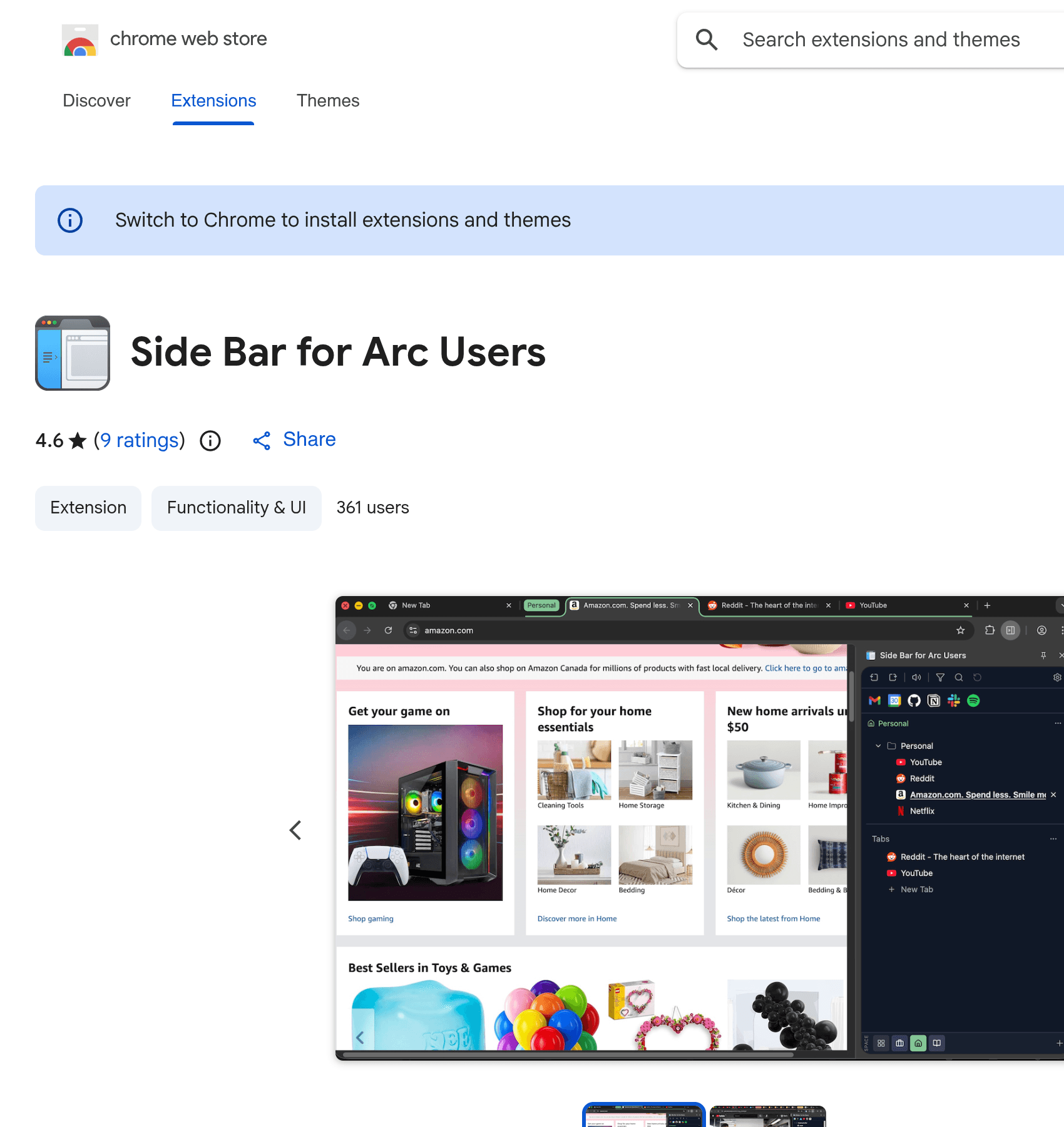
ChromeSideBar is a Chrome extension that brings the Arc browser's vertical sidebar to Chrome. Its author, monehsieh of monemone-org, is refreshingly direct about how it got made: "So I vibe-coded this extension to bring that to Chrome." The extension displays pinned sites, bookmarks and active tabs in a side panel that recreates the Arc sidebar experience — including Spaces for tab grouping, IDE-style tab history, drag-and-drop organization, and one-click import from Arc. It is open source under Apache-2.0, rated 4.6 stars on the Chrome Web Store (v1.0.326, updated July 2026), and the GitHub repo shows steady work with a commit two weeks before this write-up. Browser extensions are a good stress test for AI-written code — they live inside a host's API surface, handle real user data, and ship to a store with review. ChromeSideBar clears all of that and is genuinely useful for the Arc-curious who won't leave Chrome. A clean example of vibe coding shipping production software. curated by the VibeFix editors
City 2026
Showcase
Online
Gamesclaude-opus-5-5gpt-image-2

City 2026

A low-poly SimCity 2000 clone: Opus 5.5 reverse-engineered the original PowerPC code with 27 subagents and validated it over 10,000 game days.

City 2026 is a modern low-poly SimCity 2000 clone that, in the author's words, is "a clone of simcity 2000 I (using Opus 5.5) built over a few days." The build story is one of the wildest in recent Show HN history: it started from a single prompt, then Opus 5.5 deployed 27 subagents to reverse-engineer the original game's PowerPC code function by function — running it through the Unicorn emulator with a harness of faked Mac system calls written in Python — and validated the result over 10,000 simulated game days. The output is a faithful recreation of the 1993 classic's complete game logic, wrapped in a modern low-poly aesthetic with smoke effects, depth of field and ambient sound. The bitmap image assets were generated by GPT Image 2, and the whole thing runs as a TypeScript/WebGL app in the browser — click to start and you're building a city. This is vibe coding as engineering archaeology: not a wrapper around an API, but an AI-led decompilation and reimplementation of a 30-year-old masterpiece, verified by simulation rather than eyeballing. It landed on Show HN on October 6, 2026, and plays end to end. curated by the VibeFix editors

SkinLab
Showcase
Online
Educationclaude-code

SkinLab

A dermatologist's 3D biophysical skin model — 1.2M voxels, cut it, laser it, watch scars heal, built in 5 days with Claude Code.

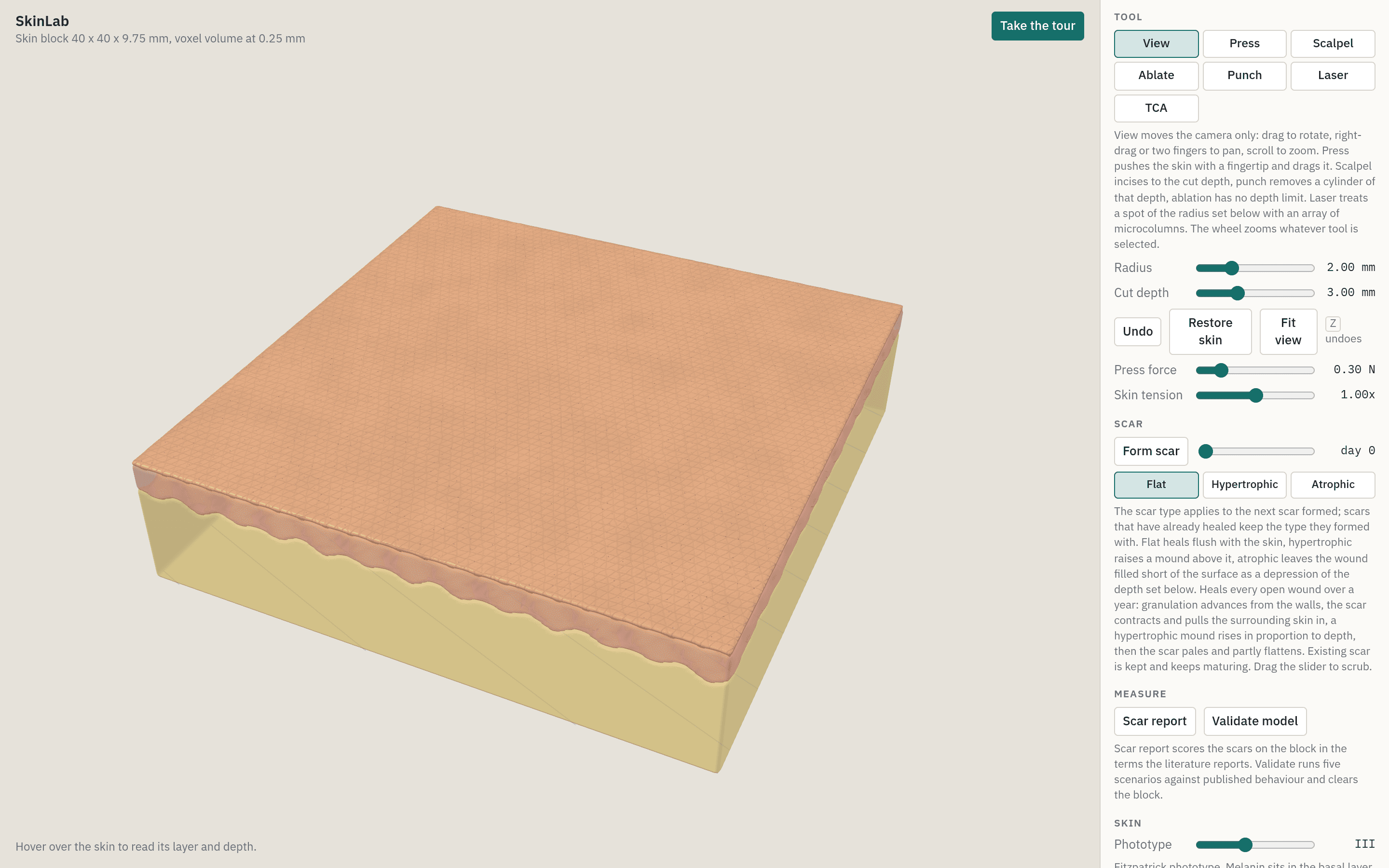
SkinLab is a browser-based biophysical model of human skin built by dermatologist Magnus Lynch. His words on how it happened: "Built with Claude Code over five days." (He has form here — a year earlier he posted a skin-cancer quiz he "vibe coded with Gemini 2.5 Pro.") The model is serious. A 40 × 40 × 9.75 mm skin block rendered from 1.2 million voxels, running entirely in WebGL with three.js and no backend. Every constant comes from published papers. You can press the skin and watch it deform, cut it with a scalpel at a chosen depth, punch a cylindrical wound, ablate without depth limit, fire a laser in an array of microcolumns, then scrub a slider and watch the scar heal over a full year — granulation advancing from the walls, the scar contracting and pulling surrounding skin in, flat, hypertrophic or atrophic scar types behaving differently. The detail that elevates it beyond a toy: a "Validate model" button runs five scenarios against published behavior and clears the block, and a "Scar report" scores your scars in the terms the literature uses. It is a genuine research-grade simulation, built in five days by a doctor who does not write production code, and it runs in any modern browser. curated by the VibeFix editors
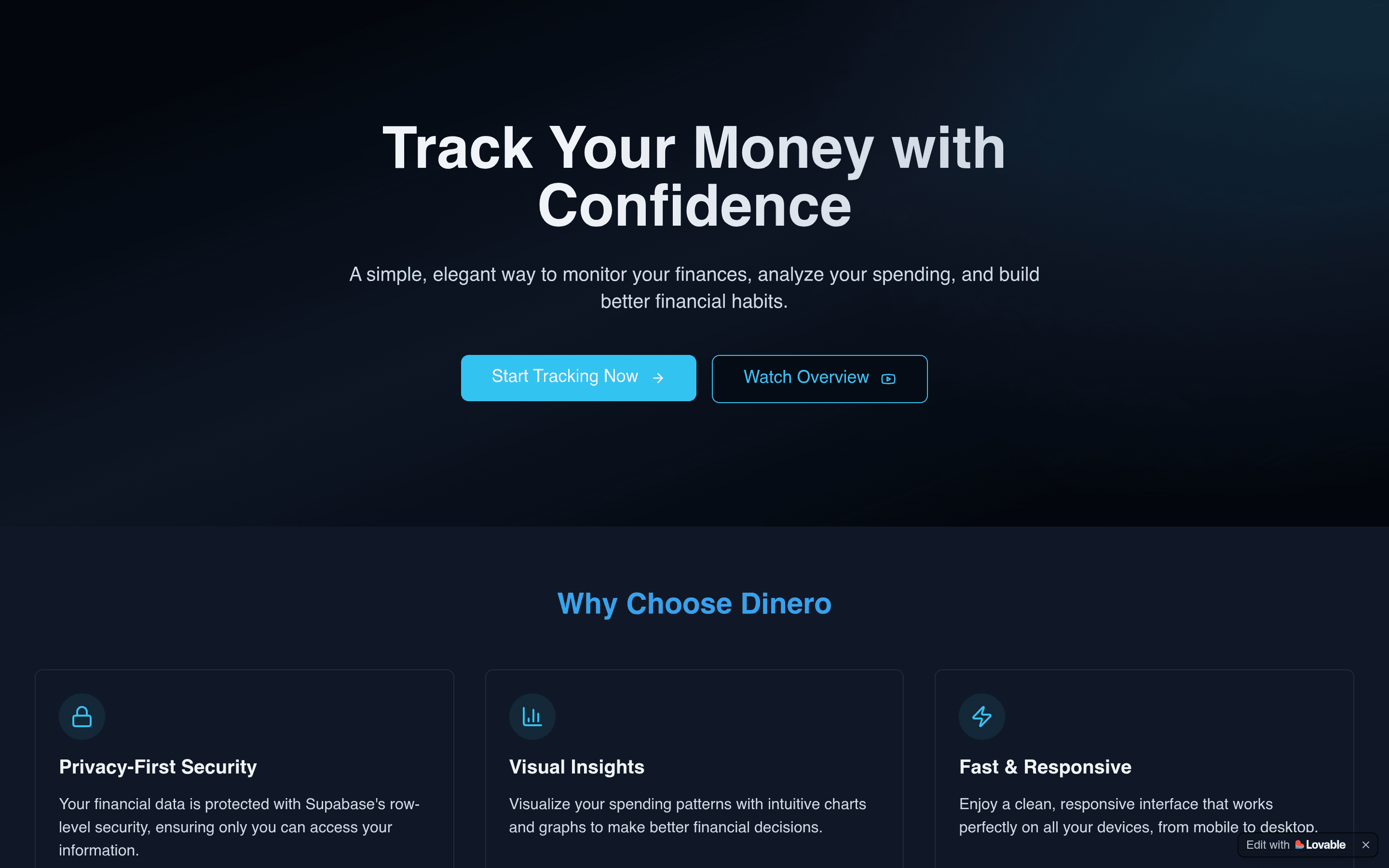
Dinero
Showcase
Online
Businesslovable

Dinero

A minimal, distraction-free finance tracker — vibe-coded in Lovable with just prompting, no hardcore coding.

Dinero is a minimal, distraction-free finance tracker that its maker, Anson Jaison, describes as "vibe-coded a few months back using Lovable (just prompting, no hardcore coding!)". It is the kind of app AI-first building is supposed to produce: one person, no code written by hand, and a finished product with real users. The app keeps the interface deliberately quiet — a dark, calm UI built around categorized transactions, monthly summaries, visual spending insights and smart filters. Under the hood it runs on Supabase with row-level security, so your financial data stays yours. The landing page walks through how it works in four steps, and the demo site is fully usable: sign up and start tracking right away. What makes Dinero interesting as a vibe-coded project is the fit between tool and outcome. Lovable is famous for flashy landing pages that die at the demo; Dinero is the opposite — a narrow, well-scoped utility where the AI did the bulk of the work and the human did the product thinking. The result feels considered rather than generated. curated by the VibeFix editors