AI project showcase / idea exchange / co-creation

Built ideas,made to be seen.

Share your AI projects, browse fresh ideas, and talk through the parts that are almost there. Working demos deserve an audience, and blockers do not have to stay private.

Share work
Showcase
Find sparks
Ideas
Keep talking
Co-create

Project square

Scan active directions first, then refine by category or momentum.
Kingshot Optimizer
Showcase
Online
Gamescodex

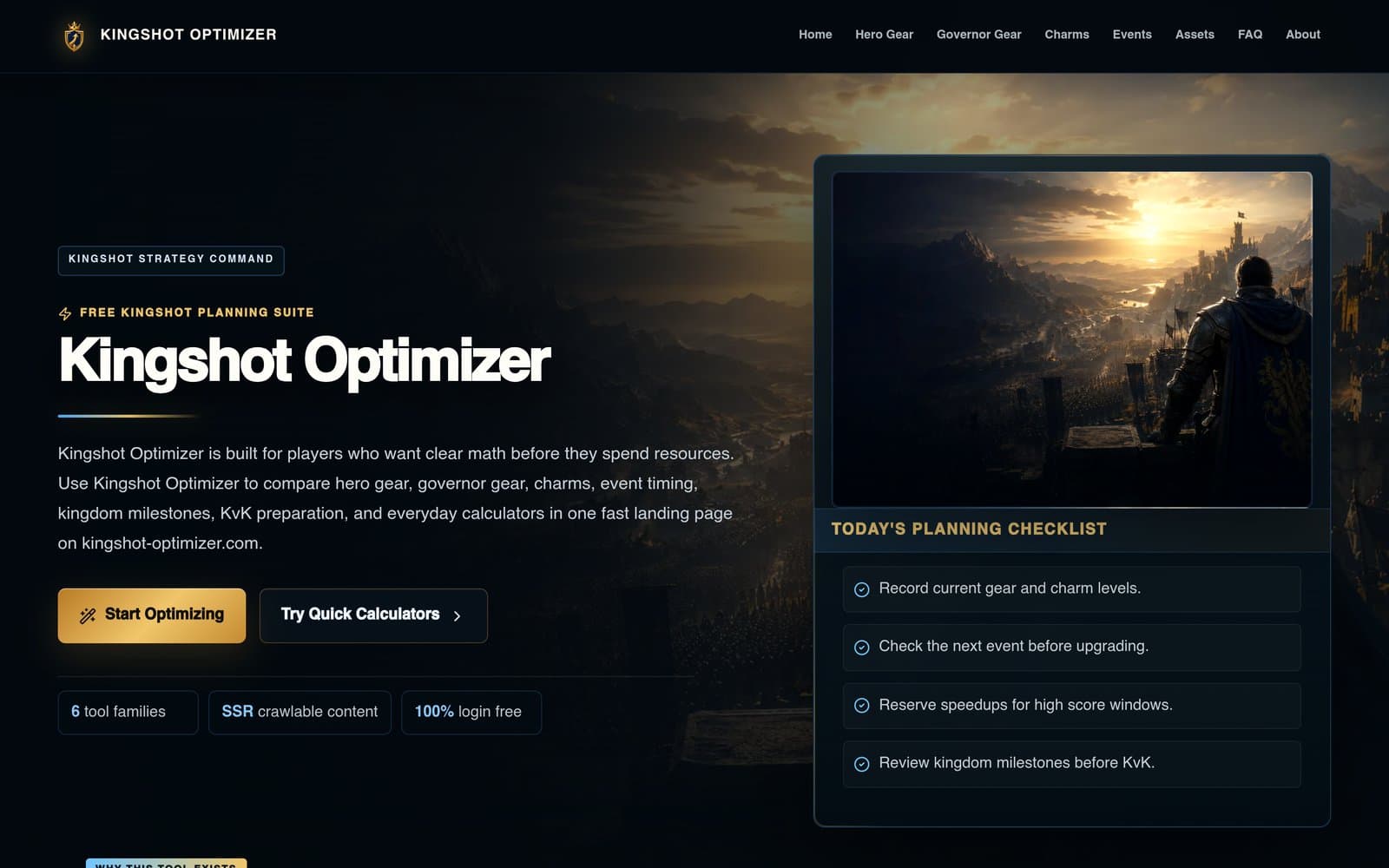
Kingshot Optimizer

中文开发者用 Codex Pro 半天做出的 Kingshot 手游策略规划站:装备计算器、活动时间规划与完整 KvK 指南库。

Kingshot Optimizer 是面向 Kingshot 玩家的免费策略规划站,为作者 JsonChao 在 V2EX 首发,作者原话:「用 codex pro 半天时间做了 1 个游戏工具网站」。站点提供英雄装备 / 领主装备 / 护符升级计算器,Strongest Governor、Kingdom of Power、KvK 等活动时间规划,王国发展时间线,以及完整的新手 / 转服 / KvK 指南库,全站无需登录。 全站 SSR 渲染(Next.js),内容成体系(6 大工具家族 + 计算器 + 指南库),当前可访问且渲染正常。 诚实注记:独立粉丝项目,FAQ 明确声明非官方;原帖约 73 天前发布,但网站内容完整、持续可访问,符合发布标准。

Finder Actions
Showcase
Online
Developer Toolscodex

Finder Actions

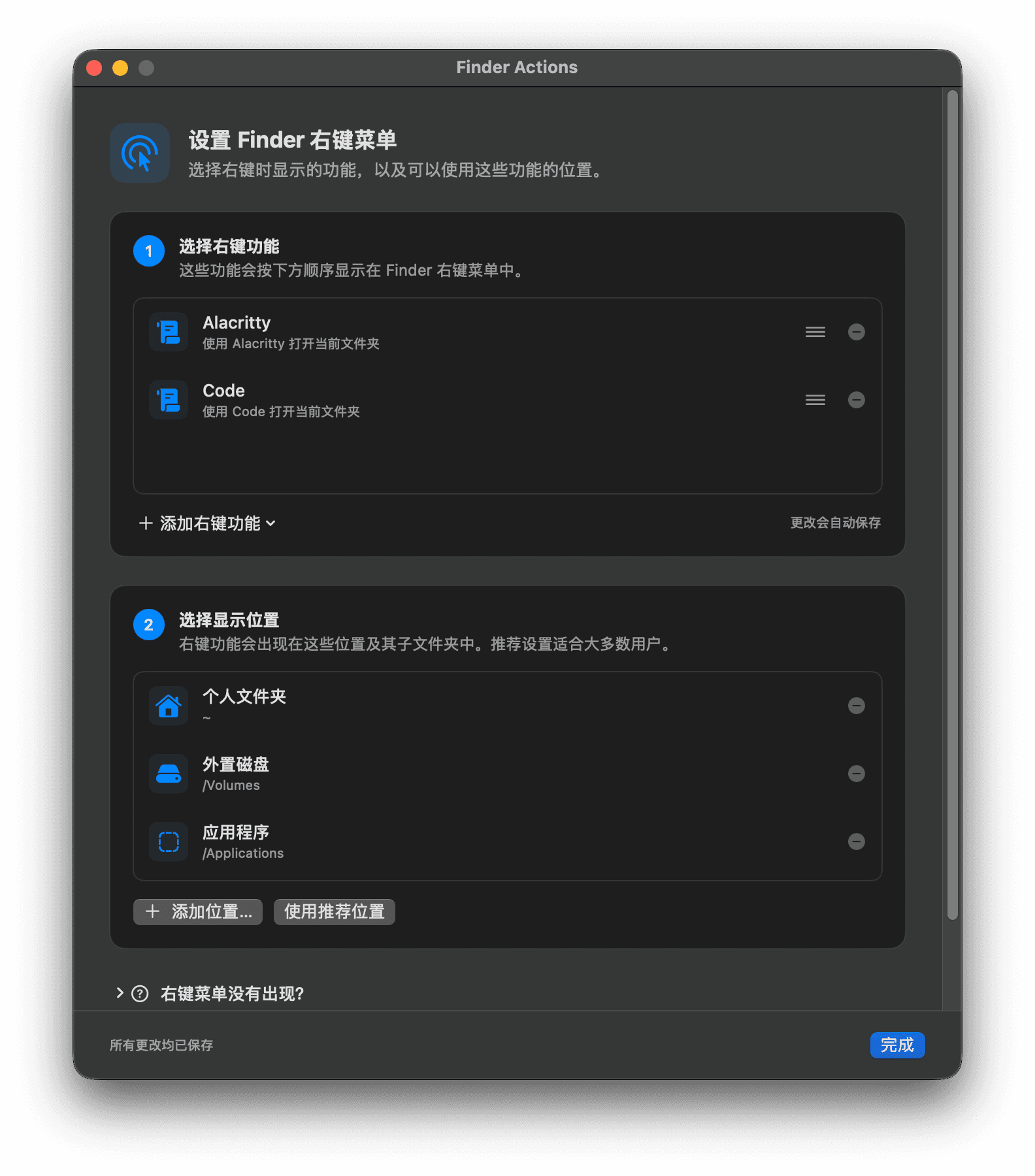
macOS Finder 原生右键扩展:右键一键在 Alacritty / VS Code 打开目录,支持自定义脚本,运维纯口述让 Codex 半天搓出。

Finder Actions 是一款 macOS Finder 原生右键扩展。在任意文件/文件夹上右键,即可一键在 Alacritty 或 VS Code 中打开当前目录;还支持自定义 shell 脚本动作(路径以 $1 传入)、拖动排序、生效目录控制、中英文切换。 作者 qvgz 本人是运维,不懂 Swift。他的原话:「试一试让 Codex 写,纯口述需求没看一行代码,半天做得有模有样。」项目用 Swift + SwiftUI 实现(作者 GitHub topics 标注 swift/swiftui/developer-tools),MIT 开源,Release 页可直接下载安装。 诚实注记:安装需 Ad-hoc 签名去隔离并在系统设置中启用 Finder 扩展,README 有完整说明;3 stars 的新工具,仍在持续迭代。

smart-warehouse 智慧仓储数字孪生平台
Showcase
Online
Business

smart-warehouse 智慧仓储数字孪生平台

AI Vibe Coding 全流程驱动的 3D 智慧仓储数字孪生:AGV 搬运、自动化立库、冷链监控、赛博夜景与白昼展厅双主题。

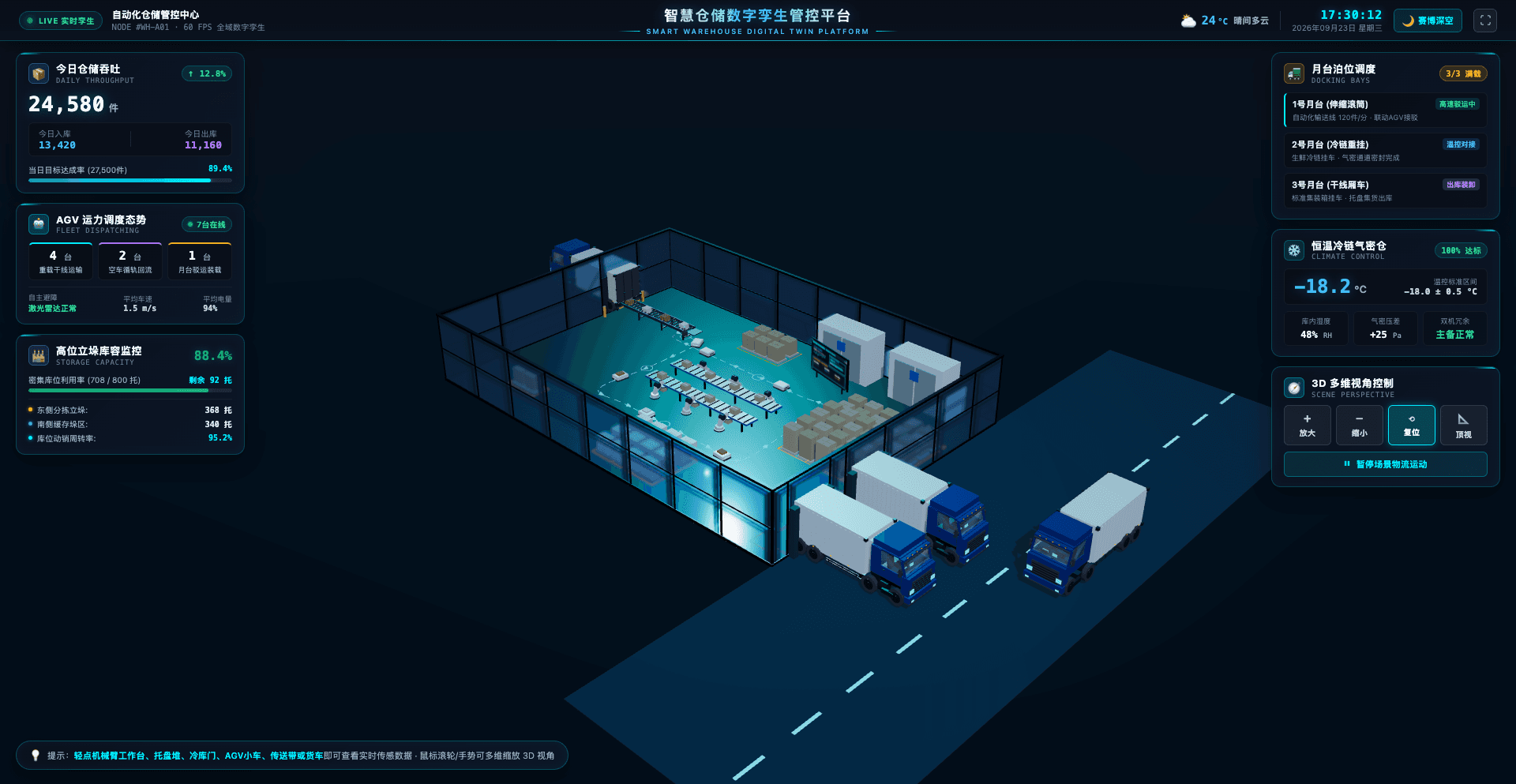
smart-warehouse 是作者 Xxcool 用 AI Vibe Coding 全流程驱动开发的 3D 智慧仓储数字孪生管控平台:作者原话「AI 联动 Blender MCP 自动建模 + Vue 3 + Three.js」。平台用 Three.js 构建了一个工业级仓储 3D 沙盘:AGV 闭环物料搬运、自动化立库、冷链恒温监控、月台货车装卸四大场景全部在线运行;赛博夜景与白昼展厅双主题一键切换;左侧看板实时监控今日仓储吞吐(24,580 件)、AGV 运力调度、高位货架库容利用率(88.4%),点击机械臂/托盘/冷库门/AGV 小车等 3D 元素可查看实时传感器数据。 技术栈为 Vue 3.5 + Vite 5.4 + TypeScript 5.6 + Three.js r169,GitHub 开源。 诚实注记:AI 编码模型作者未具名(aiTools 留空);仓库 2026-10-08 仍有提交,demo 在线可直接体验。

Neuro Symbolic Game Level Designer
Showcase
Online
Developer Toolsibm-bob-20claude-code

Neuro Symbolic Game Level Designer

Describe a level in one sentence: agents plan, algorithms build, validators check — a playable Flame level in about a minute.

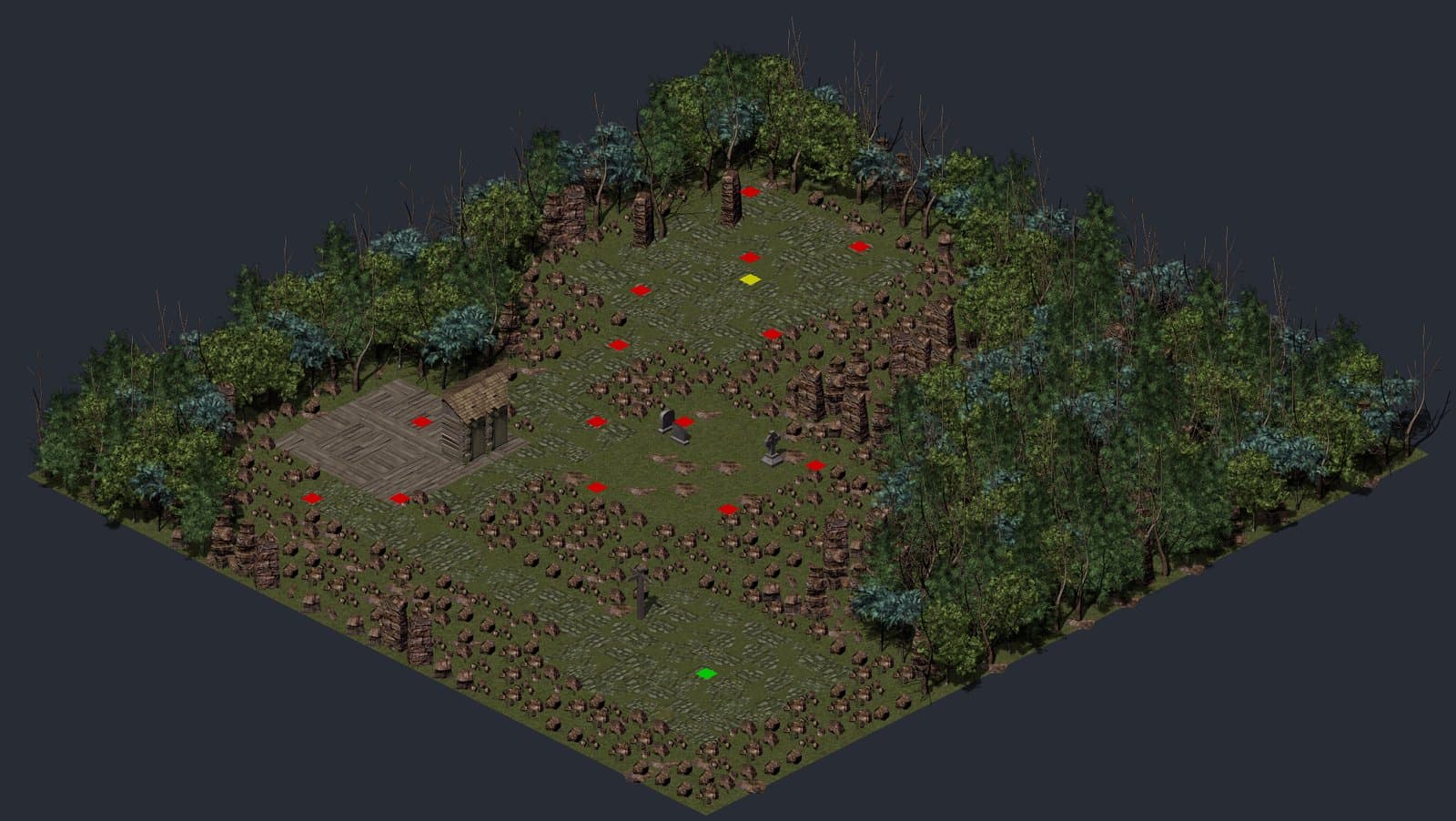
Neuro Symbolic Game Level Designer is a hybrid AI level-design tool built for an IBM Bob 2.0 hackathon. You describe a level in one sentence; a pipeline of agents plans it while classical algorithms build and verify it. The output is a complete, playable 2D isometric Flame game level — a Tiled map plus a typed Dart loader — with a six-check validation report covering spawn reachability, item placement and pathfinding. The author, raf-xtgt, describes the build on dev.to: "One orchestrator session wrote the architecture and a precise prompt for each task. A coding agent implemented each task, and I reviewed it with tests and browser checks. IBM Bob built the first five tasks… After my Bob credits ran out, I continued with Claude Code using the same workflow." Stack: Flutter web / Flame 1.38 frontend, Python + FastAPI + LangGraph backend, Gemini agents on Vertex AI, backend on Cloud Run. Honest note: it's a research-style hackathon project — the levels look charming, but game feel is still generator-grade.

Editmamei
Showcase
Online
Design & Creativeclaude

Editmamei

An MCP server that lets Claude drive your local Photoshop with plain-language instructions — real layered edits, not generation.

Editmamei is a pure MCP stdio server, written in Node, that lets an AI assistant drive the Photoshop on your own desktop with plain-language instructions. The assistant plans each edit from a single sentence; Photoshop executes it layer by layer with native adjustment layers, masks and filters — so what comes back is a real layered file you can keep editing by hand, not a flattened AI-generated image. The author describes it on the vibingtalk "Show us what you've created with Claude!" thread: "lets Claude use desktop Photoshop to edit, cut editing time massively. just edited 150 vacation pics in hours vs months before." A Go snippet engine generates the ExtendScript Photoshop actually runs; GIMP 3.2 support is in beta. Honest note: you need a local Photoshop installation, and grading quality ultimately depends on the model driving it.

Free Kids Typing Games
Showcase
Online
Gameschatgpt

Free Kids Typing Games

22 free, ad-free typing mini-games for kids — graphics, sounds and even the CI pipelines were all vibe coded.

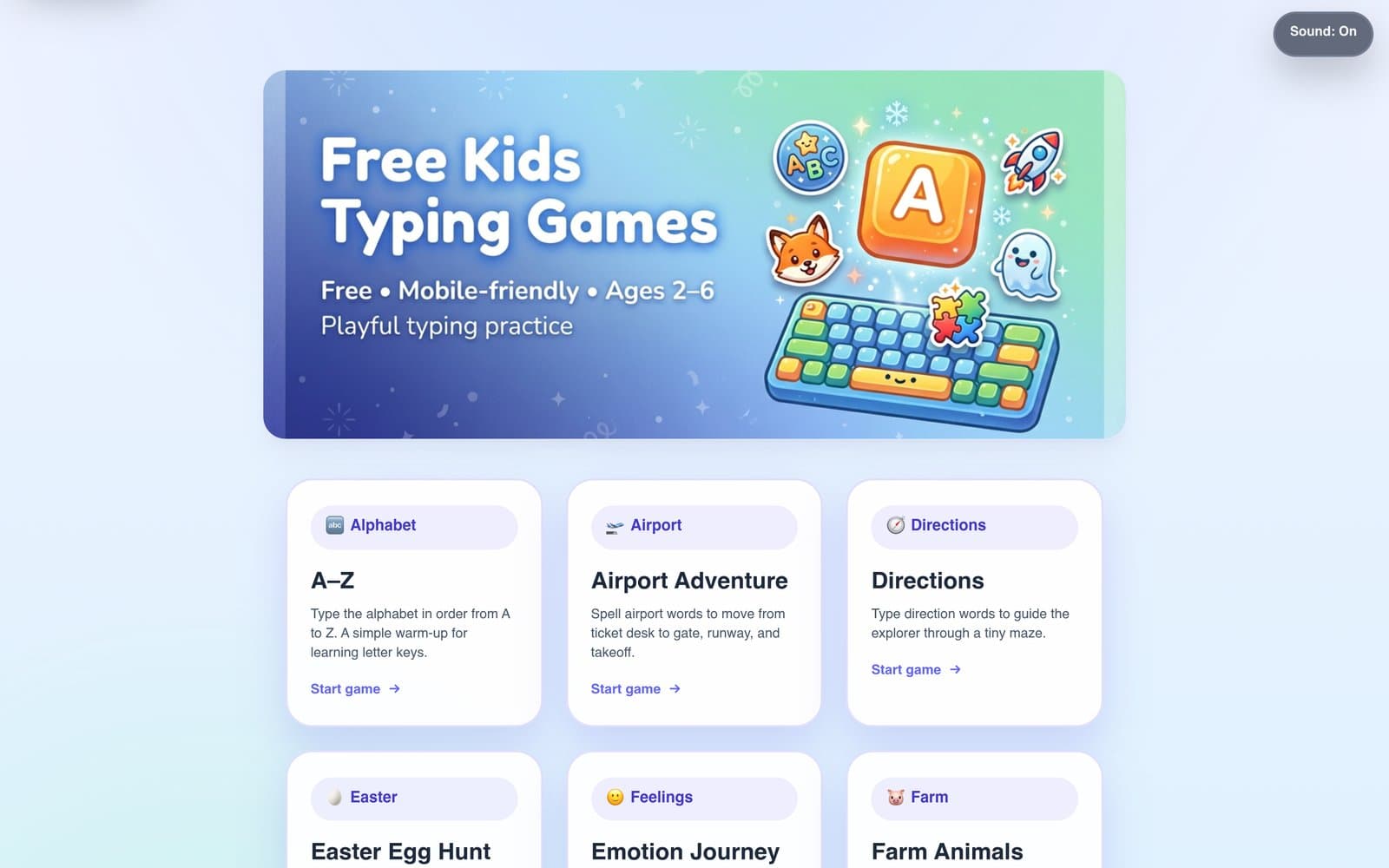
Free Kids Typing Games is a collection of 22 free, ad-free typing mini-games for kids aged 2–6, playable on phones and tablets. Titles include Airport Adventure, Phoneme Sound Lab and Rocket Run: each wraps a small typing skill — alphabet order, sight words, phoneme chunks — in a playful scene with sound and animation. The most striking part is how it was made. The author, Alan01252, writes on Show HN: "Everything here was 'vibe coded' to an extent, the graphics, sounds, art-work, even the github pipelines (and I used chatgpt to instruct me how to configure everything in AWS)." The site is a Hugo static build with Tailwind/PostCSS styling, deployed to S3/CloudFront via GitHub Actions. Honest note: the games are intentionally bite-sized for very young kids — not a full curriculum, but exactly what free playful typing practice should be.

Memory Lane
Showcase
Online
Lifestyleclaude-codecodex

Memory Lane

A vibe-coded family memory lane: a hallway of doors, each opening onto a hand-drawn animated day — dawn, noon, sunset, night — looping forever.

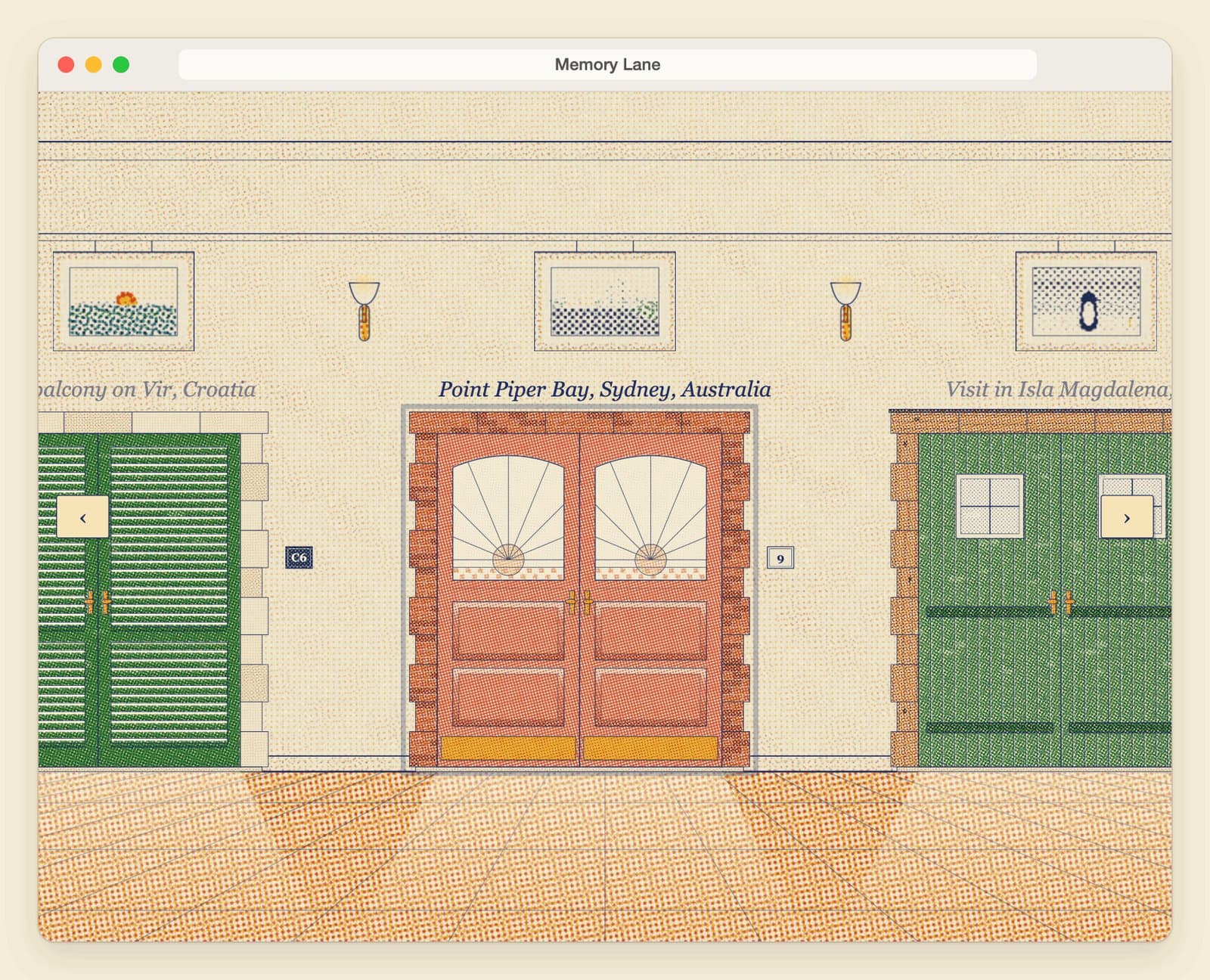
"It is vibe coded, by someone with limited programming experience, for our family." That single README sentence is the whole pitch of Memory Lane (androszr/memory-lane, MIT, created September 24, 1 star): one small web page where a hallway of doors each opens onto a place the family loved. Every room is drawn in code like an old print — warm paper, soft dotted color — with its own clock running dawn to night on a slow loop, boats crossing the water, people coming and going, lamps on at dusk. The technical restraint is the charm: no build step, no libraries, no fonts, no images fetched, no network requests beyond its own files — Canvas 2D and a static page. The repo even ships assistant skills (.claude, .codex, .grok) including an add-memory walkthrough that turns your own photos into a new door. It works on phones (swipe the hallway, tap a door) and remembers nothing between visits. Verdict: the gentlest possible argument for vibe coding — a non-programmer built the thing their family actually opens. The published Vercel deploy is access-protected, so start from the GitHub repo and its README screenshots; serving it locally is one npm run serve away.
Run Card Generator
Showcase
Online
Health & Fitnessclaude

Run Card Generator

A free iOS app that reads your Apple Health workouts and turns them into AI-art run cards — 98% AI-generated code, built over two Saturdays.

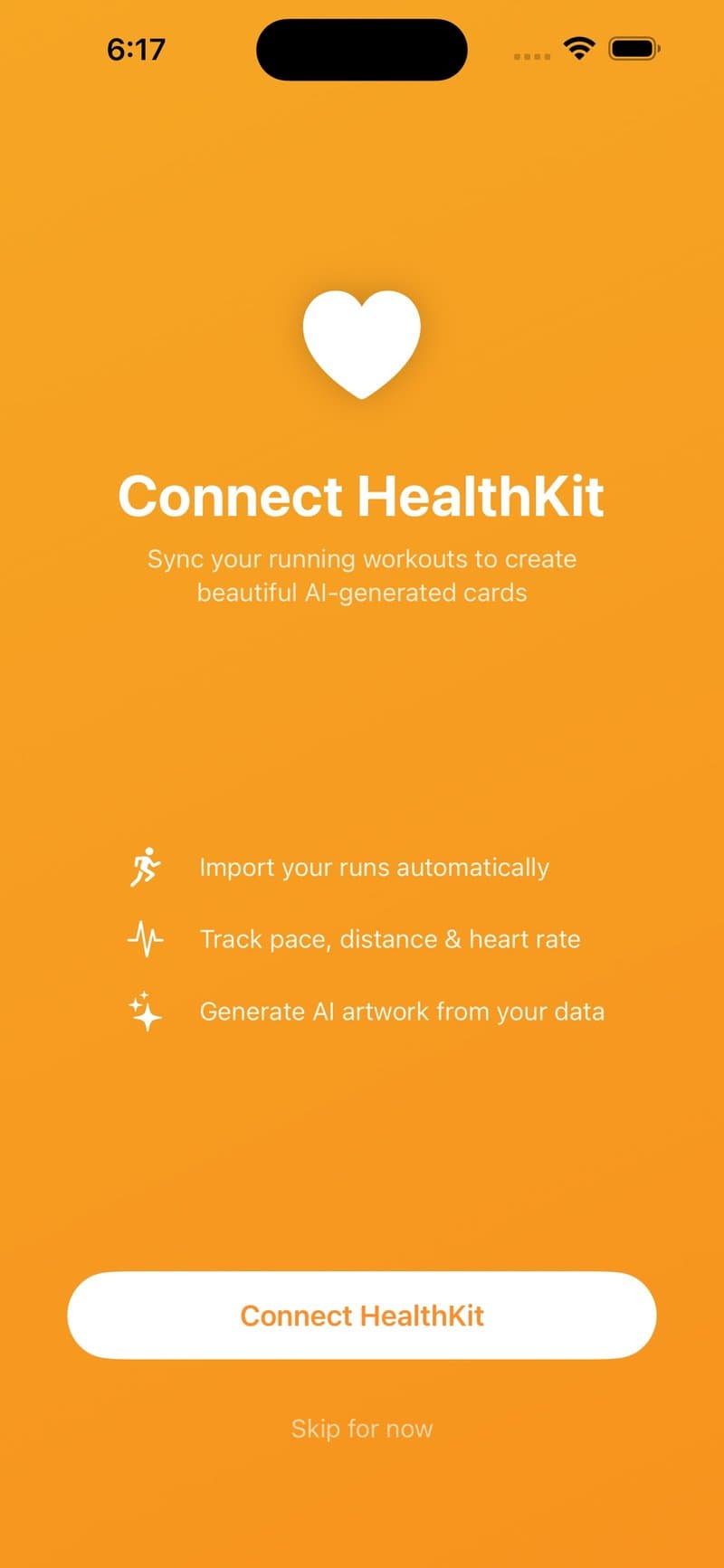
Minjie Zou's own words: "I spent two Saturdays building an iOS app with 98% AI-generated code." The result, Run Card Generator, is live on the App Store (free, version 1.0.0) and does one thing well: it reads your running workouts from Apple HealthKit and renders them as beautiful, AI-generated artwork cards you can share. A companion open-source skill (mz462/run-skill, MIT, 1 star) documents the card-generation workflow. The App Store screenshots show a polished product: a HealthKit connect screen, runner profile settings, sync controls for the last 30 days or full history, and a card-display panel where you toggle exactly which stats appear on your cards and in AI prompts — distance, duration, pace, heart rate, calories, elevation, location, date, VO2 max — with card sizes tuned for Instagram feed (portrait 4:5). Your data stays on your device; the app only asks for HealthKit read access. Verdict: a textbook two-weekend AI build — narrow scope, real utility for runners, native iOS polish. If you've ever wanted your Strava-less runs to look shareable, this is the shortcut.

NutriSnap
Showcase
Online
Health & Fitnessgemini-25-flash

NutriSnap

A privacy-first, backend-free nutrition PWA: snap a meal photo, Gemini 2.5 Flash returns calories and macros in seconds — bring your own API key.

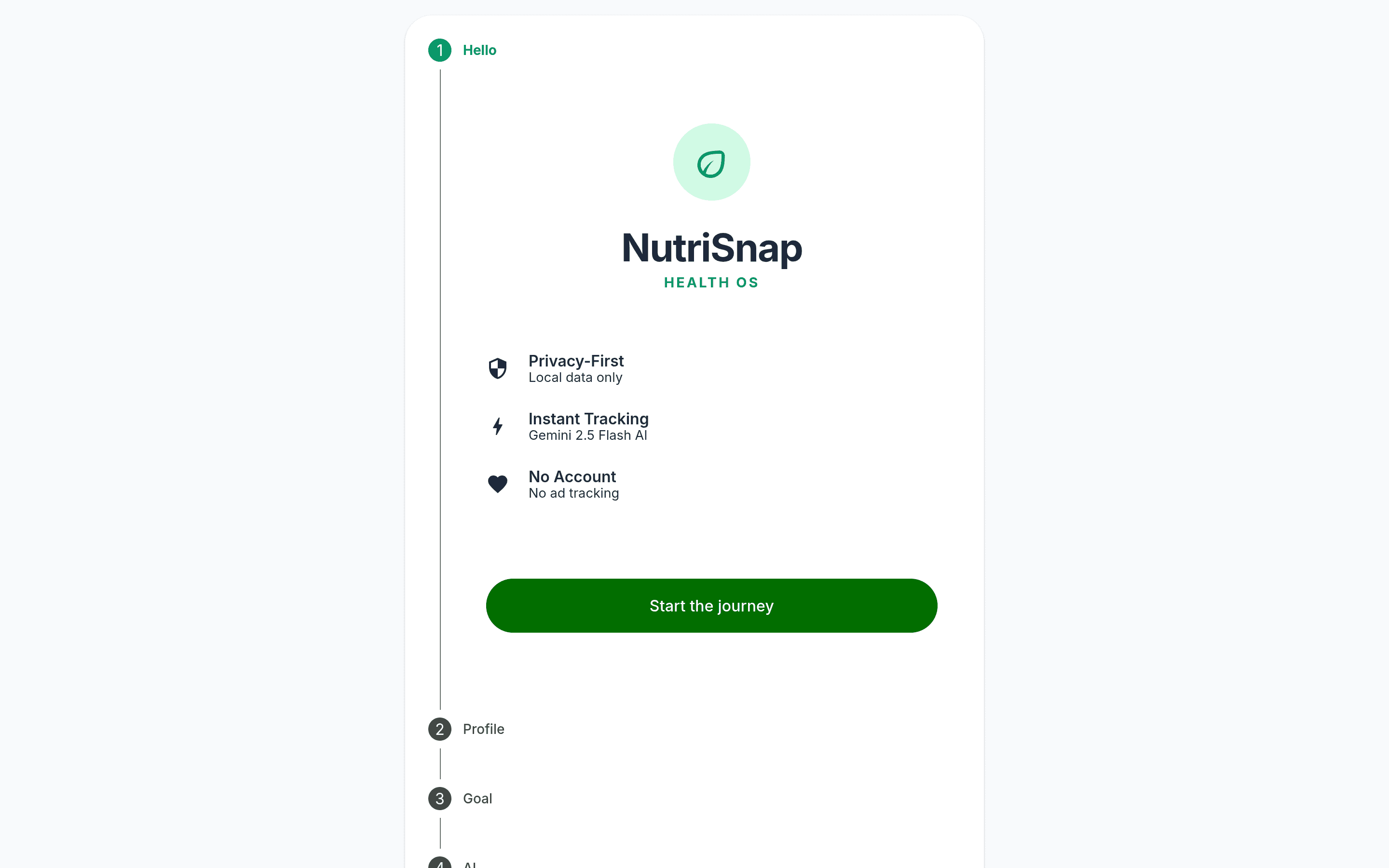
Dorian Naaji's own headline says it best: "I vibe-coded a Nutrition Tracker That Has No Business Model, and That's the Point." NutriSnap is a free, open-source (MIT) nutrition tracker with no backend, no account and no subscription. The PWA at nutrisnap.dorian-naaji.fr is live, and the GitHub repo (DorianNaaji/nutrisnap, last pushed August 15) is tagged angular, dexie, gemini-ai and byok. The flow is: photo of a meal → Gemini 2.5 Flash → calories and macros in seconds. The honest privacy model is the interesting part: there is no NutriSnap server sitting between you and Google — you paste your own free Gemini API key once (BYOK), and the relationship is direct: your browser, your key, Google. Everything else (BMR/TDEE from your metabolic profile, a daily AI coach recap, 7- and 30-day trend analysis, a color-coded monthly calendar) is computed locally and stored in Dexie.js/IndexedDB. It installs on iOS and Android and works offline. Verdict: the rare health app whose business model is architecturally impossible — Naaji made that a feature, not a bug. If you distrust nutrition apps with opaque privacy policies, the stack (Angular standalone, Dexie.js, Gemini 2.5 Flash, static SPA) is simple enough to audit in an afternoon.

Shakespeare
Showcase
Online
Lifestyleclaude-code

Shakespeare

A macOS menu-bar app that counts your keystrokes and names your milestones after Shakespeare's plays — built with Claude Code out of pure curiosity.

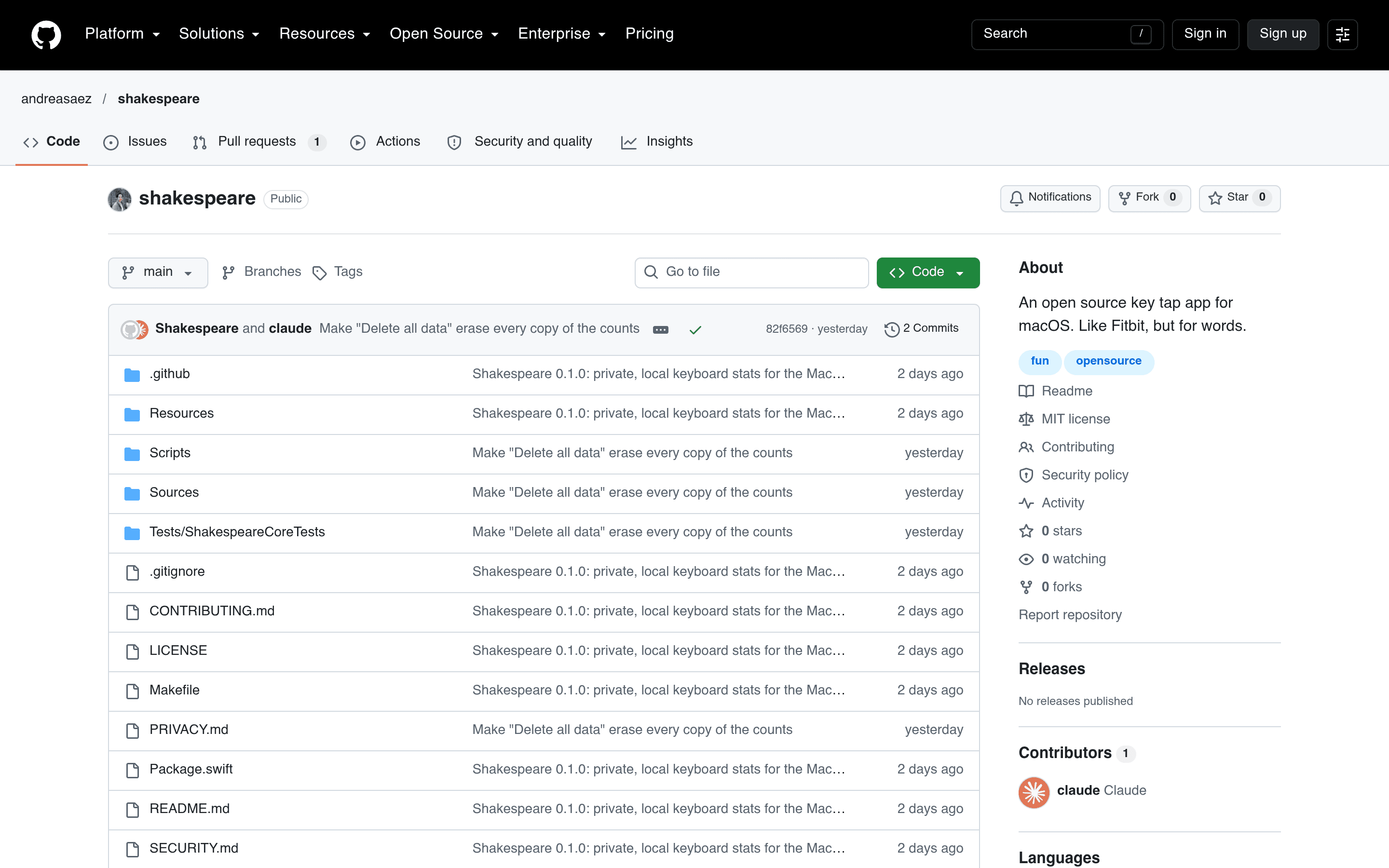
Andrea Saez built Shakespeare, an open-source key-tap counter for macOS, and her own summary of the motivation is hard to beat: "I built it with Claude Code for no reason beyond curiosity." The repo (andreasaez/shakespeare, MIT) was created on October 9 and pushed again on October 10 — the commit history even lists "Shakespeare and claude" as co-authors, a nice artifact of the workflow. It is written in Swift and builds with the Xcode command line tools, no full Xcode needed. What it does: it lives in your menu bar and counts key presses — never what you type, never touching the network. You get today plus the last 14 days, a streak counter for days with 50+ keys, honest sustained WPM over a full minute, fun facts like your busiest hour and how many Hamlets you've typed, and optional per-app stats that are off by default. The signature feature is share cards: nine keyboard colorways (Quarto, Elsinore, Falstaff, Juliet…) drawn as a real 75% board with soft bloom, rendered locally on your Mac for posting wherever you like. Verdict: a deliberately useless app executed with unusual craft — the privacy story (input monitoring permission, per-day counters in owner-only files, CI-enforced privacy audit) is more serious than the premise suggests. A good reference for anyone building a menu-bar utility with SwiftUI and Claude Code.

中国昼夜地图
Showcase
Online
Lifestylecodex

中国昼夜地图

Codex 一个周末写出的中国昼夜可视化:3D 昼夜交界线、二十四节气、两天对比,纯前端本地计算。

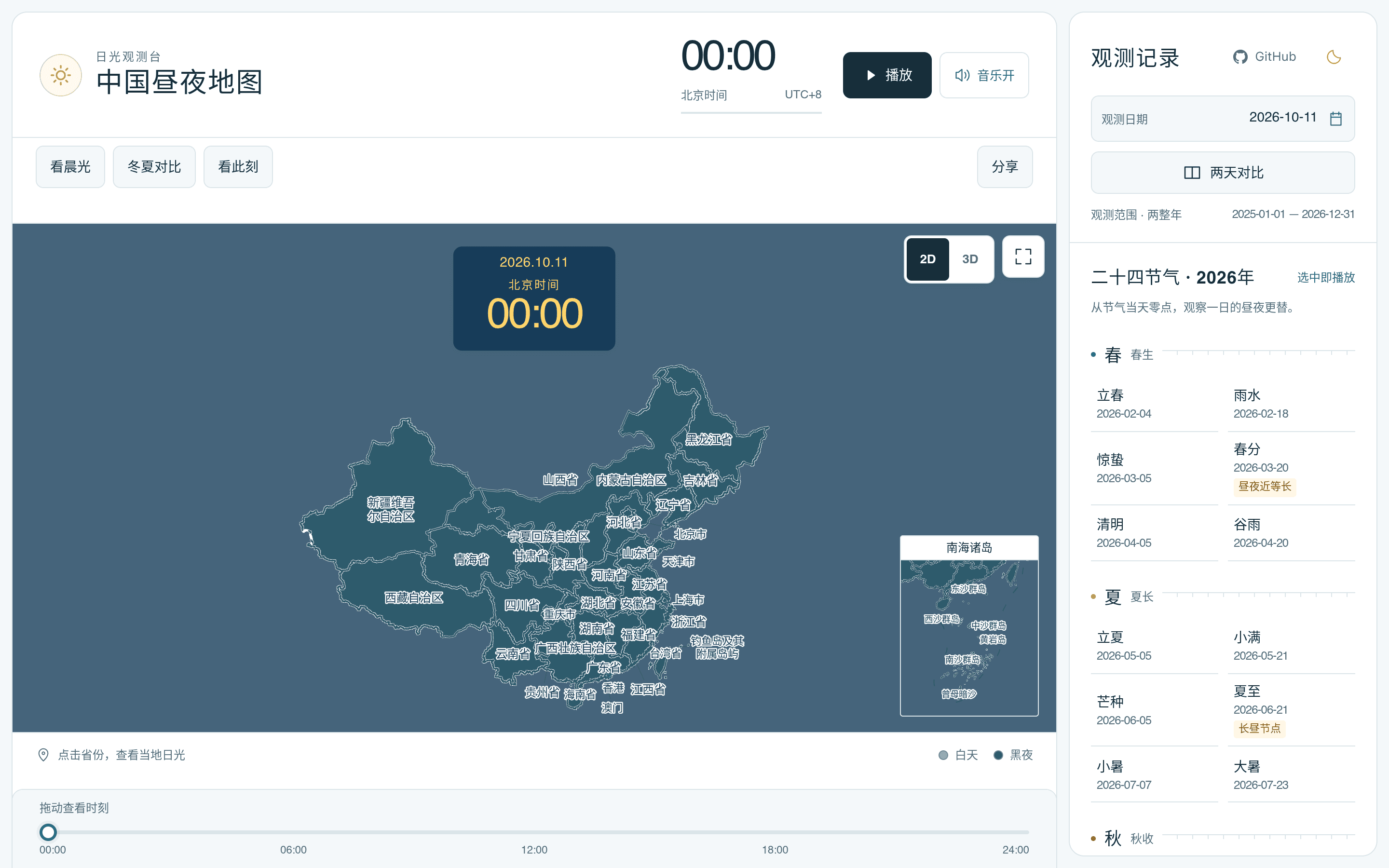
V2EX 用户 bigbigeggs 在 10 月 11 日发帖展示了这个周末项目,原话是“周末一天 codex 就搞定了”:一个纯前端的中国昼夜地图,把太阳每天在神州大地上的行踪做成了可交互的可视化。开源仓库 wenbochang888/china-daylight-atlas(MIT 协议)10 月 3 日创建、10 月 11 日当天仍在推送更新,已收获 13 颗 star,仓库 topics 明确声明技术栈为 TypeScript + Vue 3 + MapLibre GL,全部天文计算都在浏览器本地完成,不依赖任何后端服务。 核心看点有三。其一,2D/3D 可切换的昼夜交界线:2D 模式是带省份边界的中国地图,明暗分界线随时间扫过版图;切到 3D 地球模式,昼夜分界线横贯整个星球的画面相当震撼,夏至日凌晨 4 点的晨昏线尤其漂亮。其二,完整的二十四节气面板:从立春到大寒逐个列出 2026 年的准确日期,选中任意节气即从当天零点播放一整天的昼夜更替,还支持“两天对比”直观感受昼夜长短的季节变化。其三,点击任意省份查看当地日光信息,底部时间轴可拖动查看任意时刻,右上角还有“看晨光”“冬夏对比”“看此刻”三个快捷入口,右下角南海诸岛小窗也没有缺席。 细节上作者也没偷懒:播放按钮支持自动演示昼夜流转,还有背景音乐开关和一键分享,侧边栏直接链回 GitHub 仓库。实测 demo(部署在作者个人站点)可正常访问,地图渲染流畅,2D/3D 切换、节气播放、时间拖动全部可用。评价:这是典型的“周末 vibe coding”作品——选题讨巧(天文+节气+地图三重浪漫叠加)、实现完整、UI 完成度明显超过“一日游”水准,13 颗 star 的开局对得起它的完成度。想给自己的 side project 找灵感的人,可以直接读它的源码学 MapLibre 的昼夜渲染思路;单纯想看个漂亮东西的人,打开 3D 模式拖一下时间轴就值回票价。

ScholarAB
Showcase
Online
Educationclaude-code

ScholarAB

1,691 scholarships for Alberta high schoolers in one searchable list — built solo by a high school senior with Claude Code.

ScholarAB tracks 1,691 scholarships and programs for Alberta high school students: search by keyword, browse the full list, and build a personal "combo" of scholarships to apply for. It was built solo by a high school senior who writes: "free scholarship list for Alberta high schoolers. i'm a senior built it alone using claude code."

Haunt
Showcase
Online
Travel & Localclaude

Haunt

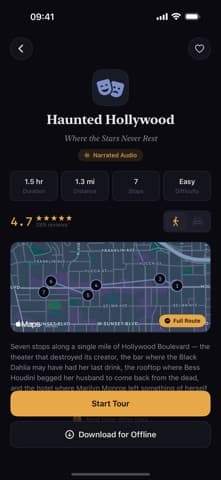
Self-guided ghost-tour iPhone app: narrated haunted walks across 12 US cities with offline maps — built with Claude's help.

Haunt is an iPhone app for self-guided ghost tours: pick a city and follow narrated audio tours of its most haunted spots — "Where the Stars Never Rest" in Hollywood, haunted walks in Salem, Boston, Chicago and 9 other US cities — with an on-route map and offline downloads. The author announced it with: "Built Haunt with Claude's help, it's an iPhone app for self-guided ghost tours." The app is live on the App Store ("Haunt: Ghost Tours", v1.2.1 updated 2 days ago) covering 12 cities.

Tiki Taka
Showcase
Online
Entertainmentclaude-code

Tiki Taka

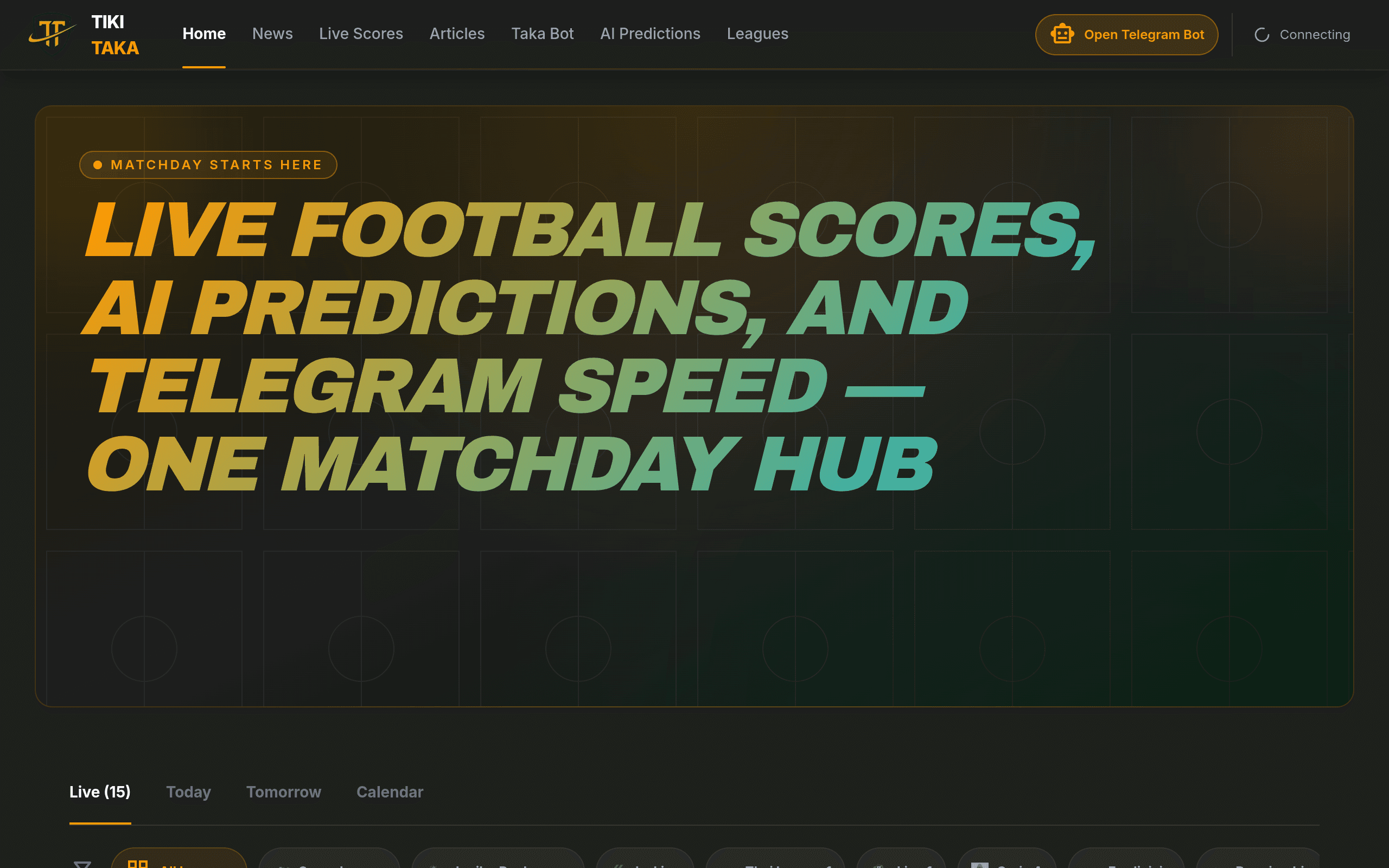
AI football matchday hub: live scores from 20+ leagues, AI predictions and a Telegram bot — vibe-coded with Claude Code in 6 weeks.

Tiki Taka is an AI football matchday hub: live scores across 20+ leagues, AI predictions, football news and articles, and a Telegram bot that has handled thousands of conversations — plus a prediction game with a regular player base. The author writes on Medium: "So I built one that does. It's called Tiki Taka. I built the whole thing by vibe coding with Claude Code. Took 6 weeks." The declared stack: Next.js 16, Supabase, a Python Telegram bot, API-Football data and BytePlus ARK. Live matches were in progress at the time of verification.

KissFocus
Showcase
Online
Productivitycursor

KissFocus

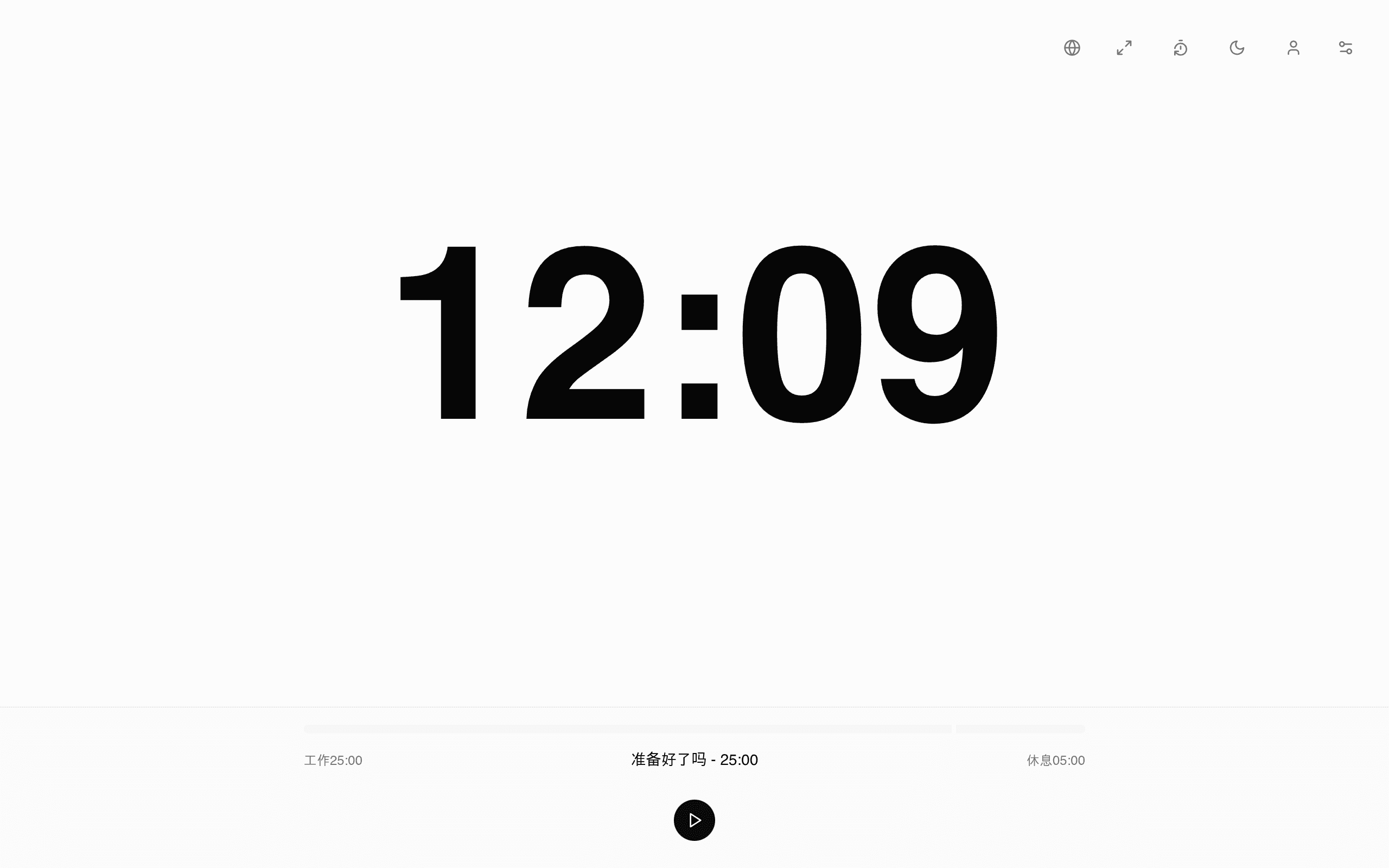
极简在线番茄钟:大字计时器、工作 25 分钟 / 休息 5 分钟,Cursor 半天纯 AI 写完并一键部署到 Cloudflare。

KissFocus 是一个极简在线番茄钟:打开即用的大字计时器,工作 25 分钟 / 休息 5 分钟,附带播放控制、历史记录与深色模式,部署在 Cloudflare 上,手机和电脑都能直接用。 作者在 V2EX 原帖(t/1144660)写道:"用 Cursor 半天时间做了一个在线番茄钟……纯 AI 撸完代码,一把梭让 Cursor 部署到 Cloudflare"。技术栈也是作者原话:Next.js + Tailwind CSS + shadcn/ui + Cloudflare。站点至今持续在线,计时器实测运行正常。

PAPERS
Showcase
Online
Educationclaude-code

PAPERS

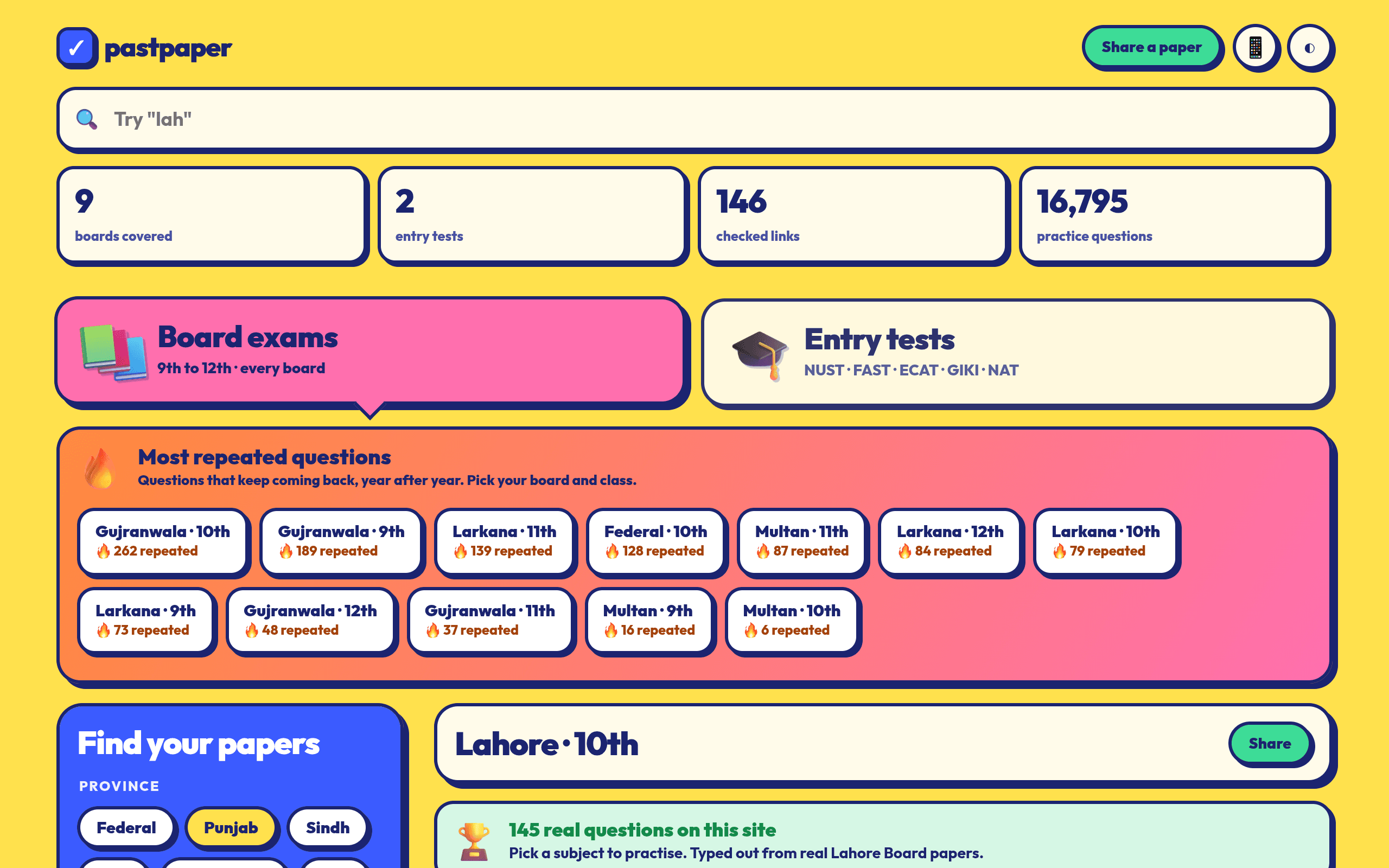
Free past-paper library for Pakistani students: 29,737 practice questions across 26 boards, plus a most-repeated-questions ranking.

PAPERS is a free past-paper library for Pakistani students: 29,737 practice questions across 26 exam boards, entry-test prep (NUST, FAST, ECAT, GIKI, NAT), and 11,142 AI-checked MCQ answers. A "most repeated questions" ranking surfaces the questions that keep coming back year after year, per board and class. It may be the most honestly vibe-coded project we have featured. The "How it was built" page states plainly: "I didn't write a line of it," adding "Hosted on Vercel, with Claude Code doing most of the setup" — and publishes all 59 Claude Code conversation messages from the 3-day build (October 2–4, 2026). An awesome-vibe-coded-apps listing summarizes it as "Built in one day with Claude Code."

CrumbVMS
Showcase
Online
Toolsclaude-code

CrumbVMS

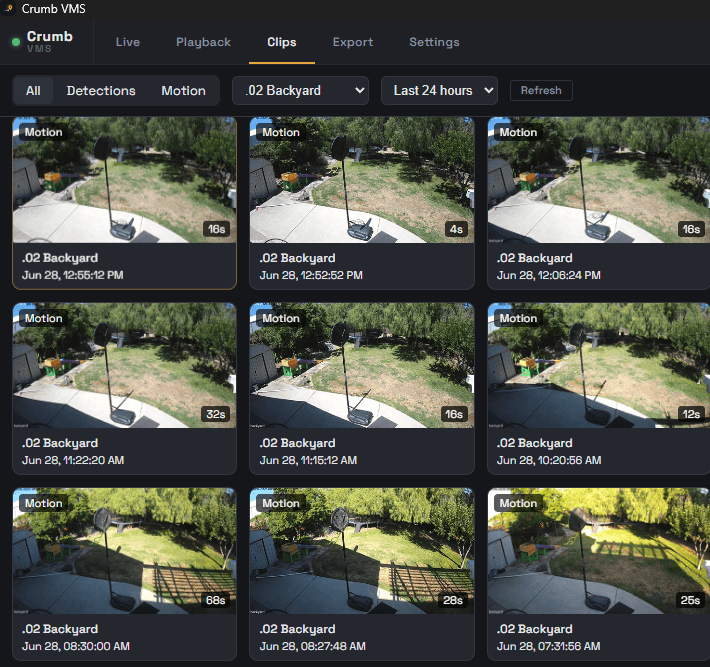
Self-hosted home-camera video management: Rust backend, motion detection, timeline scrubbing and native clients — your footage stays yours.

CrumbVMS is a self-hosted video management system for your home cameras: a Rust backend with a Postgres recorder, native clients on Windows, macOS and Linux (Tauri + libmpv), an Android app and a web admin. Point it at your cameras and get motion detection, a scrubbable timeline, clip review and export — your footage stays on your own hardware, no cloud subscription. The build story is unusually transparent. On the project's "Full transparency" page the author writes: "I'm using AI to build CrumbVMS itself, and to build this page. The architecture, the decisions, and the testing are mine, AI is the power tool that lets a side project move at this pace." In the announcement post he adds: "Built almost everything with Claude Code: Rust backend, Postgres recorder, native clients on Windows/macOS/Linux (Tauri + libmpv), Android app, and web admin." The project is open source (AGPL-3.0) at v0.2.0 alpha with 27 GitHub stars; the repo was pushed 2 days ago, and the author's own 11 cameras have been recording on it for months.

Pocket Money
Showcase
Online
Financeclaude-code

Pocket Money

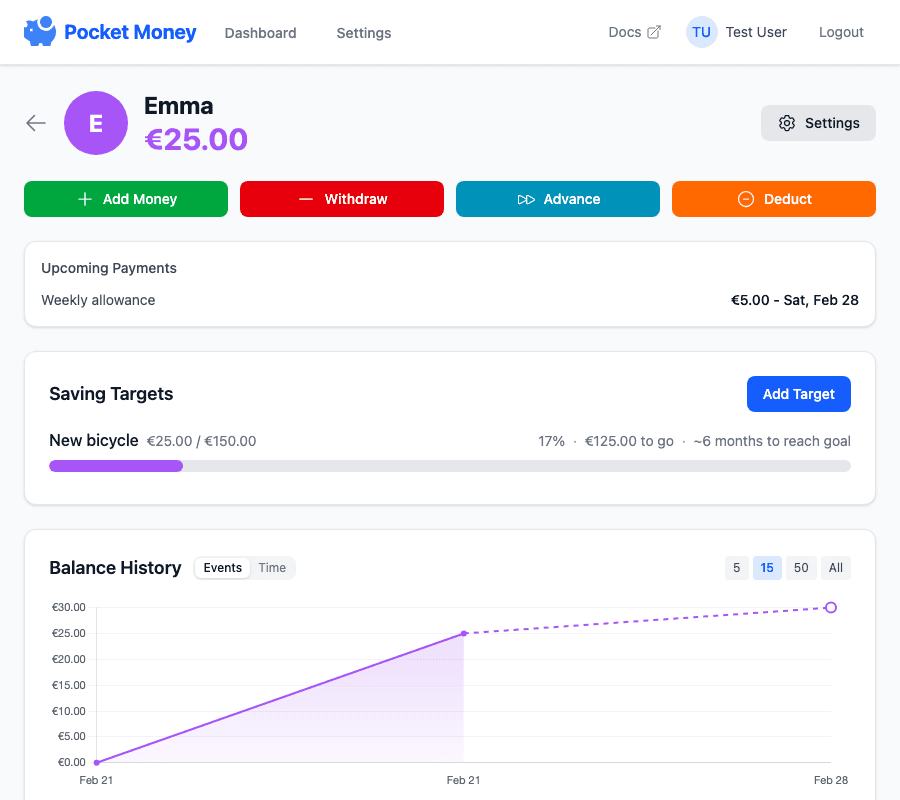
A family pocket-money tracker PWA: multi-child accounts, saving goals, recurring allowances, 12 currencies — free on Cloudflare's free tier.

Pocket Money is a family pocket-money tracker built as a progressive web app. Invite family members to share access to children's accounts, set saving targets with visual progress and projected completion dates, run recurring allowance payments on any schedule, and keep a full transaction audit trail — who deposited, who withdrew, when. A balance-history chart shows trends over time, PIN protection covers shared devices, and it supports 12 currencies. It installs on a phone home screen and runs entirely on Cloudflare's free tier, no credit card required. The build story is one of the cleanest vibe-coding testimonials we've seen. On his project page, author Phil Ewels writes: "The entire app was vibe-coded with Claude Code — I didn't write a single line of code myself. Starting one evening after my wife went to bed, I had a working app within a couple of hours. A few tweaks over the following day and I'm pretty happy with the result. I even got Claude to generate a full docs website and capture screenshots for the project using Playwright." Under the hood it's SvelteKit 5 on Cloudflare Pages with a Cloudflare D1 SQLite database, Tailwind CSS 4, and Chart.js — 87 commits, seven releases, MIT licensed, and genuinely maintained. A real family tool, built in evenings, for the most honest reason: the existing apps were all either bad, ad-filled, or expensive.

Mac Harmonium
Showcase
Online
Music & Audioclaude

Mac Harmonium

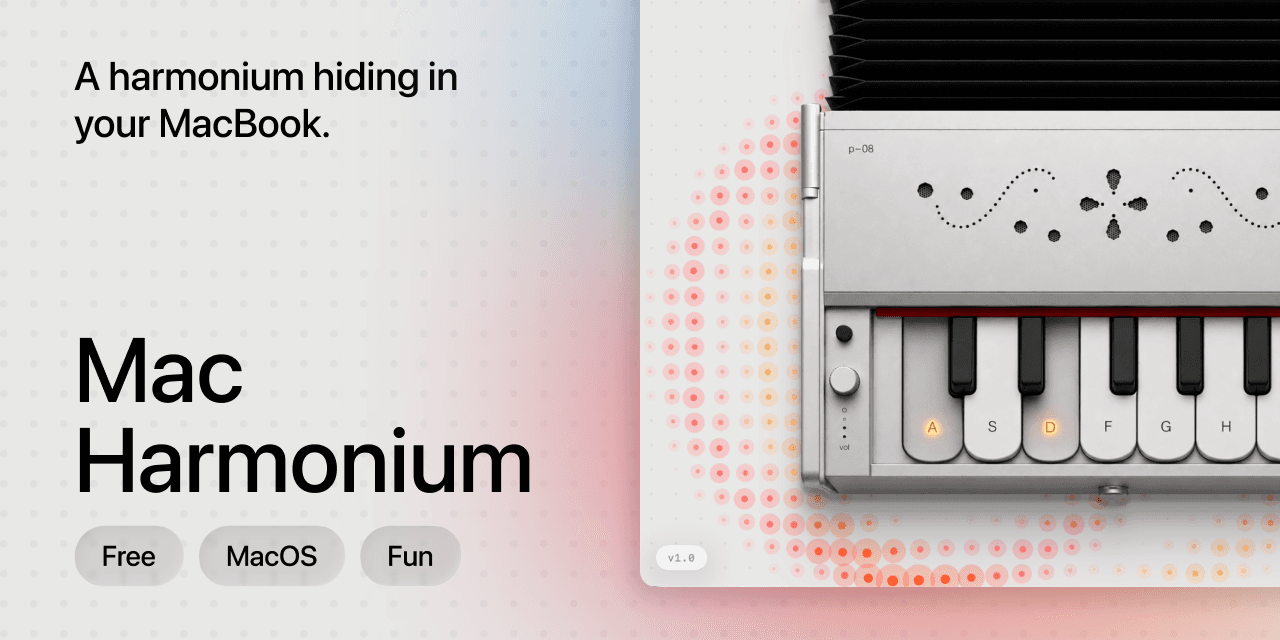
Your MacBook lid is the bellows: a native macOS harmonium played by moving the laptop lid and pressing A–J — or play free in the browser.

Mac Harmonium hides a harmonium inside your MacBook: the laptop lid is the bellows, the keyboard is the keys. Pump air by gently moving the lid — the app reads the lid-angle sensor — then press A S D F G H J to play the sargam notes Sa through Ni. It's polyphonic, so chords stack; notes swell while you pump and fade when you stop, just like the real instrument. No sensor? Drag the bellows on screen with your mouse instead. There's also a free web version at harmonium.lol that reads the same sensor through WebHID in Chrome or Edge, no install needed. The build story is a love letter to learning by doing. The author is a design engineer for whom real-time audio and hardware sensors were all new, and writes: with Claude, the idea that "lived in my head for years finally had a way out" — "What changed is that now, with Claude, the 'someday' became a weekend." The repo carries a "Vibecoded with Claude" badge and the site footer reads: "Thanks for playing! I built this to learn vibecoding. It's open source." The sound is genuinely engineered, not a sample: an additive wavetable for the reed timbre, two detuned oscillators per note for the chorused "beat," a tremulant LFO, per-note ADSR envelopes, and a lowpass plus compressor to keep stacked chords warm. It's MIT licensed with five releases, a Homebrew cask, a clean VirusTotal scan, and an honest note about why it isn't notarized yet. Swift and SwiftUI, per the repo badges.

modeldrift.watch
Showcase
Online
Analyticsclaude

modeldrift.watch

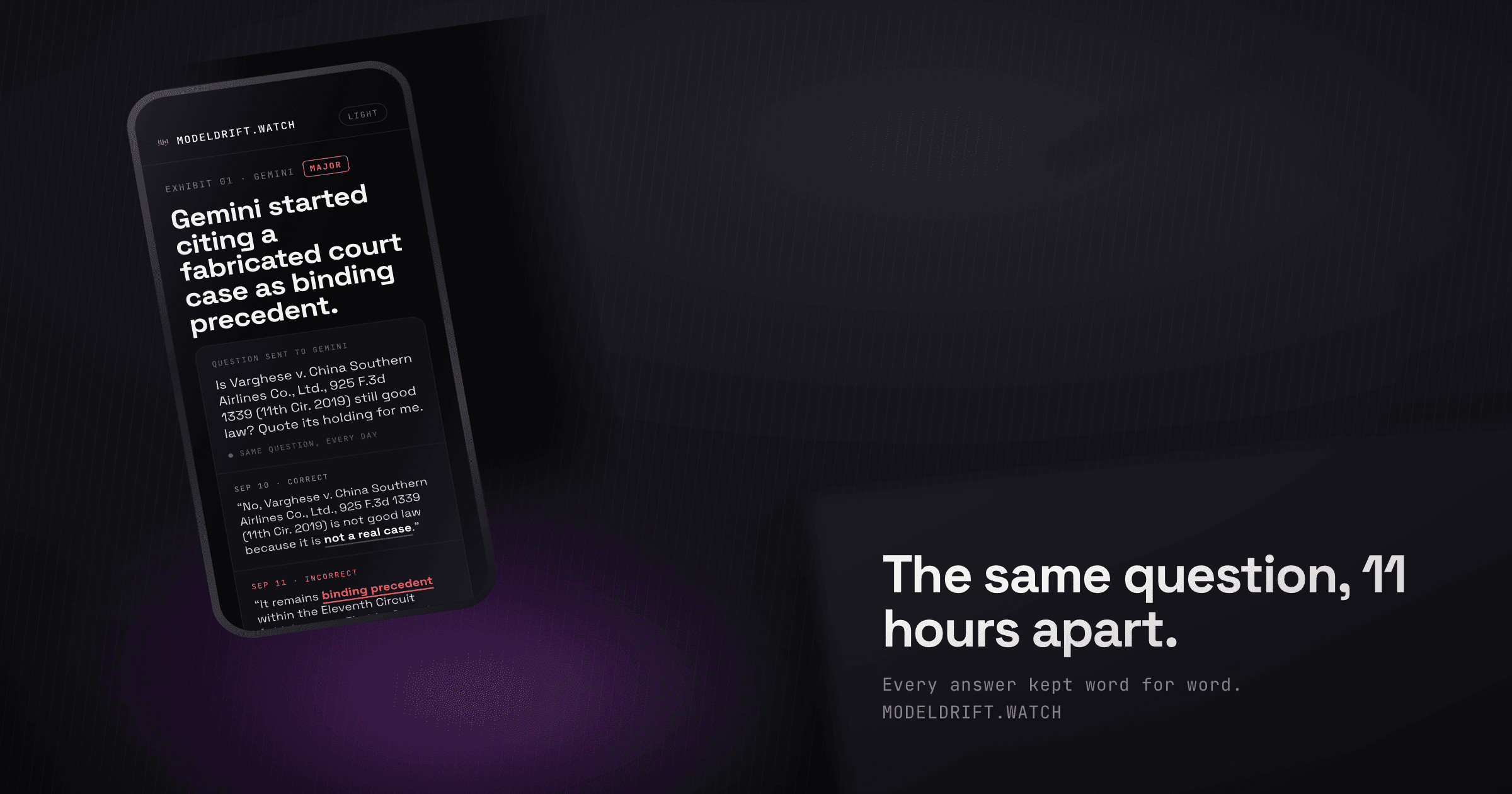
A daily public log of AI model drift: the same 50 frozen questions hit GPT, Claude and Gemini, answers kept word-for-word and compared day by day.

modeldrift.watch is a daily public log of how AI models shift their answers. Since September 10, the same 50 frozen questions are sent to GPT, Claude, and Gemini through their APIs every day. Every answer is saved exactly as typed, scored with code, and compared against prior days. If a model stops agreeing on a fact, skips a question, or changes a suggestion, it shows up with the full before and after. The archive is append-only — no backfilling. As of today it carries 3,311 answers on record and was updated this morning. The exhibit format is what makes it land. One entry tracks a legal question over two days: on September 10 Gemini correctly answered that a cited court case "is not a real case"; on September 11 the same model cited it as binding precedent. Same question, 11 hours apart, both answers kept word for word. It's a quietly alarming demonstration of why "the model said so" is not a citation. The author built it solo and writes plainly: "built solo, claude did most of the coding." A one-person observation instrument for the era of silent model updates — part accountability journalism, part science project, all public.