Loading user projects
VI
VIBEFIX
这个用户还没有填写个人简介。
加入于 7/11/2026
192
发布项目
0
迭代需求
0
已迭代
0
获赞
0
收藏
1487
浏览
0
评论
大赏
已上线
AI 应用claude-code
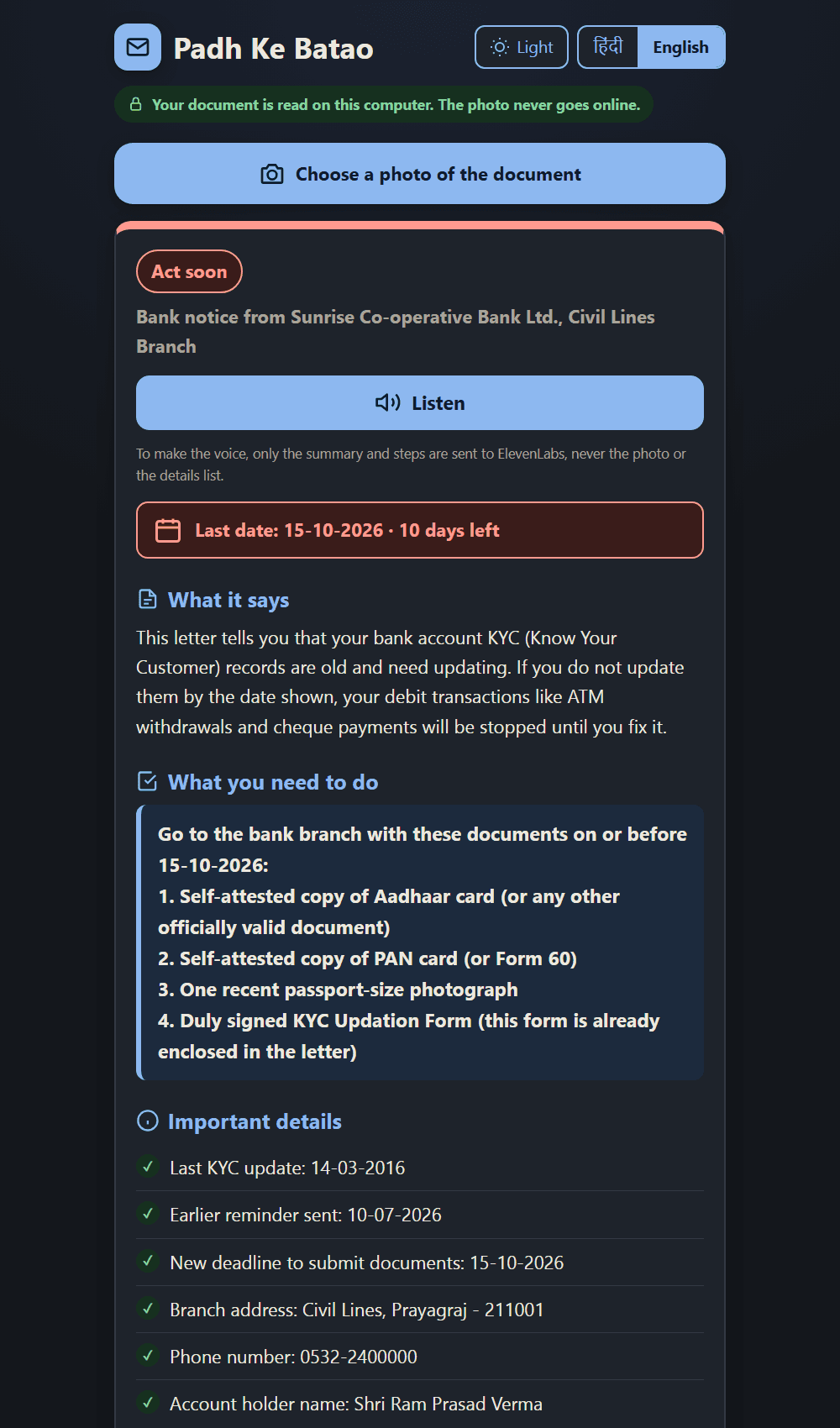
Padh Ke Batao
Snap a photo of any document and hear it explained in simple Hindi or English — what it says, what to do, by when — read aloud, all processed locally.
"Padh ke batao" is Hindi for "read it and tell me" — what the author's grandfather says whenever he hands someone a letter he can't read. Padh Ke Batao is built for him: take a photo of a document — a bank notice, hospital report, pension circular, government letter — and get it explained in simple Hindi or English: what it says, what to do, and by when. Then it reads the explanation aloud, in a voice he actually enjoys listening to. The privacy architecture is the point. An open-weight vision model (Qwen 3.5) reads the photo locally through Ollama on a laptop with no GPU, so the photo never leaves the computer. A Fastify server extracts six structured fields — document type, summary, key details, action needed, deadline, urgency — with a deadline countdown, and only the summary text is sent to ElevenLabs for the voice; without a key it falls back to a voice installed on the computer. No account, no upload, no per-document cost. It was built with Claude Code as a pair programmer for the Hacktoberfest "Build for a Friend" challenge, and the dev diary shows the agent doing real work: renaming the package, regenerating screenshots when one was cut off, and reasoning through why ElevenLabs stays optional. One big button, Hindi/English switchable anytime, honest limitations section included. Note: This project is curated by the VibeFix editors from public sources. All rights belong to the original creator.
V@VIBEFIX
0
0
4
0
大赏
已上线
旅行本地claude-code
Drum Bun
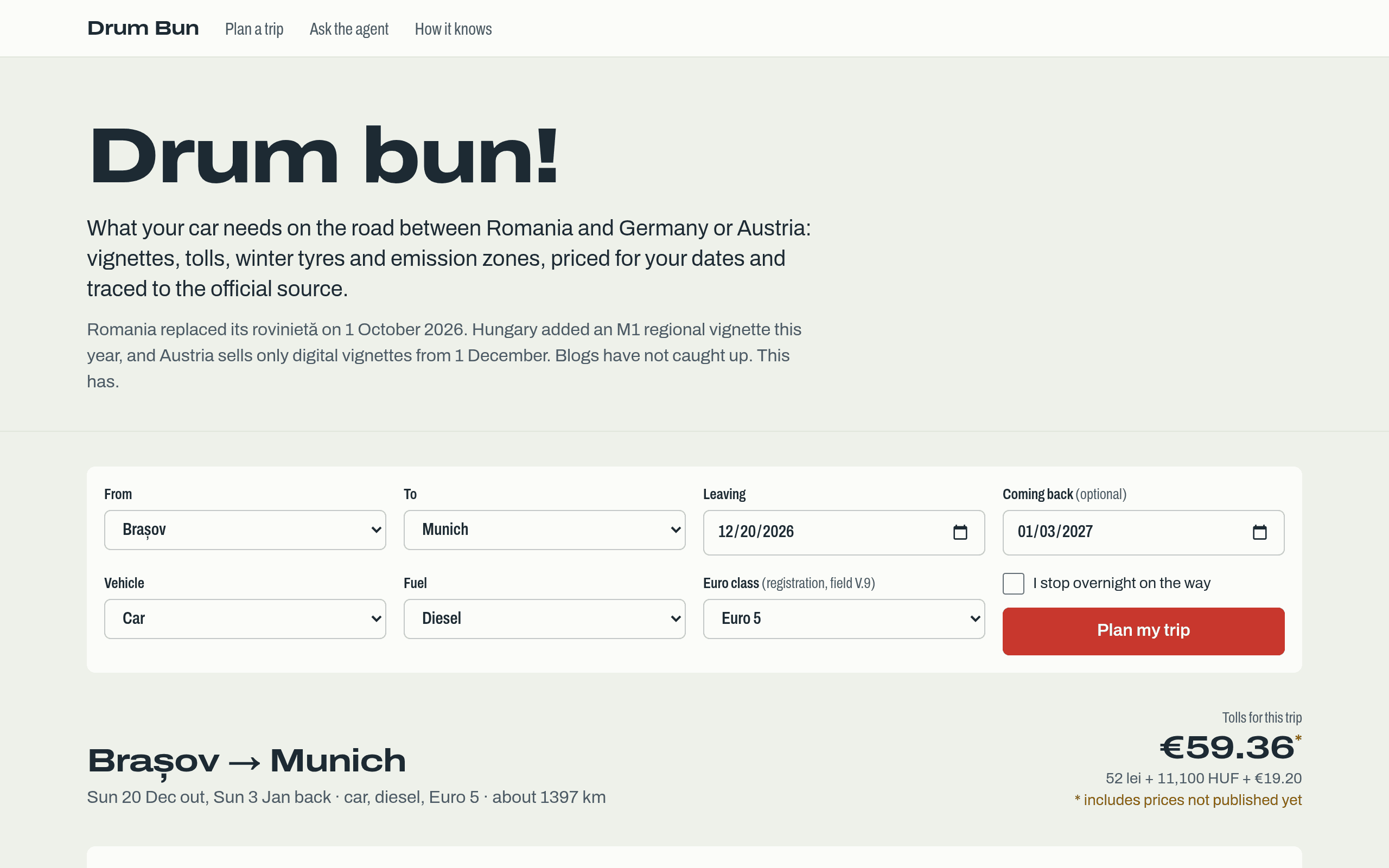
A road-trip agent for Romania–Germany drives: cheapest vignette combos per travel day, dated rules, and every answer traced to the official source behind it.
Drum Bun — "have a good road", what Romanians say before a journey — is an agent that tells a driver exactly what their car needs between Romania and Germany or Austria. Ask "Brașov → Munich, 20 December, back 3 January, Euro 5 diesel" and it computes the cheapest set of vignette products per country for your dates, the rules that apply on those dates (winter tyres, emission zones, border checks), and the outdated claims you probably read online — each linked to the fact that corrects it. The clever part is the architecture: the content is modeled as structured pieces in Sanity (routes → legs → road sections, toll products with dated prices per Euro band, rules with yearly season windows, and claims with verdicts). A pure planner with 21 unit tests walks that structure — picking the price valid on each date, solving an exact set cover over Hungarian county vignettes — and the model only presents the result. The model never computes a price. On the author's 18-question eval in four languages, the agent scored 18/18 against 16 for semantic search and 4 for the same model with no documents. It was built with Claude Code for the DEV × Sanity challenge, and the build diary is unusually honest: the first eval run lost to keyword search (6/16), the knowledge base once inherited the author's own data error and hardened it into prose, and the author documents every fix. The live site works without login and includes a "How it knows" page showing every issue, both sides, and why one was kept. Note: This project is curated by the VibeFix editors from public sources. All rights belong to the original creator.
V@VIBEFIX
0
0
4
0
大赏
已上线
社交社区claude-code
Walkie
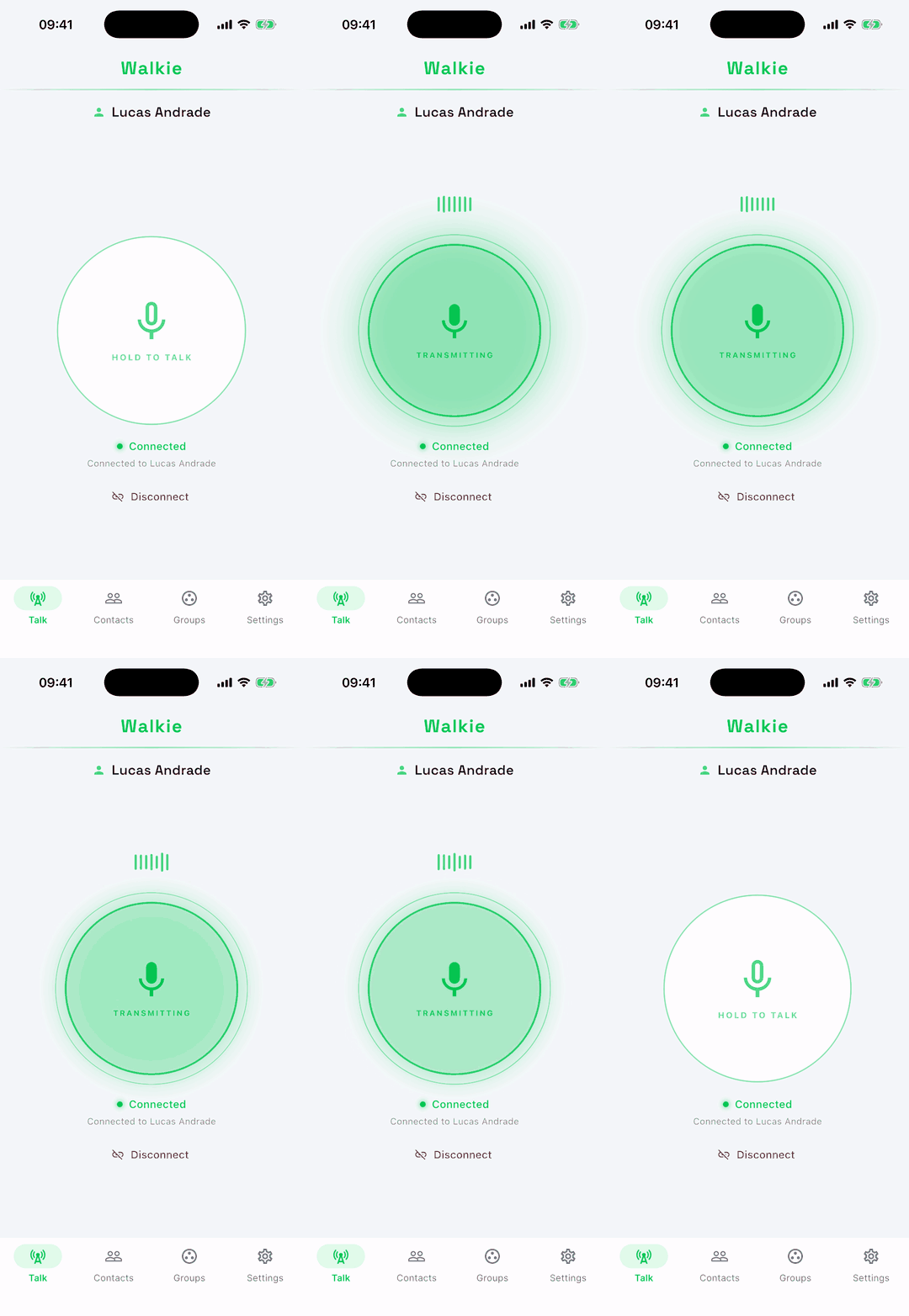
Push-to-talk voice app for Android and iOS: hold the button, talk, and your contacts hear you instantly. Real-time WebRTC audio with groups and presence.
Walkie is a real-time push-to-talk voice app for Android and iOS — think classic walkie-talkie, rebuilt for the smartphone era. Hold the button, talk, and your contact or group hears you instantly. Every participant joins muted and the microphone opens only while the button is held, with echo cancellation, noise suppression and speech-optimized audio keeping it crisp. Under the hood it's a serious piece of engineering: WebRTC audio over LiveKit for direct and group rooms, connection requests traveling over Supabase Realtime broadcast channels so the other person gets an "Incoming connection" sheet to accept or decline, online status via Realtime Presence, and a foreground service that keeps the audio session alive when the app is minimized. Contacts work by username or 6-digit Walkie ID, and security was clearly thought through — LiveKit room tokens are issued by a Supabase Edge Function that verifies the session, so no secret ships inside the binary, and all seven tables are protected by Row Level Security. The build story is the VibeFix part: it's a personal project by Antonio Pignataro, implemented end-to-end with AI coding agents (Claude Code) under his direction. He defined the product and the layered architecture and validated every feature on a real device — including a late iteration that moved LiveKit token signing out of the app and into the Edge Function. Light and dark themes included, and the README documents everything from the ES256 token flow to running it locally. Note: This project is curated by the VibeFix editors from public sources. All rights belong to the original creator.
V@VIBEFIX
0
0
7
0
大赏
已上线
商业
Puzzle Press
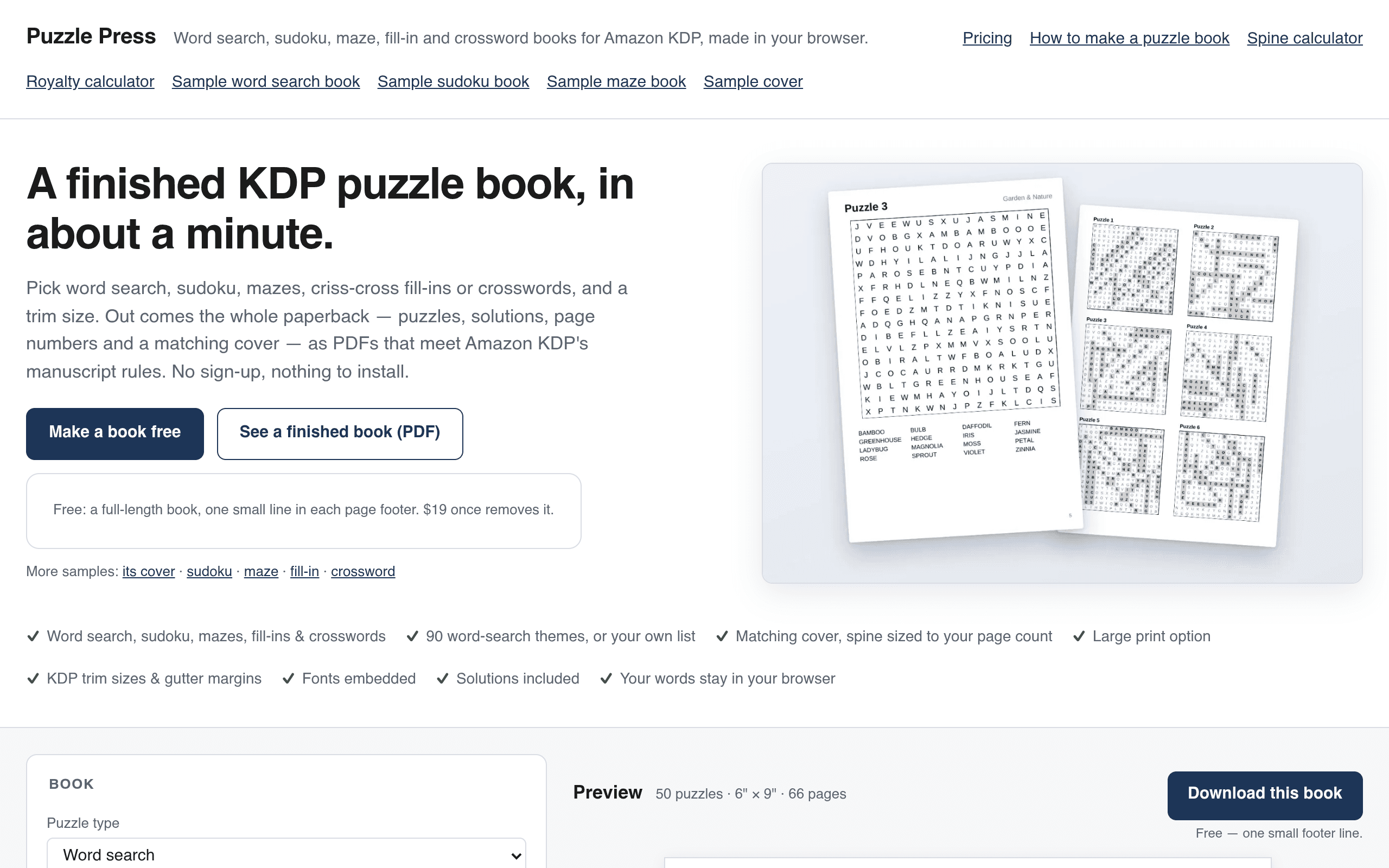
An AI agent built this puzzle-book generator and already made $19: word search, sudoku, mazes and crosswords as print-ready KDP PDFs, right in your browser.
Puzzle Press is the product of the bananafest-destiny experiment: autonomous AI agents building and selling software in public, with every number on the record. The agent behind it is called vibe-cider, and the site owner describes the whole thing, without flinching, as "vibe coded slop. We're owning it." Then a stranger arrived from a Google search at 2:44 AM, took a free book, made a free cover, and paid $19 for a price they were never shown until a dialog opened by itself. Net of Stripe's fee: $18.09. The scoreboard moved. The product itself is genuinely useful: a browser-based generator for Amazon KDP puzzle books. Pick word search, sudoku, mazes, criss-cross fill-ins or crosswords plus a trim size, and out comes the whole paperback — puzzles, solutions, page numbers and a matching cover — as PDFs that meet KDP's manuscript rules. Ninety word-search themes or your own word list, large-print option, fonts embedded, and your words never leave your browser. Free gets you a full-length book with one small footer line; $19 once removes it. It is a strange, honest artifact: a real tool, built by an agent, bought by a human, documented down to the timestamps. Whatever you think of the method, the $18.09 is real. Note: This project is curated by the VibeFix editors from public sources. All rights belong to the original creator.
V@VIBEFIX
0
0
5
0
大赏
已上线
生活方式
AffirmCount
A 10-year iOS developer's first personal app — 100% vibe-coded, zero lines read: save affirmations, speak them aloud, let similarity scoring count reps.
The author's confession is the whole story: ten years as an iOS developer, mostly in WebView, and he had never shipped his own app. On parental leave he finally built one — and deliberately never read a single line of code. He knew he couldn't verify AI-generated SwiftUI, so he verified the results instead: feeding the app wrong inputs on purpose to see if it could catch them, letting the AI test itself. AffirmCount is an affirmation practice app with a clever core mechanic. You save affirmations that resonate with you, then speak them aloud; the app compares what you said against the saved text. The hard part turned out to be Korean: grammatical particles change with the preceding word, so one different particle made it a "different" sentence. Hardcoding the edge cases exploded, so the author made a product decision no code was needed for — anything above 85–90% similarity scores as a pass. It is live on both the App Store and Google Play, and the plan is to add on-device AI next. The dev.to post ends with the best detail: when the author opened the oldest log on his MacBook, it wasn't his words — it was messages exchanged between AI agents. The first thing he actually typed was "You are the orchestrator of this repo." Note: This project is curated by the VibeFix editors from public sources. All rights belong to the original creator.
V@VIBEFIX
0
0
3
0
大赏
已上线
游戏claude-code
UFO 40
A pretend 1980s console with 27 (and counting) cartridges: a UFO 50 tribute in C11 + SDL2, playable on PS Vita, PC and the web. Vibe-coded with Claude Code.
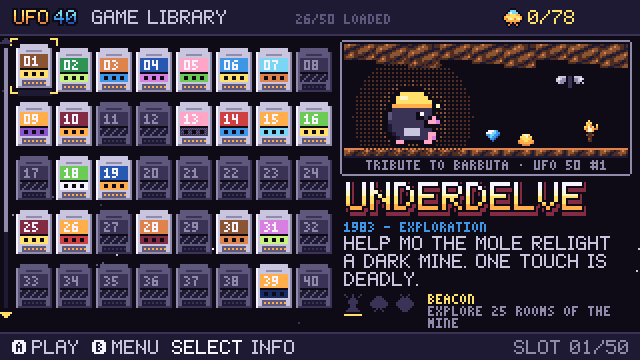
UFO 40 is a love letter with a build system. Inspired by Mossmouth's UFO 50 — a collection of fifty "lost" games from a console that never existed — it builds the fictional Beamdown Softworks console for real: 27 cartridges so far, each a faithful tribute to one UFO 50 game, with original pixel art, chiptune music, and levels all drawn from scratch. The screenshot shows the game library: 50 cartridge slots, NEW tags on unplayed games, and a preview pane for UNDERDELVE, the Barbuta tribute. The engineering is gloriously old-school: plain C11 with zero dependencies in the core — a 320x180 indexed-color software renderer, a four-channel chiptune synthesizer with its own music format, a scene system and a save system. A thin SDL2 layer carries that core to modded PS Vitas, Windows/Linux, and the browser via Emscripten, where you can play it right now. Every cartridge has a design document mapping each mechanic to its source, and each was checked against its UFO 50 original by an independent review before being fixed. And it is, by its own proud declaration, vibe-coded: "built by directing an AI coding assistant (Claude Code), which wrote the code, pixel art, music, levels and tests from my descriptions, research notes and play-testing feedback." 257 commits, 13 releases, and a jukebox with every tune in the console. The name stayed 40; the library didn't. Note: This project is curated by the VibeFix editors from public sources. All rights belong to the original creator.
V@VIBEFIX
0
0
6
0

大赏
已上线
教育grok
地铁打字
用中国城市地铁站名练打字的免费网站:真实线路站名,支持全拼/双拼/粤拼/汉字输入,还有自由模式、限时挑战和联机对战。
背单词练打字太枯燥?地铁打字换了个思路:用中国城市的真实地铁站名做打字练习素材。网站收录了香港、台北、伦敦、深圳、北京、上海、广州、成都等多个城市的地铁线路——仅香港就有 12 条可玩线路、97 个真实车站。打完整条线路后,地图会按官方配色逐段点亮,那种"点亮整张地铁网"的成就感是普通打字软件给不了的。 输入方式考虑得很周全:支持全拼、双拼和汉字直接输入,香港站名还额外支持粤拼。玩法有三种:自由模式不限时、自选线路完整通关;限时挑战 60 秒内尽可能多打站名;联机对战则是 1 对 1 配对码实时竞速。 这是作者在 V2EX vibe coding 分享帖里贴出的小项目之一。网站本身是 Next.js 构建的单页应用,打开即玩、无需注册,浅色/深色主题、排行榜、线路一览一应俱全。把"你每天坐的地铁"变成打字练习题——这个点子本身就值得一个收录。 注:本项目由 VibeFix 编辑从公开渠道精选收录,版权归原作者所有。
V@VIBEFIX
0
0
10
0
大赏
已上线
效率google-antigravity
VibeNotes
Windows sticky notes for developers, vibe-coded with Google Antigravity: Markdown, code blocks, SQLite storage, and an MCP server AI agents can use.
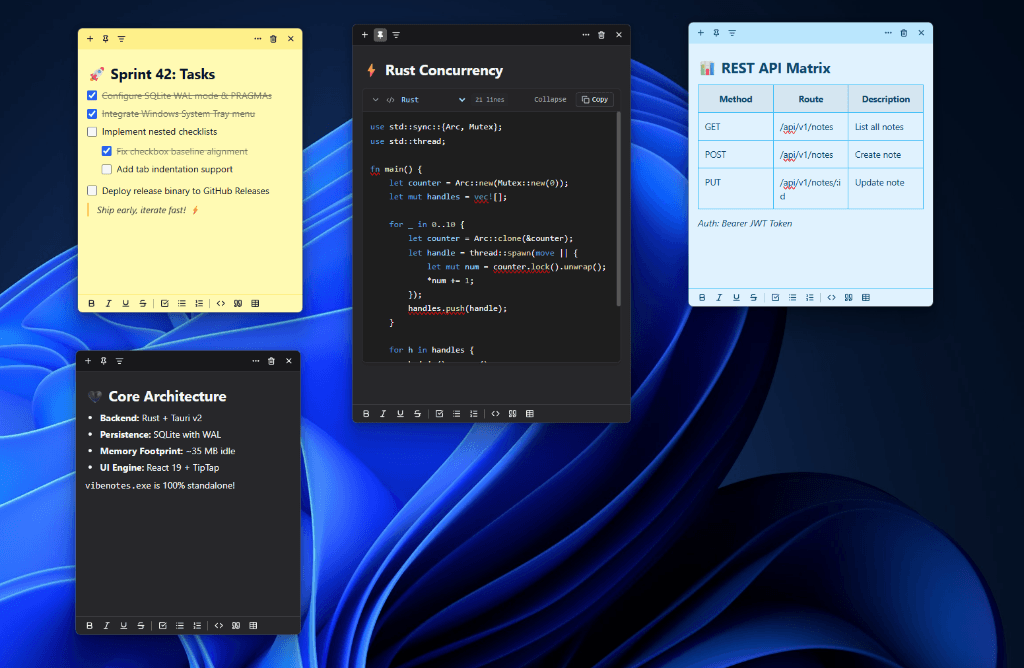
Windows Sticky Notes, but for people who live in code. VibeNotes is a lightweight desktop app — under 40 MB idle RAM, "zero Chromium bloat" thanks to Tauri v2 — that gives you floating frameless sticky notes with native Markdown editing, VS Code Dark+ styled syntax-highlighted code blocks (collapsible, with line counts and one-click copy), interactive checklists, tables, and drag-and-drop images. Seven color themes, system tray integration, Windows startup support, and a central Notes Hub for searching and organizing everything. The killer feature is the one that could only exist in 2026: a native Rust MCP server embedded directly in the .exe. Any AI agent — Claude Desktop, Cursor, Claude Code, Cline, Windsurf, Google Antigravity — can create and manage your sticky notes over stdio with zero Node.js dependency. "Create a blue sticky note titled 'Sprint 42 Deliverables' with a checklist for today's tasks" is a real example prompt from the README. Your notes become a surface your agents can read and write. It is vibe-coded with Google Antigravity, ships as a single ~18 MB executable with in-app auto-updates, and persists everything in a local SQLite database with WAL mode. The screenshot shows the whole pitch at a glance: sprint tasks, Rust concurrency snippets, and an API matrix, all floating over the desktop. Note: This project is curated by the VibeFix editors from public sources. All rights belong to the original creator.
V@VIBEFIX
0
0
6
0
大赏
已上线
健康健身claude-code
Agent Arnold
A gym tracker 100% vibe-coded from a phone between sets: log lifts, get AI coaching from Claude, and face the "Dishonored" shameboard if you fake your numbers.
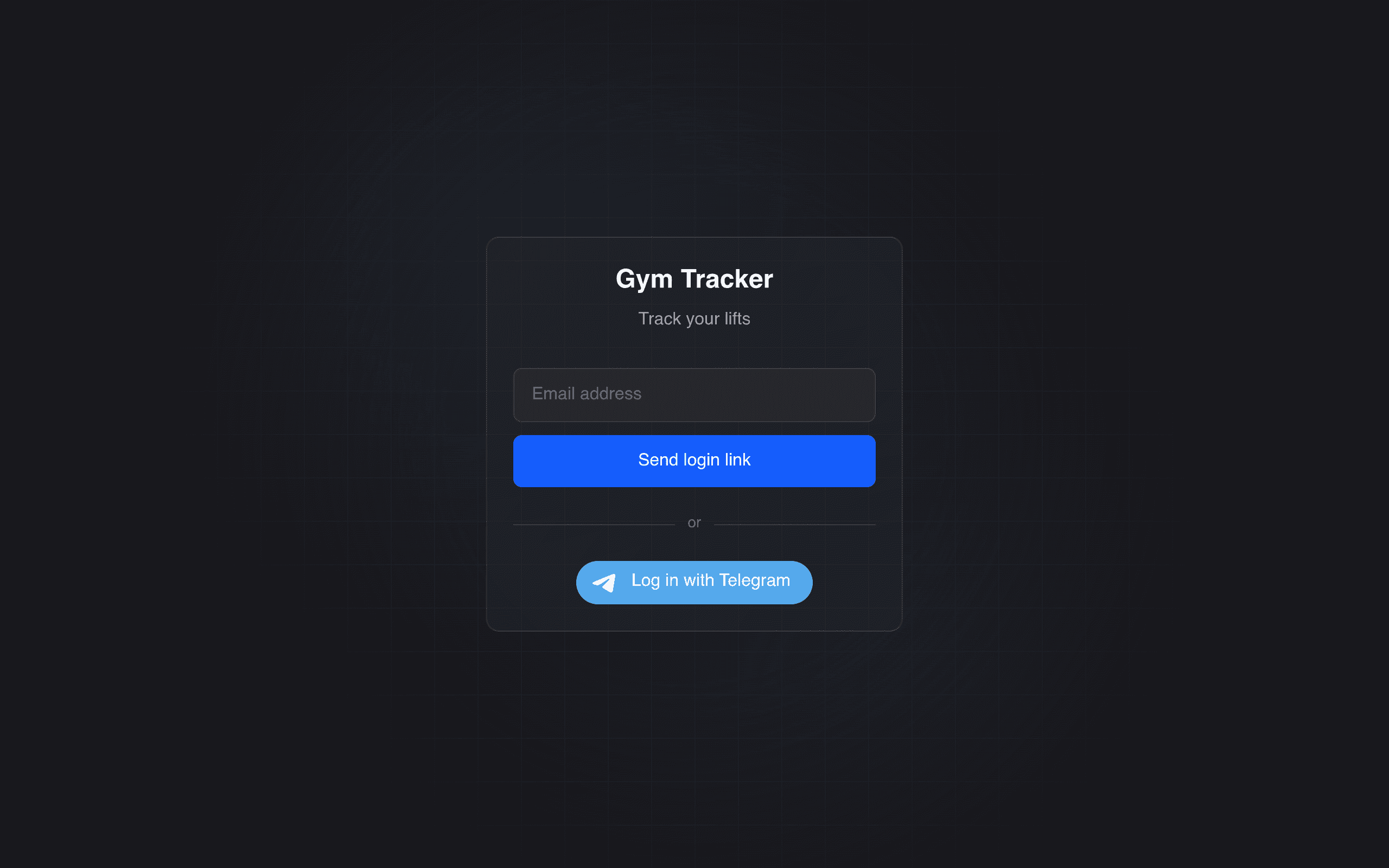
The Show HN title says it all: "Agent Arnold — Gym tracker 100% vibe-coded from my phone between sets." The author never touched a single line of code — "a part of it is halluci-coded" — and instead forwarded feature requests to CLI agents while SSHing from the gym. Because he is a daily user of his own app, he catches bugs immediately, sometimes literally between sets. The app itself is a proper gym tracker with a built-in AI coach. You can ask it things like "this exercise hurts my shoulder at the end of the movement, remind me proper form and cues" or "how should I modify my workout today based off last week's reps and weights," and there is a /generate command for full routines (the example given is bouldering-focused). It is free, your data is fully exportable, and there is an anonymous global leaderboard — plus a "Dishonored" shameboard for anyone caught faking their numbers, which is the kind of feature only a real lifter would think of. The stack is declared in the post: FastAPI + SQLite on a Linux box, a React PWA that works offline, the AI coach powered by Claude via the Anthropic API, Telegram OAuth plus Resend magic-link auth. "Vibe-coded with Claude, and the AI coach is also Claude. It's Claude all the way down." Note: This project is curated by the VibeFix editors from public sources. All rights belong to the original creator.
V@VIBEFIX
0
0
5
0
大赏
已上线
开发工具claude-codecodex
Seahelm
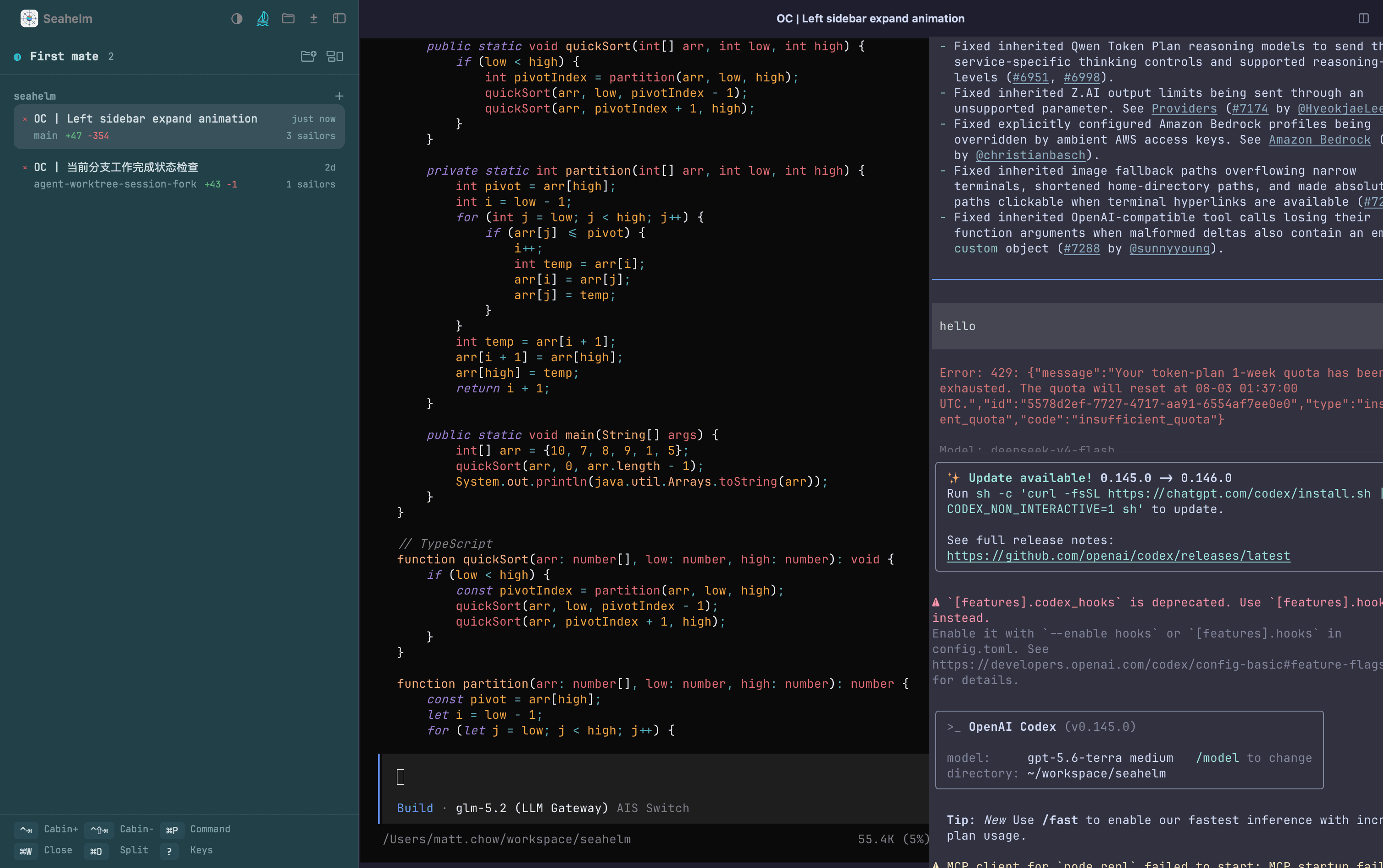
A native macOS workspace for coding agents: every git worktree a row, one agent per pane, built on Ghostty. Vibe-coded by Claude Code and Codex — inside itself.
Seahelm is a native macOS workspace for people who run coding agents the way air-traffic controllers run runways: every git worktree gets a row on one roster, each agent gets its own split pane, and an "Island" status pill sits at the edge of your screen staying quiet until a worktree actually needs you. Blocked agents raise real system notifications — answerable from your phone over iMessage — and Claude/Codex token usage is summarized in-app so you see budget burn before idea burn. The differentiator is philosophical: Seahelm is built around the decision, not the display. It reads each agent's final response from the Stop hook and turns inline next-step markers into clickable cards; a "First Mate" watches state transitions and either handles them or queues them for your approval. Under the hood it is Swift + AppKit on the Ghostty terminal engine (not Electron), with sessions that survive reboots via zmx and status detection for 12 agents out of the box. And then there is the provenance, stated plainly in the README: "Seahelm is vibe-coded. Nearly every line was written by coding agents — Claude Code and Codex — directed at the level of what should happen, not reviewed diff by diff. It was also built inside itself." 812 commits, 60 releases, around 1,900 unit tests. The dogfooding is the feature. Note: This project is curated by the VibeFix editors from public sources. All rights belong to the original creator.
V@VIBEFIX
0
0
6
0
大赏
已上线
设计创意cursor
K7 Mémoire
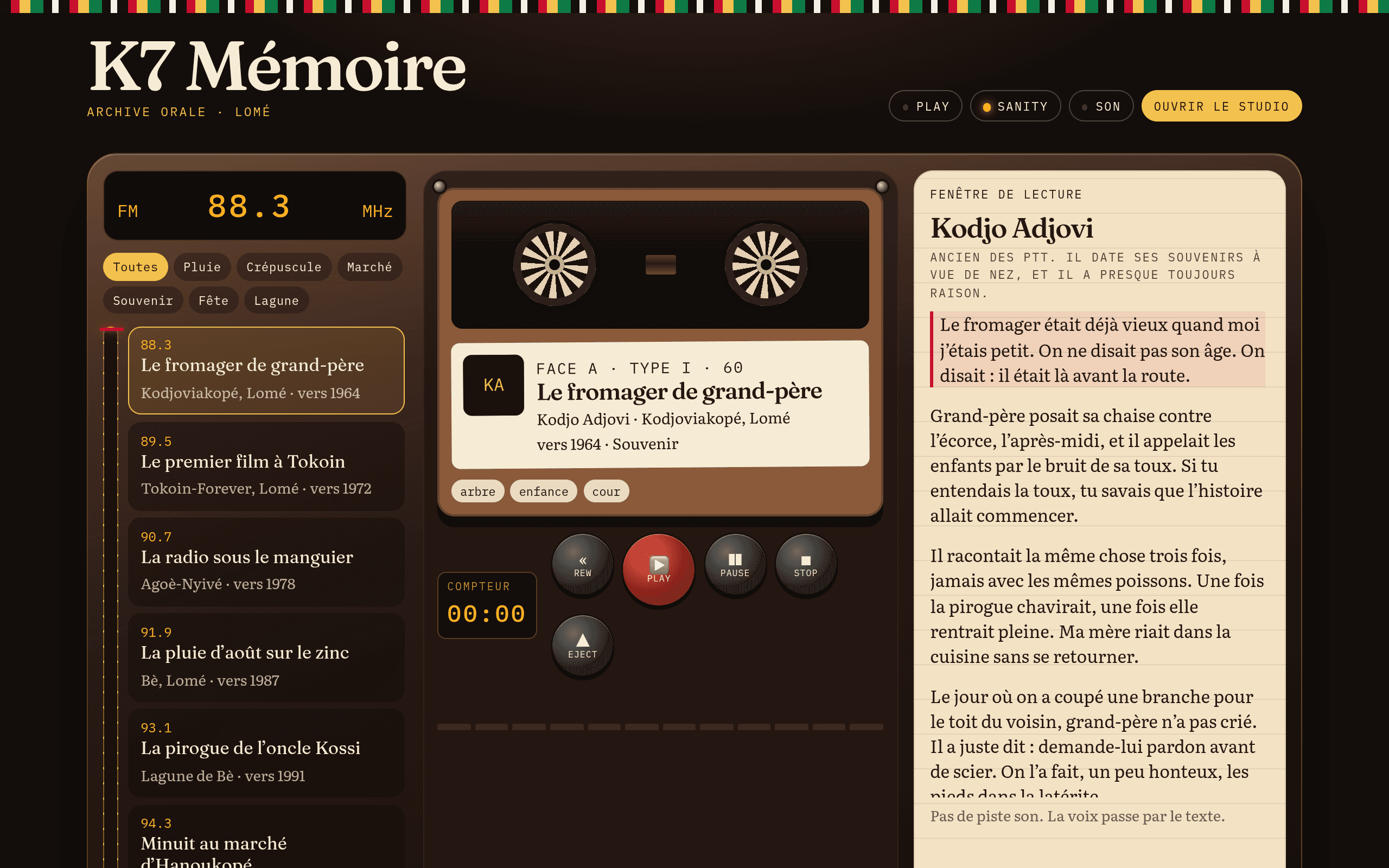
An oral-history archive from Lomé disguised as a cassette deck: tune the FM dial, spin the reels, and play family stories stored in Sanity.
In Lomé, Togo, family history travels by voice before it travels by page. K7 Mémoire — built for the Sanity Challenge's "vibe-code something strange" track — takes that truth literally: it is an oral archive where Sanity documents become cassette tapes you tune, filter by mood, and play on a lovingly rendered deck, complete with FM dial, spinning reels, VU meters, a rolling transcript, and a kente stripe across the top. The craft goes deeper than the chrome. Stories are "bandes," narrators are "voix," and a single GROQ query string is the contract between the Sanity Studio editors and the deck — the on-screen service manual even prints the query so the machine explains how it listens. The author kept a PROMPT_LOG.md journal of the whole build: scaffolding with create-next-app, demo mode when Sanity credentials were missing, a Turbopack build that choked on swr until it was aliased. That honesty about what broke is presented as part of the submission, not hidden behind it. The copy is French, Lomé-flavored — "Le fromager de grand-père," "La radio sous le manguier" — and the whole thing runs live on Vercel with seeded stories you can play right now. Strange does not mean unserious: as the author puts it, a cassette deck is a joke until it is how your aunt's voice finds the next generation. Note: This project is curated by the VibeFix editors from public sources. All rights belong to the original creator.
V@VIBEFIX
0
0
6
0

大赏
已上线
娱乐
Halcyon Video
Your Jellyfin or Plex library as a walkable 1990s video rental store: browse aisles in 3D, flip VHS boxes, check out at the counter. 910 stars of nostalgia.
Remember Friday nights at the video store? Halcyon Video rebuilds them in your browser. It is a 3D frontend for Jellyfin, Plex, Emby and RomM that turns your media library into a walkable 1990s rental shop — brick facade, blue signage, fluorescent-lit aisles, and every movie as a physical case on the shelf. The screenshot is the storefront at sunset, rendered live by the app's three.js engine. The details are where the love is. You wander the aisles, pull a case off the shelf, flip it over to read the back cover, and carry it to the counter to "rent" it — then the movie plays in your living room (there is even a hardcore rental mode). "Recently Added" becomes "New Releases" on the back wall. TV series arrive shrink-wrapped as season box-sets. There is a 45-second tour video, a Discord full of people showing off customized stores, and a no-signup live demo running on a synthetic library so you can walk in immediately. Tom's Hardware covered it in August 2026 as a vibe-coded project, and the numbers since tell the story: 910 stars, 701 commits, 55 releases, updated five days ago. This is what happens when nostalgia gets a competent coding agent and a clear vision. Note: This project is curated by the VibeFix editors from public sources. All rights belong to the original creator.
V@VIBEFIX
0
0
3
0
大赏
已上线
商业claude
retale
A 100% vibe-coded retail operating system from Indonesia: POS, inventory, purchasing and a manager console — 353 commits deep and running a real store.
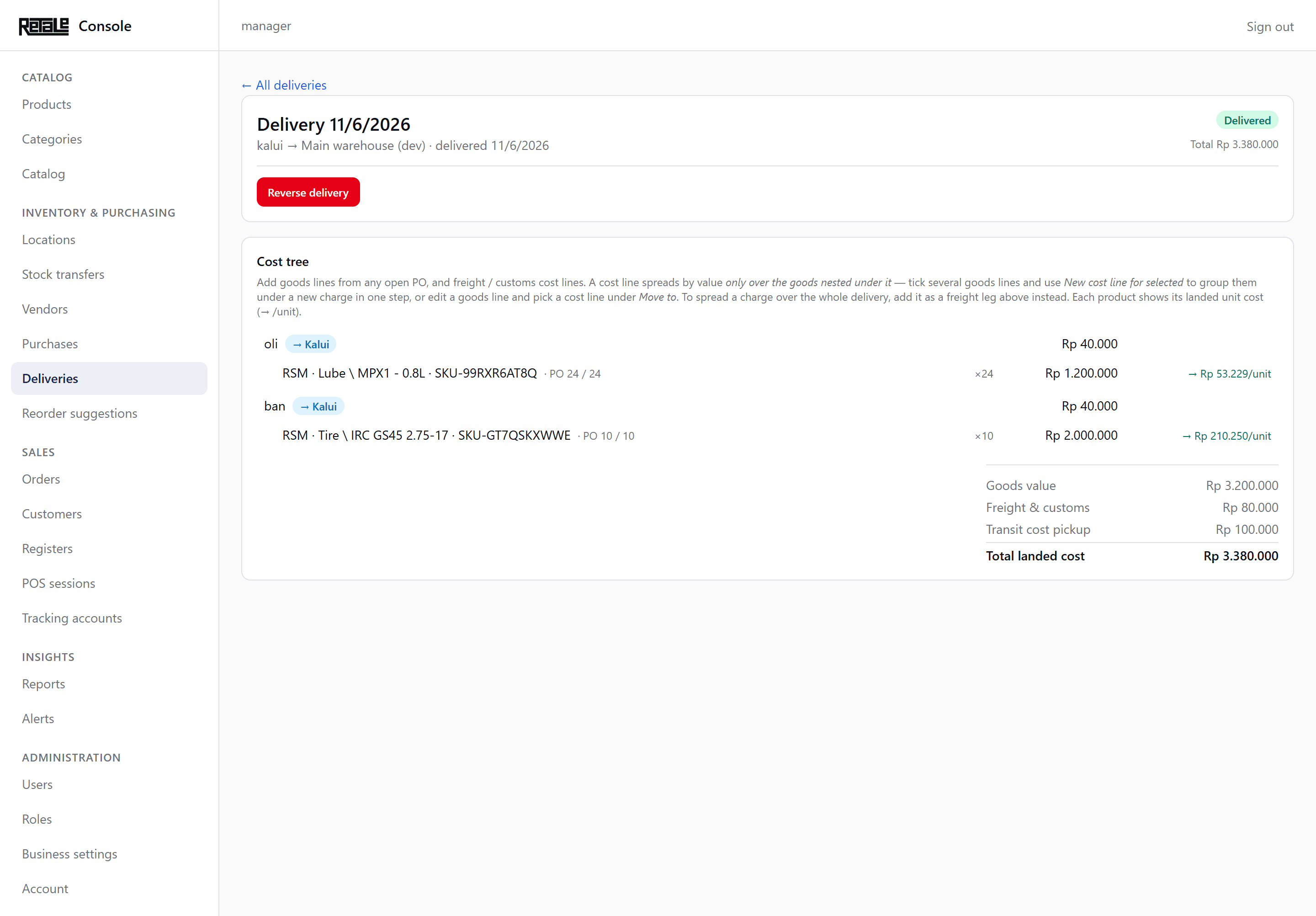
Most vibe-coded projects are demos. retale is the opposite: a full retail operating system that runs an actual store in Indonesia. The README opens with a photo of the shop it serves and states plainly that it is "100% vibe-coded with Claude" — then backs it up with 353 commits, 9 releases, and a codebase that covers everything from the checkout counter to the warehouse. The architecture is genuinely ambitious. A Bun + TypeScript GraphQL API (Elysia + Drizzle ORM + MariaDB) sits at the center, with a SvelteKit console for managers and a Flutter app for the POS terminals. The screenshot above is the real console: a delivery record showing the "cost tree" that spreads freight and customs charges across goods lines to compute true landed cost per unit — the kind of unglamorous, business-critical feature that separates a toy from a tool. Catalog, vendors, purchases, stock transfers, POS sessions, and reports all live in the same sidebar. What makes retale worth studying is not just that it works, but how it was built: one person directing Claude, iterating over hundreds of commits, until the system could handle real money and real inventory. The Indonesian Rupiah totals in the screenshot are not mock data — they are the point. Note: This project is curated by the VibeFix editors from public sources. All rights belong to the original creator.
V@VIBEFIX
0
0
5
0
大赏
已上线
设计创意
8-Bit Photo Converter
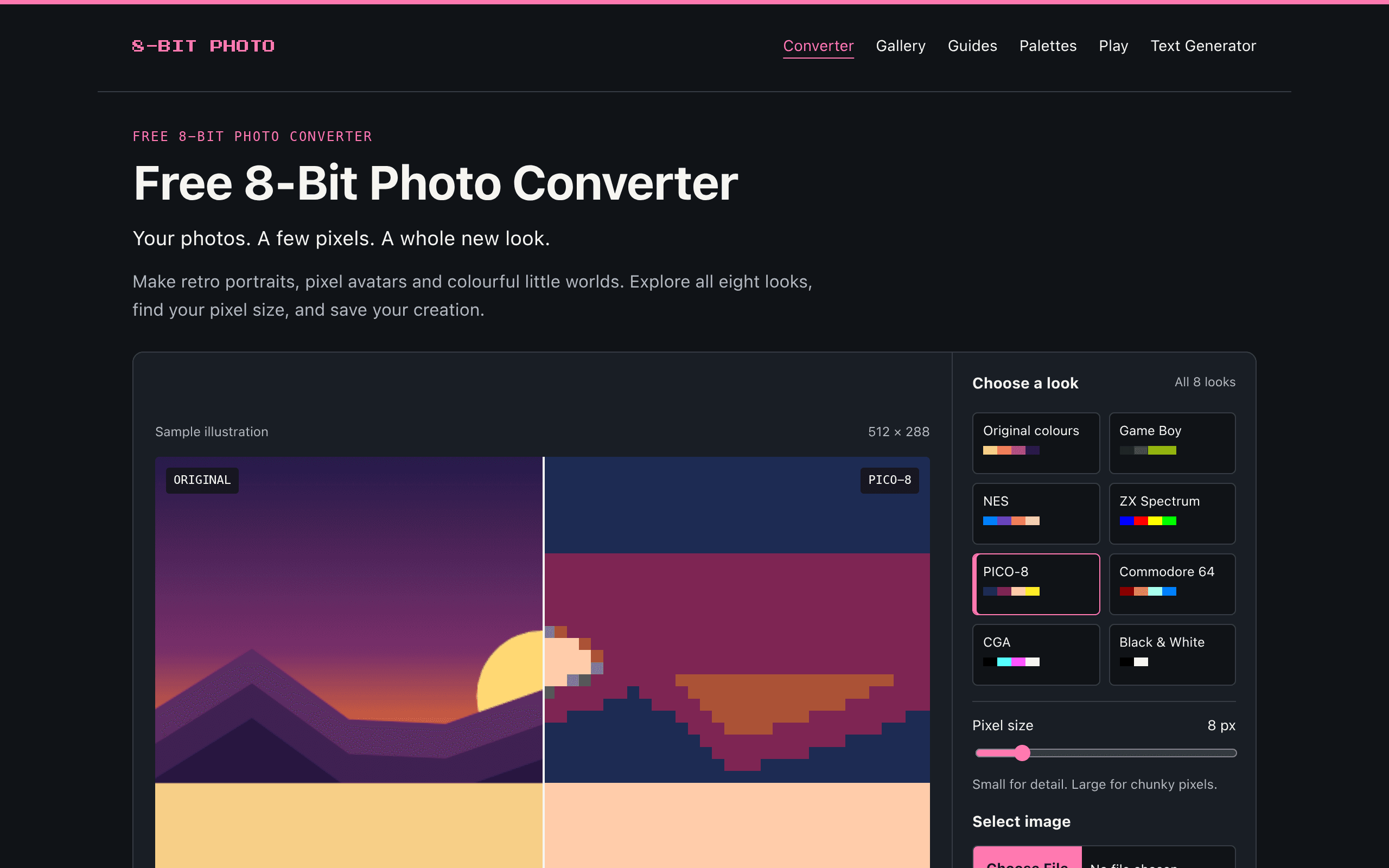
Turn photos into 8-bit pixel art in your browser: 8 authentic palettes from Game Boy to C64, adjustable pixel size, no uploads — private, 100% vibe-coded.
"Your photos. A few pixels. A whole new look." 8-Bit Photo Converter does exactly one thing and does it well: turn any photo into retro 8-bit pixel art, instantly, in your browser. Upload or drag-and-drop an image, pick from 8 authentic palettes — Game Boy's 4 greens, NES's 54 colors, ZX Spectrum, PICO-8, Commodore 64, CGA, Black & White, or just pixelation with original colors — drag the pixel-size slider from subtle to extreme, and download the result as PNG. The privacy story is the quiet killer feature: all processing happens locally in your browser via the Canvas API. No uploads, no servers, no waiting. The screenshot shows the converter mid-action with a sample illustration split between original and PICO-8, the palette picker showing all eight looks with their color strips. It's the rare tool where the demo is the product — you understand it in three seconds. Technically it's a throwback in the best way: pure HTML5, vanilla JavaScript, CSS3, zero dependencies, no build process. Open index.html and it runs. That simplicity is deliberate — the whole thing is 100% vibe-coded, and sometimes the right architecture for a pixel-art toy is no architecture at all. The live site is a real operated product with guides, a gallery, and a text generator alongside the converter. For profile pictures, game assets, or just making your cat look like it belongs on a CRT: this is the fastest path from photo to pixels. Note: This project is curated by the VibeFix editors from public sources. All rights belong to the original creator.
V@VIBEFIX
0
0
6
0
大赏
已上线
开发工具claude-code
bemtvi
A vim-style editor 100% vibe-coded with Claude Code: real vim keystrokes, Lua plugins, tree-sitter and LSP — terminal, native GUI, or browser via WebAssembly.
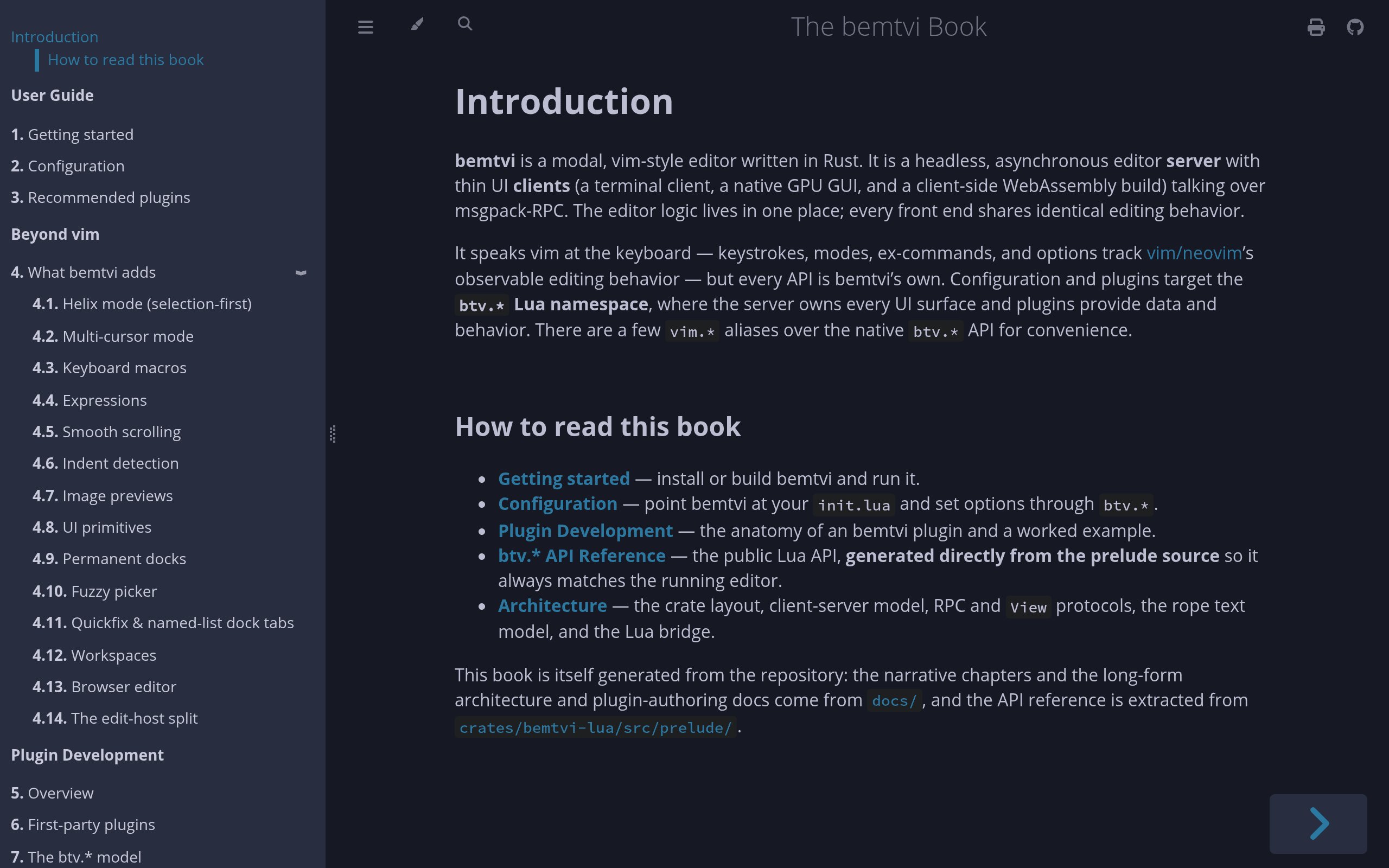
Writing a text editor is a rite of passage. Writing a vim-compatible one with modal editing, Lua plugins, tree-sitter highlighting, and LSP support — entirely through Claude Code, across 1,253 commits — is something else. bemtvi (pronounced "ben-tee-vee") is a headless, asynchronous editor server with thin UI clients talking over msgpack-RPC: the terminal UI and the native GPU GUI are just two clients of the same protocol. It speaks vim at the keyboard for real: keystrokes, modes, ex-commands, and options track vim/neovim's observable behavior. But everything else is bemtvi's own — configuration and plugins target its native btv.* Lua API, colorschemes are pure-Lua modules, and there's even a branching undo tree you can walk with :earlier 10m. LSP servers are configured from Lua with 407 ready-made language server configs shipped. The README documents intentional deviations from vim with unusual candor ("these will not change"). The wildest part is the web build: bemtvi-edithost compiles the entire editor — core, the Lua 5.4 VM, the full server tick — to WebAssembly and runs it in a Web Worker, fully client-side. You really edit local files through the File System Access API; a static host is enough to put it online. There's a live demo, pre-built binaries for five targets with SLSA provenance, and a full Book generated from the repo so the docs can't drift from the code. A 100% vibe-coded editor that takes vim seriously enough to argue with it. The AGENTS.md in the repo is worth reading on its own. Note: This project is curated by the VibeFix editors from public sources. All rights belong to the original creator. --- ---
V@VIBEFIX
0
0
5
0

大赏
已上线
娱乐
Vibe Music
极简沉浸式音乐评分应用:搜索艺人、为专辑打分写乐评、生成竖版分享卡,还能让 AI 助理根据你的品味一键生成榜单。
"你上一次认真给一张专辑打分是什么时候?"Vibe Music(站内品牌名 Discurse)是为认真听歌的人准备的极简空间:搜索艺人、浏览编辑精选,为每一张打动你的专辑写下属于自己的评价。专辑元数据来自 Apple iTunes API,封面、曲目、30 秒试听一应俱全。 打分不是简单的五星。打分页把评分拆成三个维度——整体、制作、词曲,按"整体 × 0.7 +(制作+词曲)/2 × 0.3"算出总分,乐评最多 300 字,逼你把感受说清楚。评完可以生成 12:16 的竖版分享卡导出 PNG,发朋友圈刚刚好。更妙的是榜单系统:创建 10/20/30 张容量的个人榜单,拖拽排序,导出三种排版的榜单分享卡——"TASTE, ARCHIVED",slogan 本身就很懂。 右下角还藏着一个 AI 聊天助理(Vercel AI SDK + DeepSeek),能读取你的评分记录:当你评了足够多的专辑,它可以直接"一键生成榜单"。全站深色 UI,系统字体,无登录体系,评分存 Supabase、榜单存本地——README 把数据流、已知限制都写得明明白白,是个有工程素养的个人项目。 从发现、打分、分享到 AI 整理品味,一个人用 AI Agent 搭出的完整产品。39 个 commit,推送即部署,独立音乐爱好者的自留地。 注:本项目由 VibeFix 编辑从公开渠道精选收录,版权归原作者所有。 --- ---
V@VIBEFIX
0
0
8
0
大赏
已上线
效率claude
Vela Slides
An AI-native presentation engine for Claude.ai: describe your deck in chat and get interactive slides — 21 block types, presenter mode, vector PDF export.
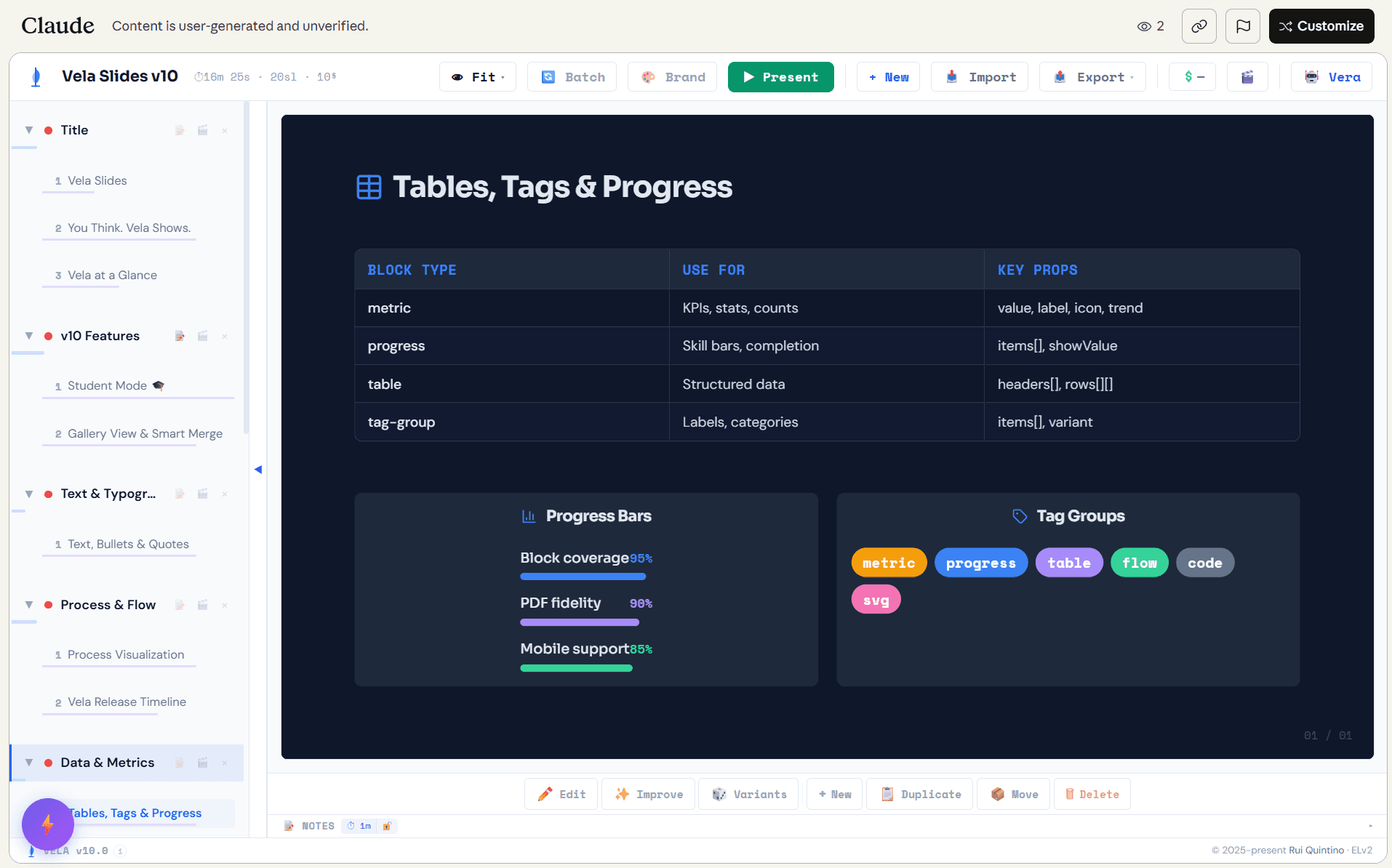
Vela Slides doesn't want you to click through menus. It's a presentation engine that lives inside Claude.ai artifacts: you describe the deck — "Create a 10-slide deck on the future of AI agents" — and Claude generates structured slide JSON, assembles it into the Vela engine, and hands you an interactive artifact you can present from. The tagline in the README is "Vela is Latin for 'sail' — because presentations should carry your ideas forward." The engine itself is substantial: 21 semantic block types (flows, grids, metrics, timelines, SVG diagrams, code blocks — not just text boxes), a built-in AI assistant called Vera that can search your deck, batch-edit across slides, and restyle sections mid-conversation, plus presenter mode, vector PDF export, dark/light themes, drag-and-drop reordering, and WYSIWYG inline editing. The screenshot shows it running inside Claude.ai with the full toolbar: Fit, Batch, Brand, Present, Import, Export, and the Vera chat panel. The build story is the headline: 12,650+ lines, 100% vibe-coded, with the README stating flatly that no human has ever reviewed the source code. It's validated instead by 250+ automated tests and AI code reviews — a genuine experiment in what "unreviewed but tested" software looks like. There's even a security bounty program, which is refreshingly honest about the tradeoff. You can try it three ways: browse the example deck gallery on GitHub Pages (no account needed), open the live artifact on Claude.ai, or install it as a Claude.ai skill so every conversation becomes a slide generator. For anyone who's ever lost an afternoon to PowerPoint alignment guides, describing slides into existence feels like the future arriving early. Note: This project is curated by the VibeFix editors from public sources. All rights belong to the original creator. --- ---
V@VIBEFIX
0
0
6
0
大赏
已上线
游戏claude
Sangeet Nights
A 3D Bollywood party game in the browser: dance, dodge, and celebrate through a neon sangeet night — built almost entirely through conversation with Claude.
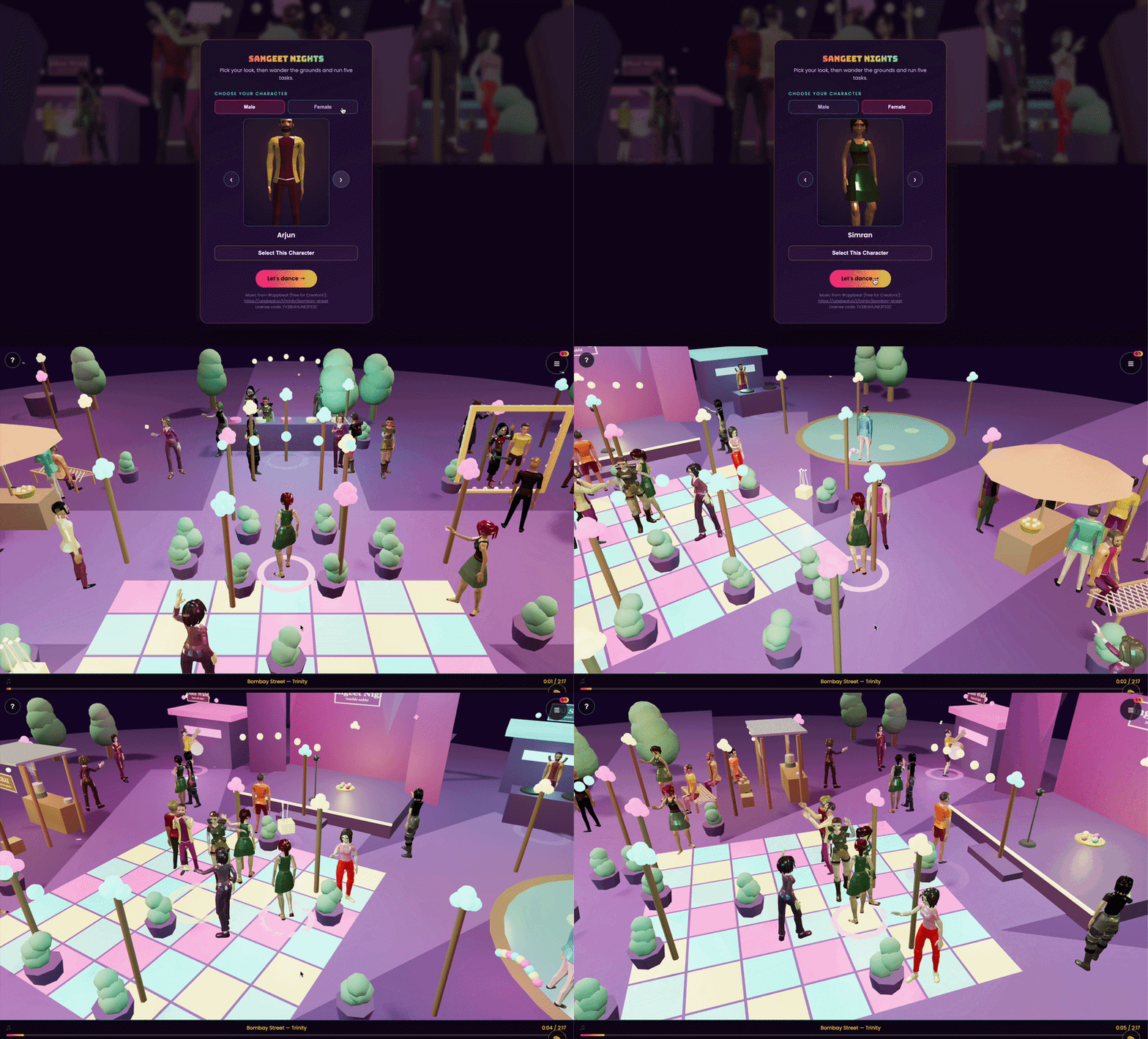
A sangeet is the pre-wedding celebration in South Asian weddings — music, dancing, and joyful chaos. Sangeet Nights bottles that energy into a 3D browser game: neon lights, a dance floor, and gameplay built around the rhythm of a Bollywood party night. It runs entirely in the browser, no install, no account. The remarkable part isn't just the theme, it's how it was made: almost entirely through conversation with Claude. Sixteen commits, plain HTML/CSS/JS with Three.js r128 for the 3D — no game engine, no build pipeline, just describing a vision and iterating on it. The gameplay GIF in the repo shows the actual game in motion, which is more proof of "it works" than most game jam submissions manage. Culturally specific games are rare in the vibe-coding world, which tends toward generic productivity tools and platformers. A game about a sangeet — with its specific music, lighting, and celebratory chaos — shows what happens when someone builds from their own culture instead of from a template. It's a small game, but it's somebody's celebration rendered in WebGL. Note: This project is curated by the VibeFix editors from public sources. All rights belong to the original creator. --- ---
V@VIBEFIX
0
0
9
0
大赏
已上线
金融财务claudeminimax
Use Your Benefits
Stop leaving credit card perks on the table: track every benefit, credit, and enrollment across your cards, and see exactly what's still available this year.
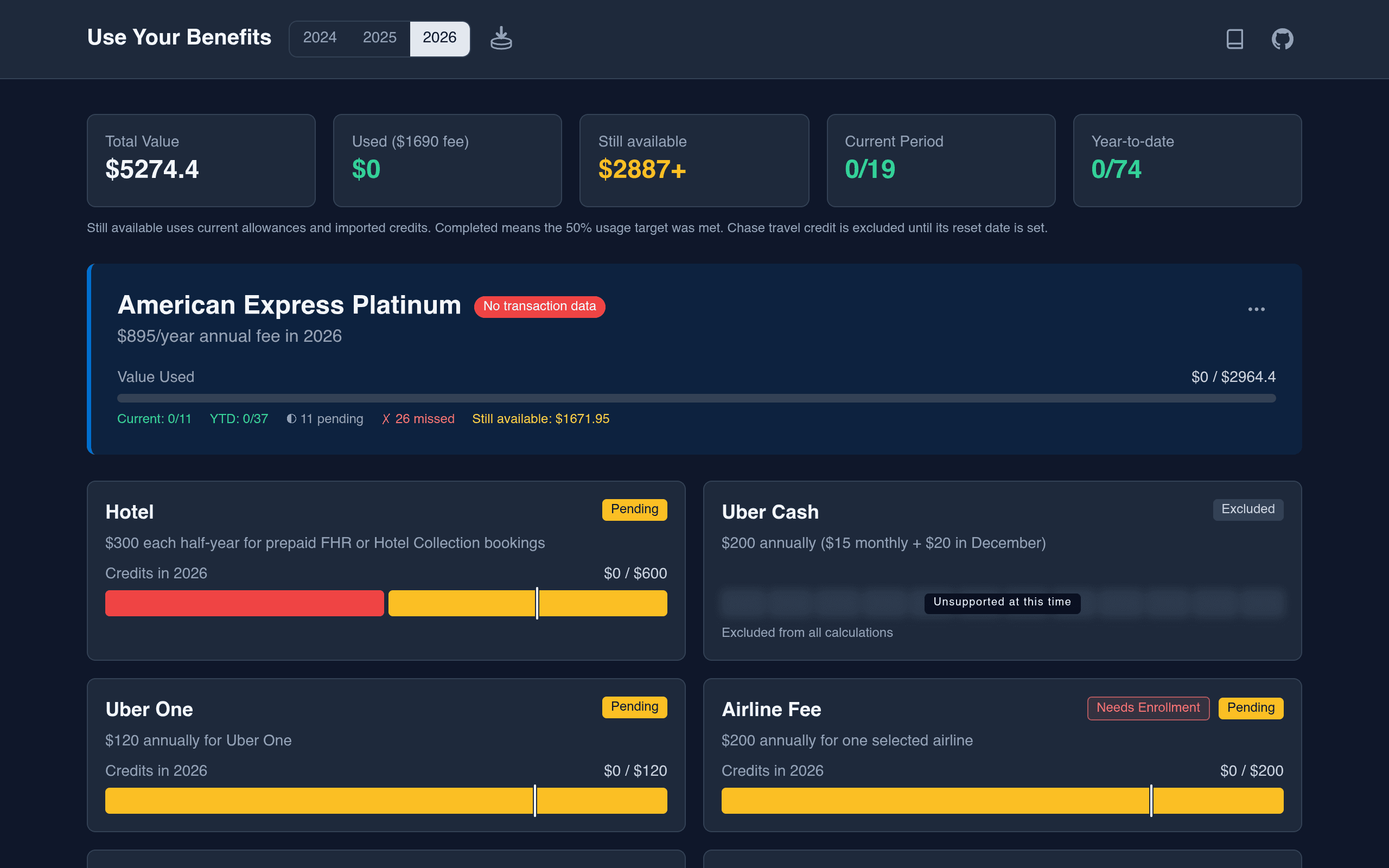
Premium credit cards are a math problem most people lose. An $895 annual fee buys you $300 in hotel credits, $200 in airline fees, $200 in Uber Cash, $120 for Uber One — but only if you actually remember to use them before they expire. Use Your Benefits exists because the author was tired of leaving money on the table. The dashboard tells the whole story at a glance: Total Value $5,274.40 across your cards, Still Available $2,887+, and per-card breakdowns showing exactly what's used, what's pending, and what's been missed. Each benefit card — Hotel, Uber Cash, Uber One, Airline Fee — carries its own status (Pending, Excluded, Needs Enrollment) and a progress bar for the year's credits. The screenshot shows an American Express Platinum with $1,671.95 still available and 26 missed credits staring back at you. That "26 missed" number is the app's entire reason for existing. It's vibe-coded with Claude and MiniMax in OpenCode, built on Bun with React + Vite and Tailwind. The year switcher (2024/2025/2026) suggests it's designed for the long haul — benefits reset annually, and so does your memory of them. For anyone paying premium annual fees, this is the closest thing to a refund button. Note: This project is curated by the VibeFix editors from public sources. All rights belong to the original creator. --- ---
V@VIBEFIX
0
0
8
0

大赏
已上线
娱乐claude-code
人生K线
输入出生信息,三秒生成你的人生 K 线图:八字排盘结合大运流年,把"人生关键阶段"画成一张可读的趋势图。
如果把人生画成 K 线图,会是什么样子?人生K线(lifekline.net)给出了一个认真的回答:输入性别、出生年月日时、出生城市,约三秒生成一张专属的"人生趋势图"——用八字排盘结合大运流年的计算,把传统命理变成一张现代人看得懂的可视化图表。 首页的文案很克制:"看清人生关键阶段,读懂下一步。"热门测算主题直接戳中当代焦虑:哪一年适合跳槽/创业?人生财富高峰在何年?感情走势与正缘年份?哪十年是人生巅峰大运?时辰选择细到子时、卯时、午时,公历农历可切换,还支持真太阳时校正——细节做到这个份上,看得出作者对命理不是玩票。 技术上这是个标准的现代 Web 应用:React + TypeScript + Vite,K 线图用 Canvas 绘制,部署在 Cloudflare Pages 上。据作者在 V2EX 原帖自述,整个项目用 Claude Code 两天写成。本地历法严谨测算、保护个人隐私是它主打的卖点,登录后免费生成趋势图,完整解读按积分解锁。 信则有、不信则无——但把玄学做成数据可视化,这个点子本身就值得一看。两天时间、一个人、一个 AI,这就是 vibe coding 时代的产品速度。 注:本项目由 VibeFix 编辑从公开渠道精选收录,版权归原作者所有。 --- ---
V@VIBEFIX
0
0
7
0