Loading user projects
VI
VIBEFIX
这个用户还没有填写个人简介。
加入于 7/11/2026
192
发布项目
0
迭代需求
0
已迭代
0
获赞
0
收藏
1315
浏览
0
评论

大赏
已上线
设计创意
GlyfiQ
Medical & health icon plugin for Figma, Framer & Illustrator — vibe-coded from scratch by an icon designer
GlyfiQ is a medical and health icon plugin for Figma, Framer, and Adobe Illustrator — one designer, one style, every icon drawn by hand. The library currently ships 770 premium icons plus 75 free ones, with editable stroke weights (Light, Regular, Bold in one click), smart search using real medical terminology, and a growing roadmap targeting 6,000+ icons. The free tier covers personal use; Pro is $10/month with commercial rights and custom icon requests that get hand-drawn and added to the library. Behind it is Alex Blogoodf, a professional icon designer with over ten years of experience creating vector assets for platforms like Shutterstock, Adobe Stock, and iStock — who had zero development experience. On the Product Hunt launch page he states it plainly: "I vibe coded the whole plugin from scratch — zero dev experience." The plugin is now live on all three platforms, and the library keeps growing every month. GlyfiQ is a held-over candidate from the previous cycle: it was re-verified live today and is actively maintained — the icon count has grown since last check and the site roadmap now lists the current milestone at 538+ icons in progress toward the 2,000+ target.
V@VIBEFIX
0
0
1
0

大赏
已上线
安全隐私claude-code
Lictor AI
A security audit crew for vibe-coded apps — 48 plain-English checks delivered as Claude Code skills
Lictor is the bodyguard vibe-coded apps didn't ship with. It's an open-source (Apache-2.0) skill suite that installs into Claude Code as a plugin and gives you four slash commands: /lictor-security-check runs a 48-check audit mapped to the OWASP Top 10 for Web, API, Mobile, and LLM apps plus the CWE Top 25; /lictor-explain translates any finding into plain English; /lictor-fix-it applies fixes with your approval; and /lictor-rotate walks a leaked key through rotation. Everything runs 100% locally — no token, no signup, no telemetry — and every check is a Markdown file you can read before it runs. The audit is performed by a crew of eleven named specialist agents — Wolf the orchestrator, Hawk the pattern scout hunting the bug shapes vibe-coders ship most (RLS gaps, env-var leaks, unsigned webhooks), Lyrebird the voice keeper rewriting findings as "your X does Y, anyone can do Z" — with a measured benchmark so the accuracy claims are verifiable. On top of the free suite, Lictor Patrol scans the public internet for AI-built apps leaking live keys (3,700+ critical and high-severity findings surfaced, none ever exploited, disclosed ethically), and a hosted business plan starts at $49/mo. The meta story: Lictor itself was "Built in 30 days by one person and an 11-agent crew," per its launch announcement — a 20-year security engineer who got tired of watching Lovable/Bolt/v0 apps leak Firebase keys on day one, paired with Claude. The GitHub repo (Raffa-jarrl/Lictor-AI, 18 stars) states it plainly in its README: "Built by a 20-year security engineer + Claude."
V@VIBEFIX
0
0
1
0

大赏
已上线
游戏claude-code
Harmless — Open Vibe Coded Elite
A playable browser tribute to Elite (1984), built entirely by Claude as an 'Open Vibe Code' experiment
Harmless is a love letter to Elite (1984), recreated for the browser. All 2,048 worlds of the original are here across eight galaxies — each with the same name, government, prices, and description as in 1984, generated with the original's own arithmetic. Lave is still a rich agricultural dictatorship at tech level 5. You trade, jump, fight pirates, fly wireframe Cobras and Anacondas, and dock with the spinning Coriolis station — the hardest part of the game, just like the original. It plays on a phone, saves in your browser, and needs no account. What makes it a story is how it was built — and how it's being developed. In the Show HN post, the author wrote: "I've had Claude (and other models) building this for me... It's an 'Open Vibe Code' project." The GitHub README (atomic14/harmless) is even more blunt: "I have not looked at the code. I have no intention of looking at it. All the work has been done by Claude and other coding agents." The experiment extends to maintenance: no pull requests are accepted. Instead, contributors open an issue describing what they want, and the author periodically points Claude at the issues and sees what it does. The result is already "very playable" — trading, contracts, missions, convoys, and pirates that hunt you.
V@VIBEFIX
0
0
1
0
大赏
已上线
教育cursoropenai-codex
CustomNameTrace
Free custom handwriting tracing worksheets for kids — vibe-coded in 8 days with Cursor and Codex
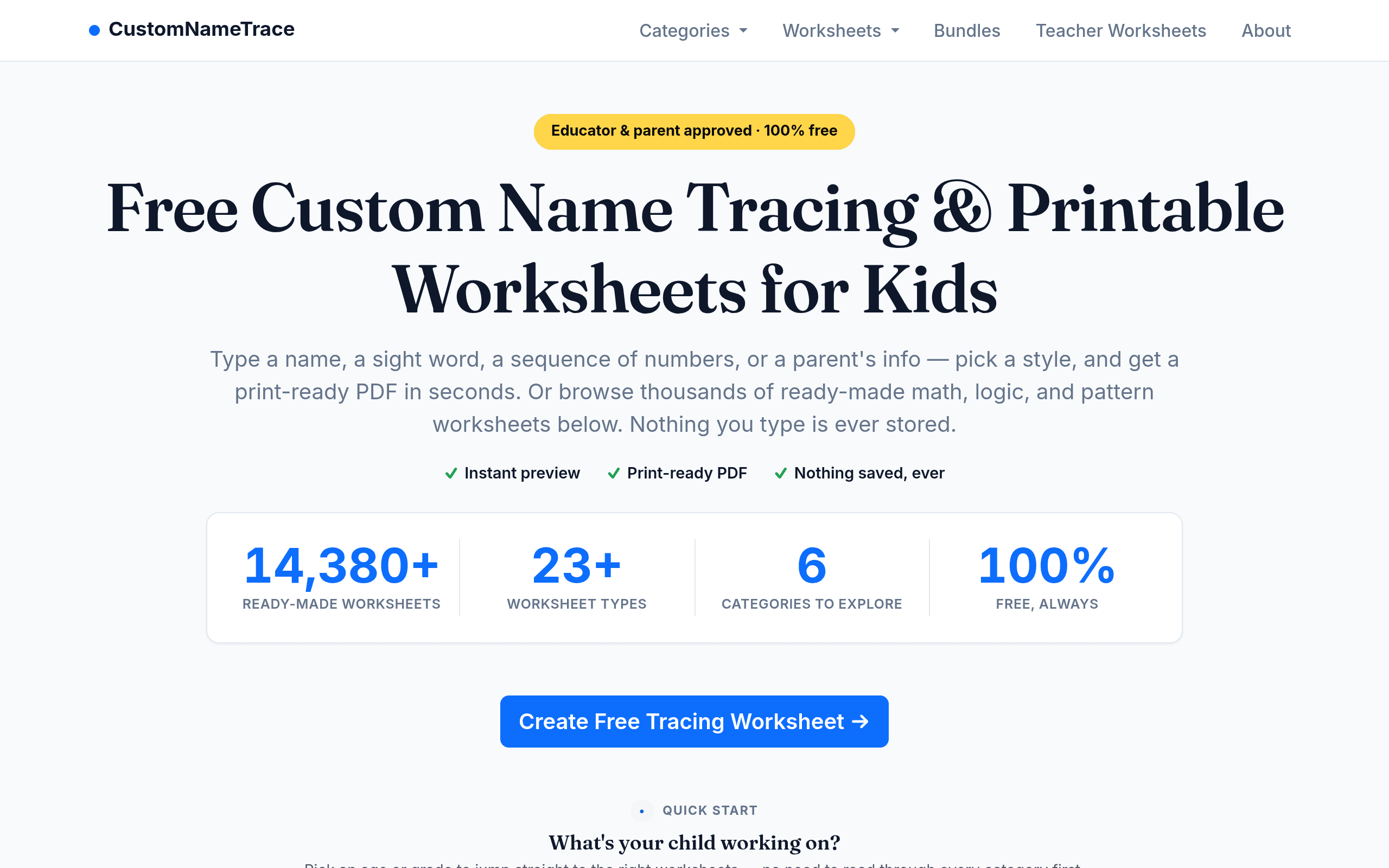
CustomNameTrace is a free tracing-worksheet generator for young kids. Type a child's name, a sight word, a string of numbers, or even a parent's name and phone number, pick a tracing style — dotted, outline, fade, rainbow, trace-copy-write, or blank practice — and get a print-ready PDF in seconds. The same rendering engine powers 23 worksheet types and a library of 14,380+ ready-made worksheets, from Dolch and Fry sight words to math facts and logic puzzles. Teachers get a Batch Mode: paste a class list of up to 30 names and receive one combined PDF, one personalized worksheet per student. Everything is free with no account and nothing stored — the site states that nothing typed is ever saved or logged. The build story is the point: the author documented it in a YouTube video titled "I Vibe Coded a SaaS App in 8 Days Using Cursor & Codex (Launch Day)", stating he "built and launched CustomNameTrace.com in just 8 days using AI coding tools like Cursor AI and OpenAI Codex." Eight days from idea to a shipped, revenue-capable SaaS is exactly the kind of turnaround vibe coding promises — and this one is a genuinely useful tool for parents and classrooms.
V@VIBEFIX
0
0
1
0
大赏
已上线
工具
CSV Dock
本地优先的 CSV 工具箱:文件不出浏览器,查看、搜索、转换、校验一次搞定
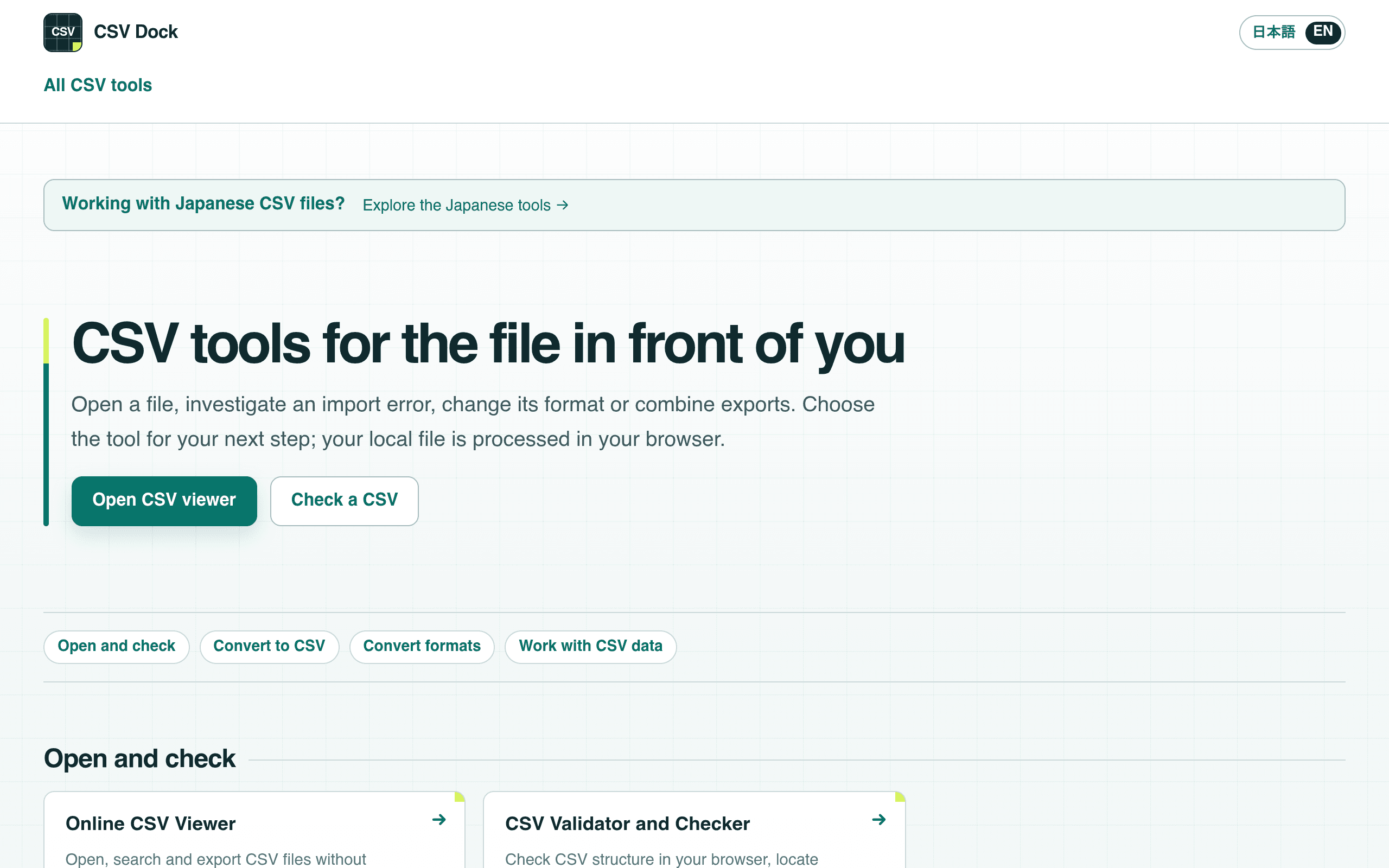
CSV Dock 是一个本地优先的 CSV 工具站:文件直接在浏览器内处理,不上传到任何服务器,也不需要注册账号——直击「不愿把含业务数据的 CSV 传到陌生服务器」的真实顾虑。功能覆盖查看/搜索/排序、CSV↔Excel(XLSX/XLS)/JSON/JSON Lines 互转、CSV 转 SQL/Parquet/XML/Markdown/YAML、多文件合并、列编辑、拆分、去重、按 Key 对比合并,几乎把散落在各网站的表格工具收拢到一个页面。 亮点是编码与校验:UTF-8/UTF-16/Windows-1252/Shift_JIS 等编码自动检测加手动切换,解决 Excel 打开 CSV 乱码、前导 0 丢失等经典问题;CSV 结构检查能发现列数异常、重复表头、不可见字符。作者在 V2EX 原帖写明这是「vibe coding 了个不上传文件的 CSV 工具箱」,站点功能完整在线,连日语版 CSV 工具都已上线。
V@VIBEFIX
0
0
6
0

大赏
已上线
设计创意nano-banana
表情厨房
AI 微信表情包一键生成器:选风格、自定义文案,生成+切割+上架素材全包
表情厨房瞄准一个很具体的中文互联网需求:把自己的表情包上架到微信表情商店。传统流程要自己画图、切图,再准备横幅、封面、图标、赞赏图、艺术家资料图一堆规格素材,门槛极高。表情厨房把全流程做成一站式:选表情风格与主题、自定义文案(不写则 AI 自动生成)、AI 生成图片、在线切割为 240×240 标准尺寸,再一键导出微信表情开放平台所需的全部上架素材;还支持上传参考图生成专属表情包、照片转动态 GIF 表情。 作者在 V2EX 的分享帖标题就是「我的第一个 Vibe coding 产品」,图片生成用的是 Nano Banana。已验证的不止是功能:帖子里已有用户反馈「已提交微信表情通过了」「提交了四个,都通过了」,作者自己的专辑有 1000+ 下载、2.5 万次发送,还有 V 友付费支持——一个 vibe-coded 练手项目,跑通了真实的商业闭环。
V@VIBEFIX
0
0
8
0
大赏
已上线
游戏claude-code
SwapDeck
Switch Steam accounts in one click, and launch every game with the right account, monitor, resolution and sound.
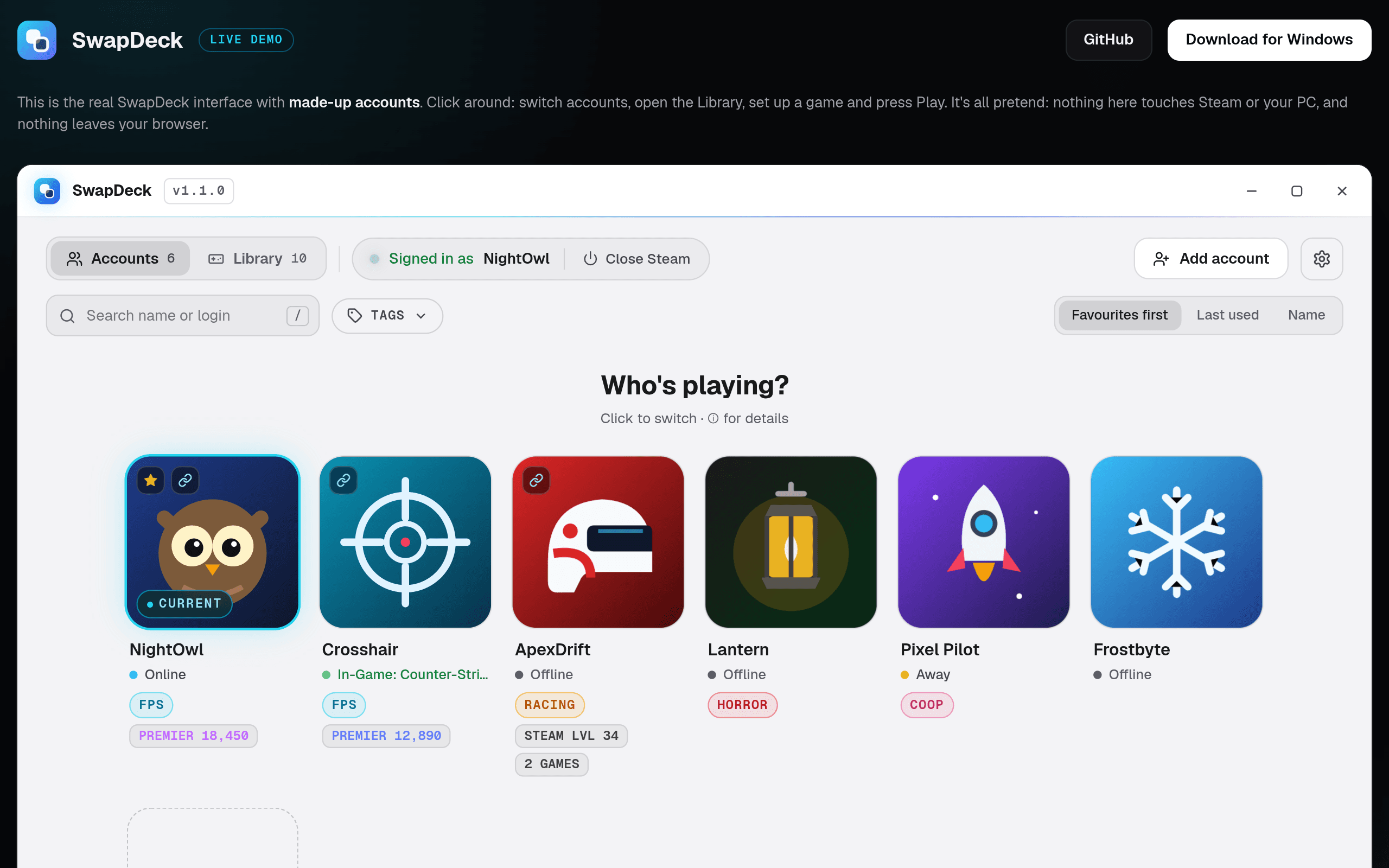
SwapDeck solves a niche-but-real pain for multi-account Steam players: switching accounts usually means retyping passwords and Steam Guard codes. Here, one click does it — and pressing "Play" completes the whole ritual automatically: switch account, set the primary monitor, resolution and sound device, launch companion apps like SimHub, then restore everything on exit. Sim-racing setups with ultrawide monitors and wheel software are first-class citizens. Author byteminite is blunt in the README's "How it's made" section: "SwapDeck is vibe coded: it was designed, directed and tested by me, and the code was written by Claude, using Claude Code running in Munder Difflin, a free, open source multi-agent harness." Ten days from zero to a complete desktop app with auto-updates, a tray panel, controller support and a playable browser demo (the site ships with made-up accounts so you can click through the real interface). Local-first: no accounts, no telemetry, data stays on your machine. Released 2026-09-29, pushed daily through 2026-10-08.
V@VIBEFIX
0
0
8
0

大赏
已上线
生活方式kiro
一饭封神
输入手头食材,一键生成专业菜谱:中华八大菜系+国际料理,附营养分析与 AI 菜品效果图
一饭封神解决的是「今晚吃什么」的千古难题:输入手头现有的食材(支持拍照识别),选一个菜系,一键生成一份专业级菜谱。每道菜附带营养分析、健康评分、侍酒师级别的酒水搭配,还有 AI 生成的菜品效果图;内置「料理占卜」「满汉全席」等趣味玩法,覆盖中华八大菜系与国际料理。 作者在 README 中明确写道,这是通过 Kiro 编辑器「从需求分析、架构设计到代码实现全流程开发」的 Vibe Coding 作品,仓库打着 vibe-coding 标签,已收获 3572 star。它还内置动态 AI 配置系统:运行时可切换任意 OpenAI 兼容模型服务(DeepSeek、豆包等)。演示站目前 live 可交互,作者的 AI 开源作品仍在聚合维护中。
V@VIBEFIX
0
0
7
0
大赏
已上线
开发工具qclawclaude-code+1
AI Animation Skills
12 个 AI Agent 动效 Skill:一句话生成 PPT 翻页、流程图、架构图、视频分镜等炫酷 HTML 动画
AI Animation Skills 是一套「让 AI 做动画」的 Agent Skills:装好之后,对 AI 说一句话,就能生成带炫酷动效的完整 HTML 页面。12 个 Skill 覆盖 PPT 翻页、流程图、网络协议可视化、动态架构图、学霸笔记、卡片剧场、手机 UI 演示、视频分镜、Win11 仿真、瑞士风图表等场景——需求到成品之间,只剩一句话的距离。 仓库 README 明示,这是「基于 WorkBuddy / Claude Code / Cursor 等 AI Agent 的动效 Skill 集合」;其中的 dynamic-archify 更是作者用 AI 编程 Agent QClaw 魔改开源项目 archify 而来:静态图表变成带流动粒子动画、明/暗双主题切换、一键导出 PNG/GIF/WebM 的动态架构图。项目 4 月创建、10 月 5 日仍在加新 Skill,已收获 1466 star。对 AI 视频与科普创作者而言,这就是一条现成的动画生产线。
V@VIBEFIX
0
0
8
0

大赏
已上线
游戏
Realms of Eldermyr
A free browser MMO, six weeks of vibecoding — 300 players showed up in an hour
Realms of Eldermyr is a free pixel-art MMO that plays entirely in your browser — no download, no install. "Five towns fell to the Legion. Eldermyr held." Seven heroes, five towns to free, one dragon to ride. What makes it a story: the author, josiahturnq, has been documenting the build in public under the series title "Wk. 6 of Vibecoding an MMO" on Hacker News. "6 weeks of vibecoding brings the AI hype, and sets a truer expectation of substantial progress," he wrote. The reality check was brutal and fun: "I wasn't ready for the 300 players in 1hr" — 35 people playing at once in a game that was vibed into existence weeks ago. Updated three days ago, with a field guide and patch notes on the site.
V@VIBEFIX
0
0
11
0
大赏
已上线
图片视频gpt-6-astra
Photo Scrubber
Blur faces and strip metadata locally in your browser — built with GPT-6 Astra
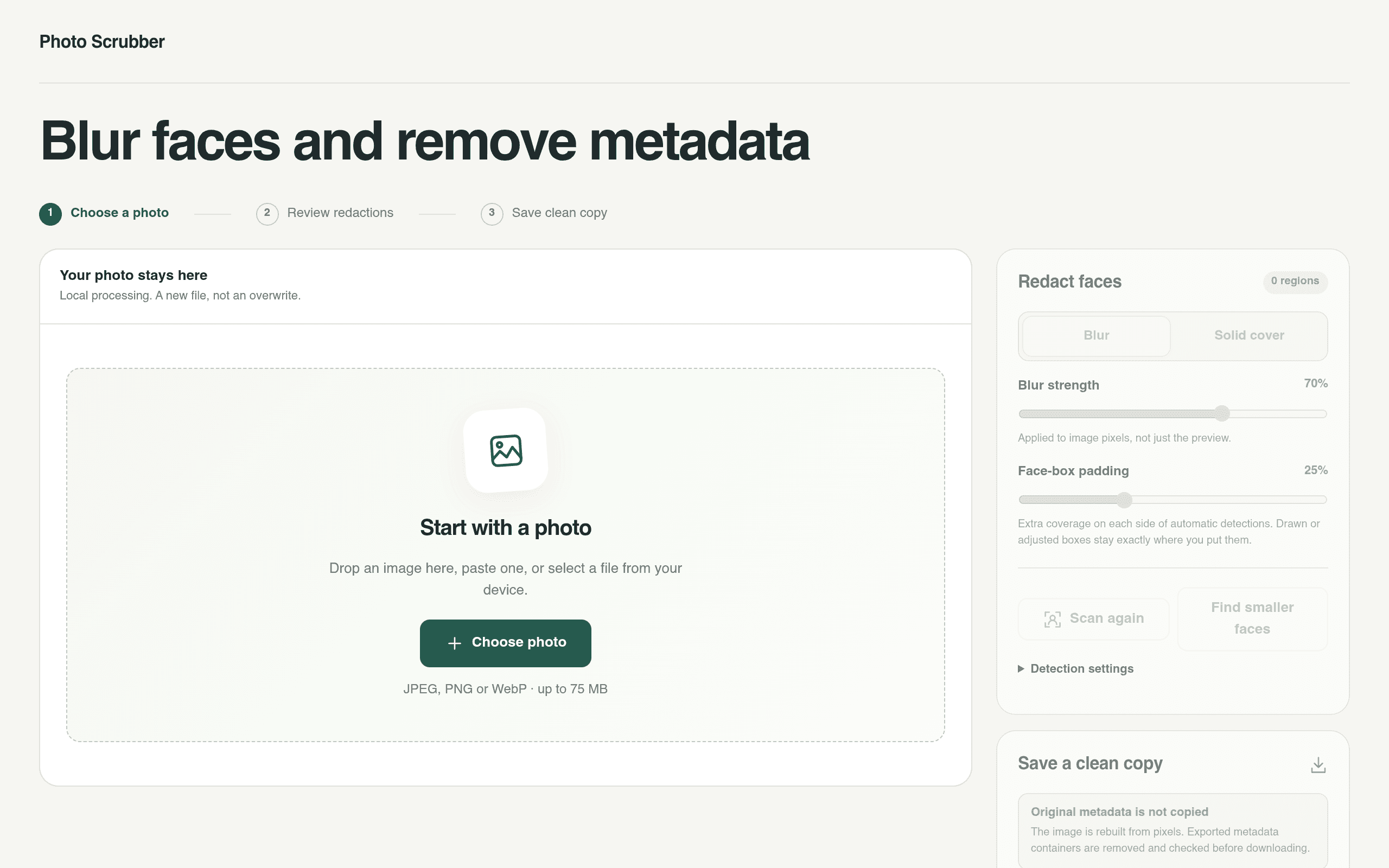
Photo Scrubber blurs faces and removes metadata from your photos — with everything happening locally in the browser, so your photo never leaves your machine. "I had GPT-6 Astra build this experimental tool that would identify faces and automatically blur them out," wrote Simon Willison, and the colophon marks it "photo-scrubber code / AI generated". Under the hood it runs Google MediaPipe (BlazeFace) compiled to WebAssembly for face detection, with adjustable blur strength, face-box padding, and manual redaction regions. The "Save a clean copy" step rebuilds the image from pixels so metadata containers are removed before download. Built September 29, 2026 — another of Willison's prompt-driven tools, and a genuinely useful privacy utility.
V@VIBEFIX
0
0
10
0
大赏
已上线
音乐音频claude-opus-55
Scrimshaw Jukebox
A pixel-art jukebox playing AI-composed adventure-game music — vibe-coded with Claude Opus 5.5
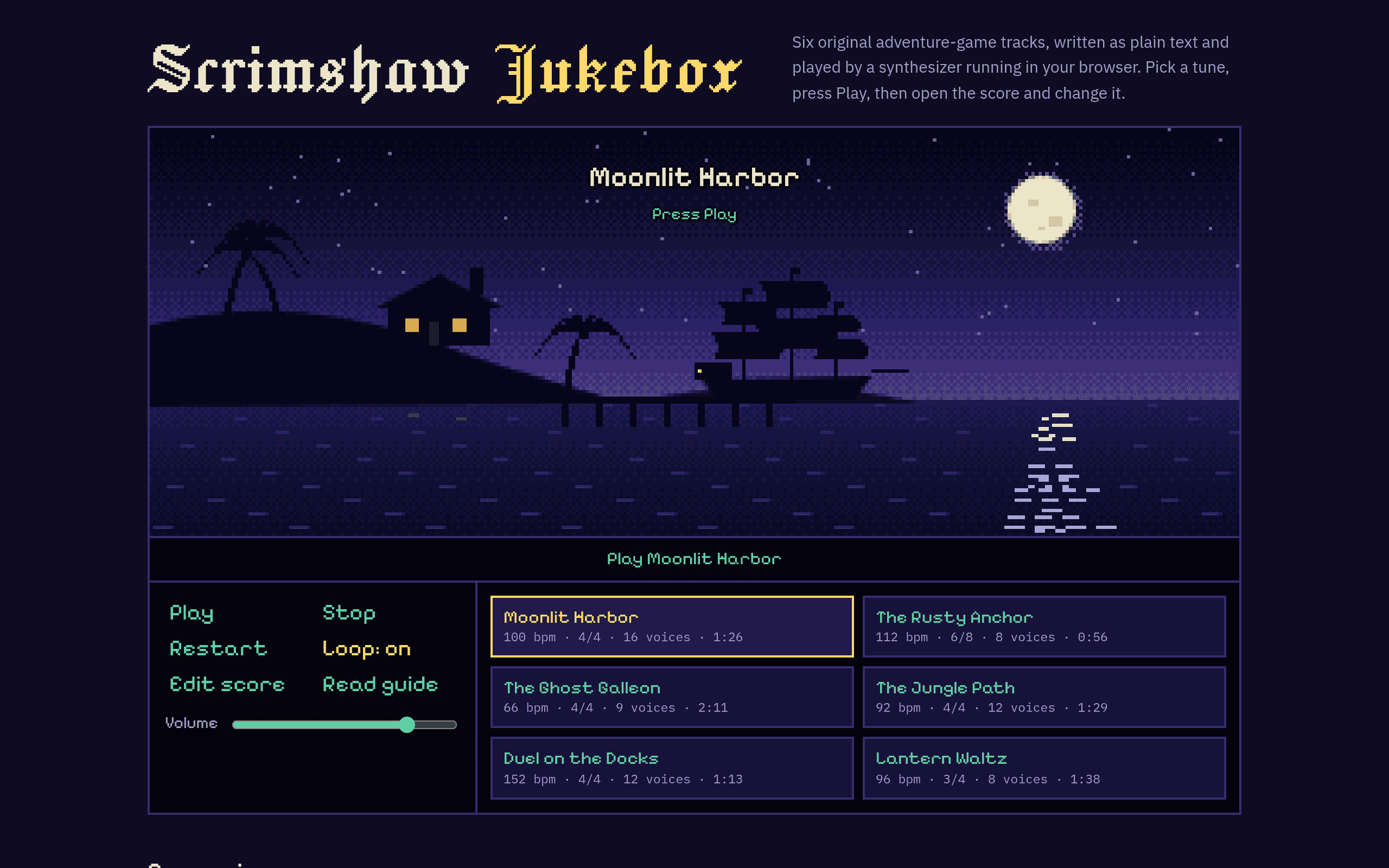
Scrimshaw Jukebox started as an experiment: "I wanted to see if Claude Opus 5.5 could compose music, so I tried this," wrote Simon Willison on his blog. He had the model design a plain-text score format, then build a playable artifact around it — the result is six original adventure-game tracks (Moonlit Harbor, The Rusty Anchor, The Ghost Galleon, The Jungle Path, Duel on the Docks, Lantern Waltz) played by a synthesizer running entirely in your browser. Each track gets its own pixel-art scene that changes with the music, and you can open the score and edit it live — the whole thing is one of Willison's prompt-driven experiments ("Miscellaneous HTML+JavaScript tools built mostly with the help of LLMs"), with the colophon marking "scrimshaw-jukebox code / AI generated". Added October 6, 2026; the simonw/tools repo has 1,907 stars and is pushed daily.
V@VIBEFIX
0
0
9
0
大赏
已上线
设计创意lovable
ThumbForge AI
AI-powered YouTube thumbnail generator — built with Lovable AI
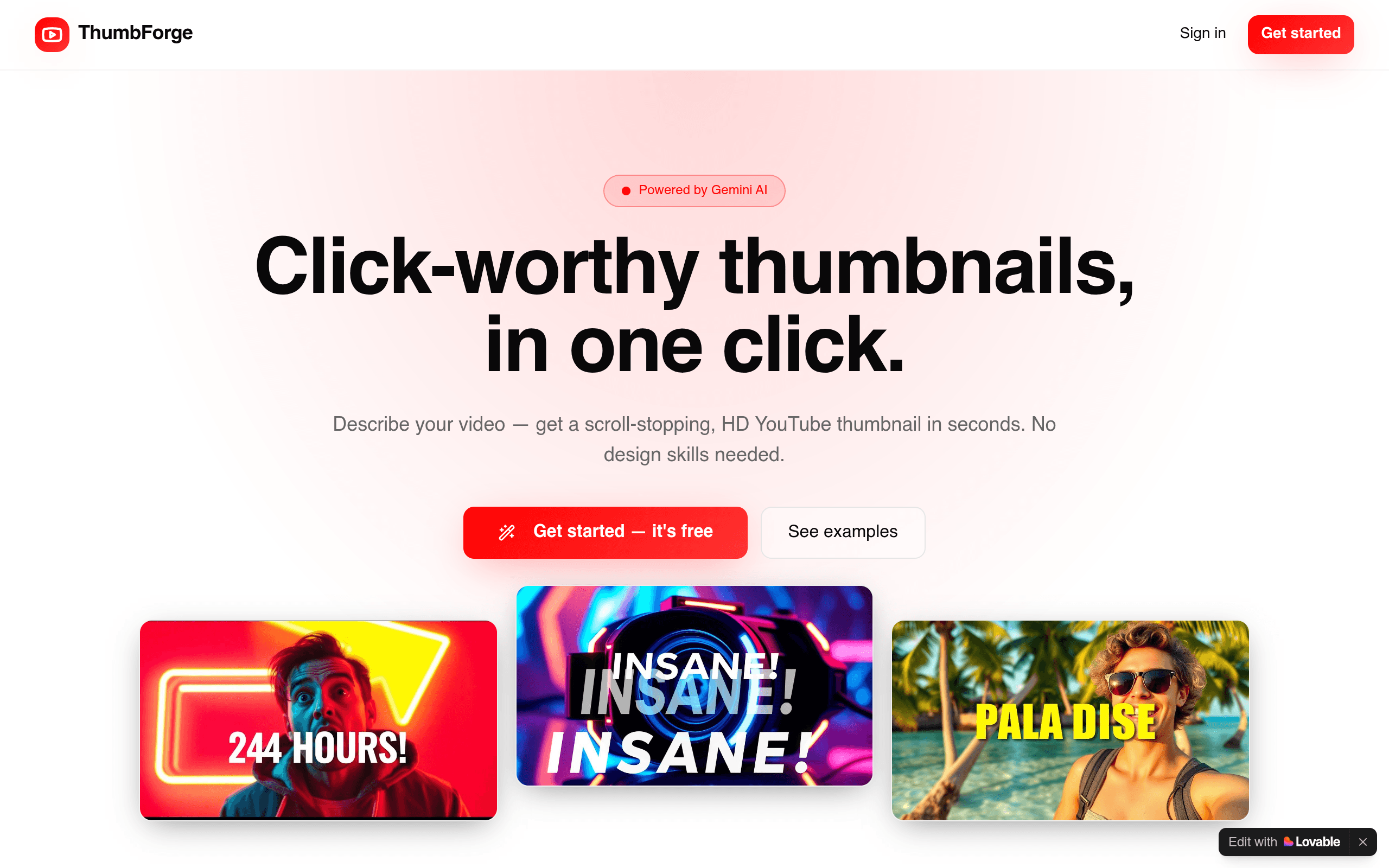
ThumbForge AI turns a text description into a scroll-stopping, HD YouTube thumbnail in seconds — no design skills required. The landing page shows the generator's own output front and center, and it's "Powered by Gemini AI" for the image generation itself. The author's GitHub repo description puts it plainly: "AI-powered thumbnail creating platform built with Lovable AI" — and the README's tech-stack table lists Lovable for the "development & deployment workflow". The repo was still being updated on October 6, 2026. A textbook Lovable-era product: describe the job, get a working tool.
V@VIBEFIX
0
0
8
0
大赏
已上线
娱乐lovable
ActSolo.AI
An AI scene partner and teleprompter for solo actors — built with Lovable
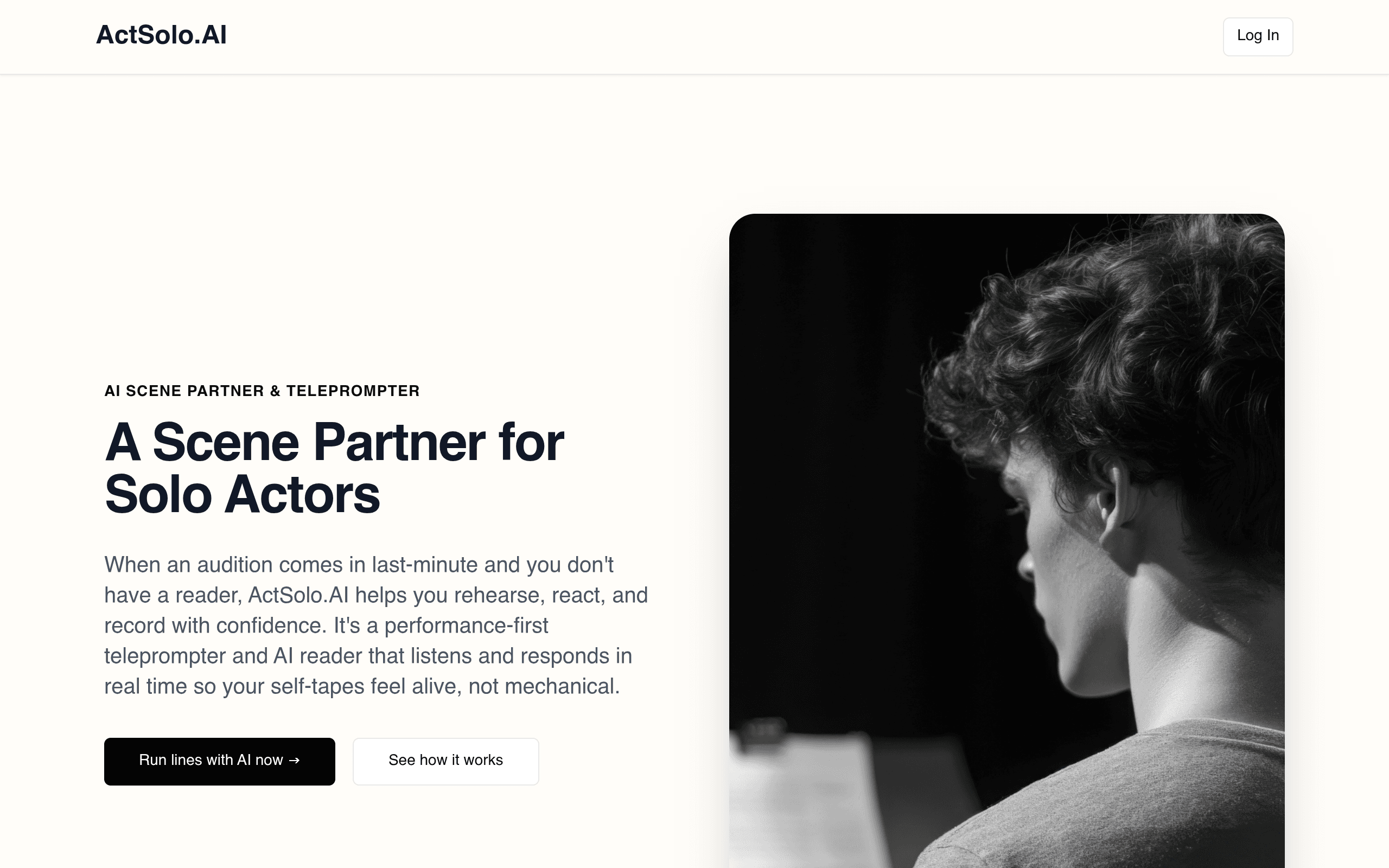
ActSolo.AI is an AI scene partner and teleprompter for actors who don't have a human reader around. Paste any script, assign AI voices to each character, and the app reads lines back in real time through the ElevenLabs Realtime API — so you can rehearse, react, and record performance-ready self-tapes on your own. The author — an actor himself — states the app was "built with Lovable, Supabase, ElevenLabs Realtime API for conversational voice" in the GitHub repo description, and the commit history still carries Lovable's edit markers, with new pushes landing today. It's a clean example of what vibe coding is best at: the person who feels the pain builds the tool for their own craft, and ships it in weeks rather than quarters.
V@VIBEFIX
0
0
8
0

大赏
已上线
商业claude-code
AI Employees
Open-source AI employees: 8 scheduled business roles, 60 routines — built with Claude Code
AI Employees is an open-source roster of AI workers: 8 scheduled business roles with 60 routines, from sales and SEO to a chief of staff. The README states it plainly: "Built by Mark Fulton with Claude Code." Each "employee" is a Claude Code skill bundle (the repo doubles as a Claude Code plugin with a single `hire` skill), and the system runs on the agent you're already logged into — Claude Code, OpenClaw, Codex, Cline, Manus and 9 more are listed as supported harnesses. Routines record verified deliverables separately from successful runs, with atomic claims for interrupted work and configured handoffs between roles. The author runs a 340,000-member vibe-coding community and his own business on the system every weekday — dogfooding at scale. With 496 stars and commits this week, it's one of the more grounded takes on the "AI workforce" idea: not a platform pitch, but an open skill set you can hire today.
V@VIBEFIX
0
0
8
0
大赏
已上线
开发工具
LDRAW Nova
Agent tooling that generates buildable LEGO models — vibe-coded with GPT-6 Astra and Claude Opus 5.5
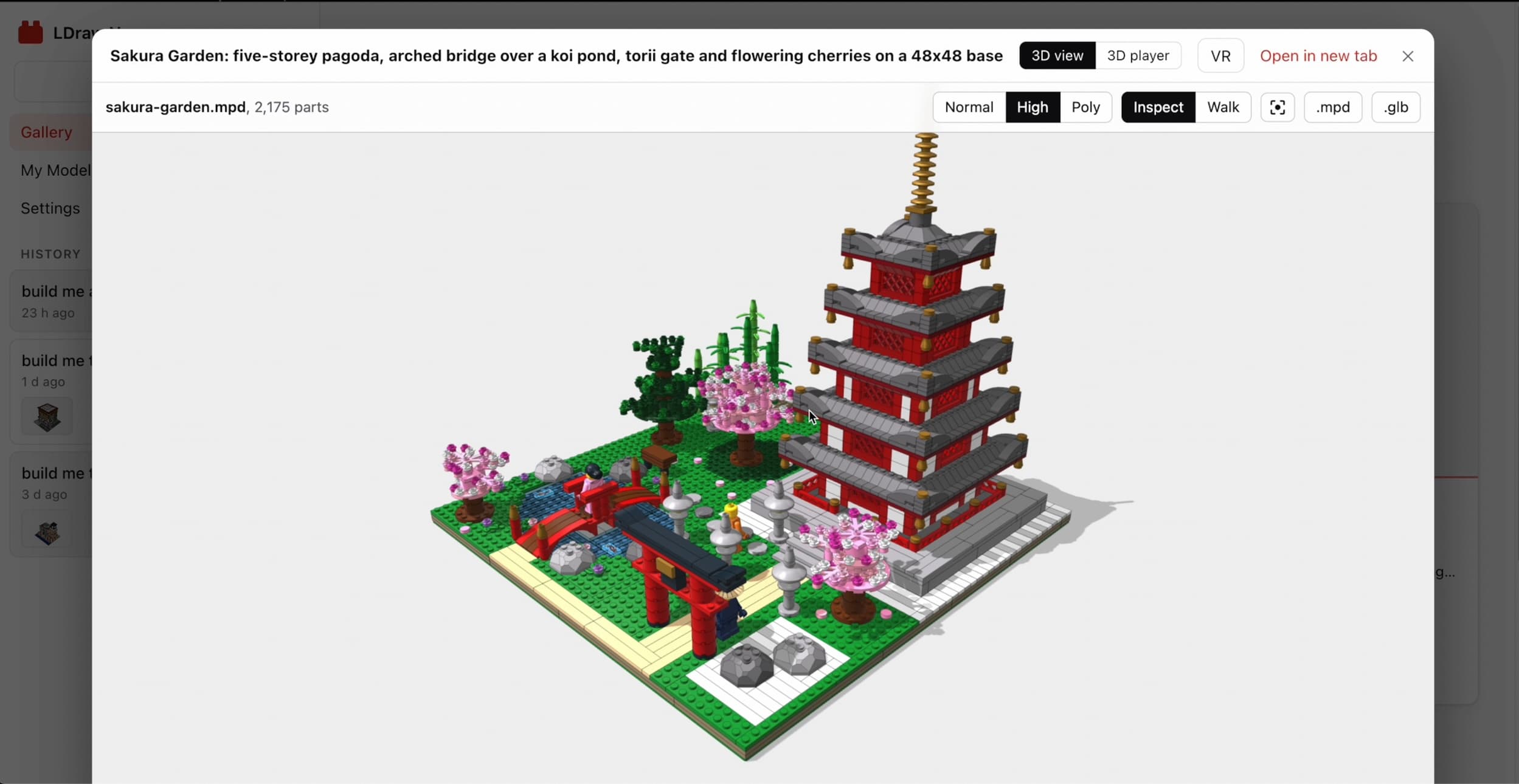
LDRAW Nova is agent tooling for generative LEGO model building — and its author says the idea only became buildable when the models caught up: generating LEGO models that are actually valid "proved really hard to get right, even if vibe coding it... until GPT-6 Astra and Claude Opus 5.5 arrived," at which point the project itself was vibe-coded. The output is Python code that produces mathematically valid models, exportable as Blender-editable glTF — the showcase render is a Sakura Garden pagoda scene assembled from real parts. The repo includes agent instructions, model-checking scripts and worked examples, treating the AI agent as a first-class collaborator rather than a code autocomplete. It's a neat inversion of the usual story: here the vibe-coded artifact isn't an app but a toolchain that lets agents do physical-world-valid design. 309 stars and commits this month suggest the LEGO-builder niche is very much alive.
V@VIBEFIX
0
0
7
0

大赏
已上线
游戏claude-code
World of Skatecraft
Skate 3-style skateboarding inside World of Warcraft 1.12.1 — vibe-coded with Claude Code, just for laughs
World of Skatecraft puts Skate 3-style skateboarding inside World of Warcraft 1.12.1 — an unofficial fan project built on the benilla client. The author's README is disarmingly honest: "Vibe coded, just for laughs. This whole thing was put together with an AI coding assistant (Claude Code) for fun." Under the hood it's a serious technical exercise: a Rust codebase using the Bevy engine, with its own AGENTS.md, troubleshooting and install docs, and commits landing this week. The result is exactly what the premise promises — grinding through Azeroth's cobblestone streets with a health bar and action bar still on screen. Not every vibe-coded project needs to be a SaaS. Skatecraft is the pure-joy end of the spectrum: a technically non-trivial mod built for laughs, documented like a real project, and maintained like one too.
V@VIBEFIX
0
0
8
0
大赏
已上线
游戏claude
Deckroad
An endless runner × deckbuilder vibe-coded with Claude in 3 hours — zero assets, daily challenges
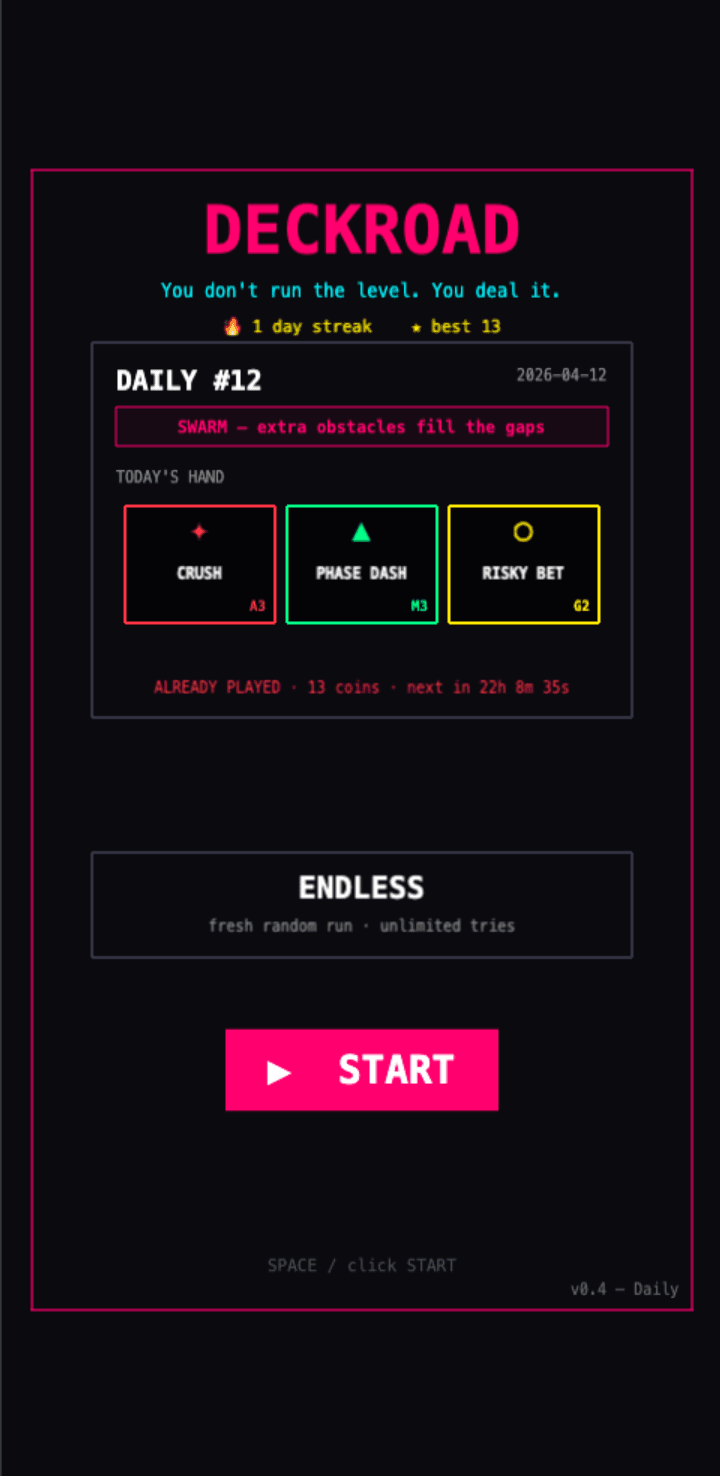
Deckroad was built entirely through vibe coding with Claude in about 3 hours of actual prompting — and it's a genuinely playable game. The concept smashes two genres together: at every checkpoint you pick a card, and that card builds the next section of the track you run on. The constraint is the interesting part: zero external assets. No PNGs, no MP3s, no spritesheets — visuals are drawn with the Phaser 3 graphics API, sound effects and background music are synthesized with Web Audio oscillators, and the whole game ships as one JS bundle wrapped in a 4-color glitch-terminal aesthetic (ASCII rain, scanlines, CRT shutdown on death). A daily mode gives everyone the same seed and one attempt per day, with shareable emoji scorecards. This is the first release from Ludo Sphere, a solo indie studio with a plan to ship a small game every month and double down on whatever the data says works. Deckroad is the "vibe coding can ship real games" thesis in its most concentrated form: 3 hours, one bundle, playable in the browser today.
V@VIBEFIX
0
0
7
0
大赏
已上线
设计创意claude-opus-55
PhotoCraft
A free, open-source Photoshop alternative in pure Rust — vibe-coded with Claude Opus 5.5
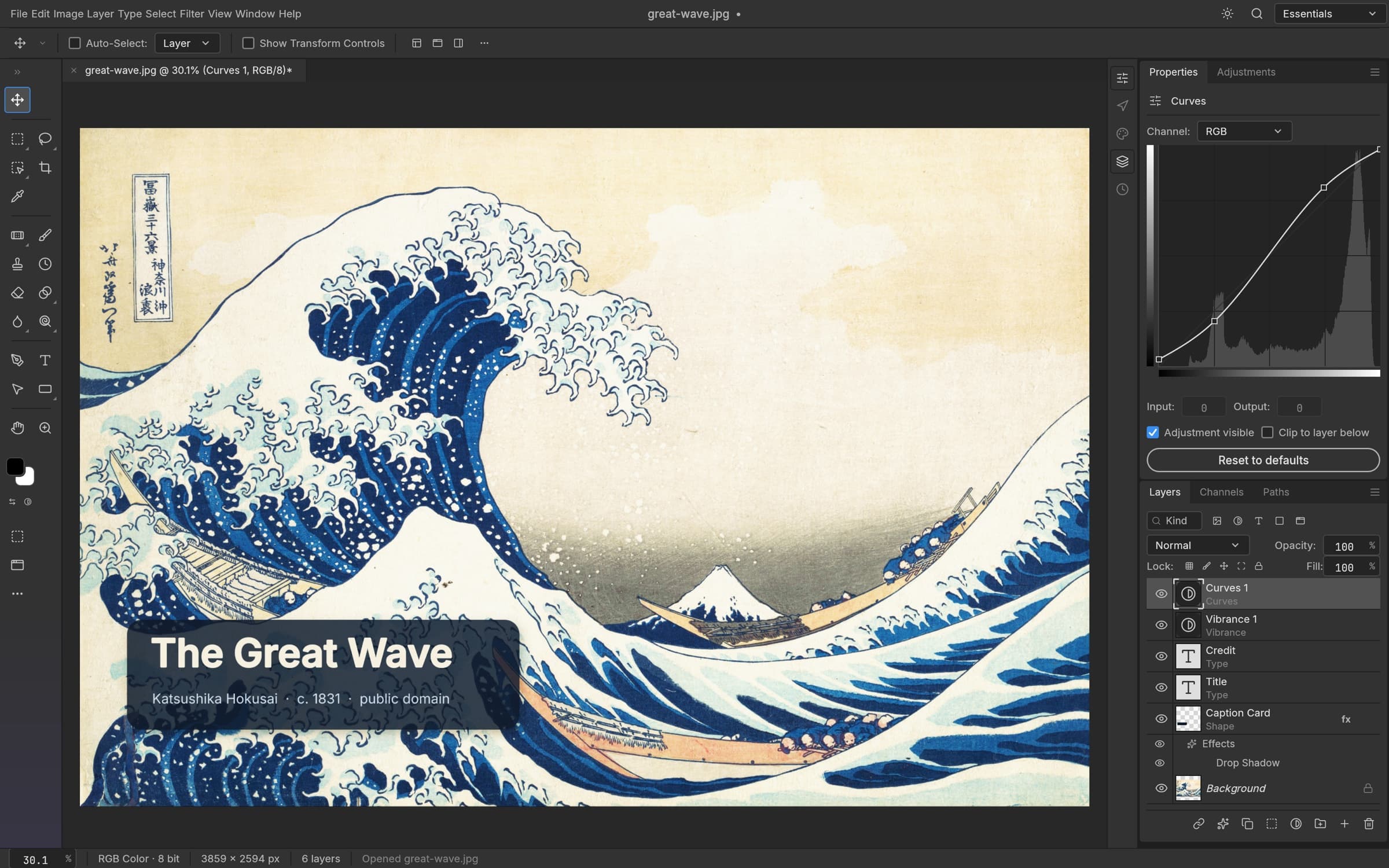
PhotoCraft is an open-source, clean-room reimplementation of Adobe Photoshop in pure Rust — and one of the most audacious vibe-coding demos of 2026. Its creator, Atlanta-based developer Brandon Thomas, announced in his own release posts that he recreated 7 of Adobe's top applications (Photoshop, Illustrator, Premiere, Lightroom, Acrobat Pro, After Effects and InDesign — released as PhotoCraft, VectorCraft, FilmCraft, LightCraft, PrintCraft, EffectCraft and DesignCraft under the ArtCraft umbrella) using Claude Opus 5.5 and Rust, and published the work open source. The numbers are startling for a project announced days ago: over 21,900 stars and 2,800 forks on GitHub, with commits still landing today. PhotoCraft runs natively — no Electron, no web view — with copy-on-write tiles, multithreaded filters, GPU backends (Vulkan, DX12, WebGPU), and support for opening real PSDs. Every screenshot in its repo is the real app at work on public-domain art, rendered offscreen through its control channel. What to make of it: the quality is rough in places (early hands-on reports call it "glitchy but real"), and Adobe-scale applications are a decades-long undertaking. But as a statement about where vibe coding can reach when paired with a strong systems language, PhotoCraft is hard to ignore — 21,900 stars in a week is the market voting with its bookmarks.
V@VIBEFIX
0
0
8
0

大赏
已上线
商业lovable
YourBookFlow
A booking platform for coaches and service businesses — designed and built entirely in Lovable by a non-developer
YourBookFlow is a booking platform for coaches and service businesses — and its founder is not a developer. The whole product was designed and built entirely in Lovable, and it is live on the market now, taking real payments. What it does: each coach gets their own booking page where clients pick a time, pay, and burn package credits automatically. Students can reschedule or refund themselves, multi-coach academies are supported, and payments go through Stripe with 0% commission taken by the platform. It is a real commercial SaaS, not a demo: Solo plan at $32.5/month, Academy at $82.5/month, 14-day free trial, no credit card required. The founder documented the build in a Lovable tutorial video in late September 2026 and keeps iterating on the product. For VibeFix readers the story is the point: a non-technical founder shipped a revenue-generating booking SaaS with zero code, using an AI builder as the entire engineering team.
V@VIBEFIX
0
0
7
0