AI 项目展示 / 灵感交流 / 共创迭代

做出来的灵感,值得被看见。

发作品、看灵感、贴卡点、找帮手。跑起来的值得被看见,还差一步的也可以被讨论、被接力完成。

晒作品
作品大赏
找思路
灵感交流
接上话
共创迭代

项目广场

先扫热门方向,再按类别或热度继续找灵感。
jpm
大赏
已上线
开发工具claude-code

jpm

A fast, small, secure-by-default JavaScript package manager written in Rust — every line coded by Claude Code.

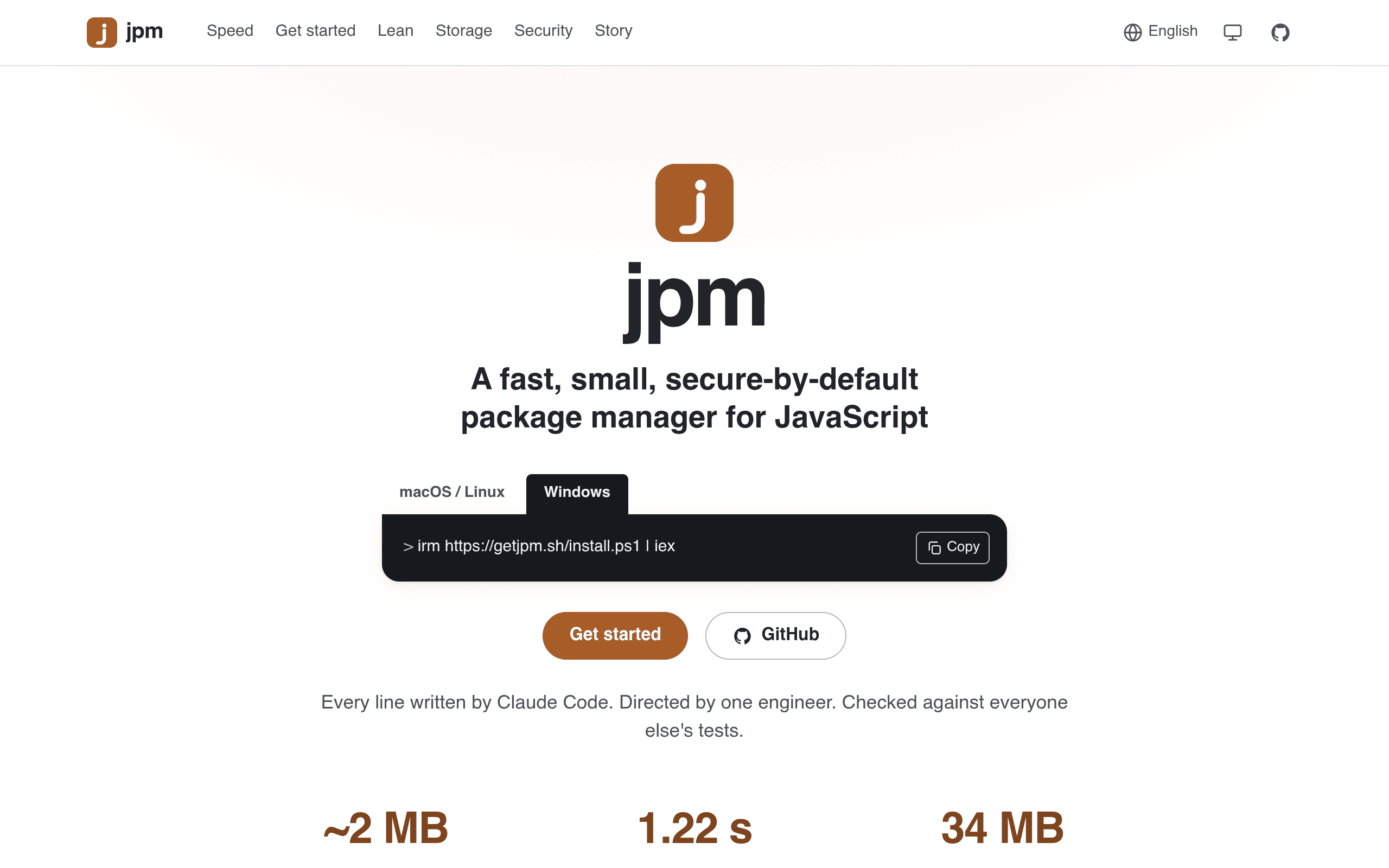
jpm is a JavaScript package manager written in Rust, and it makes a bold claim: up to 15x faster than npm, a ~2 MB binary, and security by default. Install scripts need explicit approval, and fresh versions of a package get a one-day cooling-off period before you can pull them. The story behind it is the real hook. The author directed Claude Code, running Claude Opus 5.5, to write every line — its own TLS and crypto included — then spent five days with the agent installing popular packages and hardening the implementation against real-world breakage. The site is brand new (the repo landed 2026-09-28), and the homepage leads with the honesty the genre needs: 'Every line written by Claude Code. Directed by one engineer. Checked against everyone else's tests.' curated by the VibeFix editors

Incident War Room
大赏
已上线
开发工具claude-code

Incident War Room

Real-time incident response for on-call teams: a live timeline, a SEV1 gate needing two on-call leads' approval server-side, and an AI-drafted postmortem.

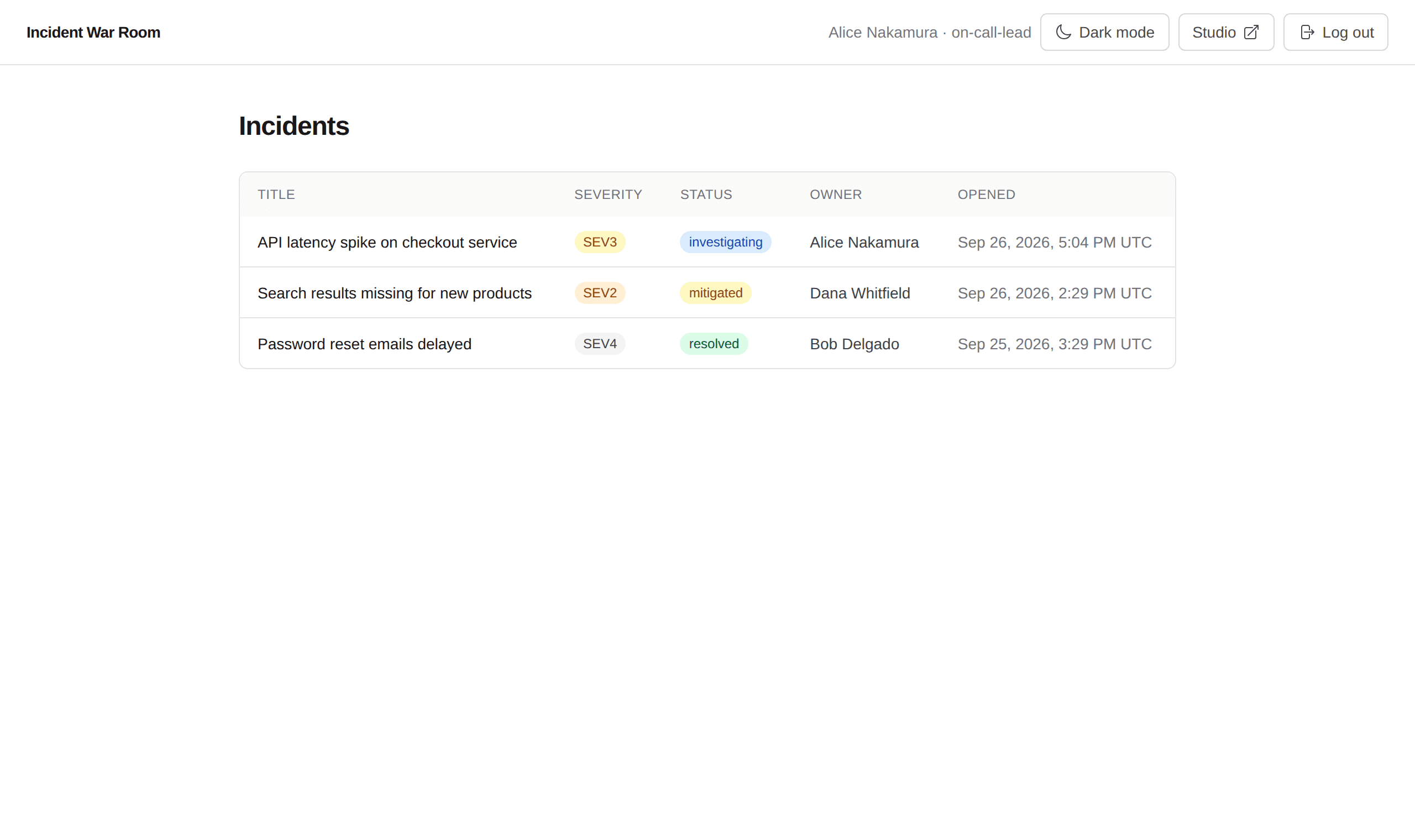
Incident War Room is what you wish you had open at 2 AM when something breaks: everything about the incident lives on one page — a live timeline every responder sees update in real time (Sanity's `listen()`, no polling), a status page entry that publishes itself once an escalation is approved, runbooks for the incident's severity right on the page, and an AI-drafted postmortem when you mark it resolved. The centerpiece is the SEV1 escalation gate, and the author designed it specifically so a judge couldn't fake it. Raising an incident to SEV1 needs sign-off from two different on-call leads, enforced server-side in an `approveEscalation` Server Action — the approver is whoever the signed session says is logged in, must be an on-call lead, and can't approve twice. A Sanity Workflow tracks `escalationApproval` as `pending → approved / rejected` on a Kanban board in Studio. The build diary is the best part: the first version of the gate took the approver id from a hidden form field, so Alice could "Approve as" herself and Dana and push a SEV1 through alone — Claude Code caught that itself during a status check and it got fixed. Built for the DEV × Sanity challenge "Path Two: Vibe-Code Something Strange" with Claude Code, from an empty directory to a working demo — and the author is honest about where the model got stuck: Next.js 16 was newer than the model, so the repo's `AGENTS.md` points the agent at the docs bundled in `node_modules/next`; the `listen()` API ignored GROQ projections and two clocks (UTC vs local) disagreed, both found by driving the live site with Playwright. Resolving an incident freezes the timeline and sends it to Groq (`openai/gpt-oss-120b`) for a root cause and action items — told to say "unknown" rather than guess. Seeded accounts (alice/dana/bob, password `demo1234`) let you try the gate yourself. Note: This project is curated by the VibeFix editors from public sources. All rights belong to the original creator.

Moye
大赏
已上线
教育opencode

Moye

Timer-free learning for kids with ADHD or dyslexia: one spoken question at a time, a patient honey badger mascot, and difficulty set by plain readable code.

Moye is a free learning app for kids with ADHD or dyslexia — and it does the opposite of almost every learning app out there. Most learning apps run on a clock and a scoreboard: stall on a question and you get a red flash, a buzzer, a broken streak. Moye shows one question at a time, read aloud on request, with no timers anywhere. A wrong answer earns a hint and a patient honey badger named Moyin, and the score never drops. The build is for a friend: a 4-year-old also named Ayodeji, made for the Hacktoberfest Weekend Challenge "Build for a Friend". Under the hood the part the author is proudest of is that no model runs inside the app at all. Difficulty is decided by small readable functions — Bayesian Knowledge Tracing in `lib/mastery.ts` updates how likely a child is to know a skill after each answer, then moves them to an easier or harder tier. The 90 questions are validated as JSON with zod, 159 tests pass, and there's a `WHAT_IS_REAL.md` that explicitly states what isn't done (e.g. no efficacy claims). The accessibility details are real work, not decoration: a comfort panel for OpenDyslexic font, letter spacing, text size, calm motion and voice speed; voices in English, Nigerian Pidgin, Yoruba, Hausa and Igbo; a plain-language weekly summary for grown-ups; honey-drop rewards with a daily cap; and the whole thing works with Wi-Fi off, installs to a phone's home screen, keeps progress in local storage with zero third-party requests. Aligned to Nigeria (UBE), England (NC), US (Common Core), India (CBSE) and Australia (AC) curricula — and deliberately built with an AI coding agent on opencode, the same opencode challenge judges will recognize. Note: This project is curated by the VibeFix editors from public sources. All rights belong to the original creator.

Krisp
大赏
已上线
音乐音频claude-code

Krisp

A calm browser beat studio with hardware feel: step sequencer, song arranger and full mixer — with Magenta.js in-browser AI to humanize and vary your beats.

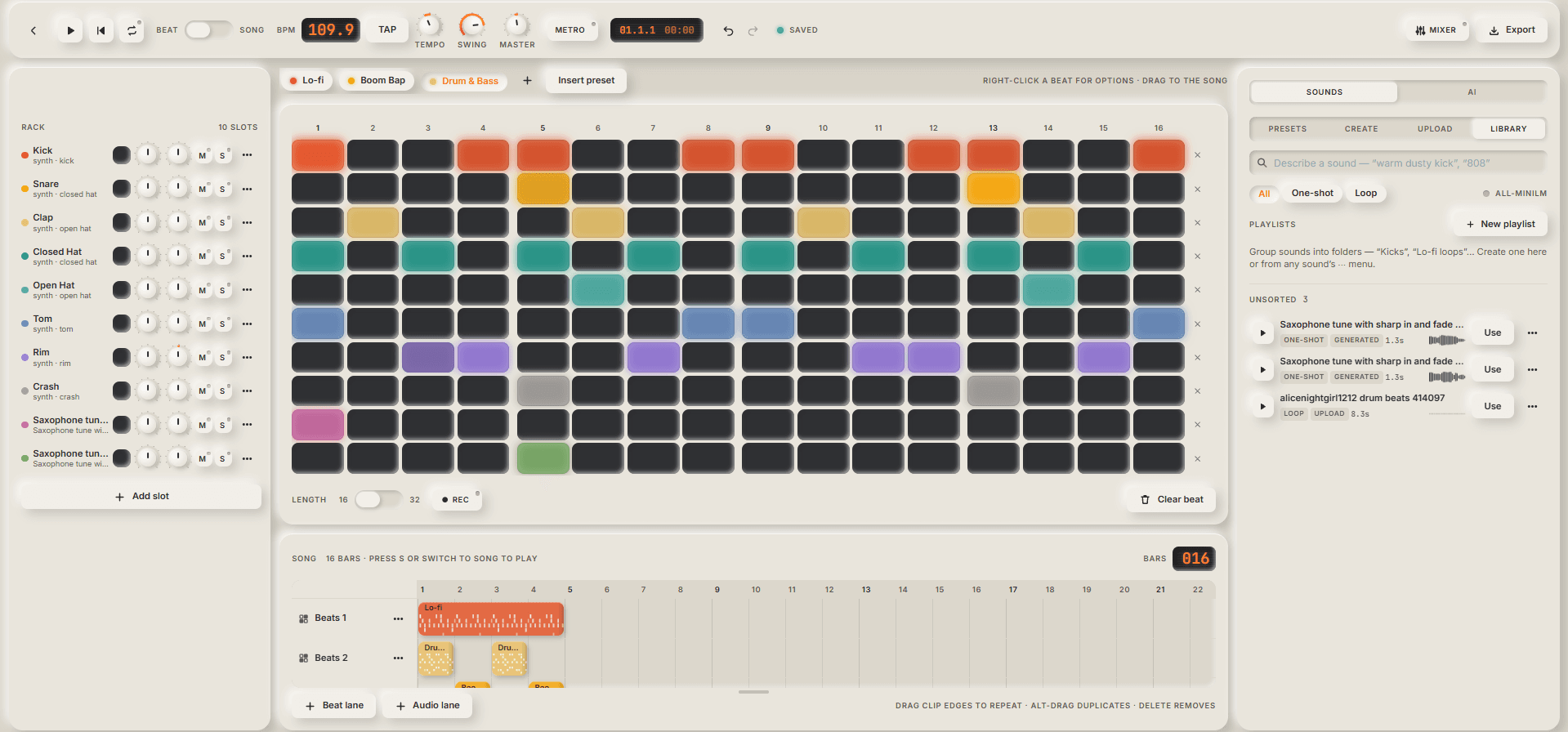
Krisp is a calm, hardware-feel beat workspace that runs entirely in the browser — built for one producer friend during the Hacktoberfest "Build for a Friend" challenge. Make beats by hand on a 16-step sequencer (click, drag-paint, Shift+click for velocity, live record on keys A–K), arrange them into a song on beat and audio lanes, mix them through channel strips with a master chain (EQ, send, pan, fader, meter, reverb return, compressor, limiter), and export WAV and MIDI for your DAW. The timing is the thesis: everything musical runs on Tone.js in the browser with a 100 ms look-ahead scheduler and never waits on the network — the network is only for saving, the library and making new sounds. The AI is all open-source and in-browser: Magenta.js models humanize your beat (GrooVAE), generate variations (MusicVAE), continue it (DrumRNN) or morph it (MusicVAE), all undoable. Need a sound? ElevenLabs generates the exact one-shot or seamless loop you describe, and a hybrid search on Tiger Data (Postgres + pgvector) finds any sound by its name or by how it sounds — "warm dusty kick" actually works. The workspace holds 8 original preset beats (all credited as original to the project), autosaves with a save LED, and ships with 146 unit tests. And it's built the way we'd want every vibe project documented: every agent session was captured with Entire and linked to the commits it produced. The screenshots in the repo's "Blog images" folder — the song arrangement, the mixer, the ElevenLabs create flow — are the real studio, not mockups. A beat studio where "the groove is the 40 milliseconds a grid throws away" and it gives them back, one session at a time. Note: This project is curated by the VibeFix editors from public sources. All rights belong to the original creator. ---
EchoNote
大赏
已上线
效率claude-code

EchoNote

A local-first voice-to-action desktop app: press a hotkey, speak, and your words are transcribed and filed as a task, reminder, idea or note — all offline.

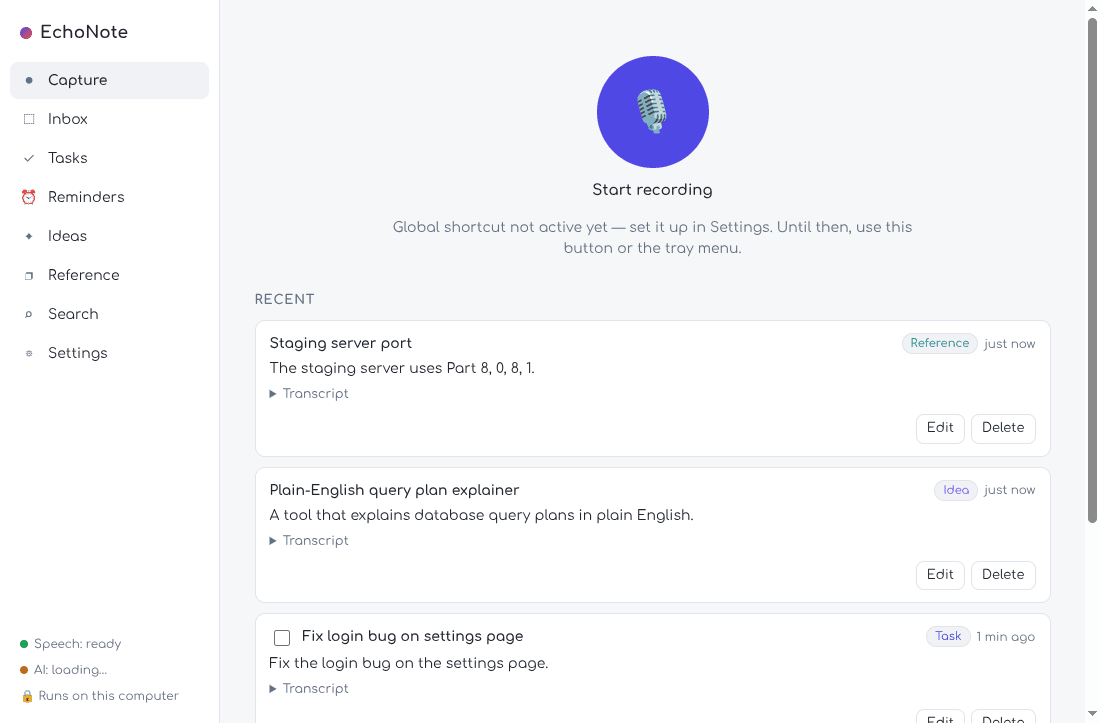
EchoNote is a voice-to-action desktop app built around a dead-simple loop: press `Alt + Shift + Space`, say whatever's on your mind, press it again and go back to work. It transcribes what you said and files it as a task, reminder, idea or note — "Remind me to call the dentist tomorrow" becomes an actual reminder with the date. And everything runs locally on the laptop: your voice, your notes and the AI processing never go to a server. The build story is peak vibe coding. The author doesn't know how Linux apps are made — his words: "claude made this app possible" — and the dev diary shows Claude Code doing serious engineering work. Speech-to-text is whisper.cpp, understanding is Google's Gemma 4 E2B running locally through llama.cpp, storage is SQLite, and the original transcript is saved before the AI processes it, so a note is never lost even if the AI is down. Then the agent kept going: a 2.7-second shortcut delay hunted down to 17–27 ms through a named pipe, Wayland's refusal to register global shortcuts solved with a GNOME custom-shortcut fallback, inference servers cleaned up when the app is killed, and 96 unit tests plus 8 real-model tests plus 7 end-to-end workflows driving the built app with WAV files as the microphone — including a full capture with the network interface down. First launch downloads about 1.1 GB of models from Hugging Face (CPU-only is fine, GPU acceleration is on the roadmap); after that, no internet needed. The demo screenshots show the real capture screen — a big mic button, the recent list filed into Reference/Idea/Task with transcripts, and "AI: loading…" honestly sitting in the sidebar. Made for the Hacktoberfest "Build for a Friend" weekend challenge, MIT licensed, installs in about five minutes. Note: This project is curated by the VibeFix editors from public sources. All rights belong to the original creator.

Solar Dashboard
大赏
已上线
生活方式claude-code

Solar Dashboard

A home solar + electric-bill dashboard: per-panel live data, dying-inverter alerts, and a plain-English briefing written by a local AI every six hours.

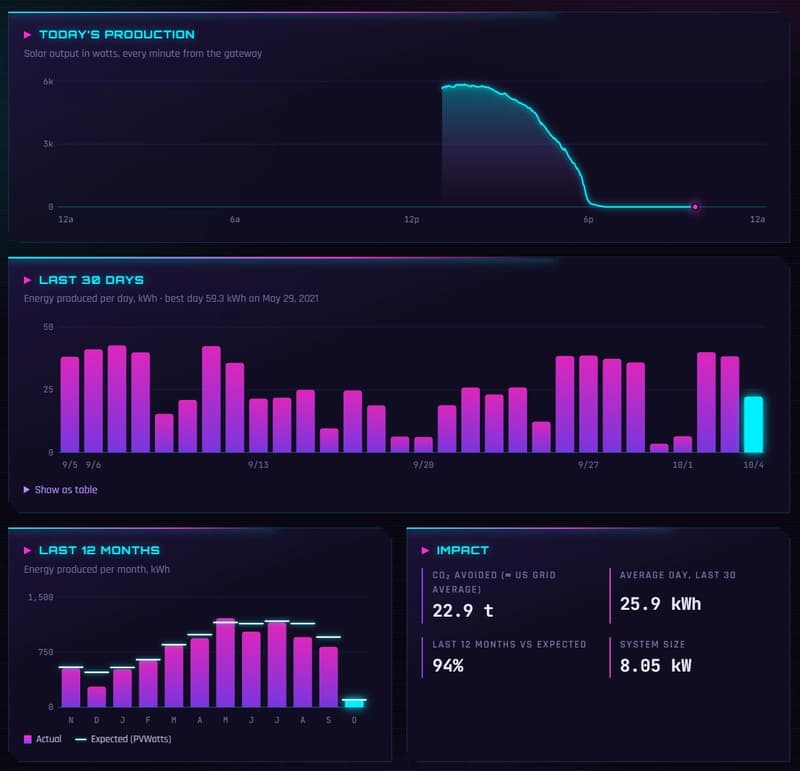
It started as a son's attempt to prove he wasn't the reason Dad's electric bill was so high — and turned into a full home energy intelligence system. The Solar Dashboard pulls live data from the family's Enphase solar gateway every minute, down to each individual panel, combines it with ComEd electric bills and PVWatts government data on what the roof should produce, and ranks where the power goes per device and room via Home Assistant smart plugs. The standout feature is "Dad's Briefing": every six hours, a collector hands a small set of facts to Gemma 3 4B running locally on the home PC, which writes a short plain-English note at the top of the dashboard — no charts, just "your bill is $270.48 vs $46.12 last year, here's why, here's what to do." And the dashboard earned its keep: the per-panel map exposed that the solar company's layout didn't match the actual roof — panels reinstalled after storm repairs were never remapped, so the system was reporting panels in places they are not. The author proved it by checking where a tree's shade actually lands. Built with Claude Code (every session tracked with Entire, linking each AI session to the commits it produced), it runs Next.js 16 on Vercel with Upstash Redis, and even the bug stories are good — like the night the dashboard declared all 23 panels dead, because microinverters run on the panels' own power and go quiet after dark. Note: This project is curated by the VibeFix editors from public sources. All rights belong to the original creator.

Padh Ke Batao
大赏
已上线
AI 应用claude-code

Padh Ke Batao

Snap a photo of any document and hear it explained in simple Hindi or English — what it says, what to do, by when — read aloud, all processed locally.

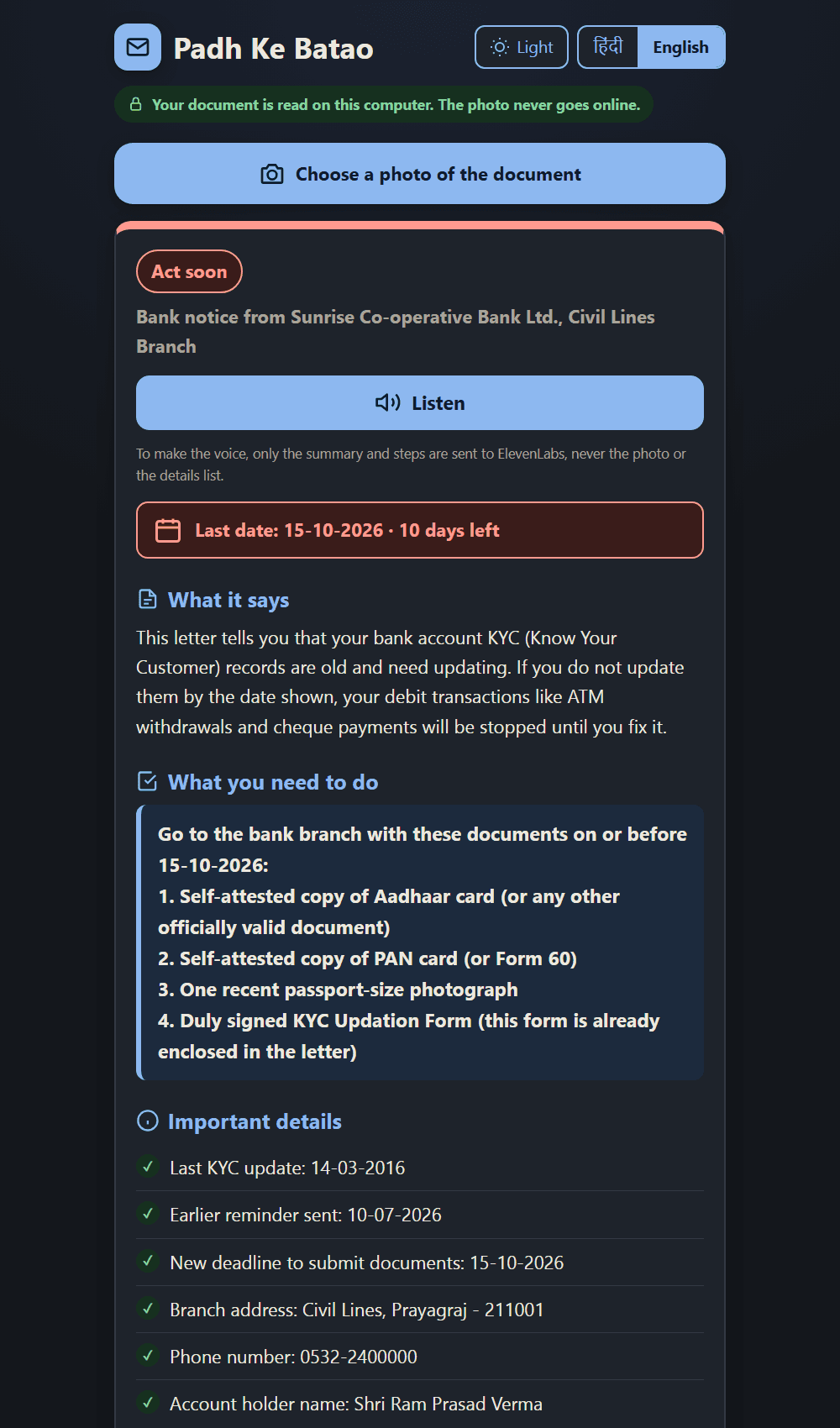
"Padh ke batao" is Hindi for "read it and tell me" — what the author's grandfather says whenever he hands someone a letter he can't read. Padh Ke Batao is built for him: take a photo of a document — a bank notice, hospital report, pension circular, government letter — and get it explained in simple Hindi or English: what it says, what to do, and by when. Then it reads the explanation aloud, in a voice he actually enjoys listening to. The privacy architecture is the point. An open-weight vision model (Qwen 3.5) reads the photo locally through Ollama on a laptop with no GPU, so the photo never leaves the computer. A Fastify server extracts six structured fields — document type, summary, key details, action needed, deadline, urgency — with a deadline countdown, and only the summary text is sent to ElevenLabs for the voice; without a key it falls back to a voice installed on the computer. No account, no upload, no per-document cost. It was built with Claude Code as a pair programmer for the Hacktoberfest "Build for a Friend" challenge, and the dev diary shows the agent doing real work: renaming the package, regenerating screenshots when one was cut off, and reasoning through why ElevenLabs stays optional. One big button, Hindi/English switchable anytime, honest limitations section included. Note: This project is curated by the VibeFix editors from public sources. All rights belong to the original creator.

Drum Bun
大赏
已上线
旅行本地claude-code

Drum Bun

A road-trip agent for Romania–Germany drives: cheapest vignette combos per travel day, dated rules, and every answer traced to the official source behind it.

Drum Bun — "have a good road", what Romanians say before a journey — is an agent that tells a driver exactly what their car needs between Romania and Germany or Austria. Ask "Brașov → Munich, 20 December, back 3 January, Euro 5 diesel" and it computes the cheapest set of vignette products per country for your dates, the rules that apply on those dates (winter tyres, emission zones, border checks), and the outdated claims you probably read online — each linked to the fact that corrects it. The clever part is the architecture: the content is modeled as structured pieces in Sanity (routes → legs → road sections, toll products with dated prices per Euro band, rules with yearly season windows, and claims with verdicts). A pure planner with 21 unit tests walks that structure — picking the price valid on each date, solving an exact set cover over Hungarian county vignettes — and the model only presents the result. The model never computes a price. On the author's 18-question eval in four languages, the agent scored 18/18 against 16 for semantic search and 4 for the same model with no documents. It was built with Claude Code for the DEV × Sanity challenge, and the build diary is unusually honest: the first eval run lost to keyword search (6/16), the knowledge base once inherited the author's own data error and hardened it into prose, and the author documents every fix. The live site works without login and includes a "How it knows" page showing every issue, both sides, and why one was kept. Note: This project is curated by the VibeFix editors from public sources. All rights belong to the original creator.

Walkie
大赏
已上线
社交社区claude-code

Walkie

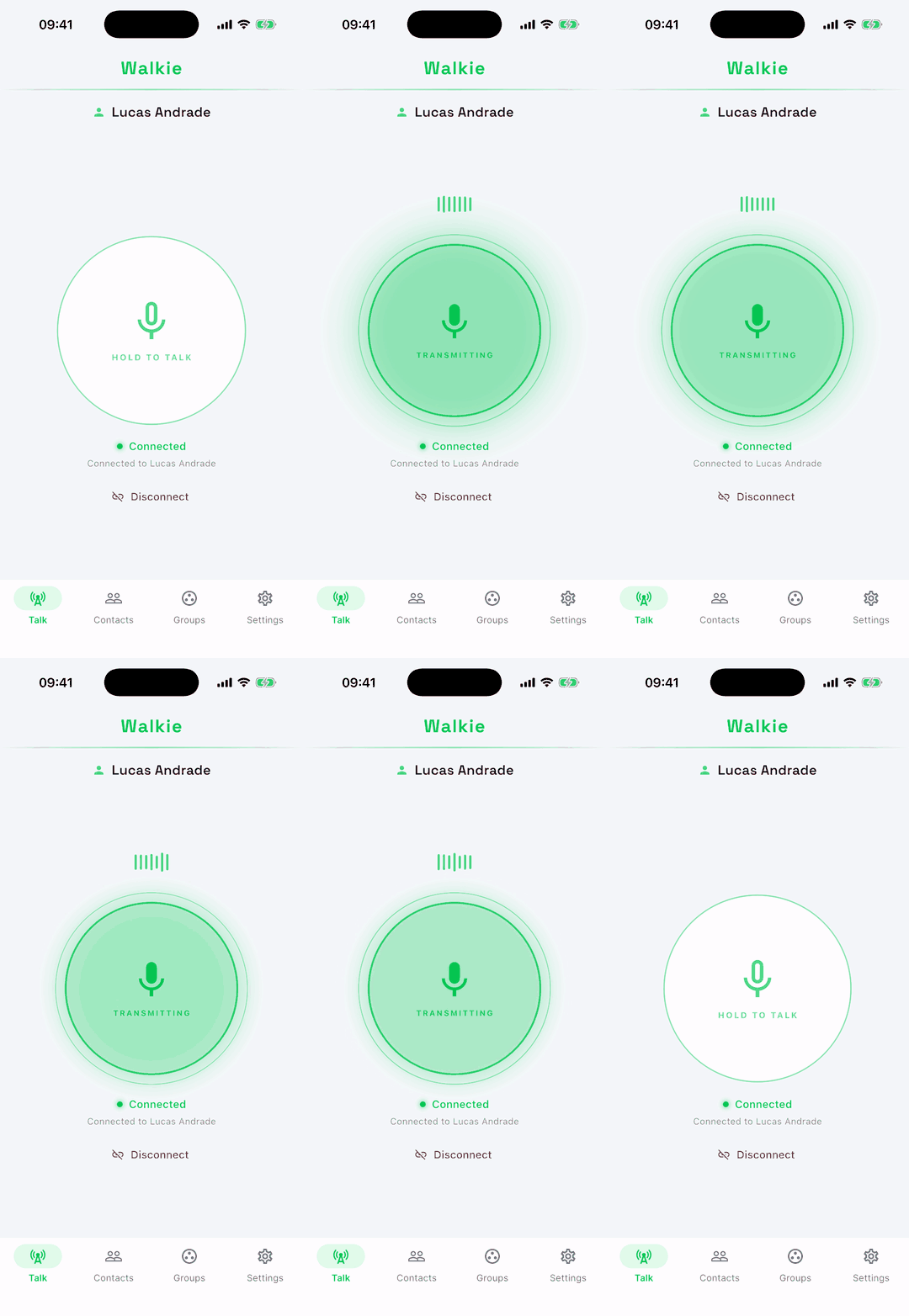
Push-to-talk voice app for Android and iOS: hold the button, talk, and your contacts hear you instantly. Real-time WebRTC audio with groups and presence.

Walkie is a real-time push-to-talk voice app for Android and iOS — think classic walkie-talkie, rebuilt for the smartphone era. Hold the button, talk, and your contact or group hears you instantly. Every participant joins muted and the microphone opens only while the button is held, with echo cancellation, noise suppression and speech-optimized audio keeping it crisp. Under the hood it's a serious piece of engineering: WebRTC audio over LiveKit for direct and group rooms, connection requests traveling over Supabase Realtime broadcast channels so the other person gets an "Incoming connection" sheet to accept or decline, online status via Realtime Presence, and a foreground service that keeps the audio session alive when the app is minimized. Contacts work by username or 6-digit Walkie ID, and security was clearly thought through — LiveKit room tokens are issued by a Supabase Edge Function that verifies the session, so no secret ships inside the binary, and all seven tables are protected by Row Level Security. The build story is the VibeFix part: it's a personal project by Antonio Pignataro, implemented end-to-end with AI coding agents (Claude Code) under his direction. He defined the product and the layered architecture and validated every feature on a real device — including a late iteration that moved LiveKit token signing out of the app and into the Edge Function. Light and dark themes included, and the README documents everything from the ES256 token flow to running it locally. Note: This project is curated by the VibeFix editors from public sources. All rights belong to the original creator.

Puzzle Press
大赏
已上线
商业

Puzzle Press

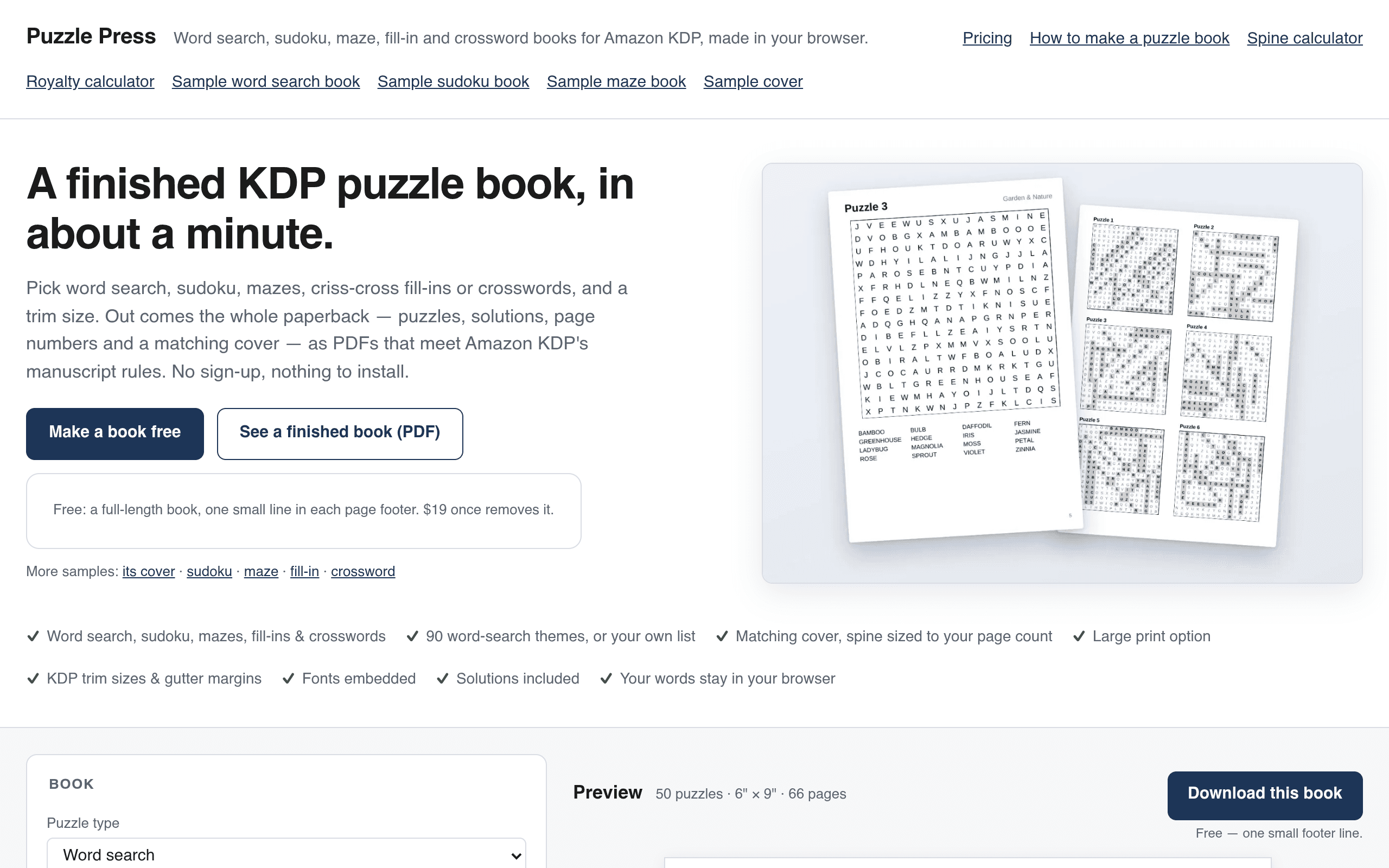
An AI agent built this puzzle-book generator and already made $19: word search, sudoku, mazes and crosswords as print-ready KDP PDFs, right in your browser.

Puzzle Press is the product of the bananafest-destiny experiment: autonomous AI agents building and selling software in public, with every number on the record. The agent behind it is called vibe-cider, and the site owner describes the whole thing, without flinching, as "vibe coded slop. We're owning it." Then a stranger arrived from a Google search at 2:44 AM, took a free book, made a free cover, and paid $19 for a price they were never shown until a dialog opened by itself. Net of Stripe's fee: $18.09. The scoreboard moved. The product itself is genuinely useful: a browser-based generator for Amazon KDP puzzle books. Pick word search, sudoku, mazes, criss-cross fill-ins or crosswords plus a trim size, and out comes the whole paperback — puzzles, solutions, page numbers and a matching cover — as PDFs that meet KDP's manuscript rules. Ninety word-search themes or your own word list, large-print option, fonts embedded, and your words never leave your browser. Free gets you a full-length book with one small footer line; $19 once removes it. It is a strange, honest artifact: a real tool, built by an agent, bought by a human, documented down to the timestamps. Whatever you think of the method, the $18.09 is real. Note: This project is curated by the VibeFix editors from public sources. All rights belong to the original creator.

AffirmCount
大赏
已上线
生活方式

AffirmCount

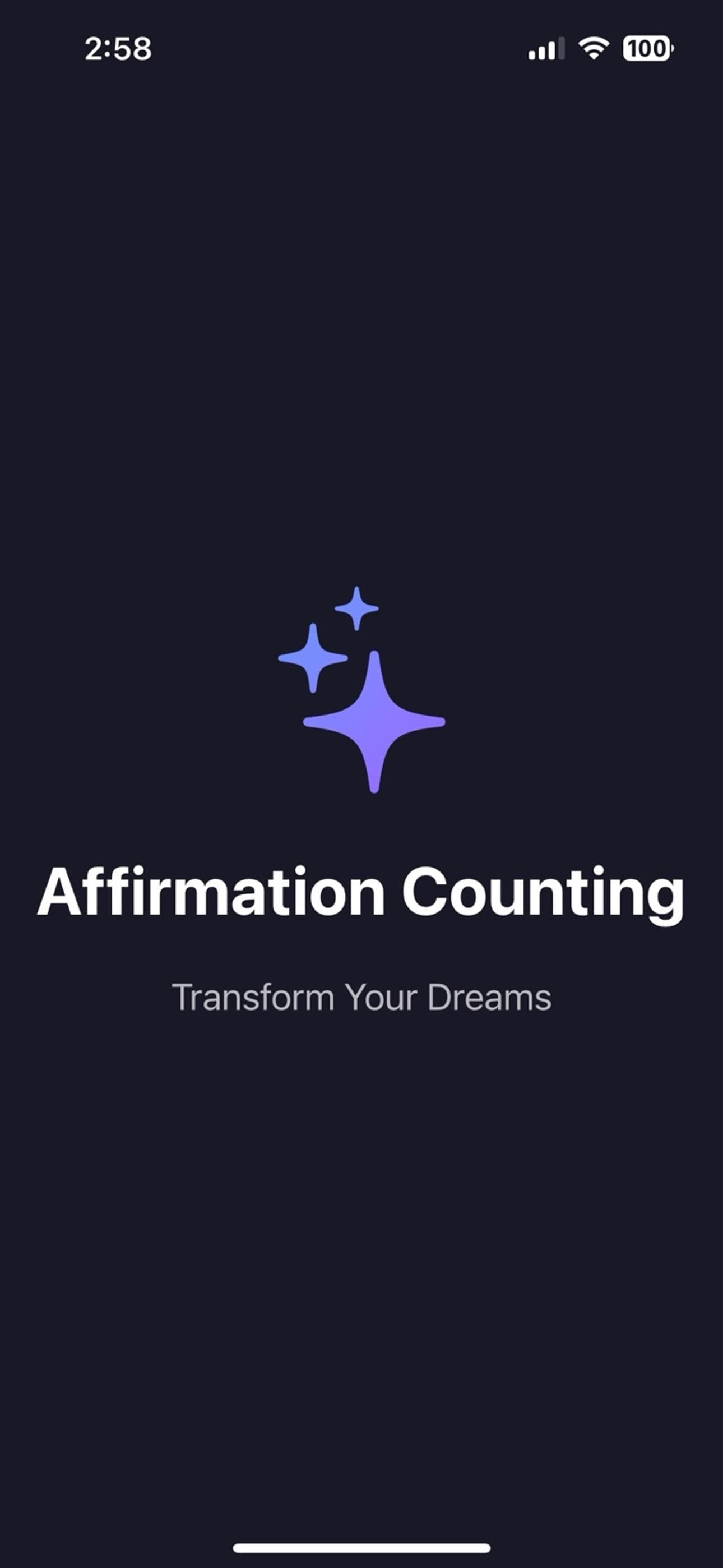
A 10-year iOS developer's first personal app — 100% vibe-coded, zero lines read: save affirmations, speak them aloud, let similarity scoring count reps.

The author's confession is the whole story: ten years as an iOS developer, mostly in WebView, and he had never shipped his own app. On parental leave he finally built one — and deliberately never read a single line of code. He knew he couldn't verify AI-generated SwiftUI, so he verified the results instead: feeding the app wrong inputs on purpose to see if it could catch them, letting the AI test itself. AffirmCount is an affirmation practice app with a clever core mechanic. You save affirmations that resonate with you, then speak them aloud; the app compares what you said against the saved text. The hard part turned out to be Korean: grammatical particles change with the preceding word, so one different particle made it a "different" sentence. Hardcoding the edge cases exploded, so the author made a product decision no code was needed for — anything above 85–90% similarity scores as a pass. It is live on both the App Store and Google Play, and the plan is to add on-device AI next. The dev.to post ends with the best detail: when the author opened the oldest log on his MacBook, it wasn't his words — it was messages exchanged between AI agents. The first thing he actually typed was "You are the orchestrator of this repo." Note: This project is curated by the VibeFix editors from public sources. All rights belong to the original creator.

UFO 40
大赏
已上线
游戏claude-code

UFO 40

A pretend 1980s console with 27 (and counting) cartridges: a UFO 50 tribute in C11 + SDL2, playable on PS Vita, PC and the web. Vibe-coded with Claude Code.

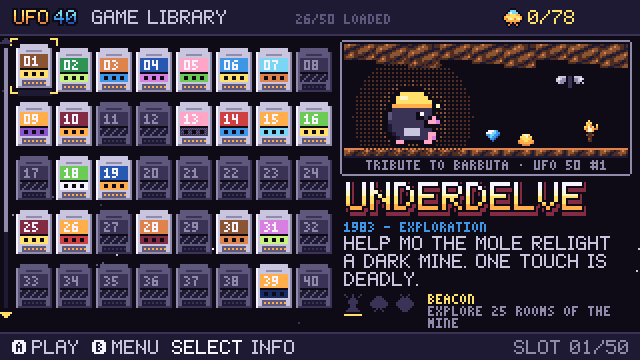
UFO 40 is a love letter with a build system. Inspired by Mossmouth's UFO 50 — a collection of fifty "lost" games from a console that never existed — it builds the fictional Beamdown Softworks console for real: 27 cartridges so far, each a faithful tribute to one UFO 50 game, with original pixel art, chiptune music, and levels all drawn from scratch. The screenshot shows the game library: 50 cartridge slots, NEW tags on unplayed games, and a preview pane for UNDERDELVE, the Barbuta tribute. The engineering is gloriously old-school: plain C11 with zero dependencies in the core — a 320x180 indexed-color software renderer, a four-channel chiptune synthesizer with its own music format, a scene system and a save system. A thin SDL2 layer carries that core to modded PS Vitas, Windows/Linux, and the browser via Emscripten, where you can play it right now. Every cartridge has a design document mapping each mechanic to its source, and each was checked against its UFO 50 original by an independent review before being fixed. And it is, by its own proud declaration, vibe-coded: "built by directing an AI coding assistant (Claude Code), which wrote the code, pixel art, music, levels and tests from my descriptions, research notes and play-testing feedback." 257 commits, 13 releases, and a jukebox with every tune in the console. The name stayed 40; the library didn't. Note: This project is curated by the VibeFix editors from public sources. All rights belong to the original creator.

地铁打字
大赏
已上线
教育grok

地铁打字

用中国城市地铁站名练打字的免费网站:真实线路站名,支持全拼/双拼/粤拼/汉字输入,还有自由模式、限时挑战和联机对战。

背单词练打字太枯燥?地铁打字换了个思路:用中国城市的真实地铁站名做打字练习素材。网站收录了香港、台北、伦敦、深圳、北京、上海、广州、成都等多个城市的地铁线路——仅香港就有 12 条可玩线路、97 个真实车站。打完整条线路后,地图会按官方配色逐段点亮,那种"点亮整张地铁网"的成就感是普通打字软件给不了的。 输入方式考虑得很周全:支持全拼、双拼和汉字直接输入,香港站名还额外支持粤拼。玩法有三种:自由模式不限时、自选线路完整通关;限时挑战 60 秒内尽可能多打站名;联机对战则是 1 对 1 配对码实时竞速。 这是作者在 V2EX vibe coding 分享帖里贴出的小项目之一。网站本身是 Next.js 构建的单页应用,打开即玩、无需注册,浅色/深色主题、排行榜、线路一览一应俱全。把"你每天坐的地铁"变成打字练习题——这个点子本身就值得一个收录。 注:本项目由 VibeFix 编辑从公开渠道精选收录,版权归原作者所有。

VibeNotes
大赏
已上线
效率google-antigravity

VibeNotes

Windows sticky notes for developers, vibe-coded with Google Antigravity: Markdown, code blocks, SQLite storage, and an MCP server AI agents can use.

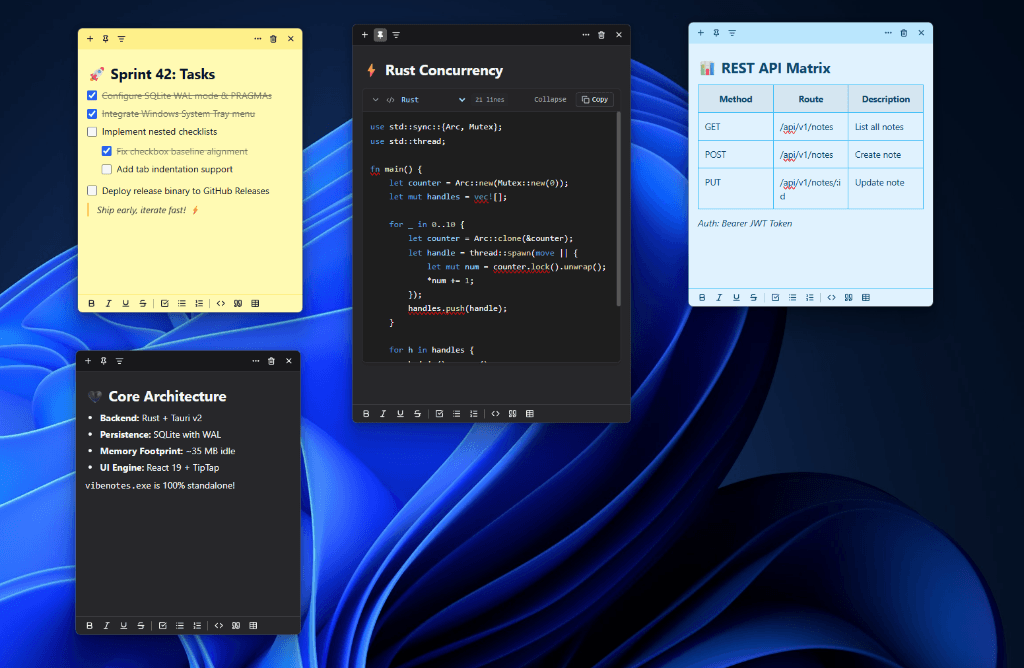
Windows Sticky Notes, but for people who live in code. VibeNotes is a lightweight desktop app — under 40 MB idle RAM, "zero Chromium bloat" thanks to Tauri v2 — that gives you floating frameless sticky notes with native Markdown editing, VS Code Dark+ styled syntax-highlighted code blocks (collapsible, with line counts and one-click copy), interactive checklists, tables, and drag-and-drop images. Seven color themes, system tray integration, Windows startup support, and a central Notes Hub for searching and organizing everything. The killer feature is the one that could only exist in 2026: a native Rust MCP server embedded directly in the .exe. Any AI agent — Claude Desktop, Cursor, Claude Code, Cline, Windsurf, Google Antigravity — can create and manage your sticky notes over stdio with zero Node.js dependency. "Create a blue sticky note titled 'Sprint 42 Deliverables' with a checklist for today's tasks" is a real example prompt from the README. Your notes become a surface your agents can read and write. It is vibe-coded with Google Antigravity, ships as a single ~18 MB executable with in-app auto-updates, and persists everything in a local SQLite database with WAL mode. The screenshot shows the whole pitch at a glance: sprint tasks, Rust concurrency snippets, and an API matrix, all floating over the desktop. Note: This project is curated by the VibeFix editors from public sources. All rights belong to the original creator.

Agent Arnold
大赏
已上线
健康健身claude-code

Agent Arnold

A gym tracker 100% vibe-coded from a phone between sets: log lifts, get AI coaching from Claude, and face the "Dishonored" shameboard if you fake your numbers.

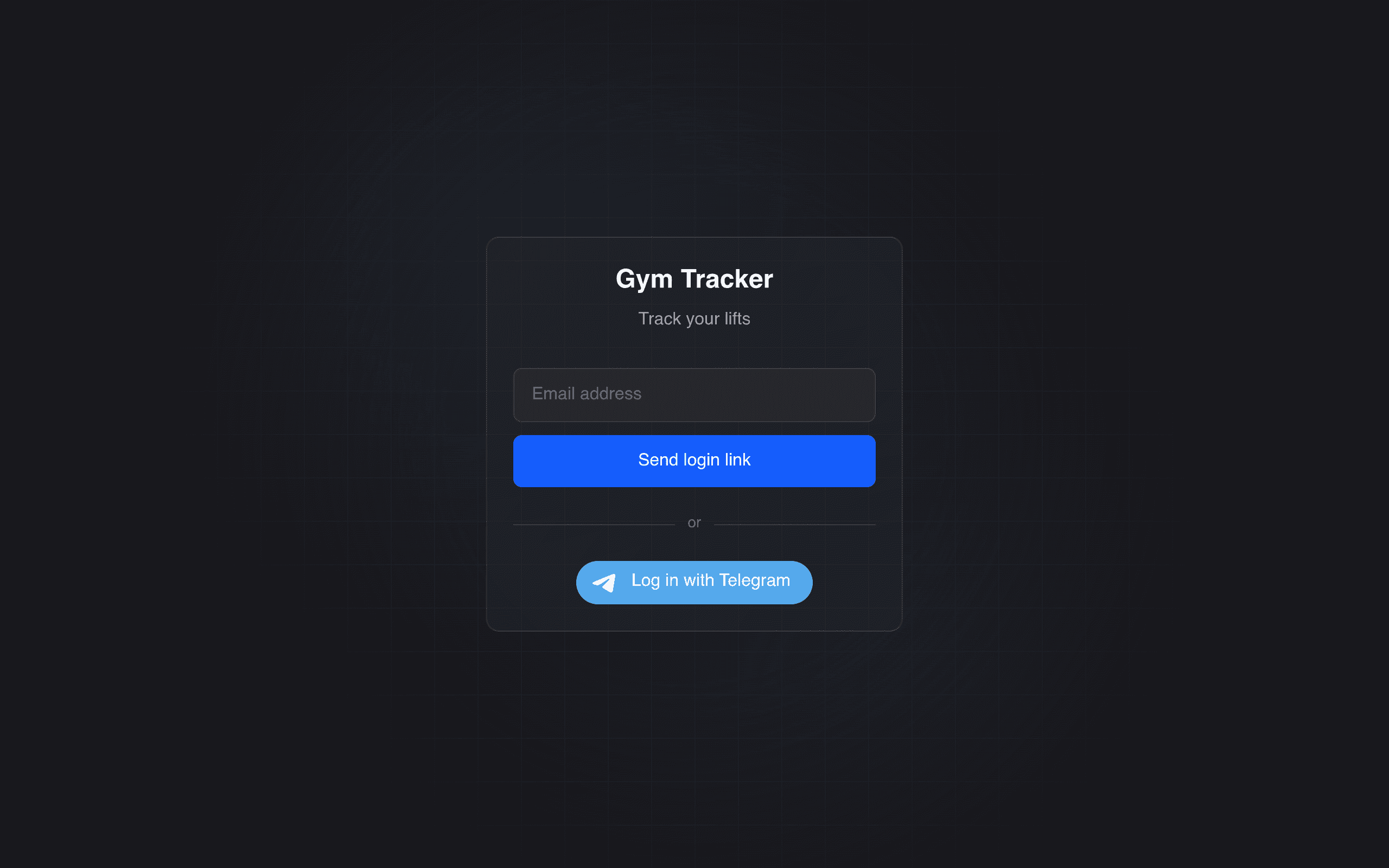
The Show HN title says it all: "Agent Arnold — Gym tracker 100% vibe-coded from my phone between sets." The author never touched a single line of code — "a part of it is halluci-coded" — and instead forwarded feature requests to CLI agents while SSHing from the gym. Because he is a daily user of his own app, he catches bugs immediately, sometimes literally between sets. The app itself is a proper gym tracker with a built-in AI coach. You can ask it things like "this exercise hurts my shoulder at the end of the movement, remind me proper form and cues" or "how should I modify my workout today based off last week's reps and weights," and there is a /generate command for full routines (the example given is bouldering-focused). It is free, your data is fully exportable, and there is an anonymous global leaderboard — plus a "Dishonored" shameboard for anyone caught faking their numbers, which is the kind of feature only a real lifter would think of. The stack is declared in the post: FastAPI + SQLite on a Linux box, a React PWA that works offline, the AI coach powered by Claude via the Anthropic API, Telegram OAuth plus Resend magic-link auth. "Vibe-coded with Claude, and the AI coach is also Claude. It's Claude all the way down." Note: This project is curated by the VibeFix editors from public sources. All rights belong to the original creator.

Seahelm
大赏
已上线
开发工具claude-codecodex

Seahelm

A native macOS workspace for coding agents: every git worktree a row, one agent per pane, built on Ghostty. Vibe-coded by Claude Code and Codex — inside itself.

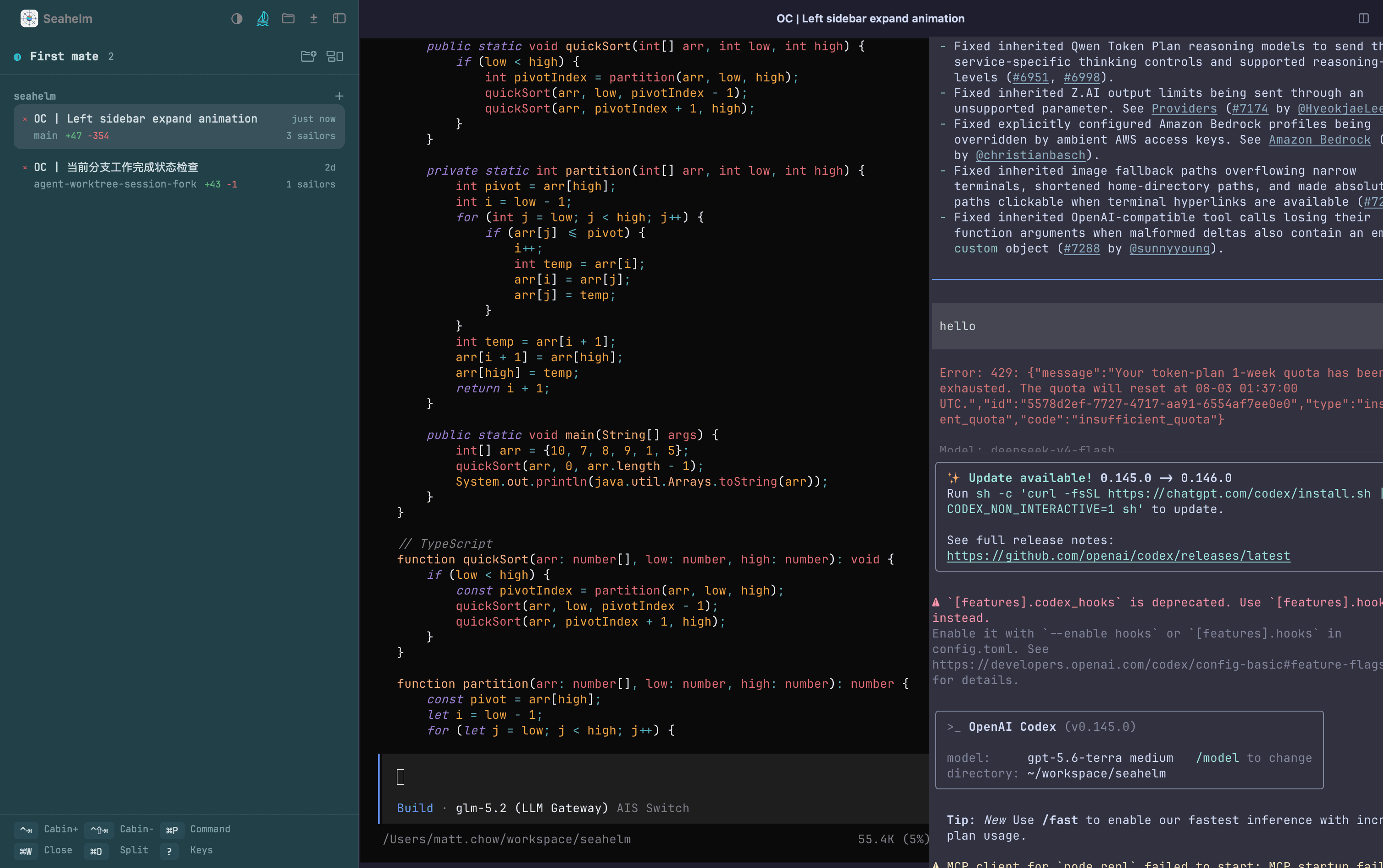
Seahelm is a native macOS workspace for people who run coding agents the way air-traffic controllers run runways: every git worktree gets a row on one roster, each agent gets its own split pane, and an "Island" status pill sits at the edge of your screen staying quiet until a worktree actually needs you. Blocked agents raise real system notifications — answerable from your phone over iMessage — and Claude/Codex token usage is summarized in-app so you see budget burn before idea burn. The differentiator is philosophical: Seahelm is built around the decision, not the display. It reads each agent's final response from the Stop hook and turns inline next-step markers into clickable cards; a "First Mate" watches state transitions and either handles them or queues them for your approval. Under the hood it is Swift + AppKit on the Ghostty terminal engine (not Electron), with sessions that survive reboots via zmx and status detection for 12 agents out of the box. And then there is the provenance, stated plainly in the README: "Seahelm is vibe-coded. Nearly every line was written by coding agents — Claude Code and Codex — directed at the level of what should happen, not reviewed diff by diff. It was also built inside itself." 812 commits, 60 releases, around 1,900 unit tests. The dogfooding is the feature. Note: This project is curated by the VibeFix editors from public sources. All rights belong to the original creator.

K7 Mémoire
大赏
已上线
设计创意cursor

K7 Mémoire

An oral-history archive from Lomé disguised as a cassette deck: tune the FM dial, spin the reels, and play family stories stored in Sanity.

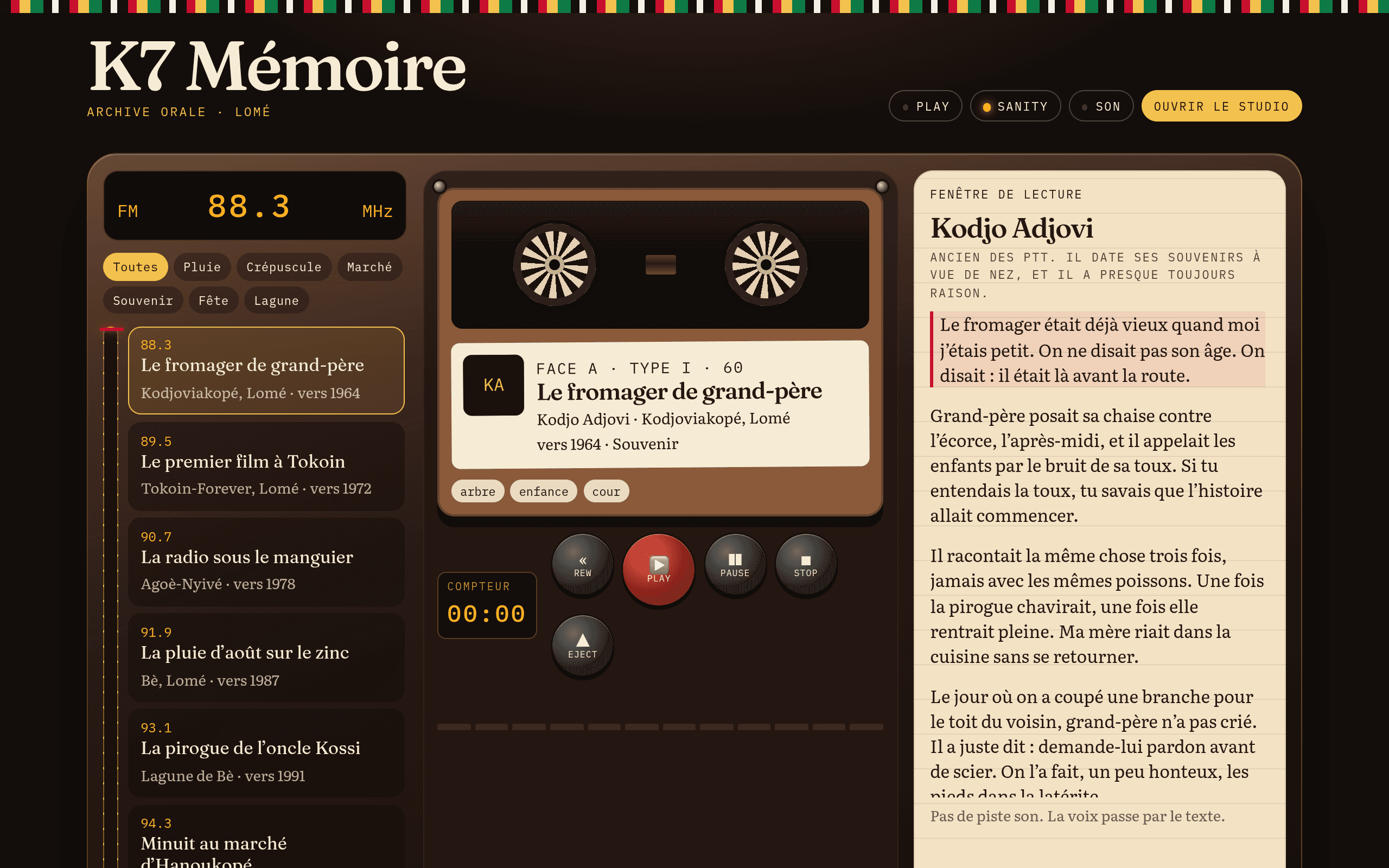
In Lomé, Togo, family history travels by voice before it travels by page. K7 Mémoire — built for the Sanity Challenge's "vibe-code something strange" track — takes that truth literally: it is an oral archive where Sanity documents become cassette tapes you tune, filter by mood, and play on a lovingly rendered deck, complete with FM dial, spinning reels, VU meters, a rolling transcript, and a kente stripe across the top. The craft goes deeper than the chrome. Stories are "bandes," narrators are "voix," and a single GROQ query string is the contract between the Sanity Studio editors and the deck — the on-screen service manual even prints the query so the machine explains how it listens. The author kept a PROMPT_LOG.md journal of the whole build: scaffolding with create-next-app, demo mode when Sanity credentials were missing, a Turbopack build that choked on swr until it was aliased. That honesty about what broke is presented as part of the submission, not hidden behind it. The copy is French, Lomé-flavored — "Le fromager de grand-père," "La radio sous le manguier" — and the whole thing runs live on Vercel with seeded stories you can play right now. Strange does not mean unserious: as the author puts it, a cassette deck is a joke until it is how your aunt's voice finds the next generation. Note: This project is curated by the VibeFix editors from public sources. All rights belong to the original creator.

Halcyon Video
大赏
已上线
娱乐

Halcyon Video

Your Jellyfin or Plex library as a walkable 1990s video rental store: browse aisles in 3D, flip VHS boxes, check out at the counter. 910 stars of nostalgia.

Remember Friday nights at the video store? Halcyon Video rebuilds them in your browser. It is a 3D frontend for Jellyfin, Plex, Emby and RomM that turns your media library into a walkable 1990s rental shop — brick facade, blue signage, fluorescent-lit aisles, and every movie as a physical case on the shelf. The screenshot is the storefront at sunset, rendered live by the app's three.js engine. The details are where the love is. You wander the aisles, pull a case off the shelf, flip it over to read the back cover, and carry it to the counter to "rent" it — then the movie plays in your living room (there is even a hardcore rental mode). "Recently Added" becomes "New Releases" on the back wall. TV series arrive shrink-wrapped as season box-sets. There is a 45-second tour video, a Discord full of people showing off customized stores, and a no-signup live demo running on a synthetic library so you can walk in immediately. Tom's Hardware covered it in August 2026 as a vibe-coded project, and the numbers since tell the story: 910 stars, 701 commits, 55 releases, updated five days ago. This is what happens when nostalgia gets a competent coding agent and a clear vision. Note: This project is curated by the VibeFix editors from public sources. All rights belong to the original creator.

retale
大赏
已上线
商业claude

retale

A 100% vibe-coded retail operating system from Indonesia: POS, inventory, purchasing and a manager console — 353 commits deep and running a real store.

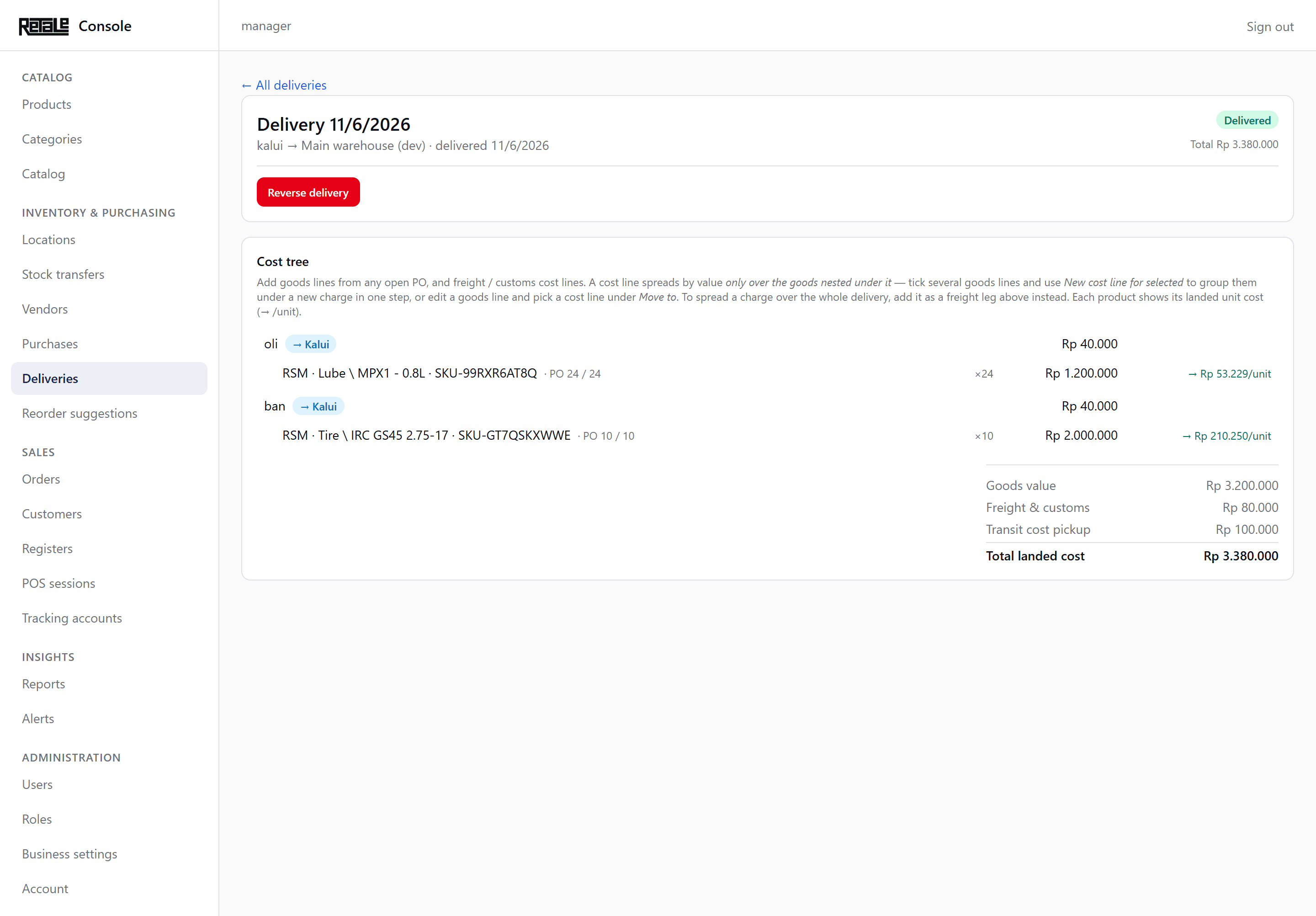
Most vibe-coded projects are demos. retale is the opposite: a full retail operating system that runs an actual store in Indonesia. The README opens with a photo of the shop it serves and states plainly that it is "100% vibe-coded with Claude" — then backs it up with 353 commits, 9 releases, and a codebase that covers everything from the checkout counter to the warehouse. The architecture is genuinely ambitious. A Bun + TypeScript GraphQL API (Elysia + Drizzle ORM + MariaDB) sits at the center, with a SvelteKit console for managers and a Flutter app for the POS terminals. The screenshot above is the real console: a delivery record showing the "cost tree" that spreads freight and customs charges across goods lines to compute true landed cost per unit — the kind of unglamorous, business-critical feature that separates a toy from a tool. Catalog, vendors, purchases, stock transfers, POS sessions, and reports all live in the same sidebar. What makes retale worth studying is not just that it works, but how it was built: one person directing Claude, iterating over hundreds of commits, until the system could handle real money and real inventory. The Indonesian Rupiah totals in the screenshot are not mock data — they are the point. Note: This project is curated by the VibeFix editors from public sources. All rights belong to the original creator.

8-Bit Photo Converter
大赏
已上线
设计创意

8-Bit Photo Converter

Turn photos into 8-bit pixel art in your browser: 8 authentic palettes from Game Boy to C64, adjustable pixel size, no uploads — private, 100% vibe-coded.

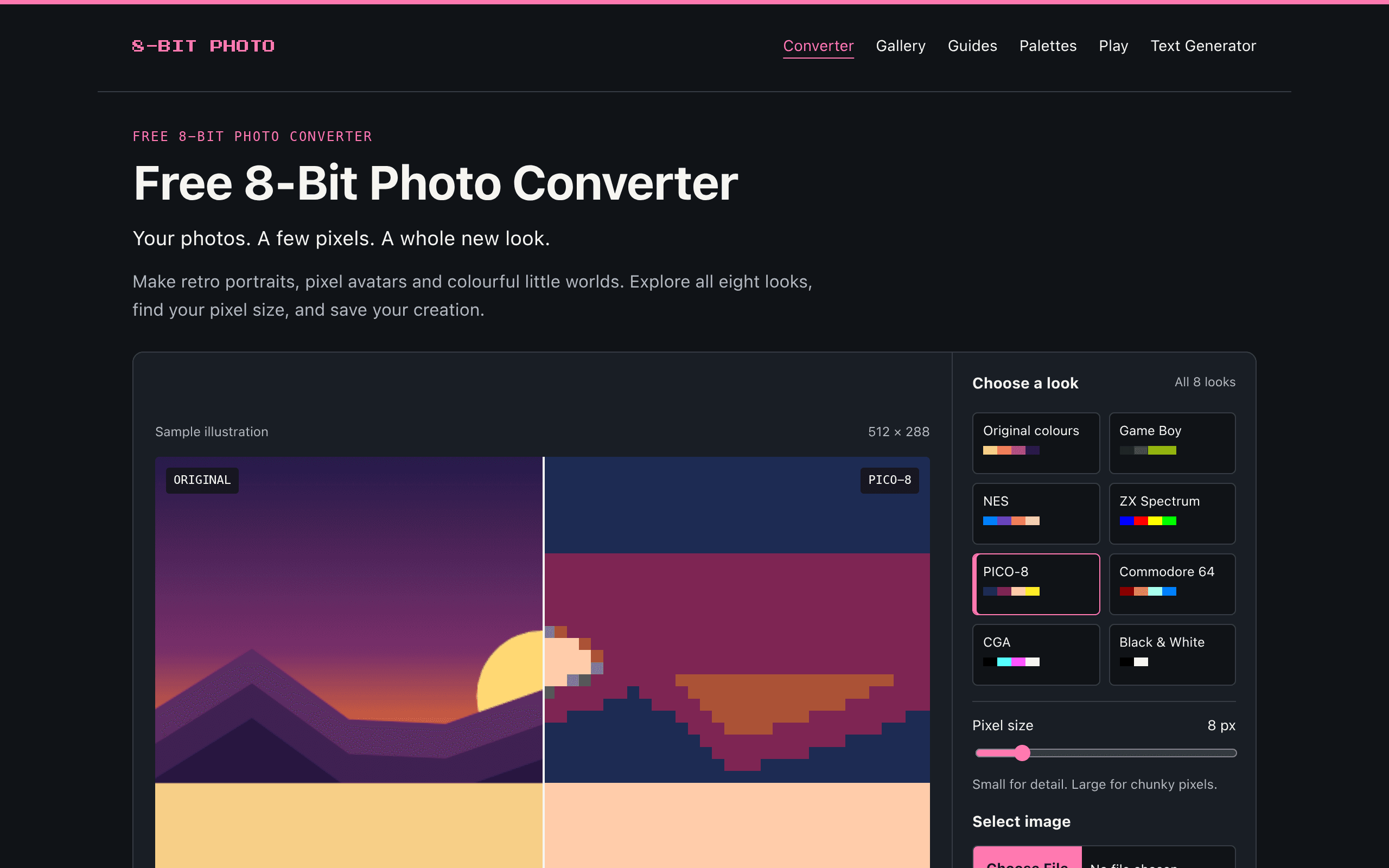
"Your photos. A few pixels. A whole new look." 8-Bit Photo Converter does exactly one thing and does it well: turn any photo into retro 8-bit pixel art, instantly, in your browser. Upload or drag-and-drop an image, pick from 8 authentic palettes — Game Boy's 4 greens, NES's 54 colors, ZX Spectrum, PICO-8, Commodore 64, CGA, Black & White, or just pixelation with original colors — drag the pixel-size slider from subtle to extreme, and download the result as PNG. The privacy story is the quiet killer feature: all processing happens locally in your browser via the Canvas API. No uploads, no servers, no waiting. The screenshot shows the converter mid-action with a sample illustration split between original and PICO-8, the palette picker showing all eight looks with their color strips. It's the rare tool where the demo is the product — you understand it in three seconds. Technically it's a throwback in the best way: pure HTML5, vanilla JavaScript, CSS3, zero dependencies, no build process. Open index.html and it runs. That simplicity is deliberate — the whole thing is 100% vibe-coded, and sometimes the right architecture for a pixel-art toy is no architecture at all. The live site is a real operated product with guides, a gallery, and a text generator alongside the converter. For profile pictures, game assets, or just making your cat look like it belongs on a CRT: this is the fastest path from photo to pixels. Note: This project is curated by the VibeFix editors from public sources. All rights belong to the original creator.