From Confidential Draft to Public Prospectus: Anthropic Files Its S-1, Aiming to List as ANT on Nasdaq
On October 26, 2026, Anthropic publicly filed its S-1: Class A shares under ANT, but with no share count or price range set and the statement not yet effective. The real story is not the $80.7B net loss — it is the $693M operating loss, 11,900 enterprise customers, and founders keeping 50.1% of voting power.

What happened: a public filing, not a listing
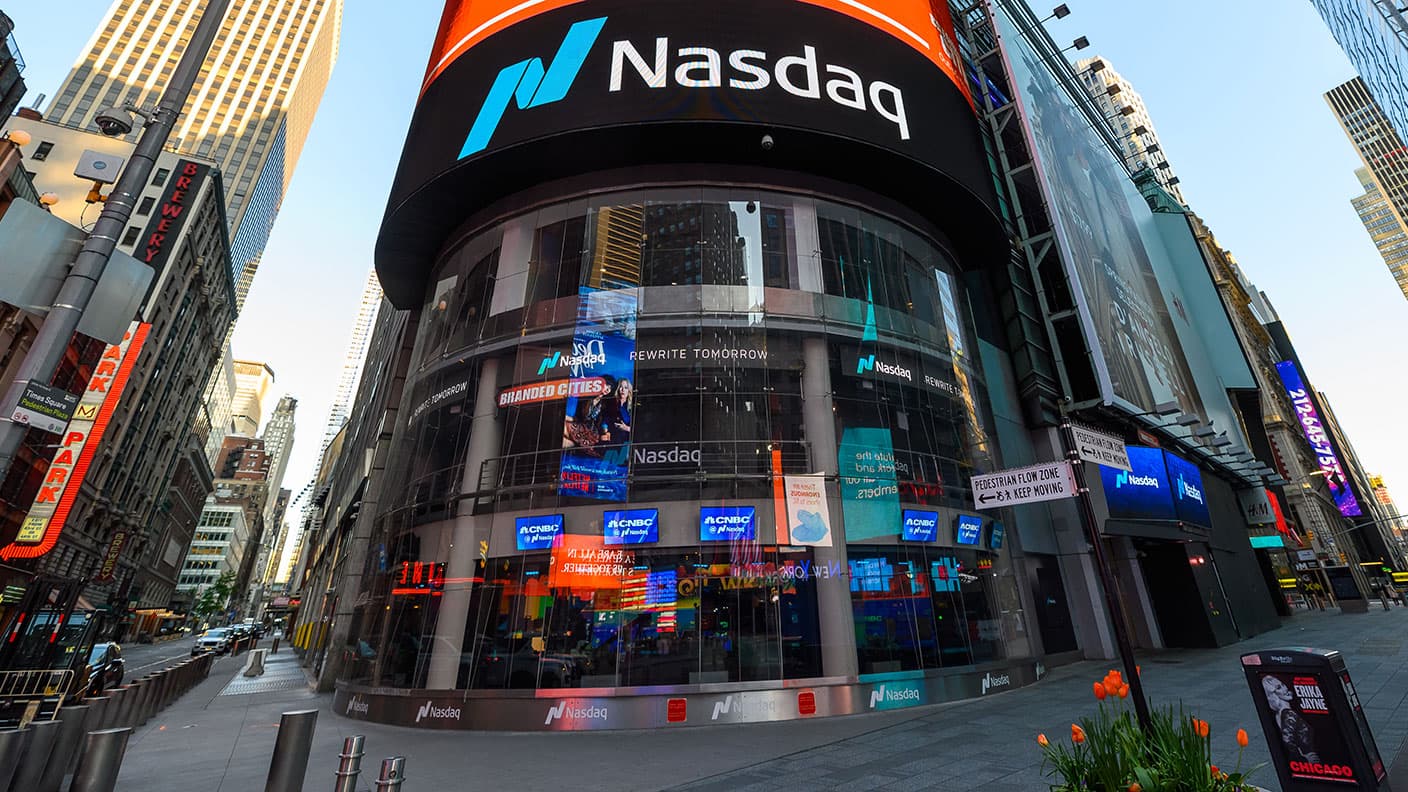
On October 26, 2026, Anthropic, PBC filed a registration statement on Form S-1 with the U.S. Securities and Exchange Commission and announced that it intends to list its Class A common stock on the Nasdaq Global Select Market under the symbol "ANT." Three qualifiers in that announcement matter more than the headline. First, the offering is "proposed," not completed. Second, the number of shares and the price range "have not yet been determined." Third, the registration statement "has not yet become effective," which means no shares may be sold and no offers to buy may be accepted until the SEC declares it effective. What happened on October 26 was not a listing; it was the moment Anthropic's numbers moved from confidential drafts and press leaks into a public legal document anyone can read on EDGAR.
The distinction between a confidential draft and a public S-1 is the whole story. Anthropic had confidentially submitted a draft registration statement in June 2026; for months afterward, its revenue, losses, and governance arrangements circulated as "people familiar with the matter" reporting. A confidential filing is visible to regulators and underwriters. A public filing is visible to everyone. The EDGAR index confirms the shift: the submission is dated October 26, 2026, file number 333-299633, with the S-1 as its main document across 87 filed items. Readers should also keep this article separate from an earlier VibeFix piece on Anthropic's IPO filing from the October 2 batch, which covered the confidential-stage reporting. This piece covers the public S-1 itself — the next, legally weightier step in the same process, not a republication of the same news.
Reading the numbers: the revenue curve first, then the $80.7 billion loss
The revenue trajectory in the filing is steep to the point of distortion: $41 million in 2023, $386 million in 2024, $4.585 billion in 2025, and $16.286 billion in the six months ended June 30, 2026 — roughly 14 times the $1.163 billion of the same period a year earlier. Read the periods carefully. The half-year figure is not an annualized run rate, and doubling it to guess a full-year total would misrepresent the document. Early multiples are flattered by a tiny base; the segment that actually deserves attention is the jump from $4.585 billion in full-year 2025 to $16.286 billion in half-year 2026, where the absolute increase is too large to explain away with base effects.
The loss figure needs even more unpacking. The filing reports a net loss of $80.7 billion for the first half of 2026, and most headlines stopped there. But the same document reports an operating loss of $693 million, down from $2.1 billion a year earlier, and attributes about $72.4 billion of the net loss to non-cash changes in the fair value of convertible notes, derivative liabilities, and SAFEs — driven mainly by a rise in Anthropic's own enterprise valuation. In plain terms, most of the headline loss is an accounting reflection of the company becoming more valuable: as its valuation rose, the fair value of its convertible instruments rose with it, and the difference flowed through as a loss. That does not make the $693 million operating loss disappear, and it is not a defense of Anthropic's spending. It simply means that using the $80.7 billion figure to argue "this company is failing" and using the $16.3 billion revenue figure to argue "it has already won" are the same reading error in opposite directions: each takes only the half of the document that supports its conclusion.
Customer structure is the third set of numbers worth a close read. As of September 30, 2026, on a trailing-twelve-month basis, Anthropic had more than 11,900 customers with $100,000 or more in revenue, up from more than 950 a year earlier; more than 1,900 above $1 million; and about 250 above $10 million. The structural shift matters more than the counts: in the third quarter of 2026, over 50% of the $100,000-plus customers used Claude Platform together with at least one first-party application such as Claude Code or Claude Cowork, up from about 30% in the fourth quarter of 2025. The center of gravity is moving from selling model calls to selling a platform-plus-application bundle. Once a customer's development environment and knowledge workflows both live inside one vendor's system, switching costs stop being a matter of changing an API endpoint.
Cash is also in the document: $112.4 billion in cash and equivalents as of June 30, 2026, $19.3 billion in short-term investments, and $3.2 billion available under a credit facility. Those figures are often waved against the loss to conclude "it can burn forever." The filing, however, stresses that compute commitments are "substantial" and will "continue to grow" as the business scales, requiring large upfront commitments and ongoing payments. Deep cash and heavy commitments can both be true, and the second is the variable that constrains the company's future freedom: signed compute contracts are not costs you can flex down at will.
Governance is the hardest part of the document
If revenue figures can move in a later amendment, the governance structure is the part of the filing least likely to change — and most worth reading closely. Anthropic is incorporated as a Delaware public benefit corporation, with a stated public benefit purpose of "the responsible development and maintenance of advanced AI for the long-term benefit of humanity." That is not decorative mission language: directors of a public benefit corporation must weigh shareholder interests alongside the charter's public benefit purpose, which is a different duty from that of an ordinary corporation's board.
The power arrangements have two layers. The Long-Term Benefit Trust (LTBT), through a special class of Class T common stock, generally has the authority to elect and remove the Class T directors, who together will constitute a majority of the board's authorized members. The LTBT holds no economic interest; its institutional function is to separate the voice of safety and long-term interests from the capital structure. Separately, a single share of Class F common stock, held by a founder LLC of the seven co-founders, carries votes equal to 50.1% of the total voting power on matters submitted to stockholders generally. The filing therefore describes the company as a "controlled company" under Nasdaq governance rules, which exempts it from requirements such as a majority-independent board and fully independent nominating and compensation committees. It does not exempt the company from disclosure, audit committee independence, or financial reporting. Power and disclosure are two separate lines in this document: the first stays largely with the founders and the LTBT, the second belongs to the market and regulators. Readers should keep them separate too.
What it means for vibe coders: the product lines in the prospectus
The S-1 is not only a financial document for investors; it is the first time Anthropic has confirmed its product map with the seriousness of a legal filing. Claude Platform is described as a comprehensive agentic development environment, Claude Code as its coding agent, and Claude Cowork as its knowledge work agent with computer use capability. The filing also notes that Claude is accessible on AWS, GCP, and Azure, with Anthropic keeping direct contractual relationships with customers while paying each cloud provider a fee. For anyone building daily with Claude Code, the practical point is that the tool is not a side business in this story — it is part of the growth narrative the company is presenting to investors.
Three practical judgments follow. First, investment in Claude Code is unlikely to shrink abruptly because of the listing process: it is tied directly to the revenue-structure shift the filing is selling. Second, compute-commitment pressure means future price, rate-limit, or allowance changes are more likely to arrive as contract-term changes than as friendly blog posts; building a core workflow entirely on one vendor's free tier or trial terms carries more risk than it used to. Third, listing brings a long-term benefit for developers: quarterly reports will publish revenue structure, customer retention, and compute commitments in auditable form, so judging a vendor's health will no longer depend on leaks — provided readers learn to read those reports rather than just their headlines.
One organizational detail is worth noting: Goldman Sachs and Morgan Stanley are the representatives of the underwriters, with 18 underwriters listed on the prospectus cover. That is not news in itself, but it signals the scale at which this listing is organized — a large-tech IPO operation, not a tentative experiment. The larger the operation, the more normalized disclosure, analyst coverage, and expectation management become, and the harder it gets to excuse product volatility with "we are still early." Developers should adjust their expectations accordingly: from startup flexibility, where surprises are the norm, to listed-company predictability, where commitments are meant to be tracked.
What the filing does not say: the blanks matter more than the filled boxes
The prospectus is a preliminary "Subject to Completion" document: share count and price range are blank, and no listing date is given. Any report claiming a fixed valuation or a specific listing day, without citing a new amendment containing those numbers, is dressing market rumors as facts. Reports of a possible mid-November debut have no basis in the filing itself; they belong to the reporting register, not the disclosure register. What readers should watch in the coming weeks is whether an amendment with a price range appears on EDGAR — not countdown posts on social media.
Equally, the filing promises nothing about future Claude pricing, free tiers, or model roadmaps, and it does not allocate proceeds to specific products. Reading it as "Anthropic will raise prices" or "Anthropic will cut prices" puts words in the document's mouth where it has said nothing. The honest reading is that the S-1 tells you about the company's past (revenue, losses, customers) and its power structure (who decides), not its future (how products will change). The future has to be verified against later periodic reports and product announcements, not extrapolated from one prospectus.
A final caution on quotation: figures in a preliminary prospectus can change before final pricing, and each figure carries its own definition and period. The safe practice, followed in this article, is to always state the period ("the six months ended June 30, 2026") and the basis ("trailing-twelve-month revenue") alongside the number, rather than dropping a bare $16.3 billion or $80.7 billion into a sentence. If a later amendment revises any number, that amendment — not speculation — becomes the updated source.
Judgment: remember the power and the commitments, not the loss figure
Two judgments survive a full read of the S-1. The first is about power: after listing, the founders and the LTBT retain institutional control over the company's direction through the Class F and Class T arrangements, while public shareholders supply capital with structurally limited influence. That is good news for those who trust the long-term direction and bad news for those who want shareholder rights to constrain it — both evaluations are legitimate, depending on where you stand. The second is about commitments: the steepness of the revenue curve and the weight of compute commitments are two sides of the same coin. The growth story is, at its core, "ever-larger compute contracts in exchange for an ever-larger enterprise customer base." Whether it holds depends not on any single quarter's multiple, but on enterprise renewal rates and unit compute costs — precisely the items the prospectus discloses least and future periodic reports will be most worth tracking.
For vibe coders, the practical actions are small and concrete. First, write down how dependent you are on Claude Code and Claude Platform, and what migration would cost if terms or prices change. Second, save the key pages of this S-1, and diff the numbers when the next amendment appears. Listing news expires in a day; a vendor's governance structure and contract commitments stay with your project for its whole lifetime. The point of reading a prospectus is that it lays open, in legal form, the backstage of a company you use every day.

Figure: Anthropic revenue trajectory (2023 $41M, 2024 $386M, 2025 $4.585B, 2026 H1 $16.286B, from the S-1 filing; the 2023 bar is near-zero at this scale).
Comments (0)
Sources
Related articles
On October 28, Microsoft opened the agent harness behind its Copilot products through Foundry: 20+ models plus bring-your-own-key, with Microsoft running the agent loop and sandbox. This article unpacks what was actually opened, why now, and the three questions to settle before adopting it.

On October 28, Google announced Gemini 4 Carbon, with strong cybersecurity scores and multi-day task ability, but first access goes only to a small group of vetted cyber defenders, with no date for developers or consumers. This article unpacks its scores, pricing, and safety claims, and judges whether it is worth chasing now.

On October 26, 2026, Anthropic released the Claude for Nonprofits plugin, built with about 30 nonprofits: skills for fundraising, hiring, marketing, and governance, aimed at teams where over 75% have fewer than 10 seats. This piece explains the three areas, why the map-first design is the part worth copying, and the boundaries the announcement does not guarantee.