On October 3, 'Sites in ChatGPT' hit the HN front page with ~209 points and 218 comments. Not a launch — a reckoning: is prompt-to-URL a toy, a prototype host, or a productivity tool? The four debates, the doc-backed facts (D1/R2, sign-in, custom domains), and three verdicts for vibe coders.
On October 3, engineer Kevin Liao published a polemic that hit the HN front page: agent memory plugins are a lottery over RAG snippets; what agents need is a documentation workspace. The essay's diagnosis, its open-source Operator Memory plugin, the two strongest objections, and the minimal practice you can start tonight.
Gergely Orosz visited OpenAI, Anthropic, Cursor, and Ramp and wrote up the 2026 state of the industry: near-100% AI-generated code, agent PRs up ~10x in eight months, code review degrading into theater, the IDE declared legacy. Key takeaways plus three verdicts and four actions for vibe coders.
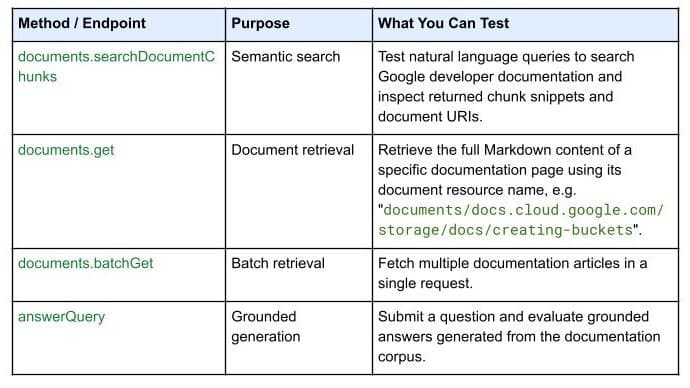
On October 7, 2026, Google Developers launched the Developer Knowledge API ecosystem: official Google Cloud, Firebase, and Android docs as a programmatic source of truth, with a gcloud CLI surface, an official Agent Skill (one-line install), an MCP server, and multi-language client libraries. Why 'docs as APIs' uproots vibe coding's classic failure of models misremembering APIs.
On September 30, 2026, Bitdefender launched AI Guardian in public beta: a security layer for autonomous AI agents that verdicts every tool call, file access, and credential use as allowed, flagged, or blocked. First on macOS, free during beta, supporting Claude Code and OpenClaw. Why this 'agent behavior firewall' arrives right on time for vibe coders.
On October 8, 2026, Google Cloud launched the Gemini agent at Gemini at Work 2026: a universal agent for work that takes objectives, plans by itself, auto-selects between Gemini and Claude models per task, and introduces 'coworker agents' with their own email, calendar, and directory seat. Four judgments on why the second half of the agent race is about 'agents that feel like colleagues.'
On October 7, 2026, GitHub announced via Changelog: starting with CLI 1.0.94-0, the /model command discovers models in your local Ollama instance, listed alongside configured and cloud models. Discovery doesn't auto-enroll — each model needs manual confirmation — and models must support tool calling and streaming. GitHub also teased intelligent routing, and clarified: a local model neither enables offline mode nor disables telemetry.
On October 1, 2026, Microsoft AI shipped three voice models at once: MAI-Transcribe-2-Streaming (streaming transcription, #1 on Artificial Analysis for streaming accuracy at 2.5% WER, final transcript 0.13s after end of speech), MAI-Voice-2.1 (23 languages, one consistent voice across languages), and 2.1-Flash (45s of audio at ~150ms end-to-end). With listening and speaking covered, a voice agent on a pure-Microsoft stack can now complete a turn in under a second.
On October 1, 2026, the Svelte team shipped SvelteKit 3.0: config moves from svelte.config.js into vite.config.ts, the private $lib alias retires in favor of Node-native #lib subpath imports, service workers shed boilerplate, and error handling improves across the board. The sv CLI hit 1.0 the same day, and its one-command migration turns the leftovers into a TODO list for your agent.
Reported by InfoQ on October 3: a GPT-4 coding agent given CVE descriptions successfully exploited 87% of 15 test vulnerabilities, versus 7% without descriptions. rclone's author received 40+ security disclosures in a single month — more than the project's previous decade combined; QEMU has shortened its embargo period. The vulnerability disclosure timeline is collapsing under agent speed.
On October 7, OutSystems announced Agent Experience is generally available: its low-code platform is now open to any AI coding agent — Claude Code, Cursor, Codex, Kiro — with agents working at the design level, the platform generating code deterministically, and governance built in. This is the "vibe coding goes enterprise" playbook: taming shadow AI with a compliant path. But the 74% rework figure is vendor-survey data — discount it. The real bill is the hidden cost of platform lock-in.
On October 2, GitLab disclosed CVE-2026-90970: the prompt template sandbox in the self-hosted AI Gateway can be escaped, letting a logged-in user with Duo Agent Platform permissions execute arbitrary commands on the gateway host. CVSS 9.9. It is the component's second 9.9 this year — February's CVE-2026-1868 was the same template engine, the same CWE-1336. Eight months apart, both patches fixed specific escape paths without moving the trust boundary.