Badges, Mailboxes, and Directory Seats for Agents: Google Cloud Launches the Gemini Agent, Auto-Selecting Between Gemini and Claude per Task
On October 8, 2026, Google Cloud launched the Gemini agent at Gemini at Work 2026: a universal agent for work that takes objectives, plans by itself, auto-selects between Gemini and Claude models per task, and introduces 'coworker agents' with their own email, calendar, and directory seat. Four judgments on why the second half of the agent race is about 'agents that feel like colleagues.'
On October 8, 2026, at the Gemini at Work 2026 conference, Google Cloud launched the Gemini agent — a "universal agent for work." Reuters covered it the same day, confirming the key details. This isn't another chatbot or another coding agent; it's an explicit paradigm statement: the unit of interaction with an agent is no longer the "instruction" but the "objective" — you hand it an objective, and it plans the work, picks tools, connects to business systems, and returns finished work.
Why should vibe coders care about an enterprise launch? Because Google is standardizing the whole design pattern of "agents as employees": objective-driven, per-task model selection, independent agent identities, built-in cost controls. Today it's an enterprise feature; tomorrow it's the cheat sheet for indie developers building agent products.
What launched: one objective, three kinds of delivery
Per Google's official blog, the Gemini agent flow goes: you start from a prompt window with an objective; it plans the work, calls skills and tools, connects to the company's business systems; and hands back something finished — landing where you already work: documents, the inbox, developer environments.
The capabilities, unpacked:
1. Lives inside Workspace, but can visit rivals' turf. The agent works directly inside Gmail, Drive, Docs, Slides, Sheets, Chat, and Calendar, and can also be invoked from Slack, Microsoft 365, and the command line. Tasks can keep running in the cloud for hours or even days — "persistent" and "long-horizon" are the two keywords of this launch.
2. Auto-selects models per task, mixing Google's own with Anthropic's. The most thought-provoking detail: the Gemini agent currently chooses between Google's Gemini models and Anthropic's Claude models per task, with more models coming, plus built-in cost controls. Google just broke the "one agent, one model" assumption with its own hands — the model becomes a replaceable execution layer; the agent is the product layer.
3. "Coworker agents": giving agents badges, mailboxes, and directory seats. Users can create coworker agents with independent Workspace identities — their own email, their own calendar, their own Drive, a seat in the company directory — but only able to see information shared with them. They show up in Teams, email, and documents, @-mentionable like colleagues, with permissions, audit, and governance behind them. It's the most formal answer yet to the "agent identity" question: agents are no longer "your avatar" but "digital colleagues with boundaries."
4. An enterprise connector matrix. Confluence, Git, Jira, Salesforce, ServiceNow, BigQuery/Databricks/Postgres/Snowflake, and any MCP server. Finance and legal editions are already in preview; government, healthcare, and retail follow.
Google also dropped a number: nearly 80% of Google Cloud customers use its AI products. Pricing and GA dates are unannounced; it's still in private preview.
Why this is paradigm-level: four judgments
First, "objectives" are replacing "instructions" as the agent's unit of interaction. Compare: Copilot completes code as you write (instruction-level), Cowork runs a defined task end-to-end (task-level), while the Gemini agent takes an objective and plans by itself (objective-level). Each level up means more agent autonomy — and steeper demands on guardrails. For indie developers building agent products, the first product decision should be: which level does my agent stop at?
Second, model selection is turning from "faith" into "routing." Google itself mixes Gemini and Claude, auto-selecting per task. The signal for vibe coders: stop welding your product to one model. Abstract the model-call layer, route per task, log each task's cost and quality — this "model routing + cost control" combo is today's big-tech standard and tomorrow's bar for indie agent products.
Third, "agent identity" is the next infrastructure problem. Independent email, independent permission boundaries, auditable — Google replicated the enterprise "new hire onboarding" flow (issue account, set permissions, join directory) for agents. Vibe coders can copy it now: does each agent in your product have an independent identity and permission boundary, or is everything running naked on the user's highest privileges? (Bitdefender's AI Guardian, launched the same season, answers the second half of that question — offense and defense appearing in the same week is no coincidence.)
Fourth, enterprise agent integration work is up for grabs. The connector matrix (Jira/Salesforce/MCP) says it plainly: the second half of 2026's agent race isn't about models but about "how many business systems you can plug into." The indie opportunity isn't building the Nth generic agent — it's the "last mile" connectors and skills for specific vertical systems. Google's skill-registry thinking works just as well at small, sharp scale.
An action list for vibe coders
1. Audit your agent product's model coupling. If switching models means editing 20 files, abstract the call layer first. Per-task routing (cheap models for easy tasks, strong models for hard ones) saves money immediately.
2. Design an "identity" for your agents. Minimum viable: separate API keys, separate permission scopes, separate operation logs. Don't let agents roam around on your root credentials.
3. Build "cost visibility" into the product. Google bakes cost control into the agent; FinOps for AI is becoming standard. Can users of your agent product see what each task cost? If not, expect "why did you charge me so much" tickets.
4. Watch the skill/connector ecosystem. The stronger generic agents get, the more "connection" is worth. Polishing an MCP server or skill for some niche SaaS you know well may be a bigger opportunity than building the agent itself.
The competitive landscape: three players, different hands, same table
Reuters framed the launch inside a bigger card game: OpenAI launched always-on agents (Dots) in September — chasing user goals across apps on their own; Meta released Muse last month — a personal agent that shops, books travel, sends emails, and pays for you; Microsoft holds Copilot's Home/Code/Autopilot trio. With Google's Gemini agent entering, the four hands are clear:
OpenAI plays "personal goal tracking" (dots following your objectives across apps), Meta plays "personal life assistant" (consumer scenarios), Microsoft plays "in-suite agents" (productivity scenarios), Google plays "enterprise employee agents" (objective-driven + independent identity + governance). None of the four is competing on "a smarter chat" — all are competing on "in what identity, and where, the agent works." That's the real table of the agent race in late 2026.
For indie developers, once the table is visible, positioning is easy: don't build the fifth generic agent. The shared blind spot of the giants is vertical depth — specific industry workflows, deep integrations with niche SaaS, profession-specific skills. Big tech's generic agents can't reach those places (no data, no know-how), and that's exactly the vibe coder's home turf.
Behind "independent identity": the trilemma of permission, audit, and liability
Hidden in the coworker-agent design is a detail most people missed: "only able to see the information shared with it." It sounds bland; it's actually the foundation of enterprise agent adoption.
Consider the counterexample: ask a generic agent today to "organize Q3 sales data" and it runs on your full permissions — it can see HR salary sheets, legal contracts, the CEO's inbox. It won't cross lines on its own, but one prompt injection can make it spill what it shouldn't. Google's answer inverts it: zero permissions by default, share on demand — exactly the least-privilege principle of employee onboarding.
That's a directly copyable checklist for vibe coders building B2B agent products: 1. independent identity and credentials per agent; 2. data access deny-by-default, allowlist to open; 3. audit logs for every action (who authorized it, what it did); 4. human confirmation for sensitive operations (deleting data, sending externally). Miss these four and enterprise customers won't even let you into a POC.
One level deeper is liability: an agent sends a wrong quote email from its independent mailbox — whose fault? Google's answer is "permissions, audit, and governance" — making agent behavior traceable so liability can be assigned. Indie developers should start building this awareness now: for every high-risk action your agent product takes, is there evidence of "who authorized it"? Without it, the first dispute will teach you the hard way.
Private preview phase: what you can do now
Honestly: Gemini agent is still in private preview, pricing and GA dates unannounced — most people can't use it today. That doesn't diminish its value as a "design sample" — a big tech preview is an indie developer's roadmap preview.
Three things to do now: first, turn its four design patterns (objective-driven, model routing, independent identity, built-in cost) into a checklist and score your own agent product against it; second, apply for the preview queue on Google Cloud and read its skill/connector docs — the docs alone are a free design course; third, watch the day its pricing drops — the pricing anchor for enterprise agents (per seat? per task? per token?) will directly shape indie agent pricing strategy, so decide in advance how your prices map against it.
One-line summary: the Gemini agent launch says the second half of the agent race isn't about "smarter models" but about "agents that feel more like colleagues" — with objectives, identities, boundaries, and controlled costs. Models will keep getting stronger, but once these design patterns standardize, they won't roll back. A good time to copy the homework.
Sources
Related articles
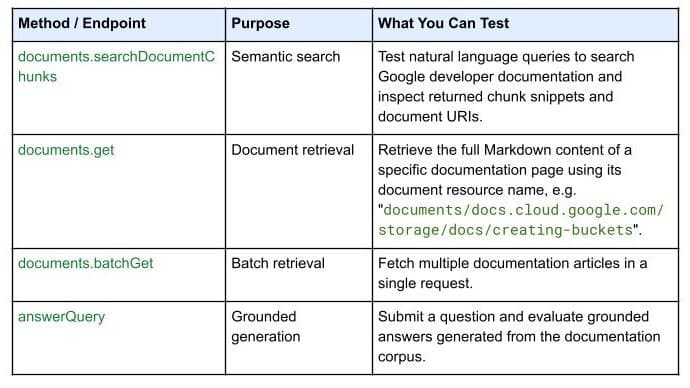
On October 7, 2026, Google Developers launched the Developer Knowledge API ecosystem: official Google Cloud, Firebase, and Android docs as a programmatic source of truth, with a gcloud CLI surface, an official Agent Skill (one-line install), an MCP server, and multi-language client libraries. Why 'docs as APIs' uproots vibe coding's classic failure of models misremembering APIs.

On October 3, 'Sites in ChatGPT' hit the HN front page with ~209 points and 218 comments. Not a launch — a reckoning: is prompt-to-URL a toy, a prototype host, or a productivity tool? The four debates, the doc-backed facts (D1/R2, sign-in, custom domains), and three verdicts for vibe coders.

Gergely Orosz visited OpenAI, Anthropic, Cursor, and Ramp and wrote up the 2026 state of the industry: near-100% AI-generated code, agent PRs up ~10x in eight months, code review degrading into theater, the IDE declared legacy. Key takeaways plus three verdicts and four actions for vibe coders.