Stop Letting Agents Code from Stale Docs: Google Turns Official Documentation into an API — One gcloud Line to Query, One Line to Install the Skill
On October 7, 2026, Google Developers launched the Developer Knowledge API ecosystem: official Google Cloud, Firebase, and Android docs as a programmatic source of truth, with a gcloud CLI surface, an official Agent Skill (one-line install), an MCP server, and multi-language client libraries. Why 'docs as APIs' uproots vibe coding's classic failure of models misremembering APIs.
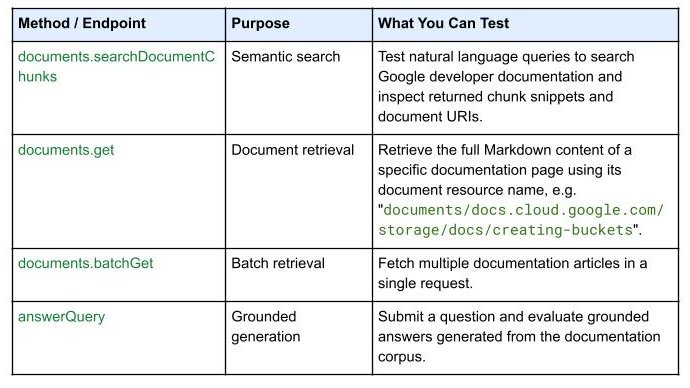
On October 7, 2026, the Google Developers official blog announced the Developer Knowledge API ecosystem — a full toolkit turning official docs for Google Cloud, Firebase, Android, and more into a "programmatic source of truth": a gcloud CLI surface, an official Agent Skill, API Explorer, multi-language client libraries, plus a standalone MCP server.
Not a flashy headline, but possibly this month's highest long-term value story for vibe coders. It strikes at vibe coding's most common and most insidious failure mode: models generating plausible-looking but unrunnable code from "remembered" outdated APIs. From now on, "check the official docs first" can become a standard skill in agent workflows — an infrastructure-level change.
What launched: documentation is no longer web pages, it's an API
The official positioning is blunt: the programmatic source of truth for Google developer documentation, designed specifically for modern AI agents, IDE extensions, and automated workflows, replacing brittle web-scraping with a structured API that serves fresh, Markdown-formatted documentation.
Key properties:
1. Hybrid semantic + keyword search with intelligent chunking. Not plain full-text search but hybrid semantic-plus-keyword retrieval, with documents split into well-sized chunks — meaning agents get "just enough context" instead of whole pages burning through context windows.
2. Frequent re-indexing. Docs sync soon after upstream updates, so agents always read the current version. That's the weight behind "source of truth": a scraper's biggest problem isn't slowness — it's that you never know which day's version it crawled.
3. Grounded Q&A. Beyond retrieval, grounded question-answering over official docs — answerQuery returns answers with structured citation tracking, every claim sourced. Every vibe coder knows what this means: agents can no longer bluff you with "I think this API works like that."
Four doors: terminal, agent, browser, code
Google laid all four doors at once, covering every scenario where agents work:
Door 1: gcloud CLI. Three core commands:
# Grounded answers with citations, straight in the terminal
gcloud developer-knowledge answer-query --query="How do I create a BigQuery dataset?"

# Search document snippets
gcloud developer-knowledge documents search-chunks --query="Firestore transactions"

# Fetch a document's metadata and content
gcloud developer-knowledge documents describe "documents/docs.cloud.google.com/storage/docs/creating-buckets"

# Pipe an error trace straight in for grounded debugging
gcloud developer-knowledge answer-query --query="$(cat error.txt)"
The last one is inspired: piping an error trace directly into the query. The daily vibe-coder reality — a terminal full of red, previously copy-pasted to an AI (which then guessed from memory); now one command yields a grounded answer from official docs. Pre-installed in Cloud Shell, works out of the box with standard gcloud installs.
Door 2: the official Agent Skill, one-line install.
npx skills add google/skills --skill retrieving-developer-knowledgeAfter that, your AI coding assistant knows how to consult Google's official docs. Compatible with Antigravity, Claude Code, Cursor, GitHub Copilot, and custom agent frameworks — note that list: Google didn't gate this to its own Antigravity but opened it to all mainstream agents. Smart: a docs API's value lies in being called by every agent; locking it down would kill it.
Door 3: a standalone MCP server. The Developer Knowledge MCP server — skills can go through MCP or fall back to REST (curl). — MCP is becoming the standard slot for agent capabilities, and Google just shipped the official implementation.
Door 4: multi-language client libraries + API Explorer. C#, Go, Java, Node.js/TypeScript, PHP, Python, Ruby all covered; operations include AnswerQuery, SearchDocumentChunks, GetDocument, BatchGetDocuments (up to 20 documents per batch call). API Explorer offers a zero-code interactive testing UI.
Why this is infrastructure-level: three judgments
First, "stale knowledge" is vibe coding's systemic bug, and it finally has a systemic fix. Recall your own war stories: asking an agent to write Firebase code and getting a deprecated API from two years ago; asking it to configure Cloud Run and getting a renamed flag. The old fix was "you know better than the agent, correct it manually" — which defeats vibe coding's whole point. The new fix: make "consult the latest docs" a standard pre-step for agents, hardened into the workflow via the skill mechanism. The concept of a knowledge cutoff is being hollowed out by "real-time docs APIs."
Second, skills are becoming the "package manager" for agent capabilities. Look twice at npx skills add — it has the same feel as npm install. Agent capability expansion is moving from "writing prompts" to "installing skills": docs lookup is one skill, code review can be one, deploy checks another. The new habit for vibe coders: curate your agent's skill list like you curate project dependencies. Google shipping official skills sets the standard for this ecosystem.
Third, big tech has started "writing docs for agents." The blog's own words: "designed specifically for modern AI agents" — documentation consumers are no longer just human developers but agents too. That changes how docs get written: more structured, more machine-readable metadata, more stable anchors. The takeaway for indie developers: write your own product docs for "human + agent" dual readership. Can an agent read your API docs? Does your README have a machine-followable quickstart? In the agent era, documentation is a customer-acquisition channel.
The classic failures, retired: three real scenarios
To show this isn't paper value, three war stories every vibe coder has lived, and how this API retires them:
Scenario 1: the ghost of deprecated APIs. You ask an agent to "write login with Firebase"; it finishes in a flash, then throws auth/invalid-api-key-style errors at runtime. After an hour you find it: it used Firebase v8 namespaced syntax while your project runs v10 modular APIs — the model's training data simply contains more v8 code, so it "remembered" the old one. Now the skill retrieves the latest docs first, v10 syntax arrives as context, and ghost APIs can't materialize.
Scenario 2: the renamed flag. A gcloud run deploy flag got renamed in the new version; the agent generates the old flag from memory, deployment fails, and the error message is cryptic. Previously you'd human-grep release notes; now documents describe pulls the current parameter table — machines read docs 100× faster than humans read release notes, and never skim past the important line.
Scenario 3: migration documentation hell. Migrating 30 Cloud Functions to Cloud Run, each needing trigger configs, env vars, and permission models verified against docs. Previously 30 tabs of manual reading; now BatchGetDocuments fetches 20 docs per call while the agent diffs and generates migration scripts in bulk — docs retrieval turns from "human manual labor" into "an agent's API call." That's what "infrastructure" means.
Not on Google's stack? This still concerns you
"I don't use Google Cloud — why should I care?" — you should care about the pattern. Google moved first; AWS, Azure, Cloudflare following is a matter of time: they share the same incentive (fewer support tickets and less churn from stale docs). The signs are already there: everyone's shipping MCP servers and agent skills; docs-as-APIs is the natural next step.
More valuable is the extrapolation: you can build the "docs retrieval" habit for your own stack today — no need to wait for official APIs. Many docs sites expose decent search APIs or sitemaps; a small skill (curl + parse) gets you 70% of the official solution. The core idea in one line: never let an agent write API calls from memory.
An action list for vibe coders
1. Install the skill today. One line: npx skills add google/skills --skill retrieving-developer-knowledge. If you work in the Google Cloud/Firebase/Android ecosystem, it's a zero-cost accuracy upgrade. From today your agent stops consulting its memory for docs.
2. Write "docs first" into your agent workflows. Not just Google's docs — give your regular stacks similar retrieval skills (the big vendors are all catching up). Add a line to your AGENTS.md / project instructions: "for APIs in the XX ecosystem, confirm the latest usage via the docs skill before writing code."
3. Try trace-piped debugging. Next time the terminal goes red, don't rush to copy-paste into an AI — run answer-query --query="$(cat error.txt)" first and compare the grounded answer against the pure-memory answer. That comparison will change your trust model of "AI debugging."
4. Rewrite your product docs for dual readership. Audit your README/API docs: clear structured headings? A quickstart a machine can follow step by step? Machine-readable error-code explanations? — Your next user might not be human; it might be someone else's agent.
One-line summary: when documentation becomes an API, vibe coding's classic failure — "the model misremembered the API" — gets uprooted. What Google laid down isn't a feature but infrastructure: four doors, all-agent compatible, MCP-native. Install the skill and let your agent read only current docs from today — possibly the biggest accuracy upgrade you'll get for 10 seconds of work this year.
Sources
Related articles

On October 3, engineer Kevin Liao published a polemic that hit the HN front page: agent memory plugins are a lottery over RAG snippets; what agents need is a documentation workspace. The essay's diagnosis, its open-source Operator Memory plugin, the two strongest objections, and the minimal practice you can start tonight.
On October 8, 2026, Google Cloud launched the Gemini agent at Gemini at Work 2026: a universal agent for work that takes objectives, plans by itself, auto-selects between Gemini and Claude models per task, and introduces 'coworker agents' with their own email, calendar, and directory seat. Four judgments on why the second half of the agent race is about 'agents that feel like colleagues.'

On October 7, 2026, GitHub announced via Changelog: starting with CLI 1.0.94-0, the /model command discovers models in your local Ollama instance, listed alongside configured and cloud models. Discovery doesn't auto-enroll — each model needs manual confirmation — and models must support tool calling and streaming. GitHub also teased intelligent routing, and clarified: a local model neither enables offline mode nor disables telemetry.