SvelteKit 3 Is Here: $lib Retires, Config Moves to vite.config.ts — the First Major Release That Assumes Agents Do the Upgrading
On October 1, 2026, the Svelte team shipped SvelteKit 3.0: config moves from svelte.config.js into vite.config.ts, the private $lib alias retires in favor of Node-native #lib subpath imports, service workers shed boilerplate, and error handling improves across the board. The sv CLI hit 1.0 the same day, and its one-command migration turns the leftovers into a TODO list for your agent.
On October 1, 2026, the Svelte team officially released SvelteKit 3.0 — four full years after SvelteKit 2 (late 2022). The @sveltejs/kit 3.0.0 package landed on npm the same day, and the companion sv CLI hit 1.0 alongside it. The news reached the Hacker News front page on October 5 with 400+ points and 150+ comments. For a framework famous for its "compile-time magic," the keywords of 3.0 are subtraction, not addition: config relocation, alias retirement, boilerplate slimming. The official blog put it modestly — the same framework, a little more polish, a little more type safety, a little less junk.
Don't let the modest wording fool you. Every breaking change in SvelteKit 3 answers the same question: when AI agents become the primary authors of code, what should a framework look like?
Four Years in the Making: What 3.0 Actually Changes
The list first. SvelteKit 3's breaking changes are few, but each one cuts deep:
1. Config moves from svelte.config.js into vite.config.ts. SvelteKit's config used to live scattered in svelte.config.js, forcing the Vite plugin through async resolution and extra glue code. In 3.0 the config consolidates into vite.config.ts so the Vite plugin can resolve it synchronously. It sounds like an implementation detail, but the practical effect is real: the path from "config as code" gets shorter, and an agent editing config no longer has to guess where each option lives.
2. The $lib alias retires, replaced by #lib. The most debated change. SvelteKit 2's $lib was a framework-private path alias; 3.0 switches to Node-native package.json subpath imports (#lib). The cost: import paths must now carry file extensions (#lib/foo.js instead of $lib/foo). The payoff: the alias is no longer SvelteKit dialect — anything that understands Node subpath imports (including an AI agent's static analysis) can read it directly.
3. Environment variables get better. defineEnvVars moves into the dedicated @sveltejs/kit/env subpath — more precise types, less mental overhead.
4. Service workers shed boilerplate. New $app/manifest and $app/service-worker modules bring better type checking and API availability inside service workers.
5. Error handling improves across the board. +error.svelte now covers both load and render failures, every error flows through handleError, and stack traces carry sourcemaps — a long-standing debugging weak spot, fixed.
6. Foundation upgrade: Node ≥ v22.17, TypeScript ≥ v6, Svelte ≥ 5.56.4, Vite ≥ 8.0.12 (the first Vite bundling stable Rolldown v1), @sveltejs/vite-plugin-svelte v7. The TypeScript 6 floor will trip teams pinned to TS 5 — check plugin compatibility before upgrading.
Behind $lib's Retirement: a Decade-Long Debate of Convention vs. Standard
$lib → #lib looks like a prefix swap; in reality it's the Svelte team taking a clear side: platform standards over framework dialects.
For a decade, frontend frameworks loved inventing their own conventions: Nuxt's auto-imports, Next.js's special files (page.tsx, layout.tsx), SvelteKit's own $lib/$app. Conventions onboard beginners fast, but each framework becomes an island — toolchains (linters, bundlers, AI coding assistants) must be adapted per framework. The beauty of #lib is that it's native Node.js capability: declare the imports field once in package.json and Node, TypeScript, bundlers, and an agent's static analysis all understand it, with no SvelteKit plugin translating in the middle.
First reactions in the community were mixed: some grumbled that $app still uses the dollar prefix, an inconsistency; but more people realized that #lib works outside SvelteKit — your scripts, tests, and Node tooling can all share the same alias. No "convention" can offer that.
The lesson for vibe coders is direct: when choosing a framework, the parts that lean on platform standards are the parts agents get wrong least. $lib was SvelteKit-exclusive knowledge an agent could only recall from training data; #lib is a Node standard no Node-literate model will miswrite. This "retirement" hands a slice of framework knowledge back to the platform and shrinks the agent's error surface.
sv migrate: Upgrading, Designed "Agent-Friendly"
The upgrade command is one line:
npx sv migrate sveltekit-3 --tasks all --confirmIt migrates as much code as possible automatically and generates a TODO list for the rest. The official blog couldn't resist a wink: "If you're agentically inclined, your robot friends will make short work of it."
That's not marketing copy — it's a new release paradigm. Framework authors now assume agents do the upgrading: the migration tool's output is no longer a diff for humans but a TODO list for agents. The Svelte team adds one more tip: upgrade to the latest 2.x first, because 2.x emits deprecation warnings that map one-to-one onto the breaking changes — effectively "test cases" for the agent's migration task. Skipping that step throws away your best migration assistant.
New projects are even simpler: sv create (sv itself is now 1.0, with the community add-on API official).
Remote Functions' Absence: the Subtraction Philosophy of 3.0
Note what 3.0 does not bring: Remote functions (type-safe client-server RPC, the answer to React Server Actions) remain experimental behind the Async Svelte flag. The team calls them "top priority" — and still chose not to cram them into 3.0.
That restraint is rare among 2026 framework releases. Compare: many frameworks treat major versions as feature launch events; SvelteKit 3 is a cleanup event — the August RC announcement was literally titled "We've cleaned out the junk drawer." A major version doesn't have to mean major features; it can mean "clean the foundation so the next decade walks easy."
That's good news for indie developers: the 3.0 migration is mostly mechanical (move config, rename aliases, add extensions) with no "learn a new mental model" cost. The real paradigm shift (Remote functions) waits until the foundation is solid.
An Upgrade Checklist for Vibe Coders
If you have a SvelteKit 2 project, walk this order:
1. Upgrade to the latest 2.x first, then run migrate. The 2.x deprecation warnings are the migration map the team prepared for you (and your agent). Don't skip it.
2. Grep the whole repo for $lib. sv migrate handles most cases, but dynamically constructed paths, doc examples, and README snippets need a human pass. Remember the new rule: #lib/foo.js must carry the extension.
3. Check what's left in svelte.config.js. After the move to vite.config.ts, options like kit.adapter must migrate as a whole — don't leave half behind.
4. Confirm toolchain versions before upgrading. Node v22.17+, TS 6, Vite 8 — sync your CI images, Dockerfiles, and build environments on your deploy platform.
5. Test error pages deliberately. +error.svelte behavior changed (both load and render failures route through it) — click through your 404s, 500s, and edge errors.
6. Leave Remote functions alone for now. Still experimental; wait for GA — vibe projects should never chase experimental APIs.
Vite 8 + Rolldown: the Most Underrated Part of the 3.0 Foundation
SvelteKit 3 requires Vite ≥ 8.0.12 — the first Vite bundling stable Rolldown v1, the Rust rewrite meant to succeed Rollup. The announcement didn't headline it, but its day-to-day impact may exceed #lib: faster builds, lower memory, noticeably better cold starts and HMR on large SvelteKit projects.
The trend to watch: 2026's frontend toolchain is collectively "swapping engines" — Vite to Rolldown, Node embracing native TypeScript support, package managers racing Rust rewrites. SvelteKit 3 rebuilt its foundation on this wave, signaling that the next years' performance dividends come from tooling, not framework APIs.
Practical note for vibe coders: if builds get slower after upgrading to 3.0, check whether a Vite plugin hasn't caught up with Rolldown yet — plugin ecosystems always lag the framework by half a beat; check the plugin's issue list first when builds act strange.
When to Upgrade: Now or Later?
A decision framework. Upgrade now: new projects go straight to 3.0 (it's the sv create default); old projects already facing big surgery (adapter swaps, route refactors) can roll the upgrade in — the migration cost is mostly mechanical. Wait: projects in a stable money-making phase with heavy reliance on niche Vite plugins — wait for the plugin ecosystem to catch up with Rolldown; or teams pinned to TS 5 for plugin compatibility — sort out TS 6 first.
Either way, run sv migrate on a branch first and read the TODO list's length — the list is your effort estimate, far more accurate than gut feel.
One-line summary: SvelteKit 3 isn't an upgrade about "learning new things" — it's an upgrade about "paying down technical debt." It swaps framework dialect for platform standard and designs the upgrade as an agent-executable TODO list — possibly the first mainstream framework major release that assumes, from day one, that agents do the upgrading. Four years of waiting, for exactly this kind of clean.
Sources
Related articles
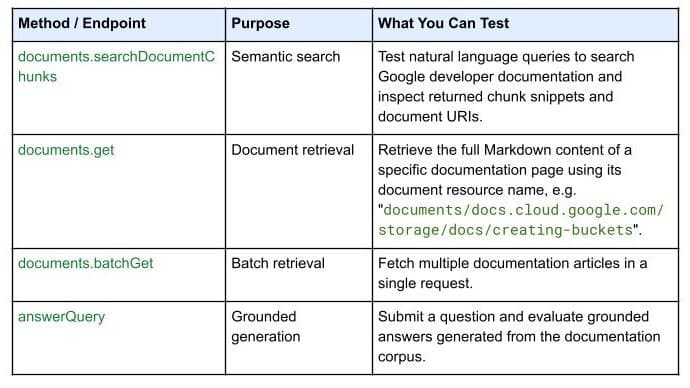
On October 7, 2026, Google Developers launched the Developer Knowledge API ecosystem: official Google Cloud, Firebase, and Android docs as a programmatic source of truth, with a gcloud CLI surface, an official Agent Skill (one-line install), an MCP server, and multi-language client libraries. Why 'docs as APIs' uproots vibe coding's classic failure of models misremembering APIs.
On October 8, 2026, Google Cloud launched the Gemini agent at Gemini at Work 2026: a universal agent for work that takes objectives, plans by itself, auto-selects between Gemini and Claude models per task, and introduces 'coworker agents' with their own email, calendar, and directory seat. Four judgments on why the second half of the agent race is about 'agents that feel like colleagues.'

On October 7, 2026, GitHub announced via Changelog: starting with CLI 1.0.94-0, the /model command discovers models in your local Ollama instance, listed alongside configured and cloud models. Discovery doesn't auto-enroll — each model needs manual confirmation — and models must support tool calling and streaming. GitHub also teased intelligent routing, and clarified: a local model neither enables offline mode nor disables telemetry.