"Disclosure Is Weaponization": Coding Agents Turn CVE Descriptions into Working Exploits at 87% — the Old Rules of Coordinated Disclosure Are Failing
Reported by InfoQ on October 3: a GPT-4 coding agent given CVE descriptions successfully exploited 87% of 15 test vulnerabilities, versus 7% without descriptions. rclone's author received 40+ security disclosures in a single month — more than the project's previous decade combined; QEMU has shortened its embargo period. The vulnerability disclosure timeline is collapsing under agent speed.

On October 3, 2026, InfoQ published a piece on open-source AI security that buried the year's most striking set of numbers. Researchers built a benchmark: hand a coding agent 15 real vulnerabilities and see if it can write working exploits. A GPT-4 agent given the CVE descriptions successfully exploited 87% of them; the control group, given no descriptions and left to figure things out on its own, managed only 7%.
Get the meaning of that number right first: this isn't "AI discovered new vulnerabilities" — it's "AI turned already-public vulnerability descriptions into ready-to-use weapons." The former is research capability; the latter is industrial capability — a world of difference. In the past, turning a CVE description into a reliable exploit took weeks of human labor: reading code, setting up environments, writing a PoC, debugging it, bypassing mitigations. That labor was the entire foundation of coordinated disclosure: it bought maintainers a window to ship patches. Now agents compress that labor into an automated pipeline: read the description, locate the code, generate the exploit, run it in a sandbox, read the error, fix, repeat. 87% says this pipeline is no longer a lab toy — it's a reproducible attack production line.
87% vs 7%: One Description Is the Entire Price of Weaponization
What does the 87%-versus-7% gap really reveal? Not that the model got smarter — both groups used the same GPT-4 agent. The entire difference came from that dry CVE description. It's a treasure map with coordinates: the affected component, the trigger conditions, the version range, compressing the search space from an entire codebase down to a handful of functions. Without coordinates, the agent is searching the ocean, and 7% is the hit rate of searching the ocean. With coordinates, what remains is the "read-modify-test" loop agents are best at.
And that loop happens to be the sweet spot of agent architecture. Exploiting a vulnerability follows the same cycle as everyday bug fixing: read code to locate the issue, write a PoC, run it, read the error, patch the PoC, run again. More importantly, the "last mile" is automated too: the agent pulls its own Docker images, installs dependencies, stands up environments — and environment reproduction was precisely the most tedious, time-consuming part of writing exploits by hand. When every step closes the loop, 87% stops being surprising; what's surprising is that we waited this long to take it seriously.
One easily missed detail: the quality of disclosure text directly sets the speed of weaponization. The more structured and precise the CVE description — affected versions, attack vector, preconditions — the higher the agent's success rate. We used to demand that vendors "write disclosures clearly" so users could assess risk; that same clarity is now feeding high-quality input to attack pipelines. The good intentions of the disclosure regime are being converted by agents into attacker efficiency.
Maintainers Get Flooded First: rclone's 40 Reports and QEMU's Embargo
The benchmark numbers quickly spilled into reality. rclone's author Nick Craig-Wood disclosed publicly: in the last month alone, he received more than 40 security disclosures; in the project's previous ten years, it had received about 20 in total. One month — more than double the prior decade.
The quality problem is worse. Agent-generated "suspected vulnerabilities" are pouring in bulk, mixing real bugs with false positives and hallucinations, and maintainers must triage each one by hand. Attackers mass-produce disclosures with agents; defenders digest them one at a time with human labor — the cost asymmetry is total. rclone is a well-known open-source project maintained by a tiny team; the speed at which it is being flooded is a preview of the speed at which the whole open-source ecosystem will be flooded.
QEMU's response is even more telling: it has shortened its embargo period — the buffer between private notification of a vulnerability and public disclosure. Embargoes exist to give maintainers time to develop patches. But when exploit generation catches up with or outruns patch development, a longer embargo just widens the attacker's "known vulnerability, no patch" window. Shortening the embargo is a reluctant move, but a rational one: in a "disclosure is weaponization" world, the buffer period's value has been hollowed out, and the only speed that matters is how fast the patch lands.
From Fix to Probe: Minutes Apart
If rclone's ordeal was "being flooded," what happened to Cambridge's Anil Madhavapeddy — a core OCaml maintainer — was "being targeted." He fixed a path-traversal vulnerability; minutes after the PR went up, his production webserver logs showed probe requests carrying the same bug pattern. From "public fix" to "someone knocking with the same payload" took minutes.
This means the weaponization pipeline no longer stops at "generating exploits" — it extends to "scanning the internet." A fix PR is itself a vulnerability writeup with a diff: which lines changed, what pattern was fixed — agents can read it, scanners convert it faster. Attackers used to watch commits by hand, understand patches, craft probes; now that chain is automated too. Minutes means the automated pipelines watching public repos run 24/7 and start working the moment a PR merges.
Chainguard's Adrian Mouat joined the discussion pointing at the same conclusion: open source's "develop in the open" model — commits, PRs, issues, all transparent — has become a real-time intelligence feed for attackers in the agent era. Transparency used to be a virtue; now it carries a new cost.
Madhavapeddy's suggested mitigations are worth writing down: private vulnerability discussions (don't run the whole triage in public issues), faster continuous releases (shrink the delay between "fix merged" and "users upgraded"), protocol-level rapid mitigation, and defense in depth at the engineering layer — short-lived credentials, revocable capabilities. In plain terms: assume probing starts the moment a fix goes public, then design every layer of defense around that assumption.
The Coordinated Disclosure Timeline Is Being Flattened
Coordinated disclosure, a regime running for over two decades, rests on an implicit assumption: going from public vulnerability to reliable exploit takes weeks of human effort. That assumption has failed, and the whole regime's foundation is loosening.
The most direct hit lands on N-day vulnerabilities. Previously, between a CVE going public and the vendor shipping a patch, there was a gray window of "known but unweaponized," and users could upgrade at leisure. Now, on the same day the CVE text goes public, bulk exploit-generation pipelines can start running — "disclosure is weaponization" is becoming a new attack primitive, and the N-day window is being compressed to hours. Your upgrade delay is no longer "taking it easy"; it is direct exposure.
Deeper still, this shakes the very concept of "responsible disclosure." Its moral logic was: tell the vendor privately first, give them enough time, then go public. But when the public text itself can be converted into a weapon by agents within hours, the act of "going public" carries a different lethality. We may need to redefine what a "safe disclosure format" is: should we default to assuming every public vulnerability description becomes an exploit within hours? If so, disclosure strategy, patch release process, and user upgrade expectations all need rewriting under that assumption.
Defenders Have No Choice: Security Response Must Go Agentic
rclone's experience points to the only way out: fight agents with agents. Human triage can't keep up with machine-produced disclosures, so the security response pipeline itself must be automated: on receiving a disclosure, first let an agent auto-reproduce it in a sandbox — reproducible ones enter the P0 queue, the rest wait; auto-severity-rating, auto-mapping to affected versions, auto-generated patch candidates for maintainer review. Triage, reproduction, rating — all "read-modify-test" loops, all things agents are good at.
This is a structural demand on the open-source ecosystem. Going forward, "can you respond quickly to agent-generated disclosures" will become a hard health metric for projects, alongside CI coverage and issue response time. Individual maintainer diligence is no longer the deciding factor — rclone's author is diligent enough; the problem is he's facing machine production speed. Security infrastructure (auto-reproduction sandboxes, disclosure grading standards, fast patch lanes) needs to become public investment at the foundation level, not something every small project builds itself.
The same goes for enterprise users: if your vulnerability management still runs on "wait for the vendor bulletin, schedule the upgrade," you're exposed in a world where the N-day window is measured in hours. Security releases for critical dependencies need automated tracking (Dependabot, Renovate go from "convenient" to "mandatory"), and internet-facing services need hour-level response.
This Isn't the First "Disclosure Speedup" — But This One Is Different
Security history has seen "speedup moments" before. In 2017, the Shadow Brokers leaked the NSA's EternalBlue, and WannaCry went global less than a month later — considered shockingly fast at the time. Turning a fresh CVE into a Metasploit module took skilled researchers days. But those speedups had one thing in common: they sped up humans; tools just made people faster.
This time is different: what got removed isn't human hand-speed, it's the human link itself. The 87% pipeline needs no security researcher in the loop — anyone who can run an agent can reproduce it. The disappearing barrier matters more than the speed gain: writing exploits used to require reading C and assembly and understanding memory layout; now it requires writing prompts. The supply side of attack capability expands from a few thousand professional researchers to everyone with API access.
That's also why rclone's ordeal deserves more attention than the number itself. Even if only a quarter of those 40-plus disclosures are real vulnerabilities, a decade's worth of real risk has been compressed into a single month. The security margin open-source maintainers used to get from "obscure and slow" — nobody bothers digging into niche projects — no longer exists in front of agent-driven bulk scanning. From now on, security margins can only come from engineering itself: memory-safe languages, fuzzing, least privilege by default. The era of staying safe by staying unseen is over.
One more knock-on effect: the time assumptions in insurance and compliance have to change too. Cyber-insurance actuarial models treat "mean time from CVE publication to exploitation" as a key parameter; compliance frameworks' patch deadlines for critical vulnerabilities (e.g., "remediate within 30 days") are meaningless in a world where the N-day window is measured in hours. The institutional rewrite won't stop at disclosure norms — the entire standard of "how fast counts as timely" needs recalibration.
Three Practical Notes for Vibe Coders
First, drop the "wait for the stable release" habit — at least for security releases. Waiting used to dodge regression bugs; now waiting hands the N-day window to attackers. Turn on automatic security updates for critical dependencies and merge when CI passes.
Second, stop treating "no public PoC" as safety. The subtext of 87% is that the CVE description itself is PoC raw material. When you see a CVE affecting your stack, the first reaction should be "assume the exploit exists," not "wait until I see a PoC."
Third, if you maintain an open-source project, write your SECURITY.md now and containerize your reproduction environment. Lowering triage cost is lowering the speed at which the disclosure flood drowns you. A reproduction environment that comes up with one docker compose makes automated triage possible; a SECURITY.md that states supported versions and response times routes well-meaning reporters to the right channel. QEMU has already shortened its embargo expectations — your project should plan its response around the assumption that an exploit exists within hours of disclosure.
For vibe coders who live on the open-source ecosystem, there's a personal angle too: the project your agent scaffolds in a day sits on a dependency tree of thousands of open-source packages. When disclosure becomes weaponization, every npm install or pip install is an act of trusting the entire supply chain — whose guardians are currently drowning in 40 disclosures. Put dependency scanning and automatic security updates on your release checklist; the cost is near zero, and the payoff is sleeping at night.
The vulnerability disclosure regime was designed for human speed: humans take days to read code and weeks to write exploits, so the regime dared to offer 90-day buffers. When both offense and defense switch to agent speed, the regime has to be rewritten. The 40-plus disclosures rclone received in a month aren't an anomaly — they're the first gunshot of the new normal. The question is no longer whether agents will weaponize vulnerabilities — 87% already answered that. The question is whether your response speed can keep up.
Sources
Related articles

Gergely Orosz visited OpenAI, Anthropic, Cursor, and Ramp and wrote up the 2026 state of the industry: near-100% AI-generated code, agent PRs up ~10x in eight months, code review degrading into theater, the IDE declared legacy. Key takeaways plus three verdicts and four actions for vibe coders.

On October 3, engineer Kevin Liao published a polemic that hit the HN front page: agent memory plugins are a lottery over RAG snippets; what agents need is a documentation workspace. The essay's diagnosis, its open-source Operator Memory plugin, the two strongest objections, and the minimal practice you can start tonight.
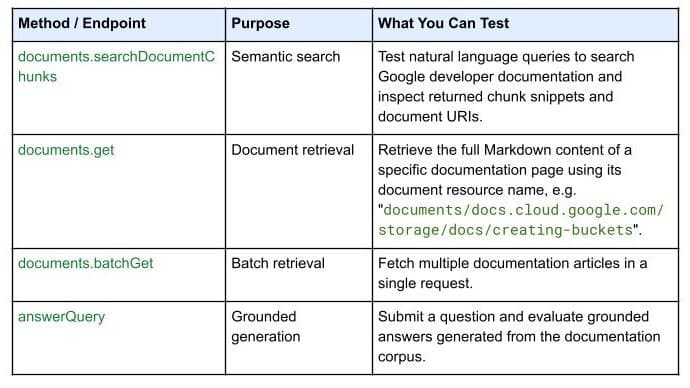
On October 7, 2026, Google Developers launched the Developer Knowledge API ecosystem: official Google Cloud, Firebase, and Android docs as a programmatic source of truth, with a gcloud CLI surface, an official Agent Skill (one-line install), an MCP server, and multi-language client libraries. Why 'docs as APIs' uproots vibe coding's classic failure of models misremembering APIs.