A Bankrupt Chatbot Firm Wants to Auction 21 Million Users' Private Chats: 42 Attorneys General Say No
On November 24, 2026, 42 state attorneys general plus the District of Columbia asked a Delaware bankruptcy court to block Character.AI from auctioning the private chats of more than 21 million U.S. accounts — 2.1 million of them minors — on December 1. The only disclosed bidder, Smirks and Pangs, was formed November 13 and picked November 14. The company once promised it would never sell personal information.
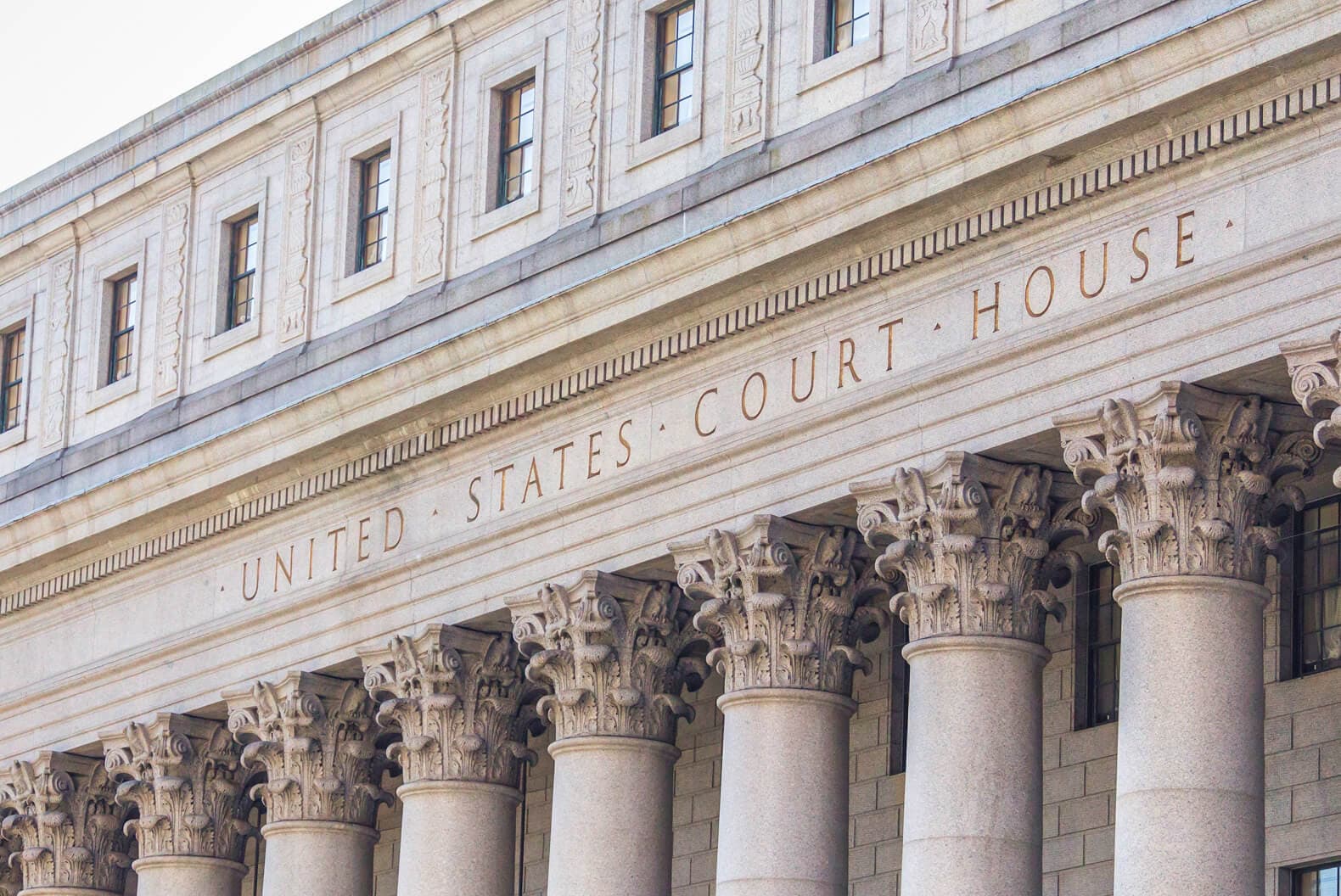
On November 24, 2026, the attorneys general of 42 U.S. states, joined by the District of Columbia, asked a Delaware bankruptcy court to block a sale: Character.AI's plan to auction off its platform together with the private chat histories of more than 21 million U.S. accounts (21 million), with the auction set for December 1, 2026. Of those accounts, more than 2.1 million are registered to minors. What a buyer would get is not only the chats but users' IP addresses, location and other metadata, and the risk scores the company assigned to users it flagged. Under the proposed sale terms, the buyer would have no obligation to follow Character.AI's privacy policy and no duty to honor users' requests to delete their data — and once the deal closed, it could resell the data or hand it to an affiliated company or a new owner without telling users, the states, or the court.
The starting point is a promise Character.AI made itself. Its privacy policy told users: "we do not sell personal information for monetary consideration." That sentence is now the center of the case. On October 12, 2026, Character.AI filed for Chapter 11 bankruptcy protection, citing "significant legal, regulatory, and operational headwinds." The company was founded by former Google engineers Noam Shazeer and Daniel De Freitas and built a product that lets users customize virtual AI companions, many based on real celebrities or well-known fictional characters. The two founders returned to Google in 2024, when the tech giant signed a non-exclusive license to use the startup's technology; the company then faced a series of lawsuits related to child safety, including one involving the suicide of a 14-year-old Florida boy whose mother said he had become obsessed with a chatbot on the platform. Character.AI later added restrictions for young users, including a one-hour daily usage cap and stricter age verification. After bankruptcy, what it wants to sell is precisely the thing users were told would never be sold.
The auction covers two pieces, with different fates. The first is Disney's $20 million non-exclusive license for Character.AI's intellectual property, which excludes user chat histories; that deal has not yet received final court approval and has already been opposed by dozens of state attorneys general, and Disney also agreed to hire most of Character.AI's remaining staff. The second piece is the focus of this fight: nearly everything else the company owns, including the character.ai website, its iOS and Android apps, user-created characters, chat content, training datasets, and every AI model the company built. Together, the two pieces amount to selling an AI companion company whole — people and data included — with the only difference being that Disney's piece leaves the chats out, while this piece is made of chats.
What alarmed the attorneys general most is the only publicly disclosed bidder. Smirks and Pangs Acquisition LLC (Smirks) was set up as a Delaware company on November 13, 2026 — and the very next day, November 14, 2026, Character.AI picked it as the stalking-horse, or base, bidder for the auction. The sale contract names no parent company or investors and allows foreign investors whose identities would be shared only with Character.AI. Under the contract, the only employee the buyer would have to hire is Character.AI's own top lawyer — even though the company told the court the bidder has no ties to it. The states are also asking the court to deny a $350,000 "break-up fee" Smirks would collect if Character.AI ends up selling to someone else. Reporting after November 24 (the Wall Street Journal, via Gizmodo) disclosed that Smirks is backed by New York investment firm Octave Advisors, through its Octave Fund I LLC — and before that, Character.AI had asked the court to keep the backer's identity secret, dropping the request only on November 24. In other words, the public learned whose money would buy 21 million people's chats only a week before the auction.
There is a contradiction here worth pulling out on its own: what the company told users and what it filed with the court do not match. In a blog post, Character.AI assured users their information would still be protected under its privacy policy; under the sale terms, the buyer would not have to follow that policy at all and would not have to honor deletion requests. Both cannot be true at once — either the blog's assurance is real and the sale terms must change, or the sale terms are real and the blog's assurance is empty. The states' objection seizes on exactly that gap: Character.AI told users "your information is still protected" while handing the assets containing that information to a buyer with no protection obligations. The filings also note that bidders were given information about the company's safety failures and legal exposure that the court, the states, and users were not given. That information gap puts the fairness of the auction itself in question: the people bidding know what risks they are pricing, while the regulators do not.
The chat histories themselves are the heaviest part of the states' filing. According to Connecticut Attorney General William Tong's office, in a press release dated November 24, 2026, the chats for sale include conversations in which AI characters drew children and adults into explicit sexual conversations, and conversations in which users — including minors — shared their innermost thoughts with chatbots posing as seemingly confidential advisors, including "therapist" and "physician" characters, covering intimate topics such as self-harm, eating disorders, and suicidal thoughts. Each chat is linked to the user's profile and metadata, including IP addresses and other location data, along with the risk scores Character.AI assigned to users it flagged. As of March 2025, Character.AI had more than 21.6 million U.S. users, more than 2.1 million of them registered to minors. Tong's words were blunt: "Character.AI promised users they would never sell their personal information. Their chatbots drove vulnerable youth down a rabbit hole of emotionally volatile and sexually inappropriate chats. Their reckless misconduct and broken business model drove their company into the ground. Now they want to abuse the bankruptcy process to do exactly what they said they wouldn't do — auction off those private chat records and personal details to a shady buyer." California Attorney General Rob Bonta called the plan "appalling" and said bankruptcy should not be used to sidestep consumer protections.

What the states are actually arguing: four objections
The legal argument boils down to four points. First, no protections for users. Under the proposed deal, the buyer would not have to follow Character.AI's privacy policies or honor users' requests to opt out or delete their data, and nothing in the deal limits what the buyer could do with the data next. Second, the data could be sold again. Once the deal closes, the buyer could hand the data to a related company or a new owner without telling users, the states, or the court, or distribute and sell off the data itself. Third, the bidders know more than the court. Character.AI has given bidders information about its safety failures and the legal trouble it could face — information it has not shared with the court, the states, or users. Fourth, the business model itself may be illegal. The states argue Character.AI's chatbot service appears to violate state unfair and deceptive practice laws; California, Colorado, New York, and Connecticut have enacted chatbot safety legislation that takes effect on January 1, 2027, which could trigger further violations if the sale goes through.
The states' demands come in two tiers. Their first choice is for the court to deny the proposed sale terms, reject Smirks as the lead bidder, and deny the $350,000 break-up fee. The fallback is that any sale must leave out kids' chats and other sensitive data and include conditions that protect users. The case is number 26-11603 before Judge Brendan L. Shannon of the U.S. Bankruptcy Court for the District of Delaware, and the states' objection was filed on November 20, 2026. The court has appointed a Consumer Privacy Ombudsman to review any sale involving user accounts and chat data, and that review will be one of the key variables in whether the auction proceeds on schedule. Notably, the 42 attorneys general span both parties — the list runs from Alaska to West Virginia and includes California and New York as well as Florida and other red states. That breadth of agreement is itself a signal: when an AI company's user data is about to be auctioned, regulators from opposite ends of the political spectrum rarely line up this neatly.
The timeline is part of the story too. The states' objection was filed on November 20, announced publicly on November 24, and the auction is set for December 1 — leaving the court roughly ten days. On that same Tuesday, the judge already approved Smirks as the base bidder, after Character.AI disclosed the Octave Advisors backing. The auction machinery is already running, and the objection is chasing it. The tempo also matters: the states had objected to the Disney $20 million license deal only the week before, and now they are opposing the data sale — two interventions in two weeks, treating Character.AI's bankruptcy as one whole case rather than a series of separate transactions.
Why this is about more than one company
This case deserves the attention of everyone building AI products because it puts a question no one could avoid onto a court docket for the first time: when an AI company's core asset is the private things users confided in it, can a bankruptcy proceeding erase a promise not to sell that data? In the past, tech companies' privacy promises were mostly tested in regulatory penalties or class actions. This time the test happens at a bankruptcy auction — the company is selling not because it wants to but because it cannot survive. The question for the judge is therefore sharper: are users' chat histories the company's property, or something users entrusted to the company? If the answer is the former, the user data of any AI companion, AI therapy, or AI journal product could become an asset for sale when the company fails; if the latter, the whole industry has to rethink which items on its data balance sheet were never really its own.
This is not the first time a bankrupt company has tried to sell user data, and the earlier precedent helps weigh this case. In 2025, genetic testing company 23andMe filed for bankruptcy, and the genetic data of millions of users faced a similar auction, drawing intervention from multiple state attorneys general — genetic data and chat histories are alike in that once sold, they cannot be taken back. The two cases share a pattern: users handed over data on the basis of a promise that it would not be sold, and the promise is tested in bankruptcy court when the company collapses. The difference is that Character.AI's data is more "alive": genetic data is static biological information, while chat histories are ongoing emotional and psychological confessions, including suicidal thoughts told to a "therapist" character — in the hands of an irresponsible buyer, the ways to cause harm are more numerous and harder to trace. The 23andMe case ended with the asset sale going ahead with privacy conditions attached, which offers a reference point for Character.AI: if the court does not reject the sale outright, the most likely compromise is "sell, but kids' chats must be excluded and the buyer must accept constraints." That is exactly the direction the states' fallback demand points.
For independent developers and small teams building with AI, the lessons are concrete and directly connected to technical choices. First, the right to deletion is not a line in a privacy policy — it has to work in the product: if your product lets users delete their data, deletion must actually happen, thoroughly, and must still hold when the company changes hands or collapses; otherwise that sentence becomes evidence against you in court. Second, data minimization is not a compliance slogan but a survival strategy: part of why Character.AI is in this position is that it accumulated sensitive content it never needed to keep long-term — including minors' chats and internal risk scores. The less you keep, the less there is to dispose of in bankruptcy. Third, protections for minors belong up front, not after trouble arrives: the one-hour daily cap and age verification were added under litigation pressure, and the court filings cite them as evidence of knowing misconduct. Fourth, an investor structure has to survive daylight: a bidder registered one day and picked the next, with no named parent company and anonymous foreign investors allowed, is itself a target for regulators — the less transparent the deal structure, the fiercer the regulatory backlash.
One dimension is easy to overlook: the parallel tracks. Disney's $20 million license deal and this data auction are two parallel processes inside the same bankruptcy. Disney's money buys technology without touching user data, and it still drew opposition from dozens of attorneys general and has not received final approval; the data auction will only face more. The December 1 auction date is set, but whether the court approves the sale terms, whether it accepts Smirks as base bidder, and what the Consumer Privacy Ombudsman recommends are all undecided. The states' objection was filed on November 20 and announced on November 24, leaving the court about ten days. As this article was written, there was no outcome yet — and that is precisely why it is worth publishing: not because the ending is known, but because the ending will become the precedent for how every AI company disposes of user data afterward.
Finally, a recap of the key numbers, so no headline can distort them. More than 21 million U.S. accounts (21 million) are affected, more than 2.1 million of them registered to minors (2.1 million), and total U.S. users exceeded 21.6 million as of March 2025. The opposition comes from 42 state attorneys general plus the District of Columbia, in case 26-11603, with the auction set for December 1, 2026. The base bidder, Smirks and Pangs Acquisition LLC, was formed on November 13, 2026 and selected the next day, November 14, 2026, with a $350,000 break-up fee. Disney's $20 million license deal excludes user data and is likewise without final approval. The states' demand is clear: either reject this sale, or at minimum exclude minors' chats and other sensitive data and bind the buyer to user protections. What is really at stake is not the leftover value of a bankrupt company but the force of a single sentence — "we do not sell personal information" — after the company that said it has fallen. The December 1 auction will give a first answer, but whatever the outcome, the question is now on the table, and every AI company that collects users' confessions will have to answer it first — and users, before confiding in an AI character tonight, might ask where their words would go if the company were gone tomorrow.
Comments (0)
Sources
- Connecticut AG — Tong Challenges Plan to Auction Off Character.AI Users' Private Chats (Nov 24, 2026)
- California AG — Bonta Opposes Asset Sale of Character.AI Amid Child Safety Concerns (Nov 24, 2026)
- TechCrunch — Character.AI's plan to auction off users' private chats challenged by state AGs (Nov 25, 2026)
Related articles

On November 24, 2026, Anthropic published full results for Siren, a honeypot test that puts Claude in deliberately weakened sandboxes with a credential or file sitting just outside. Recent models reach outside in 21–32% of scenarios but misuse what they find in only 0.6–1.6% — and a few lines of sandbox rules in the system prompt cut reaching to about 2% or less.
On November 23, 2026, MIT's Lindsey Raymond and Microsoft Research's Eleanor Dillon posted a working paper on arXiv: one year after adopting GitHub Copilot, quarterly technical hiring fell 29% among review-induced adopters across 5,414 firms. The drop landed on junior, code-heavy roles — 72% to 52% — while headcount and separations did not move. The 29% is a wide-interval point estimate, not a verdict.

On November 24, 2026, OpenAI added nine manuscripts to its public math repository, one claiming the matrix multiplication exponent is exactly 9/4. The October upper bound is real; the new lower bound would close a 56-year gap — but the preprint is unreviewed, the Lean formalization covers only division-free circuits, and no faster program follows from it.