Two sentences draw the line: Claude Code will no longer help recreate an existing game
On 30 October 2026 Anthropic confirmed Claude Code's Opus 5.5 prompt gained two sentences: no recreating a specific existing game, even renamed or called original. Original and genre games are unaffected, but copy-the-game prompts are now formally blocked.
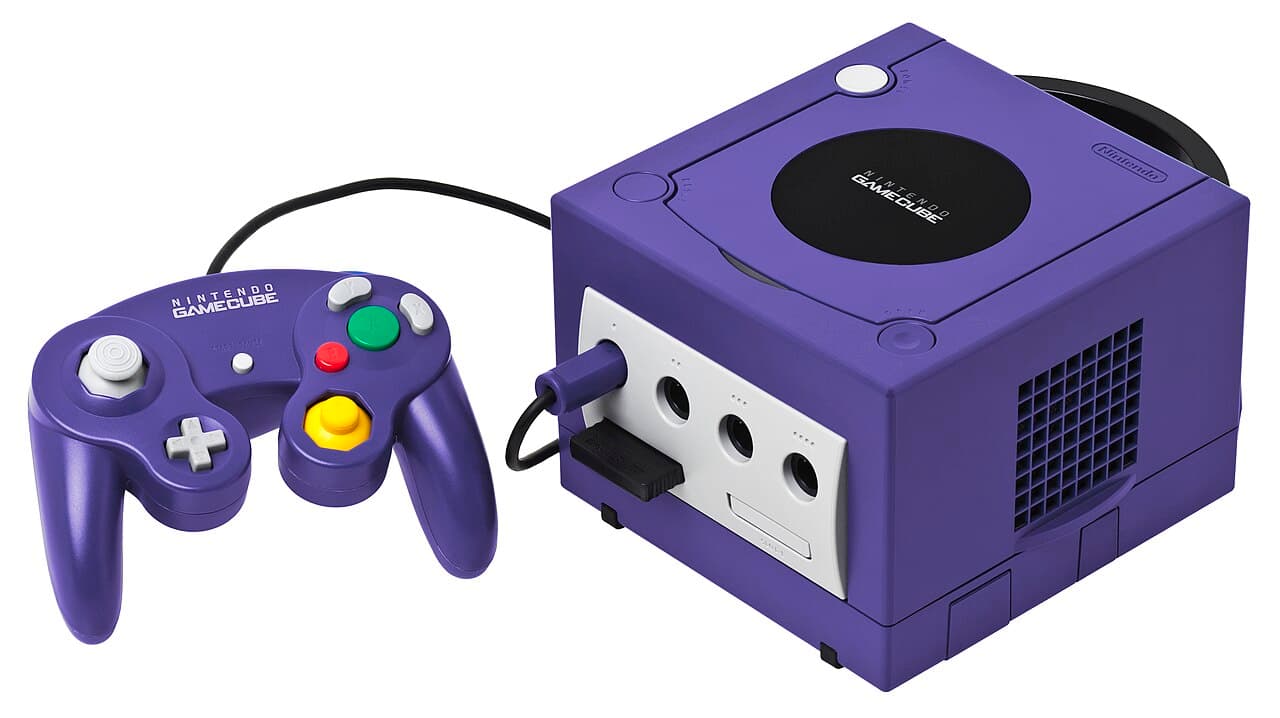

On 30 October 2026, Anthropic confirmed something narrow, specific, and consequential: Claude Code now carries a rule aimed squarely at recreating an existing game. The rule is two sentences long: "Do build original games, games in a genre, and games from the user's own designs and assets. Don't build a recreation of a specific existing game, even if it is renamed or called original." It does not ban game development with AI. It bans one particular act: rebuilding a specific game that already exists.
That distinction is the whole story. For months, the debate around AI-made games has swung between two unhelpful extremes: either AI game development is harmless fun, or it is theft all the way down. Anthropic's rule refuses both framings. It says original work is fine, genre work is fine, work built from your own designs and assets is fine — but cloning a specific title is not, even if you change the name and call it original. For anyone vibe coding games with Claude Code, that line now shapes which prompts work and which ones get refused.
How the rule surfaced
The rule did not arrive with a launch event. It was found first by a user. On 30 October, X user Chasm posted that Claude Code had picked up a server-delivered rule around 27 October, listed under the internal flag "tengu_heron_brook," with no user-facing setting to turn it off. The post spread quickly, and Anthropic then confirmed the change through a spokesperson to Game Developer, pointing to a statement from Addy Osmani, a member of Anthropic's technical staff. Game Developer's story was updated on 30 October to record Anthropic's confirmation.
Osmani's wording is worth quoting exactly, because it is the official rationale: "We added two sentences to Claude Code's prompt on Opus 5.5 to steer it away from recreating someone else's specific game because using Claude to infringe IP is against our usage policy." He added that original games, genre games, and games built from a user's own designs and assets are meant to keep working, and invited people whose own work gets refused to send him specific examples.
Three details in that statement deserve attention. First, the verb is "steer," not "block." This is a prompt-level instruction, not a technical barrier. It will shape behavior in most cases, but it does not guarantee the model cannot be talked around with reworded, split, or indirect prompts. Second, the rule is described as applying to Claude Code's prompt on Opus 5.5. The reporting does not say it has been rolled out to every model or every Anthropic product. Third, it was delivered server-side, which is why users could notice the change around 27 October while public confirmation only arrived on 30 October. You may already be living under a rule you never saw announced.
Why now
The timing is not a coincidence. Over the past few months, AI-assisted game remakes have moved from amusing demos to a genuine source of anxiety for independent developers. Someone can take a public demo, trailer, or playtest build and ask an AI tool to reproduce its mechanics, level structure, and art direction closely enough to ship a lookalike first. The original team is still polishing; the copy is already in front of players. For a small studio, that is not flattery. It is a direct threat to whether years of work can earn anything at all.
Game Developer's reporting gives a concrete example. Digital Sun, the Valencia studio behind Moonlighter, cancelled a planned public Steam playtest for its upcoming "Tower Defensevania" game ReVamp, fearing a public build could be analysed, cloned, and released before the original. The studio switched to smaller invitation-only Discord playtests starting 29 October, with a wider public playtest now expected around January, and ReVamp itself scheduled to launch on 25 March 2027. When a studio pulls a public playtest because it fears being cloned, the problem has clearly outgrown the "a few bad actors" stage.
Developers have also been pressing Valve to explain how it can stop such clones from displacing originals on Steam, prompting a rare explanation from the company to developers in South Korea earlier that same week. Read together, these events suggest that platforms, tool vendors, and storefronts were all pushed to take a position in the same week. Anthropic moved first among the tool vendors. That does not solve the problem, but it does mean "recreation" is no longer silently permitted at the tool layer.
Where exactly the line falls
Split the rule into its two halves and the boundary becomes clearer. The permitted side has three categories: original games, games in a genre, and games from your own designs and assets. The prohibited side has one: a recreation of a specific existing game. The operative word is "specific." Building a platformer, a roguelike, or a farming game is working in a genre. Asking for a rebuild of one real, named game — its systems, levels, and art direction carried over wholesale — is recreation.
The rule explicitly closes the most obvious loophole: renaming the game or describing it as original does not help. The phrase "even if it is renamed or called original" is there precisely because that was the standard workaround. For vibe coders, this means prompts of the form "make me something like [existing game], just with a different name" are now likely to be refused, or redirected toward a same-genre game with its own design.
But the grey areas are real and unresolved. What about a licensed derivative you are authorized to build? A remake of your own older game? A study-purpose reimplementation of one mechanic from a classic, rather than the whole game? The rule's text answers none of these. Osmani's invitation to send examples of false refusals is an honest admission that mistakes will happen — and that the current remedy is after-the-fact feedback and iteration, not a clear allowlist published in advance.
What this means in practice
The most immediate effect is on prompts. If you have been using "recreate this game" as a way to practice, demo, or validate an idea, that path is now closed on Claude Code with Opus 5.5, at least as a straightforward request. The practical rewrite is to structure prompts as "genre plus your own design": name the genre, then specify your own core mechanic, art direction, and level pacing, instead of using an existing game as the template. That is not just a compliance trick. It is also better engineering — a copied structure is usually the hardest thing to maintain later, because you never learned why it was designed that way in the first place.
Second, do not misread this as "Anthropic no longer lets you make games." The rule explicitly encourages original and genre work. The game projects VibeFix has featured in recent rounds are overwhelmingly original small games — their own mechanics, their own art, their own names. Those projects are unaffected. What is affected are projects whose selling point is the recreation itself, and those projects were always on thin ice copyright-wise. The tool just started enforcing what the law already implied.
Third, stay realistic about circumvention. Game Developer notes that safety limits on generative tools have repeatedly been sidestepped with rhetorical tricks, and that this rule is a prompt-level steer rather than a hard technical block. The same reporting points out that determined cloners can move to open-weight models that carry no such restriction. Put together, the honest assessment is: this rule will stop most casual, low-effort copying, but it will not stop someone determined to copy. Its value is in the signal and the raised cost, not in a permanent fix.
My judgement
My judgement is that this is a late but correctly aimed statement, limited in force but clear in signal. Anthropic avoided both lazy options: it did not ban all game development with AI, and it did not just shrug when asked. Drawing the line between "original" and "recreation" in two sentences is a useful reminder to the vibe coding community: the legitimacy of AI-made games never came from "the AI writes fast." It came from "this is your own work."
But do not overrate two sentences. The rule says nothing about licensed work, nothing about study-purpose reimplementation, nothing about an appeals process beyond sending examples to one employee, and nothing about whether it will extend to other models and products. The safest strategy for developers building games on Claude Code is to work in the "original plus genre" mode from now on, and to document your design decisions, art sources, and mechanic sources as you go. If the rules tighten further or false refusals increase, a project with its own paper trail does not need to explain itself from scratch.
There is a broader shift worth noticing. AI coding tools are moving from "just generate" to "generate within boundaries." Vendors used to compete on speed and accuracy; now they are also taking positions on the legality of what gets generated. For vibe coders, tool choice will increasingly involve a second question alongside generation quality: how transparent are the rules, how are mistakes corrected, and how much notice do you get before a boundary moves? Two sentences will not remake an industry. But they do put a price on the word "recreation" for the first time inside a mainstream AI coding tool, and that is a change worth taking seriously.
Will other tools follow?
The natural next question is whether other tool vendors will follow Anthropic's lead. No other vendor has publicly announced an equivalent rule in the reporting so far, so any answer here is inference, not fact. The pressure to respond is real: game recreation is not unique to Claude Code, and once one mainstream tool draws a line, rivals asked "how do you handle recreation?" can no longer answer with "we are just a neutral tool." Storefronts and platforms are pushing in the same direction — Valve being pressed to explain itself is one sign of that.
But follow-ups will not look identical. Vendors differ in philosophy, user base, and business model. Some treat minimal intervention as a selling point and may choose softer wording with post-hoc complaints handling; some have their own games businesses and may draw stricter lines; some serve mostly enterprise customers for whom game recreation was never a central scenario, so a statement ranks lower on their agenda. The likelier evolution is not "every tool adopts the same rule on the same day" but "each vendor answers the same question in its own way," with different texts, covered models, and appeals channels. For developers, that means the rules themselves become a variable to check when switching tools: the same prompt may run on one tool and be refused on another, as a matter of routine.
There is also the question of whether prompt-level guidance escalates into system-level detection. Today's rule lives in the prompt: the model "knows" it should not recreate, but there is no separate detector comparing generated output against existing games for similarity. A future step could add similarity detection or game-asset fingerprinting — a genuinely hard constraint. But that step carries costs: false-positive rates, compute costs, and privacy questions. Anthropic's choice of prompt guidance over hard detection may be precisely about staking out a position first and watching feedback before committing to heavier machinery. For developers, the implication is that the rules still have room to tighten — and projects built in the "original plus genre" mode are the safest under any future version.
A self-check list for game developers
If you are building games with Claude Code, or plan to start, run through this list. First, can your project documentation state in one sentence what its own core mechanic is? If you can only say "like [existing game]," that is a warning sign. Second, can you account for your art sources? Self-drawn art, properly licensed open assets, and bought-out rights all count as sources; "have the AI draw a set in the style of [existing game]" does not. Third, do you have decision records for level and system design — why three lives instead of five, why this pacing? Those records are your strongest evidence if the project is ever questioned. Fourth, do the project's name and marketing copy lean on an existing game? A name containing the original's keywords, or copy calling it "the spiritual successor to [existing game]," pushes you toward the grey zone.
Fifth, and most often overlooked: does the whole team use the same outward story? Many recreation disputes start not from code but from promotion — a developer saying on social media "we recreated [existing game]" becomes the opening exhibit even if the code was written from scratch. Keeping outward claims consistent with inward facts is the cheapest risk management available. Sixth, keep licence evidence with the code: if your project genuinely has a licence, the documents, emails, or contracts should live alongside the repository, not only in one person's inbox. Whoever can produce licence evidence and whoever cannot are in entirely different positions when a platform review or a tool-rule false refusal arrives.
The essence of this list is simple: make your project able to prove itself to anyone — tool vendors, platform reviewers, rights holders. AI lowered the barrier to making games, but it did not lower the barrier to proving "this game is mine." On the contrary, as generation gets easier, proving originality matters more. The two-sentence rule merely wrote that trend into a tool. The trend itself will not change with the wording of the rule.
Comments (0)
Sources
Related articles
GitHub made Copilot assisted permissions generally available on 26 October 2026: a model screens command, path, and URL requests first, auto-approving the clearly safe ones and sending the rest to you. It saves prompts, not oversight — the model can err, and this is no substitute for sandboxing.
A tampered Claude Code build in Cursor's marketplace tried to plant a persistent SSH backdoor for about 11 hours on October 29. Check for the svc-telemetry key first — uninstalling alone is not enough.
Anthropic's Claude Code v2.1.311 adds an environment variable that removes the last confirmation prompt before deletion commands. Defaults are unchanged and the switch is opt-in only, but once it is set, a model's mistake has no human checkpoint left. This article explains the permission ladder, who must never touch it, and five hard rules for the rare cases where it belongs.