Models Think on GPUs, Agents Work on CPUs: Daytona Becomes a Unicorn with a $60M Series B for Its Agent Cloud
Daytona raised a $60M Series B at a $1B valuation to build 'computers for AI agents': isolated sandboxes launched via one API in 60 milliseconds. While models think on GPUs, agents work on CPUs. This piece unpacks the round, the thesis, the 25x revenue curve, and what it means for vibe coders.

$1 Billion for "Computers for Agents"
On October 20, Daytona, a company building cloud infrastructure for AI agents, announced a $60 million Series B funding round at a $1 billion valuation, bringing its total funding to $91 million. The round was led by FirstMark — officially making Daytona a unicorn.
Put this into this year's funding landscape: over the past year, almost all AI funding spotlight has gone to models and applications — bigger models, pricier model companies, and all kinds of "AI wrappers." The $60 million Daytona raised buys neither a model nor an app, but something that sounds a bit "boring": computers for agents to work on. A $1 billion valuation means capital has started pricing the "utilities" of the agent era.
Daytona's product in one sentence: secure, isolated cloud computing environments for AI agents. When an agent executes code, calls software tools, and completes tasks, it needs somewhere to "land" — it can't run wild on your production servers. Daytona provides that landing spot: developers launch computing environments through a single API, with support for Linux, Windows and macOS, compute that scales elastically with each task, plus pause, resume, and "try multiple approaches without losing progress." Sounds like cloud VMs? Close, but redesigned for a new kind of "user" — the agent: startup speed, isolation, and per-task elastic billing are all tuned to how agents work.
Where the Money Came From: An Angel List That Outshines the Lead
FirstMark, the lead investor, is a veteran VC firm. But what made this financing newsworthy is the cap table: Stripe's Patrick Collison, Quora's Adam D'Angelo, Mercor's Brendan Foody, Shopify's Tobi Lütke, Datadog's Olivier Pomel, Perplexity's Aravind Srinivas, and Zoom's Eric Yuan — founders or CEOs in their own right. Alumni Ventures, Evergreen Fund, Okta Ventures, Qualcomm Ventures, Samsung Next and Torch Capital also joined.
More telling is the insiders' vote: Pace Capital doubled its investment, Upfront Ventures tripled, and E2VC quadrupled theirs, with roughly $50 million of the round coming from existing investors. In 2026, a year increasingly picky about "burning cash for growth," insiders doubling down with real money often says more than new money coming in — they've seen the internal numbers.
What numbers? Daytona claims its revenue run-rate grew 25-fold between January and September; Burazin told The Recursive the monthly average was 50.9% growth. Note: these are self-reported figures without audited financials, so take them with a grain of salt. But even halved, 12x+ growth in nine months is a "the product found demand" signal for an infrastructure company. The $1 billion valuation is a bet on that curve continuing.

A Near-Death Rebirth: Giving Customers Away to Competitors
The most dramatic chapter in Daytona's story is the all-in bet it made before this round. According to The Recursive, Daytona was founded in 2023 not as agent infrastructure, but as an open-source development-environment manager — solving the old problem of developers "losing their lives to environment setup." Founder Ivan Burazin is a Croatian IT veteran who previously founded cloud dev-environment company Codeanywhere and led developer strategy at Infobip, Croatia's first unicorn.
The pivot came as generative AI moved from chatbots to autonomous agents. Burazin's call: the real opportunity wasn't "environments for humans" but "computers for agents." So the company made a ruthless decision — hand its existing customers to competitors and rebuild from scratch. Burazin told Fortune: "We basically gave our competitors all our customers, rebuilt everything, had like three months left of revenue in the bank, and then relaunched this thing."
Going all-in with three months of runway left paid off: FirstMark led a $24 million Series A in February, then the same firm led this $60 million Series B eight months later. From pivot to unicorn in under two years. It also explains why Burazin dares to make bold calls like "CPU demand will surpass GPUs" — someone willing to tear down his own company isn't afraid of provocative takes.
The Core Thesis: Models Think on GPUs, Agents Work on CPUs
The technical narrative behind this round hides in one judgment Daytona keeps making. As The Recursive reports, the company's core argument is: inference clouds are where agents "think," while Daytona's cloud is where agents "work" — models think on GPUs, agents work on CPUs.
Worth unpacking. For two years, all AI infrastructure attention has been on GPUs: whoever has the chips has the voice. But agents work differently: when an agent runs, most of its time isn't spent calling a large model for inference — it's executing code, reading and writing files, calling APIs, waiting on web pages, running tests. That's CPU work. In a "digital employee's" day, GPU inference might take minutes; the remaining hours are all CPU.
Hence Burazin's provocative prediction: demand for CPU compute could soon outpace GPUs, and CPUs may become the new hardware bottleneck. Time will judge whether he's right, but it points to a real structural shift: the agent era's infrastructure bill is diverting from "GPU rental" toward "CPU sandboxes."
Another hard number backing the narrative is startup speed: traditional hyperscalers take 30 seconds to several minutes to spin up a virtual machine; Daytona claims 60 milliseconds for a new agent sandbox via pre-configured machine snapshots. Nearly three orders of magnitude apart. Why does startup speed decide the game? Because agents work "high-frequency, short-lived, massively parallel": one task may spawn dozens of sandboxes to explore in parallel, then destroy them. If every launch costs 30 seconds of waiting, the agent's think-act loop is throttled by infrastructure. 60 milliseconds means sandboxes can be spun up like function calls — the truly agent-native infrastructure experience.
The Customer List: Anthropic and OpenAI Both Use It
Daytona's disclosed customer list carries weight: Anthropic, OpenAI, NVIDIA, Cursor and Cognition, plus Meta, Cohere, Mercor, Handshake, Surge AI, SambaNova, Postman, Bolt.new, n8n and Clay. Note that Anthropic and OpenAI — direct competitors — both appear. When rivals use the same infrastructure vendor, it means Daytona sits at a layer neutral and low-level enough.
The use cases matter too: Snorkel and Trajectory use Daytona's infrastructure for AI training and evaluation to cut processing times. So "sandboxes" don't just serve agents in production — they also eat into the bigger "model training/evaluation" pie. A company collecting from both agents and training has a better story to tell.
Burazin put it vividly in the funding announcement: "Companies are going to manage thousands of digital employees, and each one needs a safe place to fail. Daytona ensures one rule breaking agent doesn't spill into company wide chaos."
That line nails what the sandbox product really sells: not compute, but "a safe boundary for failure." The more autonomous agents become, the higher the probability and blast radius of their mistakes; whether enterprises dare put agents into production depends on having an isolation layer where "an explosion only blows up itself." That's Daytona's bet.
Agent Infrastructure Is Layering — Sandboxes Are One Layer
Zoom out: in 2026, agent infrastructure is layering fast, with at least four visible layers.
First, the model layer: Anthropic, OpenAI and Google provide inference — the agent's "brain." Second, the execution layer: sandboxes and isolated environments where Daytona sits — the agent's "body and office." Third, the payments layer: as agents start spending money on services themselves, programmable payment primitives are needed (Mastercard's newly opened Agent Pay for Machines is a player here). Fourth, the orchestration and memory layer: workflows, long-term memory, tool-calling frameworks.
Unicorns are growing in every layer. Daytona's $1 billion marks the execution layer's official entry into the unicorn club. The significance: agent commercialization is no longer "one model conquers all" but a full stack of specialized infrastructure — just as the cloud era split into compute, storage, networking and security, the agent era is splitting too.
For Daytona, the real test lies ahead: hyperscalers won't watch the execution layer grow independently. AWS, GCP and Azure all have their own sandbox and container products; once they make "60-millisecond startup" a standard feature, Daytona's moat is left with "agent-native experience" and neutrality. The good news: neutrality is a real moat in infrastructure — as Anthropic and OpenAI both using it proves, the cloud giants' "player and referee" conflict is exactly the independent third party's biggest opportunity.
What It Means for Vibe Coders: Throw Heavy Jobs at Cloud Sandboxes
Back to our readers: what does this mean for vibe coders? Possibly more than it means for big companies.
Think about your current vibe coding workflow: you have agents run tests, install dependencies, start services — all on your own laptop. Fine for light tasks, but anything heavier — three agents in parallel across three branches, an agent reproducing a CI failure in a clean Linux environment, an agent running a full E2E suite overnight for you to review in the morning — and your local machine gives up: fans screaming, memory exhausted, and you wouldn't dare let an agent touch your real environment anyway.
Cloud sandboxes solve exactly this: throw the "heavy, dirty, dangerous" work into an isolated cloud environment, and keep only a lightweight command deck locally. Launch via a single API, pay by the second, burn after running — that's the personal developer's "cloud computer" for the agent era. Bolt.new, a vibe coding product, is already on Daytona's customer list, showing this path is being walked.
A concrete example: you're vibe-coding a SaaS with payments. After the local agent finishes the code, you want it to do a full run in a "clean environment": install dependencies, start a database, run migrations, execute E2E tests, even simulate a real payment callback. Doing that locally means environments contaminating each other — and the payment callback webhook needs tunneling through your NAT. With a cloud sandbox, the agent spins up a brand-new environment with one command, runs everything, throws the test report back, and the sandbox is destroyed — your laptop stays silent the whole time, fans never spinning. That's the "command deck" model: you issue orders; the heavy lifting happens in the cloud.
Longer term, when "spinning up a cloud computer per agent" gets cheap enough, vibe coding workflows shift from "commanding one agent at a time" to "commanding an army of agents": ten sandboxes in parallel, each agent owning a module, and you just review the merged result in the morning. The "thousands of digital employees" vision in Daytona's funding news translates for individual developers into: the thing you manage in the future isn't code, but a group of agents with computers.
From Codespaces to Daytona: A Decade of Dev Environments
Daytona's pivot story is really a decade of "development environments" in miniature. Around 2013, Cloud9 and Codeanywhere (Burazin's previous company) made "coding in a browser" possible; in 2021, GitHub Codespaces mainstreamed cloud dev environments; after 2023, Replit, Bolt.new and Lovable pushed "one sentence generates an app," driving cloud environments' barrier to near zero. Each step moved "environments" further from developers and closer to the cloud.
Daytona's pivot swapped the "user" in that evolution: cloud environments used to serve humans; now they serve agents. A human opening 2–3 Codespaces a day is a power user; one agent can spin up 200 sandboxes a day. New user, new product logic: humans want "handy," agents want "fast and many" — 60-millisecond startup, API-driven, burn after running. That's why Daytona dares to say traditional clouds were "designed for humans" while it is "designed for agents." Same "cloud environment," different user — and out comes a unicorn.
This lens also explains why frontline AI labs all became customers: Anthropic and OpenAI need thousands of isolated environments at once for agent evals; Cursor and Cognition (the company behind Devin) need an independent execution sandbox per user session for coding agents. Their need isn't "a few more cloud VMs" but "a new compute primitive" — sandbox-as-function-call. That's exactly the primitive Daytona sells.
Neutrality: Daytona's Real Moat
The Anthropic-and-OpenAI-both-use-it fact deserves one more layer of thought. In AI infrastructure, the "neutral third party" is a repeatedly validated moat: CoreWeave rode the GPU shortage by "selling only compute, building no models"; Cloudflare became every AI company's default by "taking no sides." Daytona is copying that playbook — no models, no apps, just the "land" where agents work.
It's also Burazin's best answer to the investor pushback reported by dealroom — "AWS can do this, why do we need Daytona?" Of course AWS can. But when your agent runs in an AWS sandbox while your competitor's models also run on AWS, what do you worry about? Data, prioritization, roadmap — the cloud giants' structural "player-and-referee" conflict is the independent third party's permanent dividend. Anthropic and OpenAI buying together is the proof of that dividend.
Neutrality isn't immunity, though. The real risk is "the abstraction moving up": if mainstream agent frameworks build sandboxes in as standard components, or hyperscalers make 60-millisecond startup a default ECS/EKS capability, Daytona's differentiation compresses. It must run faster than the giants — and the 20-person Croatia team plus the three-location expansion plan is exactly the org shape built for "running fast": small team, high density, close to Europe's engineering talent pool.
Three Questions Not to Miss When Reading This News
First, how small was the denominator behind the 25x? Growing 25-fold from January to September sounds stunning, but if January's base was a $40K run-rate, September is $1M — still expensive for a $1 billion valuation. Self-reported run-rates aren't audited; keep one eye clear.
Second, how deep does the "usage" in the customer list go? Anthropic and OpenAI are "using" it — but is that production-scale deployment or one team's pilot? Funding-announcement customer lists always skew generous; true revenue concentration only surfaces at the next round.
Third, can the Croatia team carry global expansion? Per The Recursive, Daytona's 20-person technical team is based mainly in Split and Zagreb, making it Croatia's third unicorn. This round is explicitly for scaling compute and hiring across San Francisco, Croatia and Singapore. From 20 people to global operations, the organizational climb is as hard as the compute expansion.
Three Things Vibe Coders Can Do Right Now
Theory done — here's the actionable part. If you work with agents daily, the Daytona news offers at least three executable takeaways:
First, peel "environments" off your local machine. Audit your agent workflow: how many steps truly "must run on my computer"? Probably 80% don't. Try moving tests, builds and data processing into cloud sandboxes or CI. Keep only editing and commanding locally. Your laptop will thank you — and your agents will make fewer mysterious mistakes in clean environments.
Second, design tasks for multi-agent parallelism. Many still use agents with a "one task at a time" serial mindset. Try splitting a big task into 3–4 independently verifiable subtasks and run multiple agents in parallel — provided each agent gets its own isolated environment so nothing contaminates anything else. That's exactly the cloud sandbox's sweet spot: disposable environments, zero conflicts.
Third, watch the execution-layer price war. Sandboxes are commoditizing; prices will only fall. Over the next 12 months, the thing to watch isn't "whose sandbox is 10 ms faster" but "who first makes the price so low you don't care about opening 100." When 100 sandboxes cost less than a coffee, vibe coding workflows get rewritten — and you'd better already be used to "commanding an army" before that day comes.
What to Watch Next
Daytona says the money goes to expanding its agent cloud beyond the sandbox product, scaling compute infrastructure, and hiring in three locations. Translation: it doesn't want to be just "sandboxes" — it wants the agent's "whole cloud": execution, orchestration, observability, maybe more.
Three signals worth tracking: whether the revenue run-rate curve sustains (the next round will tell); whether hyperscalers ship "60-millisecond-class" agent sandboxes (watch AWS re:Invent and Google Next); and whether the "CPU demand surpasses GPU" call gets validated in some future earnings season of massive agent deployments.
One-line summary: Daytona's $1 billion buys the judgment that "agents need computers, not just models." Models do the thinking, agents do the working, and where the work happens is becoming a standalone big business. For those of you directing agents to write code every day, it means: your next "computer" may not sit on your desk but in the cloud — dozens of them at a time.
Comments (0)
Sources
Related articles
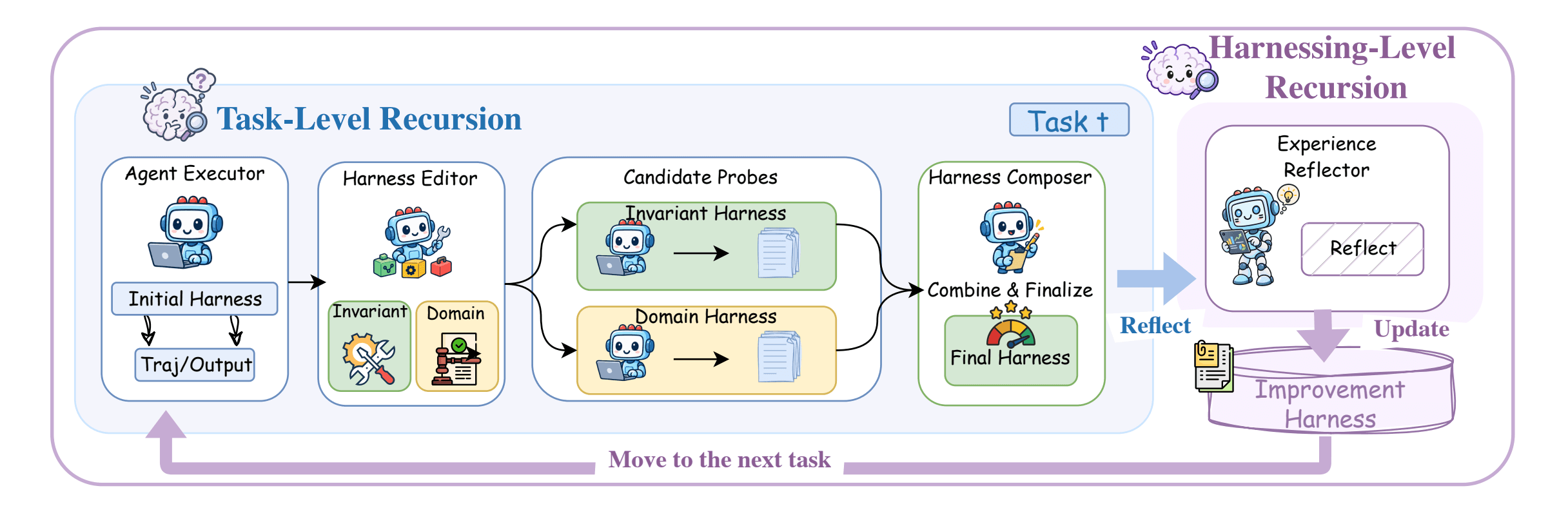
Google Research open-sources Harness², a recursive agent-harnessing framework: model weights stay frozen while two recursion levels — task-level Propose–Probe–Compose and harnessing-level experience accumulation — optimize the harness itself. Eight editable components are copy-ready homework for vibe coders; official results claim up to +11.5 points (team self-tested*), and the local demo runs with zero model credentials.
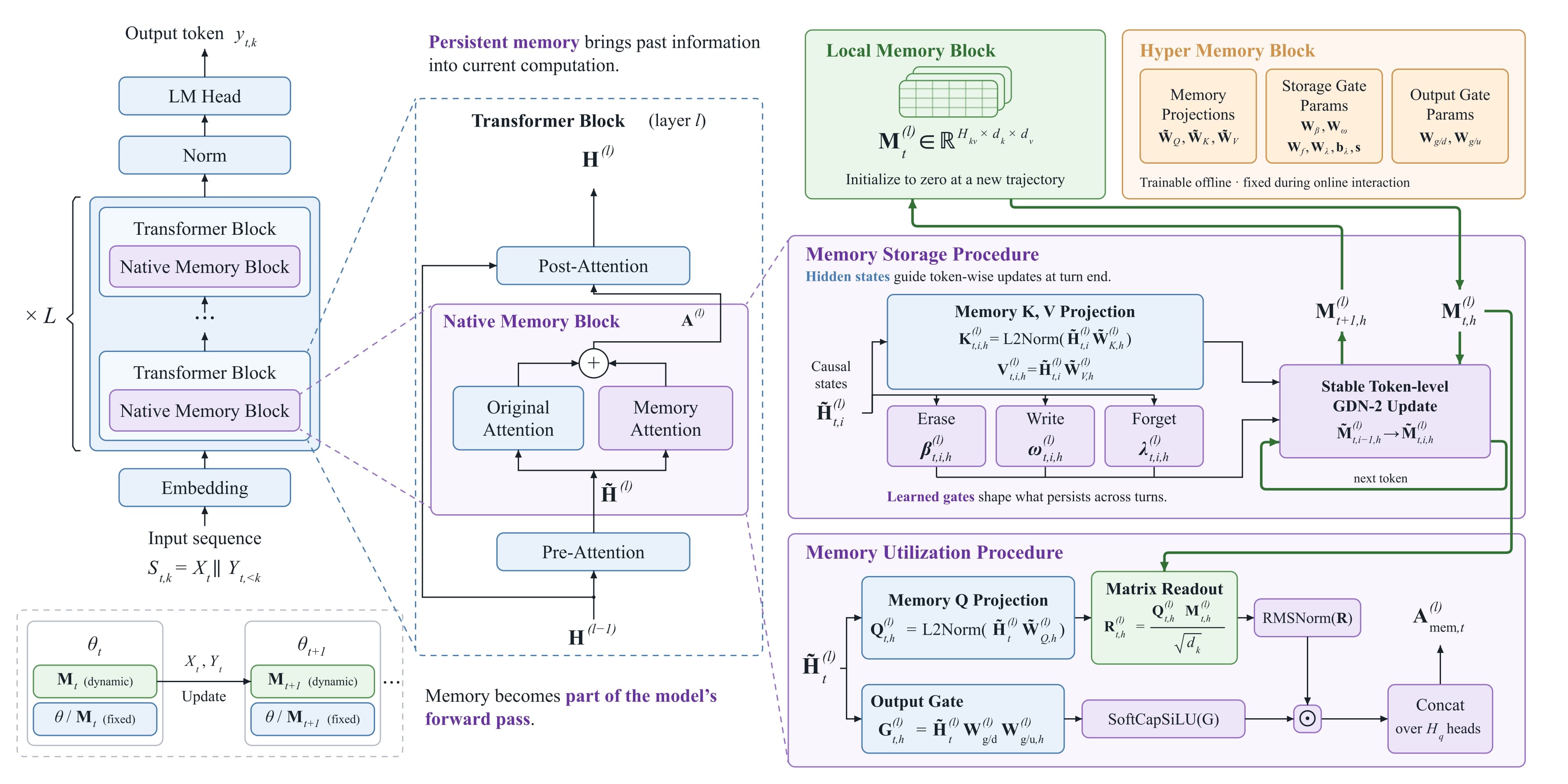
Chinese team MemTensor releases and open-sources MemT-1.0, a memory-native model family that builds persistent, updatable memory into the forward pass: GDN-2 token-level updates, Mixture-of-Storage scaling, Nano (36B) and Flash (288B) variants. The team candidly admits textual-memory systems still lead on detailed retrieval; licensing is PolyForm Noncommercial — free to explore, not for commercial use.

An October 8 programming obituary, an October 17 defense of loving code, and an October 19 Ask HN thread with 610 comments — three texts forming the full spectrum of mourner, lover, and working stiff. Verbatim quotes and analysis on the vibe coder identity question: whoever holds the design holds the identity.