IBM's Agent Factories Design Chips Now: $26 of Inference Buys a 52x Hardware Speedup
IBM Research's "agent factory" — one coordinator plus four parallel worker agents — explored chip design space with purely open models, speeding up a quantum error-correction decoder's hardware implementation 52x for about $26 of inference. A proprietary model hit 204x but cost $299. The bottleneck isn't model capability; it's inference economics.
For the past year, nearly all discussion of coding agents has stayed inside "writing software": completions, bug fixes, tests, refactors. On October 13, IBM Research pushed the question a big step forward in a new blog post — what if agents don't just write code, but actively participate in chip design?
The answer is yes, and it's surprisingly cheap. IBM demonstrated an "agent factory" — one coordinator agent directing four parallel worker agents — using purely open models to explore chip design space. The result: a 52x speedup of a quantum error-correction decoder's hardware implementation, for about $26 in inference cost. For comparison, swapping in a proprietary frontier model (Claude Opus 5) reached 204x speedup but cost $299 — 11.5 times more.
The post is authored by a 7-person team including IBM Fellow and IBM Research chief scientist Ruchir Puri, with an accompanying preprint. Its value isn't "another benchmark crushed" — it's the first time a big lab has put multi-agent orchestration into a genuinely expensive, expertise-dense engineering discipline and published the full cost ledger. For vibe coding readers who work with agents every day, that ledger is worth more than the 52x number itself.
From "writing code" to "exploring architectures": what the agent factory actually does
Chip design is one of the most expertise-intensive activities in computing. High-level synthesis (HLS) has raised abstraction from register-transfer level (RTL) to C/C++, but engineers still face countless decisions about loop structure, parallelism, memory organization, dataflow, and synthesis directives — decisions that interact in tricky ways. Computing faster is useless if memory can't feed the data; a faster design often eats more hardware resources. The design space is far too large for humans to exhaust.
IBM's agent factory turns this into a coordinated exploration loop. The coordinator agent plans the search and assigns optimization hypotheses to four parallel workers; workers modify the decoder's C++ kernel; a verifier checks correctness; candidates are ranked by latency and hardware resource use; then AMD Vitis HLS synthesizes them to an FPGA, and synthesis results guide the next round of exploration. Each configuration got a budget of 100 hypotheses.
Note what the agents are doing here: not "generating code and handing it off," but "proposing architectural changes → writing implementations → preserving correctness → reading synthesis feedback → deciding what to try next." The blog gives two examples: one transformation reorganized message storage so the synthesis tool could identify independent memory accesses and execute more work in parallel; another replaced sequential reductions with tree structures that exposed parallel computation. The value came from connecting code changes to their hardware effects through repeated evaluation. That's the watershed between software coding agents and hardware agents: the latter has an objective, measurable, physics-constrained feedback source (the synthesis tool), not just test cases and a human's "looks fine."
Three configurations: $26 vs $299, the ledger
The team compared three configurations under the same 100-hypothesis search budget: all-proprietary (Claude Opus 5 as both coordinator and workers), all-open (Z.ai's GLM-5.3, open weights, served on IBM's own GPUs through the llm-d distributed inference stack), and a hybrid (proprietary coordinator, open workers).
 Same 100-hypothesis budget: the open setup is 11.5x cheaper at 52x speedup; the proprietary setup is far more expensive at 204x. Source: IBM Research blog.
Three details deserve to be called out. First, the open search actually used more tokens — about 241 million, versus 216 million for the proprietary configuration. The savings came not from using less, but from cheaper units: according to IBM, a prefix-cache hit rate of about 98% and a blended serving cost of roughly $0.11 per million tokens. An agent factory keeps returning to the same information — source code, design constraints, earlier changes, synthesis reports — and cache-aware routing directs requests to servers holding reusable context, eliminating repeated work.
Second, the all-open configuration also produced the smallest-area design. The proprietary setup was better at converting extra resources into parallelism and lower latency, but the open setup found the most compact solution. For chip design, that's real value: area is cost.
Third, the authors flagged their own caveat: each configuration was evaluated in a single search run. These results characterize the observed searches, not a universal model ranking. Engineers will smile at that honesty — single-run numbers are for orientation; what transfers is the methodology and the cost structure.
The counter-intuitive conclusion: the bottleneck isn't model capability, it's "inference economics"
The most opinionated line hides in the blog's conclusion: the practical value of AI-assisted chip design depends not only on the best design an agent can produce, but on how much verified exploration an organization can afford. Model capability, agent role assignment, and the infrastructure serving those models jointly determine what hardware improvements are attainable within a real engineering budget.
In other words, the bottleneck moved from "is the model smart enough" to "are tokens cheap enough." A single search campaign can burn hundreds of millions of tokens; applying the approach across dozens of components and design revisions means hundreds of such campaigns. The proprietary model's 204x is obviously better — but at $299 a run, you can't afford many runs. The open model's 52x at $26 means you can reinvest the savings into more rounds and more components.
That's a directly portable judgment for vibe coding readers: the real cost model of multi-agent orchestration is shifting from "wincing per API call" to "planning by token economics." Does your agent system have a 98%-hit-rate cache? Is context being re-transmitted over and over? These infra details used to be platform engineers' business; now they directly determine how large an exploration budget you can give your agents. IBM put llm-d — an open-source distributed inference framework with cache-aware routing and disaggregated prompt processing — on equal footing with model selection.
There's also an IP angle: open weights can be deployed on-premises, so design artifacts never leave the network. For an industry that bets its livelihood on design files, "can the model run locally" isn't ideology, it's compliance and trade-secret protection. The blog calls this out explicitly — open models' value isn't just price, it's control.
Interestingly, this route contrasts with the recent on-device agent wave (LFM2.5, Nemotron and other small models built to run locally): one side bets on "models small enough to fit your device," IBM bets on "inference infra cheap enough that exploration costs stop mattering." One shrinks the model, the other cheapens the token. Short term, the latter is more realistic for heavy agent workloads — a task burning 200M tokens per campaign won't fit on-device no matter how fast the small model is. Long term, the two routes meet in the middle: cheap distributed inference plus increasingly capable small models will lift the exploration-budget ceiling together.
Money buys more runs, but returns diminish
Can you just throw budget at it once it's cheap? IBM measured: extending the all-open search from 100 to 200 hypotheses raised speedup only from 52x to 60x. The curve flattens hard.
 Doubling the budget barely moves the needle. Source: IBM Research blog.
Hence the proposed next step: adaptive resource allocation. Future work includes a wider range of architectural hypotheses and selective use of stronger models for difficult transformations or search coordination. The goal is to treat the cost–quality tradeoff as something to design deliberately: deciding where additional reasoning, a different model, or a new architectural direction is most likely to improve the design.
That judgment generalizes beyond chips. Every long-running agent system hits the same wall: diminishing returns on iteration count arrive much earlier than you'd expect. The real leverage is in the allocation strategy — which subtask deserves the strong model, which step deserves more thinking. That's also why the hybrid configuration (proprietary coordinator, open workers) is worth watching: it's essentially a naive allocation strategy — spend expensive compute on deciding, cheap compute on grinding.
The blog also drops an easily missed reminder: evaluation should account for synthesis and verification costs alongside inference — counting only inference is cheating. Lowering one part of the workflow matters most when the whole pipeline can support the extra exploration it unlocks. Plainly: tokens got cheap, but can your synthesis tools keep up? Can verification keep pace? Think in systems, not single numbers.
Three takeaways for vibe coding readers
First, the agent capability frontier is expanding from "software" into "engineering with physical feedback." Synthesis feedback for chip design is objective and measurable — the "code change → physical effect" loop is precisely what today's software agents lack most (passing tests doesn't mean a good design). Whichever domain wires agents to real, quantifiable feedback first will see agents break out there first.
Second, when evaluating multi-agent systems, separate "token economics" from "model capability." IBM's open configuration used more tokens yet spent less money — next time you see "system X burned Y hundred-million tokens," ask: what was the cache hit rate? What was the per-million-token price? Those two numbers say more than total tokens.
Third, budget allocation strategy is becoming the new core competency. 100 → 200 hypotheses bought only 8 points of speedup — that number belongs on every agent-orchestration practitioner's monitor. Instead of giving agents more "steps," get better at deciding "which step deserves more thought."
"An agent factory turns hardware optimization into a coordinated cycle of exploration: A coordinator agent directs parallel worker agents to develop and synthesize alternative designs within a defined search budget." — Ruchir Puri, IBM Fellow and IBM Research chief scientist
The blog closes by widening the frame: better hardware enables more capable AI, and more capable AI helps engineers build better hardware — cost-efficient agent factories make that reciprocal relationship practical. The $26-for-52x headline matters less than what it represents: exploration cheap enough to trial-and-error repeatedly. (Caveat: all speedup figures are high-level synthesis estimates, not silicon measurements; costs cover model inference only, excluding synthesis, verification, and engineer time.) When exploration is affordable, agents will go into the corners of the design space humans never had time for.
Comments (0)
Sources
Related articles

On October 17, The Verge reported that major websites are shutting out AI agents: JPMorgan Chase and Charles Schwab confirmed blocking agents from customer accounts, Yelp only admits agents that pay for data licensing, and Delta has no third-party agent partnership. We map who is closing the door and why, revisit Amazon's year-long war with Perplexity, and give vibe coders four judgments on building in the age of the 'right-of-way war.'
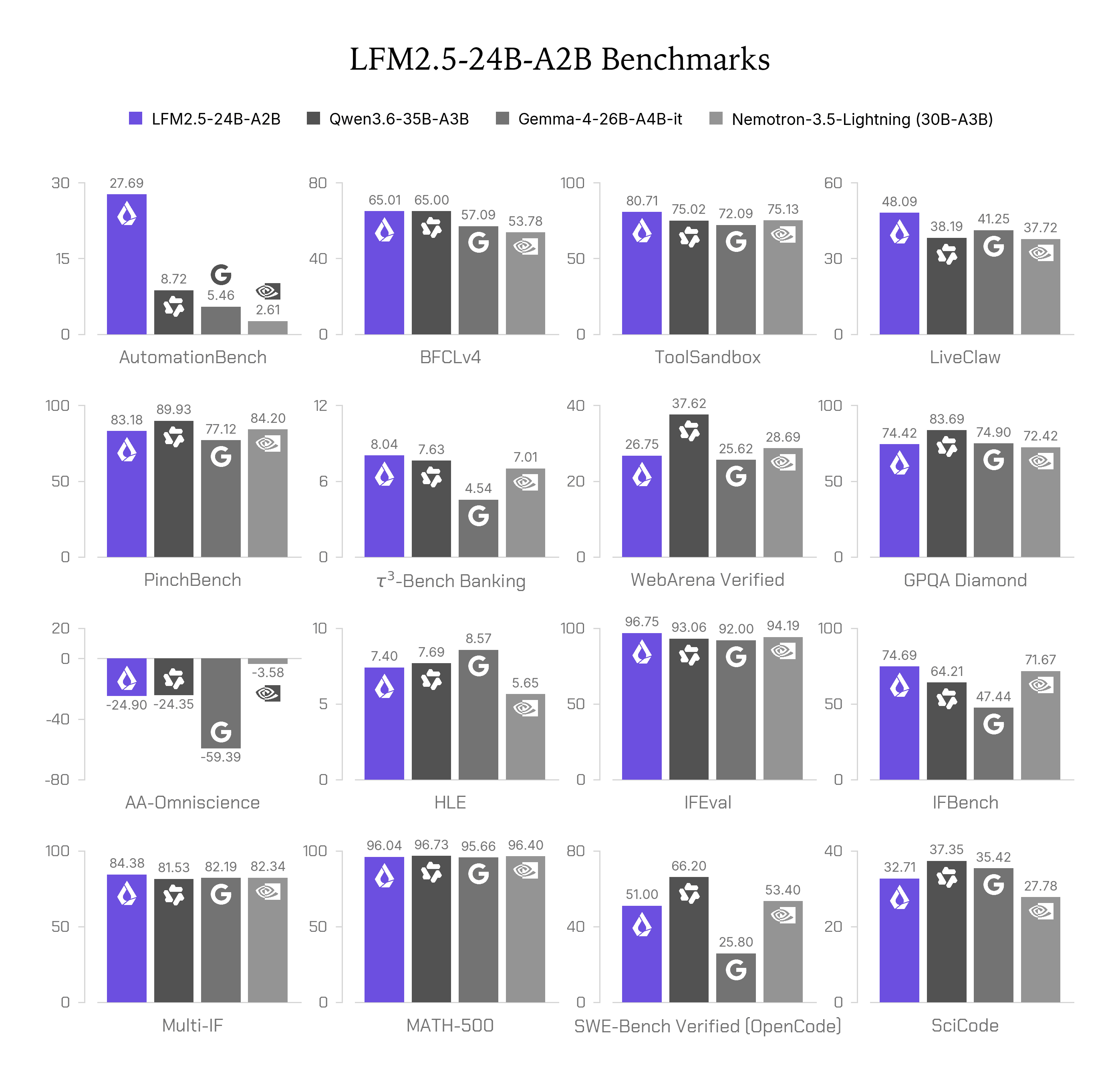
On October 13, Liquid AI released LFM2.5-24B-A2B: an open-weight 24B MoE with ~2B active parameters per token, built for fast on-device agents. Its real story is the training recipe — agentic RL inside real harnesses like OpenCode, Pi, OpenClaw and Hermes Agent. We break down the five-stage post-training, the 16 vendor-run benchmarks (strong on tool use and instruction following, weak on knowledge-heavy coding), and who should actually deploy it.
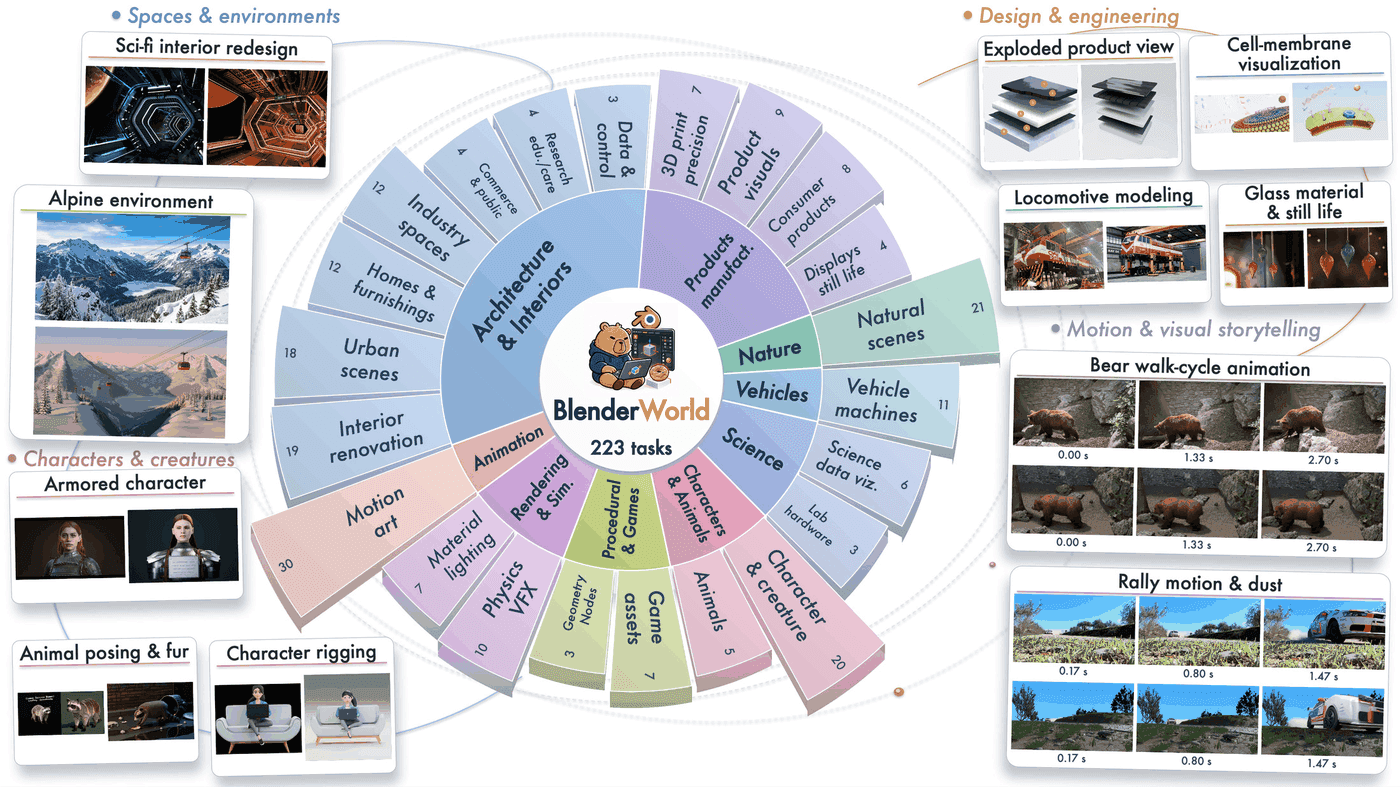
On October 14, Alibaba's Qwen team open-sourced BlenderWorld: a benchmark testing visual agents on real 3D creation inside Blender — 223 tasks, 2,651 binary rubric criteria, and submissions are editable .blend project files, not renders. We break down the exam format, the judging pipeline, and what it signals for agent evaluation.