Voxtral 3 arrives: voice agents move from three bolted parts to one pipeline
Mistral released Voxtral 3 on 22 October 2026, putting transcription in 50+ languages, speech synthesis in 35+ languages and a LiveKit-based voice-agent SDK into one real-time pipeline. This article unpacks the four parts, the price list and five pre-launch checks, and judges whether independent developers should try it.
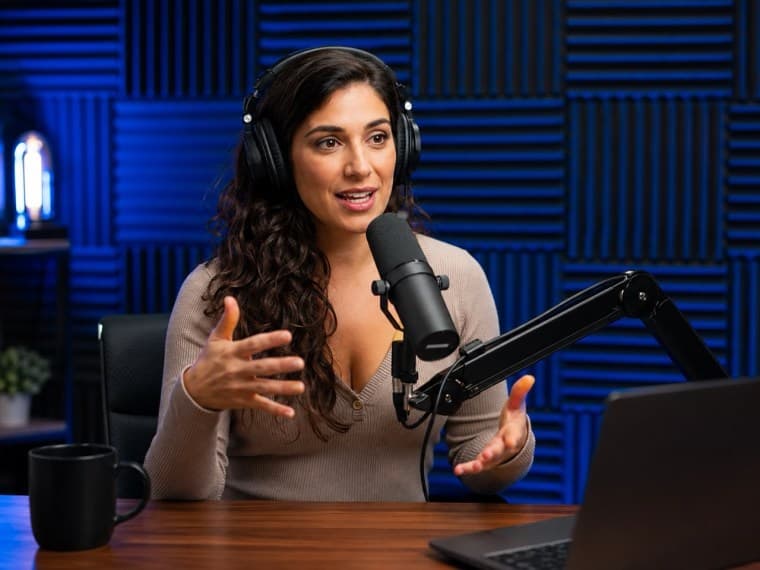
One line: voice agents go from three bolted parts to one pipeline
Anyone who has built a voice product knows where the pain lives: one vendor transcribes, another synthesises speech, a third reasons about the conversation. Each part works on its own, but stitched together they pile up latency, disagree about interruptions, and mix up speakers. What the user hears is not intelligence, but a slow telephone that keeps talking over them. Voxtral 3, released by Mistral on 22 October 2026, attacks exactly that seam: it puts speech-to-text, text-to-speech and a voice-agent SDK into a single real-time streaming pipeline, so listening, reasoning, acting and speaking happen in one call instead of queuing up in stages.

This is not another model that only reads a script aloud. Mistral aims it at concrete jobs: contact centres, service desks, virtual assistants and hands-free copilots. In other words, work that already has a clear procedure — verify an identity, check a bill, book a time — rather than open-ended chat. For independent developers and small teams, that narrower brief is good news: what you need to verify is not whether the model tells jokes, but whether it can finish a real phone task, and whether a mistake can be spotted, corrected and handed to a human.
What actually shipped: transcription, synthesis, SDK, all at once
Voxtral 3 is not a single model. It is a set of specialised models plus the SDK that wires them together. The clearest way to understand it is to follow one call.
First, it listens. The main transcription model, Voxtral Small Transcribe 3, covers more than 50 languages. Mistral says it leads the field in multilingual transcription and diarization — working out who said what — and claims it beats Whisper, Scribe v2 and Gemini 3.5 Transcribe. That claim needs a qualifier: it is the vendor's own benchmark result, not yet independently verified, so treat it as a vendor claim rather than a settled verdict. The more practical feature is context-biasing: you can hand the model key terms and free text in advance so it transcribes product names, people's names and technical terms more accurately, without fine-tuning. For jargon-heavy settings such as support, medicine and law, that is genuinely useful.
The transcription line has two cheaper, faster siblings. Voxtral Mini Transcribe 3 is a 4-billion-parameter batch model at $0.0035 per minute, suited to processing recordings after the fact. Voxtral Mini Transcribe Realtime 3 is built for live use: more than 35 languages, under 500 milliseconds of latency, diarization and context-biasing included, plus native end-of-turn detection — the model itself judges when the caller has finished speaking, instead of guessing from a fixed silence. That detail decides whether a voice agent waits like a person or jumps in every time the caller pauses to think.
Second, it speaks. Voxtral Mini TTS 3 covers more than 35 languages and more than 50 dialects at $13 per million characters. Mistral says it adjusts emotion, pace and emphasis from conversational context, and supports explicit prompt controls for emotion, pacing and emphasis, plus voice cloning from 30 minutes or more of sampled audio. A further Pro Voice adaptation targets professional use: reproducing a speaker's distinctive character, emotional range and speaking style across languages from just 30 minutes of audio. The caution is symmetrical: the more a voice sounds like a real person, the less room there is for ambiguity about consent. Any cloning should start from the recorded person's explicit permission, or a technical advantage becomes a compliance liability.
Third, it thinks and acts — the biggest change from the previous generation. The new voice-agent SDK, built on LiveKit, runs realtime transcription, reasoning, tool calls and speech synthesis as one streaming pipeline: the realtime transcription model listens and detects the end of a turn, a general model such as Mistral Small 4 reasons and calls tools, and the TTS model replies in the tone of the conversation so far. Mistral says each turn completes in under a second, and that the agent stops talking when the caller interrupts. During a call it can verify identity, check a bill or book an appointment, using function calling, web search and retrieval over your own systems. It answers and places calls over SIP, runs in browsers and apps over WebRTC, and connects to existing telephony, IVR and contact-centre software.
Fourth, deployment. Voxtral 3 is available through Mistral's EU-hosted API or for self-deployment on your own infrastructure. Mistral frames this as data sovereignty: organisations control where audio is processed, how it is handled and whether conversations are retained. For teams handling sensitive calls, that matters more than any single price figure — outsourcing the audio does not outsource the compliance responsibility.
The price list is itself an architecture diagram
Read Voxtral 3's prices line by line, because they answer the question of what size of business this fits. Batch transcription is $0.0035 per minute, realtime transcription $0.008, higher-accuracy batch transcription (Small) $0.0040, TTS $13 per million characters. The full voice-agent pipeline is priced per minute: $0.04 with Mistral Small 4 reasoning, $0.08 with a larger reasoning model.
Translated into business terms: 50,000 agent minutes a month at the $0.04 tier is about $2,000 before token fees beyond that tier; 100,000 batch transcription minutes with Mini is about $350. If your current vendor charges multiples of that for the same volume, the comparison alone can pay for a pilot. Conversely, if your calls are infrequent, short, and your human labour was never expensive, the fixed cost of evaluation, fallback design and human handover may outweigh the savings. Cheap per minute does not mean a cheap project; evaluation, fallback and handover are where the real cost sits.
For vibe builders, the sharper judgement is this: Voxtral 3 turns listening and speaking into commodities you can buy by the minute, and leaves reasoning and tooling to your own systems and data. Your moat is therefore not the voice model itself, but three things: whether your tools genuinely reach orders, bills and calendars; whether your test set covers real names, numbers, accents and interruptions; and whether a user can reach a human in one sentence when things go wrong. Models can be swapped between vendors. If those three are missing, every vendor fails the same way.
Five checks before you ship
First, names and numbers. Voice systems fail most dangerously on proper nouns and digits: one misheard syllable in a name, one missing digit in an amount, one day off in a date, and a support interaction becomes a business error. Before launch, build a test set mixing synthetic and real recordings, loaded with product names, people's names, prices, order numbers and deliberate pauses, and check line by line whether transcription or synthesis changed the meaning. Natural-sounding but wrong is more dangerous than stiff but accurate.
Second, interruption and turn-taking. A good voice agent stops when interrupted and does not grab the floor when the user is merely hesitating. Voxtral 3 builds end-of-turn detection into the realtime transcription model, which should reduce false cut-offs, but "should" must be tested on real calls: accents, speaking speed and phone-line noise all change detection behaviour. Test with hesitation, repetition and self-correction, and watch whether the agent waits for the full thought or executes half a sentence as a complete instruction.
Third, diarization. In multi-speaker calls, meeting transcription and agent-customer exchanges, assigning a sentence to the wrong person corrupts everything downstream: summaries, tickets and accountability. Mistral's diarization claim is strong, but any claim deserves retesting on your own recordings: two people saying the same sentence, one person switching language mid-call, background speech cutting in. These are everyday production conditions, not edge cases.
Fourth, the boundary of tool calls. A voice agent that can check a bill and book an appointment can touch real systems. Draw three lines in advance: what it may do alone, what it must read back and confirm first, and what it must never do. Booking can be confirmed aloud before it is written; refunds, price changes and deletions should default to human review. Without that line, "capable" quickly becomes "reckless".
Fifth, privacy and voice consent. Whether recordings are kept, for how long, who can listen back, and how a user can ask for deletion should be written into the product before launch, not added after the first complaint. Voice cloning and Pro Voice need a separate gate: samples only from the rights holder, a retained consent record, and traceable synthetic output. Being technically able to clone a voice is not the same as having the right to do it in a product.
What it changes, and what it does not
Voxtral 3's real significance is not any single metric. It turns a voice agent from a demo stitched across three vendors into an engineering component you can price by the minute and swap by module. Each stage is a separate model, so changing the reasoning model, the voice or the language does not mean rewriting the agent. That matters most for small teams, because what they lack is rarely a model — it is the engineering slack to turn a demo into a maintainable product.
What it does not change is the nature of voice evaluation. Lab scores for transcription error and synthesis naturalness never replace testing on real calls: accents, dialects, background noise, phone-line compression, shifts in user emotion. Mistral's own evaluation notes — an external model used as judge in places, prices taken from vendors' public pages — are a reminder that vendor leaderboards are for shortlisting candidates, not for making launch decisions.
One dating note is worth stating plainly: some secondary coverage dates this release to 20 October, while Mistral's own page metadata records publication on 22 October 2026. This article follows the primary source and dates the news to 22 October. Either date falls inside the 12–26 October window, so the judgement that this is a current-week story is unaffected. For publication decisions, the primary source's own stamp should always win over a republication date.
A one-week trial plan for independent developers
If you have a process that could work by voice, run this sequence over a week instead of signing up first and figuring it out later. Day one: pick one procedure with a clear flow, such as rescheduling an appointment or checking an order, and write three lists — what the agent may do, what it must confirm, what it must never do. Day two: run transcription on 20 real or simulated recordings, testing names, numbers, dialects and interruptions specifically. Day three: connect one read-only tool, such as order lookup, and complete the full loop of understanding, fetching and explaining. Day four: add interruption tests and a human-handover button, and confirm a user can reach a person in one sentence. Day five: do the real arithmetic — your call volume times the $0.04 or $0.08 tier, plus the human cost of evaluation and handover — and check whether it is actually cheaper than what you have. Day six: write the privacy note — how long recordings are kept, who can listen, how to delete, and the consent flow for voice cloning. Day seven: let five real users call without telling them it is AI, and watch at which sentence they notice something is off, and at which step they give up.
After that week you will have a conclusion no benchmark can give you: whether this voice agent can actually take your calls, or merely sounds human in a demo. Voxtral 3 gives you a cheaper, more complete set of parts. Assembling them into a product people can trust is still your job. That is the honest shape of vibe development: models keep getting more off-the-shelf, and judgement keeps getting more valuable.
Comments (0)
Sources
Related articles

Anthropic's October 21 research preview of Claude Duet flips the assistant logic: a morning brief, checks every few hours, and tasks that continue after you leave. This article unpacks how it works, its safety red lines and gaps, and a seven-question checklist for vibe builders adding proactive features.

Google Cloud's October 21 announcement puts GPT-6 Astra, Sol, and Luna into Model Garden in private preview. The models are not new — the buying route is: Marketplace billing, commitment drawdown, and a single invoice. This article separates what is live from what is coming soon, and lists five common misreadings.
Visual Studio Code 1.142 shipped October 14, 2026, with three interlocking changes: Canvases in preview, a shared interactive surface beside chat where you and an agent edit the same artifact; chats that move to another folder or Git worktree without losing history; and finer Agent Host policies as Windows Sandbox integration retires. This article explains each change, its preview limits, and who should upgrade now versus wait.