Jensen Huang Resigns as NVIDIA CEO After 33 Years; CFO Colette Kress Named Interim Chief
On Nov 12, 2026, NVIDIA said Jensen Huang resigned as president, CEO and director, with CFO Colette Kress named interim CEO. The 33-year founder era ends; shares fell 13% at the open before narrowing, and the Nov 17 earnings call is the new management's first test.
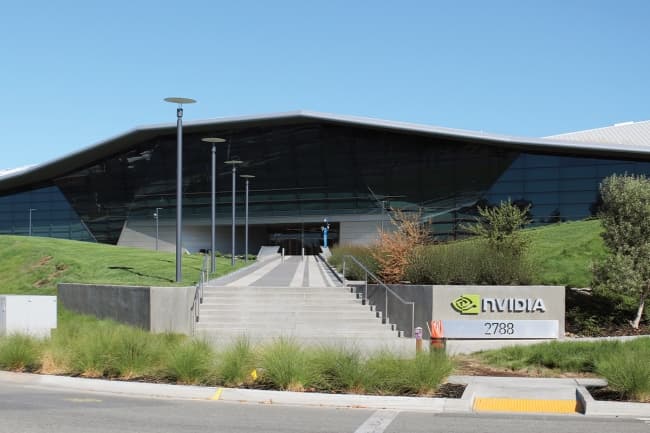
What happened: after 33 years at the helm, three roles gone in a single day
On November 12, 2026, NVIDIA's Board of Directors announced that Jensen Huang had resigned as President, Chief Executive Officer, and a member of the Board, effective immediately. The same announcement named Colette Kress, the company's current Executive Vice President and Chief Financial Officer, as Interim Chief Executive Officer. Until a permanent successor is named, she will continue to serve as Executive Vice President and CFO. The Board also appointed Harvey C. Jones as its first-ever Chair of the Board, and began a search for a permanent CEO that will consider internal and external candidates.
The announcement was restrained in tone and gave no reason for the resignation, offering only one line of thanks: "The Board and the company thank Jensen for his immeasurable contributions to the company and the industry." According to the Form 8-K filed with the U.S. Securities and Exchange Commission, the Board accepted the resignation on November 11, and it was made public on November 12. Huang co-founded NVIDIA in 1993 and led the company for 33 years, making him one of Silicon Valley's longest-serving founder CEOs. In the announcement, Kress said: "NVIDIA's strength has always come from its people, and together with our leadership team, I am committed to building on the extraordinary foundation Jensen created over the last 33 years."
Kress is no stranger parachuted in from outside. She joined NVIDIA as CFO in September 2013, after nearly 25 years in finance roles at Cisco and Microsoft, and she lived through the company's entire transformation from a gaming graphics company into the dominant supplier of AI compute. The new Board Chair, Harvey C. Jones, is equally a veteran: a director since 1993, former CEO and Executive Chairman of Synopsys, with more than 30 years as an entrepreneur, technology executive, and venture investor. The message of this arrangement is clear: stabilize first, choose later.
For developers, the most immediate date is November 17. NVIDIA will report its third-quarter fiscal 2027 results that day as previously scheduled, at approximately 1:20 p.m. PT, followed by an earnings call at 2 p.m. PT. It will be Kress's first test in front of the market as interim CEO, and the first hard data point for judging whether the company's operations really will continue "without interruption," as the announcement claims.
The market's first reaction: down 13% at the open, only 4.3% down at the close
On the first trading day after the news, the market voted with its feet, then slowly calmed down. According to market data, NVIDIA shares opened on November 12 down 13.09% at $150.99, falling sharply in early trading; but by the close the decline had narrowed to 4.34%, at $166.19, with a small further recovery after hours. That long lower shadow tells two stories: first, the sudden leadership change genuinely frightened the market — a 13% opening drop is a rare single-day move for NVIDIA; second, the panic did not last, and investors began repricing within the same day instead of selling all the way down.
Why did the decline narrow? One reason is that the fundamentals did not change: no financial guidance was lowered on the day of the announcement, and the earnings date was not moved. Another is that the succession held no surprises: Kress has managed NVIDIA's money for 13 years, Wall Street knows her, and while an interim CEO who also keeps the CFO job is unusual, it is at least not a blank page. A third, often overlooked factor: Huang owns about 3.6% of NVIDIA's stock, and resigning is not the same as selling — the announcement mentioned no change in shareholdings.
But "narrowed" is not the same as "fine." A 4.34% single-day drop for a company worth trillions of dollars still wipes out hundreds of billions in market value. More importantly, the uncertainty has not gone away — it has only changed shape, from "will there be a change?" to "who will take over?" Until a permanent successor is named, every earnings report and every product launch will be re-examined under the microscope of the post-Huang era.
The announcement gives no reason, but the timeline is a matter of public record
NVIDIA's official announcement does not explain why Jensen Huang resigned. That has to be said up front: everything about the reasons currently comes from press reporting, not from the company. But several facts are on the public record and can be laid out in order.
On November 8, NVIDIA announced that independent directors, assisted by outside legal counsel, would lead an investigation into whether Huang had been the target of a foreign intelligence operation. The New York Times had reported over the previous weekend that Huang may have been the target of a foreign espionage operation, and several outlets reported that Huang had acknowledged an extramarital affair with a Singapore-based technology executive whom U.S. intelligence officials suspect of spying. On November 11, The Wall Street Journal reported that directors were preparing to remove the longtime chief executive; the same day, the Board accepted his resignation. On November 12, the resignation was made public.
Political pressure was building at the same time. Democratic lawmakers have opened an investigation into NVIDIA's chip sales to China and written to the Commerce Secretary asking that relevant records be preserved, and there have been reports that Huang could face a congressional subpoena seeking closed-door testimony on the allegations. No official document establishes any causal link between these investigations and the resignation, and a writer should not draw that conclusion on the reader's behalf. What is certain is the timing: the resignation came four days after the investigation was announced, and less than two weeks after the concentrated press coverage began.
For readers, it matters to keep "what the announcement said" separate from "what the reporting said." The announcement says only three things: he left, who is temporarily filling in, and who chairs the board. It says nothing about reasons, responsibility, or the findings of any investigation. Any account that directly attributes the resignation to a single event is filling in words the company itself did not say.
What 33 years means: he was not an ordinary hired manager
To understand the shock of this leadership change, you have to understand Huang's position at NVIDIA. He was not a professional manager hired by the board; he was a founder who started the company in 1993 with two other engineers. Over 33 years he took a small gaming graphics company and turned it into the most important supplier of compute in the AI era. According to analyst Azeem Azhar, NVIDIA has sold nearly 14 million flagship AI chips over the past five years, taking about 85% of the market.
The departure of a founder CEO is entirely different from replacing a hired manager. When a hired manager leaves, the strategy usually continues; when a founder leaves, the company's strategic instincts, customer relationships, and voice in the industry all have to find a new anchor. Huang himself has been a key link in the AI ecosystem: his annual GTC keynote has practically set the direction of the AI industry, and his personal relationships with major cloud vendors and model companies have greased the wheels of many deals. None of that appears on any organizational chart, but the market prices all of it into the stock.
Looked at the other way, NVIDIA today is not the NVIDIA of 1993. Its moat is more than one person: the CUDA ecosystem, NVLink interconnects, and a full stack running from chips through networking to software are all organizational capabilities, built up over time. The line in the board's announcement — that operations, customer commitments, and the product roadmap will continue without interruption — is aimed squarely at that point. The question is whether the market will take the board's word for it. The earnings call on November 17 is the first verification.
What it means for the AI industry: three open questions
The first question is who the successor will be. Several reports note that NVIDIA has no prepared successor, and Huang himself repeatedly avoided naming an heir. The board says it will consider internal and external candidates, but among internal candidates there is no obvious person who can carry the technology roadmap, customer relationships, and the capital markets all at once; an external hire would face the cost of adjusting to a company with a deeply founder-driven culture. The choice of successor will largely decide NVIDIA's character for the next five years.
The second question is whether the AI investment cycle will be interrupted. NVIDIA's customers are the world's largest cloud vendors and model companies, whose capital spending plans run into the tens of billions of dollars. A leadership change by itself does not alter those plans, but if a new CEO adjusts the product roadmap or pricing, the whole pace of AI infrastructure purchasing could shift with it. The most sensitive moment in the near term is the November 17 earnings report: if the numbers and guidance hold, the market will treat the leadership change as an episode; if guidance slips, the episode becomes the main story.
The third question is whether regulatory and geopolitical pressure will keep intensifying. NVIDIA's chip sales to China are already the subject of a congressional inquiry, and export controls are a long-term variable hanging over the company. Huang spent years walking a tightrope between Washington and Beijing, and his departure could make that tightrope harder to walk — or it could make the company more cautious on compliance and actually reduce risk. It is too early to conclude either way. The one certainty is that the next CEO will face this issue on day one, with no grace period.
What it means for vibe developers: don't panic, but watch three signals
If you are an independent developer writing projects with Claude Code or Cursor, NVIDIA's leadership change is several layers removed from you: the models you use run on GPUs owned by cloud vendors, the vendors buy from NVIDIA, and who NVIDIA's CEO is will not slow down your next line of code. In the short term, the only sensible thing to do is nothing. The announcement is explicit that the product roadmap continues, and there is no signal of any change to CUDA, graphics drivers, or cloud compute supply.
But three signals are worth putting on your watch list. The first is the earnings call on November 17 — listen to how Kress talks about capital spending and the pace of next-generation chip shipments; it will be the new management's first public statement of direction. The second is the choice of permanent successor: an internal promotion means continuity, an external hire means possible change. The third is NVIDIA's attitude toward the open-source ecosystem: over the past year NVIDIA has open-sourced the Nemotron model family and training data, and if the new management tightens open-source policy, personal projects that depend on those weights should have a fallback ready.
Looking further ahead, this leadership change is a reminder that the infrastructure layer of the AI industry is shifting from "founder-driven" to "institution-driven." For small teams, that is actually good news — you should depend on interfaces, protocols, and open weights, not on any single CEO's personal judgment. Build your project on layers that can be swapped: the model can change, the cloud vendor can change, the inference framework can change. Huang's resignation by itself will not stall your project, but it is a reminder that any single point of dependence deserves a backup plan.
The timeline in one picture: the key moments from founding to the leadership change

Laid out straight, the pace of this leadership change looks unusually fast. Only four days passed between the investigation announcement on November 8 and the public resignation on November 12. Compare that with a normal CEO handover: hints six months ahead, a three-month transition, the old and new CEOs appearing on stage together, and a slow handover. NVIDIA had none of that this time — no transition period, no farewell speech, no "Huang will stay on as an advisor" fig leaf, just a resignation effective immediately. That tells us the board's decision was made within a short window, not as a long-planned handover.
There is another date in the timeline that is easy to overlook: September 2013, when Kress joined NVIDIA. The 13 years she has run finance are exactly the 13 years in which NVIDIA's market value grew from tens of billions to trillions of dollars. Her knowledge of the company's business, customers, operations, and financial position is why the board dares to put her in charge in a crisis. But whether a finance-born interim CEO can command respect on technology direction is a different question. Historically, every major NVIDIA pivot — from gaming graphics to CUDA, from data centers to AI — was decided by Huang himself. Kress's first real test will not be the earnings report; it will be whether she can vouch for the company's technology direction without Huang.
How this differs from the NVIDIA articles already on the site
The site has previously published three NVIDIA-related news pieces: the shipment of RTX Spark local AI devices, the open-sourcing of Nemotron models after they beat the best human scores on the IOI and IMO, and the release of the Nemotron 3.5 Bolt 74B model that fits in 24GB of VRAM. Those three were all about products and technology; this one is about people and corporate governance, so the topic does not overlap. The product pieces asked "what did NVIDIA release?"; this piece asks "now that the person steering NVIDIA has changed, do those product roadmaps still hold?"
It is equally important to draw a line here: this is not a gossip piece. The details about the affair and the espionage allegations are kept in this article at the level of "reported by several outlets" — not expanded, not dramatized, not filled in. The reason is simple: those details have nothing to do with developers' actual decisions, and no official document has confirmed them. Readers who want to follow the investigation should read the ongoing coverage in The New York Times and USA Today, not look for answers in a developer-focused news piece.
Judgment: short-term volatility; long-term, it comes down to the successor
Finally, here is this article's judgment, in three layers. The first layer is facts: Huang is gone, Kress is interim CEO, Jones chairs the board, the board is looking for a permanent successor, and earnings come out on November 17. All of that is backed by the official announcement and SEC filings; it is certain. The second layer is the market: opening down 13% and closing down 4.34% shows the market was frightened but did not panic all the way down; as long as the November 17 numbers and guidance hold, the leadership change will most likely be absorbed as an episode. The third layer is strategy: NVIDIA's real test is not this month but the day the successor is announced — who that person is will largely decide the company's character for the next five years.
For ordinary developers, the most rational posture is "pay attention, but don't act." There is no need to switch cloud vendors, inference frameworks, or tech stacks because of one leadership change. Put the November 17 earnings call and the successor announcement on your calendar, and make the model layer and compute layer of your project swappable — that is enough. NVIDIA's 33-year founder era has ended, but building in the AI industry will not stop because one person left. It will simply continue with a new group of people.
One more number: what NVIDIA grew into over those 33 years
What does 33 years mean for a technology company? When NVIDIA was founded in 1993, personal computers were only just becoming common and the internet had not yet reached the public; by 2026, according to analyst estimates, it had sold close to 14 million flagship AI chips, about 85% of the market. The same company rode five waves — gaming graphics, CUDA parallel computing, data centers, autonomous driving, the metaverse, and then generative AI — and caught every one, not by luck but by Huang's long-held conviction that compute would become general infrastructure.
That is also why the market reacted so violently to this leadership change: investors were never just buying a chip company's current earnings; they were buying its track record of catching five waves in a row. The successor will have to prove not just that they can run the company, but that when the next wave arrives, they will be standing on the right side of it. There is no shortcut to that proof. It can only be earned over time.
A practical note: before the successor is announced, watch November 17
One last operational reminder: if you hold NVIDIA stock, or your business depends heavily on NVIDIA compute, the earnings call on November 17 is the most important event of the next month. Listen for three things: what Kress says about capital spending next quarter, what she says about the shipment pace of next-generation chips, and how she answers when analysts ask about the successor. The tone of those three answers will say more about the new management's confidence than the earnings numbers themselves. Numbers are the past; tone is the future.
Comments (0)
Sources
Related articles

On 20 November 2026, OpenAI released MedChemBench: 99 medicinal-chemistry problems from 117 papers and patents, covering 761 molecules. GPT-6.2 Astra scores 84.5% overall — but 95.4% on assembling structures and only 50.4% on choosing compounds. The total flatters; the components tell the truth.

On 18 November 2026, Google Research and co-authors posted BuggyMLE to arXiv: bugs injected into 222 working ML repositories, and 14 models slide from 95% on the easiest tier to 9% on the hardest. A 9-billion-parameter model trained easy-to-hard beats Claude Opus 5.5 on the 10-bug tier.

On 20 November 2026, Thinking Machines Lab released Inkling 2 Mini: a 26.4B-parameter looped transformer that runs its middle 12 layers three times per token, fits in about 20GB, and runs offline on a laptop. It leads open-weights models of its size on DeepSWE and SWE-bench Verified — with the caveats printed in the same announcement.