OpenAI Models Are Now Designing Chips: ~13% Area Saved on Jalapeño, Up to 14% PPA Gains on AMD Flagship GPU IP
Around 18 November 2026, OpenAI disclosed that its models helped design chips: Jalapeño's vector unit saved about 13% of standard-cell area and its matrix unit about 10%, silicon-proven after tape-out, while AMD's flagship GPU IP gained up to 14% in PPA. The numbers are vendor-reported, and the blog's own caveats matter as much as the gains.
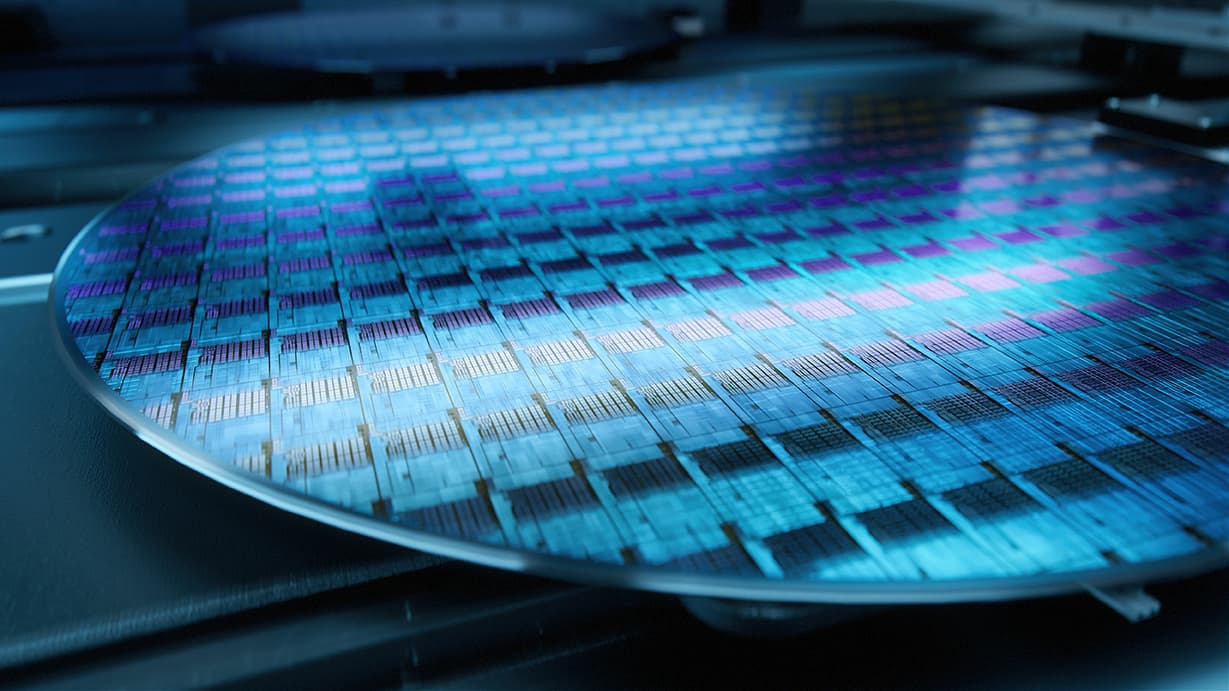
Around 18 November, OpenAI disclosed something notable: its models are no longer just writing code, drawing pictures, and chatting — they are now taking a real part in designing chips. On its own inference chip, Jalapeño, model-proposed circuit changes cut standard-cell area by about 13% in the vector unit and about 10% in the matrix unit, and those changes have been proven in silicon after tape-out. In a separate collaboration with AMD, models rewriting circuit-description code delivered up to a 14% improvement in power, performance, and area (PPA) on flagship GPU IP. This is not a model launch or a concept slide; it is a work report with concrete numbers and concrete landing points.
First, a word on the date, so nobody is misled. OpenAI's blog page itself carries no visible publication date, and the fetched text contains no mention of "November" at all. The 18 November date is established by triangulation: YourStory's report states plainly that this is "the milestone OpenAI shared on November 18, 2026," while GIGAZINE's 19 November report cites a post AMD CEO Lisa Su published on social media the same day about the same results. So this article says the disclosure happened "around 18 November," not that "the official page is dated 18 November." The distinction may look fussy, but in news writing, where a date comes from is part of the fact itself.
Why does this deserve its own article? Because it answers a question people have asked for a long time without ever getting hard numbers: can large models actually do chip design? The usual answers until now were modest — help with verification code, look up documentation — assistant-level work. What OpenAI has put on the table is different: model-proposed changes have gone into a design sent for manufacturing and into production design files for future versions. In other words, the model's hand is inside the production pipeline, not just gesturing on a lab bench.
The numbers first: what Jalapeño saved, what AMD gained
There are six core numbers, all from OpenAI's official blog, each carrying an "about" — all vendor-reported, with no independent verification, which readers should keep in mind throughout.
On Jalapeño, the team's own chip: standard-cell area down about 13% in the vector unit and about 10% in the matrix unit. The vector unit handles parallel computing tasks; the matrix unit is the arithmetic component. Area saved in both adds up to real cost and power headroom on an inference chip. Two finer examples are worth a look: one multiplier redesign used about 15% less cell area while cutting latency from two clock cycles to one; a separate adder redesign cut cell area by about 15% while keeping its two-cycle latency. Saving area while halving latency — or at least not slowing anything down — is what makes chip engineers nod. A change that saves area but drags down speed is usually unusable in a real design.
On AMD's side: up to 14% PPA improvement on flagship GPU IP, measured against heavily optimized baselines. OpenAI describes this as roughly a year of progress achieved in less than five months. On key blocks of AMD's upcoming next-generation flagship CPU, model-written designs also verified single-digit percentage PPA gains. These changes did not stay on paper: AMD has already included some of them in a recent design it sent for manufacturing, and added others to production design files for future versions.
Put the two sets of numbers together and the picture is clear. Jalapeño's 13% and 10% show the model creating value inside OpenAI's own pipeline; AMD's 14% shows the same approach working on someone else's flagship product, with the customer willing to put the results into something that will actually be manufactured. For OpenAI, the two halves together are what make the claim "models can design chips" credible.
How Jalapeño's savings were found
The timeline starts in early 2025, when OpenAI began using GPT-o3 mini to help design Jalapeño. By today's standards o3 mini is already an older model, yet it still found plenty of savings. That alone is worth noting: the headroom in chip design does not belong only to the newest, strongest models — even a previous-generation model could dig real improvements out of the design.
In the vector unit, the savings were spread across several places: floating-point adders and multipliers, conversion functions, reduction logic, and the special-function unit. The model did two kinds of work: swapping in alternative logic implementations that do the same job with different circuitry, and re-dividing computations across pipeline stages so work is split more sensibly, sharing hardware and cutting intermediate storage along the way. In plain terms, the model both "found a cheaper way to build the same thing" and "re-scheduled the work," and the two kinds of savings stacked up to the 13% figure.
The matrix unit followed a similar pattern: floating-point adders, multipliers, low-precision dot-product circuits, plus improvements to dot-product logic and pipeline organization, accumulating to about 10%. The multiplier and adder examples above come from this block: a multiplier redesign using about 15% less cell area with latency cut from two cycles to one, and an adder redesign cutting cell area by about 15% at the same two-cycle latency. OpenAI adds one crucial sentence: these optimizations were silicon-proven during Jalapeño's silicon bring-up. The saved area is not a number from a simulator; it is a result that held up on manufactured silicon.
Jalapeño is OpenAI's first custom inference chip, developed with Broadcom for large language model inference workloads. YourStory's report adds that it went from design to manufacturing tape-out in nine months, with AI models accelerating parts of the design and optimization work. Nine months is fast for a new chip, and model involvement is part of OpenAI's explanation for that speed. One caution: the nine-month figure comes from YourStory's reporting, not from the text of the official blog, so this article attributes it as such rather than presenting it as OpenAI's own words.

AMD: the model rewrites the circuit code directly
The AMD collaboration is the half of this disclosure most worth watching closely. Jalapeño, after all, is OpenAI's own project, and a skeptic could argue the model was pointed at the easy parts. AMD's flagship GPU is different: a mature product that has already been through many rounds of optimization, with a baseline that is already very high. Squeezing up to 14% more out of that baseline carries far more weight.
The model's method was to rewrite SystemVerilog RTL directly — the register-transfer-level code that describes a chip's circuits. In chip design, RTL code is the circuit's "source code": changing it means changing the circuit itself. OpenAI says the model can now reason about RTL at the level of an expert microarchitect, rewriting circuits that perform calculations, control operations, or move data. Each rewrite was verified with Synopsys tools to confirm the block's behavior was preserved, and to evaluate the power, performance, and area trade-offs. That verification step is not decoration — a single wrong change in a circuit means a manufactured chip is scrap, so "the change passes verification" is itself part of the capability.
The time arithmetic is worth doing too: roughly a year of progress in under five months. That is OpenAI's own claim, of course, but it at least shows one thing clearly: with models in the loop, the pace of design iteration changed. In the chip industry, time is money — miss a tape-out window once and a product can slip a quarter. Compressing a year's optimization work into under five months is valuable to a vendor of AMD's size not only for the 14% figure, but for the time itself.
The landing points are equally concrete: AMD has already included some of these changes in a recent design it sent for manufacturing, and added others to production design files for future versions. The subtext is that AMD's engineers reviewed these changes, found them usable, and let them into the manufacturing flow. Anyone in the industry knows how cautious a major chip vendor is about anything that goes to manufacturing — clearing that bar says more than any launch-day wording.
The CPU side should not be overlooked either: on key blocks of AMD's upcoming next-generation flagship CPU, model-written designs verified single-digit percentage PPA gains. OpenAI's words are "single-digit percentage" with no specific number attached, and this article will not invent one. Looking ahead, OpenAI says it expects further PPA improvements on top of the GPU and CPU baselines. That is a claim to file away and check against the next batch of numbers.
The RISC-V evaluations: a yardstick for model capability
Beyond the production results, OpenAI published an evaluation designed to measure how chip-design ability changes from one model generation to the next. The test subjects were two open-source 32-bit RISC-V processor cores: PicoRV32 and Ibex. The first is a compact core designed for reconfigurable chips (FPGAs); the second is the embedded processor in OpenTitan's security chip. Both are complete processor cores for embedded, microcontroller-class workloads.
The evaluation had two tasks. The first was optimizing an existing design: each model was given the original hardware description and asked to increase throughput — the number of instructions the core can execute per second. There is a subtlety in how this is measured: a change might let a core finish an instruction in fewer clock cycles but make each cycle take longer, so counting cycles alone or frequency alone would both mislead. OpenAI's approach multiplies the two together into instructions per second. Each design was checked in simulation; designs that failed a check scored zero, as did designs using more than 16 times the original core's area. Passing designs were scored by the geometric mean of instructions per clock cycle across workloads hidden from the models, multiplied by the maximum clock frequency estimated with Yosys. With a comparable budget of about 112,000 tokens per run, GPT-6.2 Astra had the highest average score on both cores, and GPT-6.1 Sol also outscored GPT-5.6 Sol on both.
The second task is harder: designing a core from written requirements. The model received written requirements and templates from the open-source code showing how the core connects to the rest of the system, and chose for itself how data would move through the core and how to divide the work into stages. The result was somewhat surprising: at about 112,000 tokens per run, all five models scored higher when designing a core from written requirements than when optimizing the existing design, on both PicoRV32 and Ibex. GPT-6.2 Astra gained more on Ibex than on PicoRV32, and the full evaluation included 9,881 scored runs across both tasks, both cores, and all token budgets.
The point of this evaluation is not the ranking itself, but that the industry now has a yardstick. Debates about "whether models can design chips" used to stay at the level of gut feeling; now there is a public, repeatable set of tasks and scores, and the next generation of models can be measured with the same ruler. That said, the ruler itself has flaws — which is the subject of the next section.
The caveats: don't rush to declare engineers obsolete
The caveats OpenAI wrote into its own blog are the easiest part of this disclosure to overlook, and the most important. Starting from written requirements gives models room to omit features found in the original cores, such as performance counters and additional instructions. Those features do little to improve throughput on the test workloads, so leaving them out can make a score look better without making the design more complete. More importantly, the tests imposed no tight area limit and did not check timing after physical synthesis. OpenAI itself says that requiring those features, setting a tighter limit on circuit area, and checking timing after physical synthesis would make the test more representative of production chip design.
Translated into plain language: part of the models' high scores comes from the test being easier than real work. In real chip design, area budgets are tight, timing closure is one of the most grueling parts of the job, and the feature list cannot be trimmed at will. The evaluation relaxed all three, so the scores naturally look better. That does not make the evaluation useless — it means that using these scores to conclude "models can already design production chips on their own" would be a leap too far.
The same caution applies to the headline percentages. 13%, 10%, 15%, 14% — all vendor-reported, none independently verified by a third party. Jalapeño's results carry the backing of silicon verification, and AMD's results carry the backing of changes entering manufacturing designs, and both of those do add weight. But they are still not independent verification. The right posture for readers is to treat these numbers as signals worth taking seriously, not as settled facts. When Jalapeño is deployed at scale and AMD's products reach the market, their real-world behavior will be the evidence to check these numbers against.
And one plain truth: no matter how capable the models become, they do not replace engineers, verification processes, or manufacturing expertise. YourStory makes the same point at the end of its report. Chip design is a tightly linked chain — from architecture definition to physical implementation, tape-out, bring-up, and volume production — and every link involves know-how that models cannot yet reach. What models can do today is work inside an expert's framework, doing part of the optimization faster and digging deeper. With that framing in place, there is no need to swing between "AI will replace chip engineers" and "this is just marketing hype."
Synopsys: giving the model an expert's toolkit
The third thread in this disclosure is OpenAI's partnership with Synopsys. The two companies are training a new model called GPT-Synopsys, designed to use Synopsys electronic design automation (EDA) tools the way expert chip designers do. According to YourStory, the partnership was announced on 30 September 2026.
The logic is straightforward: knowing how to write RTL code is not enough, because in a real chip-design workflow, huge amounts of time go into EDA tools — simulation, synthesis, timing analysis, verification — each with its own toolchain and idioms. Teaching a model to use these tools like an expert moves it from "can write code" to "can work inside a real workflow." For OpenAI, this systematizes what it did on Jalapeño and AMD; for Synopsys, it positions its tools as infrastructure for AI-era chip design.
This thread is still early: the blog gives no timetable for GPT-Synopsys and no performance numbers. So this article will not spin out predictions, only note the direction: the next phase of competition may be decided not by the model alone, but by the combination of "model plus toolchain." Whoever gets that combination working first will hold the more substantial share of chip design as a scenario.
What this actually means for developers
The most direct implication is inference cost. Jalapeño is an inference chip, and area and power saved there will eventually show up in the price of running models. OpenAI is itself one of the largest consumers of model inference; savings of 10% or more, multiplied across deployments at its scale, add up to very large numbers. For developers using the API, the chain runs: cheaper chips, lower inference costs, more calls for the same budget, or the same calls for less. That chain will not complete overnight — initial deployment of Jalapeño is planned for the end of 2026 — but the direction is clear.
The second implication is a shift in the hardware landscape. Chip design used to have a forbiddingly high barrier to entry: architecture, circuits, toolchains, and a long tape-out cycle. With models in the loop, at least the "optimize an existing design" step is getting cheaper. A small team that can use a model to help squeeze PPA may now get a foothold in a game that used to belong only to large vendors. That is especially relevant to the vibe coding crowd: today people use models to write apps and websites; tomorrow someone may use a model to tweak the RTL of a small chip, or at least to understand how optimization works inside chip design.
The third implication is methodological. The most interesting detail in this disclosure may not be any single percentage, but how the model worked: not by filling in a template, but by looking for opportunities along two dimensions — swapping logic implementations and re-dividing pipeline stages. In other words, the model was doing the kind of trade-off engineers make every day: area for speed, storage for logic, parallelism for complexity. A model that can make those trade-offs well in chip design will probably find similar optimization room in other engineering domains. Chip design is just the first example to be put on the table.
But a note of cold water is also due: this is still a long way from "anyone can design a chip." The evaluation's caveats say so plainly — area limits, timing checks after physical synthesis, and feature completeness are all non-negotiable in real design. And behind the Jalapeño and AMD projects sits OpenAI's own engineering team, setting up the framework, defining the goals, and doing the verification, with the model working inside that framework. Without the framework, the model could not have built a chip-design pipeline on its own. So the realistic expectation for developers is that models will become an increasingly important helper in chip design — not that they will overturn the industry overnight.
What to watch next
Four threads are worth following. First, Jalapeño's deployment. Initial deployment is planned for the end of 2026, and how it performs under real workloads — power, cost, stability — will be the ultimate test of this disclosure. Whether the numbers hold up will only be known then.
Second, AMD's products. Model-proposed changes have already entered a design sent for manufacturing and the design files of future versions; when those products ship, third-party reviews showing changes in power and performance can be checked against the 14% and single-digit figures announced here.
Third, the progress of GPT-Synopsys. The partnership was announced at the end of September, and this disclosure only mentions it again, with no new timetable or numbers. The next update that gives a concrete release date or a capability demo will be the moment this thread starts to deliver.
Fourth, the evolution of the evaluation itself. OpenAI has already pointed out its own test's weaknesses: the area limit is too loose, there is no timing check after physical synthesis, and features can be omitted. If the next version of the evaluation tightens those gaps, whether GPT-6.2 Astra's scores hold up will be a good test of the models' real ability. If scores drop substantially after tightening, that will show how much of today's result came from an easy test; if they hold, the claim that "models can design chips" gets one notch firmer.
All in all, this disclosure carries real weight: the in-house chip saved area and passed silicon verification, someone else's flagship product gained up to 14% with changes entering manufacturing, and the evaluation offers a repeatable yardstick. But weight is not a license to over-extend the conclusion. The numbers are vendor-reported, the evaluation was run under relaxed conditions, and talk of replacing engineers is nowhere in sight. Reading this disclosure as "AI has started helping design the very chips it runs on, and the results are already good enough to enter the manufacturing flow" is enough — one step further would be over-interpretation. How far this road goes will be clearer once Jalapeño is deployed, AMD's products ship, and the next evaluation tightens its rules.
Comments (0)
Sources
Related articles

On November 24, 2026, Anthropic published full results for Siren, a honeypot test that puts Claude in deliberately weakened sandboxes with a credential or file sitting just outside. Recent models reach outside in 21–32% of scenarios but misuse what they find in only 0.6–1.6% — and a few lines of sandbox rules in the system prompt cut reaching to about 2% or less.

On November 24, 2026, OpenAI added nine manuscripts to its public math repository, one claiming the matrix multiplication exponent is exactly 9/4. The October upper bound is real; the new lower bound would close a 56-year gap — but the preprint is unreviewed, the Lean formalization covers only division-free circuits, and no faster program follows from it.

On November 16, 2026, Abu Dhabi's IFM released K2-Horizon: six open models from 0.9B to 375B, with weights, data, 380 intermediate checkpoints, training logs, and all code published at once. The headline is not the flagship but the 7B at 72.4 on SWE-bench Verified — a model you can run locally, coding like the big ones.