REA Gains 13K Stars in a Day to Top GitHub Trending: A Decompiler for Your Coding Agent
On October 9, REA (Reverse Engineer Anything) gained roughly 13,000 GitHub stars in a single day, topping GitHub Trending's dev-tools daily ranking. It wraps decompilation and static analysis into an MCP server + CLI - one npx rea-agents setup lets 12 coding agents, from Claude Code to Cursor, read binaries with no source code. We break down its methodology, capability map, and the gray areas of reverse engineering.
Lead: A reverse-engineering tool just gained 13,000 stars in a single day
On October 9, a project called REA took the #1 spot in the dev-tools category of GitHub Trending's daily ranking — with roughly 13,000 new stars in a single day. To put that in perspective: that's a journey that takes most popular open-source projects months, completed in 24 hours. Developers started passing around the same line on social media: "I can finally let my coding agent read binaries."
Let's put the numbers on the table first: morluto/rea, MIT licensed, 40,735 stars and 6,337 forks at the time of writing. Its self-description is a single sentence: "Reverse engineer anything with agents, from app behavior down to native binaries."
But one detail needs to be stated up front, before it turns into a game of telephone. The REA repository was created on April 14, 2026 — it is not a "brand-new project" that appeared out of nowhere in October. The "shipped Oct 7" people mention refers to the v4.1 release and the moment it broke into the mainstream. This trending takeover is more accurately described as a slow-burn ignition than a bolt from the blue. That distinction matters, because it feeds directly into the judgment below: REA didn't ride the trending charts on marketing hype. It spent half a year earning a reputation inside the hardcore reverse-engineering community before mainstream developers discovered it in the agent-tooling boom.
On October 9, findarepo listed it as the #1 dev-tools project of the day, and StartupFortune covered it on the 9th and 10th. Those two signals together show this has moved beyond geek-circle self-congratulation.
What REA is: MCP server + CLI, one command to plug into your agent
In the plainest terms, REA is a pair of "eyes" for coding agents. Today's Claude Code, Cursor, and Codex are formidable — but only with source code you hand them. Face an .exe with no source, a packaged Electron app, or a .NET assembly, and they're as blind as the rest of us. REA wraps the dirty work of decompiling, disassembling, and static analysis — the kind of work that used to require a human driving Hopper, Ghidra, or IDA — into MCP tools and a command line that agents can call directly.
Onboarding is absurdly cheap. One command:
npx rea-agents setupIt registers REA's MCP server with your agent and installs matching workflow instructions (skills), backing up your existing configuration first. Restart the agent and you're done. The officially supported list includes Claude Code, Codex, Cursor, Gemini CLI, Grok Build, and 12 agents in total; any client that supports local MCP servers should work in theory, and anything off the list can be registered manually.
The dual form factor is the cleverest part of its design: MCP for agents, CLI for humans. Both front the same workflows — run npx -y rea-agents@latest analyze-javascript-application /path/to/app --json in your terminal and you get the same structured results the agent gets over MCP: modules, import relationships, Electron main/renderer boundaries, IPC channels, native add-on dependencies. That means humans and agents can reason over the same evidence instead of talking past each other.
Once wired up, you can talk to your agent like a human: "Figure out how search works in the Notes app, show me the evidence, and build a similar feature for my project." The agent decides on its own to decompile, trace call chains, and verify — and hands you both "how it works" and "my reimplementation" at the end.
The capability map: from native binaries to firmware, one checklist
REA's ambition is hiding in its "What you can analyze" list. Let's walk through it, because the list itself is a map of "the world an agent can now see":
- Native binaries: pseudocode, assembly, strings, symbols, calls and references. Deep analysis needs one of Hopper, Ghidra, or IDA — note that setup can install Hopper for you with your approval, while Ghidra and IDA use your existing installations.
- Offline ELF layout: sections, segments, original symbols/relocations, and static mitigation candidates. Requires caller-supplied pwntools on Linux x64.
- EVM bytecode: dispatch selectors, byte offsets, inferred arguments and mutability. Smart-contract reversers will know exactly how valuable this line is.
- Recorded Linux crashes: raw notes, every recorded thread's registers/signals, and optional mapping candidates.
- JavaScript / Electron apps: modules, imports, source maps, routes, IPC and native add-on relationships. Static JS analysis needs no native analysis engine — it works out of the box.
- Websites: page structure, scripts, network observations, and screenshots on request. Needs a Chrome-family browser.
- Saved network captures: requests, responses, exposed payloads and source locations. HAR supported; on Linux, mitmdump handles native mitmproxy captures.
- .NET assemblies: metadata, CIL instructions, declared native dependencies, and build comparisons. Purely static inspection — the target is never executed.
- Android APKs: manifest declarations, classes, decompiled methods and references. Needs headless JADX and a full JDK.
- Firmware: regions, extraction results, and handoffs into native analysis. Powered by Binwalk / Unblob on Linux.
- Packages and resources: file inventories, digests, plists, Apple bundle anatomy and extracted resources.
- Process behavior: terminal output, interactions, exit codes and filesystem observations, plus comparisons across runs.
This list carries two meanings. The first is breadth: desktop apps to mobile, web to firmware to on-chain bytecode — REA wants to be a universal translator for the binary world. The second is honesty: every line states its prerequisites and limits, e.g. "static JavaScript and .NET inspection read the supplied files without running the application," or "runtime capture runs or interacts with the selected target using your user permissions." That kind of boundary-setting is rare among agent tools — most tell you what they can do, not what they can't.
One engineering detail worth noting: native format and host support vary by provider, and Ghidra even supports 16-bit DOS analysis (we'll come back to that with the TH04 case). For large binaries you can raise Ghidra's startup timeout. That tells you the author has actually chewed through hard targets in production — this wasn't shipped as a weekend demo.
The methodology: three steps, evidence required at every step
REA's most valuable asset may not be the tooling at all, but the reverse-engineering methodology it has distilled. The workflow is summarized in three steps:
Step one: decompile, recover readable code and naming clues. Facing an unfamiliar binary, first let the decompiler turn it into pseudocode and assembly, recovering strings, symbol tables, and exported functions as landmarks. The goal here isn't understanding yet — it's building a map: where are the entry points, where are the interesting functions.
Step two: trace execution until you can explain the feature. Follow the call chain down: who calls this function, where do its arguments come from, where does the return value go. For an Electron app that means tracing IPC: a renderer-process API call, through the preload script, across the IPC channel, landing on a specific line in the main process. The goal is a complete causal chain — an answer to "why does it work this way."
Step three: reimplement it in your own stack. Understanding ends not with an analysis report but with a working reimplementation. The agent takes the findings from the first two steps and rebuilds the feature in your project's stack, then runs tests to verify behavioral equivalence.
Running through all three steps is one iron rule: every conclusion ships with its evidence and caveats, and REA never promises to recover the original source code. Decompilation is lossy translation by nature — compiler optimizations, stripped symbols, and inlining destroy information permanently. REA's honesty is in making the agent separate "this is certain" from "this is inferred," instead of dressing guesses up as facts. That matters enormously in the agent era: a confidently wrong "source reconstruction" is far more dangerous than an "I don't know."
The methodology is also packaged as an installable skill (distributed via skills.sh) — so even if you never touch its MCP server, you can install the "investigation playbook" into your own agent. That's rare generosity for an open-source project: it open-sources not just code, but the working method.
Showing the muscle: a 1996 game, reconstructed byte-for-byte
The standard for judging a reverse-engineering tool was never how many formats it supports — it's whether it has ever chewed through a genuinely hard target. REA's README carries three showcases; let's focus on the first two.
DX-Ball: byte-for-byte reconstruction of a sound-pan calculation. DX-Ball is the classic 1996 brick-breaker. The demo: have the agent follow a sound call into its position-to-pan helper, read the x86 instructions, complete the partial pseudocode into C by hand, and verify — the reconstruction passes 3,205 original-x86 test cases, and all 63 compiled functions are byte-identical to the originals.
"Byte-identical across 63 compiled functions" deserves unpacking. Byte-level equivalence means the agent didn't just grasp the algorithm — it reproduced machine code identical, byte for byte, to what the original compiler emitted. That demands precise command of calling conventions, register allocation, instruction selection, even the optimizer habits of a 1996-era compiler. On a stripped x86 binary with no symbols and no debug info, pulling that off proves the "decompile → trace → reimplement" workflow genuinely works on real historical binaries. This isn't a toy demo; it's archaeology-grade engineering.
Notion: tracing the Electron clipboard bridge. The second case is closer to everyday development: find the clipboard API in Notion's renderer process, follow it through the preload script and across IPC into the main process, and pin down the rich-text clipboard format handling. For a developer adding "copy rich text" to their own Electron app, that trace is a ready-made implementation guide — you don't need Notion's source to learn how Notion does it.
The third case, TH04 (an early Touhou title), recovers the bullet-ring math of a 16-bit DOS game on the PC-98: fixed and aimed angle calculations restored to C++ and compared against historical compiler output. Three cases spanning native x86, Electron, and 16-bit DOS — the intent is clear: this methodology is general, not tuned for one kind of target.
My read: these three cases are the real fuel behind the trending spike. The developer community isn't short on "supports 20 formats" marketing — it's short on "someone actually pulled off something hard with it" proof. DX-Ball's byte-level reconstruction is that proof. It turned "agents understand reverse engineering" from a slogan into a verifiable fact.
Why now: agents didn't lack hands, they lacked eyes
Zoom out and REA's explosion looks almost inevitable. For two years, coding agents have been gaining "hands": writing code, running tests, fixing bugs, opening PRs. But their "eyes" stayed blind — source code only. A huge share of real-world software behavior lives precisely inside binaries with no source: the competitor feature you want to copy, the legacy system you must migrate, the private protocol you need to integrate, the third-party SDK you should audit. None of them ship source.
The result was an absurd situation: agents kept getting more capable, while the scope of that capability stayed fenced in by the boundary of available source code. REA fills exactly that gap. It extends the agent workflow from "understand the code you give me" to "understand the code others won't show you." That's not an incremental feature — it's an outward expansion of the capability boundary. For the first time, agents can observe the closed-source world.
Two tailwinds on timing. First, the MCP ecosystem matured through 2026, and "register an MCP server" is now the standard, low-friction move for giving an agent a new tool. Second, agent-skill distribution (via the likes of skills.sh) turned "methodology" itself into an installable, reusable asset. REA happens to occupy both ends: an MCP server for capability, a skill for method.
And why morluto's REA rather than someone else's? Look at the engineering investment: 1,812 commits, 33 releases, READMEs in many languages (Chinese gets both simplified and traditional), a full docs site at rea.tools, a Discord community. This is a project maintained seriously for half a year — not a trending-chart hunter thrown together in a week. Trending rewards "suddenly discovered," but "worth discovering" takes six months of prior accumulation. That's why I call this a slow-burn ignition.
Trust and safety: local execution is a plus, but the gray areas deserve honesty
Talking about reverse-engineering tools, safety and ethics can't be skipped. First, what REA gets right: analysis runs entirely locally; your binaries are never uploaded to the cloud. The README's FAQ answers "Does REA upload my app?" directly — targets are analyzed locally. But it honestly adds the caveat: your agent only receives tool results, and the agent's model provider has its own data policy. In other words, REA guarantees "the tool doesn't upload," but it can't guarantee that the questions you ask Claude won't end up in Anthropic's logs. That distinction matters — when handling sensitive binaries (client-delivered firmware, unreleased internal tools), assess risk by the strictest link in the chain.
Now the gray areas, stated as they are: the legality of reverse engineering depends on what you use it for and where you are. Security research, interoperability work, and learning are explicitly protected or exempted in many jurisdictions; circumventing technical protection measures or cloning proprietary algorithms for commercial competition can cross lines. REA is an MIT-licensed open-source tool — the tool itself is neutral — but "reverse engineer anything" lands on the user to make the compliance call in each concrete case. The README dedicates a Disclaimer section to this; the author clearly knows.
One practical note for team leads: REA drops the cost of reverse engineering from "you need a veteran who reads assembly" to "you need someone who can talk to an agent." That means your competitors' features get dissected faster, and your private protocols get analyzed more cheaply. Both sides of the offense-defense equation just got accelerated — before using it, ask whether your own stuff would survive the same scrutiny.
Two technical risks are worth naming. First, deep native analysis depends on Hopper/Ghidra/IDA; Hopper is commercial software (setup can install it, but the license is yours to sort out), Ghidra is free but heavy. Second, REA moves fast ("REA changes quickly") and the official advice is to stay on the latest release — which means accepting some instability if you bring it into production. The FAQ's "update first, then file bugs" reads like a scar from an issue tracker once flooded with version problems.
For developers: what can it actually do for you
Setting aside the grand narrative, here is where REA's practical value concentrates:
- Competitor teardowns: "See a feature you like. Understand how it works, down to the binary level." That's the README's own pitch, and the most direct use. What used to take a reverser days can now be an afternoon of agent conversation.
- Legacy migrations: for old systems that exist only as binaries with no source, have the agent explain the critical logic before migrating. Far more reliable than "rewrite it and pray the behavior matches."
- Third-party SDK / Electron app audits: want to know what a SDK is actually collecting, or where an Electron app's IPC boundaries lie? REA's traces are the audit report.
- Undocumented protocols and formats: proprietary file formats, private network protocols — packet captures plus decompilation, with the agent writing you a parser.
- Firmware and IoT: Binwalk/Unblob unpacking handed off to native analysis — the hardware hacker's classic pipeline, now with an agent assisting.
- CTFs and security learning: the topics list literally includes ctf — the "read the challenge" phase of reversing problems can be delegated to an agent for a first pass.
The unsuitable cases deserve equal airtime: it never promises to recover original source, so "decompile a competitor's whole app, change the logo, ship it" was never on the table. What it returns is understanding and reimplementation, not copy-paste. That positioning actually makes it more credible — any tool promising "one-click source recovery" is bluffing nine times out of ten.
Getting-started advice: begin with static JS/Electron analysis — zero dependencies, fastest payoff. Move to Hopper/Ghidra-backed native binaries once you're comfortable with the workflow. And remember to restart your agent after every setup or update — the most overlooked step in the FAQ.
Closing: the star count will cool down, but "agents growing eyes" won't reverse
A sober note: some of those 13,000 stars are bandwagon clicks and bookmark collectors; trending spikes always cool. Whether REA becomes another forgotten "chart-topper of the week" depends on converting the curious into weekly users — documentation, stability, and sustained updates have to keep up. The track record of 1,812 commits and 33 releases is encouraging, but the agent-tooling race is brutal and the MCP form factor isn't much of a moat.
But one judgment I'm more confident about: the direction of "bolting a decompiler onto agents" isn't going back. As long as closed-source software exists, agents will need to read binaries. REA may be the first project to make that a one-command install, but it won't be the last. Its real contribution might not be the code at all, but the proof that the road goes through — those 63 byte-identical functions from DX-Ball are the proof.
For working developers, my advice is simple: run npx rea-agents setup, pick an app you've always wondered "how did they implement that," and ask your agent. The first time it points at decompiled pseudocode and tells you "there's a lookup-table optimization here," you'll understand why those 13,000 stars arrived so fast.
Repository: github.com/morluto/rea, MIT licensed. Official docs: rea.tools.
Sources
Related articles
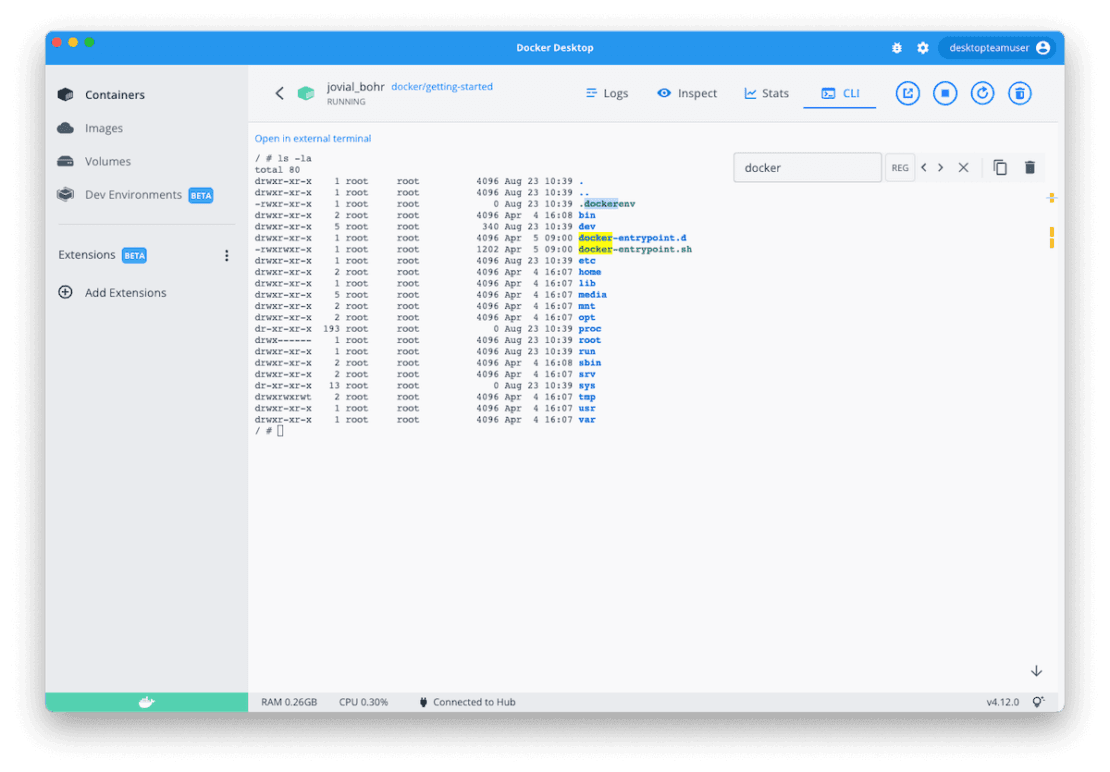
On Oct 8, Docker's docker CLI plugin Docker Agent hit the HN front page (290 points / 133 comments). It defines agents in declarative YAML (agent.yaml) — 'no code required' — with container-style commands. Model-agnostic (7 providers), native MCP tools, built-in think/todo/memory, full RAG stack, multi-agent delegation. Killer move: agents push/pull to any OCI registry like images, making definitions versionable, PR-reviewable artifacts. Repo dates to Sep 2025: 10,735 commits, 263 releases.

On October 6, Cursor's changelog announced Remote Control: the iOS app can now see local agents running on your computer and message them. Compute stays local; only your line of sight moves into your pocket. Within a week of Conductor's iPhone app, two vendors bet on the same interaction — agent programming is shifting from 'terminal dialogue' to 'pocket foreman,' and the workflow is becoming launch-leave-intervene.
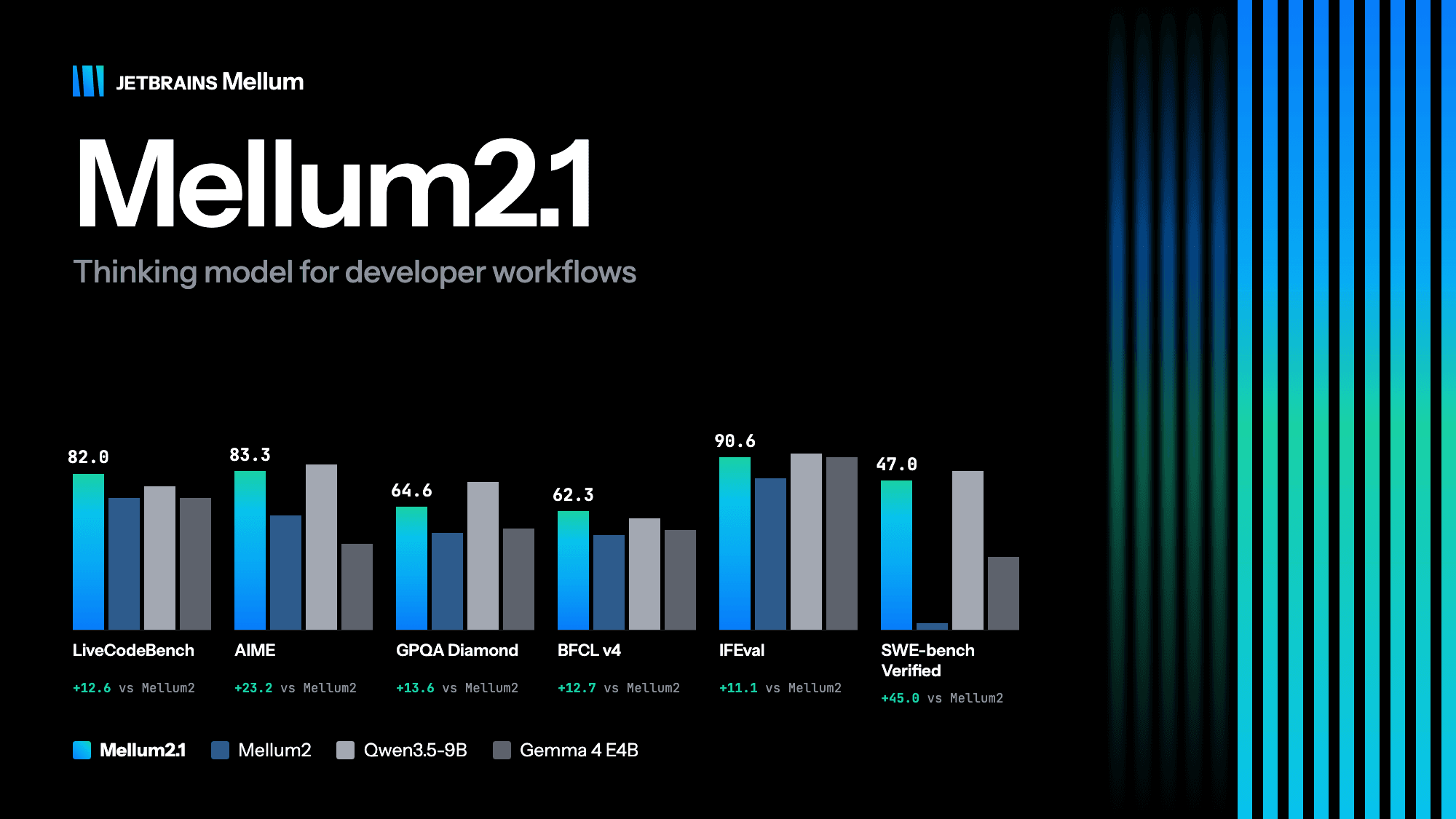
JetBrains has open-sourced Mellum 2.1, a 12B MoE model activating only 2.5B parameters per token. With its architecture unchanged since June, reinforcement learning in real environments lifted SWE-bench Verified from 2.0 to 47.0. Apache 2.0 licensed and self-hostable, it is positioned as the fast, cheap execution layer for coding agents — strong on coding and tool use, still trailing Qwen3.5-9B on the hardest agentic tasks.