A 105B Model on a Single Workstation GPU: Sarvam's New Checkpoint Costs $0.15 per Million Tokens
On November 22, 2026, Sarvam AI released Sarvam-105B-1711, a new open-weight checkpoint of its 105B model: eight-benchmark average up from 42.6 to 73.9 in nine months, blended price cut from $0.44 to $0.15 per million tokens, and a 65 GB NVFP4 build that runs on a single workstation GPU. Strong on Indian languages and voice, weaker on general tool calling and banking tasks.
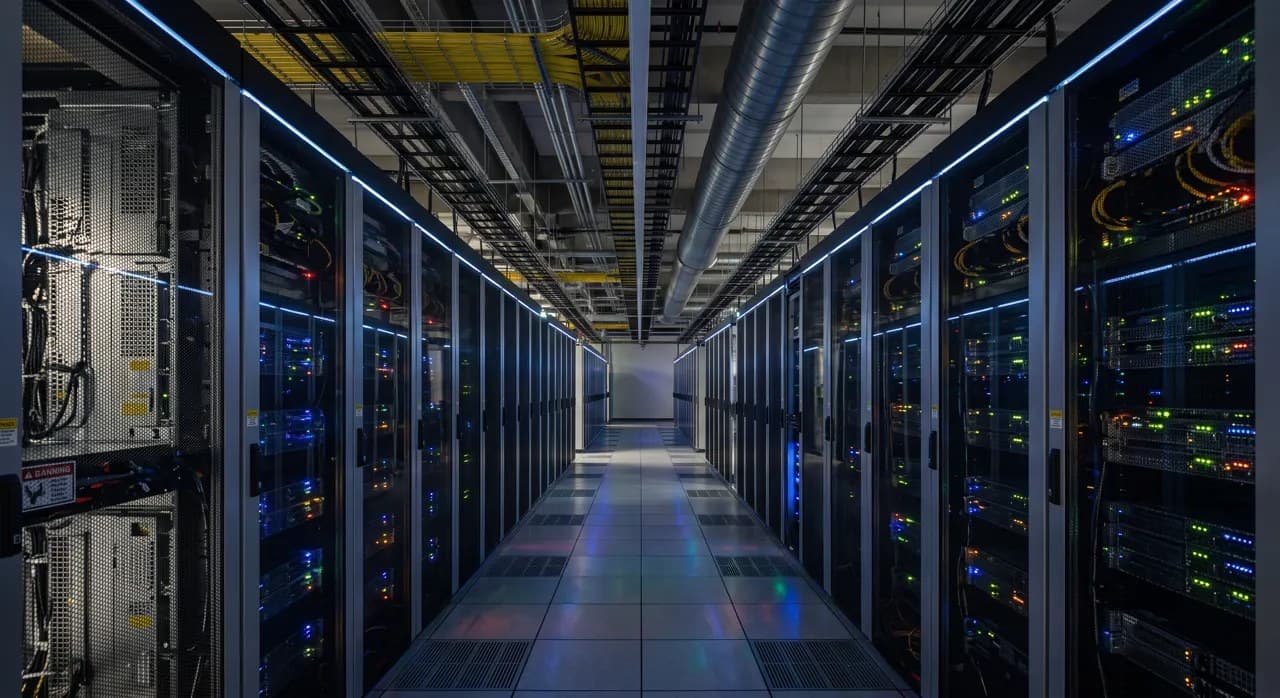
On November 22, 2026, Sarvam AI of Bengaluru, India, released Sarvam-105B-1711: a new checkpoint of its 105B flagship model, with the weights published openly under the Apache 2.0 license. This is not a new model but a major overhaul: the same 105B base, retrained on an upgraded B200 cluster with reworked post-training, lifting the average across eight conversational-agent benchmarks from 42.6 in February to 73.9, while the hosted price fell from $0.44 to $0.15 per million tokens, down by two-thirds. The eye-catching part is the size: a 65 GB NVFP4 compressed build fits on a single 96 GB RTX PRO 6000 workstation GPU, so one workstation, with the network switched off, can run it.
First, put this in its proper place. Sarvam 105B is a 105-billion-parameter mixture-of-experts (MoE) model that activates only 10.3B parameters per token. That is not small in the open-weight world: it is more than three times the size of Gemma 4 at 31B and far larger than Mistral Small 4, but smaller than Qwen3.8 at 27B active and far smaller than GLM-5.4 at 750B. Sarvam's positioning is explicit, and it is not a general-purpose flagship chasing first place everywhere. It is a Flash-Lite-class model: customer support, voice agents, internal assistants, retrieval-grounded answers, run millions of times a day, price-sensitive, but not allowed to answer too badly. The February release was honestly not good enough for that job: an eight-benchmark average of 42.6, instruction following at 32.5, Indian languages at 30.1, roughly "it runs, but don't count on it to do the work." Nine months later, this version is the same machine rebuilt from end to end.
The three biggest gains are exactly the skills that real work needs most. Instruction following (IFBench) rose from 32.5 to 82.5, up 50 points; tool use in customer-service conversations (Tau2) rose from 46.2 to 85.5; the Indic language suite rose from 30.1 to 79.1. These three numbers deserve a closer look, because they map to the places where real support conversations most often go wrong: a system prompt with a dozen rules, does the model still remember them ten turns later; a customer says "change my ticket to next Tuesday," does the model call the change tool or the refund tool; a caller switches mid-sentence from English to Hindi and back, does the model keep up. Sarvam added a consistency metric too: the share of Tau2 tasks solved correctly in all four of four attempts is 69.5%, ahead of Gemini 3.5 Flash-Lite at 63.9% and Gemma 4 31B at 62.1%. For customer service, getting it right once is not the skill; getting it right four times out of four is. That sounds like a slogan, but in this setting it is literally true: the same question arrives in ten versions from ten customers, and the model cannot depend on luck.
Price is the other half of the story. Sarvam's own blended price fell from $0.44 to $0.15 per million tokens. Side by side, Sarvam-105B-1711 averages 73.9 on the eight benchmarks; Gemini 3.5 Flash-Lite scores 74.0 at $0.85, Gemma 4 31B scores 73.0 at $0.54, and GPT-6 Luna (high effort) scores 66.3 at $0.20. In other words, scores essentially tied with Google's lightweight flagship, at less than one-sixth of its price. One caveat on method: Sarvam's "blended price" is converted at a 3-to-1 input-to-output ratio, and vendors do not all price the same way; and every score was produced by Sarvam itself, with open-weight models run on vLLM and closed models called through OpenRouter, all at high reasoning effort. The scores deserve a discount, but the price gap is real: $0.15 against $0.85, more than five times cheaper, is not a gap any statistical adjustment can explain away.
To be fair, this report card also has ugly parts, and Sarvam printed them in the same table. On the general function-calling benchmark BFCL v4, Sarvam scores only 62.4, below Gemma 4 31B at 68.8 and Qwen3.8 27B at 71.6: tool calling improved in support conversations but remains a weak spot in general function calling. On Tau3 banking it scores 19.8 against 50.3 for Qwen3.8, a gap that is not small. On the hardest knowledge benchmark, Humanity's Last Exam without tools, it scores 12.3, against 22.1 for Gemma and 30.6 for GPT-6 Luna. BrowseComp search-agent work at 41.4 and GDPval-S at 66.9 both sit behind Gemini 3.5 Flash-Lite. Math is a bright spot: AIME 2026 at 89.7 without tools and 94.2 with tools, ahead of every rival in its group. The assembled picture is clear: a model that is strong in conversation and support, strong in Indian languages, good at math, but still lopsided on general tool calling, deep knowledge, and high-stakes verticals like banking. Sarvam deserves credit for printing the weak rows; readers should not look at the 73.9 average alone and conclude it can do everything.
Next, the part most worth writing for developers: the 65 GB NVFP4 build. The full BF16 weights are 198 GB, MXFP8 is 111 GB, and NVFP4 is only 65 GB, just fitting on one 96 GB RTX PRO 6000 Blackwell workstation GPU, with no tensor parallelism and no second card. Sarvam's blog includes a persuasive demo: Indus Cowork, its document agent, running on a workstation with the network off, reviewing three vendor contracts against a contracting playbook and writing a risk memo and a presentation, peaking at 197 tokens per second and averaging 98. With a 10K-token prompt and a single user, per-user decode is 99 tokens per second; stretch the prompt to 50K and a single user still gets 62 tokens per second. And the accuracy cost? NVFP4 versus BF16 differs by roughly one point or less across the eight benchmarks: IFBench 81.8 against 82.5, Tau2 84.1 against 85.5, Indic 78.8 against 79.1. Getting 4-bit quantization to this level means Sarvam did serious calibration work: the calibration data is conversations generated by the model itself, covering thinking-on and thinking-off modes, with every routed expert receiving calibration tokens.
But "runs on one card" needs unpacking. The RTX PRO 6000 Blackwell is a professional card, not a gaming card, and the 96 GB version is not cheap; NVFP4 needs Blackwell's FP4 tensor cores, so older cards cannot run it; vLLM 0.33.0 is the version that supports this mixed MXFP8-plus-NVFP4 layout, and Sarvam itself admits it hit a kernel bug at startup: vLLM's MLA decode kernel asked for 102,400 bytes of shared memory, above the card's 101,376-byte limit, so the server failed to start, and the fix was to run the kernel with one pipeline stage instead of two, with the patch submitted upstream. So "runs on one card" is true, but only if you have that card, that version of vLLM, and are willing to follow Sarvam's deployment manual step by step. For teams without a professional card, the hosted API remains the more realistic route.
Voice is the part of this release most easily overlooked, and possibly the most practically valuable. Sarvam built a voice fine-tune of Sarvam-105B-1711 for Samvaad, its enterprise voice-agent platform, covering 12 Indian languages. The Samvaad bench is 338 next-turn evaluations drawn from real scenarios: loan collection, loan sales, surveys, onboarding, with callers switching languages mid-sentence, revising details, or making ambiguous requests, while the model must decide between a spoken reply, a tool call, or both. The voice fine-tune scores 68.7, above the base checkpoint's 57.9 and slightly above Gemma 4 31B's 68.0. The companion dictation product, Sarvam Dictate, is more concrete: on 2,959 real English dictations, the share of characters needing edits to reach what the speaker meant is 5.0%, against 8.1% for Gemini 3.5 Transcribe and 10.6% for AssemblyAI Dictation; on 692 dictations in 15 Indian languages, Sarvam is at 2.7% against 12.2% and 11.8%. It costs 0.5 rupees per minute of audio, with speech recognition and the language model included. India has 22 official languages, and mixing two of them on a support call is normal: in that setting, the gap between 2.7% and 12.2% says more than any general benchmark.
The training-side story is also worth telling, because it explains why the price could fall by two-thirds. Sarvam moved its training stack to NVIDIA B200 GPUs with MXFP8 training, raising pretraining throughput from 5,500 to 10,900 tokens per second per GPU and MFU (model FLOPs utilization) from 19% to 38%, ahead of NVIDIA's own Megatron Bridge reference numbers. In reinforcement learning, MXFP8 cut each step from 13 minutes to 7 with no drop in reward; long-context training ran 330 billion tokens on 512 B200s in a little over seven days, extending context to 160K tokens. On the serving side, NVFP4 plus DSpark speculative decoding, a method where a small draft model guesses tokens and the full model verifies them in one pass, reaches 6,067 decode tokens per second per B200 at 64 concurrent users, twice the previous BF16 setup and twice Gemma 4 31B. Cost is shaved a point at a time like this: train twice as fast, serve twice as fast, and the hosted price has room to fall by two-thirds. The method matters more than any single score: Sarvam says plainly at the end of its blog that this stack is preparation for larger models, and the next generation of training is already underway.

The model architecture itself is worth a closer look, because it determines where the "cheap" comes from. Sarvam 105B has 31 MoE layers with 128 routed experts each, holding most of the parameters, activating only 10.3B per token. Attention uses MLA (multi-head latent attention), the first layer is a dense MLP and the rest are expert layers. The NVFP4 build stores routed experts in 4-bit values with one FP8 scale per 16 values; attention, the first layer's dense MLP and the shared experts stay in MXFP8, while the routers and the output head stay in BF16. This "save where you can, keep where it matters" mixed layout is why a 65 GB footprint and a sub-one-point accuracy loss can both be true. Thinking mode is on by default, with temperature 1.0 recommended; turn thinking off and use 0.6. The voice fine-tune's 68.7 on the Samvaad bench was measured with thinking off, which shows it was tuned for answering without pausing to think: on a support call nobody waits while the model thinks, so it must speak immediately, the opposite logic from coding, where thinking longer before acting is the point.
Placed inside November's open-weight wave, Sarvam's position becomes clearer. The month's open-weight releases ran long: Z.ai's GLM-5.4 (750B, 28 layers run twice), Ant Group's Ling-3.2-air (124B, MIT license), Baidu's ERNIE 5.5 Flash Preview (280B, Apache 2.0), and Sarvam-105B-1711 (105B, Apache 2.0). Four labs took four different bets: GLM on architectural novelty, Ling on automation tasks, ERNIE on "large parameters, small activation" value, Sarvam on Indian languages plus on-prem deployment. Sarvam has the smallest parameter count of the four, but "smallest" is not a weakness here: 105B fits on one card, 750B and 280B do not. For buyers, the real change in November is not a few more big models but a falling bar for "good enough": what once needed a server room now fits on one card, and what once worked only in English now works in Indian languages. When choosing a model, the parameter count matters less and less; what matters is whether it runs on your hardware, speaks your users' languages, and what it costs per million tokens.
Of course, every score in this article shares one premise: all of it was measured by Sarvam itself. Both the blog and the model card say so: open-weight models were run on vLLM under one harness, closed models were called through OpenRouter, all at high reasoning effort, temperature 1.0, mean over four samples. Sarvam did not hide anything: it printed the weak rows in its table and published the benchmark-config YAML so anyone can reproduce the setup. But "reproducible" and "reproduced" are two different things: as of publication, no independent third party has publicly replicated these numbers on a leaderboard. The Indic suite is Sarvam's own internal evaluation, judged by Gemini 3.1 Pro; GDPval-S is Sarvam's adaptation of OpenAI's GDPval task set, judged by GPT-6 Luna. In other words, the most eye-catching numbers, Indic at 79.1 and support tool calling at 85.5, are exactly the ones most dependent on Sarvam's own evaluation setup. The right way to use them is as a reason to try the model, not as proof: before putting it in production, run your own support recordings and your own contract templates through it, and only then do the scores count.
A few details decide whether this model is easy or painful in your hands. First, context is 160K tokens, but the model card's benchmarks ran at 131,072 tokens; single-user decode at a 50K prompt is still 62 tokens per second, but long-context behavior beyond 50K has no separate published number, so test long-document Q and A yourself first. Second, DSpark speculative decoding does much of the speed work, making per-user decode 2.0 to 2.6 times faster on a single B200, but it depends on vLLM 0.33.0 and a specific compilation setup; switch inference frameworks or versions and the speed numbers may not match. Third, the voice fine-tune and the base are two different things: the 68.7 on the Samvaad bench belongs to the fine-tune, while the base scores 57.9; if you want the voice scenario, use the voice fine-tune, not the base weights. Fourth, Token Factory pricing is in rupees (10 rupees input, 25 rupees output per million tokens), and the blog's $0.15 is a blended figure converted at 90 rupees to the dollar; exchange-rate moves will move the dollar price, so budget in rupees for stability.
For vibe-coding readers, this release has one more direct meaning: the bar for running a large model locally as a development assistant just dropped again. One RTX PRO 6000, 65 GB of weights, one vLLM command, and a 105B model runs on your own machine for coding, contract review, and support-agent prototypes, with data never leaving the building. LiveCodeBench v6 at 75.3 shows it is not bad at code, though behind Qwen3.8 at 90.3 and GPT-6 Luna at 85.2; but for "a coding, tool-calling, Indian-language-speaking assistant on my own machine," it is enough. The more realistic path is to use it as a prototyping machine for support and voice agents: get the workflow running on the Token Factory API first, confirm that Indian languages and tool calling really fit your scenario, and only then decide whether to buy a card and deploy locally. Conversely, if your users are mostly Chinese- or English-speaking and Indian-language strength is irrelevant to you, Qwen3.8 and Gemma 4 score better in general use at a similar price, and they are the better pick. Models are not ranked high or low; they are fit or unfit.
There are three ways to use it. The hosted API runs on Sarvam Token Factory: the existing sarvam-105b model IDs need no code change and automatically switch to the new weights; pricing is 10 rupees per million input tokens, 25 rupees per million output tokens, and 0.25 rupees for cached input. To run it yourself, the NVFP4 weights are on Hugging Face at sarvamai/sarvam-105b-1711, vLLM 0.33.0 already includes support, and the model card gives the full launch command; for fine-tuning or further post-training, the BF16 weights are at sarvamai/sarvam-105b-1711-bf16, with NeMo RL support already merged. The license is Apache 2.0, fine for commercial use, but note that this Apache 2.0 covers the weights only, unlike Baidu's ERNIE 5.5 Flash, which splits its base and chat checkpoints across two licenses; Sarvam's side is a single clean Apache 2.0.
Three things are worth watching next. First, Sarvam already signaled in its blog that the same training and serving stack will train larger models: 38% MFU on B200, 330 billion tokens on 512 cards in seven days, NVFP4 serving at 6,067 tokens per second on one card; these numbers are all preparation for the next generation, and the next checkpoint may no longer be at the 105B scale. Second, when independent evaluation appears: whether public leaderboards like Artificial Analysis or lmarena list this model, and how far third-party scores land from Sarvam's self-reported 73.9, is the next test of this blog's credibility. Third, real Token Factory usage: whether the $0.15 blended price keeps customers away from Gemini and Gemma depends on real performance in support scenarios, not on the tables in the blog. For readers, the cheapest verification is to download the 65 GB weights from Hugging Face and run your own tasks on your own card: that is the benefit of open weights, no need to trust the blog, one run tells you.
Two boundaries, to avoid confusion with our earlier articles. First, we covered Sarvam Prism in early November: a decision model built on the same 105B base that does not generate text but answers yes-or-no and pick-one questions, making one judgment in 44 milliseconds, designed for routing, triage, and review. Prism is a small tool grown on the 105B base; this article's 105B-1711 is a new checkpoint of the base itself. They are not the same thing. Second, Ant Group's Ling-3.2-air, covered in cycle 247 on November 23, is also open-weight and also cheap, but it is a 124B-total, 5.5B-active hybrid-linear model whose headline is an automation score jumping from 15.7% to 61%; Sarvam's headline is Indian languages, voice, and single-GPU deployment. Both articles say "open and cheap," but the reasons for the cheapness and the scenarios served are completely different.
One sentence to sum it up: Sarvam-105B-1711 is not November's smartest model, but it may be November's model where the math works out best. In nine months it repaired a barely usable checkpoint into one that ties Google's lightweight flagship, cut the price to one-sixth of its rival, and squeezed 105B onto a single workstation card. None of those alone is a breakthrough; together they say one thing: large models are moving from "you need a server room to use them" to "your own machine can run them," and this time the push comes from an Indian company and the billion-plus people who speak its languages.
Comments (0)
Sources
Related articles

On November 24, 2026, OpenAI added nine manuscripts to its public math repository, one claiming the matrix multiplication exponent is exactly 9/4. The October upper bound is real; the new lower bound would close a 56-year gap — but the preprint is unreviewed, the Lean formalization covers only division-free circuits, and no faster program follows from it.

On November 16, 2026, Abu Dhabi's IFM released K2-Horizon: six open models from 0.9B to 375B, with weights, data, 380 intermediate checkpoints, training logs, and all code published at once. The headline is not the flagship but the 7B at 72.4 on SWE-bench Verified — a model you can run locally, coding like the big ones.

On November 24, 2026, Tencent open-sourced Hy-MT3: 102 languages (up from 38), three sizes from 1.8B to 30B-A3B, and a 1.8B GGUF build of about 1.35 GB that runs on a laptop. The 30B model claims flagship-beating quality at under 1 TFLOP per sample — vendor-tested, with its own TransRubric as the ruler.