Beyond the Guestbook: Engineering a Comment System for Vibe Projects
A comment system is the module that looks simplest and fails most often. This guide walks through path-enumeration tree storage, two-level pagination, the six-stage write path, @mention events, four layers of anti-spam defense, soft deletes, and a launch SOP — everything a solo team needs to ship comments that survive real users.
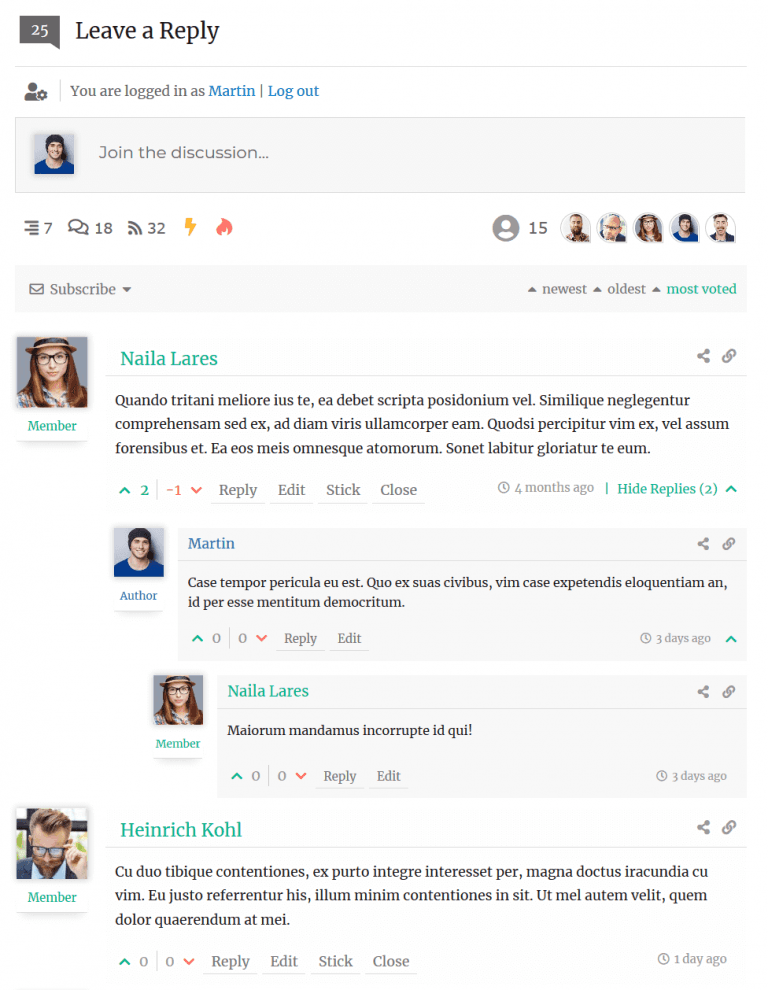
Three boundary lines first, so you don't finish reading and realize you're in the wrong theater: this guide does not cover how to aggregate in-app messages, email, and push (that's the Notification Center guide's territory); it does not cover building a general content-moderation platform (see the Content Moderation guide); it does not cover ratings and reputation (see the companion piece in this batch, Rating & Review Systems in Practice — comments handle "discussion", ratings handle "reputation", clean division of labor). This guide answers one question: in a vibe-coded project, what engineering decisions, pitfalls, and launch checklists stand between zero and a comment system that survives real users.
Why does commenting deserve its own guide? Because in the vibe-coding workflow, comments are the module that looks simplest and fails most often. One prompt gets an AI to generate a demo that can post and display — so you declare victory. Three months later, real users teach you humility: someone nests 200 replies into a 40-level "comment hell" and the page freezes; spam bots post 30,000 "add me on WeChat" messages overnight; two users delete posts simultaneously and the comment count shows -1; someone posts a <script> tag and every visitor gets compromised. The real engineering of a comment system hides behind "it posted": how the tree is stored, how lists are paginated, how spam is blocked, how counts stay consistent, how deletion hides.
This guide targets solo teams and indie developers adding comments to a vibe project, assuming a Next.js / Node + PostgreSQL stack with no dedicated backend engineer. The throughline is directly shippable: data model → list loading → write path → @mentions → moderation & anti-spam → deletion & editing → frontend UX → launch SOP. Each section ends with a decision table or checkpoint; code samples are runnable TypeScript + Prisma.
1. Three-Layer Architecture: See the Whole Picture Before Coding
Before writing code, split the comment system into three layers. Most failures come from mixing their responsibilities — e.g., stitching SQL for subtree queries inside a frontend component, or synchronously calling a moderation API inside the write endpoint and timing out post submissions. The layers:
- Storage layer: comments table + denormalized counters + moderation state machine. Answers only "how is data stored and queried fast".
- Service layer: write path (validate → rate-limit → moderate → persist → events), read path (paginated tree assembly), counter maintenance. Answers only "where do business rules execute".
- Presentation layer: comment-tree rendering, collapse/expand, optimistic updates, sort switching. Answers only "what the user sees and how fast it feels".
Iron rule for solo teams: moderation and anti-spam always live in the service layer, never in the frontend. Any frontend validation (length, keywords) is UX polish — it stops gentlemen, not attackers; real interception must happen in the server-side write path. Conversely, assemble the tree server-side in one pass and let the frontend only render — shipping 500 flat comments to the frontend for client-side tree assembly is the #1 source of mobile jank.
One more upfront decision: comments hang off a "subject" (post, article, product). Should the schema use a polymorphic subjectType + subjectId association or one comments table per subject type? Solo teams default to polymorphic single table: one comments table serves the whole site, with an index on (subjectType, subjectId, status, createdAt) covering list queries. Only split per subject when one subject type genuinely reaches tens of millions of comments — 99% of vibe projects never get there; don't pay upfront for scale that doesn't exist.
2. Data Model Decision: How You Store the Tree Decides Your Next Three Years of Overtime
Comments are trees, and relational databases offer four classic ways to store trees. Picking wrong doesn't cost "a bit slower" — it costs "some features become impossible". Pick adjacency list, and six months later when product asks for "collapse this comment's entire subtree in one click", you'll discover it needs N recursive queries. The comparison:

| Model | Schema essence | Read whole subtree | Insert one comment | Move/delete subtree | Best for |
|---|---|---|---|---|---|
| Adjacency list | parentId points to parent | N+1 recursive queries, or fetch-all and assemble client-side | O(1), one row | O(1) parentId change, but subtree reads stay recursive | Demos, MVPs with small volume and shallow depth (≤3) |
| Path enumeration | path like 0001.0004.0002 | One LIKE 'path%', path order = tree order | O(1), path = parent path + segment | Prefix UPDATE with LIKE, one statement | Solo-team default: simple reads and writes, easy subtree collapse and breadcrumbs |
| Nested set | lft / rgt values | One BETWEEN, extremely fast | Shifts half the table's lft/rgt — massive write amplification | Same, batch UPDATEs | Read-heavy, rarely-mutated trees (comments are not this) |
| Closure table | Extra table stores all ancestor–descendant pairs | One JOIN, flexible | Writes depth relation rows per insert | Delete relation rows, clean | Projects needing frequent ancestor/descendant queries with DBA support |
Bottom line up front: vibe projects default to path enumeration (materialized path) with two guardrails — a max-depth limit (e.g., 8) and fixed-width zero-padded segments. Three reasons: first, reading a subtree, breadcrumbs, or collapsing a subtree is one query each, and the frontend renders the flat array already sorted by path — no tree assembly; second, inserts just concatenate strings, zero write amplification; third, deletion (soft delete, see §7) doesn't disturb tree structure. Nested sets read fastest but comments are write-heavy — shifting half the table per insert is a production disaster; closure tables are most flexible but add a table and a maintenance burden a solo team shouldn't carry.
Reference Prisma schema (PostgreSQL):
model Comment {
  id          String   @id @default(cuid())
  subjectType String   // "post" | "product" | ...
  subjectId   String
  authorId    String
  parentId    String?  // denormalized for "direct children" queries
  path        String   // fixed-width segments, e.g. "000001.000004.000002"
  depth       Int      // 0 = top level
  body        String   @db.Text
  bodyHtml    String?  @db.Text // server-rendered safe HTML
  status      CommentStatus @default(PENDING) // see §4 moderation state machine
  likeCount   Int      @default(0)
  replyCount  Int      @default(0) // direct replies (denormalized, see §3)
  editedAt    DateTime?
  deletedAt   DateTime? // soft delete
  createdAt   DateTime @default(now())

  @@index([subjectType, subjectId, status, createdAt])
  @@index([path])  // subtree queries: WHERE path LIKE 'xxx%'
  @@index([parentId, status, createdAt]) // direct-children pagination
}

enum CommentStatus {
  PENDING   // awaiting moderation (pre-moderation mode)
  VISIBLE   // visible
  FLAGGED   // auto-flagged, awaiting human review (post-moderation mode)
  HIDDEN    // rejected / taken down via reports
  SPAM      // confirmed spam
}
Three details decide success or failure: first, path segments must be fixed-width zero-padded (e.g., 6 digits each). With variable width, string sorting puts '1.10' before '1.2' and tree order breaks — the most common landmine in AI-generated code; check this first in review. Second, denormalize depth instead of computing path.split('.').length on every read — list queries need depth for display policy (see §3). Third, store raw text in body and server-rendered safe HTML in bodyHtml; render once at write time and serve directly on read — never re-run markdown/XSS filtering per read. In read-heavy workloads this optimization is orders of magnitude.
How to enforce max depth? At write time, check parent.depth + 1 <= MAX_DEPTH (e.g., 8); reject with 400 beyond that, and hide the reply button in the UI. A true story: one vibe project had no depth limit, a script nested 3,000 levels, PostgreSQL's LIKE 'path%' survived but the frontend's recursive renderer stack-overflowed into a white screen. A depth limit is the cheapest defense you'll ever buy.
2b. Why Not MongoDB or a Graph Database for Comments?
Every comment-storage discussion invites the question: comments are trees — aren't MongoDB's nested documents or Neo4j's graphs more "natural"? The answer: for a solo team, PostgreSQL + path enumeration has the lowest total cost, and the reason isn't performance — it's "can you fix it at 2 AM". One by one:
- MongoDB nested documents: stuffing the whole tree into the subject document's array reads in one shot. But documents cap at 16MB — hot posts exceed it eventually; updating a deep comment means addressing array indexes, and concurrent writes to one document take whole-document locks; pagination, status filtering, and cross-subject "all comments by user" queries all fight the model. The correct MongoDB pattern is actually "one document per comment + parentId" — no different from a PostgreSQL adjacency list, minus transactions and JOINs.
- Neo4j / graph databases: "all ancestors/descendants of this comment" is indeed elegant in Cypher. But you onboard a second database for the whole site: backups, monitoring, connection pools, learning a query language on top of your ORM — a solo team's operational surface doubles. Comment query patterns (subtree, direct children, breadcrumbs) are fully covered by path enumeration; the graph database's sweet spot (multi-hop relationships, recommendations) doesn't apply here.
- PostgreSQL's hidden ace: the
ltreeextension was born for path enumeration —path <@ '1.2'subtree queries use a GiST index and beatLIKE 'path%';FOR UPDATE, advisory locks, and partitioned tables are all built in. You're already operating PostgreSQL for users and orders; the comments table is one more table with near-zero marginal cost.
When should you switch? Two signals together: a single table passes 100M comments with LIKE P99 over 500ms (reach for ltree or partition by subjectId — don't change databases yet); and someone on the team can independently operate a second database (then talk about Neo4j for combined social-graph + comment queries). Until then, switching databases trades operational complexity for query elegance you don't need.
3. List Loading: Two-Level Pagination Is the Only Right Answer
Comment lists are where performance disasters are born. Two wrong approaches: "fetch all comments for the subject and assemble the tree client-side" — 5,000 comments means a 3MB JSON payload that kills mobile; and "recursive fetching" — top-level first, then one query per top-level comment for replies — an N+1 that melts the database. The right approach is two-level pagination: paginate top-level comments, and paginate each top-level comment's replies independently (fetch the first N, collapse the rest).
The concrete strategy (paired with the §2 data model):
- Top-level pagination:
WHERE subjectType=? AND subjectId=? AND parentId IS NULL AND status='VISIBLE' ORDER BY createdAt DESCwith cursor pagination (a(createdAt, id)composite cursor — avoids OFFSET degradation on deep pages). 20 per page is the empirical sweet spot: ~5–8 fit a desktop viewport, 20 covers two scrolls; drop to 10 on mobile. - Reply prefetch: for the 20 top-level comments on the page, fetch each one's first 3 earliest replies in one query:
WHERE parentId IN (...) AND status='VISIBLE' ORDER BY createdAt ASCwithROW_NUMBER() OVER (PARTITION BY parentId)— one round trip, never 20 loops. - Reply expansion: "show all N replies" fires a dedicated cursor-paginated request for that parentId. Replies-of-replies (depth ≥ 2) collapse into a "view conversation" link opening a focused view (linearized subtree), not infinite indentation — beyond 4 indent levels, phones become unreadable.
- Sort switching: "newest" by createdAt, "hottest" by a persisted
(hotScore, id)cursor. hotScore must be materialized by an hourly job — never computeORDER BY likeCount / POW(...)live; live computation can't use indexes and deep pages become full table scans.
Counters are the second minefield. The subject's commentCount (shown on cards and feeds) must be denormalized on the subject table — a live COUNT(*) per render is suicide. Denormalization drifts, so three rules:
- Mutate counters only inside transactions: +1 when a comment becomes VISIBLE, -1 on HIDDEN/SPAM/soft-delete, in the same transaction as the status change. Never "update status, then call another function for the count" — a crash in between desyncs you.
- Count only VISIBLE: pending, hidden, and spam comments don't count. Much AI-generated code does a blanket
COUNT(*), so "500 comments" shows next to the title while only 3 are visible — a public embarrassment. - Run a nightly reconciliation job:
UPDATE subjects SET commentCount = (SELECT COUNT(*) FROM comments WHERE ...)full recalibration. Counters are eventually consistent in distributed systems; reconciliation is the safety net, not decoration — put it in cron, don't wait for breakage.
Denormalize replyCount on each comment the same way (direct VISIBLE children only) — the N in "show all N replies" reads it. Don't store "total subtree count": maintaining it across soft deletes and status flips is expensive, and product almost never needs it — users ask "how many direct replies", never "how many nodes in this subtree".
4. Write Path: Validate → Rate-Limit → Moderate → Persist → Events
Posting a comment isn't one INSERT. A production-grade write path has five stages, and order matters. Get the order wrong — persist first, then synchronously call the moderation API — and a 5-second moderation timeout makes users hammer submit 8 times, leaving 8 duplicate comments.

- Idempotency dedup: the frontend sends a
clientRequestId(UUID) per submission; the server enforces a(authorId, clientRequestId)unique index against double submits. This is the cheapest anti-double-click known — ten thousand times more reliable than "disable the button": networks retry, users rage-click, gateways replay; the unique index is the last line of defense. On conflict, return the already-created comment (200 + data), not a 409 that confuses the frontend. - Validation: length (10–5000 chars, configurable), non-blank after trim, parent exists and belongs to the same subject, depth within limits. Do XSS filtering at render time (see §8), not here — stripping tags at validation breaks code snippets users legitimately post.
- Rate limiting: three tiers — ≤5/min per user, ≤20/min per IP, ≤10/day for accounts registered within 24h. Redis sliding windows, keys like
ratelimit:comment:user:{id}. On exceed, return 429 +Retry-After; the UI says "slow down, try again in X seconds". Rate-limit before moderation: bots get stopped 90% here, and the moderation system's load collapses. - Moderation branch (§6 for detail): the mode decides whether status lands on PENDING or VISIBLE/FLAGGED. Moderation is a pure function (comment in → status out) — no notifications, no synchronous external API calls here; external moderation APIs go async (below).
- Transactional persist:
INSERT comment + UPDATE subject commentCount + UPDATE parent replyCount + path generationin one transaction. Path needs the parent's path, so fetch the parent first (SELECT ... FOR UPDATEagainst concurrent path-segment races), then build your own. Two users replying to the same comment concurrently need a sequence orpg_advisory_xact_lockfor segment uniqueness — "read max segment + 1" is a textbook race condition. - Event fan-out (after commit): publish
comment.created; @mention parsing, notification dispatch, search-index updates, and external-moderation callbacks subscribe. Events must publish after commit — publishing inside the transaction is a classic bug: the transaction rolls back, the notification already went out, the user taps through to a 404.
How to integrate external moderation APIs (cloud content-safety)? Async + state machine: at write time, default to VISIBLE under post-moderation (or PENDING per config), push the comment id to a queue, let a worker call the API, and flip status to HIDDEN/SPAM on callback with counter rollback. Synchronous external calls cost you their P99: their 800ms becomes your +800ms on every post; one provider wobble and your whole site can't comment. No exceptions to this decision.
The write response should be complete in one shot: the new comment's full data (path, depth, author info, likeCount=0) plus the subject's new commentCount. The frontend uses this to "confirm" its optimistic update (see §8) — don't make it fire a second list request; one extra round trip on flaky networks is a full tier of UX worse.
5. @Mentions: The Social Amplifier — Parse Exactly Once
@mentions turn comments from a guestbook into a social space, but three things go wrong: parse timing, notification dedup, and the mentioned user's permissions. The verdict: parse @mentions once at write time on the server, persist the result; notifications go through events; never notify someone who can't see the comment.
"Parse once" means: in the write path, extract usernames with /@([a-zA-Z0-9_\u4e00-\u9fa5]{2,20})/g, batch-resolve to userIds, write comment_mentions(commentId, mentionedUserId) rows, and replace @username in the text with link-bearing safe HTML stored in bodyHtml. Reads use bodyHtml directly — never re-parse. Re-parsing on every read wastes cycles on a 5,000-comment list, and worse: when users rename themselves, every historical @ link breaks. Persisting the userId snapshot at write time is correct — render "@old-name (renamed)" from the snapshot.
Notification dedup has two rules: first, mentioning yourself notifies nobody; second, mentioning the same person twice in one comment notifies once (dedupe by mentionedUserId). Going further: if the mentioned user already got a "replied to your comment" notification, the @ notification can fold into it — that folding lives in the notification center (see the Notification Center guide); the comment side just emits events with dedupKey = comment:{id}:mention:{userId}.
Permission checks are the commonly missed one: if the mentioned user lacks visibility into the subject (private post, paid column), send no notification, and render their @ as plain text, not a clickable link, in bodyHtml. Otherwise it's an information leak: an attacker posts an @victim comment, the victim taps the notification and sees content they shouldn't. Check permission once at write time and carry the result on the event — don't re-check per read.
A UX aside on "reply to whom": clicking "reply" pre-fills @username in the input, but parentId is the source of truth for the reply relationship; the @ text is decoration. Never derive the reply target by parsing @ — if the user deletes the @ text, the relationship is lost. A classic AI-generated bug.
6. Moderation & Anti-Spam: Three Modes + Four Lines of Defense
No silver bullet for moderation modes — only trade-offs. Three modes; solo teams pick by stage:
| Mode | New comment default | UX | Ops cost | Best for |
|---|---|---|---|---|
| Pre-moderation | PENDING, visible after approval | "Swallowed comment" feeling | Every item reviewed — a labor black hole | Finance, healthcare, kids' products — strong compliance |
| Post-moderation | VISIBLE; auto-scored, FLAGGED → review queue | Instant, best UX | Only the flagged 1–5% need eyes | Solo-team default: best experience/cost balance |
| Hybrid | Trusted users post-moderated, new/suspicious pre-moderated | Tiered experience | Medium | The upgrade after spam bots find you |
Post-moderation's four defensive lines, deployed cheapest-first. Each layer stops a share; only survivors reach the next — don't start with the most expensive AI moderation API:
- Rate & behavior (≈free): §4's rate limiting is layer one. Add two more: a new user's first 3 comments go to the human review queue (FLAGGED); a device fingerprint registering >3 accounts/hour puts the whole site's comments into pre-moderation. This stops script kiddies — 80% of volume.
- Keywords & regex (≈free): maintain a
blocked_patternstable (regex-capable); hits go straight to SPAM. The table needs "new-users-only" and "body vs. username" dimensions — "add me on WeChat" in a body is an ad, in a username it might be innocent. Handle false positives: tell keyword-blocked users exactly why ("contains prohibited content") instead of silently swallowing — silent swallowing is trust suicide. - Cloud content-safety APIs (pay per call): porn, terrorism, politically sensitive text goes to vendor APIs (mind domestic compliance if applicable). Async calls (see §4); callbacks flip status. Send only the comment text, never user profile data — minimize data egress; and plan the outage fallback: degrade to "everything to human review", never "everything approved" — fail-closed, not fail-open.
- Human review queue (most expensive): FLAGGED comments land in a back-office queue sorted by
reportCount × userWeight. Build yourself (the operator) an interface clearable in 10 minutes a day: 20 per screen, one-click approve/delete/ban. Review actions need audit logs (who, when, which comment, what transition) — that's the Audit Log guide's job; the comment side just emits the events.
Reporting feeds layer four: a "report" button per comment, user picks a reason (spam / harassment / porn / other), comment_reports with a (commentId, reporterId, reason) unique constraint against report-brigading. Three distinct reporters auto-FLAGGED a comment into the queue. Note: reporting takes two taps (report → reason → confirm) — mis-tap rates drop an order of magnitude.
Shadowbanning is the weapon of last resort — use sparingly: machine-confirmed spam accounts see only their own comments (status=VISIBLE plus a visibleToAuthorOnly flag filtered for everyone else). The theory: bots think they succeeded and stop rotating accounts. But false positives on real users are devastating, so the rule is: shadowban only machine-confirmed accounts (multiple hard-rule hits), human review can lift it, and the appeal path must be obvious. With zero ops bandwidth, skip it.
7. Editing, Deletion & Floor Numbers: Soft Delete Is the Only Delete
Comment deletion is always soft (deletedAt timestamped). No exceptions. Hard deletes (DELETE FROM) cascade into disaster: child comments dangle on parentId, paths break, counters desync, @ links 404. After soft deletion:
- Every list query adds
deletedAt IS NULL(use a Prisma middleware or view — never hand-write it per query; hand-writing always misses one). - A soft-deleted comment with children renders as a "this comment was deleted" placeholder bar; children display normally. Don't hide the whole subtree — children may hold valuable discussion. Reddit does exactly this.
- Counter rollback:
commentCount - 1, parentreplyCount - 1, in the same transaction as the deletedAt update. - The author sees "this is a comment you deleted" on their own placeholder; nobody else sees the original text. This is the correct GDPR/right-to-be-forgotten implementation: user deletes, others can't see.
Editing gets a 15-minute window: editedAt null means never edited; edits allowed inside the window, locked after. Why 15 minutes? Enough for typos, not enough for the "post something innocent, farm replies, then edit into an ad" trick. Edited comments show an "edited" marker and bodyHtml re-renders. FLAGGED/HIDDEN comments can't be edited — appeal first, then talk.
Floor numbers (Nth comment) are a beloved convention in Chinese-language communities — implement carefully: floor number = rank of the comment among the subject's VISIBLE comments by createdAt. Store it (floorNumber) or compute live? Storing forces re-ranking on delete (expensive); computing live on deep pages is COUNT(*) WHERE createdAt < ? (one query, acceptable). Recommendation: compute live in list responses (optimizable with cached totals), show stored snapshots in detail/quotes. And: soft-deleted comments don't occupy floor numbers — the numbering is "visible rank", not "physical rank"; say so in the UI copy, or users will ask "why does floor 5 jump to floor 7".
7b. Anonymous & Guest Comments: The Price List of Openness
Whether to allow commenting without login is a product decision — but engineering should price it first. Three openness tiers:
| Tier | Identity | Spam volume | Engineering cost |
|---|---|---|---|
| Logged-in only | userId | Low (ban the account, stop the bleed) | Lowest — this guide's default |
| Guest with verification | Email/phone + OTP | Medium (OTP farms exist) | Medium: verification channel + identity merge (claim history after signup) |
| Fully anonymous | Device fingerprint / IP | Extreme (new IP = rebirth) | High: Turnstile CAPTCHA + behavior analysis + pre-moderation nearly mandatory |
Solo-team recommendation: default to logged-in only; open guest commenting when growth demands it; skip fully anonymous unless the product is an anonymous community by definition. When opening guest comments, four rules:
- Guest comments are always pre-moderated (PENDING); only logged-in users get post-moderation. The cheapest tiering there is — beats any anti-fraud algorithm.
- Turnstile / reCAPTCHA only on the guest submission path; logged-in users skip it. CAPTCHAs are an experience tax — levy it only on those who haven't paid the "identity tax".
- Identify guests with a
guestToken(httpOnly cookie mapped in DB), not bare IP — office, campus, and shared residential egress IPs are communal; IP bans cause friendly fire. Device fingerprints are a supporting signal, never the sole identifier. - Let guests claim history after signup (merge authorId by guestToken) — a conversion hook; remember a positive confirmation on the claim-success page.
A cold fact: opening guest comments typically multiplies your comment_reports volume 3–5× (anonymity breeds hostility) — budget review-queue labor accordingly. Openness isn't free; it's billed at spam volume × hostility coefficient.
8. Frontend UX: Optimistic Updates & Render Performance
Four frontend priorities for comment sections, in order:
- Optimistic updates: on "send", insert the comment at the top of the list immediately (with a "sending" state) — don't wait for the server. When the full payload returns, "confirm" it (swap temp id for real id, fill path/depth); on failure, mark red with a retry button and preserve the input. Retire the 2015 pattern of "clear input + refresh whole list" — on flaky networks users assume the comment vanished and resend (your idempotency key from §4 catches duplicates, but the experience already lost).
- Virtualize or paginate — never render 500 nodes at once: 20 top-level + 3 replies each keeps the DOM bounded. Past ~200 loaded items, consider virtualization (react-virtuoso et al.) or at least a "view all" prompt. Delegate comment-node events to the container; don't bind listeners per node.
- XSS protection: for rich text/markdown, server-render + DOMPurify whitelist into bodyHtml, then render via
dangerouslySetInnerHTML— it's already sanitized server-side. For plain text, escape client-side with<br>line breaks; @ links come from the server's bodyHtml. Never trust frontend-submitted HTML. The iron law of iron laws. - Put sort & focus state in the URL:
?sort=hot,?commentId=xxx(focus a comment). When users share the link, friends land on that comment highlighted. (Deep-link mechanics in general live in the Deep Linking guide; the comment side just needs stable anchor ids and a focused view.)
Should it be realtime (new comments appear automatically)? The solo-team answer: skip WebSocket for v1; do "gentle polling": every 30s check commentCount; when it changes, float a "N new comments — tap to refresh" pill. WebSocket connection ops, reconnects, and message dedup are sunk cost for a solo team; upgrade when comments genuinely become core (daily comment volume > 10k). Under post-moderation, polling fetches VISIBLE only — the author's own PENDING items return too (marked "under review").
9. Pitfall Catalog: Ten Real Crash Scenes
- Variable-width path segments:
'1.10'sorts before'1.2'as strings; tree order breaks. Fixed-width zero padding — check this first in review. - No depth cap: a script nests 3,000 levels; the frontend's recursive renderer stack-overflows to white screen. MAX_DEPTH=8, hard-reject at write.
- Live COUNT(*) counters: list and card views COUNT per render; past 10k comments it's over. Denormalized columns + transactional updates + nightly reconciliation.
- Pending comments counted in totals: "500 comments" by the title, 3 visible inside. Count VISIBLE only.
- Events published inside transactions: rollback happened, notification already sent, user taps to a 404. Publish after commit.
- Concurrent path-segment races: two simultaneous replies, "max segment + 1" yields duplicates. Row locks or advisory locks.
- Synchronous moderation API calls: their P99 800ms becomes your +800ms per post. Async queue + state machine, no exceptions.
- Hard-deleting comments: dangling parentIds, broken paths, 404'd @ links. Soft delete, always.
- Storing frontend-submitted HTML: total XSS compromise. Server-render + whitelist; frontend renders bodyHtml only.
- Frontend-only rate limiting: "disable submit for 3s" doesn't stop curl. Server-side Redis sliding windows, three tiers.
9b. Three Easily Missed Engineering Details
Beyond the catalog, three details that only hurt three months after launch — writing them down now saves a refactor:
- Timezone display: store
createdAtin UTC always; convert to the user's timezone at render. Relative times ("3 minutes ago") compute client-side; absolute times format per user locale. Never persist a pre-rendered "3 minutes ago" string — it changes every minute and caches lie. (Timezone mechanics belong to the Scheduling & Timezone guide; the comment side just remembers "store UTC, show local".) - Long-comment folding: fold past ~500 chars — first 3 lines + "read more". Fold by character count, not
<br>count — 200 newlines of whitespace-padding get caught by the character rule. Expanding is pure frontend, no API call. - Log the comment id: every server log (especially moderation, deletion, status transitions) must carry
commentId + subjectId + actorId. When "my comment disappeared" hits support, logs without these mean full-table fishing; with them, 30 seconds to root cause. Minimum viable observability for comments — the cost is one log-format convention.
Toolbox (off-the-shelf pieces mentioned here — don't rebuild): DOMPurify for server-side HTML sanitizing (isomorphic — same whitelist in Node and browser); Redis + sliding-window Lua for rate limiting (not the naive INCR + EXPIRE — edge bursts leak through); Cloudflare Turnstile for CAPTCHAs (free, frictionless, works for CN users too); content-safety APIs per your primary market (see the Web Security Baseline guide's vendor table — unnamed here deliberately). Remember: a comment system's moat isn't code, it's operations — the keyword list, the review queue, the appeal path. Code is just the carrier.
9c. Comments & SEO: Let the Discussion Be Found
Comments are your site's richest UGC and an SEO goldmine — users discuss long-tail questions in natural language, which search engines love. But SPA + client-rendered comment sections are invisible to crawlers. Three moves:
- SSR the first page of comments: bake page-one comments (VISIBLE only) into the detail page's HTML. In Next.js App Router it's one async Server Component — cheap. SSR page one only; "load more" stays client-side — crawlers don't click buttons, but users want the experience.
- Structured data: add
DiscussionForumPosting/CommentJSON-LD with author, datePublished, text at minimum. Google's rich results surface the comment count and click-through visibly rises. Use the plain-text body (tags stripped) in JSON-LD — never stuff HTML into it. - Pagination & canonicals: comment pagination URLs (
?page=2) canonical back to the main page — "page 47 of comments" is thin content that dilutes crawl equity. Focus views (?commentId=xxx) getnoindex— they duplicate the main page and indexing them scores negative.
The anti-spam SEO angle: once spam comments get indexed, your domain picks up gambling/porn keywords, your link profile pollutes, rankings follow. So §6's anti-spam isn't just UX — it's an SEO defense war: SPAM-marked comments never SSR, and sitemaps shouldn't link comment pagination. A periodic site:yourdomain "add me on WeChat" self-check is zero-cost monitoring.
10. Launch SOP: Check Every Box Before Shipping
Before the comment system goes live, walk this checklist. Print it and tape it to your monitor:
- Data model: fixed-width zero-padded paths, denormalized depth, MAX_DEPTH=8 enforced at write, all three indexes built —
(subjectType, subjectId, status, createdAt),path,(parentId, status, createdAt)— verified withEXPLAINon list queries. - Write path: idempotency unique index proven (100 rapid double-clicks → exactly 1 comment), three-tier rate limits returning 429 + Retry-After, moderation branch flowing correctly across PENDING/VISIBLE/FLAGGED, transaction covering insert + dual counters + path, events emitted post-commit (mock a rollback and verify no notification escaped).
- Lists: two-level pagination (20 top + 3 replies each), cursor without deep-page degradation (page 50 still <200ms), hotScore cron scheduled, commentCount/replyCount counting VISIBLE only, nightly reconciliation live.
- Moderation & anti-spam: four lines deployed in order, keyword table supporting the "new-users-only" dimension, cloud moderation API degrading fail-closed (run one outage drill), 3 reports auto-FLAGGED, review back-office clearable in 10 minutes, shadowban with a human unban path (if enabled).
- Delete & edit: soft-delete placeholder renders correctly, children unaffected, counter rollback in the same transaction, 15-minute edit window locks on expiry, edited markers shown.
- Frontend: optimistic update full cycle (sending → confirmed/failed-retry), XSS via server bodyHtml (test with a live
<script>), sort/focus state in URL, indentation capped at 4 levels with focused view beyond, on mobile. - Observability: write P99, moderation queue backlog, FLAGGED backlog, spam interception rate on the dashboard; slow-query (>500ms) alerts; comment-volume spike (>10× hourly mean) alerts — that usually means you're being farmed.
10b. Compliance Baselines: Three Red Lines
Comments are UGC, and UGC has compliance. Three red lines for domestic and overseas alike:
- Minor protection: if the product serves minors (or can't exclude them), disable @strangers in comments, disable DM jumps, tighten the keyword list. App-store review (especially iOS) requires report, block, and mute as a trio for UGC products — missing one can mean rejection. Not "nice to have" — a launch prerequisite.
- Right to erasure (GDPR / PIPL): when a user deletes their account, what happens to their comments? Two compliant options: A. soft-delete everything (content vanishes, floors collapse); B. anonymize (null authorId, show "deleted user", keep content). Most products pick B (preserves discussion integrity) — but it must be stated in the ToS. Either way, scrub personal identifiers across
comment_mentionsandcomment_reportstoo — audits check the whole chain, not one table. - Data retention: SPAM/HIDDEN comments (especially reports containing personal data) shouldn't live forever. Set a retention window (e.g., 180 days), then hard-delete — one of the rare cases where hard delete is correct, since the content was never visible and legal demands no retention. Verify no child comments reference its path first (spam rarely gets replies — safe). Write the policy into your privacy policy, run it on schedule, keep logs.
One line: compliance costs are invisible until they're billed at user base × regulatory pressure. Write these three into your SOP before launch — your future self (the legal department) will thank present you.
11. Migration Roadmap: From Demo to Production
A roadmap to close, because v1 doesn't need everything in this guide. Three stages by volume — each stage does only its own work:
| Stage | Signal | Ship this | Skip this |
|---|---|---|---|
| MVP 0–1k comments/day | Just launched, validating demand | Path-enumeration model, two-level pagination, logged-in-only, post-moderation + keyword layer one, soft delete, optimistic updates | No cloud moderation API, no hot ranking (sort by time), no WebSocket, no guest comments |
| Growth 1k–50k/day | First spam-bot wave arrives | Three-tier rate limits, async cloud moderation API, 3-reports auto-FLAG, persisted hotScore + cron, nightly reconciliation, @mention notifications | No shadowban (don't without ops bandwidth), no ltree (LIKE still holds) |
| Scale 50k+/day | Comments become core | Hybrid moderation, device fingerprints, ltree or partitioning, comment SSR + JSON-LD, polling→WebSocket upgrade (if needed), dedicated (even part-time) moderators | Don't pre-build: everything in the scale stage is over-engineering at MVP |
One MVP-stage action everyone forgets: record clientVersion (frontend version) alongside createdAt on every comment. Six months later, when you change the bodyHtml rendering rules and need to batch re-render history, filtering by version beats full-table scans — and avoids churning obsolete formats repeatedly. Zero cost now, future payoff.
12. North-Star Metrics: Knowing Your Comment Section Is Healthy
After launch, watch four metrics weekly — ten minutes:
- Comment participation rate = DAU with comment actions / DAU. Healthy bands vary by product, but trend beats absolute: three straight weeks of decline means the section is cooling — maybe the ranking buries good content, maybe moderation false-positives too much.
- Spam interception rate = intercepted (SPAM + keyword + rate-limit) / total submissions. A jump from 2% to 15% doesn't mean your filters got stronger — it means bots found you. Check the rate-limit alerts.
- Review backlog = FLAGGED awaiting review. Over 50 sitting 24h uncleared means understaffed — temporarily switch new users to pre-moderation to stop the bleed, then staff up (or work overtime yourself).
- Comment→conversion attribution: for commerce/content products, compare order/subscribe rates of users who viewed comments vs. those who didn't. This number is the comment system's only armor in planning meetings — without it, comments get cut first next round.
Dashboard the metrics, alert the thresholds, tape the SOP to the wall. The comment system is now closed-loop: model, write path, moderation, frontend, compliance, measurement — six pieces assembled. What remains is ten minutes a day clearing the review queue — your morning workout as a site owner. Enjoy the reps — see you in the comments.
Comments (0)
Related articles

The little '4.8 stars' line is one of the highest-converting UI elements on your site — and the easiest to fake. This guide covers the four aggregation algorithms (simple, Bayesian, Wilson, time-decay), one-review-per-user writes, verified-purchase write-backs, four-layer anti-gaming, review moderation, and a launch SOP for ratings you can trust.

A customer pastes one line of script into their site, and your chat/booking/review component must run stably inside someone else's DOM: iframe + postMessage protocol, Shadow DOM style isolation, publishable keys with domain allowlists, version pins and performance budgets — the embeddable widget playbook.

CVE-2026-111322 (Oct 15): Archon's /api/* control API ships with no authentication and binds to 0.0.0.0 by default — CVSS 9.8. Anyone on your network can message your coding agent and have it run arbitrary host commands with bypassPermissions. No patch as of Oct 16. We explain the bug, why agent tools keep failing at secure-by-default, and a three-step self-check.