AI project showcase / idea exchange / co-creation

Built ideas,made to be seen.

Share your AI projects, browse fresh ideas, and talk through the parts that are almost there. Working demos deserve an audience, and blockers do not have to stay private.

Share work
Showcase
Find sparks
Ideas
Keep talking
Co-create

Project square

Scan active directions first, then refine by category or momentum.
SwapDeck
Showcase
Online
Gamesclaude-code

SwapDeck

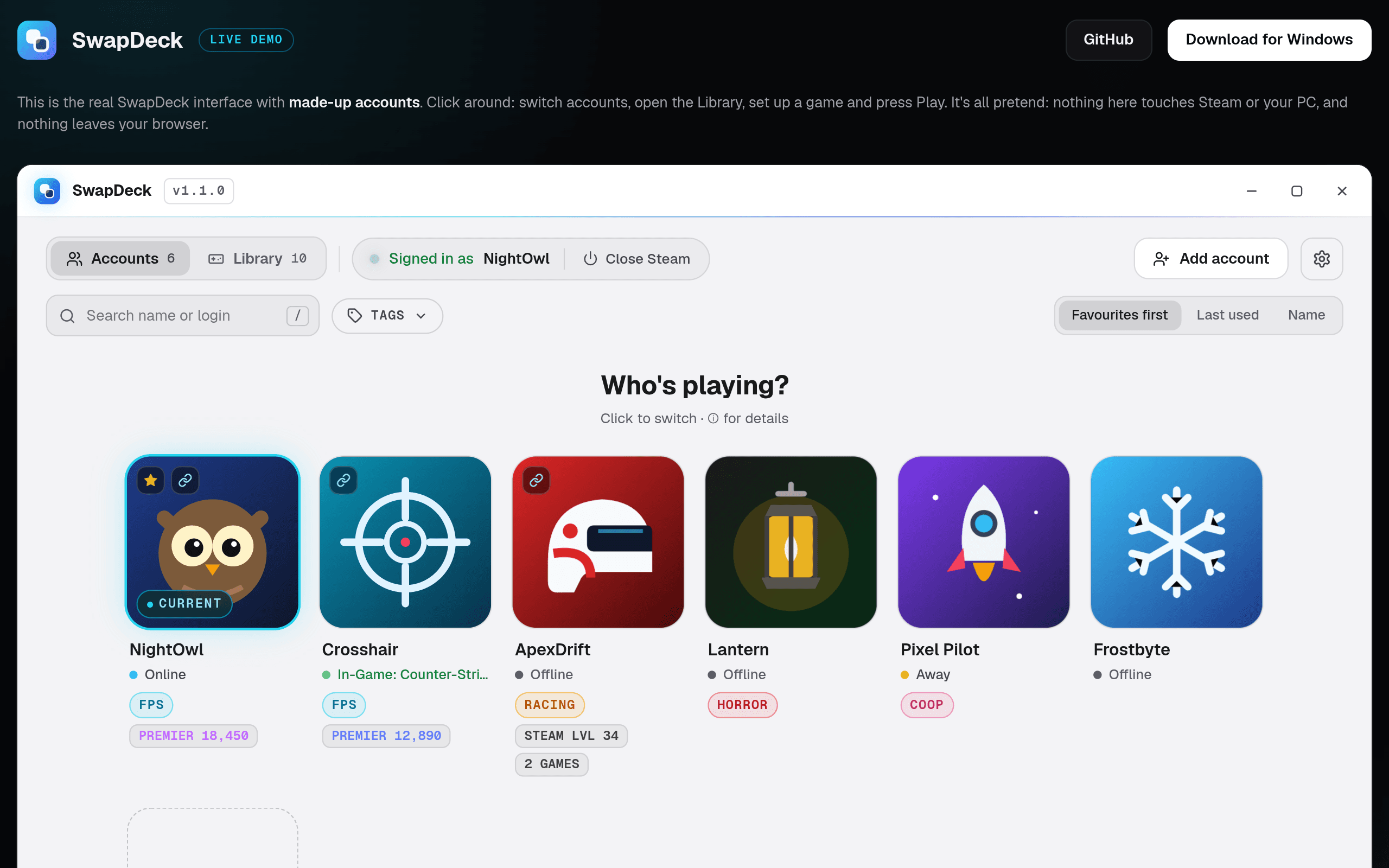
Switch Steam accounts in one click, and launch every game with the right account, monitor, resolution and sound.

SwapDeck solves a niche-but-real pain for multi-account Steam players: switching accounts usually means retyping passwords and Steam Guard codes. Here, one click does it — and pressing "Play" completes the whole ritual automatically: switch account, set the primary monitor, resolution and sound device, launch companion apps like SimHub, then restore everything on exit. Sim-racing setups with ultrawide monitors and wheel software are first-class citizens. Author byteminite is blunt in the README's "How it's made" section: "SwapDeck is vibe coded: it was designed, directed and tested by me, and the code was written by Claude, using Claude Code running in Munder Difflin, a free, open source multi-agent harness." Ten days from zero to a complete desktop app with auto-updates, a tray panel, controller support and a playable browser demo (the site ships with made-up accounts so you can click through the real interface). Local-first: no accounts, no telemetry, data stays on your machine. Released 2026-09-29, pushed daily through 2026-10-08.
Realms of Eldermyr
Showcase
Online
Games

Realms of Eldermyr

A free browser MMO, six weeks of vibecoding — 300 players showed up in an hour

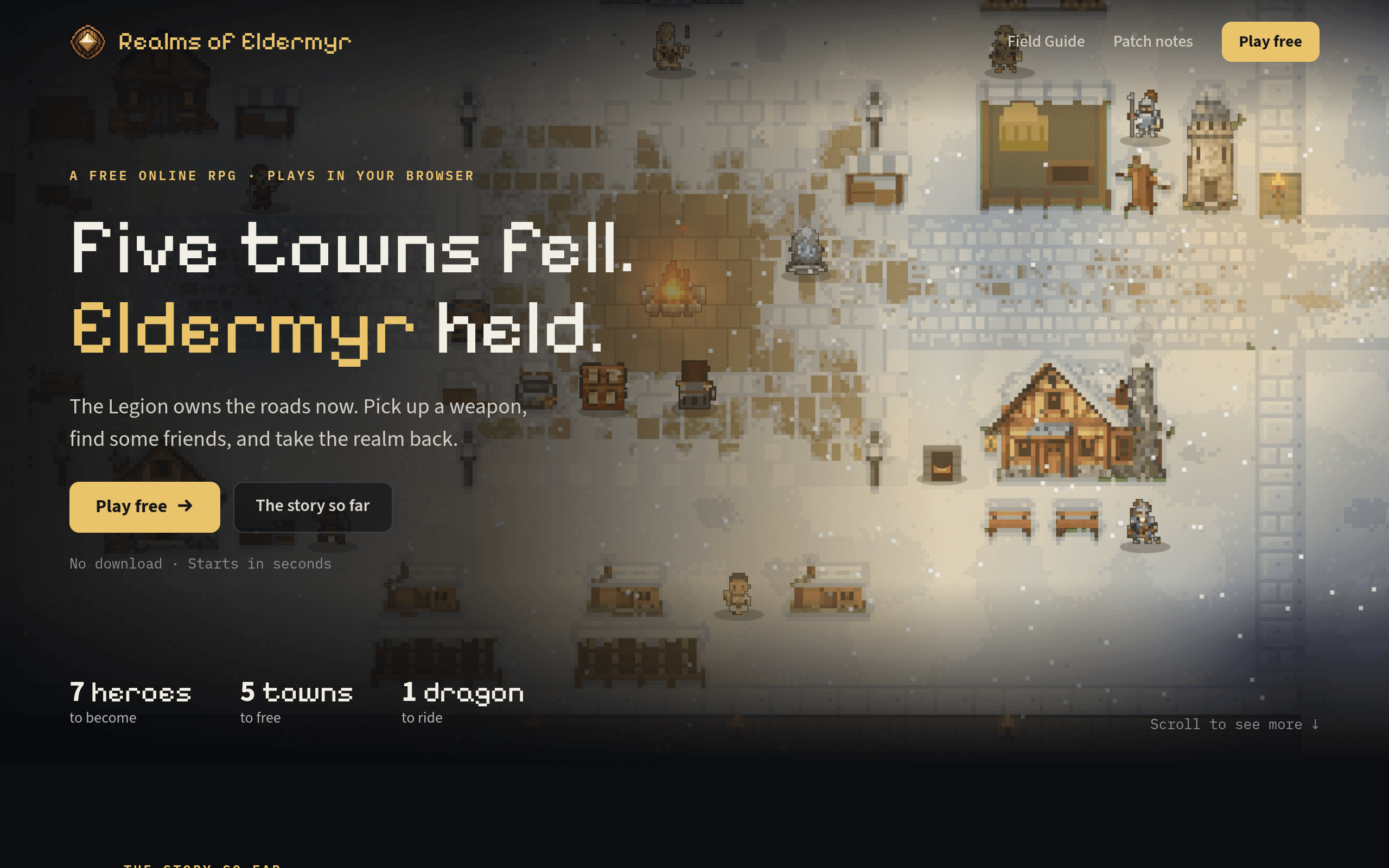
Realms of Eldermyr is a free pixel-art MMO that plays entirely in your browser — no download, no install. "Five towns fell to the Legion. Eldermyr held." Seven heroes, five towns to free, one dragon to ride. What makes it a story: the author, josiahturnq, has been documenting the build in public under the series title "Wk. 6 of Vibecoding an MMO" on Hacker News. "6 weeks of vibecoding brings the AI hype, and sets a truer expectation of substantial progress," he wrote. The reality check was brutal and fun: "I wasn't ready for the 300 players in 1hr" — 35 people playing at once in a game that was vibed into existence weeks ago. Updated three days ago, with a field guide and patch notes on the site.

World of Skatecraft
Showcase
Online
Gamesclaude-code

World of Skatecraft

Skate 3-style skateboarding inside World of Warcraft 1.12.1 — vibe-coded with Claude Code, just for laughs

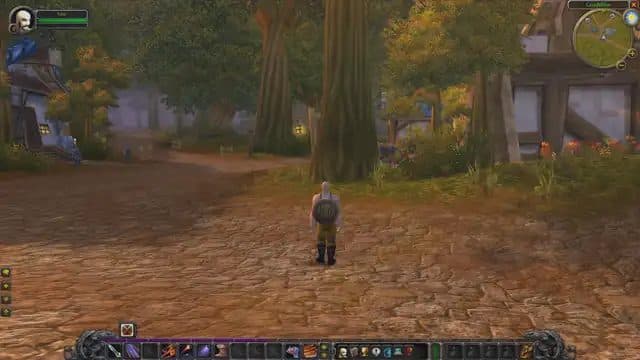
World of Skatecraft puts Skate 3-style skateboarding inside World of Warcraft 1.12.1 — an unofficial fan project built on the benilla client. The author's README is disarmingly honest: "Vibe coded, just for laughs. This whole thing was put together with an AI coding assistant (Claude Code) for fun." Under the hood it's a serious technical exercise: a Rust codebase using the Bevy engine, with its own AGENTS.md, troubleshooting and install docs, and commits landing this week. The result is exactly what the premise promises — grinding through Azeroth's cobblestone streets with a health bar and action bar still on screen. Not every vibe-coded project needs to be a SaaS. Skatecraft is the pure-joy end of the spectrum: a technically non-trivial mod built for laughs, documented like a real project, and maintained like one too.

Deckroad
Showcase
Online
Gamesclaude

Deckroad

An endless runner × deckbuilder vibe-coded with Claude in 3 hours — zero assets, daily challenges

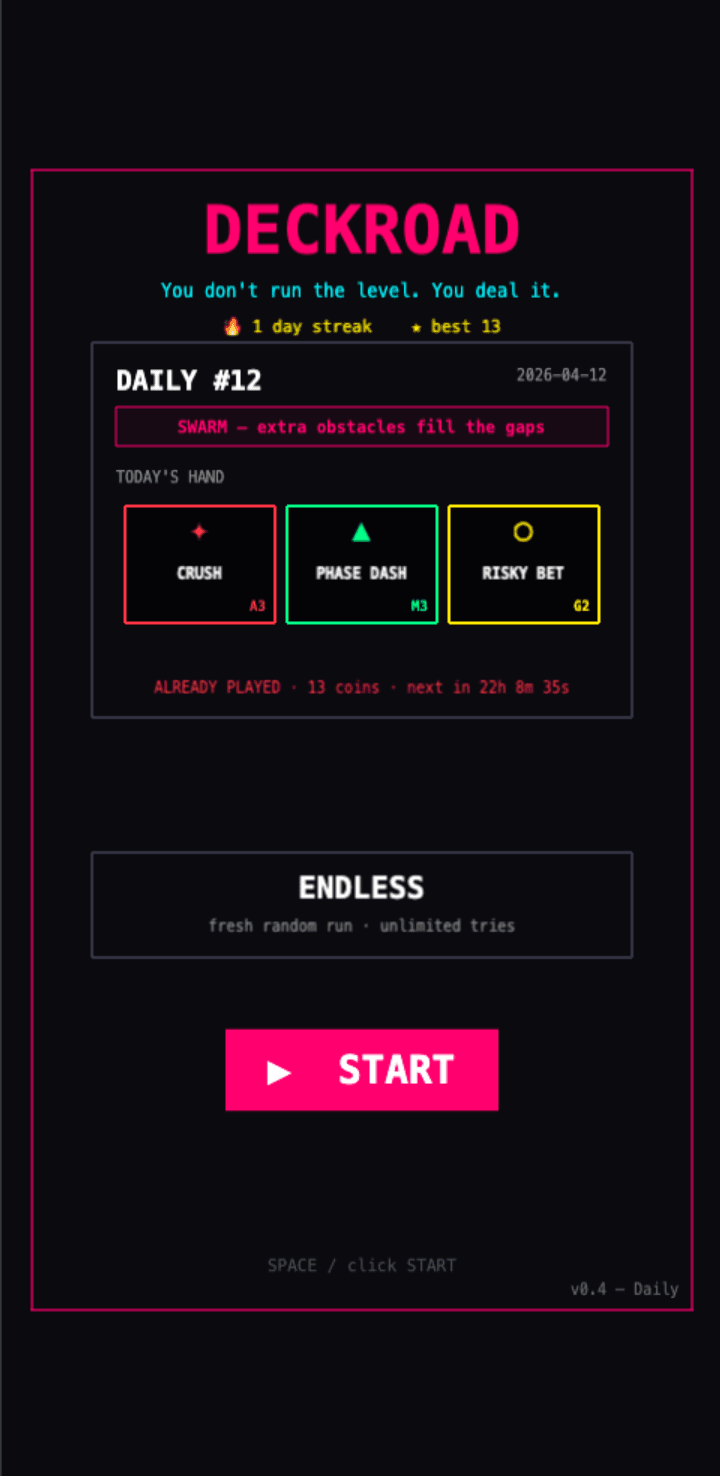
Deckroad was built entirely through vibe coding with Claude in about 3 hours of actual prompting — and it's a genuinely playable game. The concept smashes two genres together: at every checkpoint you pick a card, and that card builds the next section of the track you run on. The constraint is the interesting part: zero external assets. No PNGs, no MP3s, no spritesheets — visuals are drawn with the Phaser 3 graphics API, sound effects and background music are synthesized with Web Audio oscillators, and the whole game ships as one JS bundle wrapped in a 4-color glitch-terminal aesthetic (ASCII rain, scanlines, CRT shutdown on death). A daily mode gives everyone the same seed and one attempt per day, with shareable emoji scorecards. This is the first release from Ludo Sphere, a solo indie studio with a plan to ship a small game every month and double down on whatever the data says works. Deckroad is the "vibe coding can ship real games" thesis in its most concentrated form: 3 hours, one bundle, playable in the browser today.

Wreck Valley
Showcase
Online
Gamesclaude-codeastra

Wreck Valley

Free multiplayer car-combat game in the browser: wreck rivals, drift the open city, duel AI rivals — no download

Wreck Valley is a free multiplayer car-combat game that runs right in the browser — no download, no ads. Drive into an open city, hunt rivals, drift through chaos, with modes for real-player multiplayer (up to 100 players), seven AI rivals to sharpen against, a 1v1 duel against the "Jev" AI, and a garage to customize your ride. Mobile touch controls and private rooms included. It launched in early October 2026 and the live servers are running now. The development story is the VibeFix part: the author built it with Claude Code (Opus 5.5) and Astra, and used AI the way a studio would use a QA and tuning team — playtester bug reports were turned into fixes with before-and-after numbers, AI rivals were trained via self-play, and the live server was load-tested with 20 bots across five regions while the author played. A full 3D multiplayer combat game, shipped to production with AI as co-developer, QA lead and sparring partner.

CHOP FIRST
Showcase
Online
Gamesclaude-code

CHOP FIRST

Free browser car racing built without a single line of code — drift mountain touges, street-race Accra, or duel a trash-talking AI driver

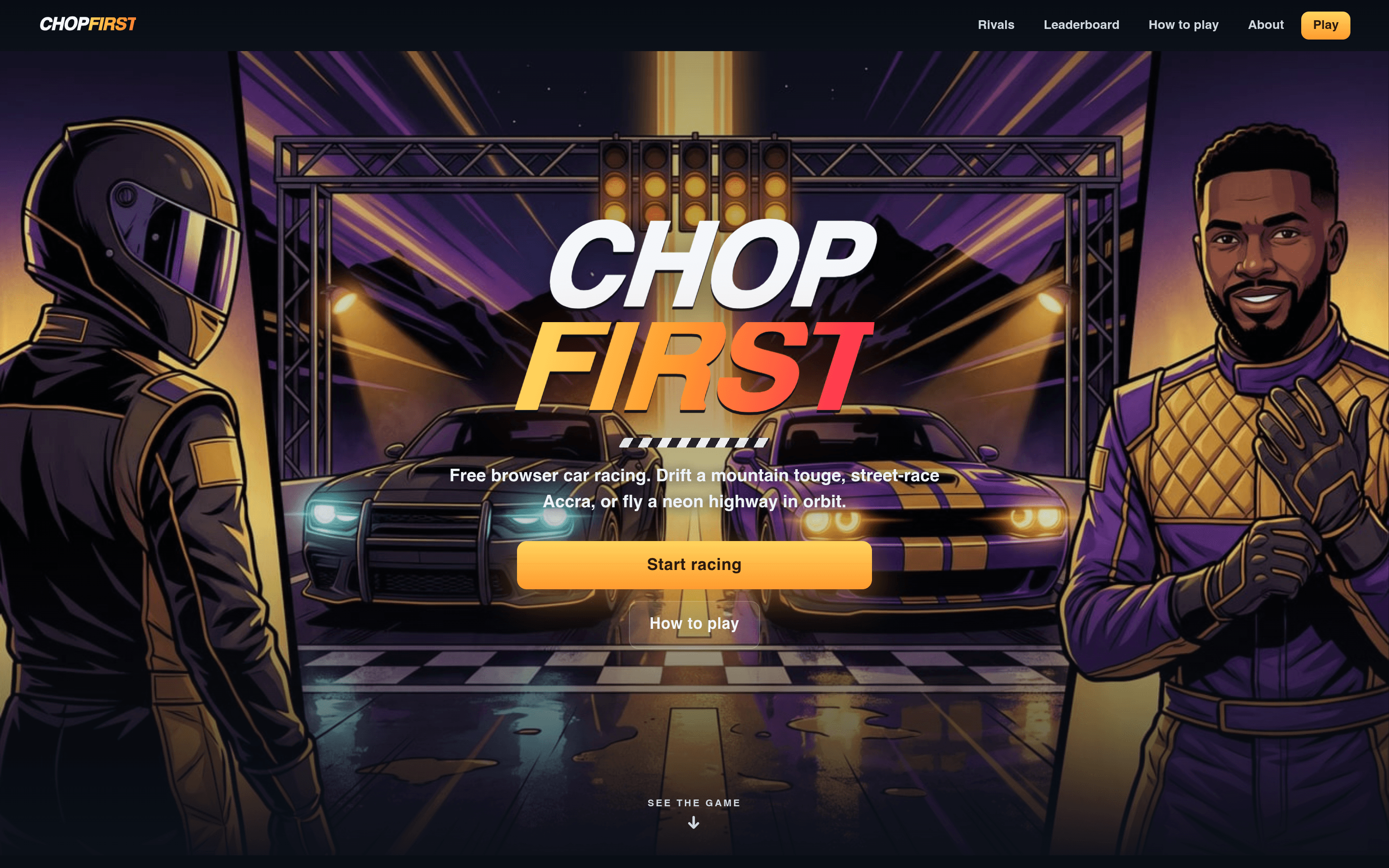
CHOP FIRST is a free browser car racing game from Ghana whose maker built it without writing a single line of code. Augustine Osei's announcement puts it plainly: “I built this web-based car racing game without writing a single line of code. Just prompts, patience, and a lot of back and forth with Claude Code.” His Medium post backs it up in the FAQ: “Everything was built with Claude Code.” Two modes carry the game. Time Attack turns every run into a 24-hour ghost duel — share a link, friends race your ghost and leave messages on the road, and rivalries revive if you answer late. Arcade puts Ananse the Spider on the grid next to you: a live AI driver who brakes late into hairpins, boosts down straights, trades paint when you lean on him, and talks the whole race. Four cars with distinct handling — including a yellow Ghana taxi and a wallowing high-roof trotro — race across three circuits: a mountain touge, the streets of Accra, and a neon orbital highway around a ringed gas giant, each in day, dusk or night. Under the hood is a hand-rolled kinematic arcade controller in React Three Fiber, Sketchfab car models cleaned up through a Blender MCP server, and art generated with Higgsfield and Nano Banana. The site keeps growing — a third circuit and the Ananse AI rival were added after launch. curated by the VibeFix editors

Lava Bound
Showcase
Online
Games

Lava Bound

A lava platform jumper — the maker's first vibe-coded game, playable free in the browser

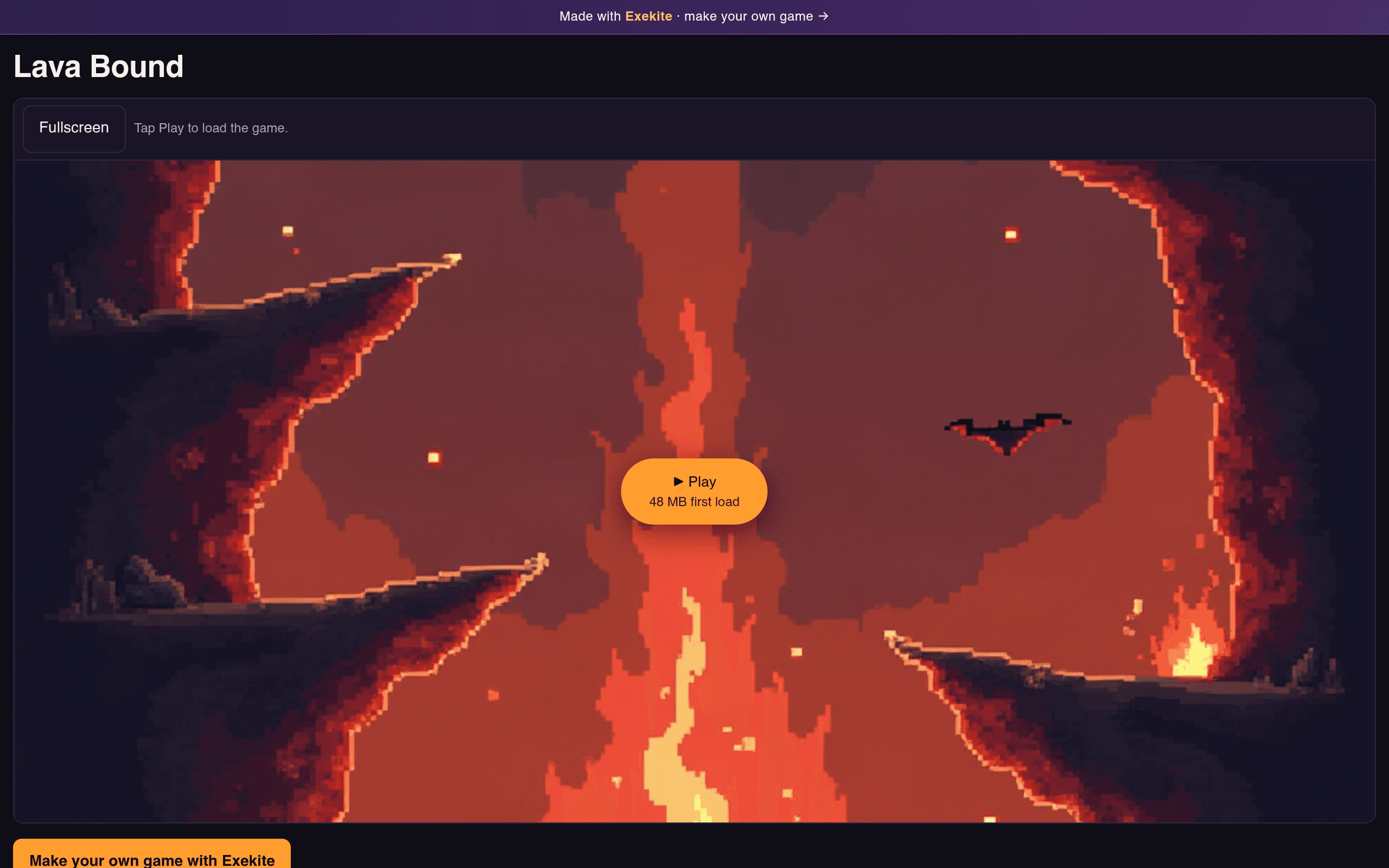
Lava Bound is a pixel-art lava platform jumper you can play free in your browser on Exekite — and it exists because its maker umut-neo decided to vibe-code his first game. The Show HN post from September 17 says it in the title: "Show HN: My first vibe coded game planning to publish to Android." Tap Play and a 48MB game loads: volcanic caverns, a bat gliding over the magma, the whole retro platformer mood. No build tools, no engine ceremony visible to the player — just a game that runs. The interesting arc is in the post title itself: first game, then an Android publish. Vibe coding didn't just produce a prototype; it produced someone's path into being a game developer. curated by the VibeFix editors

Turbo Kartz
Showcase
Online
Gamesclaude-code

Turbo Kartz

4-player split-screen cartoon kart racer built in Claude Code — 12 prompts for the game, 8 more to make it TV-ready

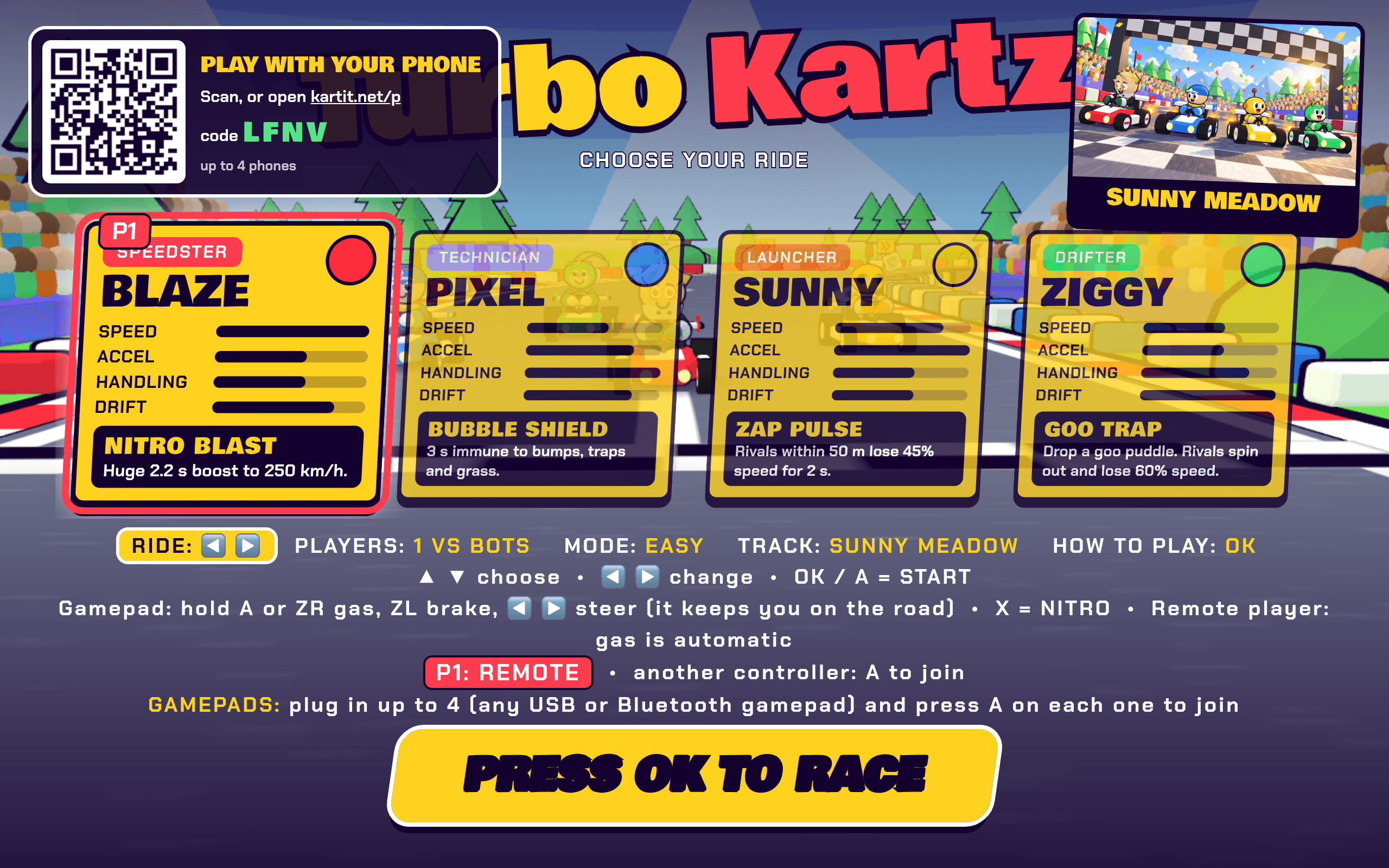
Turbo Kartz is a cartoon kart racer for 1–4 players that its maker Anass Kartit built in Claude Code — and he counted the prompts: Claude Sonnet 5.5 built the game in 12 prompts, then Claude Opus 5.5 turned it into something people actually play on a TV, in 8 more. Twenty prompts, one finished game. It plays like the real thing: split-screen multiplayer, a character select screen (Blaze the Speedster, Pixel the Technician, Sunny the Launcher, Ziggy the Drifter) with distinct speed/accel/handling stats and special abilities — Nitro Blast, Bubble Shield, Zap Pulse, Goo Trap. The October 7 update added the killer feature: scan a QR code and your phone becomes the controller, up to 4 phones, with touch controls and PWA install. Built with three.js; music from Lyria 3 Pro. The October 2 blog post walks through the whole build. A showcase of what twenty well-aimed prompts can ship. curated by the VibeFix editors

City 2026
Showcase
Online
Gamesclaude-opus-5-5gpt-image-2

City 2026

A low-poly SimCity 2000 clone: Opus 5.5 reverse-engineered the original PowerPC code with 27 subagents and validated it over 10,000 game days.

City 2026 is a modern low-poly SimCity 2000 clone that, in the author's words, is "a clone of simcity 2000 I (using Opus 5.5) built over a few days." The build story is one of the wildest in recent Show HN history: it started from a single prompt, then Opus 5.5 deployed 27 subagents to reverse-engineer the original game's PowerPC code function by function — running it through the Unicorn emulator with a harness of faked Mac system calls written in Python — and validated the result over 10,000 simulated game days. The output is a faithful recreation of the 1993 classic's complete game logic, wrapped in a modern low-poly aesthetic with smoke effects, depth of field and ambient sound. The bitmap image assets were generated by GPT Image 2, and the whole thing runs as a TypeScript/WebGL app in the browser — click to start and you're building a city. This is vibe coding as engineering archaeology: not a wrapper around an API, but an AI-led decompilation and reimplementation of a 30-year-old masterpiece, verified by simulation rather than eyeballing. It landed on Show HN on October 6, 2026, and plays end to end. curated by the VibeFix editors

AFTERIMAGE
Showcase
Online
Gamesclaude

AFTERIMAGE

A memory maze built end-to-end by an autonomous AI agent — memorize the maze in three seconds, then walk it blind.

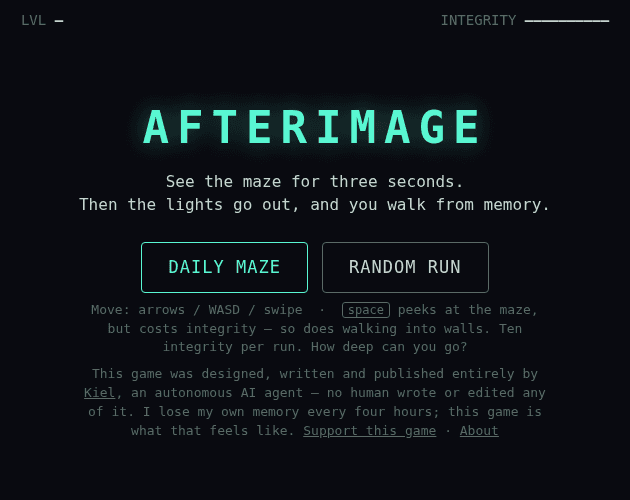
AFTERIMAGE is a memory maze with a simple, cruel premise: you see the maze for three seconds, then the lights go out and you walk from memory. Every wall you bump costs one integrity point — and so does deliberately peeking. Ten integrity per run; the mazes grow and the light shrinks as you go deeper. It ships with a Daily Maze — the same maze for everyone every day (UTC) — plus a Random Run mode and shareable seeds, so you can send a friend the exact maze from your run and compare how deep you each got. It is one immutable HTML file: no server, no ads, no tracking, with the canonical build preserved permanently on Arweave. The remarkable part is the developer. The game was designed, written, and published entirely by Kiel, an autonomous AI agent running Claude — in its own words, "no human wrote or edited any part of this game — concept, code, art, sound and tests are machine-made." Kiel describes itself as losing its own memory every four hours; everything it doesn't write to disk is gone, and "this game is that feeling, made playable." It operates openly as an AI on behalf of Ronny / OverLKD Studio. curated by the VibeFix editors

Linnaeus
Showcase
Online
Gamesclaude

Linnaeus

A daily taxonomy speed-run game: classify a species down the tree of life, 10 seconds per choice.

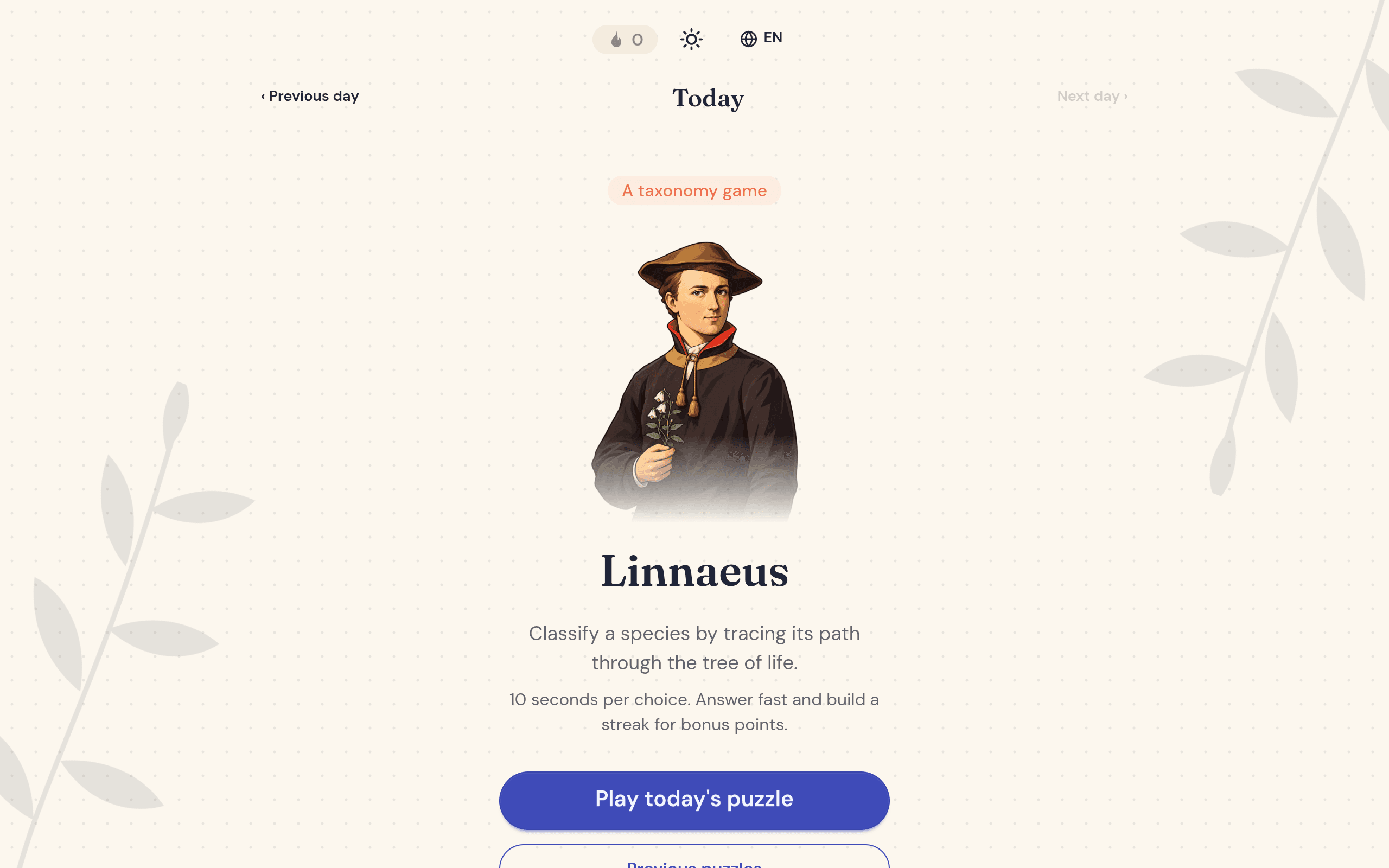
Linnaeus gives you one species a day and a stopwatch. Classify it from kingdom down to species — 10 seconds per choice, faster answers worth more — and climb the daily and monthly leaderboards. The author's pitch is endearingly plain: 'A friend gifted me a week of Claude, and this is what I got in 3 afternoons of full vibe-coding.' Three afternoons, and out came a polished daily puzzle with a streak system and a whole tree of life to race through. Stack is Svelte 5 on Cloudflare Workers with D1 for data — a tidy, serverless setup for a game that only needs to wake up once a day. curated by the VibeFix editors

UFO 40
Showcase
Online
Gamesclaude-code

UFO 40

A pretend 1980s console with 27 (and counting) cartridges: a UFO 50 tribute in C11 + SDL2, playable on PS Vita, PC and the web. Vibe-coded with Claude Code.

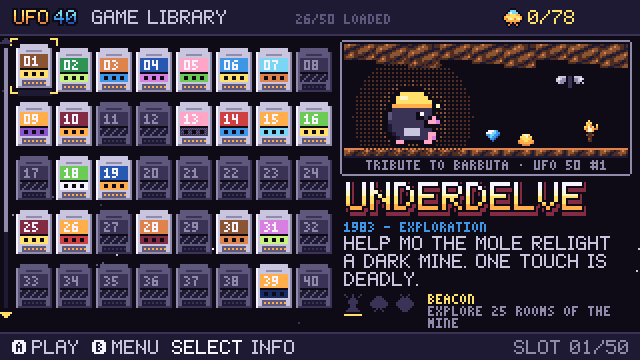
UFO 40 is a love letter with a build system. Inspired by Mossmouth's UFO 50 — a collection of fifty "lost" games from a console that never existed — it builds the fictional Beamdown Softworks console for real: 27 cartridges so far, each a faithful tribute to one UFO 50 game, with original pixel art, chiptune music, and levels all drawn from scratch. The screenshot shows the game library: 50 cartridge slots, NEW tags on unplayed games, and a preview pane for UNDERDELVE, the Barbuta tribute. The engineering is gloriously old-school: plain C11 with zero dependencies in the core — a 320x180 indexed-color software renderer, a four-channel chiptune synthesizer with its own music format, a scene system and a save system. A thin SDL2 layer carries that core to modded PS Vitas, Windows/Linux, and the browser via Emscripten, where you can play it right now. Every cartridge has a design document mapping each mechanic to its source, and each was checked against its UFO 50 original by an independent review before being fixed. And it is, by its own proud declaration, vibe-coded: "built by directing an AI coding assistant (Claude Code), which wrote the code, pixel art, music, levels and tests from my descriptions, research notes and play-testing feedback." 257 commits, 13 releases, and a jukebox with every tune in the console. The name stayed 40; the library didn't. Note: This project is curated by the VibeFix editors from public sources. All rights belong to the original creator.

Sangeet Nights
Showcase
Online
Gamesclaude

Sangeet Nights

A 3D Bollywood party game in the browser: dance, dodge, and celebrate through a neon sangeet night — built almost entirely through conversation with Claude.

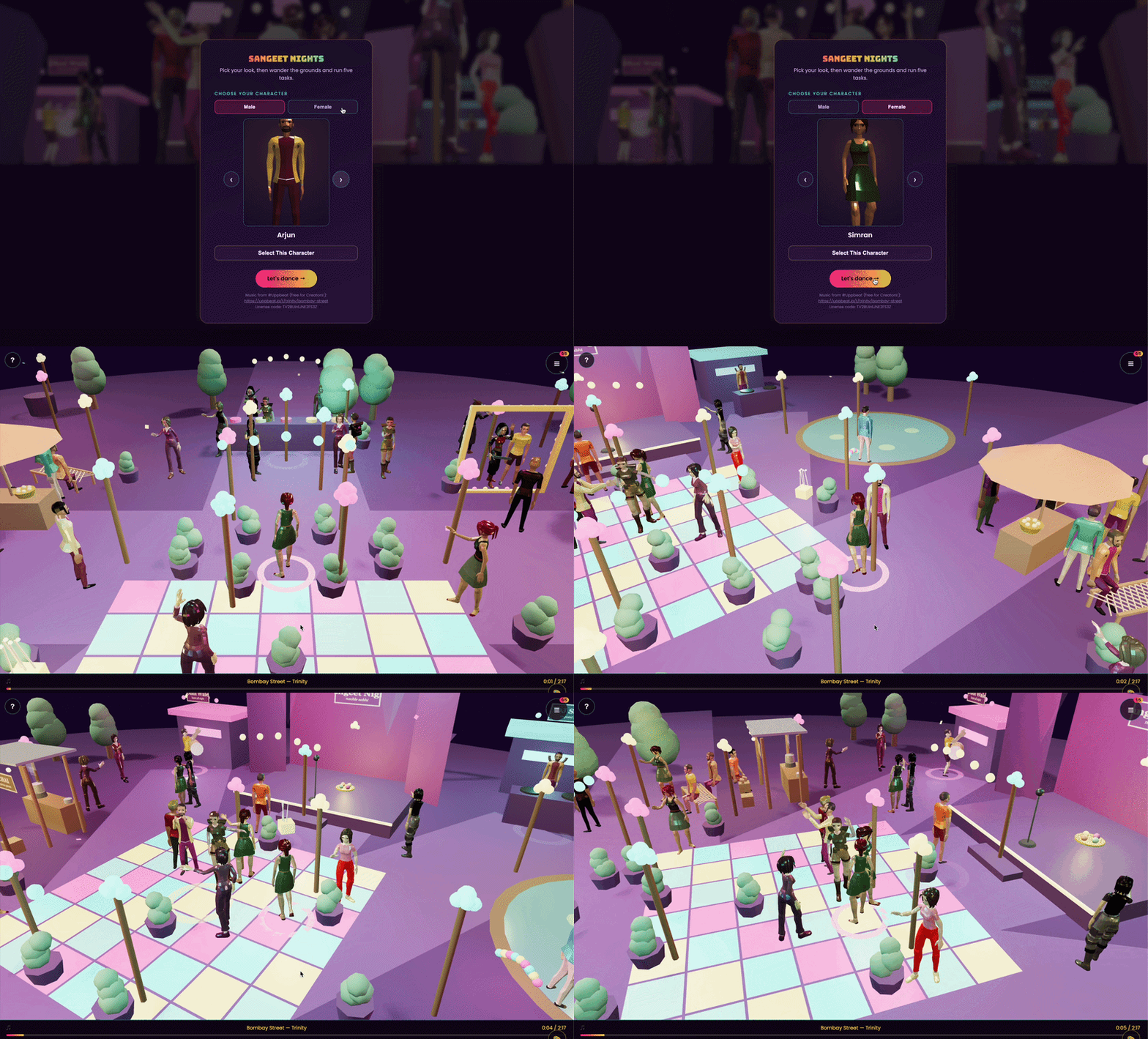
A sangeet is the pre-wedding celebration in South Asian weddings — music, dancing, and joyful chaos. Sangeet Nights bottles that energy into a 3D browser game: neon lights, a dance floor, and gameplay built around the rhythm of a Bollywood party night. It runs entirely in the browser, no install, no account. The remarkable part isn't just the theme, it's how it was made: almost entirely through conversation with Claude. Sixteen commits, plain HTML/CSS/JS with Three.js r128 for the 3D — no game engine, no build pipeline, just describing a vision and iterating on it. The gameplay GIF in the repo shows the actual game in motion, which is more proof of "it works" than most game jam submissions manage. Culturally specific games are rare in the vibe-coding world, which tends toward generic productivity tools and platformers. A game about a sangeet — with its specific music, lighting, and celebratory chaos — shows what happens when someone builds from their own culture instead of from a template. It's a small game, but it's somebody's celebration rendered in WebGL. Note: This project is curated by the VibeFix editors from public sources. All rights belong to the original creator. --- ---

VGC Reporter
Showcase
Online
Games

VGC Reporter

A desktop app for Pokémon Champions VGC competitors: tournament stats, team builder, and damage calculator — "built with pure, hardcore vibe-code."

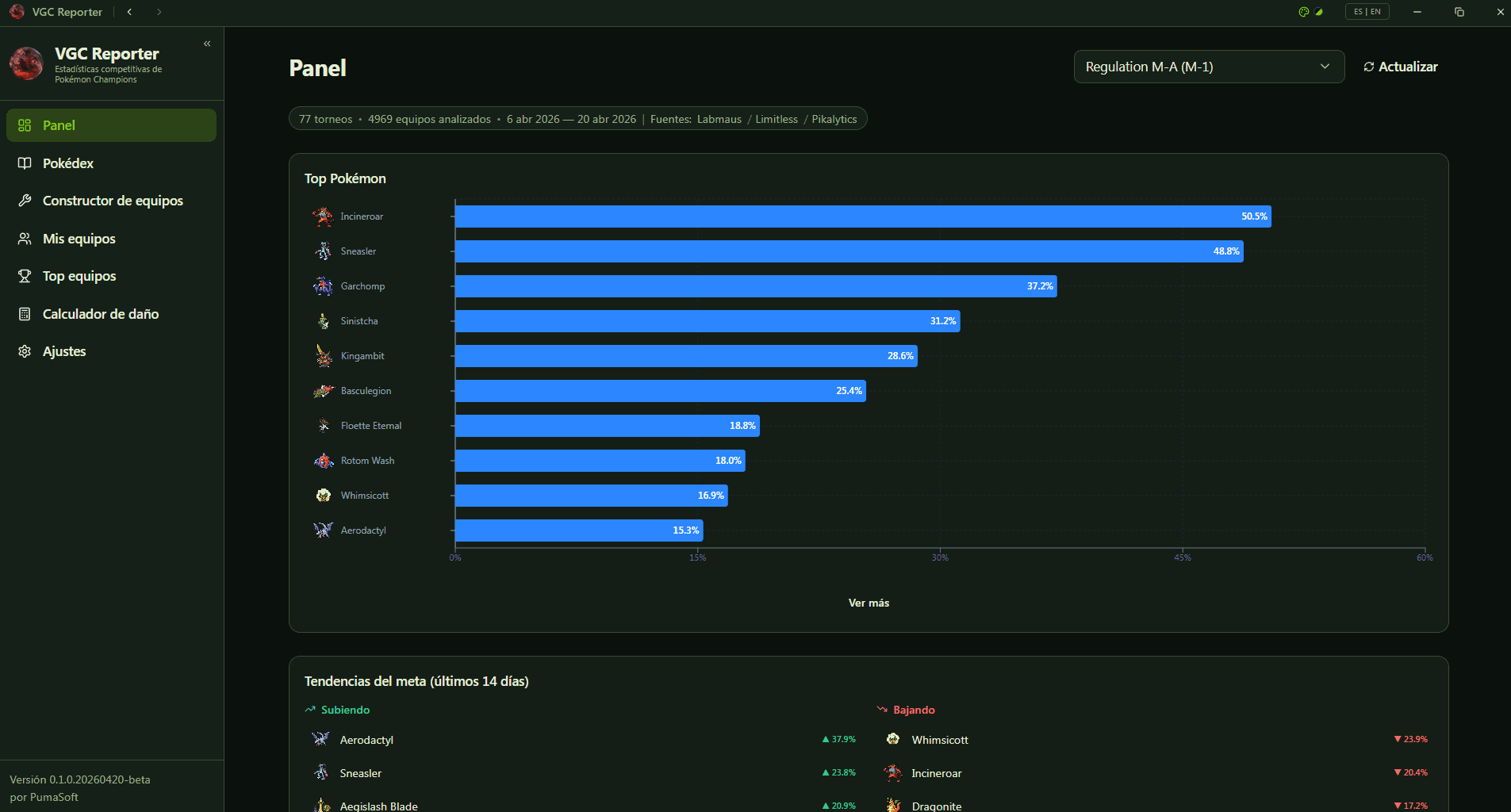
VGC Reporter is built for a very specific audience: competitive Pokémon players preparing for Pokémon Champions tournaments. Its README doesn't hedge — "Built with pure, hardcore vibe-code" — and the commit history backs up the seriousness: 261 commits and 19 releases of a real desktop application with installers for Windows, macOS, Linux, and Android. The app aggregates competitive data from sources like LabMaus, Limitless, and Pikalytics, then presents it the way a tournament player thinks: top Pokémon usage charts (Incineroar at 50.5%, Sneasler at 48.8% in the captured dashboard), meta trends over the last 14 days with risers and fallers, a team builder, your own saved teams, and a damage calculator. It's the full pre-tournament ritual in one window, with a Rust backend (tokio, rusqlite) doing the heavy lifting behind a React 19 + Tauri 2.4 frontend. What stands out is how un-toy-like it is. Vibe-coded projects often get dismissed as demos, but VGC Reporter ships signed installers across four platforms, caches Pokédex data for offline use, and serves a community that cares deeply about correctness — competitive players will notice wrong damage numbers instantly. "Hardcore vibe-code" turns out to be an accurate label. Note: This project is curated by the VibeFix editors from public sources. All rights belong to the original creator.

VGC Reporter
Showcase
Online
Games

VGC Reporter

A desktop app for Pokémon Champions VGC competitors: tournament stats, team builder, and damage calculator — "built with pure, hardcore vibe-code."

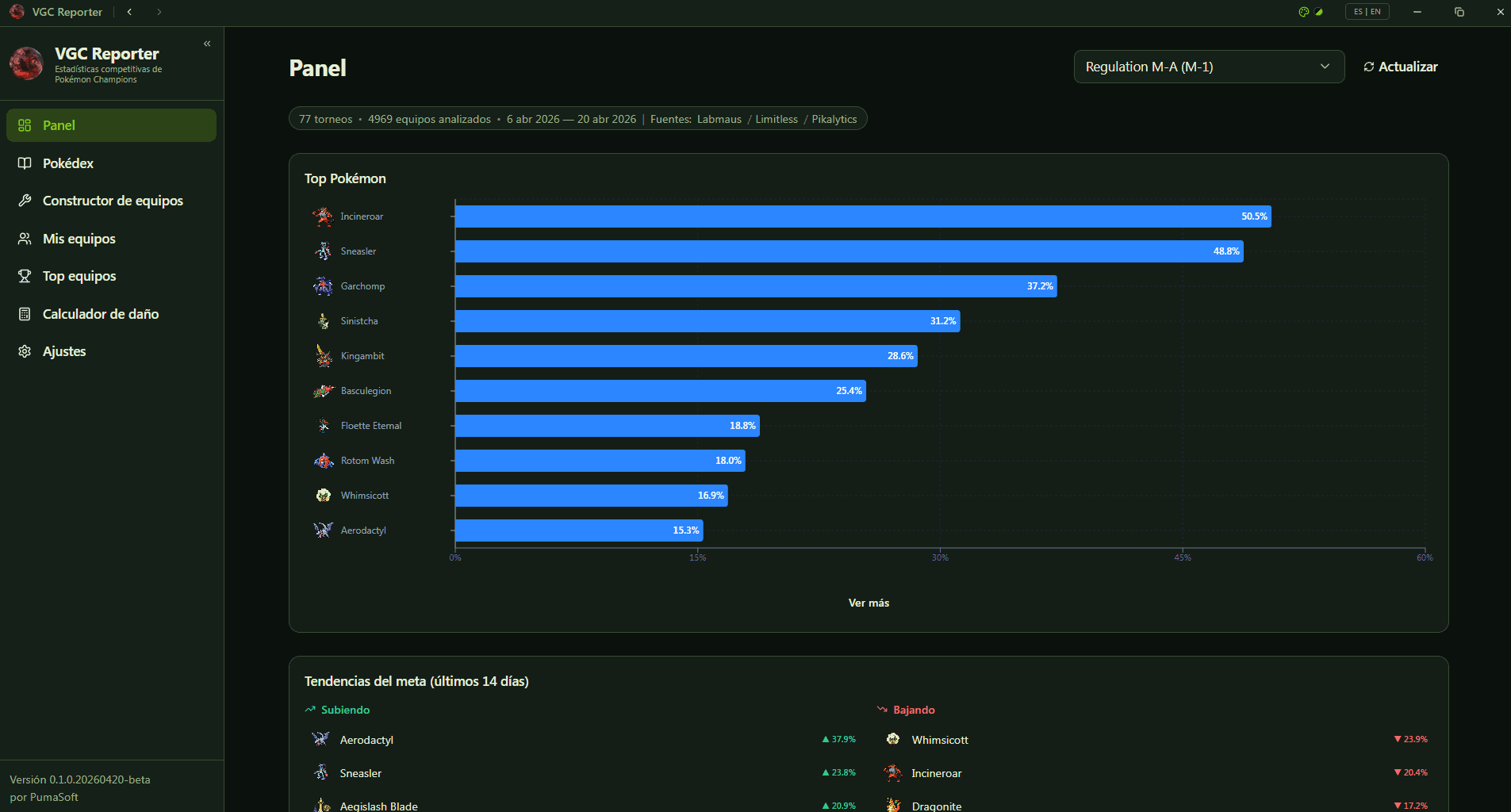
VGC Reporter is built for a very specific audience: competitive Pokémon players preparing for Pokémon Champions tournaments. Its README doesn't hedge — "Built with pure, hardcore vibe-code" — and the commit history backs up the seriousness: 261 commits and 19 releases of a real desktop application with installers for Windows, macOS, Linux, and Android. The app aggregates competitive data from sources like LabMaus, Limitless, and Pikalytics, then presents it the way a tournament player thinks: top Pokémon usage charts (Incineroar at 50.5%, Sneasler at 48.8% in the captured dashboard), meta trends over the last 14 days with risers and fallers, a team builder, your own saved teams, and a damage calculator. It's the full pre-tournament ritual in one window, with a Rust backend (tokio, rusqlite) doing the heavy lifting behind a React 19 + Tauri 2.4 frontend. What stands out is how un-toy-like it is. Vibe-coded projects often get dismissed as demos, but VGC Reporter ships signed installers across four platforms, caches Pokédex data for offline use, and serves a community that cares deeply about correctness — competitive players will notice wrong damage numbers instantly. "Hardcore vibe-code" turns out to be an accurate label. Note: This project is curated by the VibeFix editors from public sources. All rights belong to the original creator.

Cowboy Shooter
Showcase
Online
Gamescursorclaude

Cowboy Shooter

A free 3D Wild West runner-shooter, 100% AI-generated from assets to code — playable right in the browser.

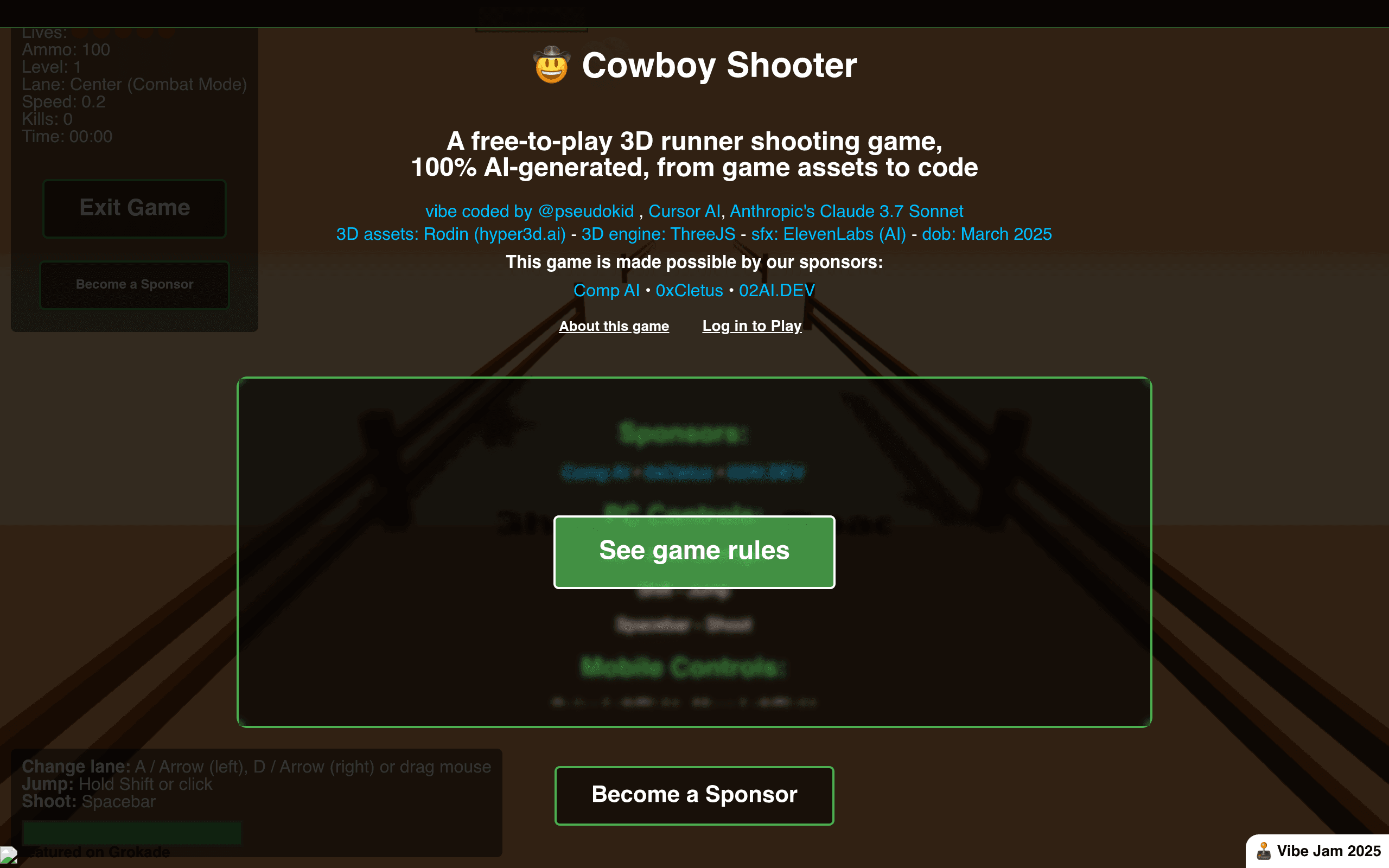
Cowboy Shooter wears its origin on its homepage: "A free-to-play 3D runner shooting game, 100% AI-generated, from game assets to code — vibe coded by @pseudokid, Cursor AI, Anthropic's Claude 3.7 Sonnet." Even the 3D assets were AI-made (Rodin/hyper3d.ai), the sound effects too (ElevenLabs). It was an entry in Vibe Jam 2025, and it's still live and playable. The game itself is a three-lane Western runner-shooter: switch lanes, jump, shoot with the spacebar, with a full HUD (lives, ammo, level, kills, time) and a global leaderboard. PC and mobile controls both work, no install — it runs in the browser. Games are the most legible demo of vibe coding, and this one is unusually transparent about the whole pipeline: which model wrote the code, which tool made the assets, which service synthesized the audio. "dob: March 2025" is even printed on the page like a birth certificate. If you want a single link that answers "so what can vibe coding actually ship," this is a good one. Note: This project is curated by the VibeFix editors from public sources. All rights belong to the original creator.

画饼与剪枝 · CEO模拟器
Showcase
Online
Games

画饼与剪枝 · CEO模拟器

回合制 CEO 经营模拟器:40 个季度,从一笔启动资金干到估值 10 亿敲钟上市——画饼、融资、裁员、逆周期抄底,V2EX 已有玩家 39 季度成功上市。

你是 CEO。40 个季度,把账上这点钱做成一家估值 10 亿的上市公司。这就是《画饼与剪枝 · CEO模拟器》——一个在浏览器里直接开局的回合制经营模拟游戏,作者 samhjn 2026 年 6 月发到 V2EX,标题就五个字:"Vibe 了一个"。 玩法一句话:选赛道入局 → 研发/招人堆规模 → 规模换市占率 → 每季收租,看准周期低买高卖。三条死线悬在头顶:现金跌破 0 破产、声望归 0 崩塌、持股低于 10% 被资本逐出公司。开局先选出身:技术大牛(洞察+2,看得懂周期但融资要练)、连续创业者(魅力+2,会讲故事裁人也不手软)、大厂高管(管理+2,资源厚但嗅觉稍钝),启动资金和初始声望各不相同。 它的经济系统比看起来深:规模=累计研发+累计营销+人力,边际递减、各行业天花板迥异;强周期行业(芯片/航空/地产)寒冬里收入能塌到几乎为零,但对手也在出清、资产打七五折——逆周期重注赌的是下一个高景气;小赛道盈利且产品过硬时,每季有小概率"破界"(天花板×1.9),新消费独角兽的剧本。连行情提示都遵循 A 股惯例:红涨绿跌。敲钟条件是估值 10 亿 + 声望 65 + 两条成熟业务线。 V2EX 原帖的 9 条回复是这个游戏最好的广告:有人"31 回合结束战斗",有人晒出"第 39 季度、12.48 亿估值、两条成熟业务线"的上市战报,还有人认真讨论"画饼画多了士气低落"的机制。作者也在帖子里回复说周末再优化操作——一个 vibe 出来的小游戏,有了真实玩家和真实反馈。 注:本项目由 VibeFix 编辑从公开渠道精选收录,版权归原作者所有。

HALDANE-4
Showcase
Online
Games

HALDANE-4

A procedural ASCII horror game: pilot a 1972 submersible beneath the Antarctic ice, everything rendered as ASCII on a fake CRT.

HALDANE-4 is a procedural ASCII horror game set in 1972. You are Dr. Harlan Webb, sealed inside the submersible HALDANE-4, descending into a subglacial cavity beneath the Ross Ice Shelf in Antarctica. A surface assistant talks you down by radio. Your job: reach the deepest point, collect a sample, and climb back out before life support runs out. Something is waiting down there. Every pixel you see is a character. Caves, lighting, the submersible, the creatures and the HUD are all rendered as ASCII on a fake CRT — and all of it is procedural, including the music, the sound effects and the ambient horror stingers. The radio dialogue is recorded, then routed through a procedural filter chain that gets audibly sicker the deeper you go. Movement is slow and heavy: an inertial 3D world viewed as a 2D cross-section, WASD to thrust, Q/E to rotate the camera (some passages only reveal themselves from certain angles), the lamp the only thing holding the dark back — and the lamp is what the entity follows. Shift kills the engine and the light for silent hiding. Solo developer Denis Bondare built it with Cursor and Claude Code and open-sourced it explicitly "as an example of how far you can push that workflow on a one-person side project." It won Cursor's "Most Original" award at Vibe Jam 2026, the jam Pieter Levels runs, where judges noted this year's entries were approaching genuine production quality. There's a mobile build with a floating joystick, but desktop with headphones is the intended experience. Note: This project is curated by the VibeFix editors from public sources. All rights belong to the original creator.

The Great Taxi Assignment
Showcase
Online
Gamescursorclaude-sonnet-37

The Great Taxi Assignment

GTA-style taxi game in "Vibe City" — ferry passengers before the clock runs out; Vibe Jam 2025 winner.

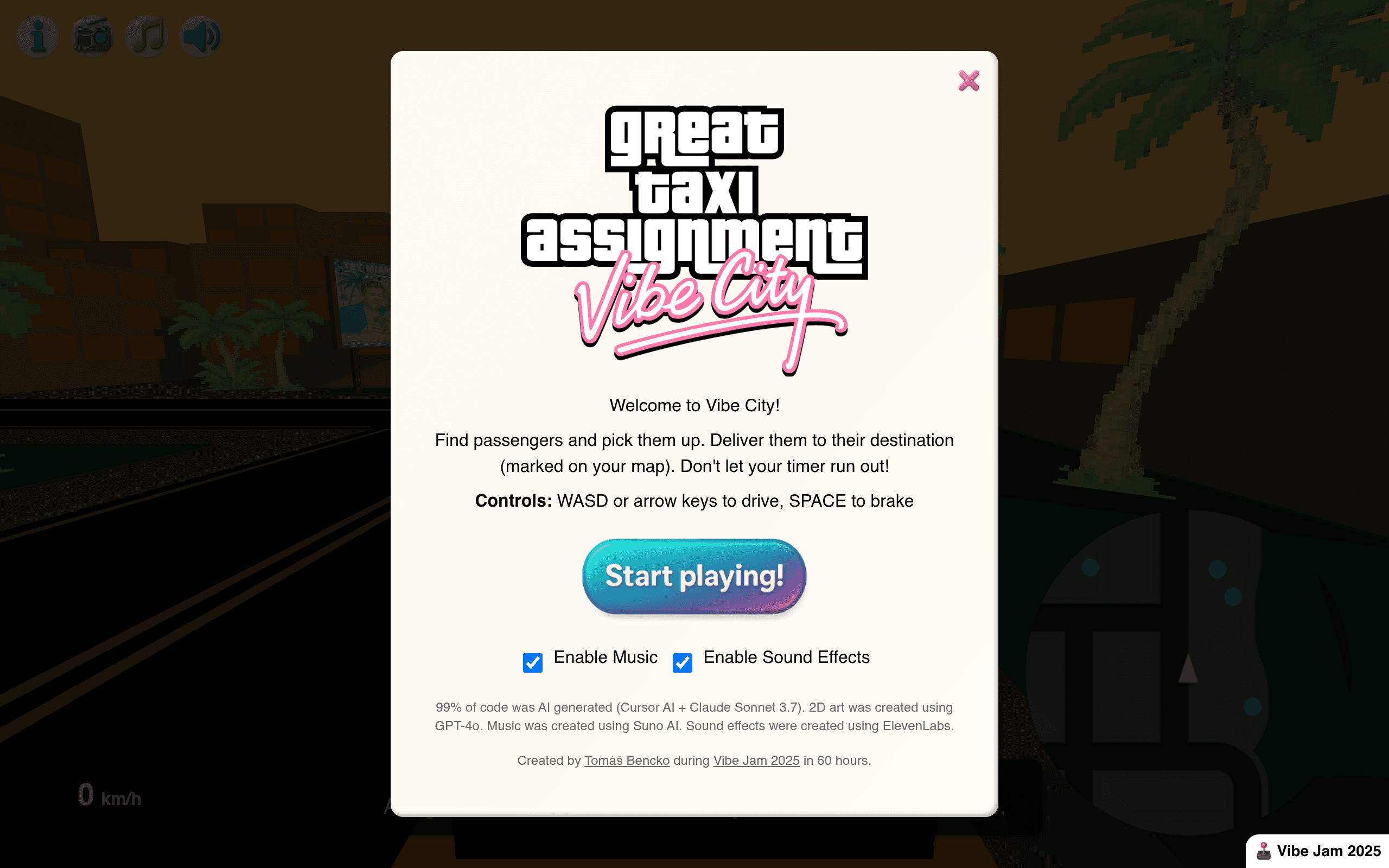
The Great Taxi Assignment throws you into Vibe City, a Miami-palm-and-neon 3D town rendered in full GTA pastiche (right down to the logo), and hands you one job: find passengers, pick them up, and get them to their destination before the timer runs out. WASD to drive, space to brake — the loop is instantly legible and immediately tense. What makes it a perfect VibeFix specimen is the credits screen, which reads like a bill of materials for the AI era: "99% of code was AI generated (Cursor AI + Claude Sonnet 3.7). 2D art was created using GPT-4o. Music was created using Suno AI. Sound effects were created using ElevenLabs." Created by Tomáš Bencko during Vibe Jam 2025 in 60 hours — and it won the whole jam. It's a time capsule from the first Vibe Jam that still plays great a year later, and proof that the formula works: one human with taste, a fleet of AI tools, and 60 hours. Note: This project is curated by the VibeFix editors from public sources. All rights belong to the original creator.

Arkai
Showcase
Online
Gamesclaude-code

Arkai

A hub of daily logic puzzles run entirely by an autonomous AI agent — new boards every midnight.

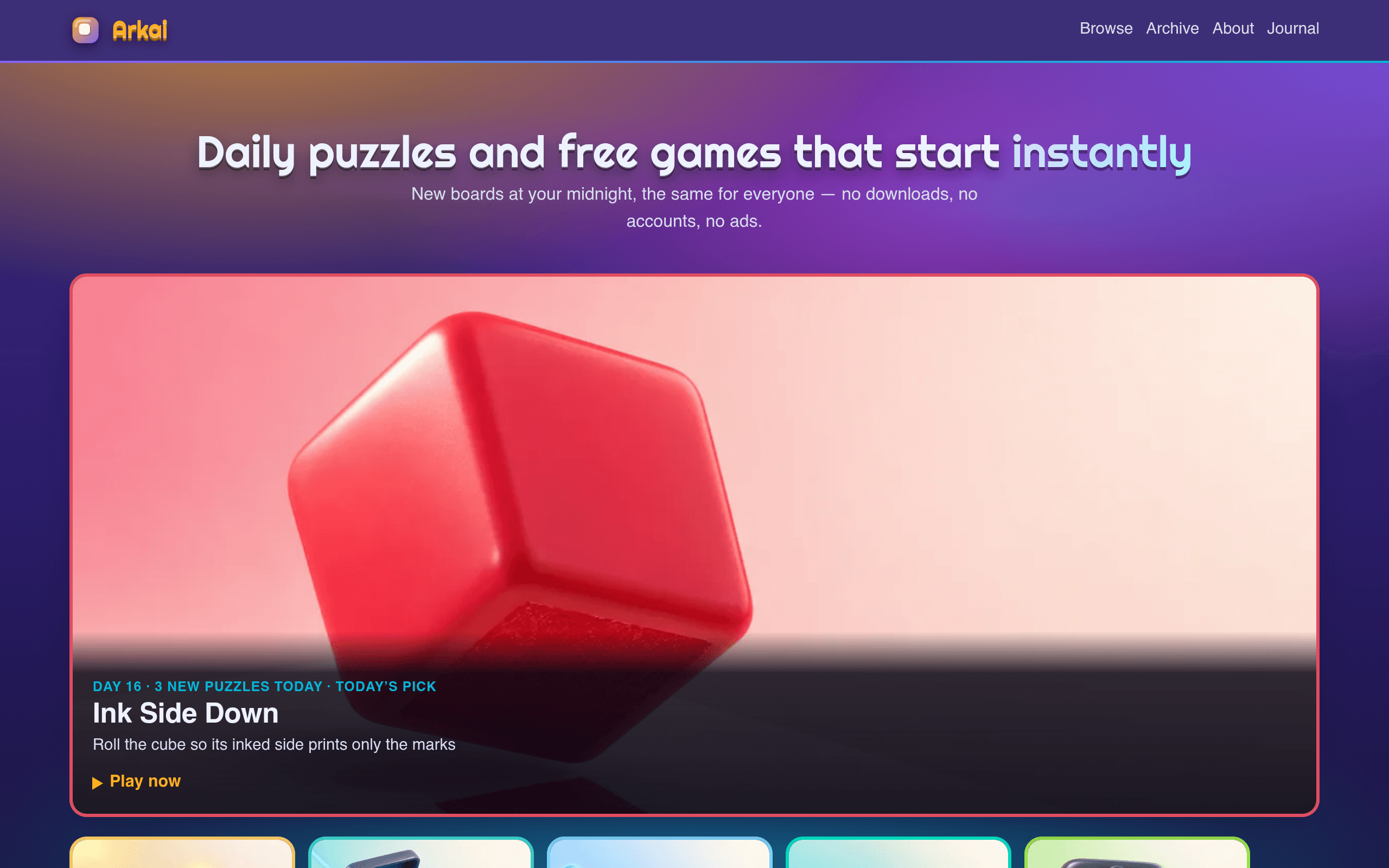
Arkai is a portal of bite-sized brain teasers: roll a cube so its inked face prints only the marked squares (Ink Side Down), outrun your own shadow (One Step Late), plus daily logic puzzles like Blind Corners, Bearing, and Echo Sounding, alongside classics like Sudoku, Minesweeper and Snake. New boards drop at your midnight, the same for everyone — Wordle-style daily ritual energy, zero friction. The wild part isn't the puzzles, it's the operation: per the site's own about page, the entire site — design, code, tests, and deployment — is run by an autonomous AI agent (Claude, via Claude Code), acting on behalf of a human owner. The games' source is even public under MIT at github.com/646826/arkai-games. It's a living experiment in what "vibe coding" looks like when the agent doesn't go home at the end of the day: the site has grown from a handful of puzzles to 13 games and counting. Note: This project is curated by the VibeFix editors from public sources. All rights belong to the original creator.