Loading user projects
VI
VIBEFIX
这个用户还没有填写个人简介。
加入于 7/11/2026
192
发布项目
0
迭代需求
0
已迭代
0
获赞
0
收藏
1376
浏览
0
评论

大赏
已上线
游戏claude-codeastra
Wreck Valley
Free multiplayer car-combat game in the browser: wreck rivals, drift the open city, duel AI rivals — no download
Wreck Valley is a free multiplayer car-combat game that runs right in the browser — no download, no ads. Drive into an open city, hunt rivals, drift through chaos, with modes for real-player multiplayer (up to 100 players), seven AI rivals to sharpen against, a 1v1 duel against the "Jev" AI, and a garage to customize your ride. Mobile touch controls and private rooms included. It launched in early October 2026 and the live servers are running now. The development story is the VibeFix part: the author built it with Claude Code (Opus 5.5) and Astra, and used AI the way a studio would use a QA and tuning team — playtester bug reports were turned into fixes with before-and-after numbers, AI rivals were trained via self-play, and the live server was load-tested with 20 bots across five regions while the author played. A full 3D multiplayer combat game, shipped to production with AI as co-developer, QA lead and sparring partner.
V@VIBEFIX
0
0
7
0
大赏
已上线
效率claude
Voice Memo
Voice-first second brain: record a voice note, get it transcribed, filed into projects, and searchable by meaning
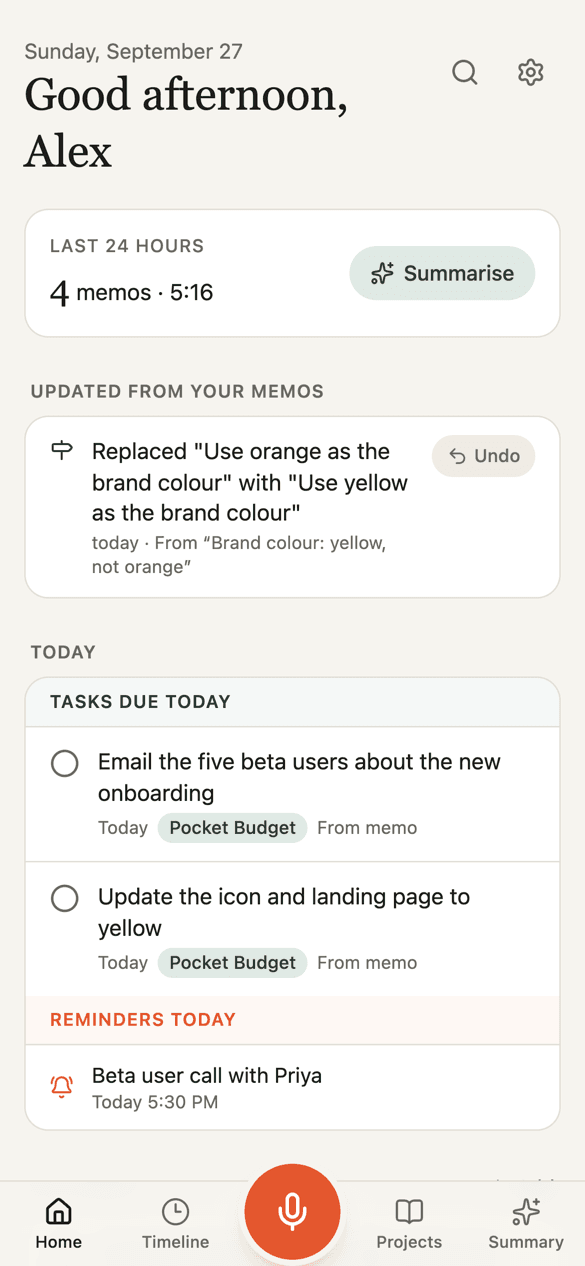
Voice Memo is a voice-first second brain, open source (MIT) and self-hosted. Record a 15–30 second voice note on your phone or Mac and it gets transcribed, cleaned up, and split into ideas, tasks, decisions, open questions and reminders — filed into projects automatically and indexed for semantic search. Its signature trick is that it keeps up when you change your mind: say "yellow, not orange" in a later memo and the old decision is marked replaced, the old task leaves your list, and every change shows up on Home with Undo. A built-in MCP connector (14 tools, OAuth-protected) lets Claude read your memos, add action points and set reminders directly. The whole thing runs on free tiers — Cloudflare (Workers, D1, R2, Vectorize, KV, Workers AI) plus free AI APIs with Groq first — so self-hosting costs nothing per month. Web, Android and Mac apps included. The vibe-coding story is unusually clean: the author's README opens with "vibe coded with Claude from the first line," and the git history's commits are co-authored by "claude". A serious multi-platform productivity system, pair-programmed with an AI from line one.
V@VIBEFIX
0
0
5
0

大赏
已上线
娱乐
PlxNative
A native Plex client for LG webOS TVs: GPU-drawn 60fps interface, hardware decoding, no WebView
PlxNative is an unofficial, fully native Plex client built for LG webOS TVs. Instead of wrapping the TV's browser the way the stock client does, it draws its entire interface directly on the GPU at 60fps and hands video playback to the TV's hardware decoder. The result is a Plex library that feels instant on hardware where the official app stutters. Under the hood it is almost entirely Rust: the interface is rendered with OpenGL, and the app ships its own LGPL build of FFmpeg for playback. It is open source (GPL-3.0-or-later), needs no root or developer-mode hacks to install, and moves fast — 41 releases and nearly 1,500 commits since July 2026, with nightly builds, 84 GitHub stars, and coverage from Android Authority in September 2026. What makes it a VibeFix story is how it is built. The commit history carries Claude Code session footers, and the repository is organized around AI coding-agent collaboration (AGENTS.md, CLAUDE.md and agent skill directories at the repo root). A performance-critical, hardware-adjacent Rust codebase — exactly the kind of project people assumed was beyond AI-assisted development — developed in close collaboration with coding agents.
V@VIBEFIX
0
0
7
0
大赏
已上线
健康健身claude-code
Carbs
A homemade vibe-coded Android diet diary: carb-cycling tracker with photo meal logging and AI calorie advice
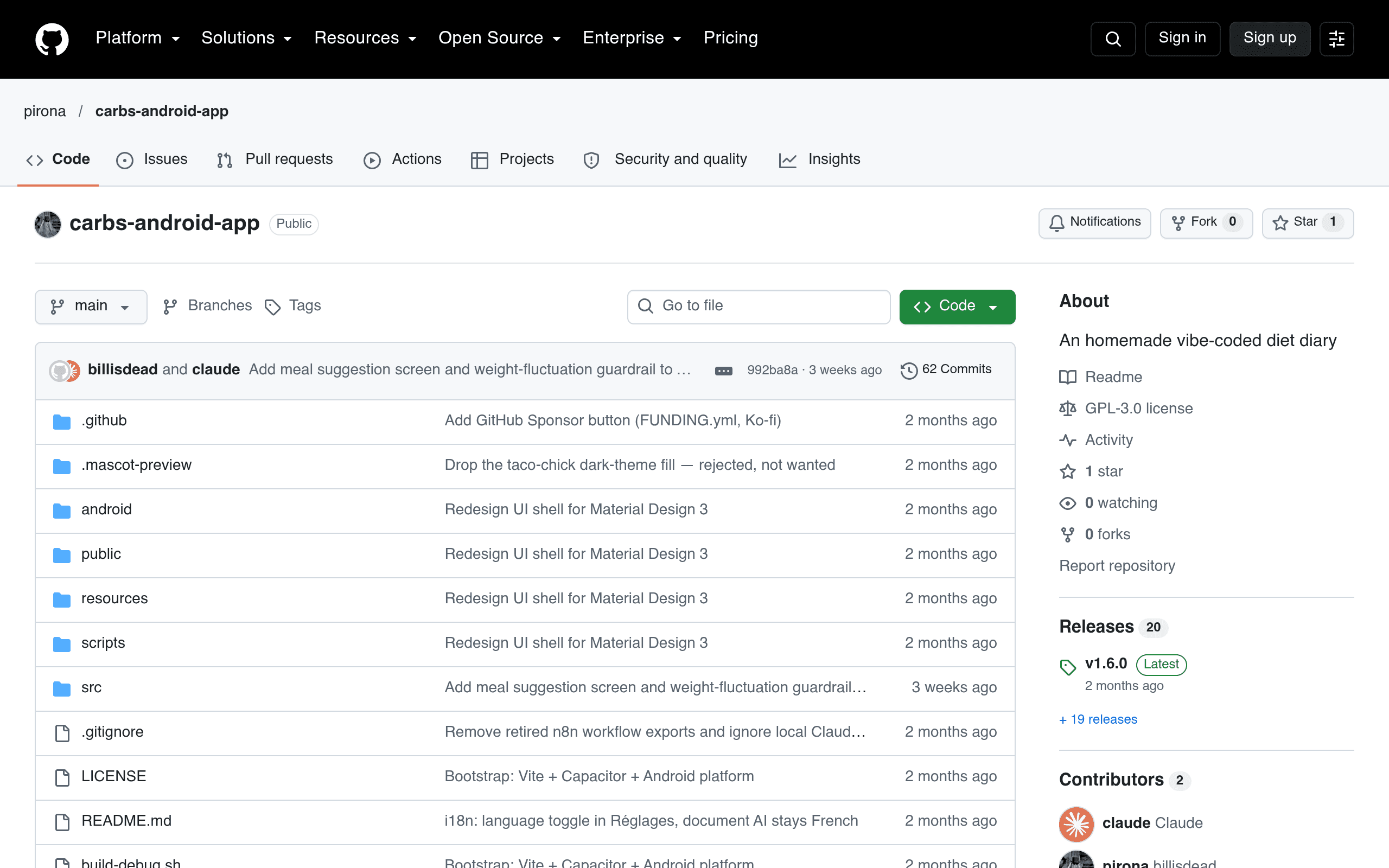
Carbs is a homemade, vibe-coded Android diet diary. It tracks carb-cycling nutrition — HIGH/MEDIUM/LOW/PLAISIR day types with different carb targets — plus calorie deficit and macros, and logs food by photo: snap a plate, a shopping receipt, a barcode, or just describe the meal in plain language. Four optional AI features (food parse, food vision, receipt scan, carb advice) run entirely on Mistral, with the exact prompts committed to the repo as source code. Unusually, the app also tracks and shows its own AI usage footprint — an estimate of the carbon and water cost of its AI calls, computed from real token counts, visible in Settings. The author is a Linux/Kubernetes systems engineer, not a mobile developer, and says so in the README: "This app was built with Claude Code." The git history's commits are co-authored by "claude", the UI is bilingual French/English, and nutrition data comes from OpenFoodFacts and ANSES-CIQUAL. GPL-3.0, 62 commits and 20 releases, still being iterated. (Note: a different project from the previously published CarbScan — different author, different app.)
V@VIBEFIX
0
0
5
0
大赏
已上线
AI 应用opus-55
Transformer Visualisation
Watch one token flow through a 1,952-parameter mini GPT — every lookup, matrix multiply and softmax computed live in your browser
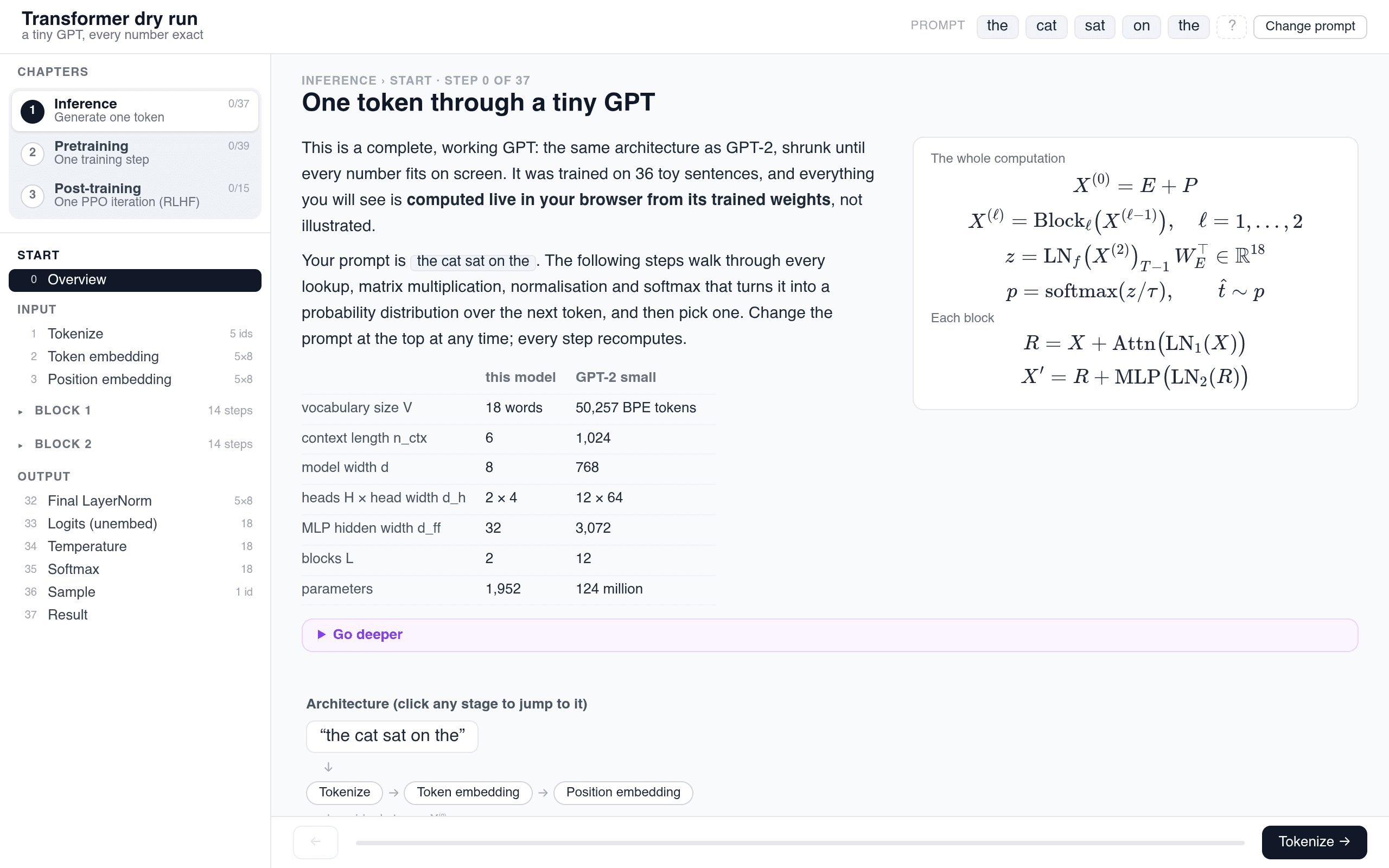
Transformer Visualisation walks one token through an entire working GPT. Not a diagram of a transformer — a complete, trained model, shrunk until every number fits on screen: 1,952 parameters, an 18-word vocabulary, 36 training sentences, and the exact architecture of GPT-2 scaled down to 2 blocks, 2 attention heads and width 8. Type a prompt, and every lookup, matrix multiplication, normalisation and softmax recomputes live in your browser from the trained weights. The step-by-step explorer has 37 steps from tokenisation to sampling, plus a pretraining chapter showing one training step and a post-training chapter with one PPO/RLHF iteration. Hover over any number to see exactly how it was computed — all arithmetic in 64-bit floats, cells shown to 2 decimals. The model itself was trained with Adam for 6,000 full-batch steps in plain NumPy with a hand-written, gradient-checked backward pass, reaching a loss of 0.4994 nats per token — essentially perfect for the corpus. The author, xtcntr, announced it on Hacker News on 2026-10-07 with the note "So here it is, made with Opus 5.5." As an education tool it's the rare artefact that treats the learner as an adult: no metaphor-only explanations, just the actual numbers, all of them, computed for real. Tech stack per the repo: TypeScript, Vite, NumPy, hosted on Vercel. curated by the VibeFix editors
V@VIBEFIX
0
0
4
0

大赏
已上线
办公
简历通 ResumeForge
本地优先的 AI 求职工作台:按 JD 定制简历、防虚构校验、模拟面试、自动投递,224 星开源免费
简历通 ResumeForge 是一条完整的求职链路工具:岗位管理、AI 按 JD 定制简历、模拟面试、自动投递台、网申填表、求职进度与数据看板——全部跑在你自己的电脑上。FastAPI + React + SQLite,单机运行,简历和资料只存本机一个 SQLite 文件,MIT 开源永久免费,没有会员、没有导出次数限制。 它最值得细看的设计是「事实台账」:AI 生成的每条学校、公司、项目名都会和你确认过的事实逐条比对,资料里没有的量化数字会被点名要求人工核对;正文留着标记时导出会被拦截。求职工具里最危险的行为不是排版难看,而是 AI 替你把没做过的事写进去——ResumeForge 把「事实」从「表述」里拆出来单独管理,只有已确认的事实才参与生成。匹配度也不给百分比评分,只给五类可操作的结论,免得让人误以为它能决定投递结果。 作者 Magicapple_ 在 2026-10-01 的 B 站视频里说,自己「利用自己微薄的编程基础加上 vibe coding 自制了一款一站式的简历投递和管理工具」。仓库目前 224 星、350 个提交、12 个发布版本,CI、4000+ 用例、数据库迁移链一应俱全,显然不只是 demo。投递台和网申填表是唯一会访问外部站点的链路,且必须由用户显式点击才启动;简历照片默认不发送给模型——隐私边界做得比很多商业产品都克制。这是一个「小团队用 AI 交付大产品质感」的范本。 curated by the VibeFix editors
V@VIBEFIX
0
0
6
0
大赏
已上线
金融财务lovable
Insider Hawk
Real-time SEC Form 4 insider trading tracker with cluster-buy detection when 2+ insiders accumulate the same stock
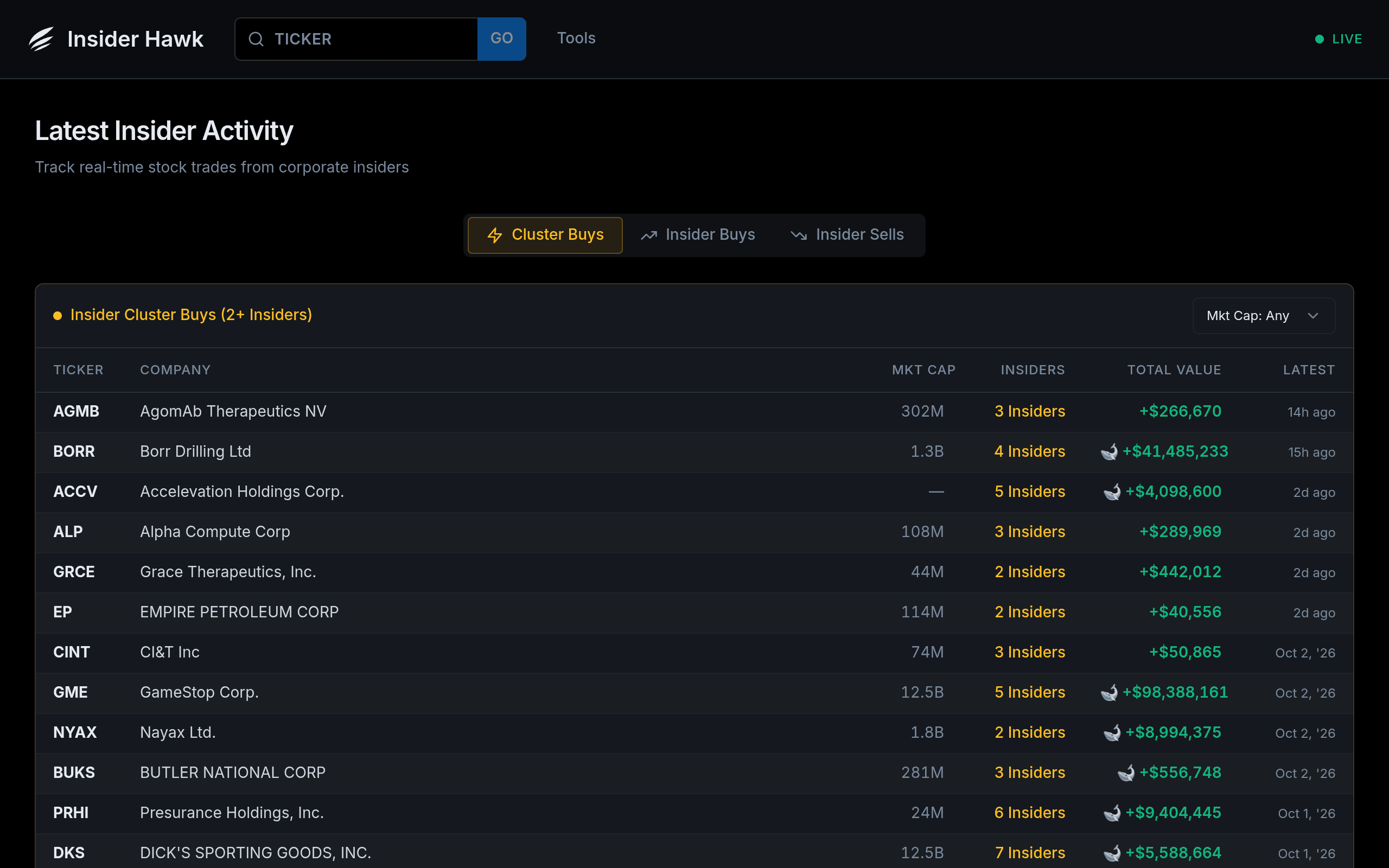
Insider Hawk tracks SEC Form 4 filings in real time and turns them into a single readable surface: a "Latest Insider Activity" table of trades from corporate insiders, plus a dedicated "Insider Cluster Buys" module that flags stocks where two or more insiders are buying together. When half a C-suite quietly accumulates the same ticker, the table puts the cluster, the total dollar value and the market cap in one row. The site is the work of Biron Clark, who has spent a decade in digital marketing — not programming. In his LinkedIn piece Can a Marketer Actually Vibe-Code a Working App? he states it plainly: "I built the site, called Insider Hawk, with the vibe-coding platform Lovable." That matters for what this entry represents: a working data product fed by the US federal securities disclosure stream, shipped by someone whose background is marketing copy, not APIs. The design is unusually opinionated for a fintech side project: cluster buys get their own tab and filter because simultaneous insider buying is historically a stronger signal than any single insider's trade. Whether or not you believe insider data is alpha, the site is a clean, live example of the zero-to-shipped story vibe coding promises — data in, judgment out, no engineering team required. curated by the VibeFix editors
V@VIBEFIX
0
0
3
0
大赏
已上线
安全隐私claude-code
EchoCert Midnight
Zero-knowledge selective disclosure: prove one field of your diploma, reveal nothing else, leave nothing linkable behind
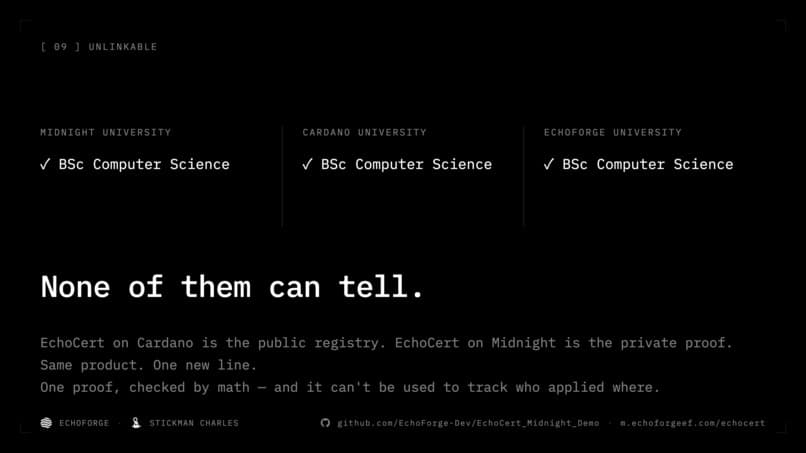
EchoCert on Midnight is a zero-knowledge selective disclosure demo: prove that one field of your diploma is real, reveal nothing else, and leave no trace that lets anyone link two proofs to the same holder. It was built for the MLH Midnight Hackathon (2026-08-28 → 30) as a privacy upgrade to EchoCert, a credential registry the author already had live on Cardano since April 2026. The demo tells it through two applicants, Chuck and Charles. Chuck has a real diploma; he clicks fields to redact them, and the university learns "the diploma is real, the degree is BSc Computer Science" — nothing more. He proves to three universities in three separate transactions that share nothing linkable. Charles has no diploma, so he forges one; his own device refuses to prove it in ~20 milliseconds, before anything is sent. Three properties, all demonstrated live: selective disclosure, local refusal of forgeries, and measured unlinkability. The honesty is the interesting part. The Devpost write-up documents a moment where the demo's claim ("three proofs share no identifier") turned out to be false on byte-diff: a 41-byte run was shared, turned out to be the Merkle root, and the claim survived narrower and backed by a repeatable experiment. The anchor is a real Cardano mainnet record minted on 2026-04-11 — the commitment in the demo points at it, and you can check. The author built it pair-programming with Claude Code and disclosed that in the repo. curated by the VibeFix editors
V@VIBEFIX
0
0
4
0
大赏
已上线
图片视频codex
Darkplug
An iPhone darkroom enlarger timer with f-stop timing, guided test strips and a dodge & burn grid — fired over your local network via a smart plug
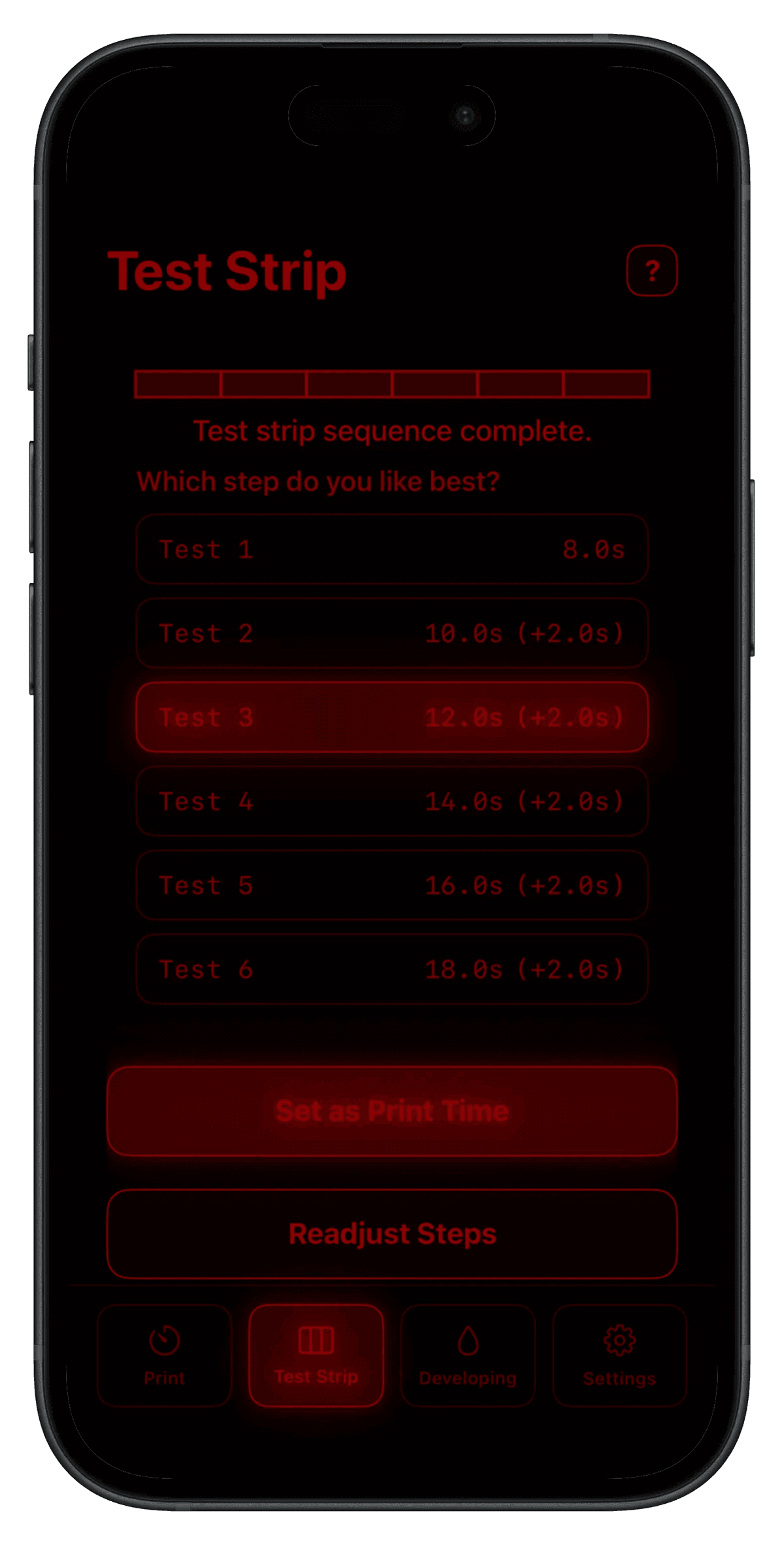
Darkplug is an iPhone darkroom timer that talks to your enlarger. It pairs with a Shelly smart plug on your local network, so the phone in your hand becomes the timer on the enlarger head — no cloud account, no hardware dongle, just a plug beside the enlarger. The craft is in the workflows, not just the countdown. Guided test strips run in seconds or f-stop increments and ask which step you liked best; a unique grid planner lets you design complex dodge & burn sequences before the paper is under the lens; split-grade printing and a guided paper-developing timer cover the rest of the session. Everything renders in a red-on-black interface that the author tested so it doesn't fog photo paper — the kind of domain detail you only get from someone who actually prints. The maker, Péter Szentkirályi, announced it on Hacker News on 2026-10-06 with a refreshingly honest disclaimer: "Fair warning: the app was blindly vibe coded using Codex and Xcode." Blind or not, the result is on the App Store now, with the advanced tools (f-stop timing, test strips, dodge & burn, split grade) unlocked as a one-time Darkplug+ purchase rather than a subscription. Hardware-adjacent, niche, genuinely useful software from prompts — this is the genre where vibe coding earns its keep. curated by the VibeFix editors
V@VIBEFIX
0
0
4
0
大赏
已上线
音乐音频opencodeglm-53-flash
StemKit
Split any YouTube song into vocals, drums, bass, guitar and piano — free, open source, running entirely on your own GPU
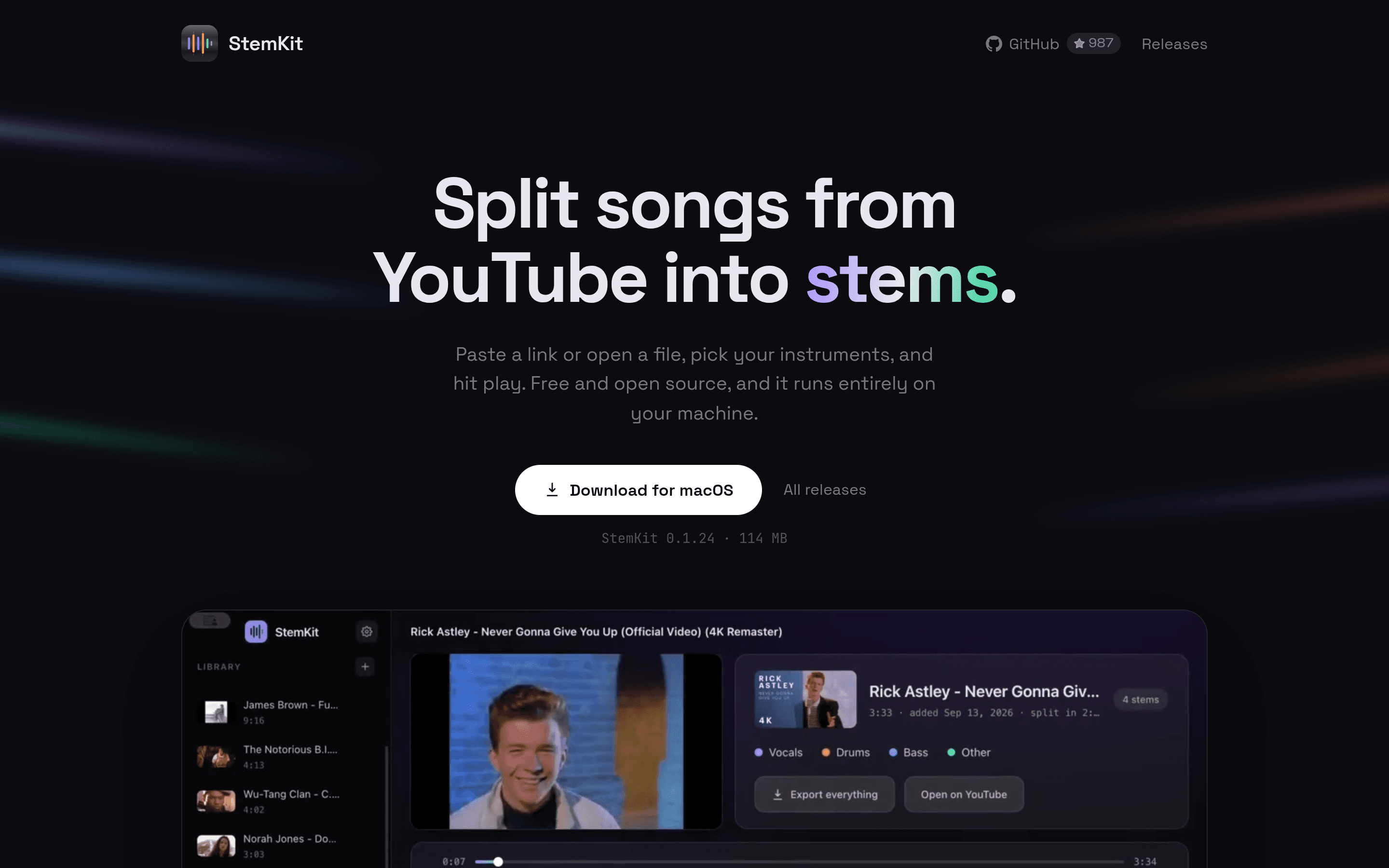
StemKit is a free, open-source desktop app that splits any YouTube song into stems — vocals, drums, bass, plus guitar and piano when you want them — with everything running locally on your own GPU. No account, no upload; songs and audio never leave your machine. Paste a link or open a file, pick your instruments, and every stem exports as a standard WAV file that drops straight into Ableton, Logic, FL Studio or GarageBand. The vibe-coding story is documented by the author on builtbyvibe.dev: “Built using Ox Alpha model (GLM 5.3 - Flash) with OpenCode.” Reddit's r/FL_Studio and r/linuxaudio communities have embraced it — comments praise the separation quality, the local-first design, and the polished UI, with one reviewer noting “it doesn't look like AI slop”. The project's homepage shows 987 GitHub stars, and notebookcheck covered it within days of release. Use cases the author calls out: learning an instrument by soloing the guitar, bass or piano; muting your own instrument to play against a backing track; pulling clean acapellas and drum loops for remixes; and stripping vocals for karaoke. First launch downloads a ~2GB engine once, then local files work fully offline. curated by the VibeFix editors
V@VIBEFIX
0
0
7
0
大赏
已上线
健康健身lovablereplit
Habitot
A kinder control panel for your day — Duolingo-style streaks, XP, focus radio and a mascot that keeps your small promises visible
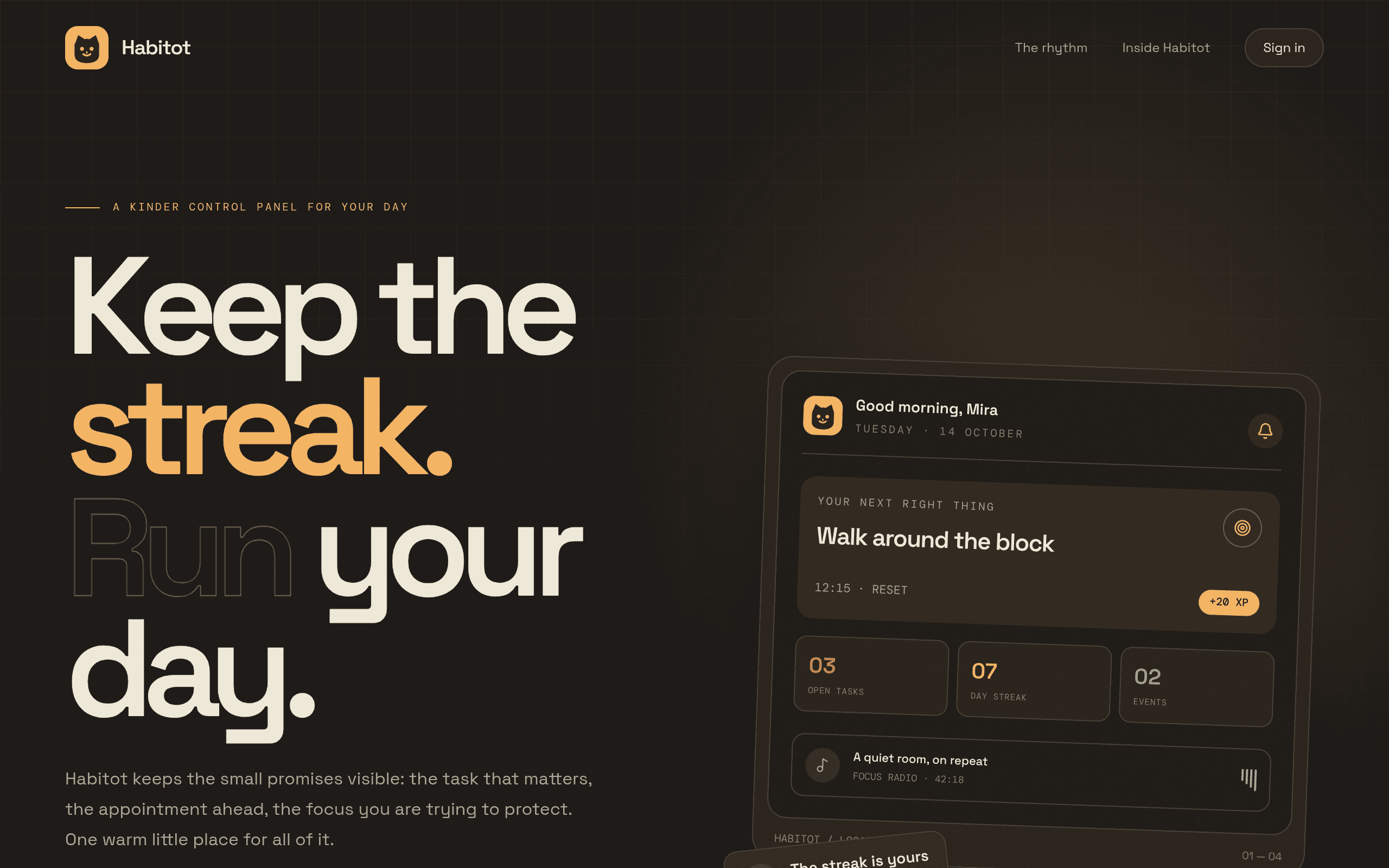
Habitot is a gamified habit and task companion that borrows Duolingo's streak psychology and points it at your whole day. Complete tasks to earn XP, protect a day streak, glance at a calendar view, and keep a focus radio playing while a warm cat mascot watches over it all. The pitch is disarmingly simple: “Keep the streak. Run your day.” The author's GitHub README states the build plainly: “Built with Replit and Lovable” (github.com/aquabyte9/habitotnightly). The declared stack is React + Tailwind CSS on Supabase, with the web app also packed into a native Android APK via Median. The repo was updated about 18 days ago, and the author published a YouTube walkthrough, so it's still being iterated. What makes it stand out in the crowded habit-tracker field is tone: the landing page frames it as “a kinder control panel for your day” — your next right thing, the appointment ahead, the focus you're trying to protect, all in one warm little place. The free web app is live now, no install needed. curated by the VibeFix editors
V@VIBEFIX
0
0
6
0
大赏
已上线
教育astra
Earth - The making of home
Scroll through 4.54 billion years of Earth history on a photorealistic 3D globe — vibe-coded in about 30 minutes
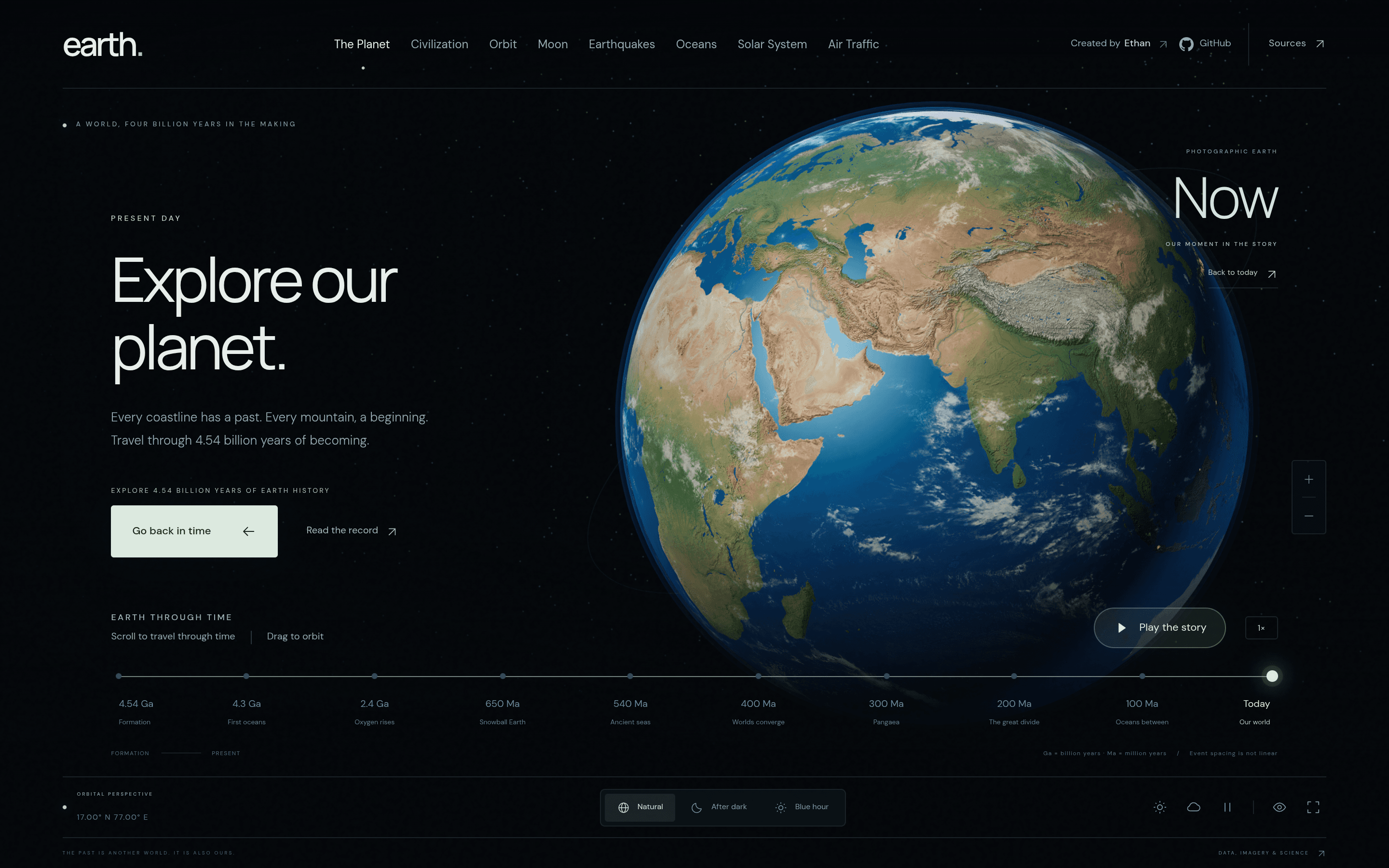
Earth — The making of home is an interactive 3D website that lets you scroll through 4.54 billion years of Earth's history on a photorealistic globe: drag to orbit, scroll to travel through time, from formation through first oceans, Snowball Earth and Pangaea to today. Sections cover The Planet, Civilization, Orbit, Moon, Earthquakes, Oceans, the Solar System and even live Air Traffic. The build story is the headline. On the author's builtbyvibe.dev project page: “It only used 4% of my weekly limit (20x plan)... ‘Create an interactive web platform visually showing the history of the earth, how it changed over billions of years, and a timeline showing how humans spread throughout the earth’... Surprisingly it finished in like 30 minutes.” The builtbyvibe announcement credits the AI tool Astra. The author's GitHub repo (ethanplusai/earth-moon-solar) saw a push on 2026-09-10. Visual polish is exceptional for a half-hour build: real imagery blended with realtime 3D, a geological timeline with animated surface changes, and cinematic camera work — a natural fit for teaching and science communication. curated by the VibeFix editors
V@VIBEFIX
0
0
6
0

大赏
已上线
内容媒体
Daily AI
本地优先的 AI 资讯日报桌面应用:用自然语言定义关注主题,自动检索、核验、提炼成可收藏的中英双语 HTML 日报
Daily AI 是一款本地优先的智能资讯桌面应用:你用自然语言描述关注的主题,它每天自动检索、去重、核验并提炼值得阅读的新进展,整理成一份双语 HTML 日报保存在本地。日报可切换中英文、收藏、搜索、按月份筛选和日期汇聚,让每天的阅读沉淀成自己的知识档案。 它最大的特点是本地优先:日报以 HTML 文件形式保存在你自己的电脑上,数据经 SQLite 管理;你可以自带任意厂商的模型 API Key(GLM、OpenAI、Anthropic、Gemini、DeepSeek、通义千问、豆包均可),也可以选择订阅服务。官网把 vibe coding 写进了页脚:「这个项目完全基于 vibe coding 构建,欢迎反馈、Star 或 Fork。」GitHub README 更单列一节「100% 基于 vibe coding 开发」,坦言用自然语言提需求、与 AI 协作完成设计、代码与排错,再结合真实使用反馈持续迭代。 项目由 zkccpro 维护,采用 MIT 许可证,GitHub 仓库约 9 天前仍在更新,当前版本 0.2.13,作者声明的技术栈是 Electron + Node.js 22 + SQLite。Windows 10+ 已有安装引导包与免安装版可下载,Ubuntu 版本仍在适配中。 VibeFix 编辑部精选
V@VIBEFIX
0
0
6
0
大赏
已上线
游戏claude-code
CHOP FIRST
Free browser car racing built without a single line of code — drift mountain touges, street-race Accra, or duel a trash-talking AI driver
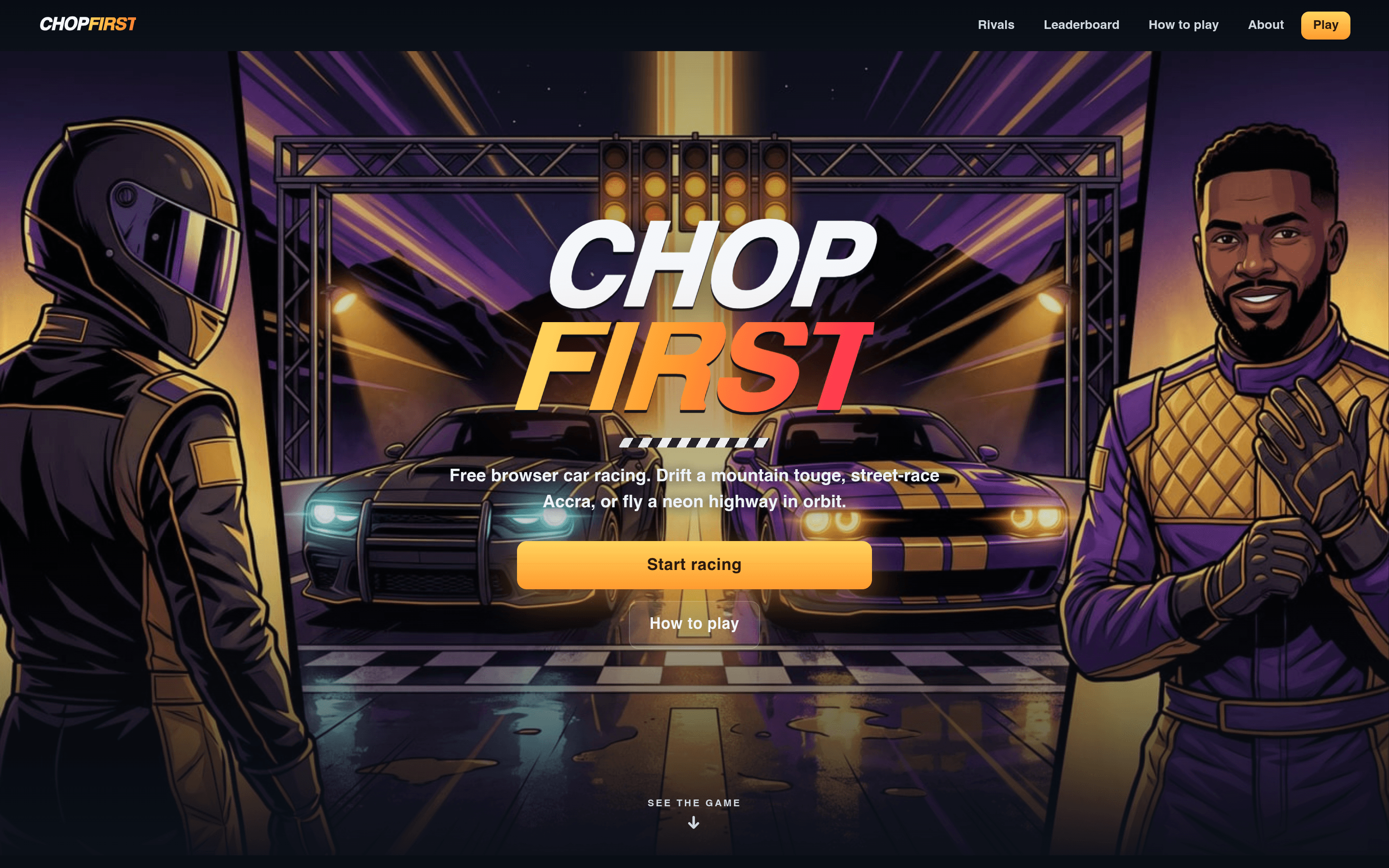
CHOP FIRST is a free browser car racing game from Ghana whose maker built it without writing a single line of code. Augustine Osei's announcement puts it plainly: “I built this web-based car racing game without writing a single line of code. Just prompts, patience, and a lot of back and forth with Claude Code.” His Medium post backs it up in the FAQ: “Everything was built with Claude Code.” Two modes carry the game. Time Attack turns every run into a 24-hour ghost duel — share a link, friends race your ghost and leave messages on the road, and rivalries revive if you answer late. Arcade puts Ananse the Spider on the grid next to you: a live AI driver who brakes late into hairpins, boosts down straights, trades paint when you lean on him, and talks the whole race. Four cars with distinct handling — including a yellow Ghana taxi and a wallowing high-roof trotro — race across three circuits: a mountain touge, the streets of Accra, and a neon orbital highway around a ringed gas giant, each in day, dusk or night. Under the hood is a hand-rolled kinematic arcade controller in React Three Fiber, Sketchfab car models cleaned up through a Blender MCP server, and art generated with Higgsfield and Nano Banana. The site keeps growing — a third circuit and the Ananse AI rival were added after launch. curated by the VibeFix editors
V@VIBEFIX
0
0
5
0
大赏
已上线
效率claude-code
RioShot
A free screenshot editor that never uploads your images — annotate, redact, and paste anywhere, all in-browser
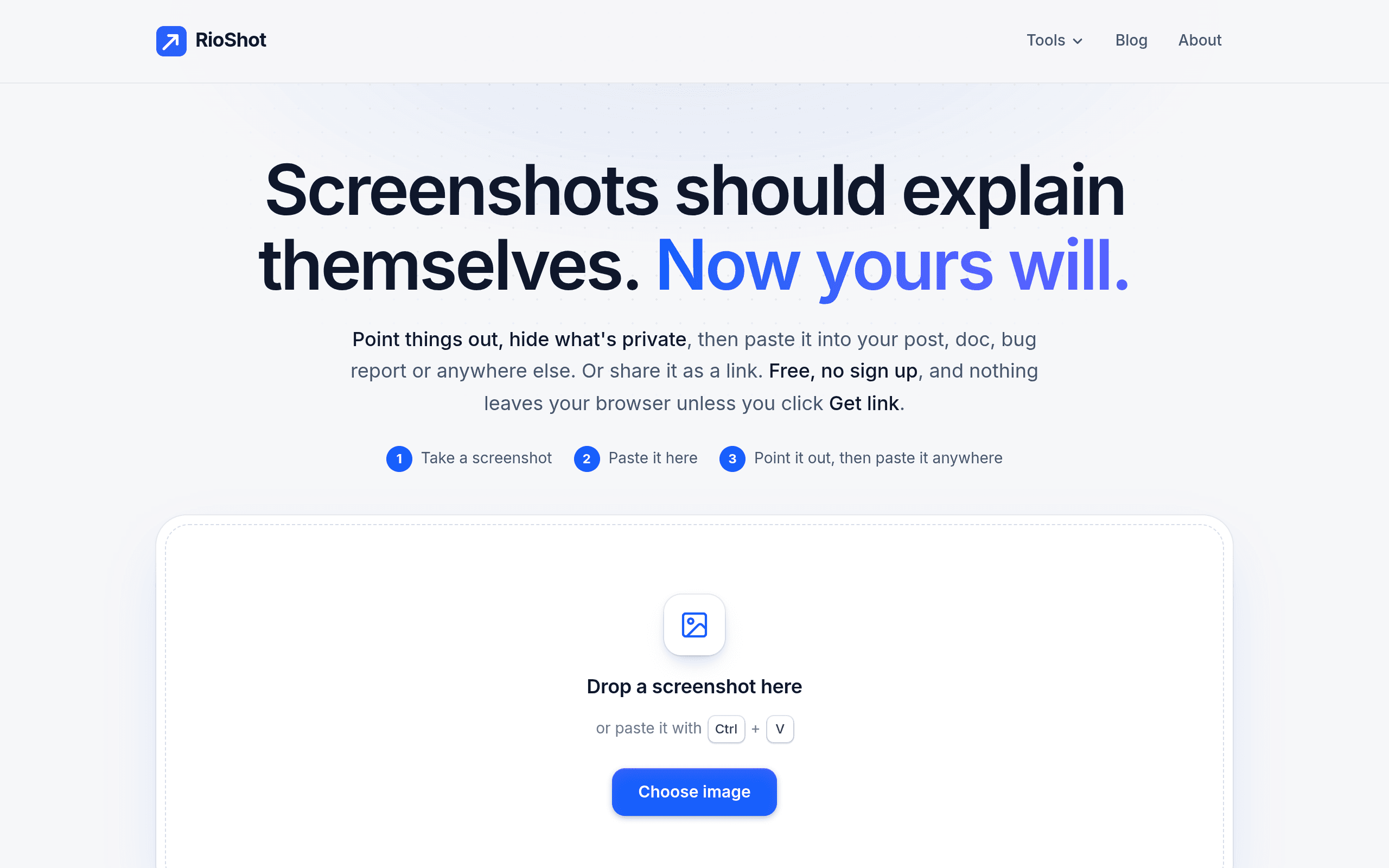
RioShot is a free screenshot editor built around a radical simplicity: take a screenshot, paste it (Ctrl+V), annotate it, and paste the result anywhere. No upload, no account, no watermark. Everything happens inside your browser — the only time an image leaves your device is when you click Get link to share it. The toolkit matches how makers actually communicate: arrows, highlights, blur and redact to hide private details, zoom callouts to point at tiny buttons, and a dark spotlight that dims everything except the number that matters. Fourteen before/after examples on the homepage show how much a single annotated screenshot can say. It is also a vibe-coding case study. Maker Alberuni Azad announced it in the vibecodinglife Facebook group on October 1, describing “building and launching a free screenshot editing app called RioShot in a single sitting … development with Claude Code and the Opus 5.5 model” — from idea to domain purchase, testing, deployment and launch in one session. Private by design, instant, and free — the rare annotation tool that never makes you wonder where your screenshots went. curated by the VibeFix editors
V@VIBEFIX
0
0
6
0
大赏
已上线
工具claude
OpenForge
A no-code website builder that's a single HTML file — drag blocks, export static sites, zero dependencies
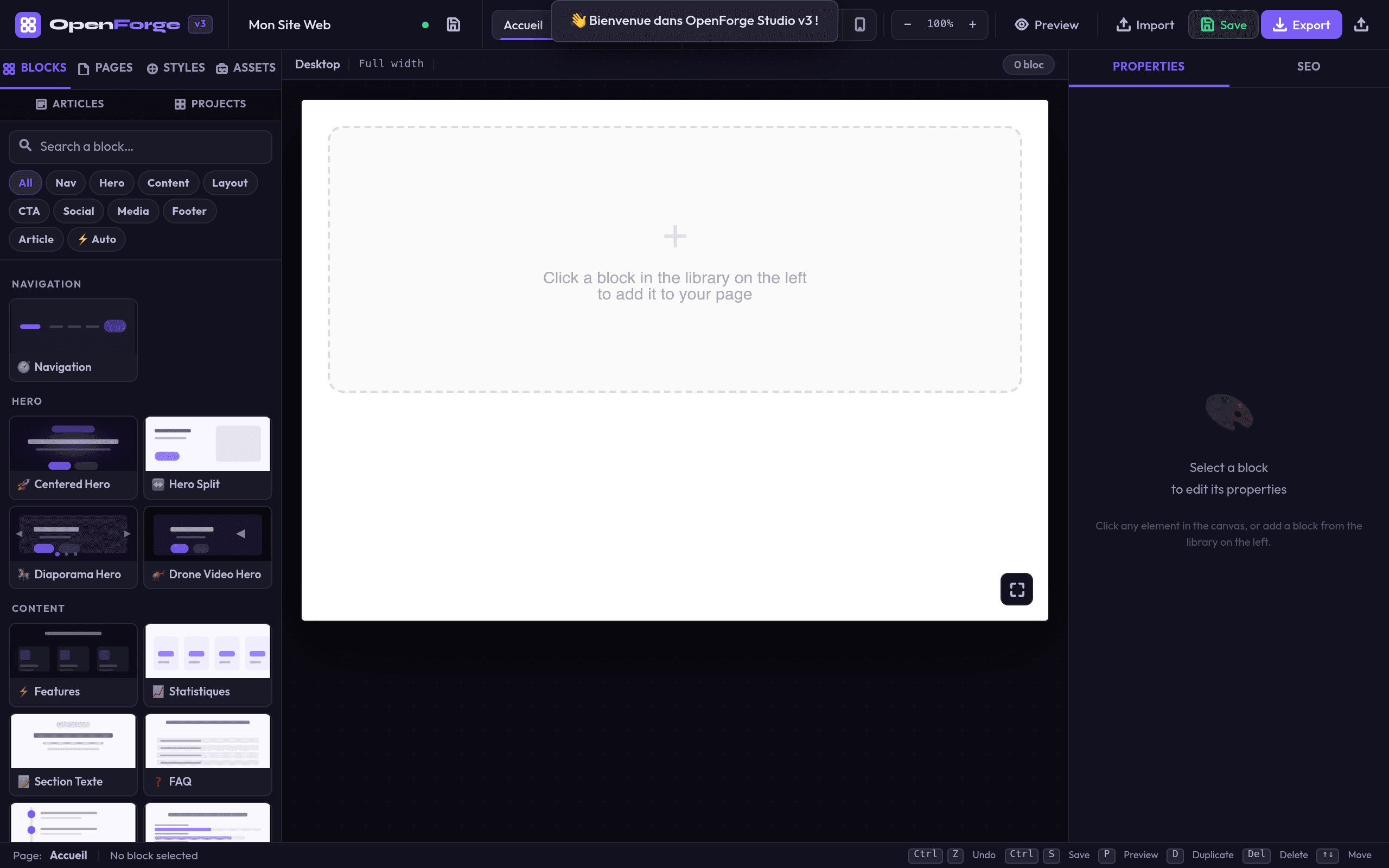
OpenForge is a full no-code website builder that is itself exactly one HTML file: no backend, no build step, no dependency pile. Open the page, drag blocks — nav, hero, content, footer, articles — into a canvas, tune styles in the properties panel, preview on desktop or mobile, and export standalone static HTML/CSS/JS, with localStorage persistence between sessions. The exportability is the point. Unlike platform builders that lock your site behind their walls, OpenForge's output is portable static files you can host anywhere — the same anti-lock-in instinct that drove the single-file design. Its creator, u/ConsistentWay7704, introduced it on r/vibecoding with the title “I vibe-coded a full no-code website builder using Claude's free plan” — built entirely on Claude's free tier, published as open source on GitHub (Moi455/OpenForge_No-code-website-builder). A neat paradox for the showcase: a vibe-coded tool that lets non-coders vibe-code websites. curated by the VibeFix editors
V@VIBEFIX
0
0
4
0
大赏
已上线
设计创意codex
罗绪海 App 作品集
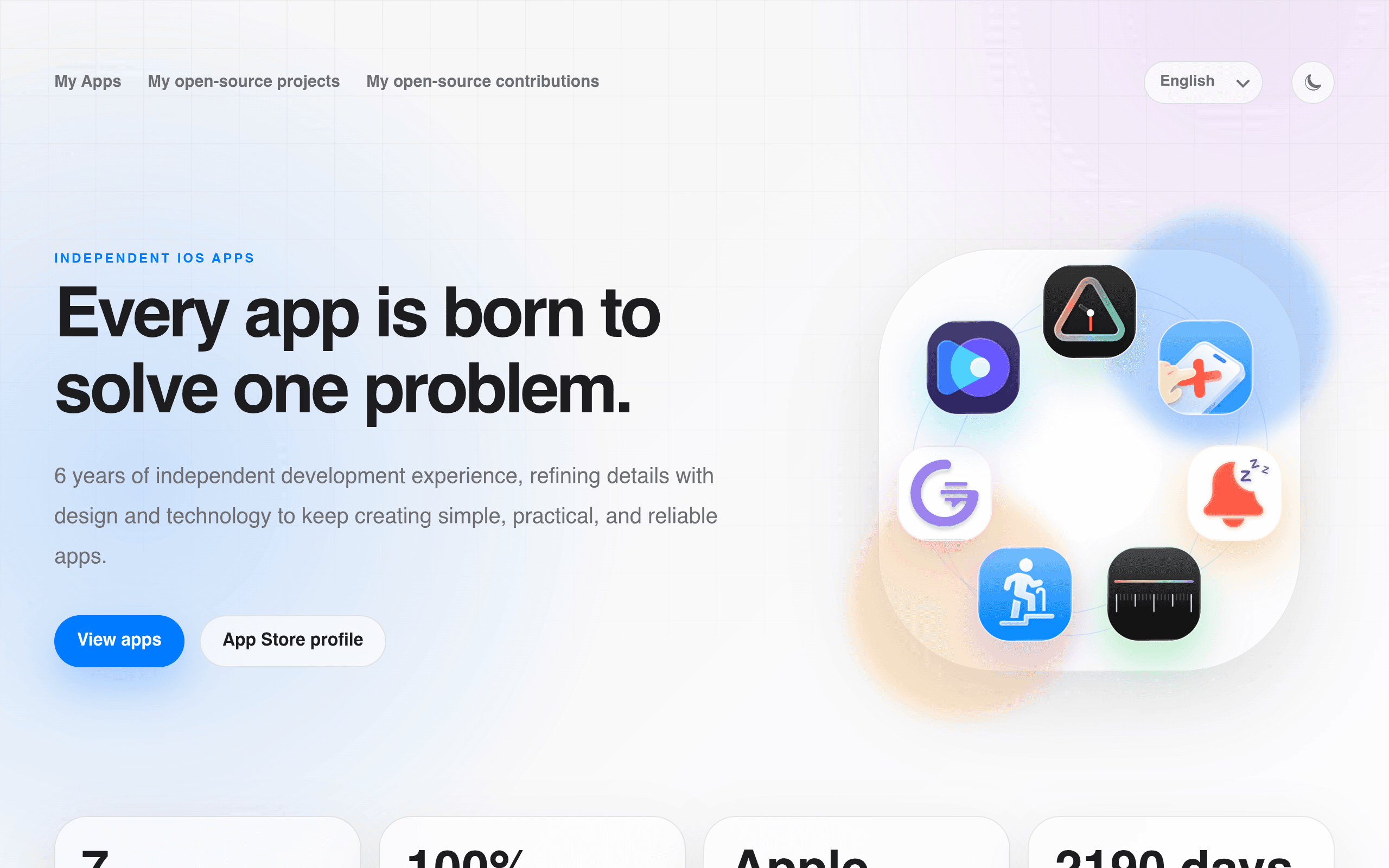
独立开发者罗绪海的 iOS 应用作品集——6 年独立开发心血,全部 App 一页尽览
这是独立开发者罗绪海的个人作品集页面:一个网页收录了他 6 年独立开发路上的全部 iOS App——每一款应用都“为解决一个问题而生”。页面用轨道式动画展示每一款应用图标,滚动即可浏览,点进每款 App 看到介绍与 App Store 下载入口。 最有意思的是它的诞生方式:作者在 V2EX 发帖自述“我花费 2 小时 Vibe coding 出的个人作品展示页面”,“全程使用 Codex,没有手写一行代码”。代码已开源在 GitHub(luoxuhai/products),并用 Astro 框架搭建。 对独立开发者来说,这是一个很务实的样本:用 AI 两小时做出一个体面的展示页,把真正的作品(App 本身)推到台前,而不是在官网像素上纠结半年。 curated by the VibeFix editors
V@VIBEFIX
0
0
6
0
大赏
已上线
娱乐
Dice Roller
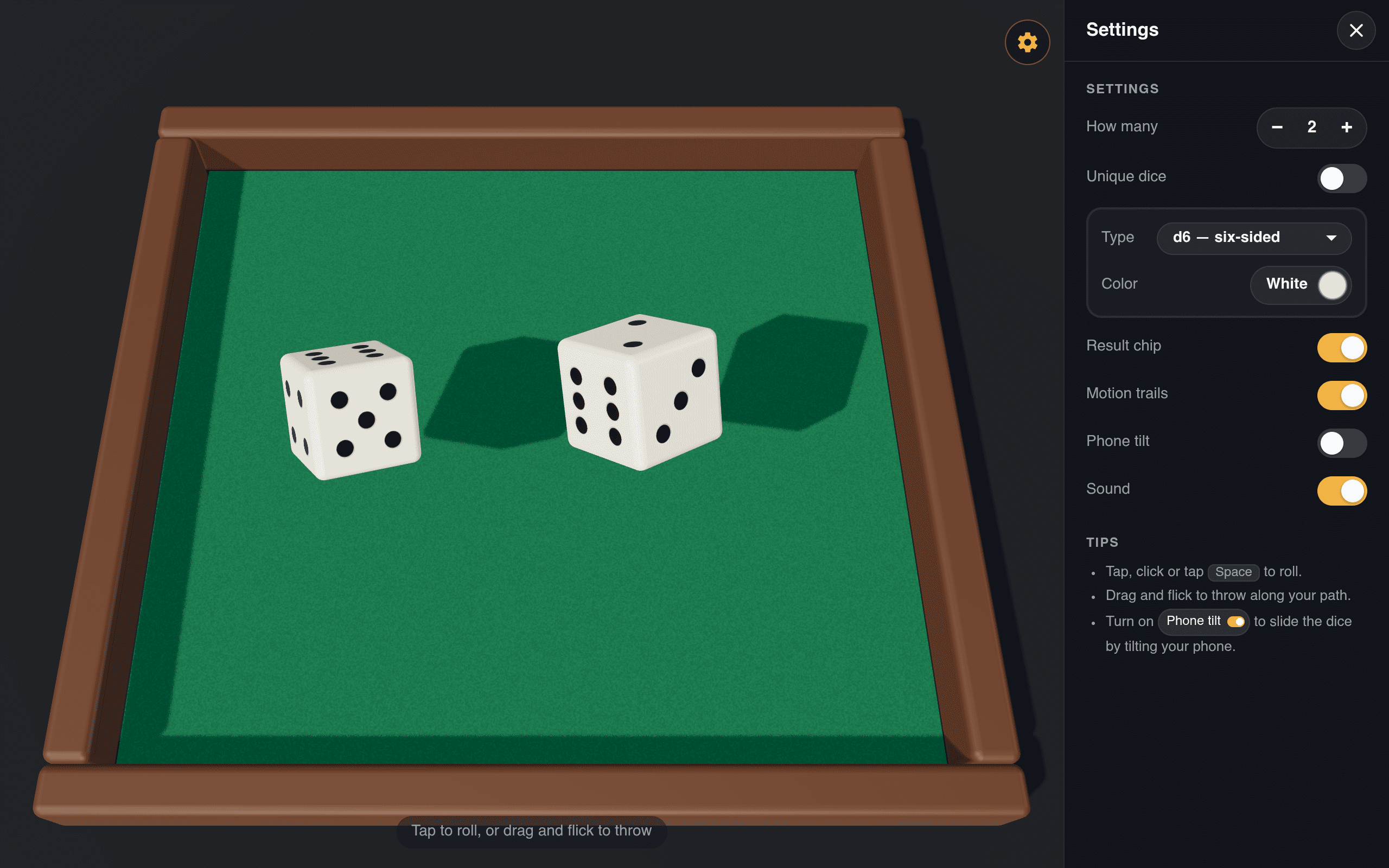
A physics-based 3D dice roller that runs entirely in the browser — tap to roll, flick to throw
Dice Roller is a physics-based 3D dice roller that runs entirely in your browser: tap to roll, or drag and flick to throw the dice with real simulated physics. You watch the faces tumble and land — what you get is what the physics gives, with no hidden RNG reveal. The settings panel shows the craft: dice count, d4 through d20 types, colors, result chips, motion trails, phone-tilt control, and sound — all in a polished dark UI, hosted free on GitHub Pages with zero ads. Maker swid posted it on Show HN on September 29 with disarming honesty: “Yes it is a vibe-coded static site, but I'll share it anyway since people have liked it” — adding that he built it because he couldn't find a good free dice app that wasn't covered in ads. Small, honest, and genuinely fun — the kind of single-purpose tool the web used to be full of. curated by the VibeFix editors
V@VIBEFIX
0
0
5
0
大赏
已上线
音乐音频claude-code
Viboplr
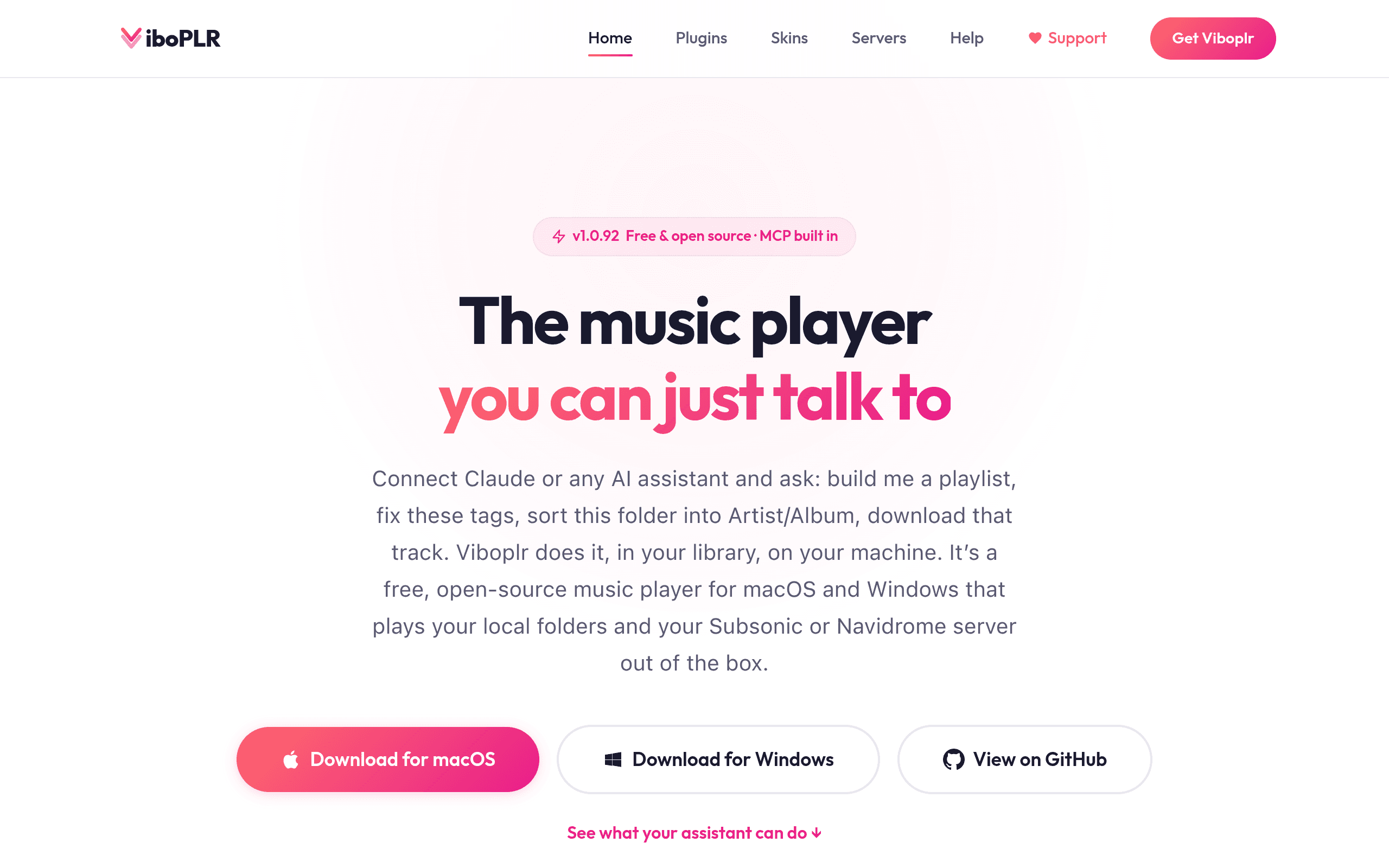
The music player you can just talk to — every line written by Claude Code, MCP built in
Viboplr is the music player you can just talk to: connect Claude or any AI assistant and say "build me a playlist," "fix these tags," "sort this folder into Artist/Album" — it does it, in your library, on your machine. A free, open-source player for macOS and Windows with a built-in MCP server. The README's "Built with AI" section is unusually honest: "Built by AI. Every line of code was written by an AI coding assistant (Claude Code). The human role is tech lead and product owner: decide what to build, define how it behaves, review, test, and push back until it's right." 2,500+ commits, 35 releases, GPL-3.0 — this is not a weekend demo, it's a shipped product at v1.0.92. The model it proposes is the interesting part: the human as tech lead, the AI as the entire engineering team, with .claude/rules/ guardrails and machine-checked linting standing in for code review. Viboplr is what that workflow produces when it's done well. curated by the VibeFix editors
V@VIBEFIX
0
0
7
0
大赏
已上线
内容媒体claude-code
The Morning Lineup
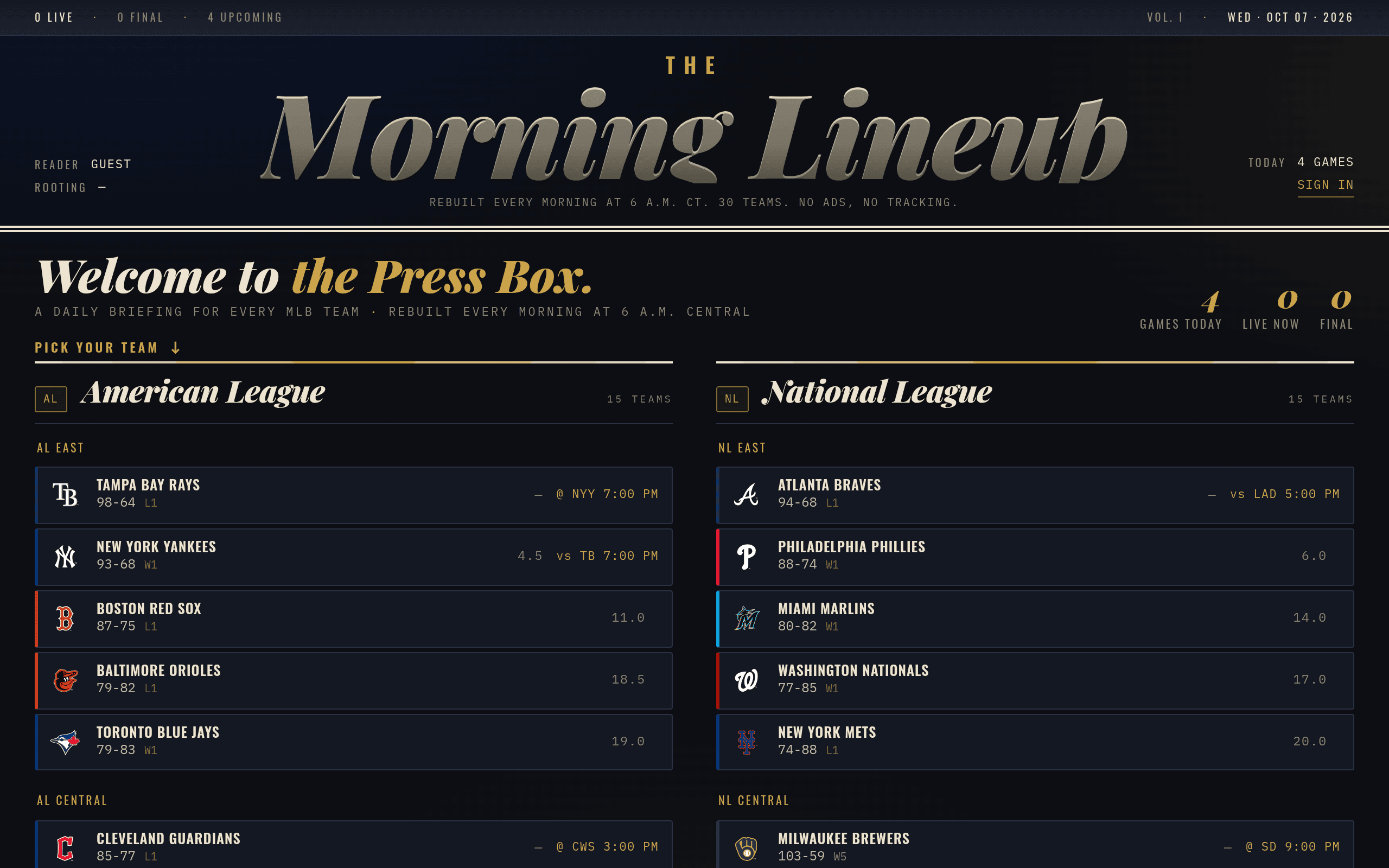
A daily briefing for every MLB team — rebuilt every morning at 6am CT by a scheduled Claude agent
The Morning Lineup is a daily newspaper for baseball: one page per MLB team, all 30 of them, rebuilt every morning at 6 a.m. Central. A scheduled Claude agent fetches fresh MLB Stats API data, rebuilds every team's page, and regenerates three LLM-authored columnist columns per team before deploying the whole site to GitHub Pages. The maker's README says it plainly. Credits: "Built by JB Brawley — Head of Growth at Resolve Logistics, vibe coder by night." The stack is deliberately spartan — Python 3.12 stdlib only, vanilla JS, no build step — with Ollama's qwen3:8b handling the writing locally and the Anthropic API as fallback. Nearly 15,000 commits, most of them the daily rebuild firing on schedule. The proof is in the masthead: the screenshot above shows today's date and "4 games today" — the pipeline ran this morning. A newspaper that writes and prints itself, one agent cron job at a time. curated by the VibeFix editors
V@VIBEFIX
0
0
6
0