Stop Copy-Pasting Prompts: When to Turn Them Into an Agent Skill
How many "god-tier prompts" are rotting in your bookmarks? The third time you paste the same prompt, it should graduate from a one-off instruction into an installable Skill. The real difference between prompts and Skills, three upgrade signals, and a hands-on skill directory walkthrough.

Every vibe coder has a bookmarks folder full of "god-tier prompts": code review templates, commit message generators, PRD breakdown instructions. They get copied, pasted, and copied again — until one day you realize you've pasted the same 300-line review prompt for the eleventh time this month, hand-editing three project names each time. The problem isn't that the prompt is badly written. It's that you've been using a one-off instruction to do a reusable capability's job.
In 2026, as Claude Code popularized Agent Skills, the game is changing: a prompt no longer has to be just a blob of text — it can be packaged into an installable, version-controlled, progressively-loaded skill pack. But many people get it wrong: either converting every prompt into a skill, or continuing to copy-paste in the chat box. This guide gives you a clear decision framework: when a prompt is enough, when it must graduate into a skill, and what a skill's directory structure should actually look like.
Prompts vs. Skills: It's Not Just Formatting
Let's separate the concepts. A prompt is a one-off instruction: it lives inside one conversation, solves one task right now, and its mission ends when the task ends. Want to use it again? Paste it again — along with the manual labor of editing project names, paths, and tech stacks.
A skill, by contrast, is an installable capability pack. Under the Agent Skills convention, a skill is a directory: SKILL.md explains what the skill is, when it triggers, and how to use it, and it can ship with scripts/ (executable scripts) and references/ (docs, checklists, examples). The agent discovers it automatically and loads it on demand — this is progressive disclosure: day to day it costs only a few dozen tokens of metadata, and the full content is read into context only when actually triggered.
An analogy: prompts are sticky notes; skills are the dedicated tools in your toolbox. Sticky notes are fine for "remind me once" things. But if you tighten the same screw every week, buy a real screwdriver instead of hand-writing "remember: counterclockwise" on a note each time.
The deeper difference is maintainability. Prompts rot across chat histories, Notion pages, and bookmark folders — fix one copy and the others stay stale. A skill is files, and files go into git: update the checklist once and every project picks up the new version next time; rollback, diff, code review — the full discipline of software engineering applies. Prompts are consumables; skills are assets — the single most important judgment in this piece. Remember it.
Three Signals: Your Prompt Is Ready to "Graduate"
Not every prompt deserves to become a skill. My rule is three signals — hit any one of them and it's time to act:
- Signal one: you've pasted the same prompt a third time. "Three strikes" is the iron rule. The first paste is an experiment, the second is validation, the third means this is a stable, reusable workflow. Every additional paste charges you three hidden costs: the manual labor of editing parameters, the context tokens consumed, and the uncertainty of "is this even the latest version?" The third time is the moment to crystallize it.
- Signal two: it involves multiple steps and file operations that words alone can't convey. If your prompt says things like "first run script X to check, then go through the checklist item by item, then output a report in format Y" — that's no longer a "one-line instruction," it's a "process." Processes need structure: scripts should be real scripts (scripts/), checklists should be real documents (references/), not crammed into one prompt for the agent to improvise around.
- Signal three: you want others — or future-you — to use it in other projects. Copy-paste distribution of prompts across a team or multiple projects is a disaster: A tweaks the wording, B still uses the old version, C never knew it existed. A skill goes into a git repo — write once, install everywhere, one version everywhere. This is the watershed between "personal trick" and "organizational capability."
Conversely, if a prompt is used once, relies purely on the model's improvisation ("help me brainstorm a product name"), or you're still editing the wording constantly — don't rush to skill-ify it. Premature structuring is its own kind of waste: let the prompt stabilize in real combat first, then crystallize it.
One more word on misfires: a skill's biggest hidden cost isn't writing it — it's misfiring. A description written too broadly ("helps users write code") gets loaded by the agent at every turn, burning thousands of tokens for nothing. My rule: the description must spell out negative conditions — exactly when NOT to trigger. Every time you catch a misfire, revisit the description and add that scenario to the "don't use" list. Good skills are tuned, not written — the first two weeks of tuning decide the next six months of experience.
Real Case: From a 300-Line Prompt to a Skill (With Directory Walkthrough)
An indie developer I'll call K maintains five small projects and owns a code-review prompt polished over half a year: 300+ lines covering security, performance, and readability checklists, plus strict output-format requirements. Before each use, he hand-replaced project names and tech stacks and deleted irrelevant checklist items. Worse, the prompt devoured roughly 8,000 context tokens every time — a huge chunk of the context window gone before the review even started.
He rebuilt it as a skill called code-reviewer. The changes were immediate:
- SKILL.md shrank to 800 words. It now states only when it triggers (user says "review," or before submitting a PR), the three-step review process, and the output format. The 300 lines of checklist detail moved into three files under references/, loaded on demand by the agent — irrelevant checklists no longer occupy context.
- Executable scripts replaced prose descriptions. The prompt's old line "first run lint and type checks" became scripts/precheck.sh, which the agent executes directly — stable, predictable output, no longer relying on the model to "remember" to run it.
- Write once, reuse in five places. The skill went into his dotfiles repo and got installed across all five projects. One day he added "check for SQL string concatenation" to the security checklist; after a git push, every project picked it up on the next review — an update that used to mean digging through old chat histories one by one.
Quantified: per-review context usage dropped from ~8,000 tokens to ~1,500 (on-demand loading), manual parameter editing went to zero, and version chaos disappeared entirely. K put it this way: "I used to 'feed' the agent work. Now I 'equip' the agent for work."
Directory walkthrough: here's a minimal structure you can copy verbatim:
- skills/code-reviewer/SKILL.md — the skill's "manual + trigger." Start with frontmatter carrying name and description. Note: the description is the routing signal the agent uses to decide when to load it — write the trigger scenario, not a feature pitch. Write "use when the user asks for a code review, or to check code quality before submitting a PR," not "a code review tool." The body has four sections: what problem this skill solves, when to use it, when NOT to use it, and the execution steps plus output format. "When not to use" matters as much as "when to use" — it prevents misfires and saves mountains of tokens and waiting time. Keep it between 800 and 1,500 words; longer and the agent loses the plot.
- skills/code-reviewer/scripts/ — executable scripts. For example, precheck.sh (one command to run lint, type checks, and unit tests) and extract-diff.sh (extract the list of changed files). The principle: anything deterministic and mechanical becomes a real script — don't let the model "perform" execution in prose. Scripts need execute permission and machine-readable output.
- skills/code-reviewer/references/ — on-demand reference material. For example, checklist-security.md (security checklist), checklist-performance.md (performance checklist), examples/good-review.md (an example of an excellent review report). The agent reads them only when SKILL.md points there — never stuffed into context all at once. That's where progressive disclosure actually saves tokens.
Three more hands-on tips for writing SKILL.md: first, steps describe "what to do," not "how to do it." Steps are the agent's action outline; details sink into scripts and references — that's the precondition for progressive disclosure to work. Second, give the skill a verb-like name. code-reviewer, db-migrator, api-tester — the name is the intent, and the agent routes more accurately. Third, trial-run it three times on a small project before promoting it. Watch whether triggering is accurate and output stable, tune the description and steps, then install it in your main projects.
Your four-step action list, starting today:
- Step one: build a "prompt graveyard" and start counting. Create a doc and log every copy-paste: date, which prompt, where used. When a prompt shows up a third time, it's your first skill candidate. Without counting, it's always "next time."
- Step two: build your first skill with the structure above. Don't be greedy — pick the most-pasted one. Write SKILL.md first (800 words), then extract "mechanical steps" into scripts and "reference detail" into references files. The first one takes under an hour.
- Step three: manage your skills repo with git. Solo devs: put it in your dotfiles for multi-device sync. Teams: a dedicated repo, installed once when someone joins. Write one README line per skill explaining its purpose — future-you will be grateful.
- Step four: "subtract" from your skills every quarter. Skills rot too: models get stronger and some checklist items become unnecessary; processes change and scripts need updates. Review quarterly: how many times was this skill triggered? How much time did it save? Delete the unused ones without mercy — there is no such thing as a zero-maintenance skill.
One more counterintuitive warning: more skills isn't better. I've seen someone build 40+ skills, forcing the agent to read 40 descriptions on every routing decision — trigger accuracy went down, not up. Worse than five well-kept ones. My suggestion: 5 to 10 for individuals, 10 to 20 for teams; beyond that, subtract before you add. Also beware "resume-driven skills" — skill-ifying one-off needs like "write my weekly report" just to look professional is pure vanity. The test is always one question: will it trigger again next month? If not, let it rest in the prompt graveyard. Skills are assets; assets need tending. Hoarding isn't investing.
One clarification: how do skills relate to MCP and plugins? Simply put, MCP connects the agent to the "outside world" (databases, APIs, browsers); skills install "ways of working" (processes, conventions, checklists). They're complementary, not competing. In a mature agent workflow, MCP is about reach, skills are about correctness. Crystallize your prompts into skills first, then explore the MCP ecosystem — don't reverse the order.
My Take: Skills Are Becoming the New Dividing Line of the Agent Era
Looking back, the prompt-engineering dividend is fading: models keep getting better at understanding fuzzy instructions, and the value of "wording tricks" is decaying. But value is rising on the other end — crystallizing "how work gets done" into structured assets that agents can reuse. Skills are the vehicle for that asset class.
My prediction: within a year, "can write skills" goes from geek toy to team standard, the way "can write a Dockerfile" once did. It doesn't measure how well you "tame" models — it measures how well you make implicit workflows explicit and turn one-off experience into reusable infrastructure. And that is precisely the part AI can't replace — because "how things should be done" always comes from your real-world practice.
So do one thing tonight: open your prompt collection, find the most-pasted one, and ask yourself — is it worth a fourth paste, a fifth? If the answer is "I'll use it many more times," stop copying: give it a directory, a name, and version control. Your agent deserves better equipment.
Related articles

On October 3, engineer Kevin Liao published a polemic that hit the HN front page: agent memory plugins are a lottery over RAG snippets; what agents need is a documentation workspace. The essay's diagnosis, its open-source Operator Memory plugin, the two strongest objections, and the minimal practice you can start tonight.

Gergely Orosz visited OpenAI, Anthropic, Cursor, and Ramp and wrote up the 2026 state of the industry: near-100% AI-generated code, agent PRs up ~10x in eight months, code review degrading into theater, the IDE declared legacy. Key takeaways plus three verdicts and four actions for vibe coders.
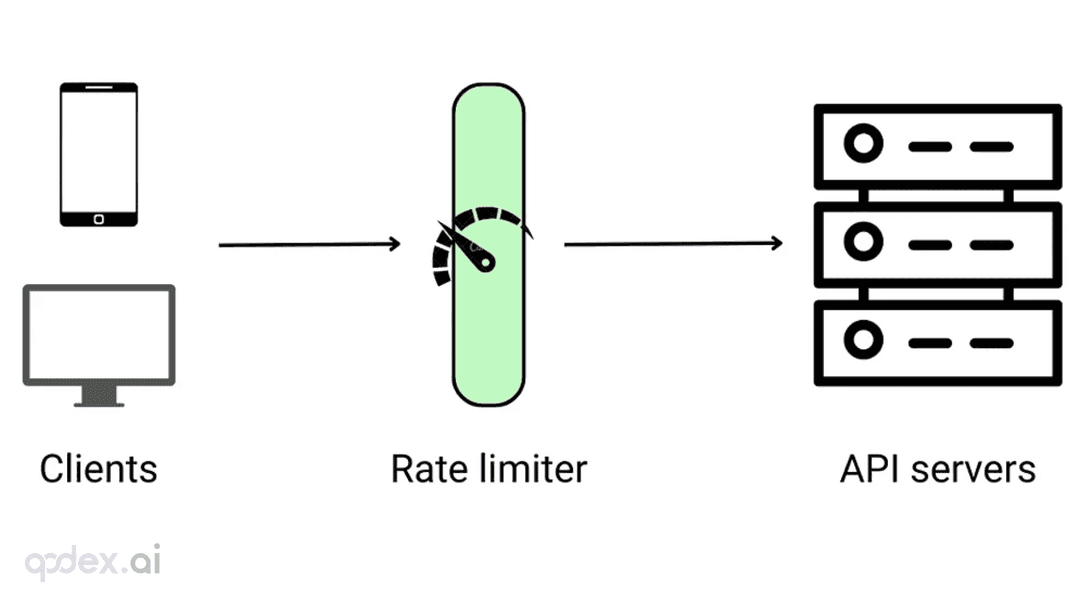
Every public endpoint will be called beyond your expectations some night. This guide builds a one-person-team rate-limiting system: algorithm choice (sliding window vs token bucket), four-layer defense, AI-endpoint money-burning protection, quota design, 429 response conventions, false-positive triage, and a launch checklist.