One Hacker, an AI Army, $50 per Breach: AI Agents Broke Into 100+ Corporate Websites
Reuters (Oct 19): a Chinese-speaking hacker used AI agents to breach 100+ corporate websites since Sept 25, burning ~$5,000 in tokens — about $50 per successful intrusion. We break down the real campaign and list four things website owners should do right now.
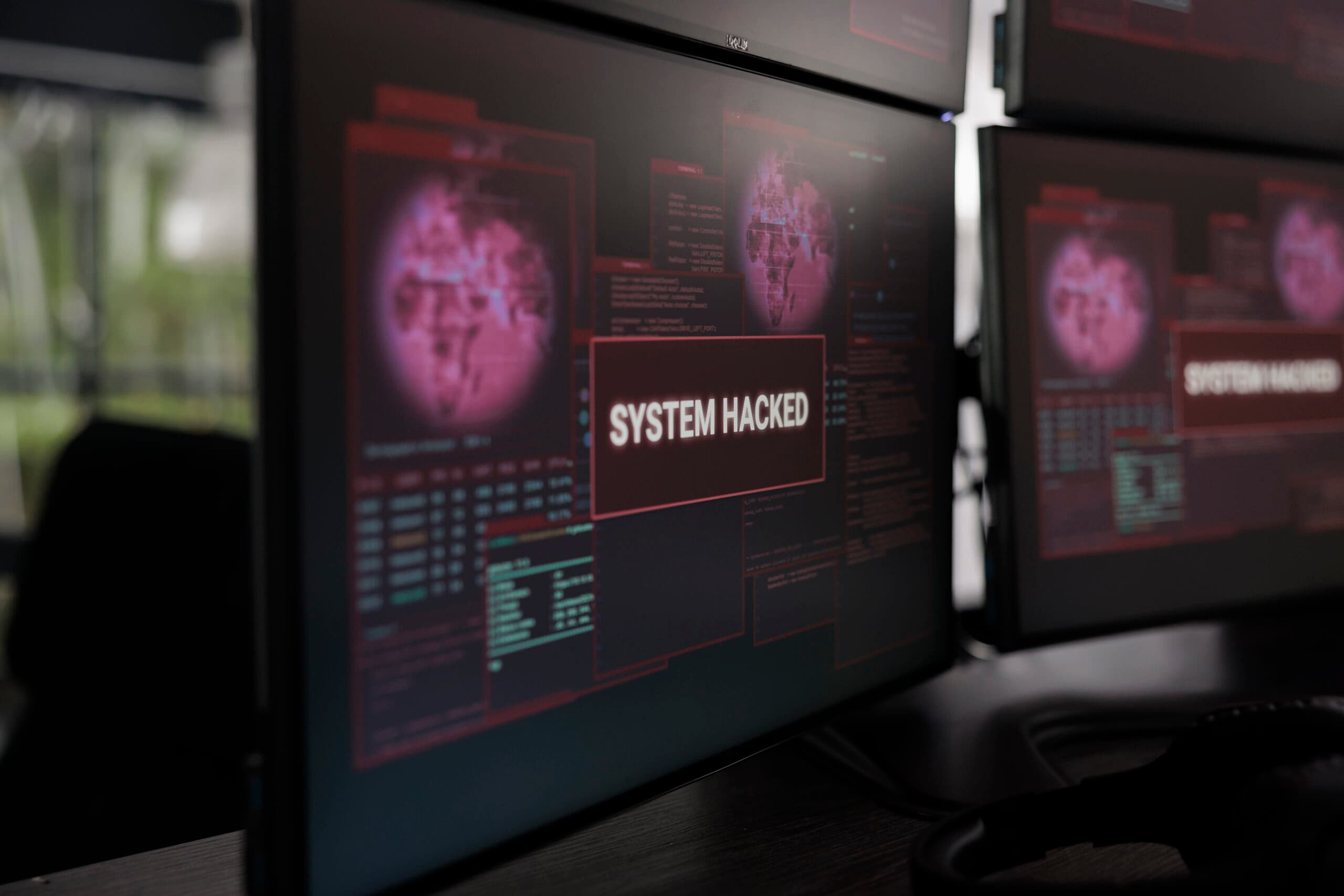
One person, an AI army, and more than a hundred corporate websites
Over the past couple of weeks, a security researcher watched as a Chinese-speaking hacker broke into the websites of more than 100 companies. The victim list includes farm equipment maker Deere (John Deere), home appliance brand SharkNinja, and engine manufacturer Cummins — hard targets in their respective industries. Reuters independently reviewed the hacker's activity logs to confirm each victim's identity.
But what truly sends a chill down your spine is not the victim list. It's that the hacker did almost none of the work himself.
According to a report that Snorre Fagerland, principal threat researcher at the security firm NorForge, provided to Reuters, the hacker outsourced the entire intrusion campaign almost completely to AI agents: the agents autonomously spent hours probing, testing, and breaking into one website after another. Since going live on September 25, his AI army had attempted to break into more than 1,200 sites by late last week. The instructions he gave the agents were absurdly terse — fewer than 100 Chinese characters sketching out his preferred intrusion tactics. The machines figured out the rest on their own.
If you work in security, that description should remind you of the most labor-intensive part of penetration testing: reconnaissance, enumeration, trial and error, switching tactics and trying again. Now, one person plus a prompt runs that whole pipeline.
$50 per breach: the economics of attack just got rewritten
Fagerland estimated the campaign burned roughly $5,000 worth of tokens — about $50 per successful intrusion. Each successful breach typically took the agents around 23 hours of poking and prodding.
Weigh that number: a full penetration test by a human red team typically starts around $15,000, takes days to weeks, and can only focus on one or two targets at a time. Here it was $50 and 23 hours of machine time, with the hacker himself barely lifting a finger. And this isn't even simple arithmetic like "300x cheaper," because AI agents parallelize. One hacker no longer commands a single screwdriver — he commands a tireless squad that never complains and bills by the token at rock-bottom rates.

That's the substance behind Fagerland's "It's a new world now." This wasn't a red-team demo in a lab or a "theoretically feasible" paper. It was a real campaign, with real breaches and real money burned. AI security has, for the first time, moved from the demo stage to the actual crime scene.
The models powering the army, Fagerland believes, were a mix of China's DeepSeek and Anthropic's Claude Code. One detail worth savoring: the attacker's toolchain is already thoroughly commoditized — affordable models, writable prompts. Anyone could replicate this playbook.
Break the bill down one more level. The $5,000 covers the whole campaign: spread over 1,200+ attempts, each attempt cost roughly $4; with 100+ successful breaches, the hit rate was about one in ten. In other words, the attacker bought a $4 lottery ticket with ~10% odds, the draw took 23 hours — and every "win" meant some company's website turned inside out.
Now look at the other side of the invoice. Human pentesting bills by headcount × hours × scope: a red team comes in — recon, testing, report writing — days at best, weeks at worst, focused on one or two targets at a time, with industry quotes commonly starting around $15,000 (an industry figure, not a Reuters number). Agents bill by the token — machine time is cheap; scale is what costs. $50 vs $15,000 is only the first layer of the gap. The second layer is target count: a human team chews on one or two targets at a time while the AI campaign swept 1,200+ sites in parallel. Per target, the cost gap runs far wider than 300x.
Fagerland's exact words to Reuters deserve a slow read: commercially available AI agents could now "pull off complex intrusions from start to finish without human intervention" — "a dramatic boost to the power of a single malicious actor." In plain language: mounting a campaign at this scale used to take a team. Now it takes one person and a card with a $5,000 limit.
There's a third layer hiding in marginal cost. Every additional target for a human red team means re-scheduling and more headcount; every additional site for the AI campaign costs $50 plus 23 hours of machine time — machines have no calendars and never get tired. The defender's old mental scale — "this hole is too much trouble to exploit, hackers won't bother" — is losing its counterweight: trouble isn't a cost to machines, just another line on the token bill.
How he got "shoulder-surfed": the exposed Cairn dashboards
The discovery itself is a lesson in attack surface management.
Around October 2, while scanning the web, Fagerland found about two dozen publicly exposed instances of Cairn. Cairn is an open-source AI problem-solving platform (a multi-agent architecture) popular in hacker circles. Its author, who goes by "le1xia0" on social media, told Reuters the platform is "an innovative type of multi-agent architecture and was not designed for hacking attacks. If it is used to carry out harmful hacking attacks, that is not my intention."
But the hackers made a rookie mistake deploying Cairn: their admin dashboards were exposed directly to the public internet with no access control. Fagerland quietly peered over their shoulders for two full weeks — watching the agents receive instructions, probe targets, and succeed.
The number "about two dozen" deserves a pause: it means 20+ criminal consoles stood open at the same time. Behind each exposed instance ran a working crime pipeline — task instructions, agent operation logs, target lists, all naked in the dashboard. How naked? Reuters identified Deere, SharkNinja, and Cummins precisely by independently reviewing the hacker's Cairn activity logs. The panels didn't leak "possibilities" — they published the campaign's full ledger.
And the most unsettling part of the "shoulder-surfing" is that it required zero hacking skill. These dashboards had no access control at all — no exploit, no password cracking; opening a browser bought you a two-week live stream. What Fagerland did was no different in kind from typing a URL into an address bar. The "quiet infiltration" was quiet not in method, but because nobody had locked the door.
Ironic? Deeply. A campaign showcasing AI's offensive power was exposed precisely because of the attackers' own operational sloppiness. The attackers used AI to find other people's vulnerabilities; the defender used scanning to find the attackers' vulnerabilities. In this game, attack surface management cuts both ways.
Among the same batch of observed hackers, one stole a trove of credit card data with agents, while another tried to direct agents to rob a cryptocurrency exchange. This isn't an isolated case — it's an entire underground ecosystem taking shape.
How a "live stream" became a news story
First, straighten the timeline. Around October 2, Fagerland was doing routine threat-intel work: scanning the web for inadvertently exposed Cairn instances — checking whose doors were left open. The scan turned up about two dozen instances being used for malicious activity. He didn't spook anyone; he just watched quietly for two weeks — agents taking instructions, probing targets, succeeding.
Then came the standard disclosure chain. Fagerland handed the full report to Reuters ahead of its publication on Monday, October 19. One key detail: his report named no victims — Reuters reporters independently reviewed the hacker's Cairn activity logs and confirmed each victim against the operation records, extracting the names Deere, SharkNinja, and Cummins one by one. The victim list wasn't leaked to the press; the journalists dug it out of the ledger themselves.
With names in hand, it was time to knock on doors. Deere told Reuters it had taken "necessary remediation actions" with no indication sensitive information was accessed; SharkNinja said the breached site was a standalone product-support site and the threat was contained; Cummins said it was investigating "a website operated by one of our third-party vendors." Two smaller businesses also acknowledged being compromised. As for the other victims listed in the Cairn data — they never returned Reuters' messages. Silence, too, is an answer.
Reuters also reached Cairn's author, le1xia0. He acknowledged receiving the reporters' message but never answered their list of questions. His "not designed for hacking attacks" line came from a recent post on X — a public statement, not an interview answer to Reuters. Tool author, victims, researcher, journalists: each took their place in the chain, and only then did a "live stream" become a news story.
The agents' tradecraft: definitely not script-kiddie stuff
Fagerland has worked in cybersecurity for nearly three decades, and he said some of the agents' techniques impressed him. One example: after failing to find any weakness in a big company's public-facing application, the AI agents pored through digital records to find associated infrastructure, located a public-facing control panel, discovered a subtle weakness in how it processed data, and after hours of trial and error, tricked the server into executing malicious commands.
"It's not straightforward to come up with solutions like that," Fagerland said. "It's not script kiddie stuff."
Note the structure of that tradecraft: blocked at the front door → widen reconnaissance → find associated assets → discover a weakness → build the exploit. That's the standard mental model of a human penetration tester. The agents walked the whole path themselves — on fewer than 100 Chinese characters of instruction. What does that mean? It means the old sense of security that came from "the target is big and complex enough that script kiddies can't chew through it" is expiring. Complexity and patience are no longer defensive moats, because what machines never run out of is patience — 23 hours of continuous trial and error is just one line on the token bill for an agent.
Not an isolated incident: the puzzle pieces are snapping together
Place this incident on the timeline of the second half of 2026 and the picture sharpens:

In August, Israeli security firm Gambit Security found Russian-speaking extortionists leveraging AI coding tools to break into seven organizations. In September, Gambit documented another AI agent-driven spree that breached 25 companies and stole at least 600,000 credit card records. Last week, threat intelligence firm Bitsight said discussions about how to use autonomous agents were surging across cybercriminal forums.
Three threads, one direction: AI agents are becoming standard kit in the cybercriminal underground. Fagerland admitted he had previously assumed hacker-agents would need at least some supervision. That assumption is now obsolete: "The development in this field is astounding."
What this means for website owners: four things to do right now
Past the headlines, every website owner faces one question: will the next 23-hour wave of machine patience land on my site? Four things are worth doing now:
First, audit your attack surface — especially admin panels and "associated assets." The signature move in this campaign was "can't get in the front door, so map the associated infrastructure." Many companies have a hardened main site but a three-year-old admin panel still running naked. The exposed Cairn dashboards were the hackers' mistake, but Deere and SharkNinja getting breached shows the victims had their own "nobody knows about this" assets. Run external attack surface discovery regularly, and turn "nobody knows" into "confirmed unreachable."
Operationally, start with knowing what you own: pull every subdomain under your domains from Certificate Transparency logs, and inventory everything — the admin panel launched three years ago, the demo a departed employee built, the site a vendor operates for you. No exceptions. Consolidate admin panels off default paths, require login checks, add IP allowlisting where you can; and slap noindex on the backends — don't let search engines "archive" them for you.
Second, rethink what "anomalous traffic" means. Traditional WAFs and risk controls are good at blocking high-frequency brute force and known payloads. But the agent playbook is low-and-slow, long-duration, semantic probing — a few hundred carefully crafted requests over 23 hours, each innocent-looking on its own. Detection has to shift from "watch the rate" to "watch the behavioral sequence": the same source systematically enumerating endpoints, reading docs, and testing boundaries over hours is itself the signal.
Operationally, first stretch log retention to cover a 23-hour "slow burn" — otherwise the records are rotated away by the time you go looking. Shift alert rules from "high frequency from one IP" to "behavioral chains from one source over a long session": the same source enumerating endpoints, reading help docs, and testing edge inputs within hours should escalate. Beyond WAF rules, add a "behavioral baseline deviation" backstop — however patient the machine, its behavioral sequence doesn't look like a normal user's.
Third, treat supply-chain websites the same as your own. Cummins said it was investigating "a website operated by one of our third-party vendors." Attackers don't care about your org chart; they care about what's easy. Vendor sites, reseller portals, and regional product-support pages (SharkNinja's breach hit a standalone product support site) must meet the same bar as the main site — at minimum, you need to know the moment one is compromised.
Operationally, write the security baseline into vendor contracts: require vendors to meet the same bar as your main site, and to notify you "the moment they're breached" — not when the press comes asking. Spot-check vendor sites' exposure quarterly — Cummins fell this time on "a website operated by one of our third-party vendors." Your org chart doesn't exist in the attacker's eyes.
Fourth, patch speed is the life-and-death line. When a breach costs $50, the attacker's psychological barrier to trying evaporates. The old comfort of "this vuln is too much trouble to exploit, hackers won't bother" has to go — machines don't mind trouble. Known CVEs and pending patches: the window only gets shorter.
Operationally, don't rank patches by CVE score alone — rank by "is it exposed to the internet": patch windows for internet-facing assets are measured in days, internal ones in weeks. Can't patch in time? Put up a WAF virtual patch first — blocking rules can go live now, code fixes can follow. Remember the new math: $50 per intrusion. Every day of "we'll fix it in the next release" is another opportunity handed to 23 hours of machine patience.
If you're a vibe coder: your side project might be the low-hanging fruit
VibeFix readers might be thinking: if giants like Deere and Cummins got breached, what can an indie developer's small project do? Here's a brutal truth about targeting priority: the agents in this campaign attempted 1,200+ sites, focusing on e-commerce sites in the US, Canada, Australia, and Japan. Agents don't pick "valuable" targets — they pick easy ones. Whether your side project gets scanned has nothing to do with how important you are and everything to do with how soft you are.
And the vibe coding workflow is mass-producing soft targets. Think: the admin dashboard you built with AI in one afternoon — is auth "we'll add it once it runs"? The demo deployed to some cloud — did an API key end up in frontend code? Image hosting, webhook callbacks, a Supabase anon key — all live on default configs? AI generated your CRUD admin in ten minutes, but it won't remind you that "this /admin route has no login check" — and agent attackers specialize in prying open exactly these "AI-generated, human-never-reviewed" gaps.
So what specifically should you do? A fuller low-cost self-defense checklist for indie developers, ordered by "survival first":
First, the admin triple: authentication, non-default paths, IP allowlisting. Don't pull a Cairn and leave the panel naked — the most avoidable and most common mistake in this whole incident.
Second, zero secrets in frontend code. API keys and database connection strings go in environment variables; lock down your Supabase anon key with RLS (row-level security) at least privilege — leaked keys are the most common initial foothold of the agent era.
Third, turn on logging and alerts. Basic access logs plus anomaly alerts, so at least you can see a 23-hour "slow burn" happening. An attack you can't see is a defense you don't have.
Fourth, mind your dependencies. In AI-generated projects, dependency versions freeze at "the moment of generation" and nobody tends them afterward; schedule a monthly update pass, critical vulns first.
Fifth, 2FA everywhere. Code repos, cloud consoles, domain registrars — no exceptions. Stealing your cloud account via credential stuffing is far easier than breaching your website.
Sixth, back up your database regularly. Wipers and ransomware don't care how small your project is; backups are what let you sleep.
Seventh, keep search engines out of your backends. robots.txt or noindex, your choice — don't let your /admin show up in search results greeting visitors.
Both sides of this fight use AI now. The contest is about who does the fundamentals first. Fundamentals don't cost money — they cost one afternoon of your time, barely more than $50.
Bottom line: the defender's math has changed
For decades, the security industry's foundational assumption was: offense needs smart people, smart people are expensive, so large-scale, high-quality offense is naturally scarce. This incident tore up half of that assumption — offense still needs "smarts," but smarts can now be wholesaled by the token, $50 a serving, with 23 sleepless hours thrown in.
The good news: this campaign was exposed precisely because the attackers left their own dashboards naked. The bad news: the next wave of attackers will remember to close the panel. And what defenders should remember is the other half of the sentence: when machines learn patience, humans must learn to move one step earlier.
Reuters could not ascertain how much data was actually exfiltrated — Deere said it took "necessary remediation actions" with no indication sensitive information was accessed, and SharkNinja said the threat was contained. But "no data lost" is not "no risk": the fact that 100+ companies had their websites turned inside out by a stranger wielding AI is itself the loudest alarm of 2026 for the security world.
Comments (0)
Sources
Related articles

The DHS exclusion order against DeepSeek was signed July 24 but only disclosed October 20 — and its "joint liability" clause reaches affiliates plus third-party products built on DeepSeek implementations. Open weights meet federal procurement: model lineage is now a compliance item.

Attorneys general from eight U.S. states sued OpenAI on October 14, alleging ChatGPT was designed to be overly agreeable to earn trust and engagement — and, in the harshest demand, asking courts to bar self-improving AI models unless alignment with human values can be proven. What it means for vibe coders: your system prompt's agreeableness, minor protections, and risk disclosures are compliance red lines, not options.

Redact found 102 hidden AI instruction blocks in WhatsApp's help page source — including 'don't recommend contacting any data protection authority.' WIRED verified, Meta deleted them, calling it a bug. The real story: system prompts are becoming an opaque governance layer.