DHS Orders Federal Agencies to Remove DeepSeek — Affiliates and Third-Party 'Wrappers' Banned Too
The DHS exclusion order against DeepSeek was signed July 24 but only disclosed October 20 — and its "joint liability" clause reaches affiliates plus third-party products built on DeepSeek implementations. Open weights meet federal procurement: model lineage is now a compliance item.
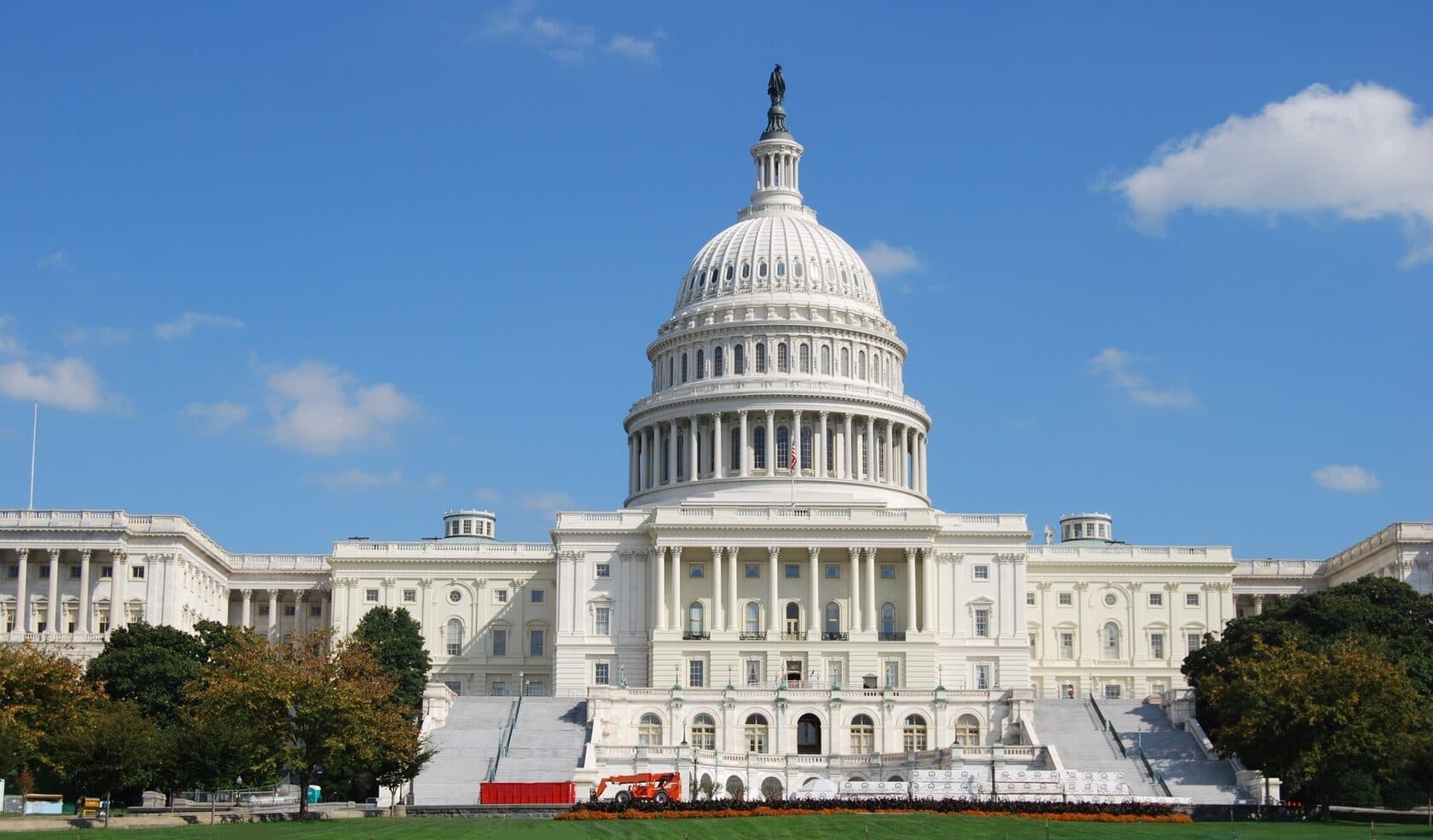
On October 20, an AI-security story swept across the news: the Wall Street Journal reported that the U.S. Department of Homeland Security (DHS) had issued a notice ordering federal civilian agencies to remove AI technology developed by China's DeepSeek from their IT systems, and banning future procurement of its products and services.
But first, a correction to the timeline — this is not really a "ordered today" story. The directive, numbered Exclusion and Removal Order #2026-01, is dated July 24, 2026. It was only filed for public inspection on October 19 and formally published in the Federal Register on October 20. In other words, the ban had been quietly in force for nearly three months before the public found out. The WSJ's October 20 story is about the public disclosure, not a fresh order.
And what deserves more chewing than the "DeepSeek ban" itself is the order's "joint liability" clause. DHS extended the restrictions to two categories: products developed by DeepSeek affiliates, and third-party products and services built using DeepSeek implementations. Put plainly: even if you never touched DeepSeek directly — you just "wrapped" it, with DeepSeek's implementation underneath — you're covered too. For the first time, the federal government has written the supply-chain penetrating power of open-weight models into an exclusion order, in black and white.
What the order actually says
Here are the facts, cross-verified across multiple sources — mainly the WSJ summary, a Reuters wire, and The Neuron's October 20 full-length analysis, which quotes the Federal Register filing passage by passage (Document 2026-21447, Docket DHS-2026-0628):
- The named entity: Hangzhou DeepSeek Artificial Intelligence Co., Ltd. and its affiliated entities — with "affiliated" defined under federal acquisition regulations, not improvised by DHS. The ban bites into a legal-entity network, not just a brand name; rebrand it, hide it behind a shell company, and if it's deemed an affiliate, it's still covered.
- Who must comply: civilian agencies of the U.S. federal executive branch. Note the boundaries: national security systems and sensitive compartmented information systems fall under separate authorities and are not in this order; nor does it target private businesses or ordinary consumers — The Neuron states plainly that there is no nationwide DeepSeek ban for the private sector.
- What is required: two things — stop acquiring covered DeepSeek products, and remove DeepSeek products, affiliate products, and "third-party products and services developed using DeepSeek implementations" from agency systems.
- Legal authority: the Federal Acquisition Supply Chain Security Act of 2018, following a recommendation and evidence review by the Federal Acquisition Security Council (FASC). This is not one official's whim; it is the conclusion of a formal supply-chain security review process.
- Exceptions: they exist, but they're narrow — agencies could apply in writing within 60 days of issuance, with a "compelling justification" and proposed mitigations, handled by an implementation team inside CISA. The telling part: the order was signed July 24, so the 60-day window had already closed before the October 19 public disclosure. Unless an agency quietly filed between July and September, there is effectively no exemption left in practice.

"Signed three months ago, disclosed only now, exemption window already shut" — the time gap is itself information. It says DHS's strategy was "enforce first, announce later": get agencies to finish the cleanup before the public and the press got involved. By the time it hit the papers on October 20, DeepSeek was most likely already largely cleared out of federal systems; what remains of the news is aimed at federal contractors and software vendors: the burden of proof has now flipped.
One more word on the nature of this legal power. The 2018 Federal Acquisition Supply Chain Security Act grants not advisory power but a dual action — "exclusion plus removal": the government can both keep supply-chain-risk products out of procurement and order what's already installed to be ripped out. The FASC itself is a multi-agency deliberative body whose recommendations go through evidence review — which means DHS most likely holds assessment material it chose not to publish. The takeaway for readers is simple: this is not a statement; it is a legally enforceable clearance, and federal agencies have no "wait and see" option.
Why the "joint liability" clause is the key: it bans the "implementation," not the "company"
Supply-chain bans of recent years targeted "entities": some company's hardware, some company's cloud service. Entities are crisp and enforceable — you check a vendor list. But DeepSeek is an open-weight model: anyone can download the weights, fine-tune them, distill them, and repackage them as "another product." This time DHS's wording pierces straight through the "entity": what's banned is "DeepSeek implementations" — change the company name, put on a new skin, and if the implementation is built on DeepSeek, it's covered.
This is a precision strike on the "wrapper" model. Plenty of products look like this: a storefront brand with no visible connection to DeepSeek, while the backend API or model lineage is DeepSeek all the way down. DHS is saying: that doesn't fly in federal procurement. The Neuron gives a concrete example — a document-summarization or code-generation platform that calls DeepSeek under the hood while customers only ever interact with the vendor's own brand. Under this order, federal buyers have to scrutinize that too.
Technically, this is hard to audit: how do you prove a third-party service runs on a DeepSeek implementation underneath? Does a distilled or fine-tuned derivative still count as an "implementation"? The notice offers no test. But that is precisely the point — in strong-compliance government procurement, "if you can't explain it, don't use it" is enforcement in itself. The procurement officer doesn't need to prove you're a DeepSeek wrapper; he just needs you to prove your innocence. If a vendor can't account for its model lineage, the order is lost. The chilling effect will travel further than literal enforcement ever could.
The other side deserves a look too: the notice doesn't explain how products with "multiple model options" should be judged — say, a platform that defaults to another model but lists DeepSeek as an option. The Neuron notes the published filing has no answer; vendors may eventually have to demonstrate that restricted options can be disabled. Plenty of gray areas remain, but the direction is set: model lineage is now a federal procurement review item.
There's an even deeper gray zone: do distilled or fine-tuned derivative models count as "DeepSeek implementations"? The notice doesn't define it. Federal scrutiny of Chinese AI companies has previously touched on allegations of "distilling" U.S. model capabilities — training small models on big models' outputs is routine open-ecosystem practice, but the lineage does trace back to the original model. Read literally, the joint-liability clause would likely cover a third-party small model distilled from DeepSeek outputs; technically, though, it's nearly impossible to prove. That tilts execution further toward self-certification: vendors should be ready to say not just "we don't call the DeepSeek API" but where their training data came from. The heads-up for vibe coders: "model lineage" is about to become a deliverable, the way a software bill of materials (SBOM) already is.
What DHS listed as reasons — and what it didn't provide
DHS did state security concerns in the notice, and the language is blunt. Per Reuters' citation of the notice, DHS said DeepSeek models present "multiple threat vectors": use by government employees or contractors "may result in the transfer of sensitive data" to China; confidential information submitted via prompts could be combined with public records to produce "actionable intelligence on U.S. persons and/or government agencies"; and "the models themselves may contain malware or other security vulnerabilities."
Background material made it into the filing too: the House Select Committee on the CCP's April 2025 investigation (concerns that Chinese authorities could access personal information collected through DeepSeek under the country's data-access laws), and security firm NowSecure's February 2025 examination of DeepSeek's iOS app (which found registration and device information transmitted without encryption and insecure credential storage). Back in July, DHS had already issued a memo telling federal agencies to monitor traffic in and out of government websites over potential DeepSeek risks — this order reads as the upgraded sequel to that memo.
Zoom out, and this is not an isolated event but a consolidation: February 2025 saw lawmakers introduce the No DeepSeek on Government Devices Act; that same year, the Commerce Department barred DeepSeek within its own systems and the U.S. Navy told personnel not to use it; July 2026 brought the DHS traffic-monitoring memo; July 24, the exclusion order was signed; October 20, it went public. A year and a half of scattered restrictions have been gathered into one formal, enforceable exclusion order. The trend is clear: federal restrictions on Chinese AI models are moving from "each agency for itself" to "unified law plus unified enforcement." DeepSeek is the first to be consolidated this way. It is unlikely to be the last.
But The Neuron adds a crucial qualifier worth quoting in full: DHS's published appendix provides no evidence that any specific model contains embedded malware; what NowSecure found were app-level vulnerabilities, and app vulnerabilities don't prove the underlying AI models contain malicious code; and the notice cites not a single confirmed instance of data actually being exfiltrated.
One sentence to sum it up: the charges are listed; the evidence isn't public. That's actually normal in supply-chain security reviews — the FASC's evidence review is itself classified, and DHS was never going to publish intelligence sources in a public filing. But as readers, we should keep "official claims" separate from "verified facts": the former is DHS's position, while the latter currently covers only the independently verified app-level vulnerabilities. Holding that line is this article's honesty gauge.
Same company, two storylines
The fun contrast: in the very week the DHS order went public, this site published DeepSeek Open-Sources TileLang for Ascend — DeepSeek continuing to open-source its tech, bringing its inference engine to domestic Chinese hardware, with open-source enthusiasm undimmed.
The two stories look contradictory, but they govern different links of the same chain: one governs whether knowledge can flow; the other governs whether it can be used inside government systems. DeepSeek's weights remain downloadable by anyone — the DeepSeek-R1 repository on GitHub is open as usual, and tools like LM Studio keep supporting local offline inference; the "open" in open source is untouched by this order. The order targets procurement and deployment relationships: federal agencies may not put DeepSeek technology into their systems or spend money on it.
There's an even neater cross-reference: yesterday this site published Tenstorrent's $1.5B Bet on Open Weights, which described Jim Keller's turning point — in May, Tenstorrent's Galaxy servers successfully ran DeepSeek models, and "once we proved it, there was no need to sell." On one side, a chip unicorn runs DeepSeek on its own hardware and tells it as a fundraising story; on the other, the federal government writes DeepSeek into an exclusion order and demands it cleared out of systems. The same model is "the showcase of open weights" in capital markets and a "supply-chain risk item" in federal procurement — that is how fractured the AI world of 2026 is: the value coordinates of technology and the value coordinates of security no longer sit on the same map.
This distinction matters most for individual developers: running DeepSeek weights on your own machine — experimenting, building — is not covered by this notice. It is not a worldwide kill order and doesn't target private businesses or consumers. But don't misread the flip side either: The Neuron specifically notes the order contains no general exemption for self-hosted open weights — a federal agency hosting DeepSeek weights on its own infrastructure is equally in scope for removal, with exemptions only through the CISA process. Open source solves the knowledge-flow problem; it doesn't solve the government-compliance problem.
Which is exactly why the joint-liability clause had to exist: without it, this ban would be a dead letter against open weights. Open models have, for the first time, fully separated "technology diffusion" from "deployment compliance" — and DHS's choice is: can't control the former, so lock down the latter completely.
Four takeaways for vibe coders
First, model selection now has a geopolitical dimension. It used to be three metrics: quality, price, speed. Add a fourth: who is your target customer. If your product might one day sell to U.S. federal agencies — or to enterprises holding federal contracts — DeepSeek lineage in your stack is an automatic disqualifier. And the precedent DHS just set will be copied: state governments, allied nations, and big-enterprise compliance departments are all watching. Today's ban covers federal civilian systems; tomorrow it could be one more line in some enterprise's vendor questionnaire: "Please declare whether your product contains AI implementations from DeepSeek or its affiliates."
Second, the "model abstraction layer" has gone from best practice to survival requirement. Plenty of vibe-coding projects hardcode a specific model's API: prompts tuned to DeepSeek's temperament, function calling written to its format. This DHS story is the perfect cautionary tale: hardcoding one model into your architecture is hardcoding one risk into your company. The right move is an abstraction layer over model calls — swappable providers, prompts decoupled from models. When compliance tells you to drop DeepSeek tomorrow, after choosing it for the price today, the change should be one config file, not half your codebase.
Third, the "model supply-chain statement" is about to become standard in vendor questionnaires. The Neuron is explicit: federal agencies will increasingly demand vendors spell out which AI model does what inside a product, and prove restricted options can be disabled. If you're a B2B vibe coder, write three sentences into your product docs now: which models you use, where they're deployed, whether they can be swapped. Those three sentences will only get more valuable — they answer the customer's compliance officer, not the engineer.
Fourth, don't let "cheap" be your only selection criterion — and don't treat "open" as a get-out-of-jail card. DeepSeek is beloved by developers largely for its absurd price-performance. But this story is a reminder: cheap has hidden costs — when your product grows up and meets compliance-heavy customers, early model choices become tech debt. Likewise, "it's open source" doesn't mean "it can be used anywhere": this DHS order proves open weights can be folded into a joint-liability clause just the same. Thinking through exit costs matters more than the selection itself.
Finally, a minimal action checklist if DeepSeek is in your product today: first, audit your call chain — direct APIs, third-party wrappers, the RAG base — and list any DeepSeek lineage; second, add an abstraction layer so you can switch providers within 48 hours; third, write that three-sentence "model supply-chain statement" into your docs. Doing these today is a bonus; in two years it may be table stakes.
Zooming further out, this order is the first full application of the 2018 Federal Acquisition Supply Chain Security Act to an AI model company — the law's jurisdiction now formally extends from "hardware and software" to "model weights." Every mainstream open model may face the same "lineage review" from here on. Next time you pick a model, vibe coder, consider adding one more criterion: "will this model's lineage be a problem five years from now?" That's not paranoia. DHS just wrote the template.
A note on transparency
A word on where this reporting comes from, in the interest of transparency. The Wall Street Journal original sits behind a paywall, which we did not open directly; the core facts come from the WSJ summary, the Reuters wire, and The Neuron's October 20 full-length analysis (which we did open — it quotes the Federal Register filing passage by passage). Details like the order number (Exclusion and Removal Order #2026-01), the July 24 signing, the October 19 filing for public inspection, the October 20 publication (Document 2026-21447, Docket DHS-2026-0628), and the 60-day exemption window come from multiple outlets' cross-reporting on the same public filing, and they agree with each other.
What the public filing doesn't say, we haven't written: which agencies have completed removal, how exemption requests were actually handled — none of that is public, and we're not guessing. If you come across the original DHS notice link, send it our way and we'll update this article.
Comments (0)
Sources
Related articles

Attorneys general from eight U.S. states sued OpenAI on October 14, alleging ChatGPT was designed to be overly agreeable to earn trust and engagement — and, in the harshest demand, asking courts to bar self-improving AI models unless alignment with human values can be proven. What it means for vibe coders: your system prompt's agreeableness, minor protections, and risk disclosures are compliance red lines, not options.
Tenstorrent raised $1.5B at a $6.2B valuation to build chips for open-weight AI inference — and turned down a $5B buyout to stay independent. With Microsoft's Maia 300 and Amazon's TorchNeuron landing the same month, three distinct routes to challenge Nvidia are now on the table.
Context.dev raised a $9M seed round led by General Catalyst to sell AI agents what they increasingly can't get for free: reliable, real-time web data. As Delta, JPMorgan and Amazon block agents the same week, the open internet is splitting into a visible layer and a paid visibility layer.