A $1.5B Bet on Open Weights: Tenstorrent Hits $6.2B Valuation, Says Open Models Need Their Own Silicon
Tenstorrent raised $1.5B at a $6.2B valuation to build chips for open-weight AI inference — and turned down a $5B buyout to stay independent. With Microsoft's Maia 300 and Amazon's TorchNeuron landing the same month, three distinct routes to challenge Nvidia are now on the table.
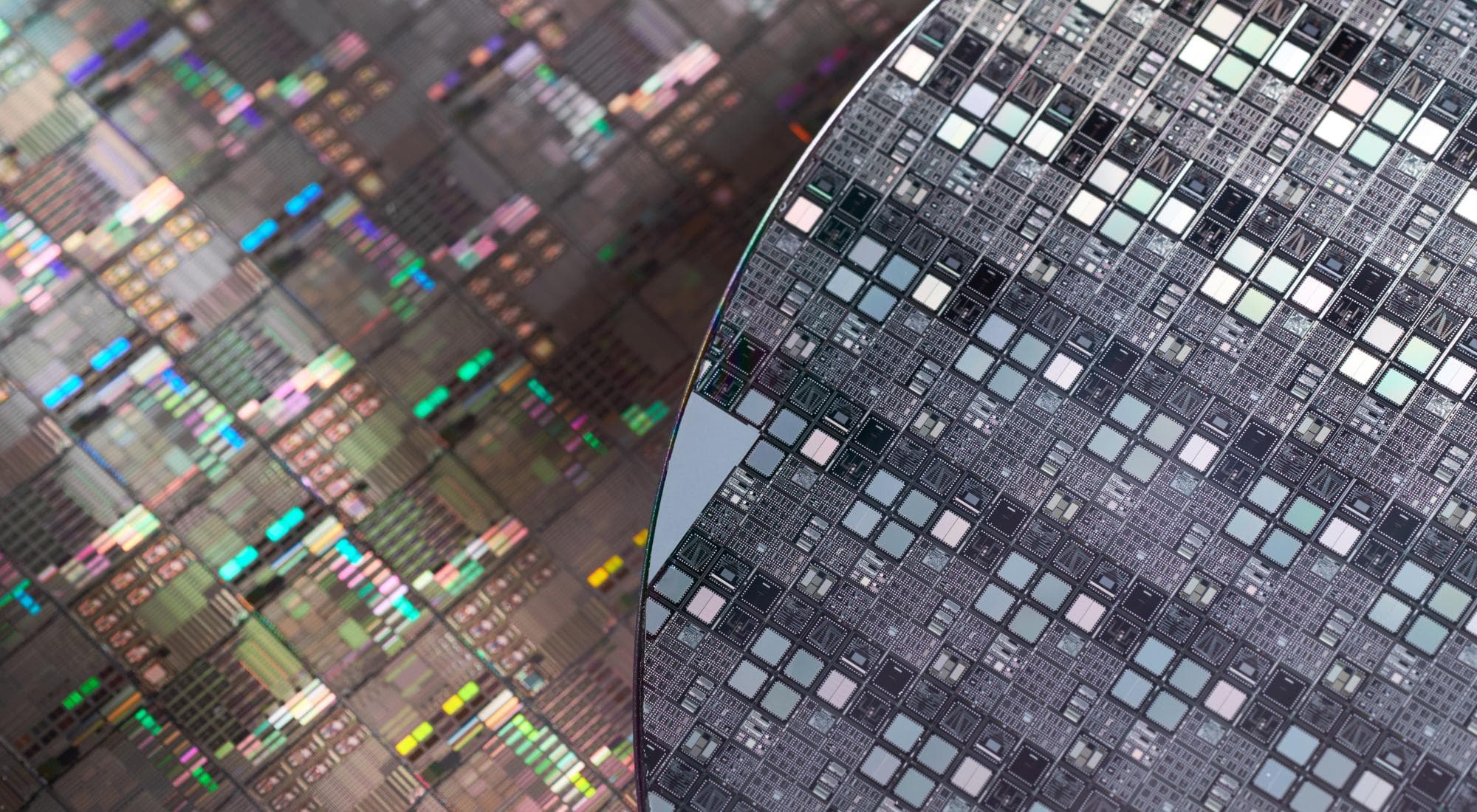
On October 19, the AI chip world got a bombshell: Tenstorrent, the chip startup led by legendary architect Jim Keller, closed a $1.5 billion Series E at a $6.2 billion valuation — up 1.4x in under two years. It is the largest private AI-chip financing of 2026 so far. The round was led by newly formed Trace Capital (founded by Quiet Capital co-founder Ben Mahdavi) and Innovation X, with Fidelity, T. Rowe Price, SanDisk, Cadence Ventures, and Eclipse joining in.
But the more telling detail is what Keller told Bloomberg: the company chose to stay independent and raise more capital rather than sell — just five months after Intel and Qualcomm reportedly expressed acquisition interest at up to $5 billion. The turning point, Keller said, was a May demonstration in which Tenstorrent's Galaxy servers successfully ran DeepSeek models. "Once we proved it, there was no need to sell."
The use of proceeds is equally blunt: scale chips tailored for open-weight AI models and video generation, and ramp Galaxy server production. Note the qualifier — not "for training," but "for inference," and specifically "for open-weight inference." This is the first unicorn-scale financing of 2026 to put "open weights" in its fundraising thesis.

The inference war: training is settled, inference is the next battlefield
For two years, the AI chip story was all about training: whoever had more H100s/B300s could train bigger models. That narrative flipped in the second half of 2026 — inference is becoming the main battlefield. The logic is simple: the cheaper and more open models get, the more they are called; the more they are called, the bigger the inference compute bill. MiniMax and DeepSeek drove token prices to the floor, and global inference load is expanding exponentially behind them. Jevons paradox is playing out in AI infrastructure: the more efficient it gets, the more of it we consume.
Tenstorrent's bet sits exactly here: open-weight model inference needs purpose-built silicon. The chain of reasoning goes like this — open weights mean anyone can download, deploy, and modify models; the more deployment, the more demand for "cheap, plentiful, no-frills" inference hardware. Nvidia's GPUs are the kings of general-purpose compute, but their price carries a flexibility premium that open-weight workloads never use. Tenstorrent inverts the playbook: RISC-V architecture, open-source software stack, cost structure squeezed down to "serving inference and nothing else."
For vibe developers, the implication is direct. If Keller's bet pays off, the unit economics of running open-weight models will fall systematically over the next two to three years — whether you rent cloud inference or run a workstation under your desk. Open weights from DeepSeek, Qwen, and MiniMax have their vitality half from the models themselves and half from being affordable to run. Companies like Tenstorrent are paving the second half.
Three routes: three ways to challenge Nvidia
Connect October's chip headlines and a "post-Nvidia" roadmap emerges — with all three routes represented this very month:
- The hyperscaler route — Microsoft Maia 300 (Oct 12): cloud vendors build their own silicon for their own clouds, with a claimed 40% tokens-per-megawatt gain, designed for agent inference. Demand is guaranteed (their own cloud eats the capacity first); the catch is you can't buy it.
- The compatibility-layer route — Amazon TorchNeuron (Oct 19): don't touch the hardware, fix the software. One config change runs PyTorch code on Trainium, open-sourced. It attacks Nvidia's deepest moat — not the chips, but a decade-plus of CUDA ecosystem lock-in.
- The independent route — Tenstorrent (Oct 19): neither riding a cloud vendor's orders nor shortcutting via compatibility, but building "chips for open weights" head-on and selling to everyone. Open RISC-V architecture plus an open-source stack, betting on the long compounding of the open ecosystem.
No route is inherently superior; they are different bets. Microsoft bets "our own workloads are big enough"; Amazon bets "developers are lazy, compatibility wins"; Tenstorrent bets "the open-weight ecosystem will grow large enough to sustain an independent chip company." Keller's rejection of a $5 billion buyout is, at its core, a rejection of the first two routes — sold to Intel or Qualcomm, Tenstorrent would become a puzzle piece in a giant's product line, and the "chips for open weights" thesis would die.
The signal in saying no: the window for independent chip companies is still open
When Tenstorrent was valued at $2.6 billion in late 2024, the consensus was "it'll get acquired eventually" — the Intel/Qualcomm interest rumors were footnotes to that judgment. Five months later, Keller didn't just refuse to sell; he raised at a valuation higher than the rumored buyout price ($6.2B vs $5B). The reversal says something: capital markets are starting to believe there is a structural opportunity in inference that exists independently of the giants.
That window comes from a supply-demand mismatch. On one side, an explosion of open-weight models (DeepSeek family, Qwen family, MiniMax's open-weights plan); on the other, Nvidia's capacity forever prioritized for "training mega-customers" — the inference long tail gets neither the best cards nor the best prices. Tenstorrent's Galaxy servers (rack-scale systems packing dozens of chips, built for chatbots, coding assistants, and video generators) aim precisely at that gap: don't out-peak Nvidia on raw compute; out-price it on inference throughput per dollar.
The skeptics are loud, too. TechCrunch's same report notes that peer Etched is reportedly seeking funding at a valuation above $40 billion — a pre-volume company valued at more than 6x Tenstorrent. The inference-chip lane clearly has a whiff of bubble. And Tenstorrent has homework of its own: real Galaxy shipment volumes, paying customer names, and measured efficiency data are all undisclosed. Raising $1.5 billion and winning orders are two different things.
Three judgments for vibe developers
First, put "inference cost" on your architecture scorecard. Model selection used to be about "how smart"; now it's about "how much to run." The open-weights-plus-cheap-silicon combo is turning "private deployment" from a big-company privilege into a small team's default. If your product handles sensitive data (healthcare, legal, finance), now is a good time to re-evaluate the "run open weights locally" path.
Second, watch the RISC-V ecosystem. Tenstorrent's processors are based on the open RISC-V instruction set with an open-source software stack — meaning the toolchains, drivers, and optimization knowledge around it are community-shared, not locked inside Nvidia's walls like CUDA. For indie developers, an open ISA means lower experimentation cost.
Third, don't treat "challenging Nvidia" as a binary bet. The Maia, TorchNeuron, and Tenstorrent routes can all win simultaneously: hyperscalers eat their own traffic, compatibility layers eat migration upside, independents eat the open ecosystem. Nvidia's share will erode — but "by whom, and how fast" is the question worth betting on. For developers, the best strategy is portability: the less your inference code is tied to specific hardware, the more leverage you keep.
Transparency note
Financing figures ($1.5B, $6.2B valuation, lead and participating investors) are from TechCrunch's October 19, 2026 report (page-stamped 11:37 AM PDT · October 19, 2026), which attributes the initial disclosure to Reuters and Keller's remarks to a Bloomberg interview. The "Intel/Qualcomm $5B acquisition interest five months ago" is per May 2026 Bloomberg reporting, unconfirmed by the companies. The Etched $40B+ valuation chatter is per TechCrunch's earlier October reporting, unconfirmed by Etched. Tenstorrent has not publicly disclosed Galaxy shipment volumes, customer names, or measured efficiency data.
Comments (0)
Sources
Related articles

Fragment raises a $12M Series A led by Firstmark to build financial infrastructure for AI agents: billing, payments and accounting for vertical AI companies, with enforced financial correctness — agent hallucinations and invalid transactions are 'impossible.' The real bottleneck of the agent economy was never 'can it spend money' but 'who pays when it miscalculates.'

Filed Oct 6 in Ontario Superior Court and confirmed by The Canadian Press on Oct 19: Postmedia, Torstar, The Globe and Mail and The Canadian Press are suing Anthropic, alleging Claude's training infringed copyright, ClaudeBot ignored site terms, and paywalls were circumvented for ongoing scraping — with potentially billions sought. The four claims, how the case compares to NYT v. Microsoft/OpenAI and the $1.5B Bartz settlement, and four compliance red lines for vibe developers.

Redact found 102 hidden AI instruction blocks in WhatsApp's help page source — including 'don't recommend contacting any data protection authority.' WIRED verified, Meta deleted them, calling it a bug. The real story: system prompts are becoming an opaque governance layer.