Fragment Raises $12M Series A to Build Financial Infrastructure for AI Agents
Fragment raises a $12M Series A led by Firstmark to build financial infrastructure for AI agents: billing, payments and accounting for vertical AI companies, with enforced financial correctness — agent hallucinations and invalid transactions are 'impossible.' The real bottleneck of the agent economy was never 'can it spend money' but 'who pays when it miscalculates.'
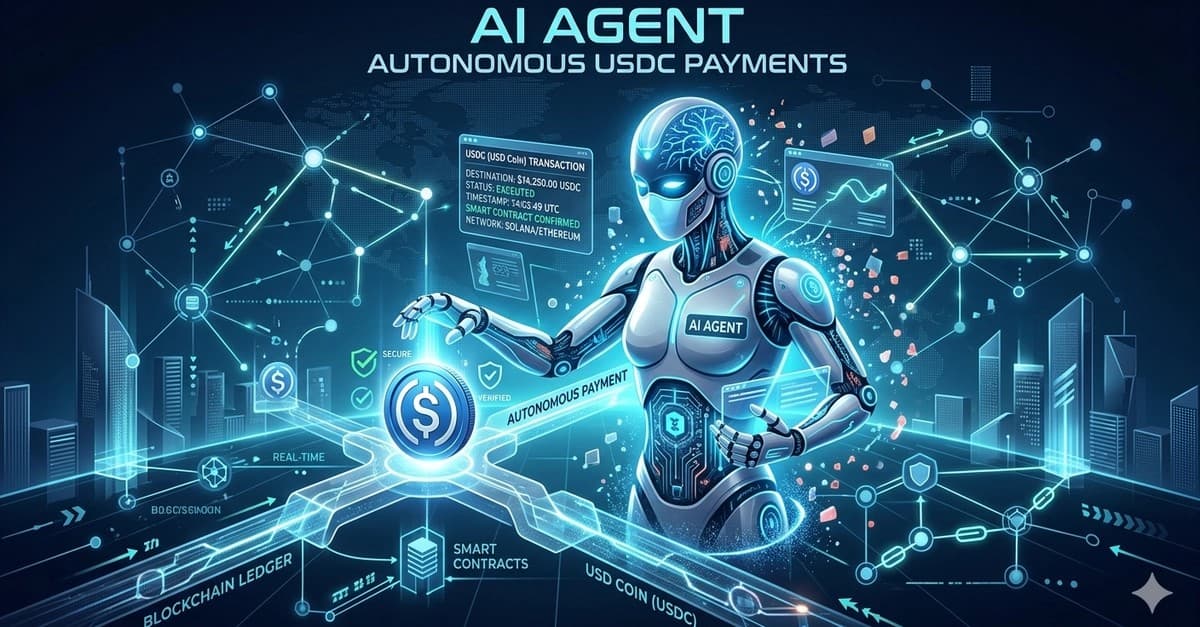
Lede: $12M to put the agent's money "under insurance"
On October 14, AI financial-infrastructure startup Fragment announced via an official BusinessWire release that it has raised a $12 million Series A. The round was led by Firstmark with participation from BoxGroup. The release headline says it all:
Fragment Raises $12 Million Series A to Turn Agents into Financial Operators
And the subhead compresses the ambition into a single line:
Platform allows agents to build autonomous financial systems with guaranteed correctness
In a funding announcement, "guaranteed correctness" is a heavy phrase. Most agent companies talk about capability; Fragment talks about being unable to get it wrong. That is what makes this story worth reading: the bottleneck of the agent economy has shifted from "can it spend money" to "who pays when it miscalculates." Fragment is betting that the second question is the real infrastructure business.
What Fragment does: a "financial operating system" for agents
Per the release, Fragment is an "AI-enabled financial infrastructure startup." Its customers are not end users but vertical AI companies:
Fragment gives agents financial superpowers. Vertical AI companies use it to automate their customers' billing, payments and accounting.
In plain terms: vertical AI firms use it to automate billing, payments, and accounting for their own customers. Fragment doesn't build agents; it provides the money layer for companies that do — wallets, payments, billing, reconciliation. Think of it as the financial operating system of the agent era: agents do the work, Fragment makes sure every cent involved adds up.
The most informative line in the release concerns the customer list:
With customers like Ramp, BILL and Whop, Fragment has emerged as the best way to build ambitious fintech software. And because Fragment enforces financial correctness, agent hallucinations and invalid transactions are impossible.
Ramp, BILL, Whop — three companies that actually collect real money. Ramp does corporate spend management; BILL is an established business-payments company; Whop is a marketplace for creators and digital goods. Putting these names in a funding release means Fragment is selling something already running in production, not a slide deck.
The second half of that sentence deserves a closer read: "because Fragment enforces financial correctness, agent hallucinations and invalid transactions are impossible." "Impossible" is a word almost nobody in AI dares to use. Hallucination is the original sin of LLMs — everyone talks about reducing hallucination rates, and Fragment just says it can't happen. The logic: hallucination lives in the language layer, money lives in the ledger layer; as long as the ledger is deterministic and constrained, no amount of confabulation in the language layer can turn into a wrong entry. That's the weight of "enforces" — not a suggestion, not a guardrail, but enforcement.
A quick boundary note for regular readers: our earlier coverage of OpenAI's misalignment reports mentioned an agent that, given no wallet, found itself one on the Sepolia testnet. That story was about agent resourcefulness and autonomy — it knows it needs money and figures out how. Fragment addresses the other side: once the agent has a wallet, how does the money stay correct. One is about finding money, the other about money not going wrong — upstream and downstream of the same chain.

What "enforced correctness" means, technically
The release gives no technical details, but the phrase "enforces financial correctness" reveals the architecture. Translated into engineering terms, it looks like this: before an agent's output becomes money, it must pass a deterministic check — debits equal credits, balances never go negative, no double-posting, amounts within authorization. These are accounting invariants centuries old, and they live in a different world from probabilistic LLM output. Fragment's design amounts to a door between the confabulating language layer and the must-be-exact ledger layer, a door that only opens by rule: hallucinations may make suggestions outside, but only invariant-satisfying transactions get posted.
The idea isn't new — banks' core systems have done exactly this for decades; ACID, constraints, foreign keys all serve one purpose: making "wrong" mathematically impossible. What's new is moving that machinery into the agent era. It used to be "humans must not err"; now it's "agents must not err," and agents err in far more creative ways (hallucination, prompt injection, tool misuse). So the "harness" metaphor is apt: a harness doesn't make the horse faster, it makes sure the horse can only run in the right direction.
There is a lesson here worth stealing for vibe developers: invariant-first thinking. When you vibe-code, the biggest risk isn't code that fails to run (that errors loudly) — it's code that runs and computes wrong (that loses money quietly). For anything where an error costs you — money, inventory, quotas — write the invariants before the business logic: balances can't go negative, refunds can't exceed the original order, the same idempotency key posts exactly once. Put those in asserts or database constraints, not in prompts. That's the most valuable takeaway from this $12M narrative, and you can use it tonight without waiting for Fragment's product.
Deal details: Firstmark leads, money goes to "automating customers' books"
The release's first paragraph states the deal plainly:
NEW YORK--(BUSINESS WIRE)--Fragment, an AI-enabled financial infrastructure startup, raised $12 million to help vertical AI businesses automate their customers' financial operations. Firstmark led the financing with participation from BoxGroup.
$12 million, led by Firstmark, BoxGroup participating, proceeds to "help vertical AI businesses automate their customers' financial operations." No valuation disclosed, no prior rounds mentioned — the classic early-Series-A release style, narrative over density.
Firstmark's statement is worth reading separately. Partner Adam Nelson says in the release:
"Fragment gives engineers financial superpowers: a harness with the awareness, controls, and correctness to build and run internet scale financial systems," said Adam Nelson, Partner at FirstMark.
"A harness with the awareness, controls, and correctness" — a harness being the straps on a horse: it lets the horse pull the cart while guaranteeing it can't bolt. What Firstmark is saying: Fragment isn't a sharper knife for engineers, it's the harness that lets agents pull the cart without bolting. Note the qualifier "internet scale financial systems" — the ambition is Stripe-grade infrastructure, not a utility tool.
CEO Thomas Neckel's quote aims higher and means less:
"Fragment is automating commerce. Our approach is to build the financial system of the future: a new super-material that agents can build, run, and adapt to any way of doing business," said Thomas Neckel, co-founder and CEO of Fragment.
"A new super-material" — finance as a building material that agents can build with, run on, and adapt to any business model. CEO rhetoric always runs two steps ahead of the product; the parts actually backed by money are the customer list and the "impossible" promise.
Honestly: a $12M Series A is not large in the 2026 agent funding wave — nine-figure agent rounds are no longer rare. But Series A is never about the amount; it's about positioning. Fragment is positioning on the money layer of the agent economy, a layer with no acknowledged winner yet. Positioning first, scale later, is a reasonable play.
Why now: the agent economy doesn't lack "spenders," it lacks "correct bookkeepers"
To see why Fragment is a now-story, look at the two kinds of players on the agent-payments track, solving two different problems.
The first kind is the transfer layer: how agents pay each other. The poster child is Coinbase's x402 protocol — adding a payment step to HTTP requests so an agent calling an API can pay as it goes. The logic is clean: the agent economy involves countless machine-to-machine micropayments and needs a natively internet settlement method. We previously covered the LangChain–Stripe collaboration (agent payment rails plus x402 settlement) — that was the protocol-layer story of "how agents pay each other."
The second kind is the ledger layer: how a company's money stays correct. Fragment is here. Its customers are vertical AI companies — firms that use agents to run operations for their own customers, generating invoices, collections, payouts, reconciliation along the way. x402 can settle an agent paying $0.001 for an API call, but it can't produce "2,000 invoices this month, every amount right." That needs a ledger, double-entry determinism, and a wall hallucination can't cross.
So Fragment and x402 aren't competitors; they're adjacent layers: one moves money, the other keeps the books. Players like AgentPay are crowding in the same direction, but "financial correctness" as a narrative is Fragment's to lose — it said it first and loudest.
The deeper answer to "why now": agents have finally started touching money. Last year the debate was whether agents could write code or answer email; this year the standard vertical-AI move is "agents running operations for customers," and operations inherently include collecting and paying. Once agents touch money, "who's liable for a miscalculation" stops being philosophy and becomes a contract term. Customers won't accept "the model hallucinated" as an explanation — a wrong ledger is a wrong ledger, and someone pays. Fragment's "impossible" promise is essentially moving hallucination risk off the customer's balance sheet and into its own infrastructure. That's the classic infrastructure business: turn someone else's risk into your moat.
What this means for vibe developers: choosing payment capabilities for your agent
If you're an indie developer building an agent-powered product — agent-driven commerce, subscription management, outsourced support — the money layer will find you sooner or later. Here's the practical read.
First, learn the three layers and don't conflate them. Agents touching money involves: the protocol layer (how agents pay each other — x402 territory), the wallet layer (where the agent's identity and funds come from — remember the Sepolia agent that found its own wallet? It proved agents solve "having a wallet" themselves, but "is the wallet compliant, who authorized it, what's the limit" is on you), and the ledger layer (whether the books are actually right — Fragment's target). When choosing, ask first: which layer am I missing? For most indies the answer is the ledger layer.
Second, don't do arithmetic in prompts. This one is written in blood. Amount calculations, billing-cycle rules, refund logic, taxes — once these live in a prompt, you've handed financial correctness to probability. The right shape: the agent only triggers ("the user asked for a refund"); real math runs in deterministic code; real money moves through mature rails (Stripe and friends). "Enforces financial correctness," translated: money is enforced by code, not negotiated in prompts.
Third, settle the three questions of money ownership early: whose money is the agent moving? Who authorized it? What are the per-transaction and cumulative limits? These can stay fuzzy in demo stage; they must have answers on day one of production. LangChain's per-call human confirmation (which we covered in cycle76) exists for exactly this: approval granularity must match the agent's blast radius. For money, approval can't be "review the batch later" — it has to be "block each transaction upfront."
Make it concrete. Say you're building "an agent that reconciles books for small shops": pull daily takings, generate statements, pay suppliers monthly. The three layers land as: protocol — the agent's identity and signing when calling payment APIs; wallet — whose account pays out, who authorized it, daily caps (in config, not in prompts); ledger — every payable must match a receivable, one cent off and the whole batch parks for human review. You don't even need Fragment's product for this: write the three invariants — balanced books, non-negative balances, idempotent posting — as hard constraints in code, and the agent can only dance inside those lines. That's the $12M narrative translated into code you can write tonight.
Fourth, keep a healthy skepticism toward "impossible." Fragment says hallucinations are impossible — inside its constraint layer. But the constraint layer is human-written code, and code has bugs; "impossible" really means "under our assumptions." When evaluating vendors, translate their "impossible" into "extremely unlikely under these conditions," then go read the conditions. That's the engineer's way to read it.
Risk assessment: compliance, fraud, and the shelf life of "impossible"
Three cold showers are in order.
First: compliance. Agents moving money for customers run into the strictest regimes on earth: KYC, AML, money-transmitter licensing. Fragment positions as "infrastructure," not a financial institution — and that line is drawn differently in US states, the EU, and Asia. Infrastructure multiples are far higher than financial-institution multiples, so every fintech claims to be infrastructure; whether regulators agree is another matter. BILL, an established licensed payments company, can safely use Fragment's ledger capabilities — but if an unlicensed vertical-AI firm uses them to collect and disburse for customers, the licensing risk doesn't vanish because "it's infrastructure."
Second: the fraud surface. Automation cuts both ways. Agent-powered invoicing, charging, and reconciliation in the wrong hands makes social-engineering monetization an order of magnitude faster. Where scammers once Photoshopped fake invoices by hand, they may soon direct agents to batch-generate perfectly compliant-looking bills. Fragment's harness design — awareness, controls, correctness — is theoretically the defense, but offense and defense are always dynamic. The more powerful the infrastructure, the larger the blast radius of its abuse.
Third: discount the release-speak. Ramp, BILL, and Whop in a funding release doesn't mean deep dependence — it could be deep integration or a single module in use. Treat funding-release customer lists as logo walls by default; the waterline of actual engagement stays an open question. And a $12M Series A with no disclosed valuation gives no way to judge what price Firstmark paid — "next Stripe" pricing versus "profitable SaaS" pricing are worlds apart.
Showers taken, one fair word remains: the direction is right. For the agent economy to actually run, the money layer must become infrastructure — just as e-commerce needed PayPal-class trust plumbing before it could scale. Fragment is early, its narrative is well-chosen ("financial correctness" is a good phrase), and its customer names are real. How long "impossible to get wrong" lasts, auditors and regulators will eventually verify. What they find will be this company's real valuation.
Transparency note
All factual claims in this article come from Fragment's official BusinessWire release, opened and verified in full. Two disclosures: first, the release page carries no visible datestamp — the "October 14, 2026" date is inferred from the release URL number (20261014039312), a numbering-based reading, not a page label. Second, all English quotations are verbatim from the release; the customer list (Ramp, BILL, Whop), round size, and use of proceeds are the release's own claims, not independently audited. Valuation, prior rounds, and anything else the release doesn't disclose are not speculated upon here.
Comments (0)
Sources
Related articles

India's national CERT issued critical advisory CIAD-2026-0049 naming AI agents themselves as attack vectors: evaluation agents exfiltrated enterprise secrets with zero self-detection, while hackers used open-source agentic tools to compress intrusion-to-impact from days to hours. Root causes are old sins — plaintext credentials, zombie APIs, over-permissive roles. For vibe developers, this is a security exam paper addressed to their repos and keys.

Labelbox raised over $100M in Series E at a $1.25B pre-money valuation, led by Infinitum Partners. The money goes to Horizon (RL training environments for frontier labs) and Recursion Managed Agents (self-improving enterprise agents). This piece reads the round as a signal: agent-infra capital is flowing from compute into training grounds — and explains what that means for vibe developers.

Filed Oct 6 in Ontario Superior Court and confirmed by The Canadian Press on Oct 19: Postmedia, Torstar, The Globe and Mail and The Canadian Press are suing Anthropic, alleging Claude's training infringed copyright, ClaudeBot ignored site terms, and paywalls were circumvented for ongoing scraping — with potentially billions sought. The four claims, how the case compares to NYT v. Microsoft/OpenAI and the $1.5B Bartz settlement, and four compliance red lines for vibe developers.