Claude Solved a 40-Year-Old Cell Mystery in Under Four Months — and Its Mistakes Cost Two Weeks
On November 4, Anthropic said Claude helped solve the first 3D structure of a vault particle from prokaryotic cells: 96 copies of one protein, purification cut from three days to 90 minutes. The same post admits Claude's errors cost the team two weeks.
First, the verdict: this is not a story about "AI discovers something new" — it is a story about how AI does science

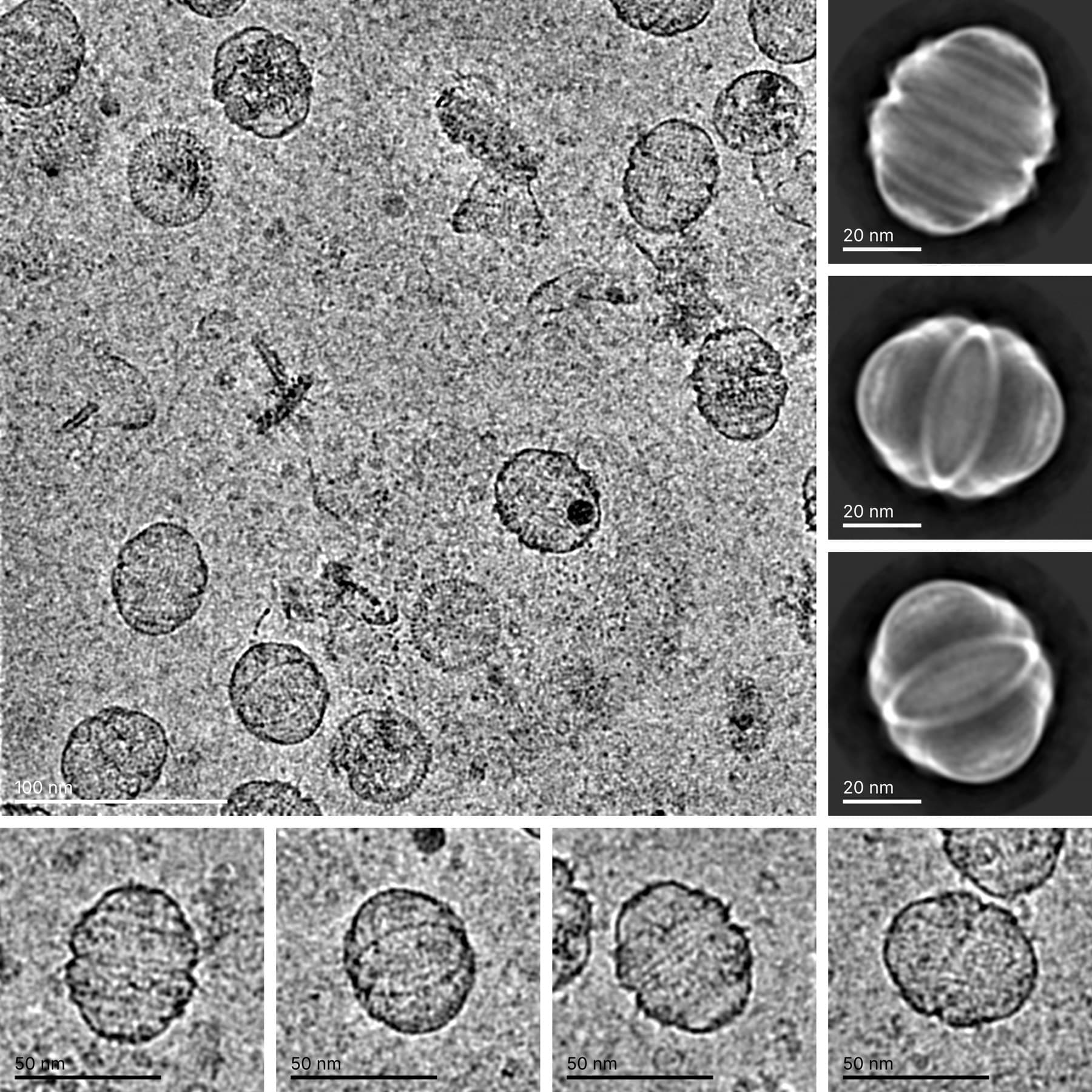
On November 4, 2026, Anthropic announced that its biology research team had used Claude to solve the first three-dimensional structure of a vault particle found in prokaryotic cells. Vault particles were discovered back in 1986, their function is still unknown, and they are among the largest protein complexes in the cell, roughly three times the mass of a ribosome. Anthropic's team found one inside a bacteriophage that infects bacteria: 96 copies of a single protein assembled into a hollow barrel, about 54 nanometers long and 45 wide, with a mass of around 9.5 megadaltons.
My verdict up front: the real news here is not the structure of the particle itself, but what happened when Anthropic built Claude into every step of the research — purification compressed from three days to 90 minutes, a first structural model ready in 34 hours, the whole project done in under four months. But the same announcement honestly records what Claude got wrong: a growth-medium additive error set the project back two weeks, and a skipped standard step produced a flawed map blended with its mirror image. The right way to read this announcement is to hold both sides at once: AI can genuinely let a team with little structural-biology experience take on a hard problem — provided someone is watching, ready to catch mistakes. Telling only the speed half of this story would misread the announcement.
What a vault particle is, and why it stayed unsolved for 40 years
Some background first. Vault particles were discovered in 1986 by Leonard Rome and Nancy Kedersha, named for their shape — under the electron microscope, the ribbed shell reminded them of a cathedral's vaulted ceiling. They are found in nearly all the cells in our body and are among the largest known molecular complexes in eukaryotes, built from 78 copies of the major vault protein arranged as two identical halves joined at the middle. The problem: after 40 years, nobody knows what they are for. Proposals include transporting molecules between the nucleus and cytoplasm, protecting cells from toxic compounds such as cancer drugs, and supporting innate immunity — none conclusively confirmed. Stranger still, mice bred without vaults survive normally, suggesting vaults may only be necessary under specific environmental conditions.
There is also a structural reason vaults resisted study: they are missing from the organisms biologists rely on most for genetic experiments. Baker's yeast, fruit flies, and nematode worms have no vaults. Mice have them, but animals bred without a vault partner protein or the vault RNA develop normally, leaving no obvious defect to follow up. In recent years, bioinformaticians identified distant relatives of the vault protein in prokaryote genomes, but nobody had shown these proteins actually assemble into vaults. That is where Anthropic's team came in: a vault in a prokaryotic cell is a simpler system to study, bacteria grow quickly, and studying it is easier. Bacterial versions of human proteins have previously revealed the microbial origins of human immune defenses — vaults' prokaryotic relatives might do the same.
What Claude actually did in this research
Anthropic's announcement walks through Claude's involvement step by step, and each step is worth a look. Step one was the search. The team used Claude Science to search for the vault protein's relatives across a database of about 15 billion predicted proteins. They turned out to be rare but widely distributed: present in 29 major groups (phyla) of bacteria and four of archaea, but in less than 1% of species with a sequenced genome. The team chose 44 candidate proteins and tested each in a cell-free system to see which genes yielded full-length protein and how much. Claude turned each protein sequence into DNA tailored to the host cell, added the control sequences that switch a gene on, and prepared the designs for ordering. The best performers moved into living E. coli bacteria, where 15 of 24 produced soluble protein.
Step two was purification, the most elegant part of the story. The conventional method for isolating vaults, developed for eukaryotic vaults, spins the sample through a tube of increasingly dense sugar and takes approximately three days. The team decided to try size-exclusion chromatography instead: the sample flows through a column of porous beads, small molecules get stuck in the pores, and the vaults, too big to enter, come out first. Claude first argued against the chromatography approach, because clumps of misfolded protein come out in that same void volume. The team went ahead anyway, and Claude helped make it work by recommending a specific column and methods to track the vault protein and check whether particles had formed. Then Claude proposed loading the contents of ruptured cells straight onto the column with no purification beforehand. The team was reluctant at first, because these columns are expensive and the raw contents of ruptured E. coli cells can clog them or cause contamination — but they were willing to test an unconventional idea, and it worked. The optimized method takes about 90 minutes from cells to microscopy grid instead of days. Seven of the 15 proteins had assembled into vault-like particles, and cryo-EM confirmed the vault shape for four of those seven — two from phages and two from bacteria.
Step three was solving the structure. The team chose one phage protein, L05, for the detailed structure because it was among the best at forming complete, closed particles. Determining a biomolecular structure often takes weeks or months of manual work with specialized software. Anthropic's approach was to direct Claude through the whole process: working in an internal multi-agent harness with access to internal compute resources, Claude set up the open-source processing software RELION and ran each step, while the team advised on the analysis decisions. A first full model was ready in 34 hours, and the final maps were ready about a week after processing began. By Anthropic's estimate, the conventional route would normally have taken weeks.
The structure itself is worth a look. The L05 vault is built from 96 copies of a single protein, 48 per half, with a combined mass of about 9.5 megadaltons. It is shorter and wider than the mammalian vault — roughly 54 nanometers long and 45 wide, compared with 67 by 40 — but because it is more spherical, it encloses about 25% more volume. The protein chain making up its wall is built from seven repeating segments stacked end to end, rather than the nine in mammalian vaults, and its end caps are flatter. The team also made 15 altered versions of the protein, most with changes at the points where neighboring copies touch: some single changes near the cap were enough to prevent the shell from closing, leaving open, rosette-like particles instead — evidence that this region is needed to seal the shell. Copying two of the wall's repeating segments, giving the protein nine — the same number as in the human vault — assembled into even larger vault particles, increasing the enclosed volume by approximately 20%. These experiments suggest how vaults could have changed size over their evolutionary history by duplicating pieces of their own wall.
One unexplained detail remains: Claude pointed out a pocket partway up each of the 96 protein copies holding a small molecule that shows up clearly in the map but has not been identified. Claude found its shape resembles coenzyme A, a common helper molecule cells use to shuttle chemical groups around. If it is coenzyme A or something similar, it would be an early hint at a possible function.
What Claude got wrong — and the announcement hides none of it
The most creditable part of this announcement is that it does not portray Claude as a flawless genius. Anthropic devotes a full section to where Claude needed improvement, and it is specific. First error: a protocol Claude wrote called for a growth medium containing an additive that interferes with getting DNA into cells, which set the project back by two weeks. Second error: early in the cryo-EM processing, Claude skipped a standard step and produced a flawed map blended with its mirror image, and the team had to tell it to stop improvising — in their words, "Please let's do normal things unless they don't work."
Taken together, these two mistakes illustrate something important for vibe developers: Claude's errors are not random small glitches, but the most expensive kind — the ones that happen in domains you do not know well. The team admits the pattern themselves: in areas they knew well, they caught mistakes quickly, but mistakes cost them time in areas they did not. To their credit, they shared their lab notes with the ML researchers who train Claude, so the team could see where the model went wrong — and that has already informed the kind of data Claude learns from. The announcement also notes that over the course of the project, as new models arrived, Claude got much better at these tasks, making seemingly fewer errors in DNA construct design and better identifying potential pitfalls in experiments.
That feedback loop is the most copyable part of the whole announcement. Anthropic's approach is not "let the AI work alone and humans only check the result" — it is "humans set direction, the AI executes, humans catch errors at key checkpoints, and the corrections flow back into model training." For anyone who wants to put agents into professional workflows, that structure is worth more than the 90-minute purification itself: an agent's value is not that it never errs, but that your process can catch its errors — and that catching them improves the next round.
What does this have to do with vibe developers?
On the surface, vault particles are far from writing code. But Anthropic states its aim plainly at the end of the announcement: to speed up research in fundamental biology by building Claude into every step of the process. The team members admit they had never worked with a protein assembly this large and had limited experience in structural biology — they took the project on anyway, because Claude could make up for what they did not know and rapidly perform analyses that would otherwise have taken much longer. Translated into vibe-developer language: agents are turning "never done this before" into "worth trying."
This is not the first time in 2026. Just weeks earlier, the same Anthropic biology lab announced that Claude had autonomously discovered a novel enzyme system with CRISPR-like repeat sequences, using only high-level direction plus roughly 950 agents, 21 hours, and 210 million tokens of searching. Both discoveries share a pattern: the problem is real, open-ended, and has no standard answer, and Claude's role is to run the long chain — search, design, execution, analysis — end to end, so human scientists can spend their energy on judgment and error-catching. For vibe developers, that is a signal worth taking seriously: the agent's next main arena may not be "help you write code" but "help you run an entire workflow you could not run before."
But the announcement also includes a sober caveat: apart from the cryo-EM analysis, which used hundreds of GPUs in parallel to save time — more computing than a typical academic institution might have — most of this work could be achieved by a typical lab with access to existing Claude products. In other words, the barrier is not the model itself, but the workflow design: knowing which step to hand to the agent, which step you must watch yourself, and which step's errors cost the most. The real barrier in the vault project was that division of labor — "humans set direction, agent executes, humans correct" — not any particular model version.
One more honest limitation: this work has not been peer-reviewed yet. The preprint has been submitted to bioRxiv, the structures and additional data will be released soon, and the function of vaults remains unknown — the team says the work "only deepens the mystery." Anthropic released the findings early to show the scientific community how Claude can be used for discovery, not to announce a settled conclusion. Read the announcement accordingly: the structural data can be trusted, the functional speculation should wait, and the preprint is worth re-checking once it goes live.
The preprint has not been peer-reviewed yet: what to trust, and what to wait for
The form of this announcement is worth a note of its own: it is an early release. The preprint has been submitted to bioRxiv, but the link was not yet live at publication time; the atomic coordinates and more data are to be submitted to public databases by mid-November; and the function of vaults is still unknown. Anthropic says so plainly — the team is releasing these findings early to show the scientific community how Claude can be used for discovery, not to announce a settled conclusion. Early release has an upside, transparency: methods, data, and failures are all on the table, so peers can verify, reproduce, and challenge them immediately. The downside is that the conclusions have not yet passed through peer review, so readers have to separate fact from speculation themselves.
The separation is not complicated. The structural data can be trusted: 96 protein copies, 9.5 megadaltons, 54 by 45 nanometers, about 25% more internal volume than the mammalian vault — all measured directly by cryo-EM, with maps and methods public and open to re-checking. The process data can be trusted too: 90-minute purification, a first model in 34 hours, a project completed in under four months — these are the team's own work records, and there is nothing to gain from inventing them. Two things need waiting: first, whether the small molecule in the pocket really is coenzyme A — the team has not identified it, and Claude's "it resembles" is a lead, not a conclusion; second, what vaults actually do — the team says the work "only deepens the mystery," and the function will need further research. Once the preprint goes live, those two points are the ones most worth checking against new evidence.
That same habit of layering applies to vibe developers reading any "AI did X" announcement: ask first which parts are verifiable measurements, which are the team's own work records, and which are still speculation. Trust what can be re-checked; park what still needs waiting. This Anthropic announcement reads as credible precisely because it did that layering itself — writing the measured, the done, and the not-yet-understood as three separate things.
Four suggestions for vibe developers
First, treat "agent runs the whole workflow" as a homework assignment you can copy, not a slogan. The vault project's division of labor is specific: searching, designing DNA, optimizing the purification method, processing microscopy data — each step with clear inputs, outputs, and checkpoints. Break your own workflow down the same way, marking which step goes to the agent, which step needs human sign-off, and which step's errors cost the most. A workflow you cannot break down will only fail faster in an agent's hands.
Second, when using an agent in a domain you do not know, budget for the cost of catching errors. Anthropic's lesson is that mistakes are caught fast in familiar territory and slowly in unfamiliar territory — one growth-medium additive cost two weeks. Before letting an agent into a domain you do not understand, prepare verification: independent checks, control experiments, or at least someone knowledgeable who can glance at the result quickly. An agent call with no verification is the same as outsourcing acceptance to luck.
Third, do not be hypnotized by "90 minutes" and "34 hours." Both numbers are real, but they save execution time, not judgment time. Purification dropping from three days to 90 minutes saves time waiting on a centrifuge; a structural model in 34 hours saves time operating software by hand. The parts that still take time — deciding which protein to study, judging whether a structural map is right, interpreting that unidentified small molecule — are still human work. Judge an agent's value by which kind of time it saves, not by the total alone.
Fourth, write error feedback into your workflow. Anthropic shared lab notes with the researchers who train Claude, turning the model's mistakes into training data for the next round. You can do a lightweight version: every time an agent errs, write down what went wrong, why, and how to prevent it next time, then update your prompts, checklists, or acceptance criteria. The teams whose agents keep getting better versus the ones whose agents keep getting worse usually differ exactly on this step.
One-sentence summary
Anthropic using Claude to solve the first prokaryotic vault structure is newsworthy not because a barrel made of 96 proteins looks elegant, but because of the complete process: under four months, purification from three days to 90 minutes, a structural model in 34 hours — and, in the same announcement, Claude's mistakes that set the project back two weeks and produced a map blended with its mirror image. Speed and errors printed side by side is precisely what makes it credible. For vibe developers, it previews the agent's next main arena: not helping you write a snippet of code, but helping you run an entire workflow you could not run before — provided you designed the division of labor, prepared verification, and turn every error into next round's improvement. The function mystery is unsolved and the preprint has not been peer-reviewed yet, but the answer to "how does AI do science" is already clearer than the vault's function itself.
Comments (0)
Sources
Related articles
On November 4, Conductor announced it is joining Meta, with a shutdown schedule precise to the day: Cloud goes read-only November 13, shuts down November 20 with data deletion to follow, while the local app runs until early 2027. The deal's outcome is TBD; the farewell timetable itself is a lesson.

On November 4, OpenAI announced it will acquire Pierre, bringing Code Storage into Codex while keeping Trees and Diffs open source. No price, closing date, or post-integration pricing was disclosed; the deal's real value is the review interface already embedded in Codex.
LiberAI introduced Liber-0 on November 3, a world action model scoring 36% across 600 trials on 60 tasks. The real story is the breakdown: 63.5% on pick-and-place, 34% on other manipulation, just 10.5% on long-horizon tasks — and a glove-data route where 10,000 annotated hours beat 2 million hours of raw video.