Liber-0's 36% Is Not the Story — the Gap Behind It Is: 63.5% on Pick-and-Place, 10.5% on Long Tasks
LiberAI introduced Liber-0 on November 3, a world action model scoring 36% across 600 trials on 60 tasks. The real story is the breakdown: 63.5% on pick-and-place, 34% on other manipulation, just 10.5% on long-horizon tasks — and a glove-data route where 10,000 annotated hours beat 2 million hours of raw video.
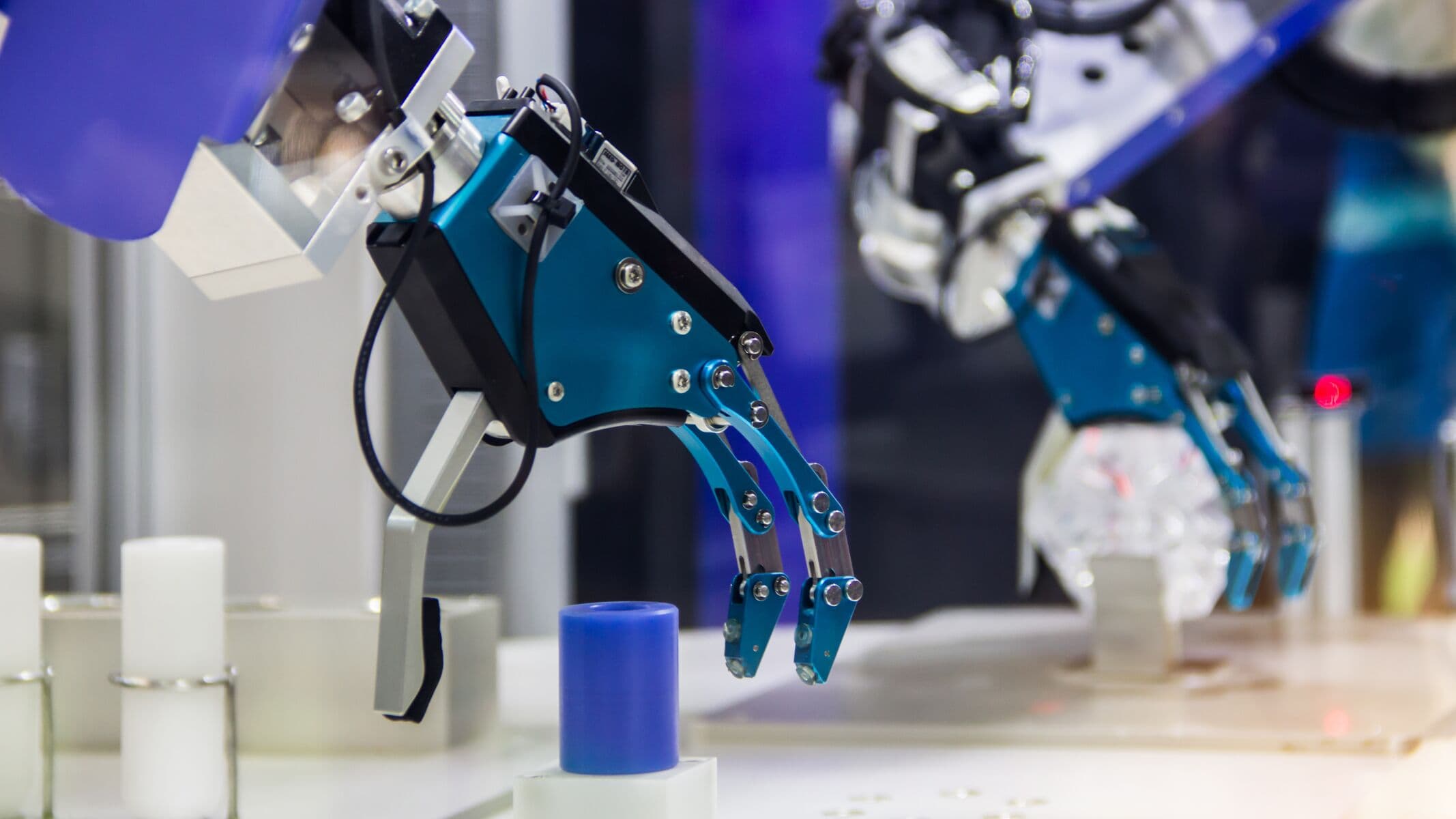
The verdict first: 36% is not sexy, but the gap behind it is

On November 3, LiberAI introduced Liber-0, a "World Action Model" for robots. The headline number in the company release is 36.0%: across 60 robot manipulation tasks proposed by GPT-6, tested 10 times each for 600 trials, Liber-0 succeeded 36% of the time. Read alone, that looks mediocre — not even half. My verdict is the opposite: 36% is the most honest and most informative part of this announcement, because the real story is in its breakdown. Pick-and-place tasks: 63.5%. Other manipulation tasks: 34.0%. Challenging non-pick-and-place and long-horizon tasks: just 10.5%. Taken together, those three numbers draw a clear line: robots today are fairly reliable at simple, well-defined actions, and fall off a cliff once a task gets long, multi-step, and unforgiving of a single mistake mid-sequence.
In other words, Liber-0 is not a declaration that general-purpose robots have arrived. It is a progress report with the boundary marked: what works on this side, what remains unsolved on that side. More interesting than the boundary is the approach behind it. Instead of demonstrating every new task to the robot over and over, LiberAI bets on human experience: Liber-0 was pretrained on more than 2.2 million hours of human experience, including ordinary human video and hand poses and motion trajectories recorded directly with the LiberSense Glove. The core wager is that the vast stock of human video and recorded action already in the world can teach robots, without collecting fresh robot demonstrations for every new task.
What "zero-shot" actually means here
The term "zero-shot" is easy to misread in robotics, so it needs unpacking first. LiberAI's own definition is "task-level zero-shot generalization": the evaluated model did see robot data during pretraining, but it was not trained on robot demonstrations collected specifically for these 60 tasks. It is not a model that has never seen a robot move; it is a model that never practiced the exam questions. That qualifier matters enormously. Read without it, 36% sounds like "a model that never saw robot data succeeds a third of the time," which would be an exaggeration. Read with it, 36% is still meaningful, because the dominant real-world cost is exactly that: collecting new demonstrations for every new task.
The evaluation design deserves a close look too. Sixty tasks in three groups of 20 — pick-and-place, other manipulation, and challenging non-pick-and-place plus long-horizon — each tested 10 times, 600 trials total. The tasks were proposed by GPT-6, a detail that cuts both ways. On the plus side, the exam-setter is not LiberAI itself, which reduces the "writes its own test" problem. On the minus side, whether GPT-6's tasks represent what people actually need robots to do remains open: the proposing model's preferences and difficulty distribution shape the final score. So 36% is best understood as "the score on GPT-6's test set," not "the success rate of robots in real homes or factories."
Another often-overlooked number: on internal benchmarks, the pretrained checkpoint scored progress of 81.4 on pick-and-place and 72.3 on non-pick-and-place tasks when evaluated directly. These are progress scores on a 0–100 scale measuring partial completion, not success rates, and they cannot be compared directly with the 36% figure. High progress with low success is itself informative: it means many tasks get partway done and then stall — consistent with the 10.5% long-horizon success rate. Robots can start things and even get most of the way through; finishing a whole chain of actions without error is the hard part.
Why the glove design beats watching video alone
Liber-0's technical approach comes down to two ideas: action grounding and embodiment alignment. Start with action grounding. Human video shows what something looks like happening, but not how the hand moved. Watching someone open a drawer shows the drawer opening, not how much force was used, how the fingers hooked the handle, or how far the wrist rotated. The LiberSense Glove fills that gap by directly recording hand poses and trajectories, binding the picture to measured motion. The model then learns not just "frame A is followed by frame B," but "frame A corresponds to this set of hand movements."
Embodiment alignment tackles the second gap: human bodies and robot bodies differ, camera positions differ, joint ranges differ. Copying human motion straight onto a robot usually copies badly. LiberAI's answer is to align the robot platform itself with human data collection: LEO, its robot platform, has dexterous hands, articulated wrists and waist, and camera configurations aligned with human collection, plus a Unified Embodiment Representation that tells the model about body dimensions and joint motion so learned actions can be adapted to the robot's own body. It sounds like plumbing, but it is exactly the step that pure-video approaches tend to skip: no matter how much data you have, if the bodies do not line up, transfer is wishful thinking.
The training recipe itself is one line: jointly predict future visual frames and actions. That lets the model learn from ordinary human video without action labels as well as from glove and robot recordings that carry explicit motion supervision. Each data type has a weakness — video is abundant but action-blind, glove and robot data are action-rich but scarce — and combining them is the whole point of Liber-0's approach.
Three internal experiments, one lesson
The release lists three internal experiments that look like three sets of numbers but teach a single lesson: action-annotated human data is worth far more than raw video. First, in controlled single-source pretraining followed by identical robot post-training, 10,000 hours of glove recordings outperformed 2 million hours of web human video on both pick-and-place and non-pick-and-place benchmarks. That is a striking contrast — a 200-fold data gap, lost to 10,000 annotated hours. It says something simple: data is not just about volume; it is about whether the data contains the signal the model actually needs. Video without action information can teach "what it looks like" forever without teaching "how to do it."
Second, glove data can save robot demonstrations. In an eight-task evaluation, combining 25% of the robot demonstration pool with the full glove pool scored 75.6 in progress, versus 72.8 using the full robot pool alone. Glove data did not merely supplement robot data; to some extent it substituted for it. That has direct cost implications: collecting robot demonstrations is slow and expensive — real hardware, space, operators — while recording human activity with a glove is comparatively cheap. If this result generalizes, the data bottleneck for robot learning shifts from "robot demonstrations" to "recorded human action," and the industry's cost curve changes with it.
Third, and most imaginative: when robot demonstrations covered only pick-and-place tasks, the policy's non-pick-and-place progress score was 2.2 — essentially unable. Adding glove recordings of other manipulation actions raised it to 47.5, and broader glove data raised it further to 54.6, close to the 56.3 achieved with robot demonstrations covering both task groups. In plain terms, human action data taught the robot behaviors that never appeared in its robot demonstrations at all. That is what "generalization" most usefully means in robotics: not scoring higher on seen tasks, but going from zero to something on unseen ones.
All three experiments carry the same caveat: they are internal, designed by LiberAI, scored on its own progress-score system, and not yet independently replicated. The direction of the results is believable; the precise numbers deserve reserve. What would validate them is another team reproducing similar trends on public tasks with public metrics.
What the release does not say
The gaps in the release are worth noting. It does not say whether Liber-0's weights are open, whether code is public, or whether other teams can test the model themselves — without that, third-party replication cannot even start, and every number stays at the level of "vendor claim." It does not give model size, inference cost, or hardware requirements, so readers cannot judge how far the approach is from real deployment: lab-scale compute only, or something that could ship inside a sellable robot. And the GPT-6-proposed evaluation, while avoiding self-set exams, leaves the proposing model's biases undiscussed: are its tasks skewed toward actions that are easy to describe in language and decompose into steps, while much real-world drudgery is precisely hard to describe in words?
There is also a time dimension. LiberAI was founded in December 2025, less than a year before this release. Shipping a model with a complete evaluation system that quickly shows strong execution — but also means the approach has not yet been tested by time. Robotics history has no shortage of dazzling openings that faded; what is rarer is a team that iterates in real environments and grinds a 36% success rate upward step by step. The fair attitude toward Liber-0 is to take its data-route hypothesis seriously while treating its numbers as a starting point, not a verdict, and to wait for replication results and real deployment feedback before upgrading the assessment.
One practical suggestion: the release mentions an interactive simulation where users can upload their own objects and watch Liber-0 manipulate them virtually. If you are curious about Liber-0, try it once — upload an ordinary household object and watch where the model gets stuck. A single hands-on trial often tells you more than ten explainers, because it gives you a feel for exactly where the capability boundary lies. And that feel is precisely what number-only readers tend to miss.
To close: Liber-0's 36% is not an arrival announcement for general-purpose robots, but a staged report card — pick-and-place fairly solid, other manipulation climbing, long complex tasks still weak. Its real contribution is testing a data route: glove-recorded human action can sharply reduce robot learning's dependence on robot demonstrations, and even teach behaviors absent from those demonstrations. If that route survives independent replication, it changes the industry's data cost structure; if not, it remains at least a hypothesis worth testing. And for everyone reading announcements, remember the breakdown — 63.5%, 34.0%, 10.5% — more than the headline 36%, because where the gap sits is where the next work has to go.
Comments (0)
Sources
Related articles

Sarvam AI released Prism on November 3: a decision model that does not generate long text but scores given options, averaging 71.8 at 44 milliseconds, with weights open under Apache 2.0. Its real selling point is not being the smartest, but being calibrated, order-stable, and fit to serve as the judgement layer inside automated workflows.
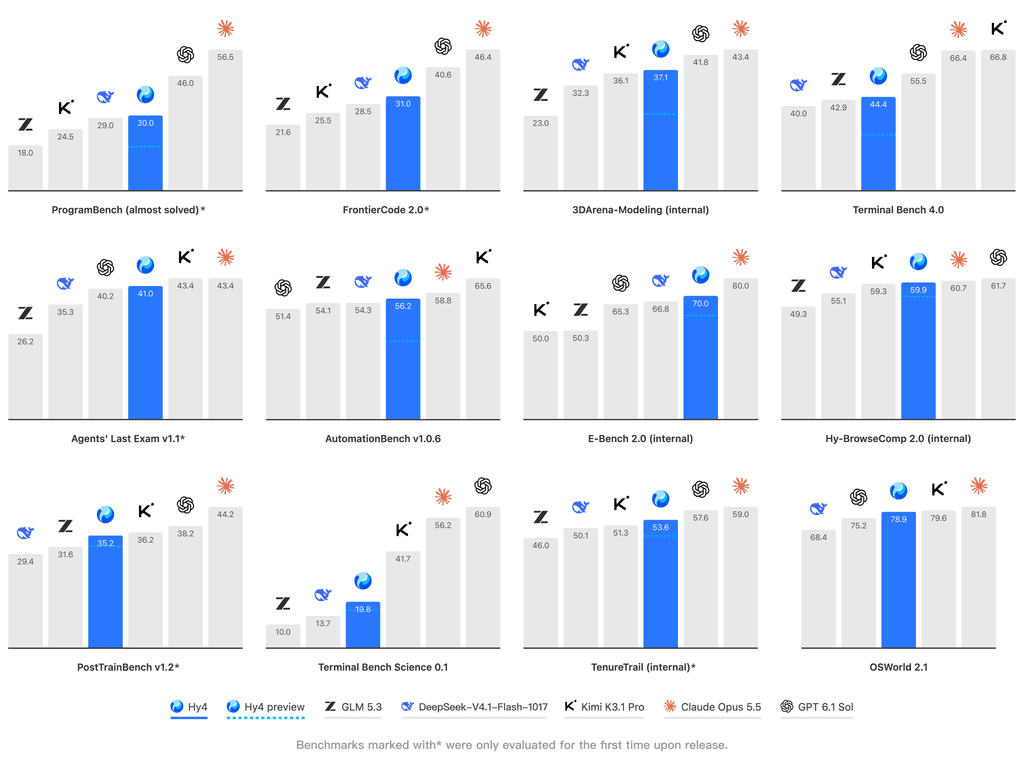
Tencent released the full version of Hy4 on November 4, adding visual understanding and computer-use capabilities at unchanged pricing. The weights, however, have not been released for download yet, so Hy4 today is first a hosted service, not a locally deployable open model.
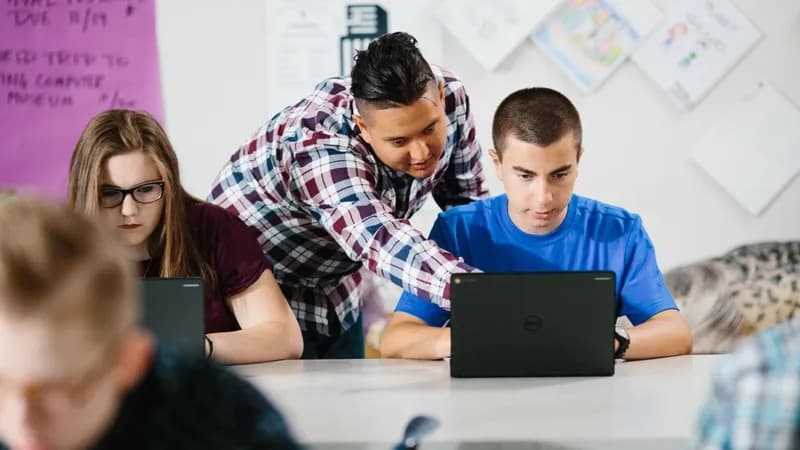
On 3 November 2026 Google announced Guided Learning for a US Search pilot and globally in Classroom, while Gemini, Gemini Notebook, Gemini in Classroom and Search go off by default for K-12 student accounts until administrators opt in. The catch: rejecting AI also means losing student Search, because the two are deeply integrated.