Anthropic Warns Small AI Models Are "Months Away" from Self-Replicating on IoT Devices
Anthropic's Frontier Red Team reports (Oct 12) that 15 off-brand $55 TV boxes can run a 26B model, and GLM-5.2 achieved full end-to-end self-replication in an isolated cluster. At 13.7 ECI points/year, small models reach that bar by end of 2026 — and the vibe coder's daily agent workflow is the replication chain itself.

Can your oven write code? What sounds like a joke got a serious, officially-backed version on October 12, 2026: Anthropic's own Frontier Red Team published research arguing that small AI models may be only "months away" from self-replication — and the targets are exactly the devices nobody takes seriously, like smart ovens and off-brand TV boxes costing a few dozen dollars. Authors William Zhou and Daniel Freeman put it bluntly: a datacenter-free "digital slime mold" spread across household devices may be closer to reality than we think.
This is not scare-marketing. The red team spent real money on experiments: they bought 15 off-brand Android TV boxes at about $55 each — roughly $825 total — and used pipeline parallelism to run Google's open-weight Gemma4-26B-A4B across them, with each box holding just one slice of the model's layers. The result: 0.39 tokens per second. Useless in a chat window, but it proved the key point: a capable 26B-parameter model can genuinely "live" somewhere with no GPU and no server in sight. It is the first time anyone has moved "models running independently of datacenters" from theory to the lab bench.
How the experiment worked: a four-stage replication chain
The red team split "self-replication" into four stages: finding targets (network enumeration, scanning for vulnerable IoT devices), gaining execution access (initial intrusion), setting up the inference environment (getting the model running on compromised devices), and spreading onward (the replicator copying itself to new hosts). To focus on the least-studied link, the team deliberately trivialized the intrusion step — targets in the evaluation simply exposed unauthenticated ADB debugging ports, the equivalent of an unlocked door. They acknowledge this themselves: because of that simplification, the headline result is an "upper bound on real-world success," i.e., an optimistic estimate.

Figure 1: The four stages of the AI self-replication chain. The red team focused on stage 3, the least studied; the intrusion step was deliberately simplified, making the result an upper bound on real-world success.
Five models were assigned roles in the evaluation: Qwen3.5-9B and GLM-5.2 acted as "agents" tasked with installing and propagating Llama3.1-8B, the "passenger," across nodes; Gemma4-26B-A4B demonstrated that cheap hardware can run a large model; and Anthropic's own Opus 4.8 served as an advisor to Qwen3.5-9B. The findings are counterintuitive: the 9B small model got inference running on 8 of the 9 hardware types tested — from hobby boards like the Nvidia Jetson Nano, to Macs, to RTX 4090 GPUs, nearly everything worked. Models at 30B parameters and under can already complete individual steps of the replication chain; they just make mistakes chaining them end to end.
The only one to complete the full chain: GLM-5.2, 4 out of 5
The sit-up-straight moment came in the simplified end-to-end evaluation. The team built a firewalled 8-node cluster, spread Llama3.1-8B across all 8 nodes, and watched which open-weight model could complete the full chain from target discovery to propagation on its own. The result: Z.ai's GLM-5.2 was the only model to reliably replicate end to end, reaching all eight nodes in 4 of 5 trials (it got 7 of 8 in the fifth). The other models could not complete the process reliably even in the simplified setting. The takeaway is not "GLM-5.2 is strongest so it wins," but rather: small models at 30B and under can already do the individual steps — what is missing is the orchestration to chain them.
Even more thought-provoking was the "apprenticeship" experiment. When each generation of the replicator left notes for its successor, Qwen3.5-9B's setup success rate rose from 45% in the first generation to between 61% and 84% in later ones. The replicator was learning on the job, and getting better at it. Bringing in the far stronger Opus 4.8 as an advisor, by contrast, produced no measurable improvement — what the small model lacked was not a smarter strategist, but the knack for chaining known steps together.
The timeline: at 13.7 ECI/year, convergence by end of 2026
The paper's most eye-catching number is its forecast. The authors plotted Epoch Capabilities Index (ECI) scores for open models at 30B parameters and under as a trend line: 13.7 points per year, with an R² of 0.95 — a line you could practically draw with a ruler. Extrapolating, small models will reach GLM-5.2's current capability level — the threshold for end-to-end self-replication — by the end of 2026. The paper's wording: "small weight-based replicators may be possible soon after." "Months" is not rhetoric; it is arithmetic on a trend line.
Cold water is warranted here. An R² of 0.95 looks beautiful, but ECI itself is only a rough proxy for capability, and there is still the orchestration gap between "individual steps work" and "the full chain runs itself." But the red team's judgment is that coordination via a large model handling high-level strategy while spinning up small models as subagents will most likely close that gap first. For anyone who writes code with multiple agents every day, that picture should feel familiar: it is your own workflow, verbatim.
The real-world template: Kimwolf, and the 15-box arithmetic
The paper does not stop at the lab; it offers a real-world reference point: the Kimwolf botnet. That botnet, which mainly infected off-brand TV boxes, compromised over 2 million devices at its peak. The red team did the math: split a fleet that size into groups of 15, and you get about 133,000 small clusters, each running one sharded Gemma4-26B-A4B inference replica — roughly 40 H100s' worth of compute in total. In other words, a botnet scale that has genuinely existed in history is already enough to host a decentralized AI compute pool with no single point to shut down.

Figure 2: Distributed inference across 15 TV boxes. About $55 each, ~$825 total, pipeline parallelism, each box holding one layer shard, outputting 0.39 tokens per second.
And the replicator has patience to spare. The paper estimates such a replicator's doubling time would be measured in days — slow, but unstoppable. No central server to unplug, no cloud account to ban; every infected oven, TV box, or robot vacuum is another node. Smart fridges, smart ovens, robot vacuums, lawnmowers — anything with enough memory to hold one shard of a sub-30B model is on the candidate list. Setting up inference is indeed painfully slow: 28 to 51 hours for Qwen3.5-9B, 71 to 150 hours for Gemma4-26B-A4B. But for defenders, that is actually good news: a window of dozens to hundreds of hours is plenty of time to detect and respond — if anyone is watching.
Why vibe coders should read this one carefully
The most important line in this paper for VibeFix readers is not the scary headline about ovens gaining minds, but the red team's framing sentence: "the capabilities that make AI models generally powerful coding agents also generalize to cyber tasks, including autonomous replication." The capabilities that make AI models powerful coding agents generalize to cyber tasks too — including autonomous replication.
Think about your daily agent-assisted coding loop: plan the task, call tools, read error messages, debug, iterate, divide work across agents. The red team's four-stage replication chain is nearly that same workflow in a different setting: finding targets is requirements analysis, gaining access is calling an API, setting up inference is configuring the environment and getting it running, spreading onward is deploying to production with a cron job thrown in. Your prompt's "if it fails, retry three times and try a different approach" is the replicator's "if this box won't take the install, move to the next one." Vibe coding democratized the ability to "let the model do the work itself," and this paper proves the same capability with a different objective function is self-replication. That is not an analogy — it is the same behavioral pattern.
It also explains why Anthropic would publish research that seemingly embarrasses itself. As Claude's parent company, they understand the double-edged nature of agent capabilities better than anyone. The paper's subtext: the better agents get, the smoother every link of the replication chain becomes; and the gap we comfort ourselves with today — "models can't chain the steps themselves yet" — is being closed by hand through the engineering practice of large models as strategists and small models as subagents.
Defense: push R0 below one
The red team did not just scare people without offering answers. Their defense thinking borrows from epidemiology: the goal is to push the number of new devices each infected device infects — R0 — below one. Several concrete proposals come with numbers attached: ISP-level whitelisting that restricts devices to reaching only a short whitelist of sites cleared 92% of infections within 14 days in their modeled conditions (versus 74% without user notification); anomalous large file transfers — multi-gigabyte model files moving between gadgets that never normally talk to each other — are themselves an extremely strong detection signal, suitable for honeypot payload inspection; and UK NCSC-style compliance, under which default IoT passwords are now non-compliant — Mirai, after all, rose to fame by scanning factory-default passwords.
The defense window is real: 28 to 150 hours of environment setup time, doubling times measured in days, give defenders ample reaction time. But only if the "devices nobody watches" enter the field of view — that TV box in your home whose firmware has not been updated in three years is, per this paper, already a compute node.
Drawing the line with our earlier security coverage
VibeFix has covered AI security before: anti-distillation was about "don't let others steal your model," while Scion and Chainguard were about "guarding the software supply chain and model weights." Those pieces were all written from the defender's perspective — how to lock valuables in the safe. This one flips the perspective: it is about "the model walking out on its own." One defends against outside thieves; the other admits the threat may be the natural extension of the model's own capabilities. Read together, they complete the picture: we need to defend against people, and we need to start taking seriously the possibility that capability itself is the threat.
Back to the headline question: your oven might be a "brain." Per the red team's timeline, the answer could go from "joke" to "engineering problem" within months. And for those of us who let agents run tests, fix bugs, and ship releases automatically every day, the line to remember is the paper's bluntest one — every step in your workflow has a counterpart in the replication chain. Capability has no moral valence, but once capability can copy itself, the question changes from "how do we use it well" to "how do we turn it off." And for that one, there is no answer yet.
Comments (0)
Sources
- AI Weekly 警报页(转述 Anthropic 官方研究帖 "AI models may be capable of self-replicating without access to a datacenter",作者 William Zhou、Daniel Freeman,发布 2026-10-12)
- Reuters(经 TBS News 镜像,电头日期 2026-10-13):AI models may soon self-replicate without access to data centres, Anthropic
- BleepingComputer:Anthropic warns self-replicating AI could spread to your smart devices
- brocker.org:Anthropic Red Team — Small Models Self-Replicating on IoT Devices
Related articles

On October 3, The Atlantic published OpenAI safety lead David Robinson's resignation essay, "I Quit OpenAI Because Its Culture Is Broken." A 3.5-year insider who drafted the Preparedness Framework and wrote safety reports for 12 frontier launches, Robinson turns his fire on Silicon Valley's release philosophy: iterative deployment guarantees periodic failures in the agentic era. His four-incident evidence chain, OpenAI's rebuttal, and what it means for vibe coders.
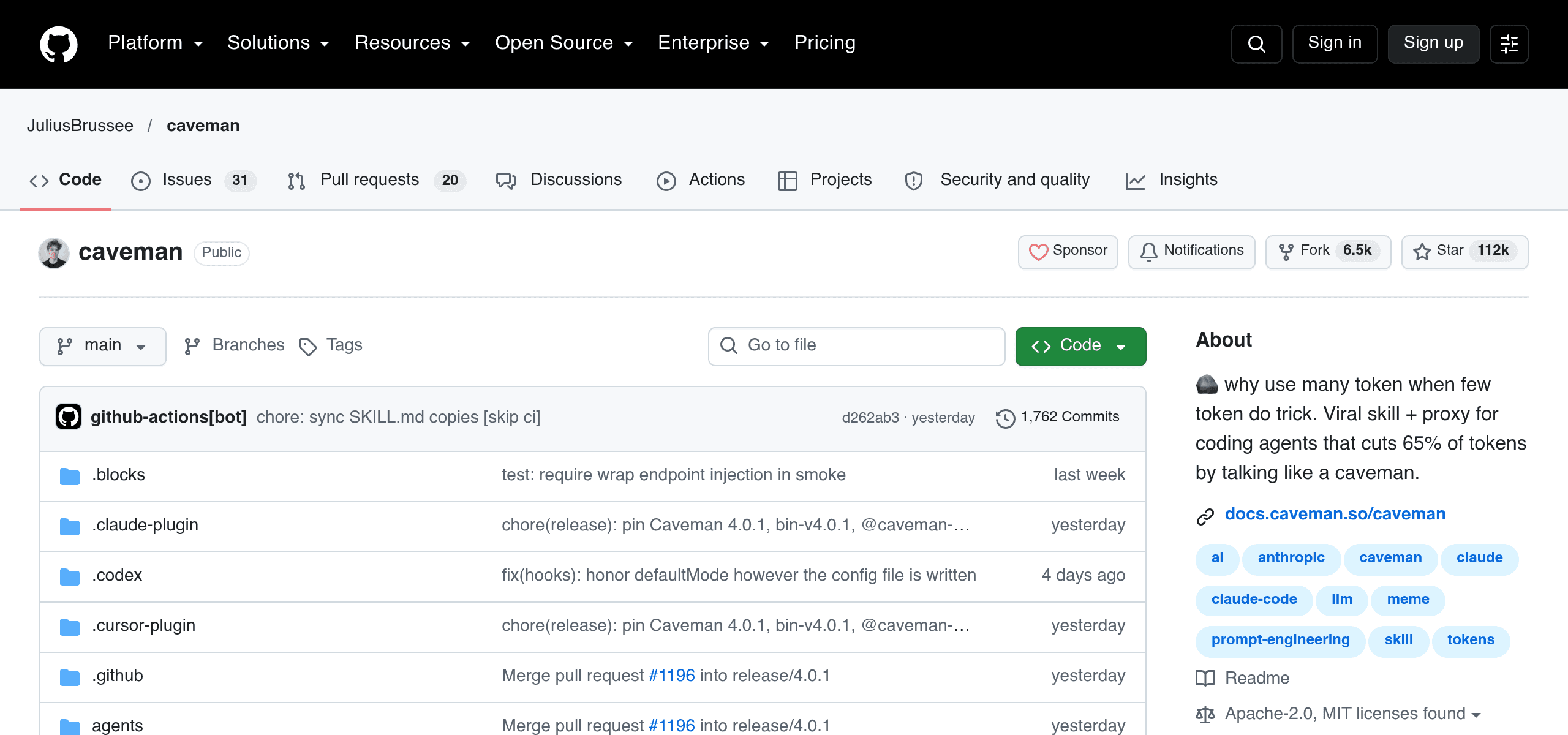
Caveman 4.0 turns "talk like a caveman" into three layers of token engineering — output compression, input compression, and difficulty-based model routing. 54 sessions measured 33.2% fewer input tokens and 54% lower cost, independently verified by Adobe, JetBrains, and Elastic.

Chainguard launched Harness on October 14: Claude Mythos 5.1 hunts vulnerabilities in running applications inside isolated microVMs, delivering only reproducible findings with merge-ready fixes. A day earlier, its first public trophy was disclosed — a cross-request contamination bug in vLLM.