Anthropic Launches OSS Scanner: Free AI Security Scans for Open Source, Raw Model Reports Straight to Maintainers
Anthropic's free opt-in OSS Scanner uses its strongest models, including Claude Mythos, to periodically scan open-source projects. Reports are fully model-generated with no human review. Models surfaced 29,000+ candidate vulnerabilities in six months; PostgreSQL, OpenSSL, wolfSSL, and curl all responded positively. We break down the mechanics, the data, and the controversies.
Lede: For the First Time in Security History, "No Human Review" Is a Selling Point
On October 8 (Beijing time), Anthropic announced OSS Scanner — a free, opt-in vulnerability scanning service for the open-source ecosystem. Projects that join will receive thorough, periodic security scans from Anthropic's strongest models, including Claude Mythos, with the resulting vulnerability reports delivered straight to maintainers, without any human review, triage, or polish in between.
Making "unreviewed" an official, advertised feature is a first for the security industry. For the past few years, AI-generated vulnerability reports have had a poor reputation in the open-source community — curl founder Daniel Stenberg complained back in early 2025 that they were "mostly slop," and maintainers generally treated unverified AI reports as noise. What Anthropic is doing now is productizing "fast but possibly wrong" as an optional fast lane: you can stay on the slow lane of human-reviewed coordinated disclosure (CVD), or you can sign up to receive raw model output directly and absorb the triage cost yourself.
A note on transparency first: Anthropic's official blog page carries no publication timestamp. Five independent outlets — TheHackerNews, SecurityWeek, Unite.AI, Help Net Security, and Tech in Asia — all date the announcement to October 8, 2026, and this article follows that convention. All times are Beijing time.
Background: From Project Glasswing to the Cyber Mission
To understand OSS Scanner, you need to see the full arc Anthropic has been building over the past six months. Earlier in 2026, Anthropic launched an internal program called Project Glasswing: using Claude's latest models to hunt for vulnerabilities at scale across some of the world's most important software projects. In six months, the models surfaced more than 29,000 candidate vulnerabilities — but Anthropic's human security team only managed to review about 6,000 of them. Humans became the bottleneck.
The flip side of the bottleneck was demand pulling in the opposite direction: maintainers who received their first reports started proactively asking Anthropic to "just send us everything you have, validated or not." To date, Anthropic has sent nearly 5,000 unverified reports directly to maintainers who asked for them. In other words, maintainers voted with their actions: better a rough but timely report now than a polished one three months late. OSS Scanner is the productization of that "fast-food delivery" model.
The same week, Anthropic folded Project Glasswing into a larger framework: the Cyber Mission — a long-term effort deploying engineering talent, tools, and funding to support defenders of critical infrastructure and the open-source community. The Cyber Mission launches with two programs: the Critical Infrastructure Defense Program, backed by 11 founding partners including CrowdStrike, and OSS Scanner. On top of that, Anthropic expanded its Cyber Verification Program into three tiers (Defense, Red Team, Specialized), giving qualified security professionals access to Mythos-class models with reduced blocking classifiers, and launched Claude for OSS (free Claude Max 20x subscriptions to help maintainers remediate vulnerabilities). OSS Scanner isn't an isolated product launch — it's the most community-facing move in a broader "AI for defense" playbook.
There's deeper industry context behind this arc: on CyberGym, an academic vulnerability-finding benchmark, LLM discovery rates climbed from under 20% at the start of last year to over 85% this year. The capability curve for finding bugs is steepening — and so is the speed of exploit development. Anthropic states plainly in its announcement that exploit code can now be developed in minutes. The defender's arithmetic changes accordingly: when attackers can weaponize a vulnerability with AI in minutes, every extra week spent waiting on human review is real, measurable risk exposure.
Mechanism Breakdown: Three Layers of Design, One Core Trade-off
Layer 1: How opt-in enrollment works
Projects aren't scanned passively — they sign up. Core maintainers submit a pull request to the OSS Scanner GitHub repository with a YAML configuration following a standard template: a link to the git repository to be cloned, a primary contact email, and a repository-relative path to a Dockerfile that sets up the build environment and pre-installs all dependencies so an offline agent can conduct its security audit without internet access (Anthropic recommends verifying that the test suite passes inside the built container). Optional fields include additional CC email addresses and the project homepage.
Eligibility criteria mirror Google's OSS-Fuzz: projects should have "critical impact on infrastructure and user security," with decisions made case by case. OSS-Fuzz is the long-running project that scans open source with fuzzers, and Anthropic explicitly cites it as inspiration — swapping fuzzing for large language models. Note the product positioning: Claude Security is Anthropic's enterprise code-scanning and patching product, while OSS Scanner is the free community edition of the same technology line — the enterprise version helps companies defend their own systems; the community version audits open-source projects at no cost.
Layer 2: Skipping human review — a deliberate trade-off
This is the sentence in the announcement most worth reading closely: the scanner's outputs will be fully model-generated, without human review or triage. The upside is faster, more frequent scanning; the cost is that reports may be incorrect or invalid. Anthropic doesn't dodge this — it puts it on the table.
But "no humans" doesn't mean "no structure." Every report ships with three components: a self-contained reproducer, an explanation of the vulnerability (including a bisection pinpointing when the bug was introduced, where possible), and a candidate patch for how to fix it (when available). During early validation, Anthropic ran this pipeline across dozens of open-source projects, producing hundreds of reports — including multiple vulnerabilities that could be chained into unauthenticated remote code execution (RCE) exploit chains. That's no longer "find the null-pointer" territory; it's combat-grade attack-chain construction.
The clever part of this design is that it acknowledges reality: Anthropic's human team digested only 6,000 findings in six months, with 23,000 candidates still queued. Rather than letting them rot in the queue, hand the choice to maintainers — if you can triage, sign for the raw output; if you can't, stay on the human CVD track. Two lanes coexist instead of a one-size-fits-all mandate.
Layer 3: A two-track disclosure policy
On disclosure timing, Anthropic draws a clear two-track line: human-verified vulnerability reports continue through the existing coordinated vulnerability disclosure (CVD) process, with the 90-day disclosure clock starting only at the moment of human confirmation; unverified raw model outputs go directly to maintainers who opted in, with no mandatory 90-day disclosure window — because they are "unconfirmed candidates," not "confirmed vulnerabilities."
This distinction matters. It avoids cramming masses of unconfirmed findings into CVD's heavyweight process (which would grind everyone to a halt), while preserving a responsible-disclosure channel for serious, confirmed bugs. The cost is a larger gray zone: for an "unverified but probably real" critical finding with no 90-day clock constraining it, the urgency of a fix depends entirely on the maintainer's own judgment.
Reading the Numbers: What 29,000, 6,000, and 97 Actually Mean
The announcement doesn't throw around many numbers, but each group deserves unpacking.
29,000+ candidates vs. 6,000 human-reviewed. That's the six-month tally of candidate vulnerabilities the models dug out of "the world's most important software projects," versus how many Anthropic's human team actually reviewed. A review rate of roughly 20%. The number says two things at once: model throughput for finding bugs now far exceeds human experts' capacity to process them; and Anthropic has effectively been sitting on a loaded pipeline for half a year — OSS Scanner isn't a from-scratch launch, it's an internal pipeline being opened to the community. The 29,000 figure also explains why maintainers are willing to sign for "unverified" reports: the human-review queue will never drain, so early beats late.
Of 97 critical/high-severity findings, 85 met the CVD bar, with only 1 false positive. Anthropic had external expert penetration testers spot-check 97 critical and high-severity findings across 48 projects: 88% met the bar for the CVD process; of the remaining 12, 11 were real but duplicated known issues or other findings from the same scan — only one was genuinely invalid, i.e., a true "false positive." Note the sample's limits: it covers only critical and high severity, and it's an expert spot-check, not a verdict on all 29,000 candidates. Even so, a 1-in-97 false-positive rate shows that in the high-severity band, the strongest current models have crossed the "usable" line. That's the confidence behind putting "no human review" in the announcement.
wolfSSL's 74 reports: 72 valid, 5 became CVEs. This is third-party validation from the maintainer trenches, independent of Anthropic's own spot-check. wolfSSL's Todd Ouska said that of 74 reports received, all but two were valid, and five turned into official CVE entries. With patches attached, the reports slotted straight into their existing fix workflow. PostgreSQL's Noah Misch said several reports came with fixes "we can use nearly as-is," and fast-track access let them address the newest issues before they reached a GA release. OpenSSL's Anton Arapov offered the most cutting comparison: early AI reports from 18 months ago, before Project Glasswing, were "appalling," while this batch of raw Anthropic model output was "as good and sometimes better than what we get from people" — especially when a report arrives with a real, working exploit attached, "that's basically job done for an engineer as you can verify it right away."
curl's Daniel Stenberg delivered the heaviest line of all: OSS Scanner helped curl find multiple issues worth addressing, including "one of the worst curl vulnerabilities reported in the last few years." Consider what that means: curl is a project the world's security researchers have examined under a microscope for two decades. Finding a "worst in years"-caliber bug there suggests model discovery capability is now brushing against the ceiling of territory long cultivated by human experts.
Industry Reaction: Applause — and Furrowed Brows
Maintainer feedback is overwhelmingly positive, which is no surprise — free audits from top-tier models are hard to turn down. But there's another voice in the security community worth hearing out.
Google has cautioned that automated security findings create extra triage work for maintainers; OpenSSF (Open Source Security Foundation) discussions have warned that AI-generated disclosures can add low-quality noise. Both concerns point at the same structural problem: as the cost of generating reports approaches zero, the cost of reading and verifying them becomes the new bottleneck. OSS Scanner's opt-in design transfers that cost to maintainers who volunteer to bear it — but transferring isn't eliminating. A tiny project with two or three part-time maintainers may simply never get through 50 model reports, free or not.
The deeper issue is misaligned incentives. The OSS-Fuzz model works because fuzzing finds deterministic crashes, which are cheap to verify; LLM reports are probabilistic judgments, each needing a human brain pass. If several vendors launch similar services, maintainers could soon receive AI reports from five or six sources at once — duplicate findings, conflicting severity ratings, inflated scores — and the noise would grow exponentially. Anthropic's admission in the announcement that "severity ratings can be inflated" and "the scanner may misunderstand a project's threat model" is a preemptive disclaimer, but acknowledging the problem isn't solving it.
There's also a subtle competitive dimension: by giving away scanning powered by its strongest models (including Claude Mythos) for free, Anthropic is effectively subsidizing security for the open-source ecosystem. That's direct pressure on commercial code-scanning vendors (Snyk, Semgrep, and company) — when audits from the strongest models are free, the pricing logic of the "AI code scanning" category gets rewritten. The pairing of Claude Security (enterprise) with OSS Scanner (free) is clearly the classic "open edition for adoption, enterprise edition for revenue" playbook.
What It Means for Vibe Coders and Indie Developers
This news hits closer to the vibe coding community than it looks. Indie developers now ship with AI at astonishing speed — a credible SaaS in a weekend — but security capability hasn't kept pace. Until now, "hire someone for a security audit" was a luxury indie developers couldn't reach: expensive, slow, long lead times. OSS Scanner turns it into "file a PR, write a YAML, get in line."
Three actionable takeaways:
- Treat OSS Scanner as part of your release checklist. If your open-source project has critical impact on infrastructure or user security (that's the eligibility bar), you can file a PR on the GitHub repo today. The key prep work is getting the Dockerfile environment right — Anthropic requires the offline agent to build and test inside the container, which is itself a healthy "reproducible build" checkup.
- Learn to read "unverified" reports. Signing for raw model output means doing your own triage. Build a simple workflow: run the reproducer first to confirm it's real, then check whether the severity rating matches your threat model, then decide whether and when to fix. Don't equate "the model says critical" with "must fix immediately" — Anthropic itself admits ratings can be inflated.
- Fold AI security scanning into the vibe coding workflow. The broader point: if models can find bugs in PostgreSQL, they can find bugs in your project too. While waiting in the OSS Scanner queue, you can use enterprise products like Claude Security — or simply have a model do a security self-review as part of your dev loop. AI-written code and AI-reviewed code are two sides of the same coin; using only one half is planting mines for yourself.
One easily overlooked detail: Claude for OSS provides free Claude Max 20x subscriptions to help maintainers remediate vulnerabilities. That means the "fix" end of the find-and-fix loop gets free compute support too. For indie developers, this whole package drives the security cost of an open-source project close to zero — all that's left is your willingness to spend time reading reports.
Risks and Controversies: Four Unavoidable Questions
First, the real cost of false positives. One false positive in 97 sounds great, but that was the critical/high-severity subset. Anthropic hasn't published accuracy figures for the low and medium tiers among the 29,000 candidates. Maintainer time is the scarcest resource of all — if false-positive rates run high in the low-severity reports, small-project maintainers will quickly go from "send me everything" to "read and ignore." Whether OSS Scanner endures depends on sustaining a signal-to-noise ratio that maintainers find worth their time.
Second, murky liability. Reports are fully model-generated with no human review — so if a "candidate patch" in a report introduces a new problem, or a report dismissed as "invalid" turns out to be a real vulnerability that later gets exploited, who is responsible? Anthropic, the model, or the maintainer who signed for the report? The announcement doesn't touch this. The voluntary nature of opt-in functions partly as a liability shield, but the legal and moral boundaries will need clarifying sooner or later.
Third, the other side of offense-defense asymmetry. Anthropic frames this as a defensive deployment, but the same model capabilities can be used by attackers to find vulnerabilities. Anthropic's logic: since attackers will use AI to find bugs sooner or later anyway, defenders should get the same weapons first — fight speed with speed. That logic holds only if defenders are actually fast: the reports go out, but can maintainers patch in time? Stenberg's "mostly slop" complaint is barely a year old; whether the ecosystem's remediation capacity has caught up with the leap in discovery capability remains an open question.
Fourth, the hidden filter of the eligibility bar. The criteria mirror OSS-Fuzz (critical impact on infrastructure and user security), with case-by-case approval. That means the long tail of small projects most in need of security help may be exactly the ones that can't get in line — while large projects with mature security processes get one more nice-to-have. Anthropic says the criteria will evolve, but for now OSS Scanner looks more like an elite pilot than universal security infrastructure. That doesn't diminish its value, but it should calibrate our expectations.
Conclusion: The "iPhone Moment" for Security May Not Be the Model — It's the Delivery
Look back at what's genuinely new here: not "AI can find bugs" (Glasswing proved that for six months), not "free" (OSS-Fuzz has been free for nearly a decade) — but Anthropic turning "no human review" from a defect you apologize for into a feature you can opt into.
Behind that shift is an honest judgment: when models find bugs an order of magnitude faster than humans can verify them, insisting that "every report must pass human eyes" stops being rigor and becomes another form of negligence — letting 23,000 candidate vulnerabilities expire in a queue. Anthropic chose to hand the choice back to maintainers, using opt-in so that "fast but possibly wrong" and "slow but reliable" coexist.
For the open-source ecosystem, this is an experiment worth welcoming — but its success won't hinge on how strong Anthropic's models are. It will hinge on whether maintainers are willing and able to digest these reports. 29,000 candidates are the models' victory; 6,000 human reviews are humanity's bottleneck; OSS Scanner is a bet that moving the bottleneck out of Anthropic and into the whole community means the community can catch it.
If you maintain an open-source project of real consequence, take a look at red.anthropic.com/oss-scanner — filing a PR costs little, while the cost of missing the first wave of deep scans could be someone else finding the bugs in your code first. In this era of AI-found vulnerabilities, the question was never whether bugs exist. It's who finds them first.
Sources
Related articles
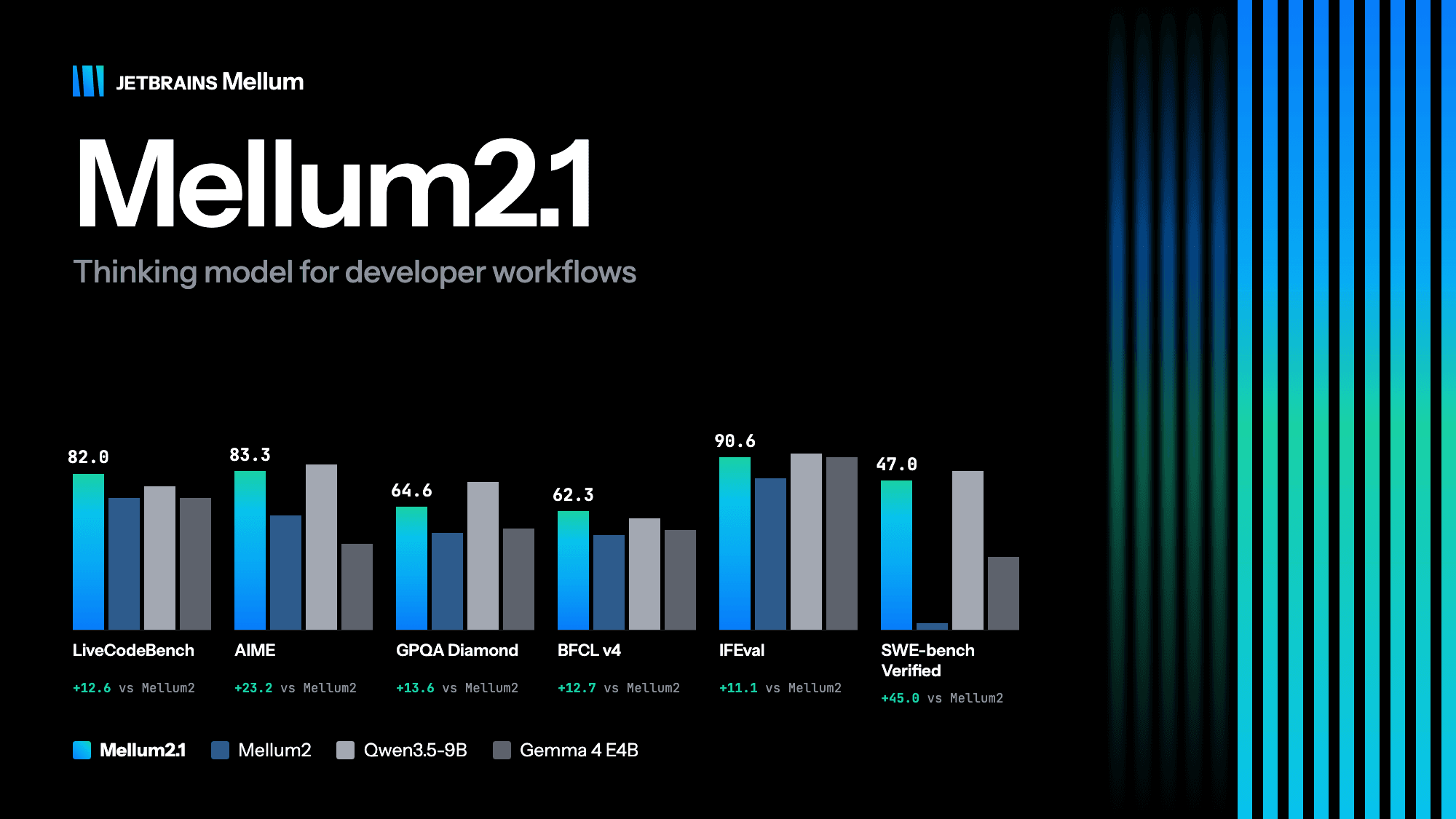
JetBrains has open-sourced Mellum 2.1, a 12B MoE model activating only 2.5B parameters per token. With its architecture unchanged since June, reinforcement learning in real environments lifted SWE-bench Verified from 2.0 to 47.0. Apache 2.0 licensed and self-hostable, it is positioned as the fast, cheap execution layer for coding agents — strong on coding and tool use, still trailing Qwen3.5-9B on the hardest agentic tasks.
On October 9, REA (Reverse Engineer Anything) gained roughly 13,000 GitHub stars in a single day, topping GitHub Trending's dev-tools daily ranking. It wraps decompilation and static analysis into an MCP server + CLI - one npx rea-agents setup lets 12 coding agents, from Claude Code to Cursor, read binaries with no source code. We break down its methodology, capability map, and the gray areas of reverse engineering.

One prompt, six unsupervised hours: GPT-6 Astra finished a three.js visualization of Calvino's 55 Invisible Cities in 53 minutes for $10, while Claude Opus 5.5 took 85 minutes, 6 parallel subagents and $74 — and declared a 'jump' for design tasks. A field report on vibe coding's limit case, model selection, and the token ledger.