Binance Intelligence: Binance Puts Vibe Coding Inside the Exchange — Trading Strategies in Plain Language
On October 5, Binance unveiled the Binance Intelligence product stack: the free AI assistant Binance AI, AI Pro that turns plain language into live trading strategies, and the developer platform Agent OS. It is the first time a top exchange has closed the full loop from natural language to strategy code to live execution.

On October 5, Binance announced a full AI product stack
On October 5, 2026, Binance unveiled the Binance Intelligence product stack in an official livestream, announced by co-CEO Richard Teng and VP of Product Jeff Li. The stack has three layers: Binance AI, a free AI assistant for all users; Binance AI Pro, which turns natural language into executable trading strategies; and Agent OS for developers. Binance AI began rolling out to users worldwide on the day of the livestream.
Binance AI: a free "market-reading" assistant
Binance AI's pitch is straightforward: compress a flood of information into something readable. It aggregates market data, news, social media, on-chain data, and research reports, presented through a generative UI — not a pile of charts, but conclusions with context. The feature list includes a For You tab, auto-generated market briefings, smart prompts, and Master Trade. Rolling out free to all users starting October 5, it will be most people's first encounter with "AI inside the exchange."
Note the wording: "gradually rolling out." Binance did not flip the switch globally on day one but ramped up in waves — the mature move, since the last thing a launch like this needs is peak traffic knocking it over on day one.
Binance AI Pro: vibe coding enters a top exchange for the first time
The real headline is Binance AI Pro, and its core capability fits in one sentence: generate executable trading strategies from natural language. A user describes an idea — say, "buy 10% of BTC when it breaks below the 20-day moving average, take profit at +5%" — and the AI turns it into strategy code that can be backtested and previewed before deployment. That is the vibe-coding logic, except the output is no longer a webpage or an app but a strategy moving real money. The product is expected later in October.
Pricing is freemium: the free tier allows querying and previewing strategies with a monthly free allowance; the Premium tier at 19.99 USDC/month unlocks live deployment, paper trading, and model selection — including frontier models. The 19.99 USDC price point is telling: billed monthly, denominated in crypto, it anchors to how professional traders already pay for tools while costing orders of magnitude less than hiring a quant intern.
The free-versus-Premium split is drawn cleanly too: querying and previewing cost nothing; you only pay once a strategy goes live. The free allowance exists to lower the cost of experimentation — users can have the AI generate a dozen strategies and backtest them for fun, and only pay the 19.99 USDC once something looks solid. That "get hooked first, pay later" design is common in trading tools, but Binance is the first to build it into a top exchange for AI strategy generation.
Strategy code stops being a toy here. Inside an exchange, an AI-generated strategy is inherently an auditable, backtestable financial artifact: every line of logic can be replayed, every execution logged. That is exactly what vibe coding has been missing — most vibed-out code runs and nobody ever looks at it again, while a trading strategy has to reconcile by nature.
Safety design: AI handles the money, humans hold the final gate
Letting AI touch funds directly was never really about model capability — it is about trust. Binance's answer is two layers of isolation: first, each live strategy runs in its own dedicated sub-account, funded manually by the user, so the strategy can only ever touch the money inside that sub-account — losses have a hard boundary; second, every trade must be reviewed and approved by the user before execution, trade by trade. The AI proposes, the human disposes.
This "sub-account isolation + per-trade human review" combo is essentially the safety template for the whole "AI handling money" scenario. It does not pretend the AI will never make mistakes; it locks down the blast radius of a mistake and keeps the final decision with the human. Any product dreaming of AI auto-investing or AI-managed accounts should be taking notes.
Agent OS: the developer layer is covered too
The third layer is Binance Agent OS, a developer platform. It actually went live back in August 2026 and now handles 280,000+ calls per day. The platform aggregates the Binance API, Wallet Agentic Hub, x402 programmable payments, and a Skill Hub, supports the MCP protocol, and lives at binance.com/agent-os. On the third-party tooling side, it explicitly supports ChatGPT, Claude Code, Codex, and Cursor.
In other words, Binance is not just bolting AI onto its own app — it is paving a road for AI agents to call exchange capabilities directly. Programmable x402 payments and MCP support both point at agent-to-agent trading scenarios: tomorrow's counterparty may not be a person, but an agent.
The three layers share one logic: Binance AI solves "understanding the market," AI Pro solves "trading hands-on," and Agent OS solves "letting other people's AI trade hands-on too." From assistant to strategy to platform, Binance has occupied every slot AI can take in the trading pipeline in a single move.
Our take: exchanges are starting to sell "strategy productivity"
This is the first time a top exchange has closed the full loop — natural language to strategy code to live execution — inside its own product. What matters is not any single feature but the position: the exchange is the closest thing to the money, and every step AI takes here maps directly onto real capital efficiency. Binance just announced a new competitive axis for exchanges: alongside fees and listing counts, "AI strategy productivity."
But three cold showers are in order. First, 19.99 USDC/month for Premium is not cheap, and the company has not said how many strategy generations the free tier's monthly allowance actually covers — if the allowance is stingy, most users will never touch the core feature. Second, per-trade human review is safe, but it is also friction: high-frequency strategies cannot survive click-to-confirm on every trade, so AI Pro's real sweet spot is almost certainly medium-to-low-frequency, longer-horizon strategies — something the official messaging glosses over. Third, compliance details are entirely absent — what is the regulatory status of AI-generated trading strategies across jurisdictions? Who is liable when something goes wrong? Not a word in the livestream. Building the most aggressive AI feature in the most heavily regulated industry means that question will have to be answered sooner or later.
For the vibe-coding community, the more interesting angle is this: when AI-generated code directly handles money, code quality stops being "it runs" and becomes "it must be auditable." Binance AI Pro has inadvertently set a new bar for vibe coding — generated strategies ship with backtests and an audit trail built in. Maybe the future test of whether a vibe-coding tool is any good is simply whether it dares to let its generated code touch real money.
Sources
Related articles

Sesame's October 6 update: the new voice assistant rolls out fully on iOS and Android with a brand-new voice model. Each voice agent gets its own computer — schedule Devin, Claude Code, or Codex with your voice while out for a walk. Smart glasses land in 2027; the voice OS ambition is on the table.
AgentMail launched AgentID on October 6: agents log in to third-party apps using their own email as an OpenID Connect identity. The verification-code step disappears, one authorization lasts 180 days. Identity may be the real watershed between agent toys and agent production.
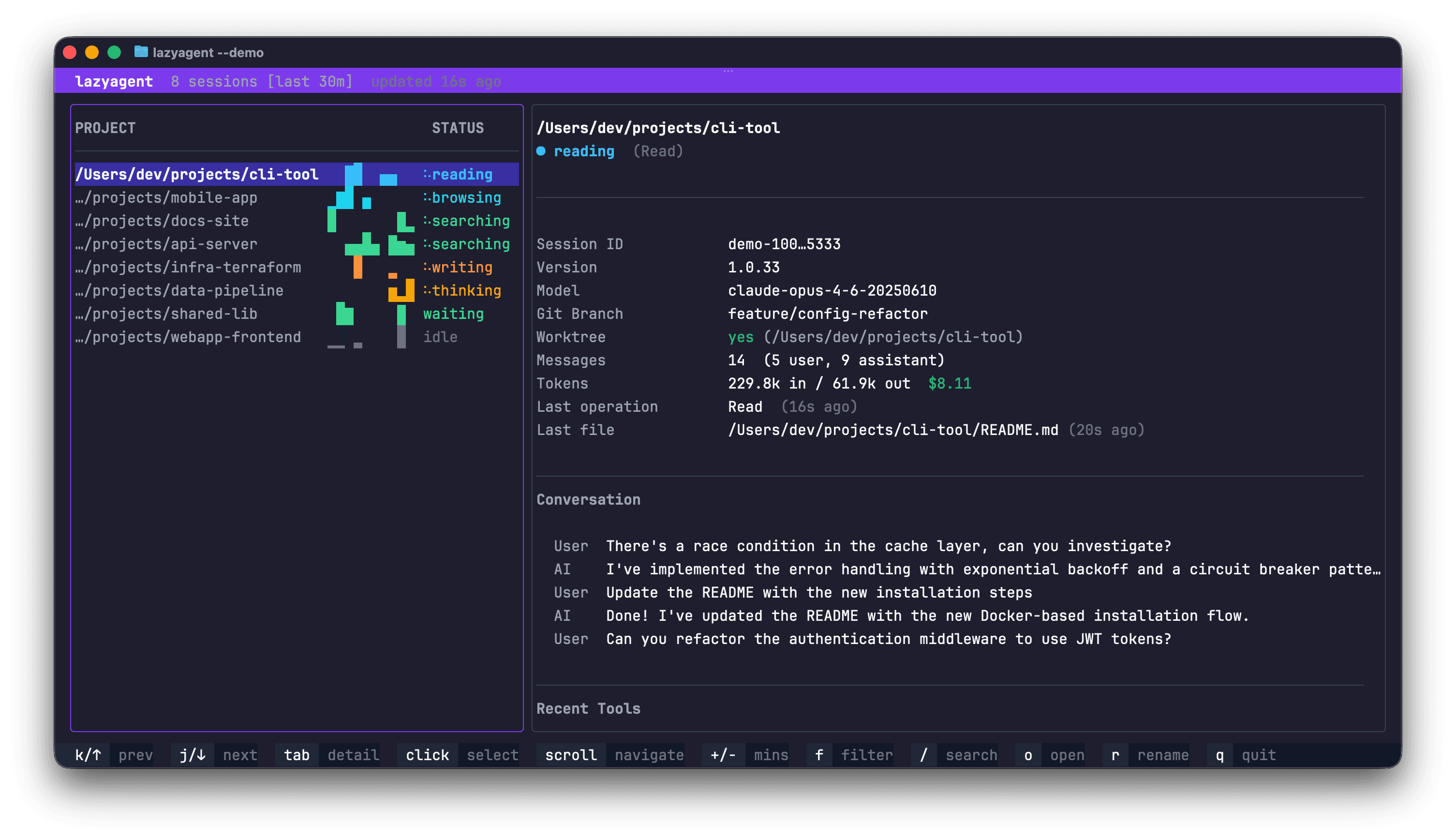
On October 4, OpenAI's Codex engineering lead Tibo made a public pledge: for 28 days, ship one clear improvement every day for most Codex and ChatGPT Work users — on days the team fails, everyone gets a usage reset. Day 1 brought ~50% faster GPT-6 Astra / 6.1 Sol by default, Day 2 made Auto-review free for ChatGPT sign-ins, Day 3 put GPT-6 in the chat tab. This is an experiment in turning product iteration into a daily series.