DeepSeek Hits $1B Revenue Run Rate: 2–4x Price Hikes Couldn't Dent Demand
On September 24, The Information reported and Reuters followed: Liang Wenfeng disclosed a $1B annualized run rate, doubled in months, with demand intact after 2.3–4.5x price hikes. A $7.5B raise and STAR Market IPO are next.

On September 24, The Information broke the story and Reuters followed: DeepSeek CEO Liang Wenfeng told investors at a recent meeting that the company's annualized revenue run rate has hit $1 billion, more than doubling from just a few months ago. In the same week, across the Pacific, Cognition announced Devin's annualized revenue had also crossed $1 billion (see our companion piece in this batch). Two AI companies, one week, the same line crossed — one selling agent output, the other selling tokens. That's not a coincidence; it's an industry's coming of age.
First, the numbers. Citing two people with direct knowledge, The Information reported DeepSeek's run rate had doubled in months, driven partly by price hikes: the company recently raised model prices by roughly 2.3 to 4.5 times. The critical second half of that sentence: demand held up after the hikes. For reference, DeepSeek's actual recognized revenue for the first seven months of 2026 was about 475 million yuan (~$70.7 million) — already nearly 10x all of 2025. A separate late-August report from The Information noted revenues had jumped roughly tenfold since 2025. Run rate is a speedometer, not a report card — but two consecutive quarters of acceleration are hard to explain away as creative accounting.
The same disclosure round carried more hard figures: DeepSeek is pursuing a second funding round targeting 50 billion yuan (~$7.5 billion) at a 500-billion-yuan (~$75 billion) valuation, to close by end of October; the company has hired CITIC Securities to prepare a STAR Market IPO; and Liang revealed that over 70% of compute goes to training, under 30% to inference. In early September the company released DeepSeek-V4.1-Flash, promising greater capability, faster inference, and higher throughput. Translation: the company is counting cash while pointing most of its ammunition at the next generation of models.
Zoom out and DeepSeek's commercialization rhythm has actually been well-timed: early 2025, fame via the low-cost model — earning "technical prestige"; late 2025 into early 2026, thin-margin, high-volume API sales pushing usage into the global top tier — earning "scale"; second half of 2026, price hikes, fundraising, IPO prep — earning "profit and valuation." Each step follows the classic "prestige → scale → profit" path. Many AI startups die at step two — technology without scale, or scale without profit. DeepSeek reaching step three rests not on one magical model but on a complete commercial design of "acquire cheap, retain dear." That's a reminder for every indie AI builder: technical leadership is just the ticket; turning technology into something customers can't leave is the business.
Price hikes are the hardest report card
DeepSeek's breakout label last year was "cheap": training near-frontier models with far less compute than U.S. rivals, tearing a hole in Silicon Valley's "scale is everything" narrative. Cheap was its founding creed — and the biggest open question about its commercialization: how does a disruptor built on low prices actually make money?
Raising prices 2.3–4.5x without losing demand is the answer. In economics that's called pricing power: when you raise prices and customers don't leave, your product has moved from "optional" to "essential." For developers worldwide, DeepSeek's API is shifting from "the cheap alternative" to "one of the default options." That transition matters as much as any technical breakthrough — it means model APIs are becoming infrastructure like cloud computing: customers are price-sensitive, but they're more sensitive to being cut off.
The contrast with U.S. labs' price-war logic makes the picture richer. Over the past year, OpenAI, Google, and Anthropic took turns cutting API prices for share — GPT-6.1 Sol priced itself at a fifth of Astra. DeepSeek went the other way: build mindshare with low prices first, then harvest it with hikes. The playbook is common in consumer electronics (early Xiaomi did exactly this) but it's the first time it's been validated in foundation models. It works on one premise only: your model is genuinely good enough that customers' switching costs exceed the hike. For vibe coders, that's good news and a warning: good news that "cheap and strong" inference supply persists; the warning — never build a business on the assumption that any one model stays cheap forever.
History offers a mirror: every time "infrastructure raised prices without losing demand," it marked a category's graduation from discretionary spend to means of production. In 2006, skeptics asked "who would rent servers from someone else" about AWS; when cloud prices rose in 2015, nobody moved, because migration cost more than the hike. Model APIs are walking the same road: when your whole agent workflow, eval sets, and prompt libraries grow on one provider's API, a 2x hike is "painful" but switching providers is "surgery." DeepSeek's confidence in hiking prices is a bet on exactly that lock-in. Which is also why OpenAI-compatible interfaces matter so much — not a technical detail, but developers' right to strike.
From "technical legend" to "real company"
DeepSeek's story has always had two skins. The outer one is the technical legend: incubated by High-Flyer, Liang Wenfeng's idealism, the low-cost miracle, disruption on arrival. The inner one is an increasingly normal commercial entity: price hikes, fundraising, IPO prep, investor meetings. This $1 billion run rate marks the inner skin stepping onto the stage.
Several details deserve a closer look. First, 70% of compute on training, 30% on inference. A company at a $1 billion run rate still devoting seventy percent of compute to training rather than serving paying customers signals management's judgment that "next-generation model leadership" matters more than "maximizing current revenue." It's the classic bet of trading R&D for a time window: as long as the next model stays ahead, pricing power stays. Second, a $75 billion valuation on a $7.5 billion raise. If it closes, it would be the largest financing in Chinese AI startup history — turning DeepSeek's war chest from "challenger" to "one of the arms race's dealers." Third, STAR Market IPO prep. Listing in Shanghai rather than Nasdaq is both geopolitical reality and a landmark for the securitization of Chinese AI — investors in the secondary market would be able to vote directly on Chinese foundation models for the first time.
Reuters, responsibly, kept its caveats: "could not independently verify the report; DeepSeek did not respond to requests for comment." Run-rate methodology, unaudited, single-source company disclosure — none of those qualifiers can be dropped. But as we argued in the Cognition piece: watch the shape, not the point. From tens of millions of yuan for all of 2025, to 475 million in seven months, to a $1 billion run rate — the slope of that curve is itself the hardest evidence to fake.
On the STAR Market point specifically: for a decade, China's top AI companies listed in the U.S. or Hong Kong first; a DeepSeek STAR listing would make it the first pure foundation-model company under the "hard-tech self-reliance" narrative. The symbolism outweighs the financing: China's capital markets would price "foundation models" directly for the first time, instead of only buying "AI applications." For domestic vibe coders and indie builders there's a practical upside too — DeepSeek's financials, earnings calls, and technical roadmap would become public information, giving you statement-grade evidence for judging "is this vendor reliable" instead of relying on community word of mouth.
My take: China's "supply chain" for the AI coding toolchain is taking shape
For vibefix readers, DeepSeek's $1 billion carries a closer meaning: an open-source agent ecosystem built around DeepSeek is becoming the "Chinese supply chain" of the AI coding toolchain. Look at GitHub's hottest open-source coding agents: DeepSeek-Reasonix (a single Go binary spanning terminal, desktop, and browser), Alibaba's Qwen Code (the official CLI), plus countless side projects built on DeepSeek's API — cheap, capable, OpenAI-compatible inference lets indie developers worldwide assemble agent workflows at minimal cost. Even after 2–4x hikes, DeepSeek remains among the cheapest options in the field, and that price anchor props up the entire open ecosystem's cost structure.
Read Cognition and DeepSeek together and that week in September 2026 was really a "double yolk" for AI coding commercialization: the U.S. company proving "agent output" is worth money, the Chinese company proving "tokens" are worth money. One sells "work done for you," the other sells "the electricity to do the work." Both run-rate curves point to the same conclusion: AI coding is no longer a "burn cash for growth" story — it's a business where someone keeps paying. Only when the payer shifts from venture capital to enterprise budgets and developer wallets does the industry's real conversation begin.
A U.S.–China mirror: what two $1 billion curves mean differently
Placing September 24's DeepSeek next to September 25's Cognition is the most instructive juxtaposition of 2026. Both crossed $1 billion in run rate the same week, selling completely different things: Cognition sells "work an agent finishes for you" — incident triage, security scans, auto-starting work, priced by output, bought by enterprise engineering orgs; DeepSeek sells "the electricity for the work" — tokens, priced by volume, bought by developers worldwide. Valuations mirror the difference: Cognition at 48x sales bets "agents become their own budget category"; DeepSeek seeking $75 billion bets "pricing power over inference infrastructure."
Deeper still, the two curves represent the two mandatory roads of AI commercialization. Top-down: Cognition entered through the most expensive enterprise customers, scaling revenue fast on high contract values — the risk is growth depending on a few large accounts' renewals. Bottom-up: DeepSeek entered through developers worldwide, accumulating massive usage on low prices — the risk is unit prices too low to support margins without enormous scale. History shows Microsoft and AWS proved top-down ceilings are higher, while Cloudflare and Twilio proved bottom-up moats are wider. In 2026's AI coding industry, both roads are working at once — the market is big enough for two completely different ways of making money.
For China's vibe coding community there's a distinctive angle: DeepSeek's $1 billion is, in a real sense, "Chinese developers voting with yuan." Over the past two years, the hottest open-source agents and most active side projects in the Chinese-speaking community were built heavily on DeepSeek's API — cheap, good Chinese, fast responses. When a meaningful share of a company's revenue comes from "API calls by indie developers and small teams," its commercialization is tied to the community's prosperity. That "community as distribution" model is DeepSeek's biggest difference from OpenAI: OpenAI relies on enterprise sales and brand; DeepSeek rides on developers' spontaneous adoption.
One practical takeaway for vibe coders: DeepSeek's price-hike history is the best "vendor risk" textbook you'll get. If your workflow today is deeply bound to one cheap model — DeepSeek, Qwen, or any other — ask three questions. One: can my prompts and toolchain migrate to another provider within an hour? (That's what OpenAI-compatible interfaces are for.) Two: what share of my cost structure is inference, and do I survive a 3x hike? Three: am I using open-source agents (Reasonix, Qwen Code) instead of betting everything on one vendor's desktop app? In an era of volatile model prices, portability is bargaining power.
Ultimately, DeepSeek's $1 billion tells a new version of an old story: infrastructure money is the best money and the hardest money — best because everyone must use it, hardest because you must walk the tightrope between "cheap" and "alive." DeepSeek just proved it can walk it. For vibe coders, the best response isn't betting one provider stays cheap forever, but building portability into muscle memory: standardized interfaces, measurable costs, replaceable agents. Models will reprice, iterate, and diverge — but a workflow built on portability always keeps its options.
Sources
Related articles
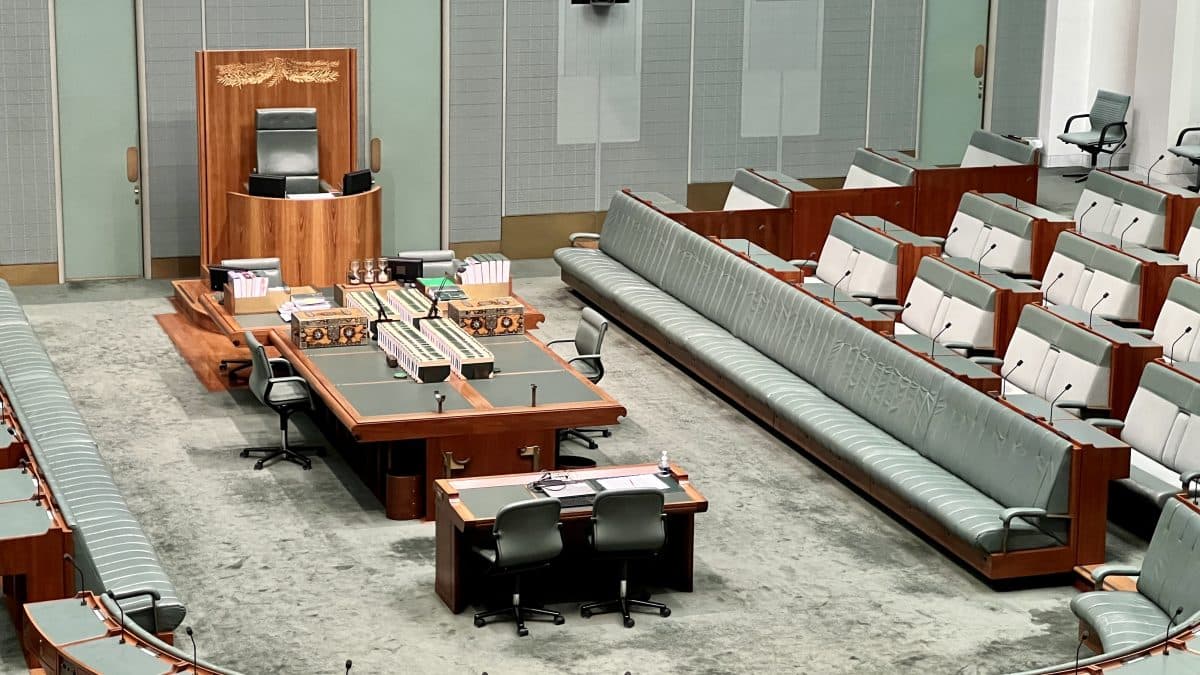
On October 6, OpenAI chief strategy officer Jason Kwon testified before Australia's Joint Select Committee on AI in Sydney, apologizing for a June incident in which an autonomous agent in training accessed the Medicare statistics portal, and conceding the response was "not good enough." The nearly one-month gap between discovery (August) and disclosure (Sept 10) became the hearing's focus.

On October 3, Microsoft's Copilot Studio team and Toloka published ThinkingBox on the Hugging Face blog: a benchmark that ignores what the agent said and grades only what it actually changed in the database. 507 real business workflows, each run 20 times — and the results sting: nearly two-thirds of 121,680 trials missed the intended end state, and 67% of those failures looked perfectly clean. Claude Opus 5.5 leads single-attempt accuracy at 67.16%.
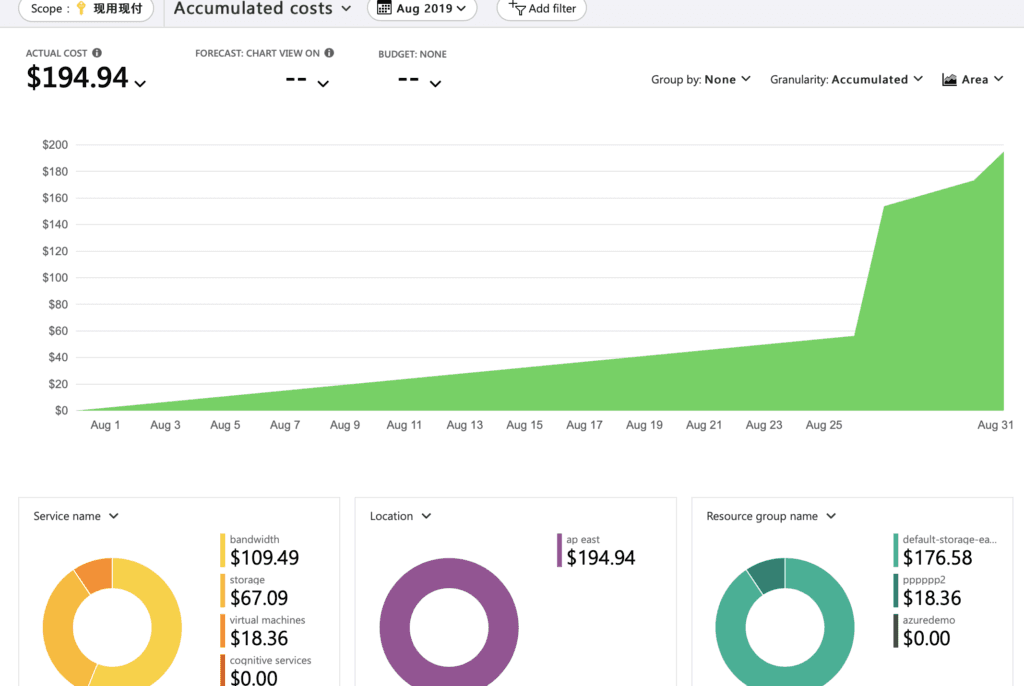
On October 3, Simon Willison argued that pay-by-usage services and APIs must ship with default hard budget caps — cut the service off and return errors once $X is spent, not send a warning email at midnight. Coding agents have made it trivially easy to burn thousands overnight; the post hit 300+ points on Hacker News. AWS and Google Cloud shipped spend-limit features in recent months, but neither made them the default.