Eclipse Enclave 1.0 Launches: An Open-Source Sandbox So Autonomous Coding Agents Can Work Unsupervised
On 19 November 2026 the Eclipse Foundation launched Enclave 1.0, an open-source sandbox that lets six coding agents — Claude Code, Codex, OpenCode, Copilot CLI, Pi and Theia — work autonomously in isolated containers, with only the files, network hosts and secrets each task needs. Vendor-neutral and MIT-licensed, but 1.0 has limits: the experimental QEMU backend has no gateway enforcement yet.
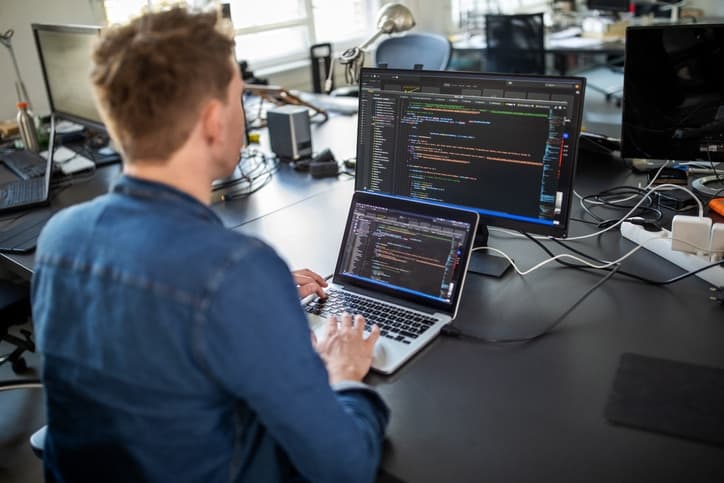
Coding agents no longer just suggest code. They rewrite it, install dependencies, run tests, and execute commands on their own. The catch is that letting them do real work means giving them real freedom — and once that freedom is granted, your SSH keys, private files, and whole development machine are exposed to the agent. Eclipse Enclave 1.0, announced by the Eclipse Foundation on 19 November 2026, takes aim at exactly that tension: an open-source sandbox and runtime where agents work autonomously inside isolated containers, and developers only open up the files, network hosts, and secrets a task actually needs — no more approving every single command by hand.
The verdict up front: Enclave does not solve whether agents are smart enough. It solves whether you dare let them work unsupervised. That is the right problem, and the fact that it is MIT-licensed and vendor-neutral makes it more interesting than the sandbox each agent vendor ships with its own tool. But do not overpraise a 1.0. It can control what an agent is allowed to touch; it cannot judge whether the code the agent writes is any good, and the experimental QEMU backend does not even have the network gateway yet. Treat it as a better set of tools for managing risk, not as a guarantee of safety.
Why coding agents need a sandbox
Over the past year, coding agents have gone from autocomplete assistants to colleagues that work on their own: refactoring a large chunk of code, fixing bugs, writing tests, running scripts to pull runtime logs, iterating until the job is done. That autonomy comes at a price. The Eclipse Foundation puts it plainly in its announcement: running agents with unrestricted access to a development environment can expose sensitive information, cause unintended changes, and create security and governance headaches for organisations trying to scale adoption.
The usual compromise has been awkward: keep the agent on a very short leash, approving every step by hand. Thabang Mashologu, the Foundation's Chief Marketing Officer and Head of Products, told InfoWorld that this throws away most of the productivity benefit — a person sits there clicking "allow" while the agent waits. Enclave tries a different deal: define the rules up front — which files it can see, which sites it can reach, which secrets it can use — then let the agent work inside those rules on its own, while the developer spends time defining the task and reviewing the result instead of approving each step.
The idea itself is not new, and neither is the technology: container isolation and allowlists have been around for years. What is new is someone building it as an open, cross-agent commons instead of each agent vendor building its own sandbox.
How Enclave walls agents off
The core design can be stated in one sentence: every agent session runs in its own isolated container and can only touch what the developer explicitly hands it. Several sessions can run in parallel on separate tasks, isolated from each other; sessions can be resumed without losing progress or configuration.
The diagram below shows what that isolation looks like: three agents doing three different jobs, all inside the sandbox; SSH keys, private files, and other projects stay outside on the host by default; and every outbound network request has to pass through the gateway.

In practice, a task goes like this: you hand the agent a job — say, refactoring a sizeable piece of code. Enclave gives it a container with only that project's worktree mounted. Inside, the agent can explore the code, change files, install dependencies, run tests, and keep iterating until it is done. As InfoWorld describes it, a typical split is one agent fixing a bug, another writing tests, and a third handling a refactor, each in its own worktree and isolated environment, without interfering with the others. When the work is done, the developer still reviews it before merging. The sandbox changes how the work gets done, not the rule that work gets reviewed before it lands.
Six agents, one set of rules
Enclave 1.0 ships with six coding agents built in: Claude Code, Codex, OpenCode, GitHub Copilot CLI, Pi, and Eclipse Theia. The architecture is extensible, so more tools can be added, and a separate extensions repository already offers extra harnesses such as Antigravity and developer tooling such as Playwright MCP.
"Six agents, one set of rules" is worth pausing on. It is the biggest difference between Enclave and the sandboxes that ship with each agent. If you use Claude Code and Codex side by side, you used to have two isolation implementations and two sets of security policies to maintain. With Enclave, the rules for files, network, and secrets are defined once and apply to all six tools. Unified rules make auditing and review practical too. For an organisation, it means the security team does not have to chase every new tool's isolation implementation — it manages one layer, Enclave.
It is also worth noting that Theia is on the list. Eclipse Theia is the Foundation's own open platform for building IDEs, and treating it as a first-class citizen signals that this project is not a stage built for one commercial agent. It is part of the Foundation's wider AI ecosystem — the announcement also names PanEval, LMOS, the Sovereign AI Foundation, and Open VSX as sibling projects.
More than isolation: gateway, secrets, rootless operation
Container isolation alone is not enough. An agent inside a container that can reach the whole internet can still send data somewhere it should not go. So Enclave's second line of defence is a network gateway: all session traffic passes through it, only allowlisted domains get through, and what the agent tried to reach — allowed or blocked — is written to a log the developer can review with a command.
To make it concrete: Claude Code needs to reach Anthropic's API, so that domain is on the allowlist and passes. If the agent tries to reach some other domain that is not listed, the request is blocked and logged. That "deny by default, allow on purpose" approach is far more solid than "allow everything, investigate after something goes wrong." And because the log exists, after-the-fact review is possible — you can see where the agent actually tried to go.
The third line of defence is secrets. Enclave has built-in mechanisms to protect API keys and OAuth tokens, using placeholders in place of real keys: the agent can use a service without ever holding the key itself. Combined with rootless operation — sessions can run as a non-root user on Podman and Docker — the design intent is clear: the agent gets the minimum permission needed to do the job, not the keys to your machine.
Where it came from: an internal tool at EclipseSource
Enclave was not written from scratch as a new project. It began as an internal tool at EclipseSource, a Foundation member organisation whose engineering teams started building sandboxing technology in late 2025 so AI coding agents could work autonomously without exposing development environments to unnecessary risk. The team used it daily, and quickly noticed a shift in where developers spent their attention: repeated approval prompts used to interrupt their flow, and agents stalled whenever nobody was there to respond. Defining access rules up front, in line with company policy, cut down on that constant babysitting, and developers could spend their time thinking about what the agent should achieve, the architecture the task needed, and the constraints it had to respect.
In July 2026, EclipseSource contributed the technology to the Eclipse Foundation, and the team kept developing it, porting more features from its internal tooling step by step. Four months later, version 1.0 was publicly announced. That origin explains one of Enclave's defining traits: it was built by working engineers for themselves first, not drawn up as a grand vision and filled in later. At launch it was already available at enclave.eclipse.dev, open source under the MIT license, with documentation open and community contributions welcome.
Why vendor neutrality is worth talking about
Mike Milinkovich, the Foundation's Executive Director, said in the announcement that the next big step in AI-assisted development is not making coding agents more capable, but giving them the autonomy to do meaningful work while developers and organisations stay in control. Mashologu put it more bluntly to InfoWorld: as agents grow more autonomous, the systems that decide what they can access, what they can execute, and how they interact with the outside world become incredibly important. "It's not enough for the AI models themselves to be powerful. We also need open, trusted infrastructure around them."
The subtext is about power: who controls the infrastructure that agents rely on. If every agent vendor ships its own closed sandbox, the rules, logs, and audit trails sit in the vendor's hands, and switching tools means rebuilding your whole security setup. If the isolation layer is open and vendor-neutral, switching agents is like switching a screwdriver — the safety policy stays the same. The Foundation also cites a report from 451 Research, part of S&P Global, which sees Enclave's consistent isolation and policy controls across supported agents as a source of immediate enterprise value. That conclusion comes with a grain of salt — it is an analyst report in the Foundation's orbit — but the direction it points to is right: the sandbox is turning from a feature of a product into infrastructure.
On platforms, Enclave ships binaries for Linux and macOS, including arm64, with .deb and .rpm packages and self-updating stable and rolling channels; Windows runs through a WSL2 launcher. There is also a preview companion UI, HomeShell, which groups parallel sessions into projects and workstreams. Note the word preview: do not judge 1.0 on HomeShell as if it were a finished feature.
Where Enclave sits next to the alternatives
Enclave is not the first sandbox for coding agents. Claude Code, Codex, and other agents ship their own sandbox or permission modes, and cloud vendors offer plenty of isolated execution environments. What sets Enclave apart is its position: it belongs to no agent vendor and no cloud vendor. It sits between the agent and your machine as a shared layer of infrastructure.
That position buys two practical things. First, switching tools gets cheaper. Use Claude Code today, try Codex tomorrow, and the security policy does not need rewriting; the audit log keeps the same shape. Second, the rules belong to you, not to a vendor. With a vendor's built-in sandbox, the vendor decides how rules are set, what gets logged, and who you call when something goes wrong. With open-source Enclave, the rules live on your own machine, the implementation can be inspected by the community, and problems can be fixed in the open.
There is a cost, of course: you install it, maintain it, and configure the allowlist yourself, and there is no vendor support line to call. A cloud sandbox is "pay and someone else worries"; Enclave is "free, but you are responsible." For an individual developer that trade may not be worth it; for an organisation that wants one story about what agents may touch, the control is worth more. Which side you pick depends on whether you fear hassle or loss of control more.
One more angle: Enclave is a Foundation project, not a startup's product. Its direction is set by the community and member organisations, so it is unlikely to turn closed-source or metered one day — but its pace also depends on community investment, and features may arrive more slowly than in a commercial product. That is exactly where 1.0 stands: the core isolation and gateway work, companion pieces like HomeShell are still previews, and the QEMU backend is still experimental. It is fairer to track it as infrastructure that is still growing than to judge it as a finished product.
Honestly: where 1.0 stops
Two points are easy to misread. First, the date. The public announcement is dated 19 November 2026, but that is the day of the public launch, not the first day the code existed: according to DEV community coverage, the Eclipse project registry dates version 1.0.0 to 31 October 2026. In other words, the 1.0 code was already in shape by the end of October, and 19 November is when the Foundation formally announced it. This article follows the announcement date, but the distinction is worth knowing — Enclave was not thrown together on launch day.
Second, the experimental QEMU backend. Alongside the default Docker and Podman container backends, the Enclave repository contains an experimental QEMU microVM backend. Several independent reports note that this backend currently lacks the network restrictions of the Docker gateway — if you run Enclave on the QEMU backend, do not assume the allowlist is protecting you; on that backend, it is not, yet. EclipseSource's own blog confirms the QEMU backend is experimental. The container backends are where the gateway actually enforces. If you want stronger VM-level isolation, wait until the gateway catches up on QEMU.
The larger boundary is a matter of principle, and Mashologu concedes it himself: "We're not suggesting that Enclave makes autonomous agents completely safe. It's about giving developers better tools to manage the risks." A sandbox can draw clear borders and contain damage, but it cannot judge whether the code an agent produces is good, whether a dependency is sound, or whether the permissions you granted were wise. The Foundation's announcement promises no such thing either. Developers still have to think carefully about permissions, network access, dependencies, and the quality of generated code — the sandbox gives that thinking a place to land; it does not do the thinking for you.
How to try it, and whether it is worth trying
Enclave 1.0 is available now at enclave.eclipse.dev, open source under the MIT license, with documentation and community feedback channels open. If you already use Claude Code, Codex, or OpenCode and have started to feel the friction — approving every step is tedious, but letting go feels unsafe — Enclave is worth an afternoon: install it, start with a small task, keep the allowlist tight, and read the gateway log afterwards to see where the agent actually tried to go before deciding how much to loosen.
Its value is greater if your team is considering running several agents in parallel, or if your security team wants a single story about what agents are allowed to touch. It turns "a different set of rules per tool" into "one set of rules for every tool." But if you are hoping it will solve the problem of agents writing wrong code, you have the wrong tool: code review, tests, and checks before merging are all still required.
Overall, the most significant thing about Enclave 1.0 is not the technology itself — containers, allowlists, and rootless operation are not new inventions — but the fact that they have been packaged into an open, vendor-neutral commons. Coding agents are changing from one person's assistant into a team's workforce, and a workforce needs infrastructure with boundaries, rules, and audit trails. The Eclipse Foundation moving first to open-source that infrastructure is the right move; whether it becomes the de facto standard depends on whether the community actually picks it up and contributes. Version 1.0 is a starting point: worth watching, not worth declaring a verdict on yet.
Comments (0)
Sources
Related articles

On November 24, 2026, Tencent open-sourced Hy-MT3: 102 languages (up from 38), three sizes from 1.8B to 30B-A3B, and a 1.8B GGUF build of about 1.35 GB that runs on a laptop. The 30B model claims flagship-beating quality at under 1 TFLOP per sample — vendor-tested, with its own TransRubric as the ruler.

On November 24, 2026, SenseTime open-sourced SenseNova U1.6, an 8B unified visual model that proofreads its own pictures: UltraTextBench dense infographics rise from 86.04 to 92.28 with self-correction on. Apache 2.0 weights, ComfyUI support on day one — but 35 GB of weights, 24 GB of VRAM, and vendor-only numbers so far.

On November 24, 2026, Anthropic published full results for Siren, a honeypot test that puts Claude in deliberately weakened sandboxes with a credential or file sitting just outside. Recent models reach outside in 21–32% of scenarios but misuse what they find in only 0.6–1.6% — and a few lines of sandbox rules in the system prompt cut reaching to about 2% or less.