Google's Antigravity Adds Claude Opus 5.5: the Model War Moves Into the IDE Picker
On October 3, Google added Anthropic's Claude Opus 5.5 and Sonnet 5.5 to its agentic coding workspace Antigravity, for paying subscribers only. Opus 4.6 and Sonnet 4.6 retire November 2. IDEs are becoming app stores for models.
What happened: a rival's flagship models inside Google's IDE
On October 3, Google updated its autonomous coding workspace Antigravity, adding Anthropic's Claude Opus 5.5 and Claude Sonnet 5.5 directly to the model selector. Antigravity is an agentic developer platform that plans, writes, and tests code across complex repositories; engineers now get the newest Claude models inside Google's environment without a separate Anthropic API key. The catch: both models are reserved for paying Google AI Pro and Ultra subscribers — free users are out.
The same announcement set a retirement date: Claude Opus 4.6, Claude Sonnet 4.6, and the open-weights GPT-OSS-120B leave the platform on November 2. The positioning is explicit too: Sonnet 5.5 is faster with lower token cost, Opus 5.5 targets deep logic and agentic workflows.
Why it matters: IDEs are becoming shelves for models
Google putting a rival's flagship models inside its own IDE would have been unthinkable two years ago. It reflects a reality: the moat at the model layer is thinning; the experience layer is the battlefield. Users no longer pick an IDE for whose model sits behind it, but for who stocks the most good models with the smoothest switching. Antigravity, Cursor, and Windsurf are all doing the same thing: becoming app stores for models, acting as the channel.
For Anthropic it's good business getting Claude onto more developers' desks; for Google it's patching its own gaps with someone else's strengths — no matter how good Gemini gets, it can't stop users from wanting to try Claude. The model-vendor/tool-vendor relationship is shifting from rivalry to "coopetition shelving."
Our take: check the model shelf before picking an IDE
The practical advice for vibe coders is direct: when choosing an AI coding tool, look first at which models its picker stocks and how cheap switching is — not just the default model it ships with. A "faster and cheaper" model like Sonnet 5.5 is ideal for high-frequency daily calls; save Opus 5.5 for the hard architecture work. And mind the November 2 retirement line — if your workflow still leans on 4.6, test 5.5 compatibility now, not on shutdown day.
Sources
Related articles

Cloudflare's Birthday Week blog makes the case plainly: GitHub was designed for humans writing code; the agent era needs the collaboration layer reinvented. Artifacts enters open beta with a repo for every agent, plus a developer competition — $25,000 in credits for first place, deadline October 14. This is the first time a major infra vendor has put 'infrastructure for agents writing code' on the table as a public proposition.

Anthropic released Claude Haiku 5.5 on October 7, calling it its "cheapest, fastest, and most capable small model." But the real story isn't the discount — it's a "100K-token price cliff": prompts under 100K tokens get roughly 90% off, while longer ones get only about 50%. Anthropic is using pricing to teach you to break big tasks apart — the small-model battlefield is shifting from "chatting with you" to "being orchestrated by bigger models."
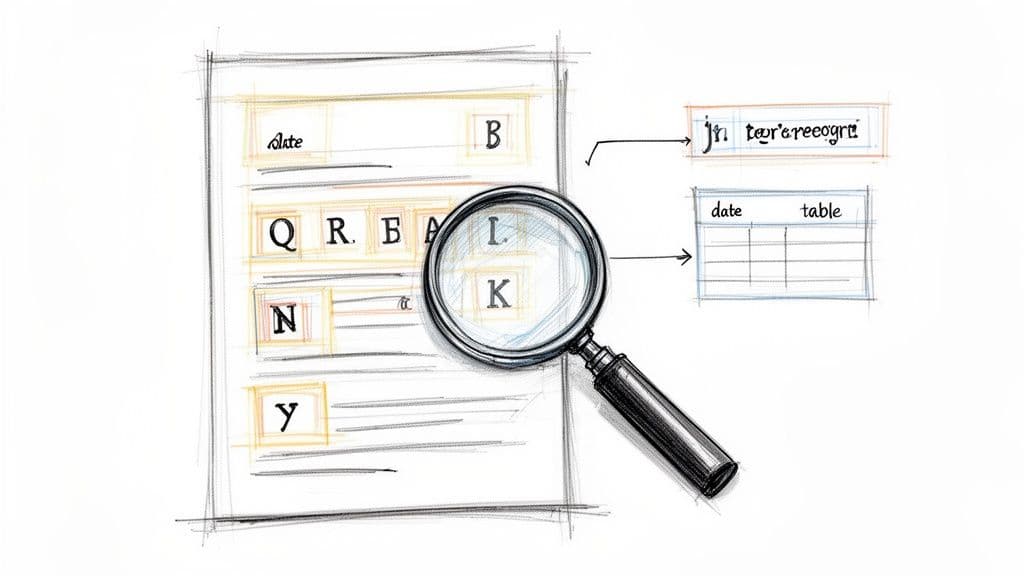
On October 7, LlamaIndex launched OpenDocRouter: one POST /v1/parse endpoint backed by 10 document-parsing models — five frontier closed-source models plus five open-source ones, switchable at will. Its companion ParseBench shows Claude Opus 5.5 scoring 84.20 at $48.82 per thousand pages, while GPT-6 Luna scores 71.34 at just $0.80 — a 60x price gap for a 14-point difference. Document parsing finally has a public, transparent quality-vs-cost menu.