Small Models Are Becoming the "Subagent Commodity": The Multi-Agent Cost Economics Behind Claude Haiku 5.5's Price Cut
Anthropic released Claude Haiku 5.5 on October 7, calling it its "cheapest, fastest, and most capable small model." But the real story isn't the discount — it's a "100K-token price cliff": prompts under 100K tokens get roughly 90% off, while longer ones get only about 50%. Anthropic is using pricing to teach you to break big tasks apart — the small-model battlefield is shifting from "chatting with you" to "being orchestrated by bigger models."

On October 7, 2026, Anthropic released Claude Haiku 5.5 with an unambiguous positioning: its "cheapest, fastest, and most capable small model" ever. The official blog carries one sentence worth reading twice: Haiku 5.5 "pairs well with Opus 5.5 and Sonnet 5.5 as a subagent on coding work." The model ID is claude-haiku-5-5, and it is now live on the Claude Platform, AWS, Google Cloud, and Azure.
At first glance this looks routine: another cheap small model, better benchmarks, lower prices — a yearly ritual. But open the pricing table and you'll find a deliberately designed detail: Anthropic is using price itself as a product manual. It drew a line at 100,000 prompt tokens. Below the line, input drops to $0.10 per million tokens and output to $0.50 — roughly 90% cheaper than Haiku 4.5. Above the line, input and output cost $0.50 and $2.50 — only about 50% cheaper. Cache reads under 100K tokens cost just $0.01 (versus $0.10 on Haiku 4.5); cache writes cost $0.125 (versus $1.25). Anthropic also disclosed the distribution behind the design: about 90% of requests to the previous Haiku model had prompts under 100K tokens — meaning the cliff covers the vast majority of real workloads, and on average it now costs around 75% less to run than the 4.5 generation.
The 100K-Token Price Cliff: Pricing as a Product Manual
Traditionally, model price cuts are linear: one discount across every scenario. Haiku 5.5's cut is tiered, and that's not an accident from the finance department — it's behavioral steering. Anthropic is telling you, through pricing, to break long-context tasks into pieces. 100K tokens is roughly 70,000+ words of documents, or the key-file slices of a medium-sized repository — most single subagent steps in agent workflows (read a file, run a test, summarize a diff) land inside this band. Past 100K tokens the discount is halved, which reads as: "either split tasks finer so each subagent keeps a slim context, or pay a premium for full long context."
Underneath sits a mature cost economics. When a coding agent calls a small model hundreds or thousands of times a day, the cost structure is set by two things: tokens per call and number of calls. The 90%-off tier lands precisely on the "high-frequency, short-prompt" subagent pattern — summarization, compaction, database queries, classification requests, all named in the official blog. Workloads that stuff hundreds of thousands of tokens of context into every call get a much smaller break. This isn't punishing long context; it's an honest admission that the real cost of long-context inference is high, and crushing the price would collapse service quality. So Anthropic drew the cliff at the 90th percentile of requests — a genuine discount for most, and a "don't use a small model for this" signal for heavy long-context users.
The Benchmarks Tell a Story of Being Orchestrated
Now the official benchmarks. The most interesting thing about this table isn't who Haiku 5.5 beat — it's who it was compared against.
On the two core agentic-coding leaderboards, Haiku 5.5 scores 39.2% on Terminal-Bench 4.0 — against a glaring 0.0% for the previous Haiku 4.5, 16.4% for GPT-6 Luna, and 70.6% for its big sibling Sonnet 5.5. On FrontierCode 1.1 it takes 46.4%, beating GPT-6 Luna's 42.4% and closing in on Sonnet 5.5's 52.1% (at Xhigh effort). Read the subtext of these matchups: Anthropic is pitting its small model against OpenAI's peer small model, not against its own flagship. The small-model battlefield has fully shifted from "can it chat" to "can it do work."
The computer-use leap is even more dramatic: 72.4% on the OSWorld 2.1 offline subset, up from 15.7% a generation ago, versus 48.9% for GPT-6 Luna and 83.9% for Sonnet 5.5. On knowledge work, GDPval-AA v2.1 hits 1620 (GPT-6 Luna 1437, Sonnet 5.5 1840) and AA-Briefcase v1.1 hits 1578 (GPT-6 Luna 1336, Sonnet 5.5 1824). Even on Humanity's Last Exam, a pure-reasoning benchmark, Haiku 5.5 climbed from the previous generation's 10.2% (no tools) / 18.7% (with tools) to 45.9% / 57.4%.
But the line that truly defines this product is easy to miss: "Sonnet 5.5 and Opus 5.5 remain better choices for complex agentic coding tasks like those measured by Terminal-Bench 4.0. By contrast, Haiku 5.5 is best suited to more narrowly scoped tasks… like compaction, summarization, or subagent work." Translation: Anthropic doesn't expect you to solve hard problems with Haiku 5.5 alone — it expects Opus/Sonnet to split the work and Haiku 5.5 to execute as the commanded worker. This is the first time "big model decomposes, small models fan out" multi-agent orchestration has been written this explicitly into a product positioning.
One underrated update: Haiku 5.5 is the first Haiku-class model with an adjustable effort setting. Users can now dial between cost and intelligence themselves. The "small model" is no longer a fixed tier but a continuous spectrum — push up when you need it, fall back to the base when you want cheap. For the first time, a small model has elasticity.
The Ecosystem Has Voted With Its Actions: Devin Fusion's 66.2
On launch day, Cognition announced Haiku 5.5 was live in Devin, with persuasive numbers: on its in-house FrontierCode 1.1 benchmark, Haiku 5.5 scores 58.4% as a standalone model — ahead of Sonnet 5 at roughly one-eighth the cost per task. Slotted into Devin Fusion as the sidekick, with Opus 5.5 as the lead agent, Fusion holds a top-tier FrontierCode score of 66.2 while cutting both cost and latency.
This case is the real-world footnote to Anthropic's official narrative: the frontier model owns planning, ambiguity handling, and final review; the cheap sidekick owns execution. "Lead plus sidekick" is no longer an architecture diagram in a paper — it's a line item on a production invoice. Asana's early testing corroborates the speed dimension: over 30% lower latency on task completion and up to 2.5x faster inference per agent turn. For sessions that fan out dozens of subagents, latency gains and cost gains are two sides of the same coin.
A "Big and Small" Polarization Is Taking Shape
Zoom out, and 2026's model landscape is polarizing cleanly. One pole is the "big and complete" route: pile on parameters, fill in capabilities, push the ceiling ever higher — flagships in the trillion-parameter class like Mistral's, whose mission is to keep raising what intelligence can do. The other pole is the "small and specialized" route that Haiku 5.5 represents: not chasing the limit of single-point intelligence, but chasing the limit of cost-effectiveness inside a defined division of labor.
These poles aren't competing — they're symbiotic. The stronger big models get, the more subtasks they decompose, and the greater the demand for a "cheap, fast, good-enough" execution layer. Anthropic's one-two punch on launch day confirms it: alongside Haiku 5.5, it halved the price of Claude Sonnet 5.5's cache reads (from $0.20 to $0.10 per million tokens), making Sonnet around 20% cheaper on most agentic workloads — because cache reads dominate agents' token consumption. It also introduced a new monthly API credit for Claude Max and Team subscribers ($100/month for Max 5x, $200 for Max 20x, up to $500 pooled for Team), explicitly "designed to support our users in building new agents and applications." Price cuts, credit giveaways, and a small-model push — three moves aimed at one strategy: making the multi-agent application's bill add up.
There's also an operational signal for developers: the Python and TypeScript SDKs now add computer use and browser use in beta, and Anthropic names Haiku 5.5 as "especially well-suited" to these tasks — the speed-capability-price combination maps exactly onto high-frequency, short-prompt, latency-sensitive scenarios like browser automation and desktop operation. The small model's first stronghold is migrating from "text classification" to "operating a computer."
The Risk Side: Cheap Subagents Aren't Free
Pushing small models into the subagent seat comes with three bills to reckon with.
First, hallucination and instruction-following shortfalls. Haiku 5.5 shows major alignment improvements over 4.5, and Anthropic notes its cybersecurity safeguards are "more restrictive than Haiku 4.5's, but somewhat less restrictive than those applied to other recent models" — permitting a wider range of defensive tasks while still blocking penetration testing and attacker-favored techniques. The flip side: when you release hundreds of subagents to run autonomously, any single one's instruction-following deviation gets amplified by fan-out. In multi-agent architectures, small-model errors don't add up linearly — they compound exponentially. The lead model's review loop must keep pace, or the token savings will be repaid double in debugging time.
Second, token gaming induced by the price cliff. Once the 100K-token watershed is public knowledge, developers will inevitably start "cutting the foot to fit the shoe": squeezing prompts just under 99,999 tokens, or force-splitting what should be one call into two. That saves money short-term but may distort architecture long-term — when pricing starts directing architecture, architecture no longer serves correctness alone. Drawing the line at the 90th percentile is clever, but every hard threshold breeds gaming around the threshold; no tiered pricing escapes that fate.
Third, the hidden cost of ecosystem lock-in. Devin Fusion's 66.2 is beautiful, but it was scored by a specific pairing — "Opus 5.5 as lead, Haiku 5.5 as sidekick." Once your agent orchestration is deeply bound to one vendor's big-small pairing, switching costs aren't just the API price delta — they're a rewrite of the entire task decomposition, prompt engineering, and evaluation stack. The cheaper the small model, the more engineering investment is sunk into migration — tokens are cheap; refactoring is expensive.
What It Means for Developers, Practically
Grand narratives aside, three concrete moves are worth making after the Haiku 5.5 launch.
First, re-audit your agent cost structure. If you're already running multi-agent orchestration (Claude Code subagents, LangGraph fan-out, or a homegrown orchestrator), moving narrow tasks — reading files, running tests, summarizing, labeling — to Haiku 5.5 could cut over 70% off the bill. Anthropic's "around 75% less to run on average" isn't marketing copy; it's the math of a 90%-off tier covering 90% of requests.
Second, try the new effort dial. Haiku used to be binary — use it or don't. Now you can tune effort per call. For subtasks that "occasionally need to be a bit smarter" (say, having a subagent do a review pass before editing code), dialing effort up one notch may be an order of magnitude cheaper than switching to a bigger model.
Third, watch the computer use / browser use beta. Haiku 5.5's OSWorld jump from 15.7% to 72.4% signals that small models operating computers have crossed from "toy" to "usable." RPA, automated testing, and web data collection finally have an official option that's fast and cheap.
In one sentence: Haiku 5.5's real significance isn't "another cheap model" — it's Anthropic turning multi-agent orchestration from a best practice into an official product shape. Small models are becoming the subagent commodity — with standard pricing (the 100K-token cliff), a standard division of labor (commanded by bigger models), and a standard ecological niche (Devin Fusion already demoed it once). What gets competed on next isn't whose single model is smarter, but whose orchestration squeezes the highest ROI out of the "big plus small" combination. That contest has only just begun.
Sources
Related articles

Reported by InfoQ on October 3: a GPT-4 coding agent given CVE descriptions successfully exploited 87% of 15 test vulnerabilities, versus 7% without descriptions. rclone's author received 40+ security disclosures in a single month — more than the project's previous decade combined; QEMU has shortened its embargo period. The vulnerability disclosure timeline is collapsing under agent speed.
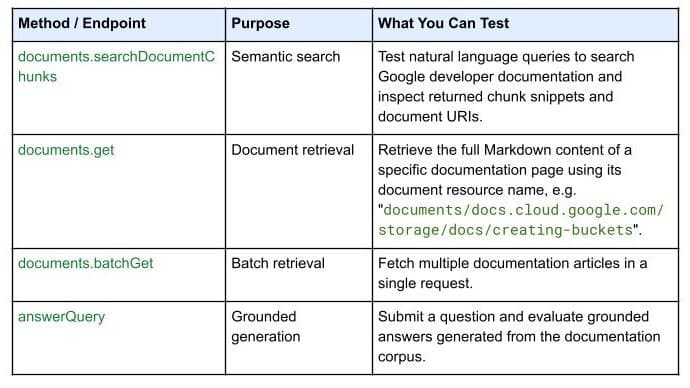
On October 7, 2026, Google Developers launched the Developer Knowledge API ecosystem: official Google Cloud, Firebase, and Android docs as a programmatic source of truth, with a gcloud CLI surface, an official Agent Skill (one-line install), an MCP server, and multi-language client libraries. Why 'docs as APIs' uproots vibe coding's classic failure of models misremembering APIs.
On October 8, 2026, Google Cloud launched the Gemini agent at Gemini at Work 2026: a universal agent for work that takes objectives, plans by itself, auto-selects between Gemini and Claude models per task, and introduces 'coworker agents' with their own email, calendar, and directory seat. Four judgments on why the second half of the agent race is about 'agents that feel like colleagues.'