The "Kubernetes Moment" for the Inference Layer: llm-d 1.0 Is Out — Can It Cut the Bill for 3,000 Coding Agents?
llm-d 1.0 is out: the open-source distributed inference framework backed by IBM, Red Hat, Google, NVIDIA and CoreWeave now ships Day 2 capabilities — multi-tenant QoS, zero-downtime upgrades, session-aware routing. IBM's demo: 3,000 coding agents at ~$0.11 per million tokens. We unpack the release, the Kubernetes analogy, and the self-host vs. API cost math for vibe developers.
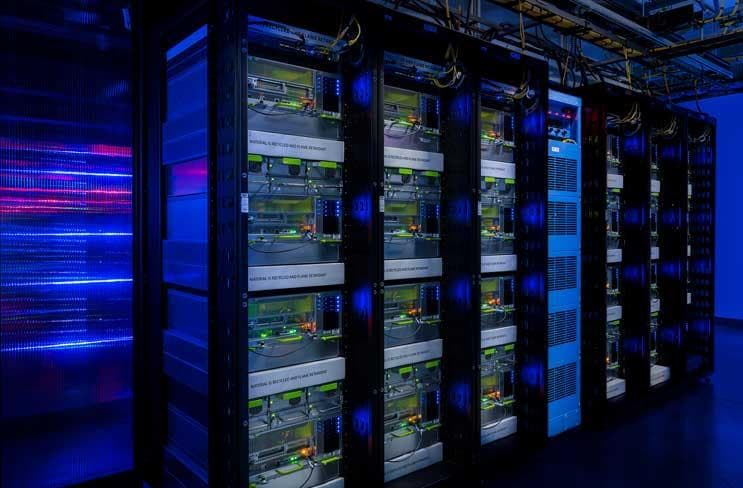
On October 20, 2026, the open-source distributed inference framework llm-d released version 1.0. The official blog headline is ambitious: "llm-d v1.0: State-of-the-art inference, ready for Day 2." The timing was deliberate — it landed on the opening day of PyTorch Conference North America (October 20–21, San Jose), unveiled as the conference's opening gift.
If you haven't heard of llm-d, here's the one-liner: it's an open-source inference "control plane" running on Kubernetes, sitting above inference engines like vLLM and SGLang, deciding which machine each request should go to, how KV caches get reused, and how prefill and decode get split across pools. The project was co-founded and is jointly led by IBM, Red Hat, and Google; CoreWeave and NVIDIA are founding contributors, and AMD, Cisco, Hugging Face, Intel, and Mistral all contribute. It is now a CNCF sandbox project. In eighteen months it grew from a shared idea among a handful of people into what the official blog calls "the open standard for distributed inference" — more than 500 contributors from over 25 organizations.
The core proposition of 1.0 is a single sentence, placed front and center in the official blog: "Serving a frontier model fast is no longer the hard part. Running it reliably, for many tenants, through upgrades, under real load, is." Put plainly: Day 1 is "getting it running"; Day 2 is "keeping it running without incidents." 1.0 is the Day 2 release.
1. What 1.0 actually delivers: four Day 2 capabilities
First, multi-tenant QoS. A shared inference fleet mixes latency-sensitive interactive requests with bursty agent workloads — who goes first? 1.0 adds centralized flow control to the router: every request is classified by a flow key combining a fairness ID (the tenant or workload) and a priority band, queued separately per flow, dispatched by priority first, then fairly across tenants within a band. Under saturation it does no-regret scheduling — requests would rather wait in the router than be committed to already-overloaded backend queues, so one tenant's burst doesn't blow up everyone's latency. A probabilistic admission controller sheds load gracefully when demand exceeds capacity instead of failing hard. The result: behind a single endpoint, a premium tier stays protected under load while best-effort and batch traffic absorb the bursts.
Second, zero-downtime operations. The router (the Endpoint Picker) gains a hot standby that takes over scheduling if the active instance fails, so routing never goes dark. More importantly, DisaggregatedSet manages the prefill pool and the decode pool as one logical unit: lockstep rolling upgrades, with requests routed only to prefill/decode pairs that are both fully rolled out and version-compatible. Previously, upgrading a disaggregated deployment meant standing up a parallel fleet and cutting over manually; now it rolls in place without dropping traffic. In the official wording: disaggregation is no longer just a performance technique — it is now something you can operate.
Third, a stable v1 configuration API. The configuration surface graduates to v1 — a versioned, stable interface that platform teams can standardize on and build against without chasing breaking changes every release. For vendors building on llm-d (Red Hat AI, GKE), that's a commitment device.
Fourth, agent-aware serving. This is the 1.0 piece most directly relevant to vibe developers. Agent workloads are distinctive: multi-turn conversations reuse enormous amounts of context, and most compute goes to handling that context rather than producing the final tokens. 1.0 answers with three moves: session-aware routing — pinning a multi-turn conversation to the replica that already holds its KV cache, via a session-state-producer plugin that tags requests and a router that sends follow-ups back to the same backend, with stickiness held until the replica saturates and then rebalances; turn-priority scheduling — the router reasons about where a request sits inside an ongoing exchange, keeping an active agent loop responsive instead of treating every turn as an isolated request; and native Responses API state — including previous_response_id, so the server carries context across turns, the agent doesn't resend its full history, and the stack doesn't recompute it. For agent builders: lower latency, lower cost, no application changes required.

The diagram above lays out 1.0's core components: the gateway at top, the llm-d-router in the middle (routing intelligence: prefix-cache-aware routing, multi-tenant flow control, session-aware routing), the split prefill and decode pools below (managed as one unit by DisaggregatedSet, upgraded in lockstep), tiered KV cache on the side (moved between GPU HBM, host memory, and storage), and the vLLM/SGLang engines at the bottom. Remember this layering: llm-d never touches model inference itself — it is the control plane. It decides where requests go, how caches get reused, and how pools scale and upgrade. The engines do the math; llm-d does the orchestration.
2. From 0.x to 1.0: first "run fast," then "run reliably"
To understand 1.0, understand what 0.x did. The official blog sums up the 0.x series in one word: reach — inference infrastructure not locked to one vendor, one cloud, or one engine. That phase delivered a set of "performance techniques": prefix-aware routing (sending requests to the machine that already caches the same prefix), KV cache offloading (moving KV cache that doesn't fit in VRAM to host memory and storage), prefill/decode disaggregation (splitting the "understand the input" and "generate the output" phases onto separate GPU pools that scale independently), and wide expert parallelism (spreading MoE experts across cards and machines).
Those techniques proved themselves in the 0.x era: Google Cloud cut Vertex AI time-to-first-token by more than 35% and doubled cache hit rates; AWS reported up to 70% more tokens per second than standard vLLM on SageMaker HyperPod; Tesla and Red Hat tripled Llama 3.1 70B output throughput on AMD MI300X. But the official blog is honest about it: those were Day 1 victories — "serving a frontier model fast." The real production problem is Day 2: "Getting a model to serve fast is Day 1. Keeping it serving, for many tenants, through upgrades, under unpredictable load, is Day 2, and it is where most inference stacks show their seams."
Why is Day 2 hard? The blog lists five reasons, each one an ops engineer's scar tissue: first, traffic is mixed — latency-sensitive interactive requests sitting next to bursty agent workloads that reuse enormous context and spawn parallel work without warning; second, priorities collide — under load someone has to yield, premium tiers stay protected, best-effort traffic absorbs the pressure; third, upgrades can't mean downtime — replacing or failing over any component must drop no requests, and the cache must stay warm; fourth, disaggregation multiplies moving parts — prefill and decode pools have to roll forward together, one misalignment and things break; fifth, agent traffic spends most of its compute on context — a stack that doesn't understand sessions and turns recomputes the same work again and again. 1.0's four capabilities map onto these five pain points one by one. That's solid release planning: not piling on features, but eating the five most painful production problems in order.
Two 1.0 technical details deserve their own spotlight. First, no-regret scheduling in flow control: under saturation, requests would rather queue in the router than be committed to overloaded backends. It's counterintuitive — the usual instinct is "hand the request off as fast as possible" — but llm-d's bet is that the router sees global water levels better than any backend does. The analogy: rather than cramming ten people into a full elevator, let them queue at the doors, where at least someone can see all floors. It's a victory for centralized intelligence, and the entire reason a control plane exists.
Second, topology-aware accelerator scheduling: through DRA (Dynamic Resource Allocation), device and network locality enter scheduling decisions, so tightly coupled parallel work lands on accelerators that are actually close together (e.g., the cross-node NVLink fabric inside a GB200 NVL72 rack). In human terms: the scheduler knows not just "which machine is free" but "which two machines are near each other with fat bandwidth." For parallel model inference, misplacement costs real communication latency — the scheduler evolving from logical scheduling to physics-aware scheduling.
3. Who's running it: a production roster from JetBrains to Tesla
1.0 dares to call itself "ready for Day 2" on the strength of a production roster, all from the official blog (vendor-stated figures — cite accordingly):
- IBM Research: self-hosts frontier open models on llm-d for coding agents and chip-design agents — 3,000 concurrent coding agents on 544 NVIDIA H100 GPUs, roughly 98% prefix-cache hit rate, about $0.11 per million tokens, around 11.5x lower cost than a proprietary stack;
- Google Cloud: builds the GKE Inference Gateway on llm-d's Endpoint Picker — cutting time-to-first-token by more than 35% in Vertex AI production, doubling prefix-cache hit rate from 35% to 70%, and integrating llm-d 1.0 into GKE across TPUs and NVIDIA GPUs;
- JetBrains: runs llm-d behind Junie, its AI coding agent, using the scheduler's predicted-latency routing to stay responsive under heavy agent load;
- AWS: runs disaggregated inference on SageMaker HyperPod — prefix-cache-aware routing plus NIXL delivering up to 70% more tokens per second than standard vLLM;
- DigitalOcean: builds its distributed inference stack on llm-d, serving the trillion-parameter Kimi K3 model across AMD and NVIDIA hardware;
- Tesla × Red Hat: Llama 3.1 70B on AMD MI300X — prefix-cache-aware routing yielding 3x output tokens per second and 2x reduction in time to first token;
- Mistral AI: serves part of its regional inference offering on llm-d; Red Hat: ships llm-d inside Red Hat AI, generally available on OpenShift and on managed Kubernetes including Azure and CoreWeave.
The roster's signal is its heterogeneity: cloud vendors (Google, AWS, DigitalOcean, OCI), chip vendors (NVIDIA, AMD, Intel, Google TPU), model vendors (Mistral), and tooling vendors (JetBrains, Red Hat) all at the same table. The blog's own line: "Different clouds, different accelerators, different engines, one stack." That is the founding vision — "any model, any accelerator, any cloud" — in deployed form.
There's a governance layer to this too: CNCF sandbox status means llm-d's roadmap is no longer any single vendor's call. Consider the counterfactual: if Kubernetes had stayed inside Google, what would today's multi-cloud world look like? The inference layer is walking the same path — IBM, Red Hat, Google, NVIDIA, and CoreWeave placing their co-built work in a neutral foundation is a promise to the whole industry: this control plane will not become one cloud's private moat. For small teams, that's a stronger commitment device than any feature: your investment in llm-d today won't be stranded by some vendor's strategy pivot tomorrow.
Hardware coverage deserves its own mention: NVIDIA side spans Hopper (H100/H200), Blackwell (B200), and Grace Blackwell (GB200 NVL72/GB300), with Vera Rubin in progress; AMD side brings MI355X with AINIC; Google TPU gets native PyTorch serving (on TPU 7x, an agentic coding workload saw median TTFT cut by more than 85% and 2.4x throughput versus a plain Kubernetes Service); Intel covers Xeon and GPU platforms end to end. Even niche accelerators — Rebellions, Iluvatar, MetaX — have community-contributed well-lit paths. Once the control plane decouples from accelerators, "supporting new hardware" becomes "writing one thin native path" — architecturally, 1.0's prettiest move.
4. Why it matters: the bill is moving from training to inference
Start with a numbers story. Someone at IBM said the quiet part out loud: "the real bill is inference, not training." Training is one-off and plannable; inference is continuous and scales linearly with usage. When coding agents go from "occasionally completing a line" to "3,000 concurrent, running 24/7," the inference bill moves from "cost line" to "survival line." llm-d 1.0 answers exactly this: in the agent era, inference is no longer the technical job of "getting the model served" — it's the operational job of "spending every cent where it counts."
Then the "Kubernetes moment" analogy. Before Kubernetes, every company racked its own servers and wrote its own deploy scripts; after Kubernetes, "container orchestration" became an open, neutral, co-built layer. The inference layer is at the same point today: vLLM/SGLang solved "running fast on one machine," but "running across machines, tenants, and hardware, upgrading without downtime" is still a wheel every company reinvents. llm-d wants to be the Kubernetes of the inference layer — sinking the dirty work of scheduling, routing, caching, and upgrades into a shared control plane. IBM, Red Hat, Google, NVIDIA, and CoreWeave jointly placing it in the CNCF sandbox follows the same script as Google donating Kubernetes to the CNCF: nobody wants the inference layer to become one cloud's private territory.
The third judgment is about agent workloads. One line in the official blog is key: "Agentic traffic spends most of its compute on context rather than final tokens." It means the traditional per-token pricing model is breaking — you think you're paying for "the code generated," but you're actually paying for "context transferred and recomputed over and over." Session-aware routing, tiered KV caching, previous_response_id — 1.0's capabilities all point at one metric: context reuse rate. What does a 98% prefix-cache hit rate (IBM's number) mean? 98 of 100 requests never recompute the prefix — the wettest part of the bill gets wrung dry.
One last judgment: llm-d 1.0's biggest news isn't any single feature — it's the formal arrival of "inference engineering" as a discipline. Running models used to be an algorithm engineer's side job; going forward, "keeping 3,000 agents' inference stable and cheap" will be its own role, with its own toolchain (llm-d), its own core metrics (cache hit rate, TTFT, cost per million tokens), and its own upgrade rituals (zero-downtime rollouts). Kubernetes turned "ops" into a profession; llm-d is doing the same to "inference ops." For vibe developers, the takeaway: you don't need to become an inference engineer, but you need to know the role exists — when your agent product starts hurting over the inference bill, you'll know what kind of person to hire and what stack to reach for.
5. The vibe developer's cost math: self-hosted inference vs. API calls
The question this piece's readers will care about most: what does this have to do with me? I don't have 544 H100s. The connection is the cost math itself — llm-d 1.0 drags the barrier to "self-hosted inference" down considerably, and the breakeven point between self-hosting and API calls is moving toward smaller teams.
Run the numbers. IBM's official figures: self-hosted llm-d at about $0.11 per million tokens, roughly 11.5x lower than a "proprietary stack" (vendor-measured — cite as such). Suppose your product burns 100 million tokens a day (easy for a mid-size agent product): API calls at $1 per million tokens cost $100 a day, $36,500 a year; self-hosted at $0.11 costs a little over $4,000 a year. An order of magnitude apart. Of course, self-hosting math can't stop at tokens — add GPU rental/depreciation, Kubernetes ops headcount, and the llm-d learning curve. But 1.0's significance is precisely in compressing the last two: a v1 stable API, zero-downtime upgrades, and multi-tenant QoS out of the box push the marginal ops cost down.
So who should seriously consider self-hosting? Three signals: first, large and stable token volume — the bigger the usage, the stronger the unit-cost advantage of self-hosting; simple economies of scale. Second, agent-style multi-turn conversational load — session-aware routing and tiered KV caching optimize hardest for exactly this, and API billing won't share cache-hit savings with you. Third, someone on the team can hold down Kubernetes — llm-d is Kubernetes-native (1.0 is decoupling, but production's home turf is still K8s); a team with no container-orchestration experience may watch the ops learning curve eat the entire cost advantage.
Who shouldn't? One line: small usage, spiky traffic, no ops on the team. Early-stage products, demo phases, burning under tens of millions of tokens a month — keep calling APIs. The API's real value was never "cheap"; it's "zero ops, zero startup cost, per-second billing." llm-d 1.0 doesn't change that conclusion — it moves the conclusion's boundary. Where "self-host" used to need the prefix "big tech," a five-person team with Kubernetes experience can now run the math seriously.
The comparison laid out as a table (illustrative math based on vendor-stated figures; your bill will vary):
| API calls (managed inference) | Self-hosted (llm-d + own GPUs) | |
|---|---|---|
| Marginal cost per M tokens | ~$0.5–2 (by model and tier) | ~$0.11 (IBM's official self-test, H100 fleet) |
| Startup cost | Zero, works out of the box | High: GPUs + K8s + learning curve |
| Ops headcount | Zero (the cloud carries it) | Needs someone who can hold down K8s and llm-d |
| Usage volatility | Per-second billing, naturally elastic | Idle GPUs burn money in troughs |
| Cache-optimization upside | Goes to the vendor, not you | A 98% prefix-cache hit rate goes straight into your pocket |
| Data sovereignty | Data leaves your walls, vendor's call | Models run on your machines, auditable |
| Lock-in risk | Locked to one API's pricing and policies | Neutral open stack, low migration cost |
A four-question decision checklist: Q1 — does monthly token volume exceed a billion? If not, the API's "zero ops" value probably outweighs self-hosting's unit-price edge. Q2 — is multi-turn agent conversation a large share of load? The larger the share, the bigger the self-hosting cache dividend — APIs won't split 98% cache-hit savings with you. Q3 — does the team have Kubernetes ops experience? Without it, year-one "tuition" (incidents, midnight pages) can eat the whole cost advantage. Q4 — any hard compliance or data-sovereignty requirements? If yes, self-hosting isn't a choice but a mandate, and a neutral stack like llm-d is one of the standard answers.
One more easily missed angle: data sovereignty. DigitalOcean runs Serverless Inference on llm-d; Mistral runs regional inference on it — "sovereign on-prem" is a phrase the official blog repeats. For products handling sensitive data (healthcare, finance, government), "the model must run on my machines" isn't optional, it's compliance. A neutral open stack's value here: no lock-in to any cloud's proprietary inference service, low migration cost, transparent auditing.
6. Honesty notes
The factual core of this piece comes from the llm-d.ai official blog post of October 20, 2026, "llm-d v1.0: State-of-the-art inference, ready for Day 2" (opened and verified in full), and neoteo.com's release notes. Production figures (IBM's 3,000 agents / 98% cache hit / $0.11 per M tokens / 11.5x, Google's 35% TTFT cut, AWS's +70%, etc.) are vendor-stated, cited from the official blog — treat them as vendor-measured numbers, not independent third-party benchmarks. Founder and contributor lists and CNCF sandbox status draw on the official blog and SiliconANGLE's October 20 first report. In cost comparisons, "1/5–1/10" is press-reporting language while the official blog gives IBM's self-hosted-vs-proprietary figure of about 11.5x — same conclusion ("self-hosting is dramatically cheaper"), different calibers; don't mix them. Ops reminder: DisaggregatedSet deployments require LeaderWorkerSet v0.11.1 or newer (an explicit prerequisite in the official release notes) — check the release notes before upgrading. The self-host-vs-API cost math is this author's illustrative arithmetic, not investment advice; real costs depend on your load profile, hardware prices, and your team's ops capacity.
Comments (0)
Sources
Related articles
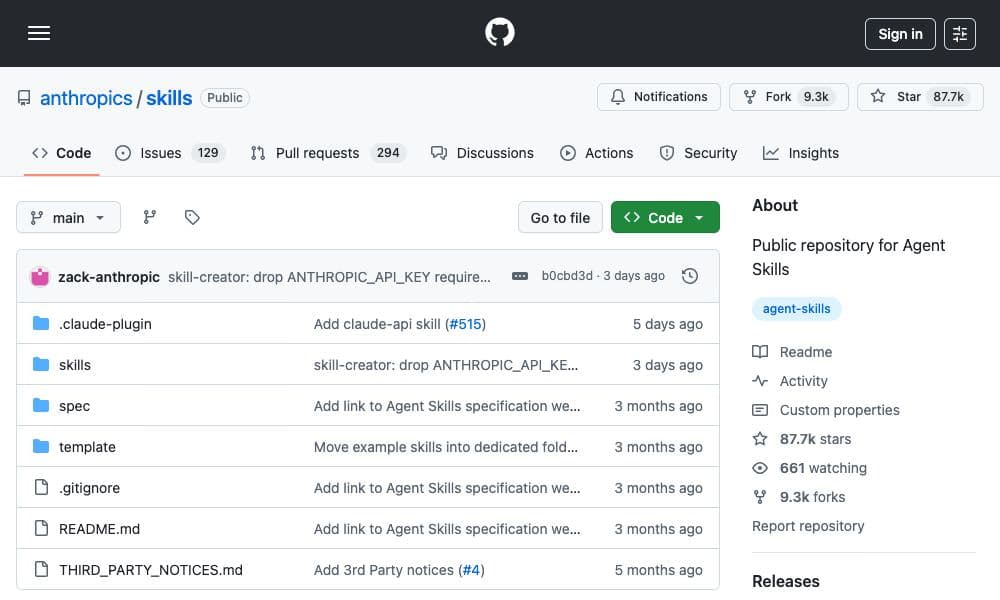
On Oct 22, Anthropic, OpenAI, Hugging Face and Alibaba donated Agent Skills, Open Responses, OpenEnv and OpenSandbox to the Agentic AI Foundation in a single day. The four projects cover the four layers of the agentic stack, taking AAIF from 3 to 10 hosted projects in its first year — the biggest governance event since MCP.
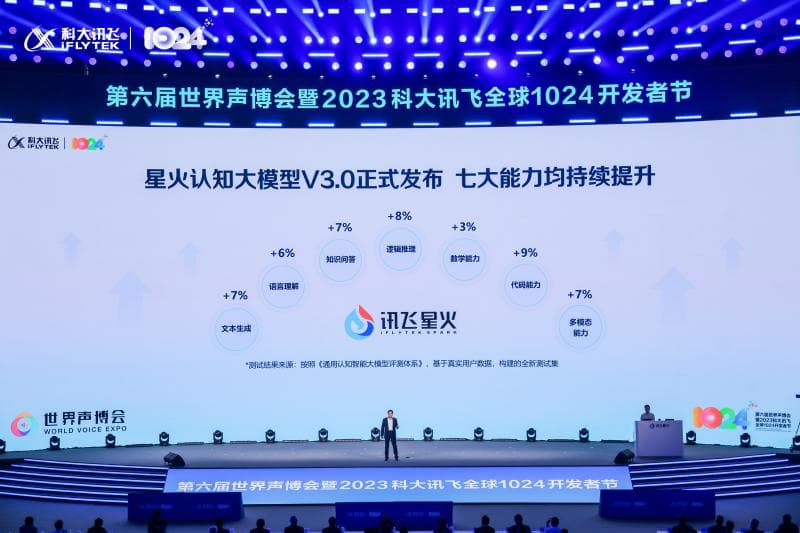
On Oct 22, 2026, iFlytek launched Spark X2.6 at the 1024 Developer Festival: 293B-A30B MoE, 1M context, claimed as the first model trained on all-domestic compute to break through in code and agent capabilities. The X2.6-4B edge model goes open source; API input priced at a limited-time 0.9 yuan per million tokens.

Anthropic released API version 2026-10-21 on October 21 — the first new version since 2023-06-01. temperature/top_p/top_k are gone (sending them returns 400), Admin API fields are renamed, SDKs switch to Authorization: Bearer, and the license moves to Apache 2.0. Here is the full breakdown and a migration checklist.