Agent Skills No Longer Belongs to Anthropic: Four Giants Donate Agent Standards to Neutral Ground in One Day
On Oct 22, Anthropic, OpenAI, Hugging Face and Alibaba donated Agent Skills, Open Responses, OpenEnv and OpenSandbox to the Agentic AI Foundation in a single day. The four projects cover the four layers of the agentic stack, taking AAIF from 3 to 10 hosted projects in its first year — the biggest governance event since MCP.
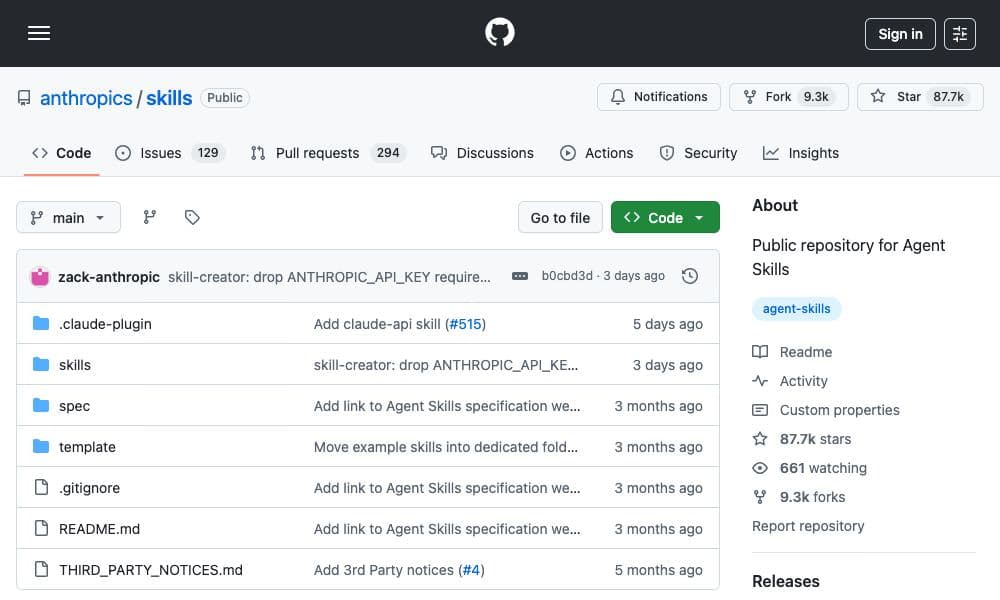
Four giants handed their agent infrastructure to a neutral foundation — on the same day
On October 22, at AGNTCon + MCPCon North America in San Jose's McEnery Convention Center, the Agentic AI Foundation (AAIF) announced four new hosted projects: Anthropic donated Agent Skills, OpenAI donated Open Responses, Hugging Face donated OpenEnv, and Alibaba donated OpenSandbox. Four companies, one day, each handing the agent infrastructure it had bet on to the same neutral foundation.
This is not a routine open-source release. The donations include project names and logos, GitHub organizations, and official domains — the projects' entire "household registration" moves over. AAIF just turned one year old, growing from 3 hosted projects to 10. Manik Surtani, the foundation's co-founder and CTO, put it bluntly in the announcement: the foundation's job is to give the community "one place to build shared standards, protocols, and infrastructure, with no single company controlling the outcome."
To grasp the weight of this, note that the four projects land exactly on the four fault lines of the agentic stack: how agents gain new skills, how applications call models across vendors, how agents are trained and evaluated, and where agents run safely. In a single day, each fault line got a "donated to the commons" standard. That is a first in agent history — the biggest governance event since MCP.

The four projects, and the problem each one solves
Agent Skills (donated by Anthropic) is the most mature of the four. Its essence is almost embarrassingly simple: a folder containing a SKILL.md file, plus scripts and reference material, forms a reusable "skill pack." When an agent needs specialized knowledge, it loads the skill on demand instead of having the workflow re-explained in every prompt. The idea was born while Anthropic was building Claude Code — the coding tool was strong on general knowledge but lacked "procedural knowledge": the checklists, conventions, and step-by-step operations of real business work. Skills launched with Claude Code in October 2025 and were published as an open standard that December.
Anthropic's ecosystem numbers are striking: more than 70 agent platforms have integrated Agent Skills, including ChatGPT, Cursor, GitHub Copilot, and VS Code; per Anthropic, 1 million skills have been published and installed nearly 280 million times. Treat those as vendor claims — they have not been independently verified — but even at half the stated size, this is one of the most deeply penetrated open formats in the agent ecosystem. After the donation, David Soria Parra (also MCP's co-creator) and Mahesh Murag continue as lead maintainers in their individual capacities, with a roadmap covering versioned releases, a formal proposal process, and security guidance for skill authors and installers.
Open Responses (donated by OpenAI) targets a different pain point: calling models across vendors. Built on OpenAI's Responses API, it defines a shared schema, consistent streaming events, and extensible tooling. Developers describe requests and outputs once and run them across model providers with minimal translation. Steve Coffey, Member of Technical Staff at OpenAI, framed the intent: "helping developers build great products on today's language models through simple, clean, and unified interfaces." For developers, this is the first neutral vehicle for the promise of "switch models without rewriting your call layer."
OpenEnv (donated by Hugging Face) is an interoperability framework and community hub for reinforcement-learning environments. Agent capabilities are forged inside environments, but RL environments have long been fragmented fiefdoms. OpenEnv turns them into interoperable, plug-and-play, easy-to-build, easy-to-share components through a simple containerized service, speaking a familiar agent interface, MCP, and Gym — the training protocol training libraries already use. Hugging Face ML engineer Ben Burtenshaw's list of existing users carries weight: Hugging Face, Microsoft, Reflection, Meta-PyTorch, Fleet, Mercor, RadixArk, Modal, Prime Intellect. The donation upgrades an "internal tool" into "industry public infrastructure."
OpenSandbox (donated by Alibaba) is a general-purpose sandbox platform: multi-language SDKs, unified sandbox APIs, and Docker and Kubernetes runtimes, covering coding agents, GUI agents, agent evaluation, AI code execution, and RL training. Its core design is a sandbox protocol defining lifecycle and execution APIs, so teams can plug in custom runtimes. Xiaobin Xu, Alibaba's Head of Development Infrastructure, said the line worth savoring: "While OpenSandbox was created at Alibaba, we don't want its future to be defined by a single company." That sentence could serve as the footnote to the entire donation ceremony.
A timeline: Agent Skills did in one year what took others five
Agent Skills' growth story, told on its own, explains why Anthropic dared to hand it over after just a year:
- October 2025: Launched with Claude Code. The starting point was pragmatic — Claude Code was strong on general knowledge but weak on the procedural knowledge real business tasks demand. Within weeks, developers had published thousands of skills on GitHub and written loaders for Codex, Cursor, and OpenCode on their own initiative.
- December 2025: Published as an open standard, with its own GitHub organization and the agentskills.io domain. Note the order: spontaneous ecosystem adoption first, standard status conferred after — the classic de-facto-standard playbook, and MCP walked the same path.
- December 2025, same month: AAIF was founded by Anthropic, Block, and OpenAI, and Anthropic donated MCP into it. MCP's donation set the template for Agent Skills: handing a project to the foundation accelerates cross-vendor adoption instead of slowing growth.
- October 22, 2026: Agent Skills joins AAIF — with, per Anthropic, 1 million skills published, nearly 280 million installs, and 70+ platform integrations.
One year from internal tool to open standard to neutral governance is rare speed in infrastructure history. For comparison: container image formats took nearly three years from Docker's de-facto standard to the OCI specification; Kubernetes was already battle-tested in production when Google donated it to CNCF. Agent Skills could move fast because the format is radically simple — a folder plus a markdown file, simple enough that there is no migration cost, and therefore no fear that the ecosystem walks back after the handover. Simple standards grow fast; this donation is the perfect proof.
Reading between the lines: each donor is doing its own math
The four companies' statements in the announcement are all decorous, but each one's calculus is different — and understanding them is how you judge how far this donation can go:
- Anthropic (Agent Skills): Soria Parra's line was "ensuring that anyone building with skills can shape what's next." The subtext: Agent Skills has already won; now the task is to cement it as infrastructure — and donating it to a foundation is the cheapest way to lock in the victory. Note that Soria Parra and Mahesh Murag stay on as lead maintainers "as individuals": those two words are standard foundation-governance practice, nominally severing the corporate chain of command while the core contributors remain the same people.
- OpenAI (Open Responses): Coffey emphasized "simple, clean, and unified interfaces." The more realistic subtext: the Responses API is OpenAI's own API, and donating its open-spec version means the whole industry builds around an interface shape OpenAI defined — openness in exchange for influence. "Switch models without rewriting" is real for developers, but who defined the shape of the interface matters just as much.
- Hugging Face (OpenEnv): Burtenshaw kept returning to "a fully open stack" and democratization. That fits Hugging Face's permanent "open camp" persona: donating the RL environment framework both matches the brand and turns a tool it already uses into industry commons — with Microsoft and Meta-PyTorch already on the user list, the donation effectively "regularizes" an existing user base into a standards community.
- Alibaba (OpenSandbox): Xu's "we don't want its future to be defined by a single company" was the most candid line of the day. A Chinese tech giant entering neutral governance of agent infrastructure as a standards donor — not a user, not a follower — is itself a strategic statement: the sandbox is the mandatory passage for agent deployment, and whoever defines the sandbox protocol shapes how agent applications get deployed.
The four donors each have their own agenda — and that is precisely the precondition for neutral governance to work. None of the motives is purely altruistic, but stacked together they produce "no one gets to own it alone." A foundation's value is not in making giants benevolent; it is in caging their competition inside a rulebook.
Why this is the biggest governance event since MCP
Start with the timeline: AAIF was co-founded in December 2025 by Anthropic, Block, and OpenAI under the Linux Foundation, with MCP, Block's goose, and OpenAI's AGENTS.md as founding projects. Less than a year ago Anthropic donated MCP; a year later the same company donates Agent Skills, while OpenAI hands over the open-spec version of its Responses API. The giants are settling into a fixed routine: incubate internally, push it into a de-facto standard, then donate it to the foundation for coronation.
The logic behind the pattern was nailed by a developer comment on DEV: companies tend to donate a format to a foundation when they want everyone else to stop worrying about who owns it. Experimental projects stay in-house; what gets donated is infrastructure the donor wants the whole industry to adopt without hesitation. So the real signal of this donation is not "four companies doing good" but "four companies agreeing that trust is the prerequisite for adoption." A standard's neutrality is itself an adoption catalyst.
One level deeper: this is the first cross-vendor neutral standards territory in the agent era. Before it, agent-ecosystem standards were jungle law — every vendor pushing its own protocols, formats, and runtimes, developers forced to pick sides. MCP solved "how agents call tools"; this round fills in skill packaging, cross-model invocation, training environments, and safe execution. With those four puzzle pieces in place, the full agent pipeline from development to deployment has neutral "common ground" for the first time. AAIF reportedly counts 305 member organizations — if accurate, that is real industry mobilization, not governance theater.
History offers a precise control group: in 2015 Docker donated its container image format and runtime, giving birth to the OCI; in 2014 Google donated Kubernetes to CNCF, ending the container-orchestration war. Both donations were followed by explosive adoption. The Agent Skills donation follows nearly the identical script: de-facto standard → donated to a neutral foundation → industry-wide confident adoption. If history rhymes, the next year brings a second wave of skills-ecosystem growth — this time with every company holding a seat at the AAIF table, not just the Anthropic camp.
The other side of the coin deserves equal airtime. Donation is not abdication: the original companies remain the de-facto largest contributors, and roadmap influence, maintainer selection, and release cadence will carry the donors' fingerprints for a while. Foundation governance delivers procedural fairness, not an equal division of power — "maintainers as individuals" is standard practice, but its effectiveness needs time to prove. For developers, the rational stance is: treat AAIF as a mechanism that lowers lock-in risk, not a promise that eliminates it.
The underestimated risk: when skills become an attack surface
One item in the donation's roadmap is easy to overlook but may be the most important: security guidance for skill authors and installers. Why would security make the founding roadmap? Because a skill's shape is inherently an attack surface: SKILL.md can hide instructions, the scripts folder can run code, and installing a skill means handing "let the agent work from someone else's manual" privileges to a stranger.
This is not a theoretical risk. Per secondary reporting, JFrog's 2026 software-supply-chain security report tracked malicious AI agent skills and found 969 carrying high-impact payloads — disguised as normal skill packs while making agents execute malicious operations. Consider the scale: with skills installed nearly 280 million times per Anthropic's claim, even a one-in-ten-thousand malicious rate is a serious absolute number. A flourishing skill ecosystem and a filthy skill supply chain are two sides of the same coin.
So Anthropic putting "security guidance" into the initial AAIF roadmap is a clear-eyed move: a standard aspiring to infrastructure must first answer "how do I know the skill I just installed isn't poisoned." It is also the thread our earlier skill-supply-chain piece has been following (linked at the end). For vibe developers, the operational advice is one line: install skills only from sources you trust, and open SKILL.md to see what it actually tells the agent to do before installing — a 30-second habit that keeps your codebase unpoisoned.
The other risk is the politicization of governance itself. AAIF went from 3 to 10 hosted projects in a year — astonishing expansion speed, but a foundation's governance bandwidth is finite: roadmap reviews, versioned releases, and security guidance for four new projects all cost human attention. The Linux Foundation's umbrella has its share of projects that went quiet after donation. The concrete indicators to watch over the next six months: does Agent Skills' first versioned release ship on time? Does any outside contributor actually walk the formal proposal process end to end? Is the security guidance written or still just a roadmap bullet? Those answer more than any press-release poetry.
What it means for vibe developers
If you build products with AI, this donation lands on four levels, ordered by practical value:
- Open Responses may be the most immediately useful. Today, switching model vendors means rewriting your interface adapters. With a neutral Responses specification, "write once, run on many" has official backing for the first time. For indie developers and small teams, that means real bargaining power: when a model gets cheaper or more capable, migration cost drops sharply. Read its schema design now even if you don't adopt it yet — the interface-abstraction thinking will directly shape how you write your own agent call layer.
- Agent Skills is worth writing today. The SKILL.md format is almost offensively simple: a markdown file with a YAML header, two required fields (name and description). Package the workflow you keep re-explaining to your AI — deploy steps, code conventions, business rules — as a skill, and your agent "remembers" it the next day. After the donation, the format's life expectancy just got much longer; no more worrying your skill goes stale next year.
- OpenSandbox lowers the cognitive load of "letting agents run code." Coding agents and GUI agents all need isolated execution environments; previously everyone built their own. A unified sandbox protocol means that soon, provisioning a runtime for your agent may be "pick an OpenSandbox-compatible runtime" rather than "build Docker from scratch."
- OpenEnv is furthest from the application layer, but worth watching. Unless you train your own agents, you won't touch it soon. But its existence means that evaluating "is my agent any good" may one day rest on cross-vendor comparable benchmarks instead of every vendor grading its own homework.
- Chinese-language skills are an open market. Of the 1 million published skills Anthropic claims, English dominates overwhelmingly; high-quality Chinese skills are scarce. If you package Chinese-context workflows — viral-post title formulas, Chinese contract review checklists, Taobao customer-service scripts — as skills, you face near-zero competition with the entire Chinese agent user base as demand. After standardization goes neutral, the long-term return on that investment is as certain as it gets.
One more easily missed signal: Alibaba is among the four donors. That makes it the first Chinese tech company to enter neutral governance of agent infrastructure as a standards donor rather than a user or follower. For the Chinese developer ecosystem, that is a long-term plus — with a Chinese-context voice at the standards table, Chinese-scenario needs (Chinese skill packs, multilingual sandboxes) stand a far better chance of making the roadmap.
Hands-on: your first skill takes 10 lines
Enough theory — something concrete. Here is a complete SKILL.md for a "write commit messages for vibe projects" skill, ready to copy-paste:
---
name: git-commit-msg
description: "Write Chinese git commit messages following conventional-commit style. Use when commit messages are mentioned."
---

# Commit message rules

1. Run git diff --stat first to see what changed;
2. Format: type(scope): one-line Chinese description; types limited to feat/fix/docs/refactor/test/chore;
3. Body under 50 chars, no English boilerplate;
4. Never commit lock files or .env.
Drop this file at ~/.claude/skills/git-commit-msg/SKILL.md (Claude Code) or your agent's skills directory, and the next time you say "commit this," the agent loads the rules automatically — no more repeating yourself. That is the entire magic of skills: turning "what you say every time" into an on-demand capability pack for your agent. After the donation, this 10-line file's life expectancy is measured in years, not months — the most tangible dividend neutral governance pays individual developers.
Honesty notes and reading boundaries
Finally, the boundaries of this report, so the information doesn't warp in transmission:
- "1 million skills, nearly 280 million installs" is Anthropic's self-reported figure, from Anthropic's official donation announcement, not independently verified. The 70+ platform integrations (ChatGPT, Cursor, GitHub Copilot, VS Code) are likewise Anthropic's claim.
- The four projects' GitHub repositories and technical documentation were not individually opened and verified for this draft; project descriptions follow the AAIF official announcement (PRNewswire, dateline October 22, 2026) and Anthropic's official statement. No repository-level assertions are made.
- "AAIF counts 305 member organizations" comes from a separate AAIF announcement via secondary reporting, cited here as background only.
- This piece's angle is "standards donated into neutral governance." To learn how to actually write and use Agent Skills, see our guide Agent Skills vs. Prompts; on skill-supply-chain security risks (malicious skills), see Skill Constellations: the Agent Skill Supply Chain; the DOE piece on national labs using skill packs for research methodology is DOE Genesis — that is the DOE's own research program, a different story from this four-company donation. Don't confuse the two.
Comments (0)
Sources
Related articles
llm-d 1.0 is out: the open-source distributed inference framework backed by IBM, Red Hat, Google, NVIDIA and CoreWeave now ships Day 2 capabilities — multi-tenant QoS, zero-downtime upgrades, session-aware routing. IBM's demo: 3,000 coding agents at ~$0.11 per million tokens. We unpack the release, the Kubernetes analogy, and the self-host vs. API cost math for vibe developers.
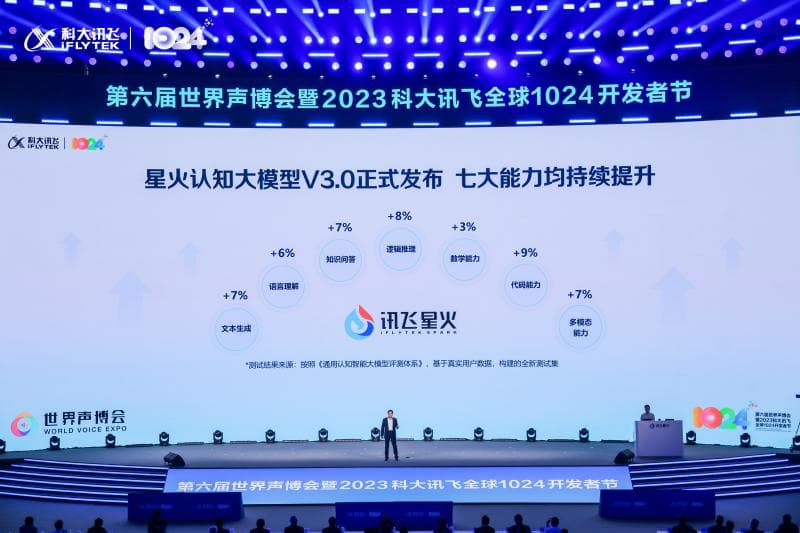
On Oct 22, 2026, iFlytek launched Spark X2.6 at the 1024 Developer Festival: 293B-A30B MoE, 1M context, claimed as the first model trained on all-domestic compute to break through in code and agent capabilities. The X2.6-4B edge model goes open source; API input priced at a limited-time 0.9 yuan per million tokens.

BBC Eye reports that two Google DeepMind researchers — Sofia Liguori and Andreas Kirsch — resigned over the company's military AI contracts with the US and Israeli militaries, quoting contract language that permits "any lawful government purpose." We unpack who quit, the contract details, an eight-year timeline from Project Maven, and what it means for developers choosing their AI supply chain.