On German Unity Day, Heidelberg-based Aleph Alpha released Kolibri, an English-German MoE model: 78B total parameters with only 3.46B active per token, Apache 2.0 weights, trained entirely on German and Finnish compute. It is the most "national-infrastructure" model launch of late 2026 — and the training pipeline and compliance design deserve more attention than the model itself.
VIBEFIX NEWS
AI Coding News
Original perspectives on tools, frameworks, open source, and the creator ecosystem.
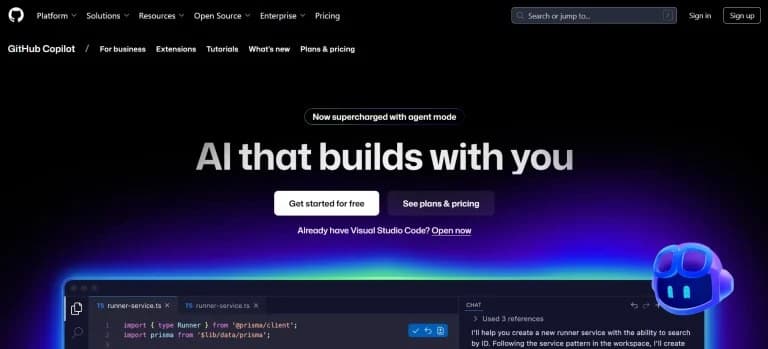
On October 2, GitHub deprecated Gemini 3.5/3.6 Flash, Kimi K2.7 Code, and Claude Opus 4.7 across all of Copilot — and with six more models slated for October 19 (announced September 18), Copilot will wave goodbye to ten models in a single month. More than routine housekeeping: AI coding has entered the era of "engine swaps," where model names behave like dependencies and "automatic migration" only happens if you never touched the switches. Three judgments and an action checklist inside.
Anthropic is moving Cowork's execution environment from a local VM to per-session cloud sandboxes: work survives a closed laptop and can be driven from a phone. This is more than an architecture upgrade — the agent "runtime layer" is becoming cloud utility, and solo teams must update their workflows and security assumptions.
Reuters reported on October 6 that Anthropic is folding Project Glasswing into an expanded Cyber Verification Program: vetted security teams get fewer restrictions on Claude Opus 5.5, Sonnet 5.5, and Mythos 5.1. Glasswing partners found 129,000 verified vulnerabilities in four months, 33,000 of them critical or high severity. For vibe coders, the real signal is this: AI vulnerability discovery has been industrialized, and the window for "ship first, worry later" is closing fast.
On October 6, Anthropic expanded its Claude for Startups program: qualifying companies get a free year of Claude Team (up to five premium seats), $1,000 in API credits, access to build plug-ins for the Claude Marketplace, and virtual office hours with Anthropic's Applied AI team. For indie developers and one-person companies, this is the first time a model lab has handed subsidies directly to builders — but once the credits burn out, the cost math is yours.
On October 5, 2026, the New York City Council convened a rare Committee of the Whole hearing on AI risk, with executives from Anthropic, OpenAI, Google, and Meta testifying under oath. None of them came voluntarily — a subpoena brought them there. AI regulation just moved from federal talk to city action.
On October 6, 2026, Sierra and Meta jointly unveiled the Personal Agent Protocol: an open standard defining how AI shopping agents prove their identity to merchants and what they're allowed to do. Walmart, Shopify and Stripe are in — but Amazon, OpenAI and Anthropic all stayed out. In this game of rule-making, the biggest test is whether the rivals come to the table.
On October 6, OpenAI released 722 AI-generated math manuscripts in a public GitHub repo, each costing roughly 3 hours of inference compute on average, with some carrying Lean formal verification. Mathematicians are split: this is math's industrial moment — and the moment the discipline's trust machinery gets rewritten.
On October 1, Earendil shipped Pi 1.0: its minimalist terminal coding agent earns the "stable" stamp, with Codemode bringing native MCP and turning tool calls from token-hungry conversation into orchestrated program steps. The same day's experimental Pi Durable packages checkpointing, crash recovery, and multiplayer steering as agent execution substrate — reliability engineering is sinking from prompt tricks into infrastructure.
On October 6, GitHub made stacked pull requests generally available: break large changes into small PRs, review independently, merge together — rebases no longer wipe approvals. Repos using stacks merge 9% more code. For vibe coders, this is the standard answer to "have the agent deliver as a PR chain" — review load drops from 2,000 lines to 200 at a time.