GitHub Copilot Retires Four Models in One Day: AI Coding Enters the Era of "Engine Swaps"
On October 2, GitHub deprecated Gemini 3.5/3.6 Flash, Kimi K2.7 Code, and Claude Opus 4.7 across all of Copilot — and with six more models slated for October 19 (announced September 18), Copilot will wave goodbye to ten models in a single month. More than routine housekeeping: AI coding has entered the era of "engine swaps," where model names behave like dependencies and "automatic migration" only happens if you never touched the switches. Three judgments and an action checklist inside.
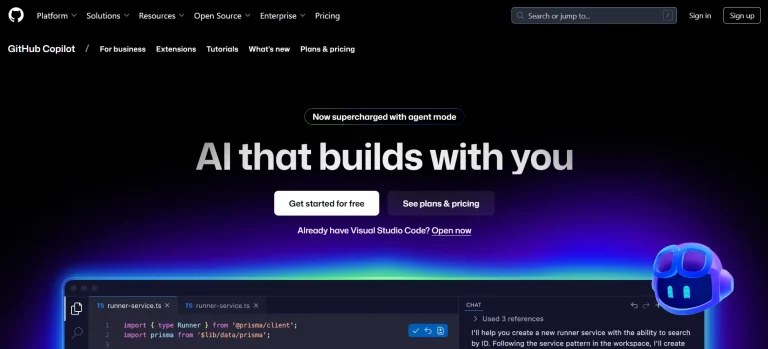
What happened: four Copilot models retired on October 2
On October 2, GitHub published a tersely worded entry on its official Changelog: effective immediately, four models were deprecated across all Copilot experiences — Gemini 3.5 Flash, Gemini 3.6 Flash, Kimi K2.7 Code, and Claude Opus 4.7. The scope was spelled out in full: Copilot Chat, inline edits, ask mode, agent mode, and code completions — nothing left out. In other words, if you were still using any of these four, they have already vanished from the model picker no matter which Copilot surface you call them from.
The announcement came with a clean replacement table: both Gemini Flash models are succeeded by Gemini 3.8 Flash; Kimi K2.7 Code's official successor is Kimi K3; and Claude Opus 4.7's slot goes to Claude Opus 5.5. GitHub added one developer-friendly note: there is nothing to do to remove the deprecated models. No grace period, no gradual rollout — the wording was "as of today," retired on the spot. That same-day style is itself a signal: GitHub now treats model retirement as routine operations, not a version event worth fanfare.
This is only the first wave: six more are queued for October 19
Zoom out on the timeline and October 2 looks like just the opening act. In a separate Changelog entry dated September 18, GitHub had already announced that six more models will be deprecated on October 19 — GPT-5.5, GPT-5.4, GPT-5.4 mini, GPT-5 mini, Gemini 3.7 Flash, and Grok 4.5 — with GPT-5.6 Sol, GPT-5.6 Luna, Gemini 3.8 Flash, and Grok 4.6 named as the official replacements.
Add the two waves together and Copilot is saying goodbye to ten models in the single month of October. That number carries more information than either announcement alone: once "deprecation notices" start arriving monthly, they stop being one-off events and become the new normal. Model launches and model retirements are becoming two sides of the same coin.
Judgment 1: Copilot model half-lives are shrinking — model names are becoming dependencies
Back in 2021, when Copilot launched, there was exactly one model behind it, and developers never had to care "which model" they were using — the model was invisible. By 2026, Copilot has become a genuine multi-model platform: GPT, Gemini, Claude, Grok, and Kimi all on the same stage, with the model picker a daily ritual. This retirement wave exposes the other side of the coin: models are not just multiplying, they are churning faster.
That forces a shift in how we work: model names are acquiring the properties of dependencies. It used to be that hard-coding a model name into a custom agent's config, a team's prompt playbook, or your own extension's defaults was like hard-coding an API endpoint — once it worked, you assumed it would work forever. GitHub is now telling you, in two deprecation notices, that this endpoint expires, and the expiration notice arrives only weeks ahead.
The pragmatic response is to manage model names like dependencies — the way you manage versions in package.json: record everywhere you reference them, check the deprecation notices regularly, and validate the replacement as soon as it lands. This lesson is especially worth internalizing for indie developers: big companies have admins watching model policies and running migrations for them; solo developers have only themselves. Adding "which models did Copilot retire this month" to your information diet costs almost nothing, and it buys you the morning when you don't stare blankly at a vanished model picker.
There is a subtler knock-on effect: countless agent workflows, prompt templates, and even blog tutorials carry recommendations like "model X works best for this." Every retirement partially invalidates that accumulated wisdom. The depreciation rate of knowledge in the vibe coding era has, for the first time, taken the concrete form of a retirement timetable. One practical suggestion: keep a "model manifest" alongside your agent configs, recording which model each workflow uses and when it was last validated — like a lockfile pinning dependency versions, pinning your expectations of models.
Judgment 2: "Automatic migration" only happens in the world where you never touched the switches
Buried in the details is a fork enterprise users should read carefully. GitHub says that with "default model enablement" left on, the replacement models are automatically enabled for Copilot Business and Copilot Enterprise customers — but if an administrator turned off the global default, or explicitly disabled a replacement model, it has to be switched on manually in the model policies.
In plain language: users on default settings migrate seamlessly; the more customized the organization, the more manual work the migration takes. This is close to a universal law of platform governance — "automatic" only exists in the world where you never touched the switches; the more carefully you tuned things, the more you do by hand.
For enterprise admins, the real exam is actually the October 19 wave. GPT-5.5, the GPT-5.4 family, and Grok 4.5 are referenced by huge numbers of internal workflows, CI scripts, and custom agents — each replacement needs to be confirmed enabled in the policies before retirement day, or developers will open the model picker on the morning of October 20, find things missing, and the tickets will land on your desk. Forward both Changelog entries to whoever owns Copilot governance: the September 18 one is the to-do list, the October 2 one is the already-happened reality.
Judgment 3: Kimi K3 takes the baton — a footnote on the globalization of Copilot's model lineup
The line most worth a second look across both replacement tables is Kimi K2.7 Code → Kimi K3. This is the first time a GitHub official announcement has placed a model from a Chinese AI lab in the "officially recommended replacement" slot.
The signaling value outweighs the technical value. It shows Copilot's model lineup has gone fully multipolar: Gemini 3.8 Flash, GPT-5.6, Grok 4.6, Kimi K3, Claude Opus 5.5 — models from five vendors competing inside the same picker. The era of OpenAI calling all the shots is over.
That is good news for developers: the more options on the table, the more leverage you keep when any single vendor has an outage, raises prices, or changes strategy. For Chinese-built models, it is the first time one has earned the "successor" title through GitHub's official channel — being written into a migration guide means its real-world coding performance has been trusted enough to recommend to every user as the migration path. That is more concrete than any benchmark leaderboard: benchmarks are lab scores; migration guides are production trust. For Chinese-speaking developers there is a practical bonus too: understanding Chinese comments and Chinese-language requirements has always been a Kimi strength, and an officially recommended migration path lowers the psychological cost of switching.
Competitive context: retiring models is an industry-wide habit — the difference is how gracefully it's done
To be fair, this is not a GitHub-only habit: Cursor and Anthropic's APIs have their own model retirement cadences, and the iteration speed of frontier models means no platform can keep old models alive forever. The real difference is in gracefulness — GitHub shipped a formal Changelog announcement, a line-by-line replacement table, admin instructions, and an automatic migration policy under default settings. Plenty of tools retire models silently: one morning your favorite model is simply gone, with no announcement and no suggested replacement.
That gives indie developers a new dimension for evaluating tools: beyond comparing model quality and price, compare "model governance transparency." A platform that announces retirements weeks ahead, publishes a replacement table, and tells admins exactly which switch to flip has a completely different long-term holding cost than one that retires silently. The former gives you time to validate the migration; the latter forces you to do it on a Monday morning.
The three ledgers behind the retirement wave: cost, licensing, and lineup
For GitHub, retiring old models is first of all a cost ledger. Every model kept alive means another set of inference capacity to maintain, another regression suite to run, another red-teaming bill to pay. Once a new model beats the old one across the board, the old model's marginal value drops to zero — keeping it is just burning money. Ten models in one October tells you GitHub's internal pruning of its model portfolio has gone from ad hoc to batch operations.
The second ledger is licensing and compliance. A multi-model platform means multiple vendors, each with different license terms and data-use policies. The older the model, the wider the gap between its terms and the present — training-data grants and output-ownership clauses written years ago may no longer match GitHub's current enterprise compliance bar. Regularly clearing out old models is also debt relief for legal.
The third ledger is the lineup itself, hidden in the replacement tables: GPT-5.6 split into Sol and Luna tiers, Gemini converging on 3.8 Flash, Kimi's K3 succeeding K2.7 Code. GitHub is using retirement to reshape the model matrix — one best answer per slot, less choice paralysis for developers. The takeaway for indie developers: don't over-invest in "which model to pick"; the platform will do the subtraction for you via retirements. Put the real work into model-agnostic assets — prompts, processes, acceptance criteria. Models get swapped; processes endure.
An action checklist for indie developers
Rather than treating this as spectator news, spend ten minutes and get these done:
- Open the Copilot Chat model picker and confirm your daily driver isn't on the retirement list; if you hard-coded model names into custom agents, extension configs, or scripts, replace them one by one with the successors.
- If you used Kimi K2.7 Code or Claude Opus 4.7: before setting Kimi K3 or Opus 5.5 as your default, run your two or three most common tasks through them once. Switching models is not just switching a name — output style, reasoning depth, even comprehension of Chinese comments can change. Don't let production be the test ground.
- Put October 19 on your calendar: the GPT-5.5, GPT-5.4 family, Grok 4.5, and Gemini 3.7 Flash wave hits harder — migrate the workflows that reference them ahead of time, not on the day.
- Enterprise users: check your Copilot settings' model policies to confirm the replacements are enabled, especially if you ever turned off the global default.
- Build the long-term habit: add GitHub Changelog's Copilot section to your information diet. Model deprecation notices now arrive monthly — read them like dependency update logs, not like news.
One line to close: competition in AI coding tools has moved from "whose model is stronger" to "whose model lifecycle management is less of a headache." GitHub just wrote that sentence into reality with two announcements and ten models. The next one to be retired could well be the one you reach for most today — preparing early is always cheaper than scrambling on the day.
Sources
Related articles

On October 7, 2026, GitHub announced via Changelog: starting with CLI 1.0.94-0, the /model command discovers models in your local Ollama instance, listed alongside configured and cloud models. Discovery doesn't auto-enroll — each model needs manual confirmation — and models must support tool calling and streaming. GitHub also teased intelligent routing, and clarified: a local model neither enables offline mode nor disables telemetry.
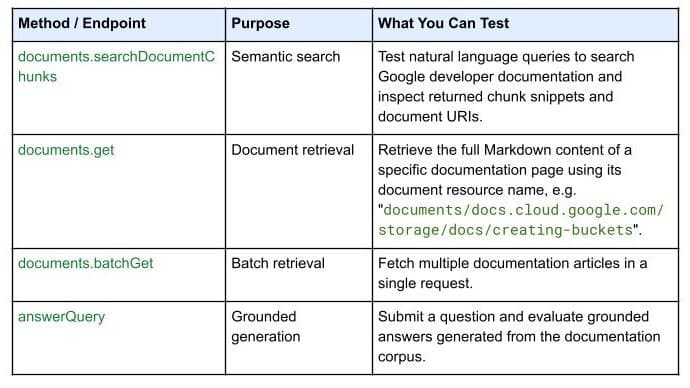
On October 7, 2026, Google Developers launched the Developer Knowledge API ecosystem: official Google Cloud, Firebase, and Android docs as a programmatic source of truth, with a gcloud CLI surface, an official Agent Skill (one-line install), an MCP server, and multi-language client libraries. Why 'docs as APIs' uproots vibe coding's classic failure of models misremembering APIs.
On October 8, 2026, Google Cloud launched the Gemini agent at Gemini at Work 2026: a universal agent for work that takes objectives, plans by itself, auto-selects between Gemini and Claude models per task, and introduces 'coworker agents' with their own email, calendar, and directory seat. Four judgments on why the second half of the agent race is about 'agents that feel like colleagues.'