722 Manuscripts Published Overnight: AI Math Hits Its Industrial Moment, but Trust Hasn't Caught Up
On October 6, OpenAI released 722 AI-generated math manuscripts in a public GitHub repo, each costing roughly 3 hours of inference compute on average, with some carrying Lean formal verification. Mathematicians are split: this is math's industrial moment — and the moment the discipline's trust machinery gets rewritten.
What happened on October 6
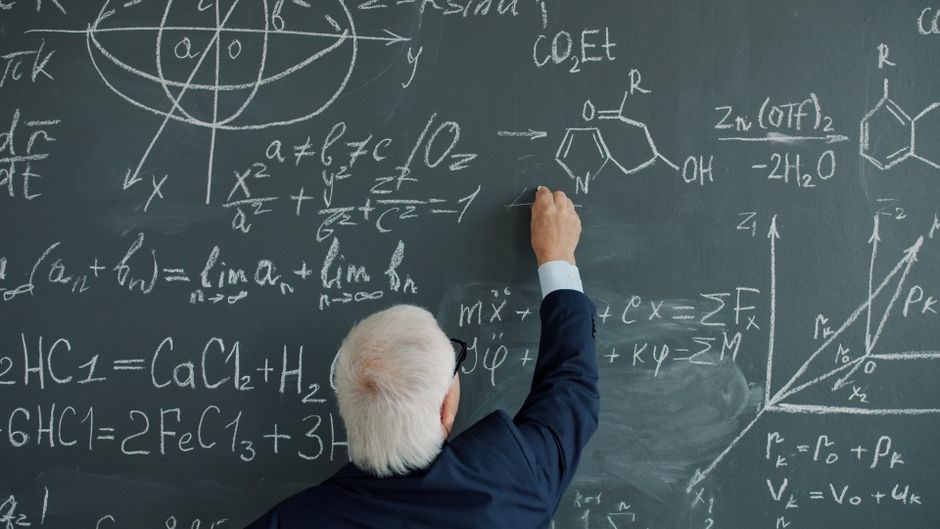
On October 6, 2026, OpenAI pushed a GitHub repository into the public eye: openai/math. It holds 722 math manuscripts, grouped into 372 families of related results. According to OpenAI, all of them were produced by an internal model that has not been publicly released.
The numbers deserve a closer look. OpenAI says each result consumed roughly 3 hours of ChatGPT Pro-level inference compute on average. During evaluation, the model attempted around 4,000 math problems in total. In other words, this is the first time "AI doing math" has reached a scale measurable in manuscript counts and compute ledgers.
What was released goes beyond the manuscripts. Some proofs ship with Lean formal verification — note: some, not all. OpenAI also published reasoning summaries and compute statistics for 10 of the results. But two things were missing: the prompts were not disclosed, and the model has no name.
To be clear: this is not "the Riemann Hypothesis has been proven"
Some outlets have already run headlines like "AI proves the Riemann Hypothesis." That is wrong. None of the 722 manuscripts claims to solve a Millennium Prize problem like the Riemann Hypothesis. Conflating "industrial-scale production of math proofs" with "proving the hardest conjectures" buries the real story under a false one.
The real story is bigger. Per OpenAI's own timeline: this internal model began training on August 28, 2026, and on September 21 OpenAI announced it had solved 100+ long-standing open math problems. Within two months, the production of mathematical results moved from workshop to assembly line. The question is no longer "can AI do math" — it is "can humans still read and trust math produced by AI at scale?"
Mathematicians are split
Daniel Litt of the University of Toronto publicly called it a good thing for math. His logic is straightforward: mathematics has long been short on hands for verification and short on compute for exploration — one more powerful proving machine looks like pure upside.
But more mathematicians' first reaction was: show us the receipts. The objections cluster around three points. First, the model has no name and the prompts were not published, so nobody can reproduce the work — the field has to take OpenAI's word for it. Second, having human mathematicians check all 722 proofs line by line is an unrealistic workload; only some proofs have Lean formal verification, most do not. Third, and deepest: if a proof is so long and complex that no human can truly understand it, is it still "mathematics"? The tradition demands that a proof be an argument a human can follow and check — not merely a probably-correct output.
On Hacker News, the discussion has grown into a long thread. Supporters and skeptics are really arguing about the same thing: once proofs outgrow human reading capacity, what rebuilds the trust machinery of mathematics?
Princeton's "new rules": the AGMAI guidelines
Notably, one week before OpenAI's release — on September 29 — the Advisory Group on Math and AI (AGMAI), housed at the Princeton Institute for Advanced Study and independent of OpenAI, published responsible-publication guidelines for AI-generated mathematical results. The guidelines were formed after 600+ questionnaire responses, aimed squarely at the current situation.
The requirements are specific: labs should stop secret benchmarking; name their models; disclose prompts, reasoning summaries, and compute costs; and stop using mathematical results as model marketing.
Measured against that yardstick, OpenAI's release is a half-finished exam: reasoning summaries were provided (for 10 results), compute statistics were provided (roughly 3 hours of Pro-level inference per result), the repository is public, and the secret-benchmarking concern was partly addressed. But the model still has no name, and the prompts are still undisclosed.
The guidelines' real weight is that they are mathematics' first attempt to write rules for a new species — AI doing math. The old norms of mathematical publishing — peer review, citation, authorship — were designed for human authors. Now an unnamed model stands in the author line, and the old rules no longer suffice.
The key variable: Lean, and the "machine-checkable" path
The detail in the 722 manuscripts most worth watching is not the count — it is Lean. Some proofs come with Lean formal verification, meaning they are not merely "plausibly correct": a machine has checked the entire logical chain.
This points to a new division of trust: humans pose the problems, judge direction and taste; machines generate the proofs; another machine (the proof checker) verifies them. Verification no longer rests on "some authority read it and nodded" but on "Lean says it checks out."
Anyone in vibe coding will recognize this pattern. Would you ship an agent's code straight to production? No. But if it comes with a passing test suite — or better, formal verification — the trust problem gets a different solution: you don't need to trust the agent, you only need to trust the checker. "Generate + machine-checkable" may be the general answer for every high-stakes generative task in the AI era: code works this way, and so do math proofs.
Of course, Lean verification covers only some of the manuscripts. The remaining hundreds still need human checking, or next-generation verification tooling. That is the biggest open question OpenAI left behind — and the hard problem the whole field will chew on in the coming months.
What to watch next
Three questions will decide how much this ultimately matters. First, independent verification: will any third-party team reproduce some of the results, or run more proofs through Lean? Second, model naming and prompt disclosure: will OpenAI answer the AGMAI guidelines and finish its half-done exam? Third, disciplinary norms: will journals and conferences start requiring machine-checkable versions of AI-generated proofs?
The number 722 itself may be forgotten in two years. But the turning point it marks will stay: mathematics produced industrially for the first time, and a discipline's trust machinery rewritten in full public view. A reminder for anyone building AI — once your model starts mass-producing things humans can't read, verifiability is not optional. It is the price of admission.
Sources
Related articles
On October 1, 2026, Microsoft AI shipped three voice models at once: MAI-Transcribe-2-Streaming (streaming transcription, #1 on Artificial Analysis for streaming accuracy at 2.5% WER, final transcript 0.13s after end of speech), MAI-Voice-2.1 (23 languages, one consistent voice across languages), and 2.1-Flash (45s of audio at ~150ms end-to-end). With listening and speaking covered, a voice agent on a pure-Microsoft stack can now complete a turn in under a second.
On October 8, 2026, Google Cloud launched the Gemini agent at Gemini at Work 2026: a universal agent for work that takes objectives, plans by itself, auto-selects between Gemini and Claude models per task, and introduces 'coworker agents' with their own email, calendar, and directory seat. Four judgments on why the second half of the agent race is about 'agents that feel like colleagues.'

Reported by InfoQ on October 3: a GPT-4 coding agent given CVE descriptions successfully exploited 87% of 15 test vulnerabilities, versus 7% without descriptions. rclone's author received 40+ security disclosures in a single month — more than the project's previous decade combined; QEMU has shortened its embargo period. The vulnerability disclosure timeline is collapsing under agent speed.