Model Selection in 2026: Open vs. Closed — When to Use Which
No best model exists — only the one fitting your constraints. A four-dimension scoring framework, hybrid routing architecture, and picks for three typical profiles.

In 2026, choosing a model is no longer the single-choice question "which model is strongest" — it's a constraint-satisfaction problem. I've seen two kinds of teams pay tuition: one routes all traffic to the most expensive flagship model and redesigns its architecture overnight when the monthly bill arrives; the other self-hosts an open model "for data security," watches users churn over poor quality, and finally realizes 90% of its use cases never needed self-hosting. Both placed bets without thinking.
The conclusion first: in 2026 there is no "best" model, only the model that best fits your constraints. Open vs. closed isn't a holy war — it's an engineering trade-off. This article gives you an executable decision framework: when open source is mandatory, when closed is mandatory, and the hybrid architecture most teams should actually use.
A real billing story first. A small team building an AI writing assistant routed everything to a flagship closed model in late 2025. The product worked, quality was great. Three months later, the finance review: API cost per user per month was $4.20 against a $9/month subscription — after payment processing and tax, margin was near zero. The more users, the more they lost. Two weeks of hybrid refactoring: high-frequency tasks like draft generation and grammar checks moved to a small open model; deep rewriting and creative expansion stayed on the flagship. Per-user monthly cost dropped to $0.90, margin back above 80%. The cost of a wrong choice isn't "spending a bit more" — it's a business model that doesn't work.
When Open Source Is Mandatory
Three scenarios where open source isn't optional — it's required.
First: data can't leave your network. Healthcare, finance, legal, government — compliance here is a hard constraint: patient records, transaction logs, case files. Every closed-API call is a compliance risk. A medical SaaS team doing clinical-note structuring told me they evaluated closed APIs — 15% better quality — but the hospital's infosec review vetoed it outright. They ended up with locally deployed open models plus domain fine-tuning: only 5% behind, but it won them orders from three top-tier hospitals. Against compliance, a 5% quality gap is nothing; failing to win the deal is zero.
Second: unit cost decides survival. Do the math: 10 million tokens a day at a few dollars per million tokens on a flagship closed model is thousands to tens of thousands a month; an open model, once deployed, has marginal cost near GPU depreciation. For high-frequency, low-ticket scenarios (content moderation, log classification, bulk document preprocessing), closed-API bills eat the entire margin. My rule of thumb: if model call cost exceeds 10% of your average contract value, evaluate open alternatives immediately — this isn't about saving money, it's about whether the business model works at all.
Third: you need to modify the model itself. Distillation, quantization, architecture surgery, domain continued pretraining — all require the weights. A code-completion team distilled an open model into a 7B-parameter specialist, pushing latency under 200ms — something no closed API can offer (you don't control API latency). When you need not a "smarter model" but a "more controllable model," open source is the only answer.
One more commonly missed scenario: offline and edge environments. Factory-floor inspection terminals, field devices with no connectivity, on-plane local assistants — places where cloud APIs simply can't be reached, only local models run. In 2026, edge small models (quantized 1B–7B) already handle classification, extraction, and simple Q&A, and an "offline-first, online-enhanced" architecture doesn't feel bad. If "works without internet" is part of your pitch, local open deployment isn't an option — it's a prerequisite.
Before committing to open source, run the "three-step evaluation" to avoid discovering it's not good enough after deployment. Step 1: grade task difficulty. Split your tasks into three tiers by required capability: L1 (classification, extraction, format conversion), L2 (summarization, simple Q&A, code completion), L3 (complex reasoning, multi-step planning, open-ended creation). Open models roughly match at L1, trail 10–20% at L2, and the gap is obvious at L3. If your core tasks are all L3, don't fight it — go closed. Step 2: test on 200 real samples. Not public benchmarks — your own data. Run candidate open models against the closed flagship, hand-check 50 for "acceptability rate." Many teams discover open models are only 5% behind on acceptability in their scenario but 20x cheaper — the decision becomes instant. Step 3: compute total cost of ownership. GPU cost + engineer time + evaluation and ops overhead, versus 12 months of API bills. Remember to include "someone must track new model versions quarterly" — that's where all of open source's hidden cost lives.
When Closed Source Is Mandatory
The reverse also holds: three scenarios where forcing open source is self-harm.
First: you need frontier capability. Complex reasoning, long-context understanding, multimodality, agentic multi-step tool use — in 2026, open models still trail top closed models by half a year to a year on these dimensions. If your selling point is "the smartest AI assistant," shipping an open model means fighting with your weakness against their strength. Users won't forgive wrong answers because you're "using open source." Quality is the 1; cost is the zeros after it.
Second: you don't have an ML team. The real cost of open source isn't GPUs — it's people. Deployment, quantization, evaluation, hallucination handling, tracking new versions — at minimum one full-time engineer who understands models. A solo founder or 5-person team burning three months on "tuning open model deployment" would do better calling APIs and shipping product. Open source saves token money and spends engineer time — most people do this math backwards.
More precisely: an engineer who can independently deploy and operate open models costs at least ¥600K–1M a year; a small app doing 5M tokens a day might pay only a few thousand a month in closed-API bills. In other words, until token volume crosses the point where "hiring beats buying API," self-hosting loses money. The rough threshold: only seriously evaluate hiring + self-hosting when monthly API bills stay above ¥30K. Before that, call APIs and spend time on product and growth.
Third: you need compliance credentials and SLAs. Ironic but true: some enterprise buyers actually demand big-vendor closed APIs, because "someone's accountable if things break." SOC 2, 99.9% uptime SLAs, content-filtering backstops — closed APIs ship with these; self-hosted open source means building them all yourself. For B2B, "we use OpenAI/Anthropic/Google enterprise APIs" is itself part of the sales pitch.
The Decision Framework: Four-Dimension Scoring + Hybrid Architecture
Most real projects are neither purely open nor purely closed. Here's the framework I actually use, in two steps.
Step 1: score four dimensions, 1–5 each. Capability requirement (how hard are the tasks? simple classification = 1, complex reasoning = 5), cost sensitivity (higher with token volume), privacy/compliance (public data = 1, healthcare/finance = 5), controllability need (API-only = 1, need distillation/hacking = 5). Capability ≥ 4 → closed, no debate. Privacy/compliance ≥ 4 → open, no debate. Neither extreme → look at cost sensitivity — ≥ 4 means open as the workhorse; ≤ 2 means closed as the workhorse, don't overthink it.
Step 2: the hybrid routing architecture — the mainstream answer for 2026. Don't "pick a model." Build a router: simple tasks (classification, summarization, format conversion) go to cheap small open models or small-tier closed models; complex tasks (reasoning, agent loops) go to flagship closed models; sensitive data goes to local open models. An AI customer-service company using this setup has 80% of conversations handled by small models — bills down 70% — while complex-issue resolution actually rose because the flagship handles the hard cases. Routing strategy itself is the most important cost optimization of 2026.
How to implement routing, in order of complexity: rule-based routing is simplest — hardcode by task type ("summaries → model A, reasoning → model B"), shippable in a day, right for clean task taxonomies; a small-model classifier is the upgrade — a cheap model judges difficulty first, answers easy ones itself, escalates hard ones to the flagship, right for conversational settings with wide difficulty variance; waterfall fallback is the safety net — try the cheap model first, escalate when confidence is low, right for quality-sensitive but cost-conscious scenarios. My advice: start with rule-based, look at a month of data, then decide whether to upgrade. Premature "smart routing" costs more in complexity than it saves.
Three more executable recommendations: first, benchmark on your own business data, not public leaderboards. Leaderboards test general capability; your business might be "extracting fields from invoices," where a fine-tuned small open model can beat the flagship. Take 200 real samples, run them through, 10 minutes to a conclusion. Second, add circuit breakers and degradation to model calls. Closed APIs get rate-limited, repriced, and revamped; self-hosted deployments go down. The routing layer must support "primary down → auto-switch to backup" — that's a production checklist item, not an optimization. Third, re-evaluate quarterly. Model capabilities shift every six months; a scenario that required closed models today may be fine on open source in half a year. Put "model selection" into the quarterly tech review, not a one-time architecture decision.
One last business-layer tip most people miss: negotiate enterprise discounts at volume. Major closed vendors all have tiered discounts or reserved-capacity plans past certain monthly spend — 20–40% off is negotiable; on the open side, cloud GPU reserved instances run half the on-demand price. Selection isn't just a technical decision, it's a procurement decision — the same architecture costs less in the hands of a team that negotiates.
Map the framework onto three typical profiles. Profile 1: solo founder building an AI app. Default to all closed APIs; don't touch self-hosting. Your bottleneck is product and growth, not per-token price. Only evaluate hybrid when monthly bills exceed ¥30K for three straight months. Premature optimization is a classic indie killer. Profile 2: a 10–50 person growth-stage team with real engineering. Hybrid routing is the standard answer: high-frequency simple tasks on small open or small-tier closed models, core differentiated capability on flagships, one person reviewing routing ratios quarterly. The 50–70% saved can fund another growth hire. Profile 3: finance/healthcare/government-heavy customer base. Local open deployment is the ticket to entry — clear compliance before chasing quality. The playbook: "local open models as the base covering 80% of compliant scenarios; non-sensitive enhancement tasks go to cloud flagships with written customer consent." Don't try to convince the compliance department — win the deal first.
My Take: In 2026, Selection Skill Is Shifting from "Chasing New" to "Doing Math"
In 2023–2024, the selection logic was "use whatever's newest." In 2026, models are good enough that "most scenarios are covered," and the deciding variables became cost, compliance, and controllability. That's actually the mark of a maturing technology: nobody picking a database asks "which database is strongest" either — they ask "which fits my data volume, my team, my budget."
One level deeper: people treating "open vs. closed" as a holy war are missing the real opportunity. The real opportunity lives in hybrid architectures and routing strategy — knowing which model fits which task matters ten times more than knowing which model tops the leaderboard. Over the next three years, the most valuable AI engineers won't be the ones who "can call the strongest model" — they'll be the ones who "can push model cost below the gross-margin line."
A closing line for CTOs and indie developers: if your selection doc has no cost worksheet, the selection isn't done. Every model choice should ship with a table: daily token volume, unit price, monthly cost, share of average contract value, alternative cost comparison. Paste that table into the tech review, and most arguments evaporate on their own — numbers don't care about beliefs.
Three final selection pitfalls. Pitfall 1: leaderboard worship. Public benchmark test sets may have nothing to do with your business — a model ranked #1 can get destroyed by a fine-tuned small model in your "dialect customer service" scenario. Leaderboards are reference, not answers. Pitfall 2: architecting the perfect system on day one. I've seen teams with fewer than 100 users design a "five-route hybrid router with automatic A/B testing" — the product died while the architecture was still in slides. Match selection to stage: 0→1, just make it work; 1→10, start managing cost; 10→100, then get sophisticated. Pitfall 3: ignoring exit cost. Deep coupling to one vendor's proprietary features (like exclusive fine-tuning APIs) becomes a nightmare at migration time. Always keep a "swap the model" abstraction layer — prompt templates, eval sets, and routing interfaces decoupled from any specific vendor. The abstraction cost you skip today becomes ten times the migration cost tomorrow.
Related articles
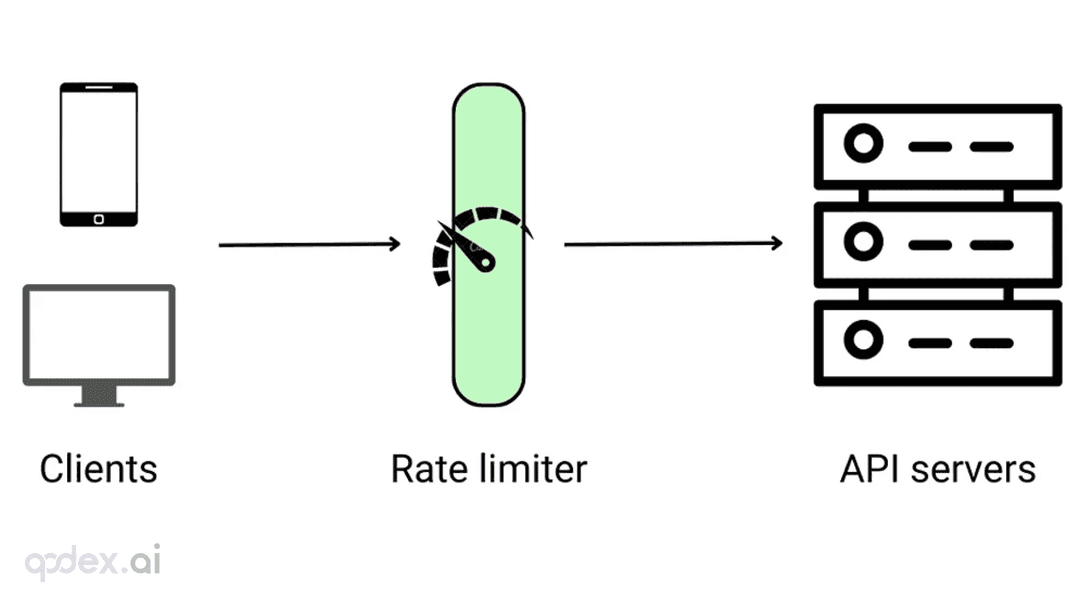
Every public endpoint will be called beyond your expectations some night. This guide builds a one-person-team rate-limiting system: algorithm choice (sliding window vs token bucket), four-layer defense, AI-endpoint money-burning protection, quota design, 429 response conventions, false-positive triage, and a launch checklist.

On October 3, engineer Kevin Liao published a polemic that hit the HN front page: agent memory plugins are a lottery over RAG snippets; what agents need is a documentation workspace. The essay's diagnosis, its open-source Operator Memory plugin, the two strongest objections, and the minimal practice you can start tonight.

Gergely Orosz visited OpenAI, Anthropic, Cursor, and Ramp and wrote up the 2026 state of the industry: near-100% AI-generated code, agent PRs up ~10x in eight months, code review degrading into theater, the IDE declared legacy. Key takeaways plus three verdicts and four actions for vibe coders.