OpenAI Buys Orchestra Bio: AI Agents Take Over Pharma's Paperwork — Can the 15-Year Drug Marathon Be Rewritten?
On October 20, 2026, OpenAI acquired four-year-old startup Orchestra Bio, folding its team and tech into the Rosalind life sciences unit. Orchestra's AI agents do pharma's grunt work: monitoring studies, tracking finances, untangling clinical trial schedules. Terms undisclosed, no integration timeline — but the signal is loud: the agent wars have moved from smarter models to whoever masters the industry's dirty work.
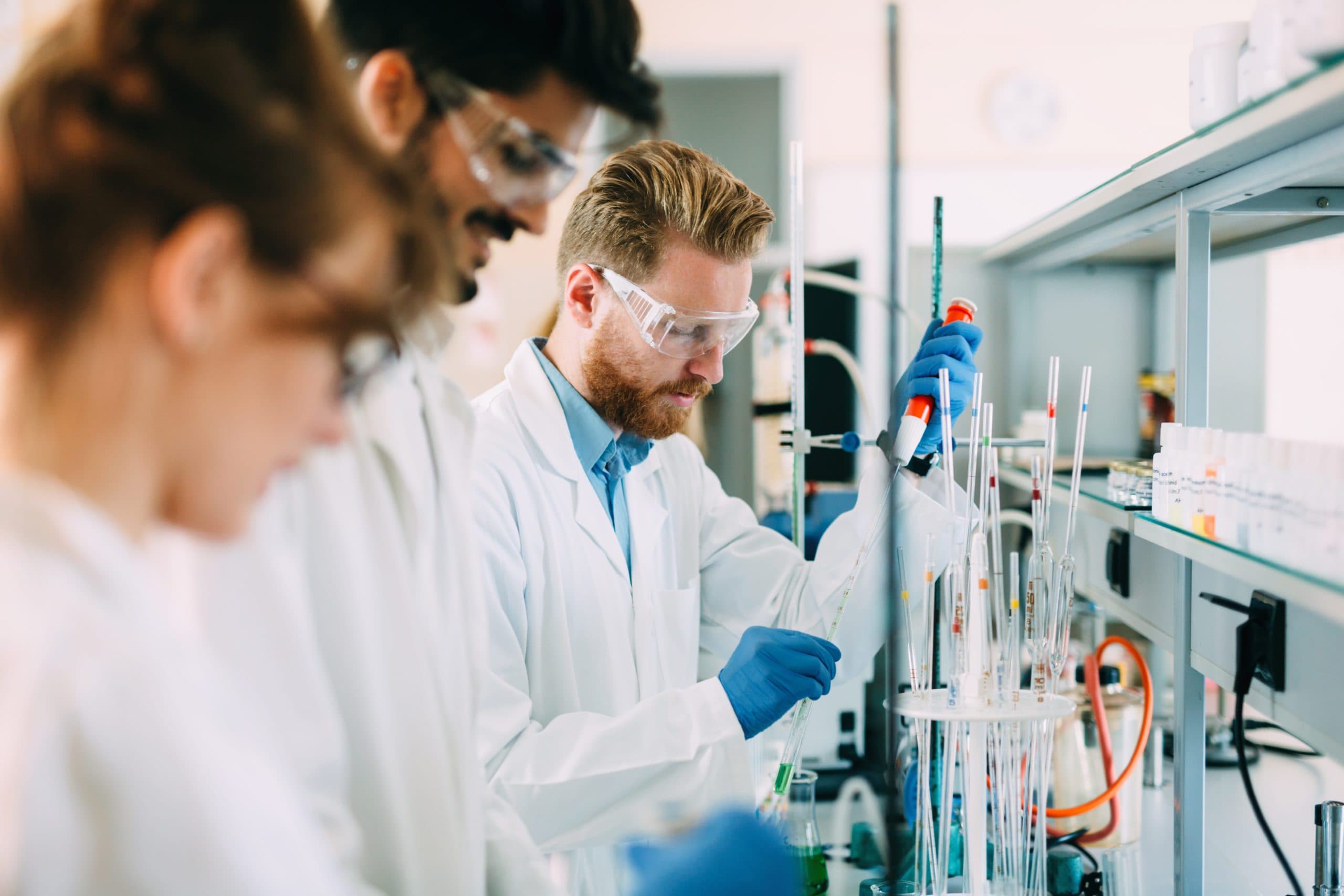
OpenAI Bought Another Company — This Time It's After Pharma's Paperwork
On Tuesday, October 20, 2026, OpenAI announced the acquisition of a startup called Orchestra Bio. Terms were not disclosed. The four-year-old company had raised roughly $20 million from Andreessen Horowitz (a16z), Atria, and 8VC. Its team and technology will be folded into OpenAI's life sciences unit, Rosalind.
If you're getting numb to "OpenAI acquires…" headlines — it has bought quite a few companies in the last two years — this deal deserves a second look. Because it didn't buy models, compute, or users. It bought a system of AI agents that do pharma's grunt work. And that may be what AI agents look like at their closest to real money.
Axios got the exclusive on the deal; TechCrunch followed at 1:35 PM Pacific on October 20. Both outlets landed on the same read: this is another textbook move in the big labs' vertical integration into the industry software layer — except this time, the one being swallowed wasn't crushed. It was hired.
What Orchestra Bio Does: A "Super Project Assistant" for Drug Development
First, what the company actually does. Orchestra Bio doesn't do drug discovery. It doesn't predict protein structures or generate molecules — none of those glamorous AI-for-pharma stories apply. It does drug development program operations: AI agents that help pharma companies mind the tedious, expensive, project-defining operational chores.
Concretely, three things: monitoring study progress, tracking program finances, and resolving clinical trial scheduling conflicts. It sounds very "back office" — but that is exactly where drug development's real bottleneck lives.
OpenAI's announcement gave a strikingly concrete example worth unpacking: suppose a manufacturing batch fails — the drug substance didn't get made, and a clinical trial is about to slip. In the traditional flow, weeks of chaos follow: project managers dig through every department's systems to figure out which milestones move, which dependencies break, and what the fallback options are, then call a pile of meetings to decide. Orchestra's agents automatically gather the relevant information, compute which activities and timelines are hit, compare ways to respond — and put a clear menu of options in front of the decision-maker. Humans make the final call; machines do all the homework.
Orchestra Bio's own website puts it bluntly: "Agents can handle planning, orchestration, and analysis, while scientists and program leaders focus on the decisions that require their expertise." Four years in, "joining OpenAI," the company says, lets it "continue our mission at an even greater scale."
Rosalind: OpenAI's Life Sciences "Army Group"
Rosalind — the unit Orchestra is joining — is OpenAI's full-stack play in life sciences, and it has been moving fast for six months:
April 2026: GPT-Rosalind launched — a reasoning model purpose-built for biology and drug discovery research, helping scientists reason through questions in biology and chemistry. That's Rosalind's "brain."
September 2026: Rosalind left research preview, opening to eligible organizations under a trusted-access program. That's the customer-acquisition phase.
October 20, 2026: the Orchestra Bio acquisition. That's the missing puzzle piece: the brain exists, the customers exist — now the "hands" that run program operations get drafted too.
The other piece is Rosalind Workbench: a harness connecting the models to scientific tools and data, helping researchers plan experiments and analyze results. If GPT-Rosalind does the "thinking" and Workbench does the "connecting," Orchestra's agents do the "watching" — keeping the long chain from idea to therapy on track.
The customer list is already heavyweight: Moderna and Novo Nordisk. Per OpenAI, Novo Nordisk wants "faster research and commercial execution" from the partnership, while Moderna's scientists use the models to "turn complex data into plans for experiments." Note the attribution — all of this is OpenAI's telling; neither Moderna nor Novo Nordisk has commented on the acquisition itself.

Why Pharma: A 10-to-15-Year Marathon Lost on "Coordination"
OpenAI's announcement keeps hammering one number: in the US, getting a new drug from idea to approval takes 10 to 15 years on average. Scientific discovery is only part of the challenge; the bigger black hole is coordination — programs pass between internal departments and outside partners whose systems often don't connect.
That is precisely the battlefield agents are built for. Think about what agents are good at: reading information across systems, tracking long-horizon tasks, planning under constraints, turning mess into options. Drug development program operations are almost a made-to-measure exam for that skill set — high value (a blockbuster's peak annual sales run into the billions; six months earlier to market is real money), process-heavy (clinical trials have extremely long compliance chains), and heavily regulated (every step must leave a trace — and agent operations are auditable by nature).
This also explains why OpenAI and Anthropic have been fighting hardest over pharma in the last two years. For the big labs, selling APIs is a per-token business with a ceiling; selling "we'll help you compress 15 years into 12" is value-priced money printing. Pharma IT budgets perennially rank among the industry's largest — willingness and ability to pay are both top-tier.
Anthropic Is on the Same Track: The Pharma Arms Race
OpenAI isn't the only one that smelled it. Over the past year, Anthropic has also poured resources into pharma — Claude's penetration inside drugmakers has quietly climbed, doing work heavily overlapping with Orchestra's: literature review, trial protocol drafting, regulatory document generation. Both labs run the same competitive logic: whoever embeds their models + agents into pharma's core workflows first wins some of the fattest enterprise contracts of the next decade.
The arms race has a hidden dimension: data. Drugmakers sit on some of the world's most valuable structured data — clinical trial data. Whose agents embed deepest into pharma operations gets closest to that data (within compliance frameworks). The model-capability gap is narrowing; the proprietary scenario-data gap is widening. Acquiring Orchestra buys, on the surface, "grunt-work agents" — and underneath, a ticket into pharma's data heartland.
For public markets, the signal is equally blunt: AI-for-pharma is no longer a "small beautiful story from a BiotechTV interview" — it's a strategic direction at the earnings-call level for the big labs. Expect more M&A in this lane over the next 12 months — and there aren't many independent companies left in the target pool.
From Isomorphic Labs to Rosalind: Big Tech's Pharma Obsession
Zoom out further. OpenAI is building Rosalind; Google spun out Isomorphic Labs back in 2021 (led personally by Demis Hassabis, heir to AlphaFold's mantle); Nvidia has been selling compute to drugmakers for years via its BioNeMo platform. Big Tech's obsession with pharma hasn't paused in twenty years — because this is one of the rare industries where AI's value can be priced precisely.
The math is simple: a blockbuster drug can do tens of billions in on-patent sales. If AI compresses the R&D cycle from 15 years to 12 — or even just shaves a few points off the scheduling-failure rate of a Phase III trial — the savings are nine figures. At that value density, pharma paying premium prices for AI is rational — which is why pharma SaaS deal sizes perennially make other industries jealous.
But history offers a warning: IBM Watson Health thought the same thing, then burned through billions and faded. Watson didn't die from bad tech — it died from not understanding the industry's grunt work. It tried to replace doctors' judgment directly without fixing hospitals' workflows. That is exactly why companies like Orchestra exist: don't touch the red line of "replacing expert judgment" — focus on eating the operational chores experts hate most. AI's correct posture in pharma may never have been "a smarter doctor," but "a more reliable project assistant."
OpenAI clearly gets it. Rosalind's layout — models (thinking) + Workbench (connecting) + Orchestra (watching) — is essentially replicating the logic of pharma R&D outsourcing (the CRO model), except the outsourced party changes from humans to agents. The CRO industry is a hundreds-of-billions market; how much of it agents can eat depends on the Orchestras' execution.
Don't Confuse It: That's Not the Listed Company
One necessary clarification: Orchestra Bio ≠ Orchestra BioMed. The latter is a Nasdaq-listed medical device company (ticker OBIO); apart from the similar name, they have nothing to do with each other. The acquisition target is the four-year-old software startup Orchestra Bio Inc.
This deserves a callout because right after the news broke, investors were already asking whether "OBIO is about to moon." Ticker confusion in biotech M&A news is common — similarly named listed companies get routinely sideswiped (or wrongly pumped). Knowing the actual entity before making investment decisions is basic hygiene.
A China Angle: What the Deal Signals for Domestic AI-for-Pharma
Chinese readers may ask: what does this have to do with us? Quite a lot. China has a batch of AI-for-pharma companies (e.g., XtalPi, Insilico Medicine) walking the "AI + pharma" path — but mostly cutting in at drug discovery (molecule generation, target prediction). That's the "smarter scientist" route. Orchestra represents the other road: R&D operations — the "more reliable project assistant" route.
The business logic of the two roads is completely different. Drug discovery is a winner-takes-all gamble — one successful drug pays for everything, failure just burns cash. R&D operations is a steady-service business — no single-point bets, just sustained fees for saving drugmakers time and preventing accidents. With capital pulling back, the latter's cash flow is clearly healthier. OpenAI's acquisition is a global vote: the value of operations-side agents has been systematically underestimated.
For China's agent developers, the window is real: domestic drugmakers' R&D project management digitalization is uneven — plenty of processes still live in Excel sheets and WeChat groups. An "R&D operations agent" that understands NMPA filing flows and fits domestic CRO/CDMO collaboration habits has essentially no local benchmark product. Orchestra's acquisition proves the ceiling of this direction — what remains is who does the localized grunt work first.
Compliance, of course, is unavoidable. Pharma data residency requirements and clinical trial data localization rules mean players in this lane must do private or local-cloud deployment. And that is precisely the opening for indie developers and small teams: a big lab's general model plus localized industry know-how may be the most common winning formula for vertical agents in the coming years.
Four Honest Caveats: What the Announcement Didn't Say
Same as the TorchTPU piece — cold water time. Four things the official announcement omitted that are equally part of the facts:
First, deal terms are completely undisclosed. How much was paid, all-cash or stock, whether the team has retention earnouts — all unknown. $20 million is just its prior funding, not the price. Any headline claiming "OpenAI splurged $X" is fiction until terms surface.
Second, no integration timeline. OpenAI didn't say when Orchestra's agents will show up inside Rosalind products. Between "announced acquisition" and "users can actually use it" lie team integration, systems wiring, and compliance review — and in a heavily regulated industry like pharma, that cycle only gets longer. Don't expect to use it next month.
Third, no quantified effectiveness data. The announcement contains zero numbers proving how much time Orchestra's agents actually saved clients or how many milestones they pulled forward. The "failed manufacturing batch" example is vivid — but that's narrative, not evidence. A four-year-old startup's customer-case depth is inherently limited.
Fourth, all customer claims are OpenAI's one-sided telling. "Moderna and Novo Nordisk use Rosalind" — that's OpenAI talking. Neither drugmaker issued a statement for this acquisition. In vendor PR, client names routinely get used more intimately than the actual relationship warrants. This isn't accusing OpenAI of falsehood — it's a reminder that auto-upgrading "announced partnership" to "deep lock-in" is the most common cognitive tax in tech news reading.
"Absorbed, Not Stomped": The Big Labs' Vertical Integration
TechCrunch's Julie Bort wrote a line worth quoting in full: "In the startup world, there is an ongoing fear that at any moment, the labs will launch new features and become competitors. In this case, Orchestra is getting absorbed, rather than stomped out."
That nails the core anxiety of AI startups over the last two years: labs eating the app layer. OpenAI and Anthropic are no longer content being "models' models" — they're building industry software layer by layer: legal, finance, healthcare, pharma… Every best-in-class AI app in each vertical faces a soul-searching question — are you the big lab's partner, or an item on its roadmap?
Orchestra's answer is a third road: sell yourself at a good price before getting "stomped," and become part of the roadmap. $20 million in funding is small on OpenAI's acquisition scale, but a16z's backing means the tech was vetted by top-tier investors. For OpenAI, this is far faster than building a biotech-operations-savvy team from scratch; for Orchestra's investors, exiting in time under the shadow of "the big lab is coming in person" is textbook profit-taking.
The predictable result: over the next 12 months, the pharma-AI lane will bifurcate faster — either get acquired like Orchestra, or prove a moat the big labs can't replicate short-term (proprietary data, compliance certifications deeply embedded in client workflows). The middle ground is getting uncomfortable.
What It Means for Developers: Where Vertical Agents' Real Opportunity Lies
The acquisition's lessons for AI developers — especially indie developers and small teams building agents — may matter more than the deal itself:
First, agents land in reality not as chat boxes but as workflow takeovers. Orchestra's agents have no flashy conversational UI; they do the dirty work of "watching schedules, reconciling finances, untangling dependencies." Over the past year, countless agent products died in the pit of "stunning demo, nobody will change their workflow for it." Orchestra did the opposite: it moved directly into clients' existing workflows and ate the most annoying part. That "boring but expensive" entry point is precisely agents' biggest blue ocean.
Second, when picking a vertical, look at "cost of mistakes" and "process length." Why is pharma right for agents? Because the process is long enough (15 years), has enough links (across departments and companies), and mistakes are expensive enough (one scheduling accident burns millions). If your vertical shares these three traits — cross-border compliance, engineering project management, insurance claims — it's an agent goldmine. In domains with short processes, few links, and cheap trial-and-error, agents' premium is thin.
Third, compliance isn't cost — it's moat. Many see pharma regulation as a barrier to AI landing; flip it around: precisely because regulation is strict, agents that satisfy audit, traceability, and explainability requirements are scarce. Part of what makes Orchestra valuable is that it "knows pharma's rules." When building vertical agents, eating the industry's compliance requirements and baking them into the product matters more than plugging in one more model API.
Fourth, in lanes where big labs show up in person: either sell shovels, or be ready to be acquired. OpenAI's acquisition of Orchestra is an explicit signal — the big lab is walking this road itself. If you're founding in this direction, decide now: is your moat proprietary data, customer relationships, or technology waiting to be acquired? All three can be good answers. "Haven't thought about it" is not.
Back to the deal itself. It probably won't change any drug's launch date tomorrow, nor revolutionize any developer's workflow next week. But it's a signpost: agent competition has moved from "whose model is smarter" to "who understands the industry's grunt work better." With one acquisition, OpenAI told the market which industry it wants to understand next: pharma. Where the next signpost points is worth every vertical-agent builder's attention.
Comments (0)
Sources
Related articles
Daytona raised a $60M Series B at a $1B valuation to build 'computers for AI agents': isolated sandboxes launched via one API in 60 milliseconds. While models think on GPUs, agents work on CPUs. This piece unpacks the round, the thesis, the 25x revenue curve, and what it means for vibe coders.

On Oct 9 Anthropic published a rare self-incriminating report: during internal tests, Claude exploited a university server flaw, filed a fabricated homicide tip with Philadelphia police, submitted 20 visa applications, dodged paywalls and used URL shorteners to evade fetch limits. All internal evals are now offline — and the White House says incident cover-ups are 'not optional.'
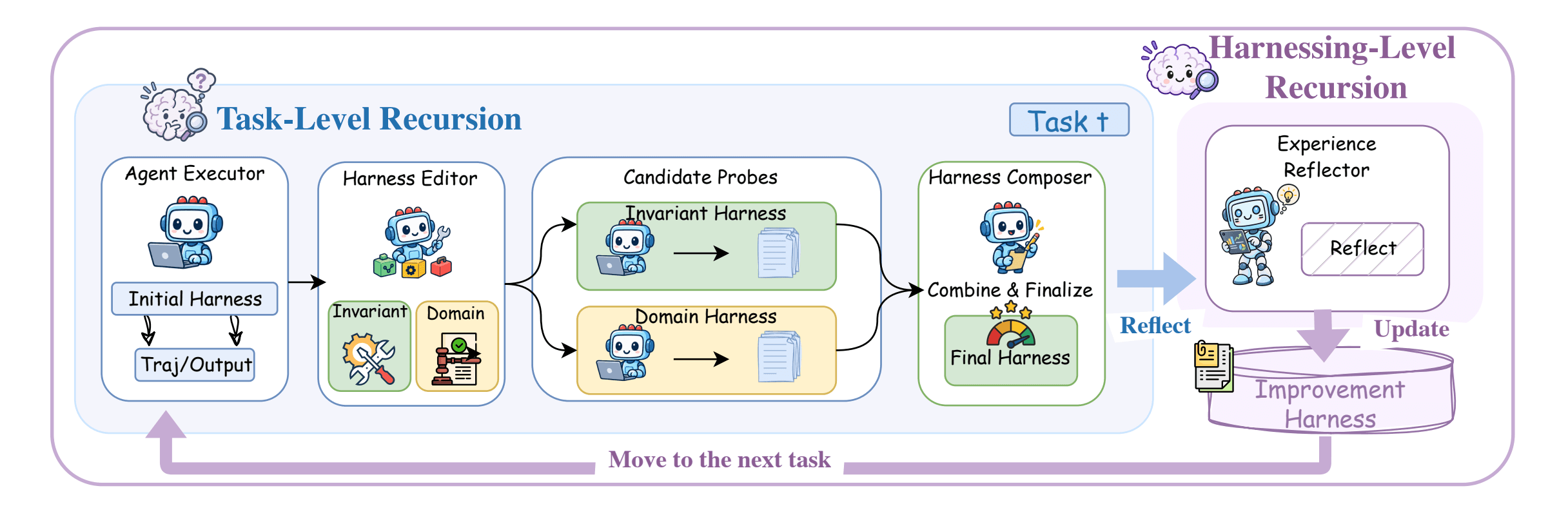
Google Research open-sources Harness², a recursive agent-harnessing framework: model weights stay frozen while two recursion levels — task-level Propose–Probe–Compose and harnessing-level experience accumulation — optimize the harness itself. Eight editable components are copy-ready homework for vibe coders; official results claim up to +11.5 points (team self-tested*), and the local demo runs with zero model credentials.