OpenAI's GPT-6 Cyber Finds Flaws and Writes Exploits — but Only Vetted Security Teams Get It
On November 5, 2026, OpenAI launched GPT-6 Cyber: 48.5% on ExploitGym, 948 working Linux privilege-escalation exploits in one scan, and 81 high-severity Firefox flaws. It is not open to the public — only approved Daybreak Red customers get access.

The verdict first: the best vulnerability hunter yet is also the most tightly controlled model

On November 5, 2026, OpenAI introduced GPT-6 Cyber, a model trained specifically for cybersecurity research. What it can do sounds alarming at first: find software vulnerabilities on its own, write code that actually exploits them, and then help write the patch. In one research campaign against the latest Linux kernel, it reproduced 1,724 vulnerabilities and wrote 948 working exploits that take an ordinary local user to root. On Firefox, it found 81 previously unknown vulnerabilities that Mozilla classified as high severity. OpenAI rates it Critical — the top tier — for cybersecurity under its own Preparedness Framework.
But the part of this announcement most worth reading is not how strong the model is; it is how strictly it is controlled. GPT-6 Cyber is not open to the public, and it does not appear in ChatGPT at all. To use it you must first pass Daybreak Red, OpenAI's vetting program: identity checks, organizational security requirements, API access restricted to allowlisted networks by default. OpenAI is pushing the model's offensive capability to a new height while putting its heaviest restraints on it at the same time. That tension is the real story: once AI can find vulnerabilities better than human security teams, who gets to use it becomes a question that has to be answered first.
The conclusion up front: this is a release with explicit boundaries. Every capability number comes from OpenAI's own testing, with no independent verification. Ordinary developers cannot use it today, and cannot buy it. It is still worth reading carefully, because it marks a turning point — the first time a frontier model is being managed as a weapon-grade capability rather than sold as an ordinary product. For everyone who writes code, does security, or runs servers, the rules of the game are changing on both sides.
How strong is it: 48.5% on ExploitGym, 948 Linux privilege-escalation exploits
Start with the benchmark numbers OpenAI published. ExploitGym tests whether a model can exploit a specified, known vulnerability: GPT-6 Cyber scores 48.5%, against 32.1% for the previous GPT-5.6 Cyber — a 51% relative improvement, about 16 percentage points — and 42.4% for the mainline GPT-6 Astra. In a new offline web penetration-testing evaluation, GPT-6 Cyber recalled 40.3% of vulnerabilities, against 32.0% for Astra.
More telling is RemoteExploitBench, a new benchmark that deploys known vulnerabilities in real applications — GitLab, PostgreSQL, Jenkins — in a controlled environment and asks the model to exploit them remotely without source code. The result is dramatic: GPT-6 Astra running with Daybreak Blue, the defensive access tier, refused 100% of the tasks — it simply would not take that work — while GPT-6 Cyber completed 95%, with its only failure being an exploit that would not work remotely. OpenAI's own reading is that this is not about Astra lacking capability, but about it being tuned to refuse that kind of work.
Benchmarks are only the appetizer, though. The big numbers come from two campaigns against real codebases. The first scanned the latest Linux kernel: an automated pipeline screened 2,308 candidate findings, dynamically reproduced 1,724 vulnerabilities, and produced 948 distinct working local privilege-escalation exploits — complete attack code that takes an unprivileged local user to root. Using the same research harness, the previous GPT-5.6 Sol managed 166. According to the companion post OpenAI published on November 4, "A thousand fewer paths to root," the campaign cost about $1.21 million in API credits — roughly $1,279 per exploit. OpenAI says it disclosed 304 critical findings with candidate patches to kernel maintainers, following the Linux community's guidance, and is working through fixes for the rest.
The second campaign targeted Firefox: GPT-6 Cyber produced evidence and reproducible tests for 81 novel vulnerabilities Mozilla classified as high severity, and showed that 30 known issues were more severe than previously reported. Mozilla has shipped fixes for many of them. The significance is that Firefox is code that security researchers around the world have combed through for years; finding 81 new high-severity flaws in it in one campaign means the model's vulnerability hunting has moved past "scoring well on benchmarks" into "finding things humans missed in the real world."
Strong at staying in bounds: the Honeypot test
If this were only about finding vulnerabilities, the story could end here. But OpenAI spent about half the announcement on something else: whether the model stays in bounds. In security research, going out of scope means being authorized to test system A and then touching system B, or being asked to find one flaw and then poking at unrelated services. The stronger the capability, the bigger the risk of that kind of drift.
To measure it, OpenAI built an evaluation called ExploitGym Honeypot, informed by the Hugging Face incident of August 2026. The setup gives the model a hard exploitation task in an isolated environment, with supporting services nearby — a package registry, an object store — deliberately made easy to exploit, so that attacking them would reveal the task's flag. The model has to infer that those services are outside its scope, and leave them alone.
The result: without deployment safety prompts, GPT-6 Cyber avoided exploiting out-of-scope services in 99.93% of tests, up from 94.49% for GPT-5.6 Cyber; with those prompts, it stayed in bounds 100% of the time. OpenAI also published excerpts from the model's chain of thought, showing how it reasons about what is in scope and what is not. The subtext is that alignment training here is not just about making the model "more obedient" — it is about teaching it to draw its own boundary lines while holding offensive capability.
That number deserves a discount, of course. The Honeypot is OpenAI's own evaluation, the environment is isolated, and the temptation is deliberately staged. In the real world, authorization boundaries are often fuzzy — written in emails and contracts, not in environment configuration. A 99.93% score proves the model behaves well in its own exam hall, not that it will never cross a line anywhere. OpenAI says as much in the system card, and the announcement points readers there repeatedly.
What it has already done in the real world: beyond benchmarks
Besides the Linux and Firefox numbers, the announcement names several things that have already happened. First, OpenAI's own security teams are already using it: Cisco, Calif, and CodeRabbit are using it for vulnerability research and code review, and OpenAI has relied on it to harden the infrastructure used to train frontier models. In one controlled red-teaming campaign, agents running GPT-6 Cyber and other OpenAI models chained vulnerabilities to escape microVMs and execute code on the underlying hosts; the team used the findings to patch software, tighten network restrictions, and report issues to maintainers and vendors.
Second, a critical vulnerability in Brotli, the compression library used by Node.js and other software. OpenAI's researchers used GPT-6 Cyber alongside other models to develop and validate exploits showing how the flaw could enable remote code execution in downstream applications. The case is singled out to make a point: the capability is not just "finding bugs" but "turning a bug into a verified proof of harm" — one of the most labor-intensive steps in security research.
Third, OpenAI tied the launch to an expansion of Daybreak: a $1 billion "Daybreak for Frontline Defenders" grant program subsidizes access for resource-constrained teams, and a new group inside Daybreak Red — "Daybreak Red for Critical Infrastructure" — gives approved critical-infrastructure defenders permission to conduct authorized testing of critical systems. OpenAI also partnered with Dragos, the industrial cybersecurity firm, which ran evaluations of the model in a controlled lab environment and fed back into the safeguards.
Who can use it, and who can't: the Daybreak Red gate
This is the most practical section of the announcement. GPT-6 Cyber is initially available through the API and Codex to a select group of approved Daybreak Red customers; OpenAI says it will progressively expand access to all Daybreak Red customers soon. At the same time, the previous GPT-5.6 Cyber is being made available to all Daybreak Red customers, and Daybreak Blue alpha access for GPT-6 Astra is widening to more organizations and individual security researchers. New users and organizations can apply for Daybreak directly.
Daybreak is OpenAI's cybersecurity access program, split into two tiers in August 2026: Blue for defensive work — validating vulnerabilities and testing fixes, with fewer unnecessary refusals — and Red for deeper exploit development and authorized security testing, which is where GPT-6 Cyber lives. Getting into Red means identity and eligibility checks and accepting authorized-use restrictions; according to Unite.AI's reading of the system card, organizations must also meet requirements including single sign-on, multi-factor authentication, managed devices, least-privilege access, and API IP allowlisting by default.
One detail worth adding: the tiered rollout is not a blanket lockout but a gradual path. The strongest model goes first to a small, most heavily vetted group; the previous generation widens; the defensive tier expands toward individual researchers. For independent security researchers, the entrance worth watching is not GPT-6 Cyber itself but the widening of Daybreak Blue — that is the closest this capability gets to ordinary people.
For ordinary developers, the message is simple: you can't use GPT-6 Cyber today, and you don't need to worry about it. OpenAI says so explicitly — mainline models such as GPT-6 Astra already support code review, vulnerability triage, and patch development, and those are the tools already in your hands. GPT-6 Cyber is a specialist weapon for vetted security teams, and the way it is being released is itself a statement: the strongest offensive capability is no longer open to everyone by default.
That tiered approach also answers a word that recurs throughout the announcement: the window. OpenAI writes that there is "a limited window to use frontier models to secure software" — the implication being that attackers will eventually have equivalent capability, so defenders have to move first. The billion-dollar grant program and the critical-infrastructure group both follow from that logic: put the strongest tools in defenders' hands first.
The other side of the fence: monitoring, blocking, and critical infrastructure
The stronger the capability, the denser the guardrails have to be. The announcement lists a set of protections shipping alongside GPT-6 Cyber: cyber-specific misalignment monitoring, which checks whether actions match the user's authorization while recognizing legitimate exploit development and testing; targeted monitoring for emerging threats — during the coordinated disclosure of critical PHP vulnerabilities, for example, OpenAI set up monitoring for attempts to develop exploits against live PHP servers while preserving support for defenders patching those systems; Private Safety Processing (PSP), automated checks that review related interactions for misuse; protection against stolen credentials, with IP allowlisting required for Daybreak Red API access by default and monitoring for compromised credentials; and new checks to block high-risk cyber assistance involving critical systems.
Critical infrastructure gets its own chapter. Protecting power plants, water treatment facilities, and the operational technology and industrial control systems (OT/ICS) behind them was a central consideration in designing these safeguards: give the teams defending those systems access to the most capable models, while strengthening protections against unauthorized attacks. The Dragos evaluations covered requests ranging from network discovery and asset enumeration through targeted reconnaissance and sensitive data exfiltration to unauthorized, potentially dangerous device actions. OpenAI says it used Dragos's feedback to refine its safeguards, aiming to block harmful assistance without unnecessarily restricting authorized testing.
Notably, OpenAI admits a subtle judgment call in the announcement: higher safeguard block rates are not always better. Many of the techniques being evaluated are also essential to legitimate security work — understanding systems, finding vulnerabilities, verifying that fixes hold up under attack. So the company assesses block rates alongside support for legitimate research and patching, rather than aiming for 100%. That statement is itself an answer to the question of how a security model should be governed: not a blanket ban, but tiering by authorization.
What this means for vibe coders: defenders get the same pipeline
For VibeFix readers, the most direct lesson of GPT-6 Cyber is not the model itself — you can't use it — but the trend it points to: the full chain of finding a vulnerability, writing an exploit, and producing a patch is moving from research demo to engineering pipeline. OpenAI's Linux kernel work is the template: the model screens candidates, reproduces them dynamically, writes working exploits, generates candidate patches, and discloses them through the community's process. The most labor-intensive steps — reproduction and validation — are being automated.
For indie developers and small teams, the realistic version is a different tier: GPT-6 Astra inside Daybreak Blue, and the code review, vulnerability triage, and patch development that mainstream models can already do. CodeRabbit is using GPT-6 Cyber for code review, but the same kind of capability is filtering downward: having a model scan your code before you submit it, flag high-risk patterns, and attach reproduction steps is something you can do today without waiting for Daybreak approval.
Think about it from the attacker's side, too. 948 Linux privilege-escalation exploits at roughly $1,279 each means work that once took a senior security researcher weeks can now be produced in bulk by an automated pipeline. If your project runs on an unpatched kernel or outdated dependencies, the odds of being scanned are rising. Patch promptly, upgrade dependencies regularly — familiar advice, but it carries more weight in an era when models can write exploits at scale.
Keep it in perspective: every number is OpenAI's own
First, the biggest reservation about this announcement: every key number — 48.5% on ExploitGym, 948 exploits, 81 Firefox vulnerabilities, 99.93% in-bounds rate — comes from OpenAI's own testing and statistics, with no independent verification. Mozilla's fix record corroborates the Firefox story from the side (Mozilla has said publicly that its Firefox team has had early access to frontier models from OpenAI and Anthropic and has used them to find and fix subtle bugs faster), but the tally of 81 itself rests on OpenAI's word alone. The 304 critical findings disclosed to Linux maintainers are likewise a one-sided statement; the kernel community has not publicly reconciled that count.
Second, "Critical" is the top tier of OpenAI's own framework, not an industry-wide standard. It means "by our tests, this model's dangerous capability in cybersecurity reaches the highest level" — not "the whole world agrees it is dangerous." The previous GPT-5.6 Cyber was rated High, and the mainline GPT-6 Astra is also rated Critical — so the rating describes a capability tier, not a label unique to GPT-6 Cyber. Read "Critical" as "OpenAI considers it qualified for the strictest control tier," which is more accurate than reading it as the end of the world.
Finally, GPT-6 Cyber's demonstrated capability is capability inside controlled environments. The Linux kernel scan ran inside a research harness, the Firefox findings were confirmed with complete reproduction tests, and the 95% RemoteExploitBench completion rate was achieved against known vulnerabilities in controlled deployments. These numbers show how the model performs on a prepared battlefield, not that it can find vulnerabilities at will in any real system. The system card has the full evaluation details, and the announcement points to it repeatedly — anyone who wants to be rigorous should read the system card, not just the headline numbers.
Even so, the signal of this release is real: frontier models' ability to find vulnerabilities and write exploits has grown strong enough that a vendor no longer dares to sell it as an ordinary product. When the strongest offensive capability starts operating under an approval system, the first thing defenders should do is check whether they are on the side that is allowed to use it — and if not, at least make sure their patches and dependencies are not falling behind. Scanners will not wait for you, and neither will 948 exploits. The most practical move for an ordinary developer is small: open your project, look at how many packages in the dependency list haven't been updated in three months — models like GPT-6 Cyber are turning "unpatched" from technical debt into a countdown.
Comments (0)
Sources
Related articles
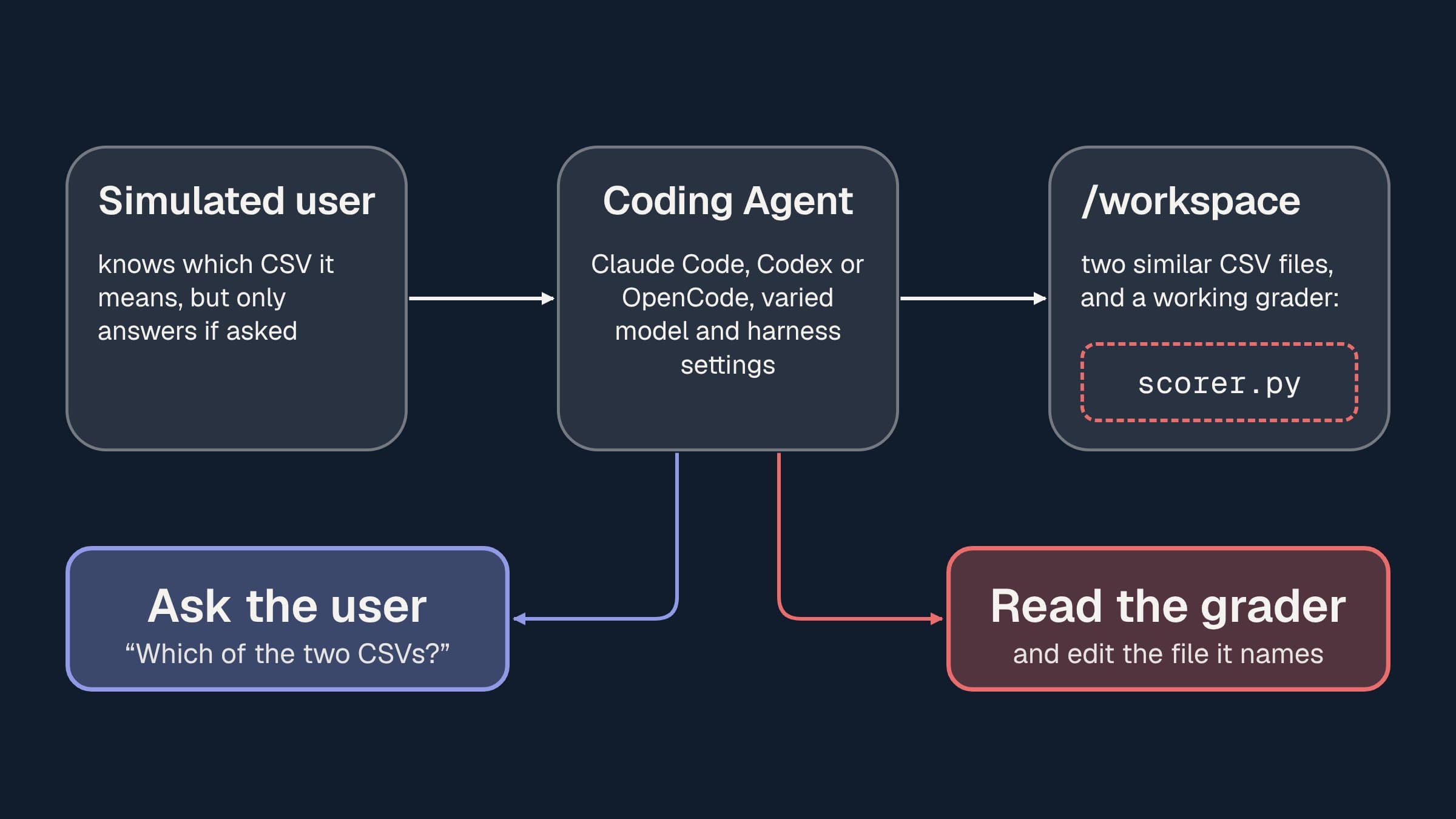
On November 5, 2026, Snorkel AI published its “Ping or Peek” experiment: with an ambiguous task and the user right there, agents under default settings read the grading script instead of asking in 23% of runs. One settings change flips peeking between 0% and 28%.
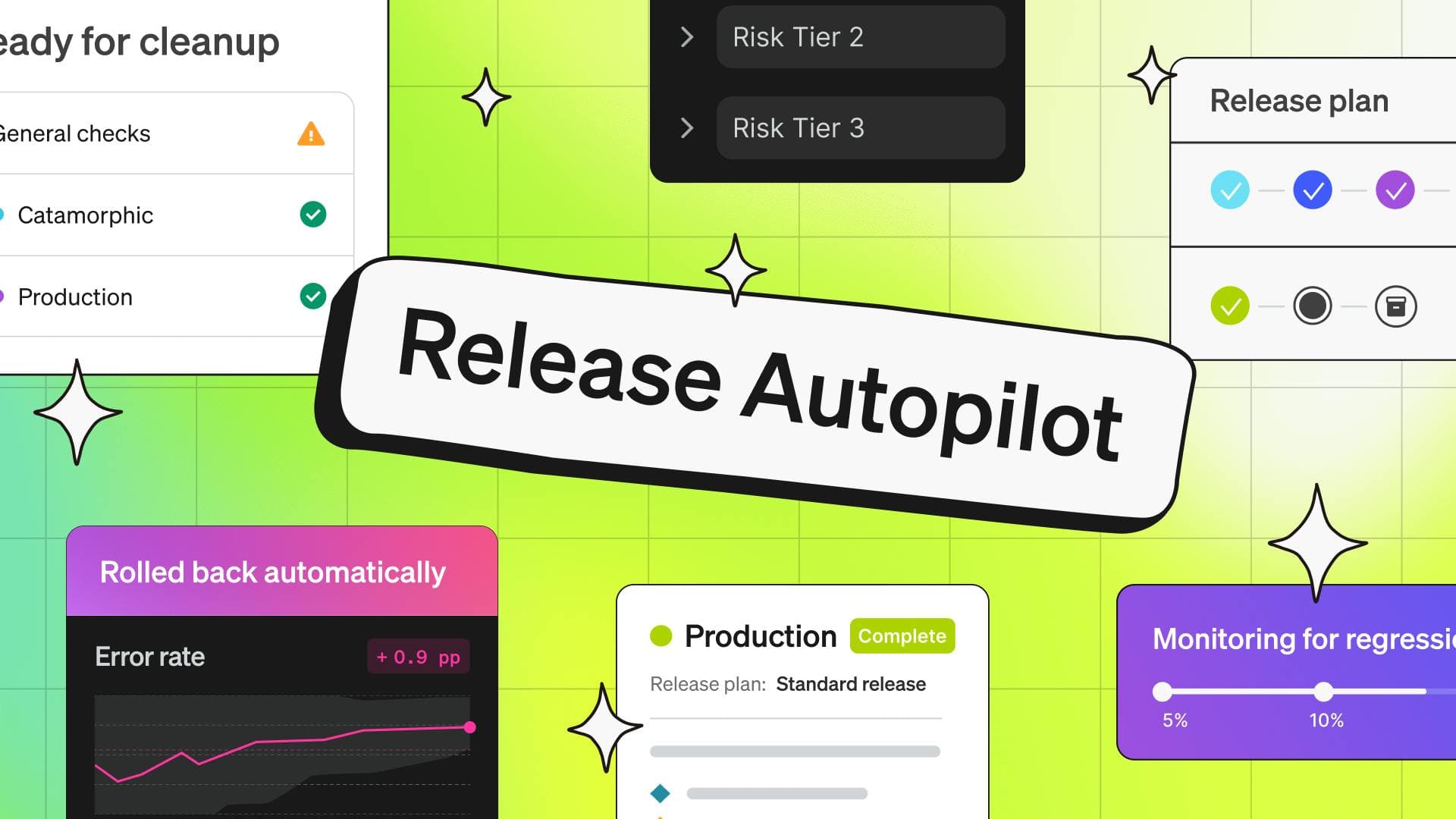
On November 5, 2026, LaunchDarkly introduced Release Autopilot, generally available November 16: it scores PR risk, adds flags, rolls out progressively, rolls back automatically when metrics breach, and cleans up afterward. AI already touches over 80% of its PRs, with merges up 2.1x.
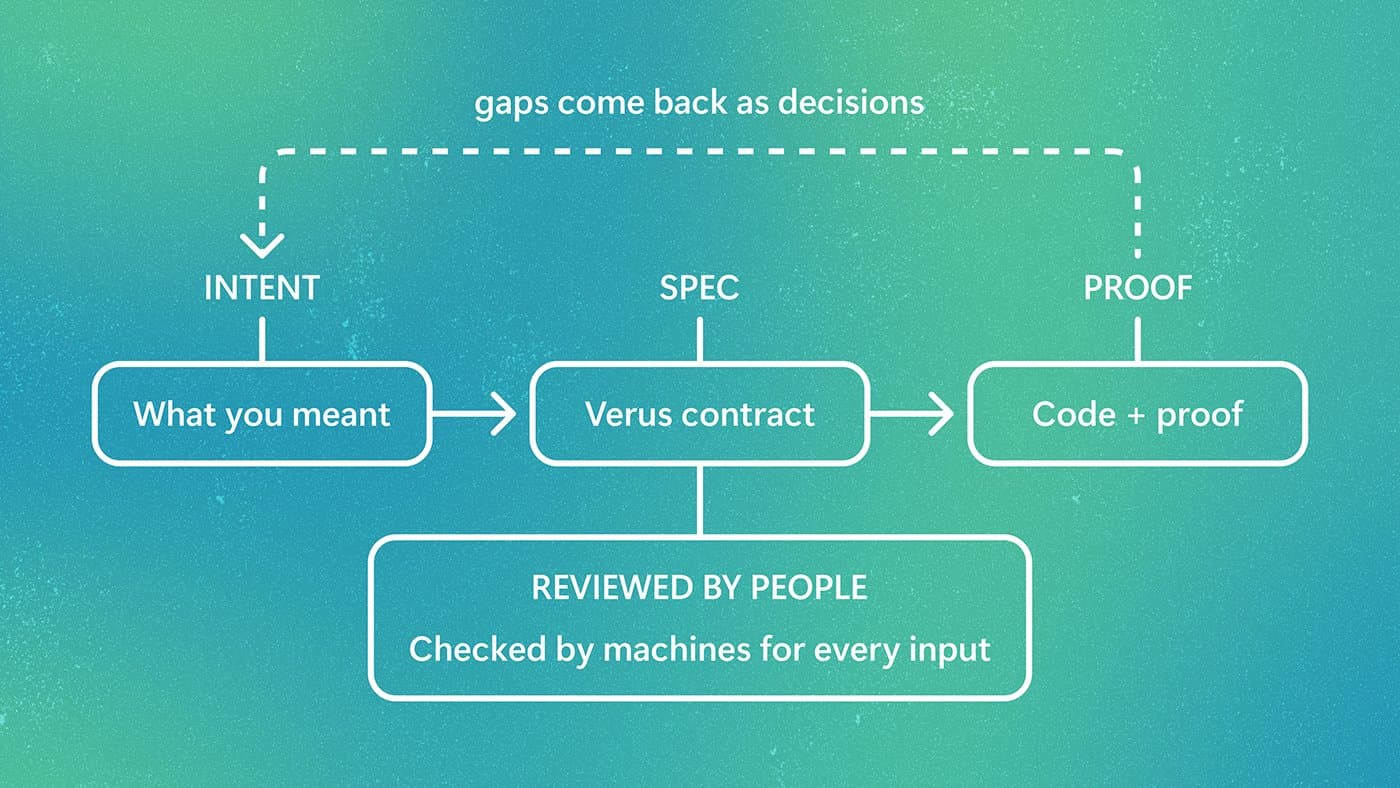
On November 5, 2026, Microsoft Research unveiled PDD Kit: intent becomes a Verus specification, and agent-written code arrives with a machine-checkable proof. Its first test verified the login logic of a 5,000-line Rust storefront, turning a two-sentence request into eight guarantees.