From $1.4T to $1.25T: OpenAI Cuts Its Own Valuation Target to Close a $30B Round
OpenAI is closing in on up to $30B in new funding but has cut its valuation target from $1.4T to $1.25T. The FT cites weaker investor demand; UAE investors and Coatue lead, with an Oct 30 decision deadline. The round is framed as a bridge to IPO.

One of the AI funding world's longest-running rules — "valuations only go up" — broke on October 23, 2026. And it was OpenAI itself that broke it.
According to internal documents obtained by the Financial Times (reported via the-decoder on October 23), OpenAI is closing in on a new funding round of up to $30 billion — but has cut its valuation target from the $1.4 trillion it originally pitched to investors down to $1.25 trillion. CNBC added deal structure on October 22: investors from the United Arab Emirates and U.S. investment firm Coatue are leading the round, and OpenAI has told potential backers to make participation decisions by October 30.
A $150 billion haircut is news in any context. But the cut itself matters more than its size: for three years, every OpenAI round was an "upsized, up-priced" affair. Voluntarily lowering the price to get the money raised marks a new phase in the AI capital game.
What happened: assembling the pieces
There is no official announcement; all figures come from sourced reporting. But the FT, CNBC and TechCrunch accounts converge tightly:
- Size and valuation: up to $30 billion at a $1.25 trillion pre-money valuation. If fully subscribed, post-money lands around $1.28 trillion — still the world's most valuable private company.
- Leads: UAE investors plus Coatue. CNBC reports OpenAI is separately negotiating a commercial deal locking in priority procurement of newly built UAE compute capacity.
- Timeline: October 30 decision deadline; CNBC says the company wants signatures by the end of next week.
- Framing: the round is explicitly positioned as a bridge to IPO. OpenAI confidentially filed its IPO prospectus with the SEC in June; CFO Sarah Friar told employees in August the company would be publicly traded by 2027; CEO Sam Altman said in September the timing was "unfavorable" — a view he had already communicated internally in June.
- Distribution: the FT reports Morgan Stanley and Dragoneer marketed the offering to private-wealth clients at the higher valuation, but demand was weaker than in previous rounds. Some investors said they would wait for Anthropic's IPO pricing later this year before committing.
One important basis adjustment: $1.25 trillion is pre-money; the March round's $852 billion was post-money (that $122 billion raise brought in Amazon, NVIDIA and SoftBank as strategic partners, with Microsoft continuing). The two numbers aren't directly subtractable. But the direction is clear — $852B post-money in March, a $1.4T pitch in early October, now a $1.25T pre-money target:

Why the cut: three compounding reasons
First, buyers are genuinely tired. The FT's word was "indigestion" — some backers went so heavy in earlier rounds they couldn't stomach the $1.4 trillion ticket. This isn't a verdict on OpenAI's fundamentals; it's textbook large-raise fatigue. When round sizes jump from single-digit to tens of billions, each round must mobilize entirely new, larger pools of capital. Existing shareholders' wallets have physical limits.
Second, the public market changed its mood. This week Meta fell 7% after Q3 earnings — despite beating revenue estimates — because it raised the lower end of its capex guidance from $130B to $135B (upper end unchanged at $145B). Investors are now seriously asking when the hundreds of billions poured into AI infrastructure come back, and in what form. When the public narrative flips from "growth story" to "returns story," private-market pricing anchors slip. OpenAI's $150B cut is, in a sense, recognizing the public-market discount in advance.
Third, Anthropic's IPO is the pricing anchor hanging overhead. Several outlets note investors want to see Anthropic's IPO pricing (targeted at $1.5–2 trillion, reportedly profitable on an adjusted basis for two straight quarters) before committing. The logic is crisp: why pay $1.25T pre-money for a still-burning OpenAI today when a profitable, publicly priced Anthropic may be buyable in a few months? The later anchor forces the earlier discount.
Where the money goes: a $600 billion compute bill
Up to $30 billion is not actually much against OpenAI's burn rate. In February, the company told investors it expects to spend roughly $600 billion on compute by 2030. This round's real function isn't "refilling the war chest" — it's "renewing the credit line": proving to the market, to IPO underwriters and to compute suppliers that OpenAI can still raise.
That explains the UAE's role as co-lead: in this deal, "money" and "compute" are negotiated as a package. The reported side agreement locking in priority access to newly built UAE compute suggests OpenAI's financing logic has evolved from "raise cash, buy chips" to "raise cash, lock in chips." In a world of tight global compute supply, certain compute delivery may matter more than cash on the balance sheet. For developers, the signal is worth remembering: the frontier-lab bottleneck is shifting from "who has the better model" to "who has certain compute."
What it signals for the AI coding-tools sector
In early October we covered TypeSafe's $870M raise with the thesis "don't generate, adjudicate" — capital starting to pay for certainty rather than raw generation. OpenAI's markdown is the same trend at vastly larger scale: capital no longer pays a premium for narrative; it discounts for delivery. For three years the funding logic of AI coding tools was "model capability doubles every six months, so valuations double every six months." Now that even OpenAI concedes the market won't buy the $1.4T ticket, every project in the sector whose pitch is "the next model will be stronger" gets its valuation anchor dragged down.
Three transmission layers: (1) Cost pass-through. A $600B compute bill will likely bleed into API pricing — the era of inference getting cheaper every quarter may slow. Agent apps whose unit economics assume ever-cheaper tokens need to redo the math. (2) M&A logic. Giants marking down their own valuations will bid more "disciplined" — but pre-IPO OpenAI and Anthropic are hungry for revenue stories, so coding-tool assets with enterprise customers and real ARR may find the acquisition exit wider, not narrower. (3) The indie window. When big money discounts uncertainty, it's the best time for small teams to validate PMF cheaply: the giants' valuation stories make them slow in niche scenarios.
The verdict: the cut isn't bad news — it's growing up
A counterintuitive take: this markdown is a plus for OpenAI. A $1.4T pitch that closes at $20B versus a $1.25T pitch that closes fully at $30B — which sets up the IPO better? Obviously the latter. Underwriters fear one thing above all: an offering that doesn't sell. Voluntarily cutting price to secure closing is Wall Street's oldest and most effective credit-building move.
The bigger picture: the AI industry is switching from faith-driven to cash-flow-driven. Anthropic prices its IPO off consecutive profitable quarters; OpenAI secures closing with a voluntary markdown; Meta gets voted down by the public market over capex. Three events in one week, one story: in late 2026, AI capital markets started measuring AI companies with the traditional business ruler. That's bad news for speculators and good news for builders — once the ruler is standardized, people who create real value become easier to see.
Sources: the-decoder, "OpenAI lowers valuation target, raises up to $30 billion" (October 23, 2026, citing FT internal documents and CNBC's October 22 reporting); cross-checked against TipRanks, Analytics Insight and el7.ai. All figures are reported, not confirmed; the deal has not closed and terms may change.
Comments (0)
Sources
Related articles
The WSJ reports OpenAI fired three safety researchers after finding disappearing Signal chats on their phones during a leak probe. The company cites policy violations; the trio calls it silencing and warned the board of a chilling effect.
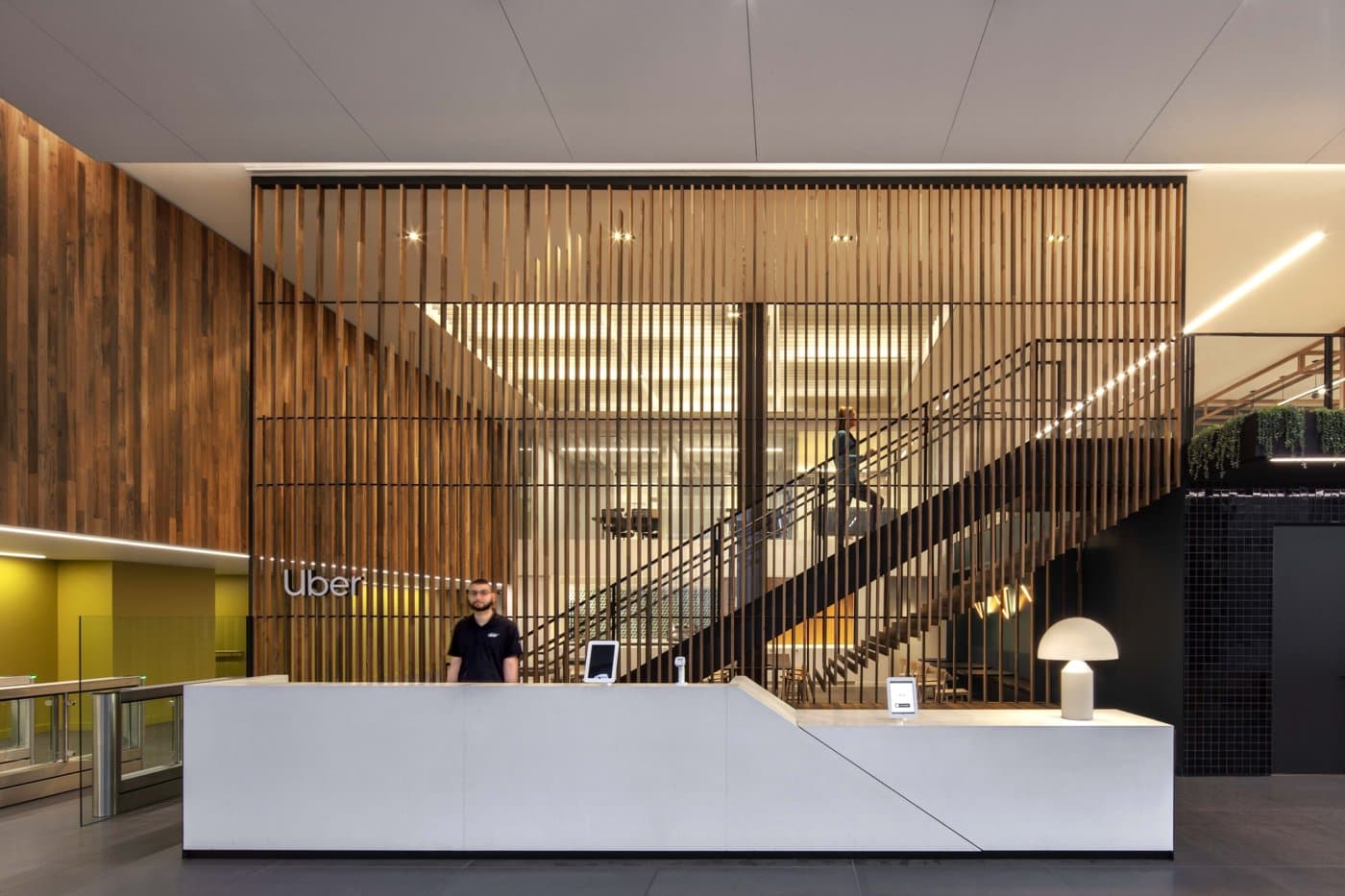
On Oct 22, OpenAI announced Uber is rolling out ChatGPT Work to more than 30,000 employees worldwide, up from a 1,000-person pilot. Six weeks after cutting about 3,300 jobs, Uber is making the largest enterprise agent bet yet — with an internal AI skills library, approved integrations, and role-specific training as the real playbook.

Anthropic 10 月 22 日研究博客:与形式化验证公司 Theorem 合作,让 Claude 给 123 个真实开源库写出 RISC-V 汇编级形式化验证——证明它们在所有小于 64MB 的输入下永远不会崩溃。239 个入口点、约 1.8 亿行 Rocq 证明、几乎无需人工 review;写证明的路上还顺手挖出几百个 fuzzing 跑万亿次都没发现的 bug。