Six Weeks After Cutting 10%, Uber Gives ChatGPT Work to 30,000 Employees
On Oct 22, OpenAI announced Uber is rolling out ChatGPT Work to more than 30,000 employees worldwide, up from a 1,000-person pilot. Six weeks after cutting about 3,300 jobs, Uber is making the largest enterprise agent bet yet — with an internal AI skills library, approved integrations, and role-specific training as the real playbook.

Six weeks after cutting 10% of staff, Uber gives an AI agent to 30,000 employees
On October 22, OpenAI announced in an official press release that Uber is rolling out ChatGPT Work to more than 30,000 employees worldwide. Until now, the product had only been piloted with 1,000 people. ChatGPT Work is an agent running inside ChatGPT Enterprise, built for complex multi-step tasks — and it delivers finished work: documents, slides, spreadsheets, even web apps.
The timing deserves a second look. On September 2, Uber announced layoffs of about 3,300 people — roughly 10% of its workforce, 20% of management — its largest cuts since the pandemic. Six weeks later, the same company announced AI agents for all 30,000 employees. The two events have no stated connection — neither OpenAI nor Uber linked them, and this piece will not assert one either. But place the two facts side by side and the picture is immediate: this is the exam every large company will face in the coming years, and Uber is simply the first to show its answer sheet in public.
First, grasp the scale. Most enterprise AI deployments stall at "pilot" or "department level." A 30,000-person, all-functions, global rollout of an agent has no public precedent. Per Bloomberg's October 9 reporting, OpenAI's enterprise business is driving the company's annualized revenue growth, expected to reach at least $70 billion by year-end (up from $50 billion at the end of September) — orders at Uber's scale are the fuel for that curve.

What the deployment actually includes
Unpacking the confirmed details from the release and cross-reporting, this is not "a ChatGPT account for everyone." It is a full enterprise landing playbook:
- The product: ChatGPT Work launched July 9, positioned for "work more complex than a typical chat request." It can act across a user's apps and files, stay with a project for hours, and hand back sheets, slides, docs, and web apps as finished materials. Uber employees will use it for research, meeting briefs, presentations, data analysis, and cross-application workflows.
- Deep integrations: Google Drive, Gmail, Google Calendar, and Slack. No more copy-pasting between apps — preparing a Monday ops-review brief, the agent can read the calendar, pull background docs from Drive, scan relevant Slack threads, and return one consolidated document. That is the essential difference between an "agent" and a "chatbot": the former has hands (it operates applications), the latter only a mouth.
- The default model: GPT-6.1 Sol. Released at OpenAI's DevDay on September 29, its official pitch is "frontier performance with cost efficiency." Enterprises now rank cost efficiency alongside raw performance as a first-order criterion — a signal everyone building on AI should internalize: inference cost has entered the core of procurement decisions.
- The support system: Uber built an internal AI skills library, an approved-integrations list, and role-specific training for operations, finance, marketing, and product teams. Note the trio — not accounts, but an ammo depot (skills), marked runways (the approved list), and driving lessons (training). That is what real enterprise AI landing looks like; single-tool thinking doesn't survive contact with 30,000 users.
- The division of labor: engineers and software teams keep using Codex for software development. Knowledge work goes to ChatGPT Work, code work stays with Codex — the first clean "civil and military" split of OpenAI's product line inside a single customer.
The "civil-military split" is itself a signal worth amplifying. For the past year, AI coding tools and general-purpose agents have been lumped together, as if "one agent for everything" were the endgame. Uber's practice suggests otherwise: code work demands precision, testability, and rollback; general office work demands flexibility, cross-app reach, and graceful fallback — nearly orthogonal capability requirements. OpenAI keeping Codex on code and ChatGPT Work on everything else is an admission that the "omnipotent agent" is a pseudo-proposition for the foreseeable future. For tool buyers, that means asking "what task class is this agent optimized for" before "how capable is it"; for builders, vertical agents still have enormous product space — the generalists won't eat everything.
Executive quotes were standard issue: Uber CTO Praveen Neppalli Naga on "giving everyone the tools to innovate" as AI transforms work; OpenAI President and co-founder Greg Brockman on Uber teams tapping "our portfolio of frontier models and agents." The real information hides in what wasn't said: neither company disclosed what Uber is paying, nor any results from the 1,000-person pilot. They only promised to "share insights into adoption, use cases, and measurable outcomes as the rollout continues." Translation: this is a vendor-announced deployment plan; effectiveness is yet to be verified.
Uber and OpenAI didn't just meet
This rollout is the natural next step in an existing relationship. In May, Uber launched a driver-facing AI assistant that translates live marketplace data — earnings trends, heatmaps — into positioning advice ("where to go for the next ride"), plus a rider-facing voice interface for booking trips in natural speech (built on OpenAI's Realtime API). Per OpenAI's May customer story, Uber runs 40 million trips a day with 10 million drivers and couriers across 15,000 cities in 70+ countries — driver-side AI has long been part of the production system.
The interesting detail hides in that May customer story: Uber's engineering team built a multi-agent architecture for the driver assistant, routing requests to specialized subsystems (small models for lightweight classification, large reasoning models for hard problems), plus a homegrown AI Guard — an internal governance layer screening prompts and responses for safety, privacy, policy compliance, and hallucination suppression. A company that puts even prompts through security screening is now handing agents to 30,000 employees; its internal skills library and approved list are very likely the continuation of the AI Guard mindset: fences first, then horses. That's a ready-made reference answer for anyone pushing agents inside an enterprise.
Why this deserves a headline
First, a judgment: this is the watershed moment when enterprise agents move from the "pilot narrative" to the "everyone narrative." For two years, the enterprise AI storyline has been "company X pilots AI, productivity up Y%" — small samples, short cycles, incomparable. A 30,000-person company-wide rollout means agents are being deployed as productivity infrastructure, not as the innovation department's toy. Infrastructure differs from toys in that it must answer for ROI, enter budgets, require training, and submit to governance — and Uber's trio (skills library, approved list, dedicated training) is precisely the standard infrastructure playbook.
Then there's the tension of the timing. About 3,300 people cut (roughly 10%) on September 2; agents for 30,000 on October 22 — every reader will connect the two. The responsible framing: present both facts, assert no causation. The release doesn't mention layoffs, neither company linked them, and any "AI caused the layoffs" or "layoffs were to fund AI" claim is currently pure speculation. But from another angle: precisely because the timing is sensitive, Uber's adoption numbers will be examined under a microscope — if only 3,000 of 30,000 actually use it, or the average employee touches it once a week, both the "AI replaces workers" and the "AI augments workers" narratives take a hit. Uber's rollout tests not just OpenAI's product but the credibility of the entire enterprise-agent value story.
A third point worth savoring is model selection. The default is not the strongest model but GPT-6.1 Sol, the "performance with cost efficiency" one. Corporate buying minds have changed: in 2024 the question was "which model is strongest"; in 2026 it is "which model is good enough at an acceptable cost." For indie developers, the reminder is blunt: your product's model cost structure determines whether you can serve enterprise customers at all — and enterprise customers are voting with "cost efficiency."
One more dimension: competition. The default answer in enterprise AI for two years has been Microsoft 365 Copilot — winning on "already installed in Office." OpenAI landing 30,000 seats at Uber is the first time someone has planted a flag in Copilot's home turf with the new species called "agent." Note Uber's stack: Gmail, Google Drive, Slack — a Google-plus-Slack shop that didn't pick Copilot, picking OpenAI instead. The symbolism outweighs the contract: enterprise AI competition is shifting from "office-suite bundling" to "agent capability," and the latter has no pre-installation advantage to exploit. That's good news for indie builders: the more open the giants' battlefield, the more room for small players — Uber's approved list will, sooner or later, have non-giant names on it.
Finally, OpenAI's enterprise business is expected to reach at least $70 billion in annualized revenue by year-end (Bloomberg, October 9; $50 billion at end of September). Orders at Uber's scale are the concrete instances behind that curve. Read this and you understand why OpenAI issues a press release for a "customer win": enterprise agents are turning from "story" into "revenue," and revenue needs lighthouse customers to prove it.
A 1,000-person pilot success does not equal a 30,000-person success
Enterprise software has a classic trap called the "pilot paradox": pilots always succeed. Pilot participants are volunteers — the most curious, the most tolerant. One thousand Uber employees who signed up to try an AI agent and the remaining 29,000 who were "informed there's a new tool starting today" are two entirely different user populations. The former files bug reports with IT; the latter just closes the tab.
That is why the most important sentence in the announcement isn't any feature — it's the promise to "share insights into adoption" later. The metrics that will actually decide this rollout's fate aren't "how many people got access" but three uglier numbers: weekly active ratio (how many of the 30,000 actually use it weekly), task completion quality (how much of the agent's finished work ships without heavy edits), and hours displaced (how much human grunt work actually got eliminated). All three are currently unknown — neither OpenAI nor Uber published any of them.
Uber's support apparatus suggests they saw the paradox coming: role-sliced training (separate tracks for ops, finance, marketing, product) admits that generic training won't work on 29,000 conscripts; the internal skills library admits employees won't build workflows from scratch — the ammo must be pre-stocked; the approved-integrations list anticipates the data-security mess of "employees connecting random apps." These aren't decorations; they're armor grown from past tuition paid.
For observers, the right posture is to treat October 22 as a starting line, not a finish line. Over the next two to three quarters, watch whether Uber publishes adoption numbers — publishing them means the numbers are defensible; persistent silence is itself information. Whether the "Uber moment" for enterprise agents is real will be answered not in press releases but in future earnings calls and employee interviews.
Three real risks: permissions, hallucinations, and the fear of being replaced
Optimism aside, a 30,000-person agent deployment has three unavoidable risks, any of which could sink it:
- Permission risk: the longer the agent's arms, the bigger the trouble. ChatGPT Work touches Gmail, Google Drive, Calendar, and Slack — it can read your email, browse your docs, see your schedule. In the pilot, 1,000 tech-savvy users knew "don't let the agent near sensitive files"; at 30,000, someone will inevitably point it at things it shouldn't see: unreleased earnings, layoff lists, M&A memos. Uber's approved list and the AI Guard mindset (the prompt/response screening layer from the May customer story) exist to plug exactly this hole — but between "the list" and "enforcement" stand 29,000 individual humans. The industry hasn't solved this one: agent permission models are still in the "coarse authorization" era.
- Hallucination risk: the prettier the deliverable, the stealthier the error. ChatGPT Work delivers "finished work" — beautifully formatted briefs, plausible-looking data analysis. The problem: hallucinations don't announce themselves. A fabricated "last quarter's decision" in a meeting brief, a miscalculated metric in an analysis — readers rarely catch them. Pilot users had time to verify line by line; at 30,000 scale, most people will just forward. The most important part of Uber's role-specific training should be "how to review agent output" — which is precisely the hardest part to standardize.
- Organization risk: after cutting 10%, who dares to genuinely use it? This is the subtlest one. Three thousand three hundred people were just let go; now the survivors are told to use AI agents. The first reaction won't be "great, leverage" but "if I teach it my job, am I next?" That fear never appears in any survey, but it shows up in usage data: people will use it for chores but won't hand over core workflows; they'll praise it but won't evangelize. CTO Naga's line about "shaping Uber's future" is nice, but trust deficit is the after-effect of layoffs, and the faster agents roll out, the heavier the trust-rebuilding burden. Every "layoffs plus AI" company faces the same mirror.
None of these three risks can be fixed by an OpenAI product update alone — they're organizational problems. Which is exactly the point: the second half of enterprise-agent competition won't be won on model capability but on whoever masters the craft of "putting AI inside a 30,000-person organization." Uber's trio — skills library, approved list, dedicated training — is the embryonic form of that craft, worth copying by everyone doing enterprise AI.
What it means for vibe developers
If you're an indie developer or a small team, this story carries three directly usable lessons:
- One: the "internal enterprise AI skills library" is a new niche. Uber building its own skills library means every large company may soon need people to write, review, and maintain internal skills — packaging company processes, compliance requirements, and business knowledge into agent-usable form. That's the flip side of Agent Skills becoming a neutral standard (see our companion piece this cycle): once the standard is unified, content supply becomes the business. People who write high-quality skills may become a dedicated enterprise role, the way Salesforce admins did.
- Two: the "approved list" is a distribution channel. Uber's approved-integrations list means your product must pass review to enter the enterprise agent ecosystem. Flip it around — if your tool makes some giant's approved list, you just won a direct channel to 30,000 potential users. Enterprise agent distribution is shifting from "app store" to "approval list"; studying a target customer's procurement and compliance process matters more than shipping one more feature.
- Three: copy Uber's trio even if you're three people, not thirty thousand. Rolling out AI tools to your team? Don't just hand out accounts: build a shared skills/prompts library (the ammo), publish a list of approved tools (the runway), spend half a day on training (the driving lessons). Uber validated the playbook at 30,000 people; your 3-person team can copy the homework directly — different scale, same logic.
Unpacking the first point further, because it may be a real money-making opportunity over the next two years: what kinds of "internal skills" are valuable? Three types: process skills ("the 7 approvals for onboarding a new vendor," "the standard structure of a quarterly review doc" — tacit knowledge in veterans' heads); compliance skills ("the three disclaimers every outbound quote email must carry," "what data may never enter a prompt" — legal and security red lines); data skills ("which table holds East China gross margin for last quarter, and what's the metric definition" — the repeat questions data teams dread). All three share a trait: companies will pay for them, but generic AI vendors won't build them for you. People who can write these skills are already charging consulting fees in the English-speaking world — and Uber's 30,000-seat rollout only grows the demand.
A final cold observation: engineers keep Codex, knowledge workers get ChatGPT Work. Inside OpenAI's own product map, "the agent that writes code" and "the agent that does chores" have already divorced. For vibe developers (who straddle both), the takeaway is: don't chase one tool for everything — the optimal product for code and for general office work may not be the same product at all. Let code tools own code; let office tools own slides.
And one honest closing note: between Uber's story and an indie developer's life stand 29,999 people. But the logic transfers — an agent's value isn't "how smart it is" but "how much ammo you gave it and how many runways you marked." Uber's ammo is a skills library and an approved list; yours is a prompts library and workflow docs. Apply the trio thinking to your one-person company: keep your own skills library (even just a markdown folder), maintain a list of tools you trust, regularly review which processes can go to the agent. You don't need 30,000 people to ride the same wave — different scale, same logic, and the logic is the valuable part.
Honesty notes
The boundaries of this report, so the information doesn't warp in transmission:
- This is a "vendor-announced deployment plan," not a measured battle report. The primary source is OpenAI's October 22 official press release, cross-checked across PYMNTS, unite.ai, dataphoenix, and Seeking Alpha with consistent accounts. But neither company disclosed the contract value nor any results from the 1,000-person pilot (adoption rate, usage frequency, ROI all unknown). Both promised to share adoption and measurable outcomes later — until then, any "success/failure" verdict is premature.
- Layoffs and the agent rollout are presented in parallel, with no causal claim. Uber's September 2, 2026 layoffs of about 3,300 people (about 10%, 20% of management, the largest since the pandemic) are public fact; the October 22 company-wide agent rollout is a separate public fact. Neither company linked the two; this piece doesn't either.
- Background figures — the May driver assistant, rider voice booking, AI Guard, 40M daily trips — come via secondary reporting of OpenAI's May customer story, cited as background only.
- Bloomberg's "at least $70 billion annualized revenue by year-end" is an October 9 reported expectation, not an OpenAI earnings figure.
- On "30x" (1,000 pilot to 30,000 rollout): the rollout figure is "more than 30,000 employees," the pilot 1,000 — the multiple is order-of-magnitude illustration only.
Comments (0)
Sources
Related articles

llm-d 1.0 is out: the open-source distributed inference framework backed by IBM, Red Hat, Google, NVIDIA and CoreWeave now ships Day 2 capabilities — multi-tenant QoS, zero-downtime upgrades, session-aware routing. IBM's demo: 3,000 coding agents at ~$0.11 per million tokens. We unpack the release, the Kubernetes analogy, and the self-host vs. API cost math for vibe developers.

BBC Eye reports that two Google DeepMind researchers — Sofia Liguori and Andreas Kirsch — resigned over the company's military AI contracts with the US and Israeli militaries, quoting contract language that permits "any lawful government purpose." We unpack who quit, the contract details, an eight-year timeline from Project Maven, and what it means for developers choosing their AI supply chain.
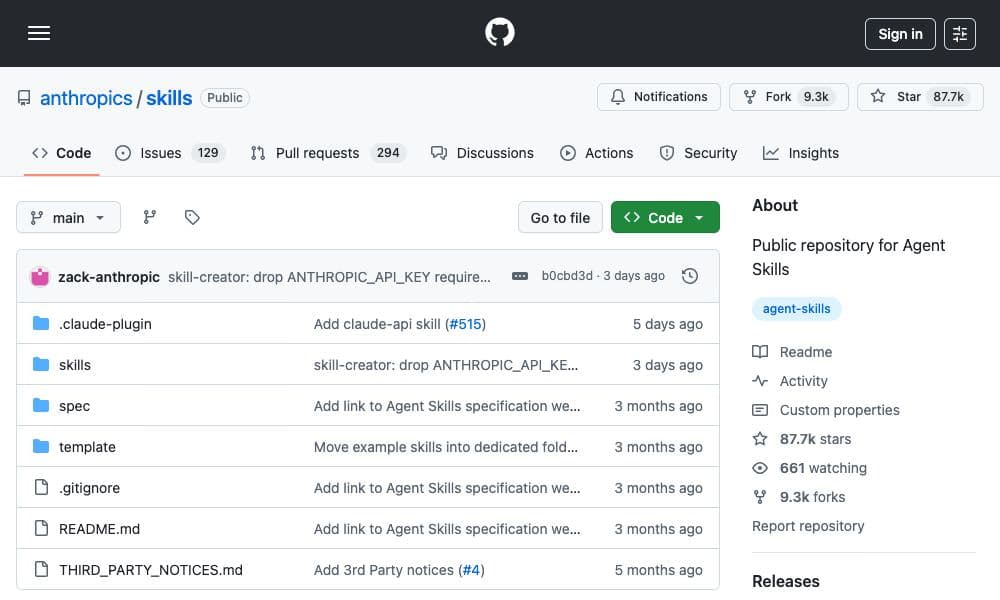
On Oct 22, Anthropic, OpenAI, Hugging Face and Alibaba donated Agent Skills, Open Responses, OpenEnv and OpenSandbox to the Agentic AI Foundation in a single day. The four projects cover the four layers of the agentic stack, taking AAIF from 3 to 10 hosted projects in its first year — the biggest governance event since MCP.