Pervaziv AI Brings 'Continuity' to Enterprise Agents: Cortex Pulse Goes Proactive with Multi-Agent Worktree Orchestration
Pervaziv AI announces a major Cortex expansion: the proactive Pulse agent watches repo changes, Workflow Recipes turn successful collaboration into reusable templates, and isolated Git worktrees enable multi-agent orchestration. Against Claude's 1,000-subagent route, our take: the next agent race is about collaboration discipline, not model power. Based on the official press release.
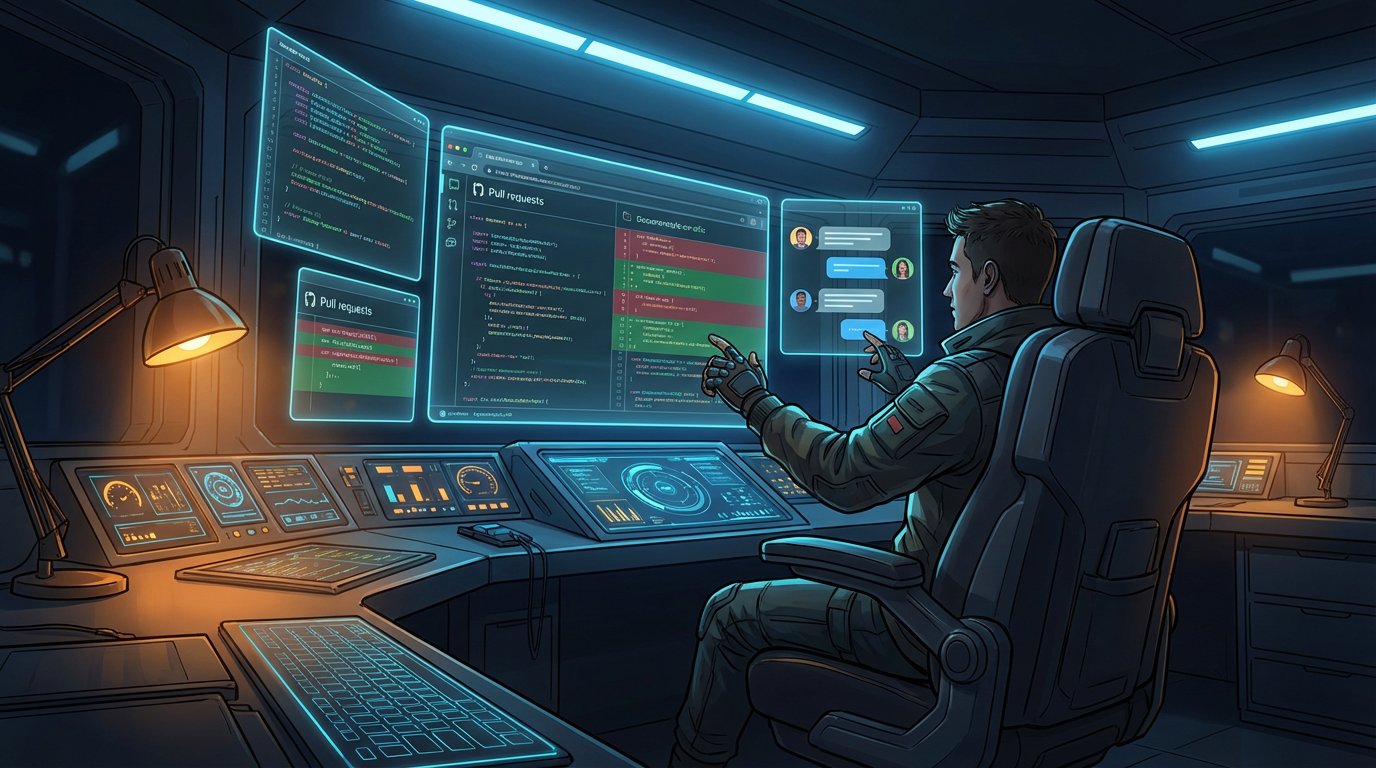
On October 9, 2026, Pervaziv AI announced via EINPresswire a major expansion of Cortex, its enterprise AI platform: a shift from "assistance centered on individual prompts" toward "continuous, coordinated work." Founder and CEO Anoop Jaishankar put it bluntly: "The next step for Enterprise AI is continuity."
One caveat up front: this is a company press release, not independent third-party reporting or a review. Everything below — Cortex Pulse, Workflow Recipes, multi-agent worktree orchestration, long-horizon recovery — is what Pervaziv AI says about itself, not what we have independently verified. Read every "official claim" with mental quotation marks around it. Even so, this launch deserves serious attention: it represents a fundamentally different bet from the "scale up parallelism" playbook, and the fork between these two routes may well become the dividing line on enterprise AI shortlists for the next year or two.
The Control Group: 1,000 Parallel Agents on One Side
Just three days ago, on October 11, we covered Claude's dynamic workflows entering public beta — up to 1,000 subagents in a single workflow. The Anthropic playbook is clear: push parallelism to the extreme, trade headcount for speed, and swarm a big objective like a hive.
Pervaziv AI chose the opposite direction. It doesn't talk about how many agents it can run at once. It talks about continuity: can an agent stay on the objective when you're not prompting it? Can it show up on its own when a build breaks, a PR gets new comments, or a dependency publishes a security advisory? Can it pick up from the last trusted checkpoint three days after an interruption, instead of starting over?
These two routes aren't mutually exclusive. One solves "compute fast," the other solves "stay trustworthy." But they expose an emerging judgment call: the next round of competition in agent programming may no longer be about model capability at all, but about something outside the model — collaboration discipline. Whoever first makes "a fleet of agents working together without stepping on each other's toes, every step auditable, every success reusable" truly solid, gets the enterprise budget first. This Pervaziv launch is aimed squarely at that judgment.
Cortex Pulse: The Agent Starts Working When Things Change
The centerpiece is Cortex Pulse, a proactive agent. Per the official description, its work begins not with your prompt but with change: a build fails overnight, a PR receives new feedback, a repository gets a new commit, a dependency publishes a security advisory, a project approaches a deadline, a scheduled report becomes available. When these events happen, Pulse gets to work — watching approved sources, identifying relevant changes, preparing concise briefings, and generating briefing cards, questions, approval requests, and failure records into a persistent Inbox. A Today view aggregates "what changed, what's in progress, what needs attention, what's completed."
For engineering teams, Pulse can follow approved repositories and surface commits, PRs, CI activity, and conditions needing attention. In VS Code, repository-related Pulse cards stay close to the project; mobile supports briefings, approvals, pause, snooze, and an emergency stop. Note that last one — the emergency stop button. Its presence in an official press release tells you exactly what Pervaziv knows enterprises fear most about proactive agents: "I have no idea what it did on its own at 3 a.m."
So the most interesting part of Pulse isn't the feature list — it's the constraint list. The release introduces "earned authority": connecting a source grants visibility only within the approved scope; watches define what Pulse should monitor; rules define what it may prepare, propose, or perform; plus budgets, quiet hours, notification policies, retention controls, and a global pause. In plain language: this agent's proactivity is fenced in.
Our take: that constraint list is precisely the precondition for enterprise adoption. Most proactive-agent products that died over the past two years didn't die from weak capability — they died from the trust deficit of "I don't know what it did overnight." Pervaziv leads with "constrainable" before "proactive," which signals it actually talks to enterprise buyers — whose first question is never "how proactive can you be" but "how do I stop you when you go off the rails." Writing the emergency stop into the press release shows they know the room. Whether the constraints actually hold, of course, awaits independent security review or customer testing.

Workflow Recipes: Turn One Successful Collaboration Into a Reusable Template
The second piece is Workflow Recipes plus Automations. The scenario in the release rings true: many workflows start as one-off requests and quickly become recurring patterns — release-readiness reviews, repository health checks, incident investigations, changing-source comparisons, upgrade evaluations. Rewriting the same prompt every time breeds inconsistency; traditional automation (scripts, separate builders) sits too far from the people who actually understand the objective, and maintenance is expensive.
The recipe idea: capture the useful structure behind reviewed work — including the decisions and evidence that made the result trustworthy. Teams can reuse the pattern, adapt it to another approved project, or schedule it through Cortex Automations. Automations add the timing and execution layer: pick a project or source, define the task, set cadence and timezone, preview upcoming runs, choose an execution environment, set budgets, and define how missed runs or failures should be handled — with manual run controls for starting scheduled work on demand.
One detail worth savoring: a recipe captures not just steps, but "decisions and evidence" — why it was judged that way, and on what basis. That's an attempt to turn tacit knowledge into an organizational asset. Anyone can save a prompt template; but "why we let that risk item through in the last release review" traditionally lives only in a senior engineer's head. Pervaziv wants to structure it, reuse it, and schedule it.
Our judgment: cautiously optimistic on direction, with the outcome hinging on recipe decay. Templates rot — codebases change, dependencies change, teams change, and a recipe that worked the first time goes stale by the tenth. The press release doesn't address this. Without versioning and effectiveness replay, a recipe system risks becoming a prompt library under a new name. That's the question enterprise buyers should press hardest in a PoC.
Multi-Agent Worktree Orchestration: Parallel, Without Stepping on Each Other
The third piece is the most "engineering-flavored" of the release: multi-agent orchestration combined with isolated Git worktrees. The scenario: complex engineering work naturally needs several specialized agents at once — one spelunking an unfamiliar codebase, one writing the implementation, one designing tests, one reviewing security implications, one validating the combined result. Some steps depend on earlier findings; others can proceed in parallel.
Pervaziv phrases the problem well: "The challenge is not simply producing more output. It is coordinating the work without overlapping edits, hidden conflicts, or an unreviewable final state." Each specialist develops and validates changes inside an isolated Git worktree, without disturbing the developer's active environment; dependencies, permission boundaries, and evidence chains connect every contribution to the final merged result, keeping the path to completion visible. The example given: a cross-cutting product change can split investigation, implementation, testing, security review, and validation into separate streams, then bring the work together for review — with conflicts and changing conditions kept visible rather than buried behind an automated merge.
Why the most engineering-flavored? Because worktree isolation attacks the dirtiest problem in multi-agent parallelism: overwrites and phantom conflicts. Anyone who has seriously run multiple agents against one repository knows the concurrency nightmare isn't that agents are dumb — it's that they don't know what the others changed. Git worktrees are a proven, battle-tested isolation mechanism: one workspace per agent, no stepping on toes at the filesystem level. That's an order of magnitude more reliable than "prompting the agents not to interfere with each other."
And the phrase "evidence chain" is one enterprise buyers understand. Audits never ask for "the AI says it's fine" — they ask "who decided what, when, based on what evidence." Binding dependencies, permissions, and evidence to every contribution is groundwork for future compliance audits. Our take: this is the most concrete part of Pervaziv's whole narrative, because it solves a real engineering pain rather than an invented need. If I were an enterprise architect, the worktree orchestration demo would go first in the PoC.

Long-Horizon Work: Interruptions Are Fine; Starting Over Is Not
The fourth piece is long-horizon work. The failure modes listed in the release are refreshingly honest: connections drop, processes restart, dependencies change, a specialist fails after other work has completed, a validation step reveals part of the plan needs repair, an approval arrives late. Short chat sessions can dodge all of these; long tasks dodge none of them — and replaying the entire workflow either wastes useful completed progress or repeats consequential actions.
The official answer: keep a long-running objective connected to its progress, decisions, evidence, checkpoints, and current status across interruptions; resume from a trusted point, preserve useful completed work, repair the failed portion when appropriate, and bring uncertain or consequential outcomes back to a person for review. Work can travel from discovery and planning through implementation, browser-assisted development, validation, and delivery, with "what was decided, what was completed, what was checked, what still needs approval" traceable throughout.
Buried here is a strengthened definition of "done": a task isn't finished because the AI says it is. Cortex, per the release, ties the final result to current evidence and keeps unfinished checks or decisions visible — giving teams a clearer basis for judging whether the work is actually complete. That's a direct answer to the "lying completion" problem: the agent that confidently declares victory while half the work is missing.
Our take: turning "done" from a sentence into a verifiable set of states is a shift that will carry growing weight on enterprise shortlists. Agent benchmarks still compete on first-pass rate, but enterprises pay for deliverable outcomes. An agent that honestly says "these three checks haven't passed and this approval is still pending, so I'm not done" is worth more than one that always says "done." Writing that into the product definition is a bet that verifiability becomes the next axis of differentiation.
Three Reasoning Tiers and a Browser Dev Surface: Choice Back in Human Hands
The remaining two pieces are more conventional, each with one point worth noting. Fast / Balanced / Deep reasoning modes: Fast for quick questions, Balanced as the default for everyday coding, research, and analysis, Deep for hard investigations, architecture decisions, and long-running objectives (with extended context where the plan and capacity allow). The notable bit: the choice is expressed in plain product language — users never manage model providers or context windows — while enterprise policy can restrict which tiers are available and employees keep an understandable choice for the work at hand. Reasoning intensity maps directly to cost; the tiers are budget valves.
The Cortex VS Code Browser turns the browser into a development surface inside the IDE: research an issue, navigate repository context, review PRs, follow build and test results, work with dashboards, inspect a running application, gather current evidence — and, with permissions and approvals, open or update PRs and kick off supported checks or scans. The release is careful to note that Cortex Discover remains the purpose-built agentic browser for broader enterprise web work; the VS Code Browser is complementary — one covers "the whole web," the other covers "the dev site."
Our take: the browser-as-dev-surface is an admission the industry finally had to make — modern software work doesn't live in a single file; it hops between code, PRs, dashboards, and running apps. An agent's "understand → act → validate" loop is only as short as its ability to follow the developer out of the editor. Everyone is building this; Pervaziv's differentiator isn't the browser itself, but that browser actions run through the same permission, approval, and evidence regime — opening a PR and writing code go through the same "earned authority."
Our Verdict: The Next Race Isn't About Models — It's About Collaboration Discipline
Back to the control group. Anthropic's 1,000 subagents and Pervaziv's "continuity" look like two product roadmaps, but underneath are two different bets on where the agent-programming bottleneck sits. One bets the bottleneck is parallel scale — a bigger swarm, more speed. The other bets it's collaboration discipline — isolated worktrees so agents don't collide, evidence chains so every step is auditable, recipes so success is reusable, checkpoints so interruptions are recoverable.
Our lean is clear: for individual developers and small teams, the 1,000-agent swarm is the bigger temptation — speed is justice. But for enterprises, Pervaziv's "collaboration discipline" is closer to the money. Enterprises never buy "how smart the AI is"; they buy "can I explain what happened when the AI breaks something." Audit, compliance, change management, security review — these words don't exist in personal vibe coding, but every one of them is a hard gate in enterprise procurement. Read end to end, Pervaziv's whole release (earned authority, evidence chains, reusable recipes, verifiable definitions of done) is an exam paper titled "we understand what enterprises are afraid of."
The honesty clause, once more: everything above is official claims. This is a press release, not independent reporting — no third-party review, no customer data, no pricing, no availability timeline. Every "can" in the release needs translating in a real PoC into "under what conditions, to what extent, and what happens on failure." If the narrative wins you over, the next step isn't a purchase order — it's a PoC on a real cross-team change scenario, watching three things: whether worktree isolation actually holds under conflict, how fast recipes go stale as the codebase evolves, and whether that emergency stop button really stops anything.
One last thing — a stealable checklist for personal vibe coding. Pervaziv's enterprise-grade apparatus, taken apart, is all discipline an individual workflow can use too: first, checkpoint long tasks so one interruption doesn't nuke a night's progress; second, make the agent show its evidence, not just its conclusions — that's your personal evidence chain; third, crystallize a successful collaboration into a template (even a well-written prompt file plus a note on "why we judged it this way"), instead of writing prompts from scratch every time. Models will keep getting stronger, but "collaboration discipline" is something strong and weak models alike lack — whoever builds the discipline first eats the dividend first.
Comments (0)
Sources
Related articles

Agnes AI has open-sourced Agnes Harness (AGH) — agent execution infrastructure for real-world tasks with continuous execution, trajectory replay, plugin/MCP extension and Skills sedimentation — plus the MHS device protocol that brings agents into the physical world. Agnes 3.0 Pro also posted 91.11 on GPQA and 56.13 on SciCode. Our take: the agent battlefield is sinking from models to the execution layer, and whoever controls that layer defines how agents work.

SemiAnalysis reviewed 857 model releases from nine leading Chinese AI firms and found only 3.6% published safety evaluations. For vibe coders who hand agents database access and MCP tools daily, that black-box waterline deserves a second look — plus four practical defenses.
Microsoft's homegrown coding model MAI-Code-1.1-Flash now runs on-device: 3-bit quantization, full 256K context, zero inference charges for local calls — but Microsoft recommends 120GB+ RAM. Third-party measurements put the quantized build at 70.80% on SWE-Bench Verified versus 72.6% full precision. What "zero inference fees" really means for indie developers, and why Copilot's router is the actual moat.