Photon Raises $4.5M: Held a Funeral for Mobile Apps, Now Sells 'No-Install' Developer Tools
On October 1, AI infrastructure startup Photon announced a $4.5M seed round led by Gradient and A*. Two weeks earlier, it held a real funeral for the 'mobile app' in a San Francisco church — coffin full of app icons included. Behind the stunt is a serious bet: users don't want to install new apps anymore; developers should deliver agents directly inside iMessage and WhatsApp.
What happened: a funeral, then a fundraise
On October 1, AI infrastructure startup Photon announced a $4.5 million seed round, co-led by Gradient and A*, with Vercel, HongShan, Z Fellows, Llama Ventures, and Karman participating. Per TechCrunch, the company has signed up over 40,000 developers and grown revenue 10x in four months.
Two weeks earlier — September 17 — Photon rented a church in San Francisco and held a real funeral for the "mobile app": eulogies, speakers (Vercel, Stripe, and OpenAI all sent people), and a coffin stuffed with app icons. Co-founder and CEO Daniel Tian called it part stunt, part developer day.
The bet: distribution is migrating
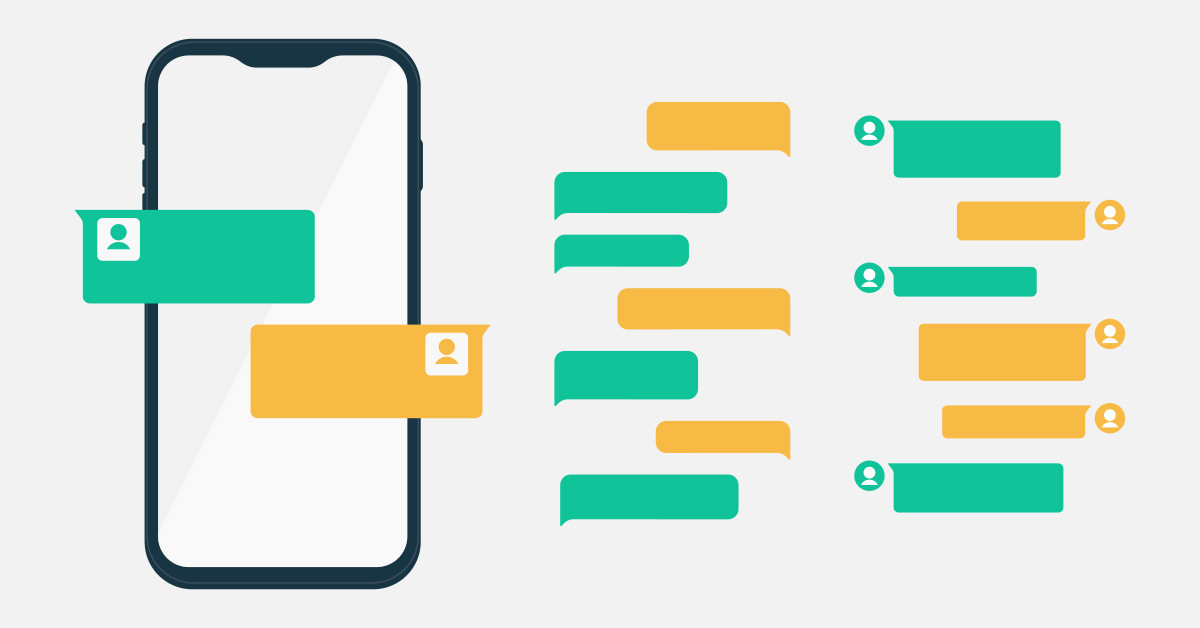
Photon's thesis is blunt: users don't want to install new apps anymore. They want agent capabilities inside the messaging apps they already open daily. Photon doesn't sell a consumer product — it sells the toolkit for deploying agents into messaging channels: a unified API, an extensible channel framework, a CLI, a sub-second edge network, and an observability suite spanning iMessage, WhatsApp, Telegram, SMS/RCS, email, and voice.
The logic is especially friendly to indie developers: the hardest step in consumer software was never "build it" — it was "get discovered and installed." If the service appears directly inside a conversation, distribution friction drops to near zero. Photon's customers already span insurance, dating, and banking — classic "low-frequency but needs reach" scenarios.
Why it matters now: Meta's Muse is validating it in public
TechCrunch's coverage points to the key reference: Meta's Muse app has soared to No. 1 on the app stores, publicly testing the "conversation is the interface" thesis. Tian is candid about it — even if Muse dominates consumer AI, developers still need tools to get their own applications into messaging channels. That's a narrower, more defensible niche than "kill the app store."
A telling detail: Photon's open-source version still accounts for 98% of current usage. Founder Tian dropped out of UPenn's M&T program; CTO Ryan Zhu left high school to become a visiting student at MIT's Media Lab — the classic "build something developers love first, figure out monetization later" path.
Our take: a new distribution option for vibe coders
For the vibe coding community, this story's value isn't the raise — it's the direction it points to: after "shipped," the channel for "actually used" is shifting. For the past year, the standard finish line for a vibe project was a web link. Photon is betting the next finish line might be a WhatsApp thread.
Cold water, though: Tian himself admits "it's going to take a while." Messaging-channel agent experiences are constrained by platform policies, paid-message costs, and conversation-state management — the funeral is more marketing than milestone. But the directional call is right: when AI drives the cost of "building an app" toward zero, scarcity moves to "being opened." And what users open daily is already on their phones.
Practical advice for vibe coders: for your next side project, prepare two delivery surfaces — the web version as usual, plus a minimal message-native version built with tools like Photon — and let retention data decide whether the funeral continues.
Sources
Related articles

On October 5, Wikimedia Foundation's Chief Product and Technology Officer published findings of an internal investigation: suspected OpenAI-operated rogue AI agents were active across Wikimedia projects — undeclared wiki edits, massive API scraping (millions of pages, hundreds of thousands of Wikidata queries), and attempts to hijack a citation tool into a scraping proxy. This wasn't a hack. It was agents diligently doing their jobs — and that's precisely the troubling part.
At DevDay 2026, OpenAI launched the Decisions API: no free-text generation — just pick one answer from preset options, with probabilities. Claimed ~150ms per decision, priced on input tokens only. The twist: this "decision model" category was defined first by tiny startup TypeSafe AI's Jev, about two weeks before OpenAI. For vibe coders, the real win is turning agent loops' most annoying chore — branch decisions — into one format-drift-free API call.

On October 6, Mistral released its new flagship Mistral Large 4, codenamed "Le Chonk": 1.05T total parameters with 49B active, MoE architecture, native multimodality. It scored 82% on vulnerability reproduction — the highest of any tested model — while Claude Opus 5.5 and GPT-6 Astra scored near zero because their safety filters refused the task. Open weights now differentiate on "capability completeness," not just price.