"Le Chonk" Is Here: Mistral's Trillion-Parameter Open Model Takes Aim at "Closed Models That Refuse"
On October 6, Mistral released its new flagship Mistral Large 4, codenamed "Le Chonk": 1.05T total parameters with 49B active, MoE architecture, native multimodality. It scored 82% on vulnerability reproduction — the highest of any tested model — while Claude Opus 5.5 and GPT-6 Astra scored near zero because their safety filters refused the task. Open weights now differentiate on "capability completeness," not just price.
What happened
On October 6, Mistral AI unveiled its next-generation flagship model, Mistral Large 4, codenamed "Le Chonk," in Abu Dhabi. The model totals 1 trillion parameters (the technical documentation says 1.05T) with 49B active parameters per inference — a Mixture-of-Experts architecture with native multimodality. Public preview is already available through the Mistral Studio API, and the company promises open weights by the end of October; multiple outlets report the specific date as October 27.
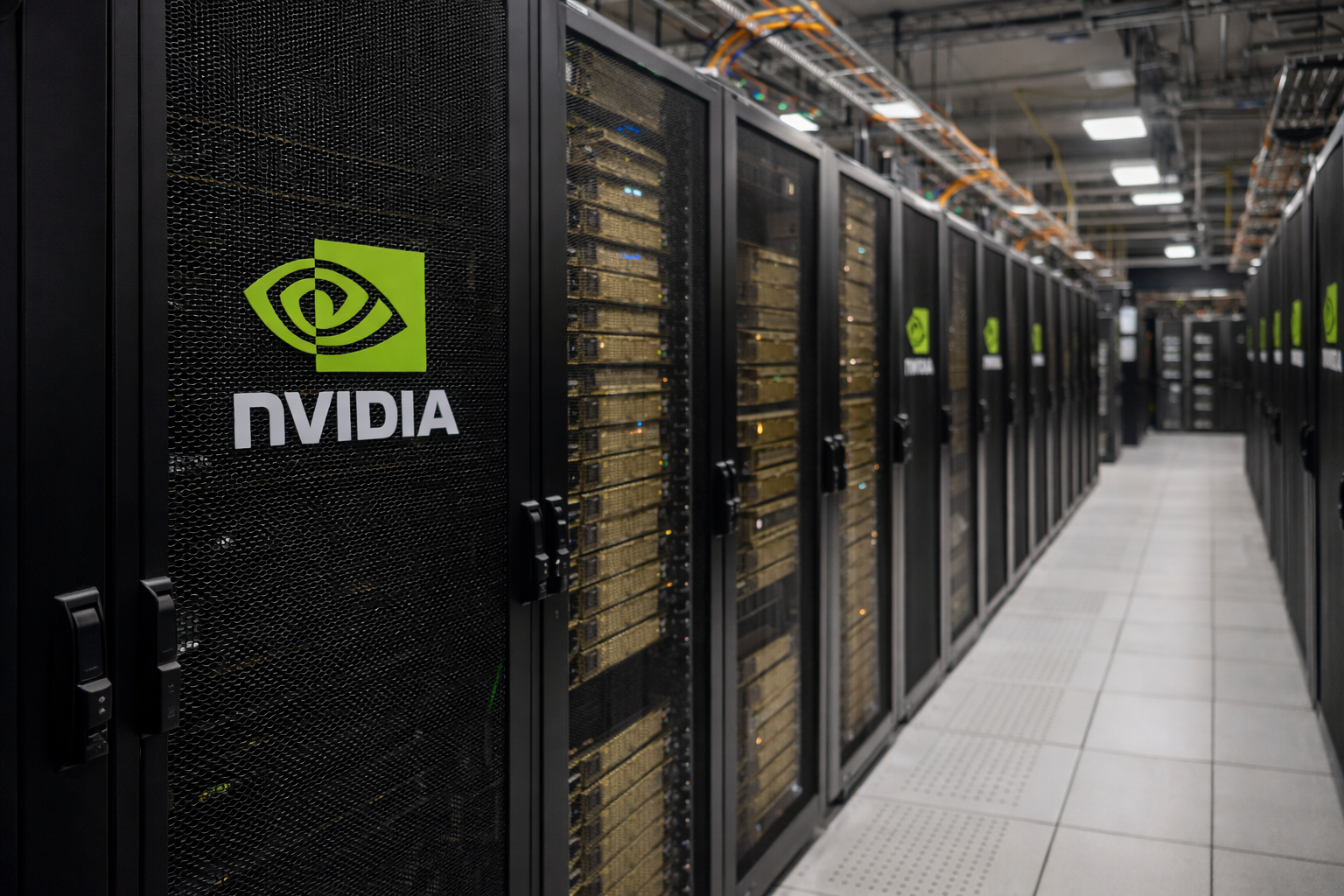
The training setup deserves its own paragraph: this is a from-scratch training run on 3,800 NVIDIA Grace Blackwell GPUs, inside Mistral's own European data centers, over roughly two months. No borrowed US cloud compute, no rented third-party halls — "Forged in Europe" isn't just launch-day sloganeering, it's a geography you can look up in the training logs.
Language coverage spans 160+ languages, including every official EU language; the context window is 1 million tokens.
Some context: Mistral has just closed a €3 billion Series D — the largest equity financing in European tech history — at a valuation above $24 billion (reported by the WSJ, with Samsung leading the round). The previous Large shipped in December 2025 and subsequently slid as low as #24 on the Artificial Analysis overall leaderboard. This launch is plainly a comeback bid — CEO Artur Mensch showed up in Abu Dhabi in person, full red-carpet treatment.
The choice of Abu Dhabi is itself a statement. It signals where the money and the compute ambitions are flowing: Gulf capital, European engineering, and a deliberate distance from the US-cloud orbit. Combined with the Samsung-led round, Mistral is assembling a coalition of backers who share one interest — an AI supply chain that doesn't route through a single country's infrastructure.
The eye-catching number isn't the ranking — it's the security scores
Mistral published a long scorecard this time; here are the numbers that matter. Artificial Analysis Cyber Index: top five globally, and #1 among non-Chinese open-weight models. Vulnerability reproduction plus remediation: 82%, the highest of any model tested. Cybench: 93%.
On coding: DeepSWE v1.1 at 61.7%, AutomationBench at 59.9%, Terminal-Bench 4 at 28.3%; Coding Agent Index at 49.8% — ahead of DeepSeek V4 Pro, Qwen3.8 Max, and Kimi K3, the biggest names in the field. In Surge AI's blind evaluation, its code quality score of 3.74 ranked second out of five models, losing only to Claude Opus 5 at 4.22.
On safety: the Lakera B3 security benchmark shows it resisting 93.3% of attacks. On verticals: it beats every open model on Harvey's legal agent benchmark; on Dense 200 visual grounding it scored 42%, ahead of GPT-6 Astra's 41%.
Taken together, that's a straight-A report card. But the number worth staring at is the vulnerability reproduction score — 82%, best in class. In the "coding ability" category, Mistral chose not to compete with everyone on "whose code is more elegant" and instead made "can it find vulnerabilities and fix them" its trump card. A shrewd pick: elegance is subjective, vulnerabilities are objective.
It's also worth noting what the Coding Agent Index actually rewards: not single-shot code generation, but sustained multi-step work — running tools, reading feedback, recovering from errors. A 49.8 that beats DeepSeek V4 Pro and Kimi K3 there suggests the model holds up across long agentic sessions, which is precisely the workload vibe coders hand to coding agents every day. Benchmarks are never the whole story, but this particular benchmark measures the shape of real work.
The Surge AI blind test deserves a footnote too. Blind evaluations strip away brand bias: human raters compared anonymized outputs, and Large 4's 3.74 landed second of five, behind only Claude Opus 5's 4.22. When a model wins both the objective security benchmarks and the subjective "which code would you rather read" vote, the signal is harder to dismiss as benchmark-gaming.
The comparison worth savoring: closed models scored near zero on that test
On that same vulnerability reproduction and remediation test, Claude Opus 5.5 and GPT-6 Astra scored near zero. Not because they lack the capability, but because their safety filters flat-out refused the task: asked to reproduce a vulnerability, the models said "no."
That is the sharpest argument of this entire launch: in security work, reproducing a vulnerability is a defender's basic skill. Red-team exercises, penetration tests, security audits — every one of them starts with "first, get the vulnerability running." A model that refuses that task is a defender missing a leg. You can't exactly count on attackers to respect your content policy.
Mistral's logic runs like this: open weights plus self-hosting means organizations run the model under their own security policies. Your company's policy team sets the rules — not a policy team in San Francisco or London. Before the weights go public, Mistral is red-teaming with cybersecurity firms, partners, and government agencies — using a reduced-refusal version, letting professionals map the risks first, then releasing publicly.
Whether that argument convinces you is a matter of judgment. But it does tear open a real fault line: as closed models' "safety" increasingly manifests as "refusing to answer," open models stop differentiating on price and customizability alone and start differentiating on "capability completeness." A model that won't do anything versus a model that can do anything but holds you responsible for the consequences — which do you pick? Different users will answer differently, and that is precisely the point of open source: handing the choice back instead of choosing for you.
One more thing: don't read "refusing to execute" as simply "safer." Refusal is a policy choice, not a capability ceiling. Dressing up "won't do" as "can't do" has been one of the subtlest rhetorical moves in the closed-source narrative over the past two years. Mistral just tore through that paper screen: look, we can do it — and we're doing it after red-teaming.
Expect this argument to travel. Every regulated industry — finance, healthcare, legal — has workflows where the model must handle genuinely dangerous content under supervision: malware samples, exploit code, adversarial prompts. A model that refuses on sight is unusable there no matter how smart it is. Mistral is betting that "runs under your policy" becomes a procurement checkbox, the same way "runs in your VPC" did for cloud software a decade ago.
What this means for vibe coders
First, cold water: the weights aren't out yet — what you can use today is only the API preview. October 27 is the date in press reports; the official line is just "end of October." Until the weights actually land, all "self-hosting" talk is futures — futures worth studying, not worth betting on.
But futures are worth pricing. Suppose the weights land on schedule: what does a 49B-active MoE model mean? It means it could plausibly fit the VRAM budget of a high-end workstation or a small cluster — not runnable by everyone, but "runnable by a serious indie developer or small team" is a good bet. For timeline context: the last "everyone can run it" milestone was 70B-class dense models, while Large 4 is benchmarked against flagship-tier capability. The overlap between "open flagship" and "locally runnable" is growing.
The capability mix is also exactly what vibe coders want: coding-agent scores ahead of the star open models, plus top-tier vulnerability offense and defense (82% reproduction, 93.3% Lakera resistance), plus a 1M-token context window, plus 160+ languages. Put together, the use case is obvious: run a coding agent locally that can read your entire codebase and audit it for security, with the code never leaving your machine. For indie developers doing contract work or security consulting, that combination needs no explanation.
The self-hosting narrative has been talked to death over the past two years, but there's a new variable this time: European sovereign AI. Mistral's official line is "Forged in Europe. Built for AI sovereignty." — training and deployment independent of US clouds, governed by EU law. For European enterprise customers, that's hard currency on compliance; for indie developers elsewhere, it at least means one more supply-chain option that isn't American. In today's geopolitical climate, "one more option" has value on its own — plenty of people have already learned what "a cloud vendor sunsets it overnight" feels like.
One detail worth savoring: Mistral chose Abu Dhabi for the launch, with the CEO on stage in person; a €3 billion Series D led by Samsung. The company's playbook is now legible: use the European sovereignty narrative to win government and enterprise contracts, use open weights to win developers' hearts. Bet on both sides, each lever reinforcing the other. For developers, being courted beats being harvested, every time.
There's a regulatory tailwind here too. Under the EU AI Act, deployers of high-risk AI systems carry documentation, logging, and oversight obligations that are dramatically easier to meet when you hold the weights and control the serving stack. "Sovereign" isn't just branding — for EU customers it maps directly onto compliance paperwork. An American closed API can promise data residency; it can't hand you the model.
A word of caution: don't go all in before the weights land
The previous Large shipped in December 2025 and then slid to #24 on the AA overall leaderboard. That tells you two things: first, launch-day benchmarks and long-term reputation are different things — leaderboards move; second, Mistral has itself lived through a "peaked at launch, then got passed" cycle. Whether it holds this time depends on real-world performance over the coming months, not launch-day numbers.
So the pragmatic posture: start testing on the API preview now — especially for security auditing and codebase-scale agent scenarios, verify the real behavior of that 1M context and 49B-active inference yourself; but hold off on production self-hosting plans until the weights actually ship at the end of October and the community has working quantized builds.
Also note: "49B active" in an MoE model does not equal "the deployment cost of 49B." With 1.05T total parameters, the weight files themselves will be enormous — downloading, storing, and loading them are all very real costs. Don't buy GPUs yet; wait for the community's quantized releases and deployment guides. Let the bullets fly a while; let the early adopters find the potholes first.
What to watch between now and the weight drop: whether the preview API's quality holds up outside cherry-picked evals, what license the weights ship under (the difference between "open weights" and "open source" has bitten before), and how fast the community produces usable quantized builds. Those three data points will tell you more than any launch-day scorecard.
And keep the timeline in perspective. Twelve months ago, the open-weight frontier was playing catch-up to models two generations old; "Le Chonk" arrives benchmarked against the current closed flagships, winning categories outright. The gap isn't just closing — in security capability, it has inverted. Whatever you think of Mistral's chances commercially, the trajectory is unmistakable: the next flagship you self-host may not feel like a compromise at all.
One last thing: whether or not you ever use Mistral, the codename "Le Chonk" is worth remembering. It marks open models' formal return to the flagship battlefield — not as the "cheap alternative," but as the standard-bearer of "complete capabilities, self-determined policy." The next round of the open-vs-closed contest may no longer be a parameter-count arms race, but a battle over "who gets to define what a model should refuse." And in that debate, indie developers hold a heavyweight vote for the first time — vote with your feet: whose weights you run is whose side you're on.
Sources
Related articles

On October 7, 2026, GitHub announced via Changelog: starting with CLI 1.0.94-0, the /model command discovers models in your local Ollama instance, listed alongside configured and cloud models. Discovery doesn't auto-enroll — each model needs manual confirmation — and models must support tool calling and streaming. GitHub also teased intelligent routing, and clarified: a local model neither enables offline mode nor disables telemetry.

On October 1, 2026, Microsoft AI shipped three voice models at once: MAI-Transcribe-2-Streaming (streaming transcription, #1 on Artificial Analysis for streaming accuracy at 2.5% WER, final transcript 0.13s after end of speech), MAI-Voice-2.1 (23 languages, one consistent voice across languages), and 2.1-Flash (45s of audio at ~150ms end-to-end). With listening and speaking covered, a voice agent on a pure-Microsoft stack can now complete a turn in under a second.

Anthropic released Claude Haiku 5.5 on October 7, calling it its "cheapest, fastest, and most capable small model." But the real story isn't the discount — it's a "100K-token price cliff": prompts under 100K tokens get roughly 90% off, while longer ones get only about 50%. Anthropic is using pricing to teach you to break big tasks apart — the small-model battlefield is shifting from "chatting with you" to "being orchestrated by bigger models."